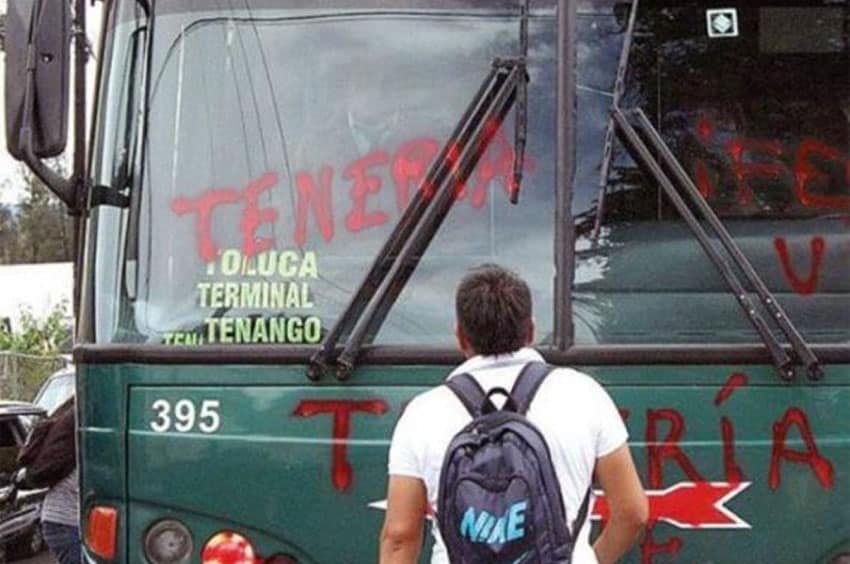
Teacher training students in México state today began releasing 92 bus drivers who were held hostage for nearly a week when students hijacked their buses.
The Interior Secretariat (Segob) negotiated an agreement with the students of the San José Tenería school on Tuesday after five days of negotiations. The students hijacked as many as 60 buses last week to attend protests and call attention to their grievances.
Upon reaching an agreement, Segob undersecretary Ricardo Peralta said he was sure that the problem was resolved, but as of early Wednesday morning the students had yet to release any of the drivers.
A representative of a national highway transportation organization denounced the students’ failure to honor the agreement.
“As of now, the drivers still haven’t been released and the situation remains the same,” he said early on Wednesday. “Things haven’t changed, with the distress of the drivers and without knowing what conditions they are in . . . it appears that the authorities are learning how difficult it is to negotiate with criminals.”
But students began freeing buses and their drivers later in the morning and by noon 10 buses had been released.
Undersecretary Peralta lamented that the students had made the decision to “hijack buses and kidnap people as a means of pressuring the government in order to be heard.”

“These are the things we have to change; the young people are surprised to have a negotiating table because they aren’t used to it. They’re used to being received with blows and tear gas, that’s why they utilize these means . . .”
As part of the deal struck with Segob, the students were obliged to release the hostages and cease to occupy highway toll plazas.
For its part, the government promised to pay teachers for backpay still not received and continue to hold monthly talks with students and teachers of the Lázaro Cárdenas Normal School in San José Tenería, among other stipulations.
Most of the stolen buses belong to the Flecha Roja bus line.
Sources: Milenio (sp), El Financiero (sp)