Two hundred schools in the Sierra region of Guerrero haven’t started the new school year due to security concerns, according to a state education official.
Alfredo Bello Salmerón, a delegate for the Guerrero Secretariat of Education, said that 2,300 primary school students in the municipalities of Leonardo Bravo, Eduardo Neri, Chilpancingo and Heliodoro Castillo haven’t attended classes since the school year began in August.
The reason: teachers refuse to work because they fear for their safety.
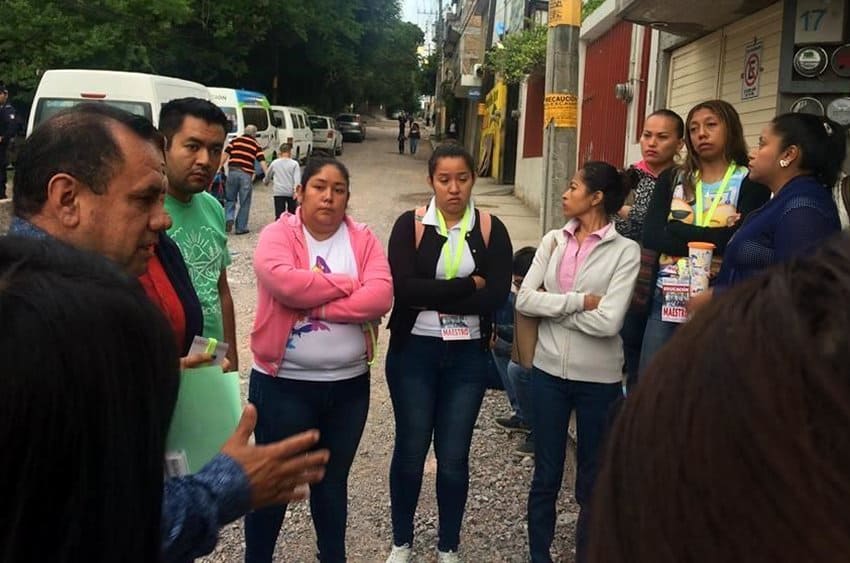
A group of 33 teachers yesterday declined to travel from the state capital Chilpancingo to communities in the Sierra region in two buses provided by the state.
Two state police vehicles arrived to escort the buses but in the end only 10 teachers boarded one bus while 10 others traveled to schools in their own vehicles, the newspaper Reforma reported.
“They told us that the army and the state police were going to accompany us . . .” one teacher said. “In these conditions, we’re not going.”
The economies of a lot of communities in the Sierra region, located in the geographical center of Guerrero, are heavily dependent on the production of opium poppies and marijuana.

However, demand and prices for opium paste has slumped in recent years as cartels in the north of the country increasingly substitute it in heroin production with the synthetic opioid fentanyl.
Local crime gangs such as Los Rojos, Los Ardillos and the Sierra Cartel have consequently seen their profits decline and have increasingly turned to “extortion, kidnapping, robbery [and] homicides,” state security spokesman Roberto Álvarez Heredia said earlier this year.
The Sierra Cartel is also engaged in a violent turf war with a gang controlled by Juan Castillo Gómez, a criminal figure known as El Teniente, which only serves to further exacerbate social and economic instability.
Teacher Lucía Hernández told Reforma that the state government has assured members of her profession that the situation in the region has now calmed down and that their safety isn’t at risk.
But she rejected the claim, questioning why transportation services in the region haven’t resumed if violence really isn’t an issue. Many health clinics are also closed.
More than a month ago, Guerrero Governor Héctor Astudillo said security forces would undertake a special operation in the Sierra region to combat insecurity and allow life to return to some semblance of normality.
But the operation has not yet started.