The Jalisco New Generation Cartel (CJNG) has made the northern border municipality of Tecate the base of its operations in Baja California, according to local security forces.
As has occurred in other parts of the country where the cartel has expanded its influence, violence has increased in Tecate, sandwiched between the municipalities of Tijuana and Mexicali and located across the border from San Diego County and Imperial County in California.
According to a report by the newspaper El Universal, homicides in Tecate increased 280% in the first three months of the year. Among the victims were a high-ranking municipal government official, an independent political candidate and an activist.
El Universal reported that the CJNG announced its presence in strategic points in Baja California in a recent video posted to social media.
It also said that intelligence departments of local security forces have warned that the cartel — an extremely violent criminal group which the United States Drug Enforcement Administration says is the primary drug trafficking organization in 24 of Mexico’s 32 states — is using the municipal seat of Tecate, a Magical Town 50 kilometers east of Tijuana, as its operational base.
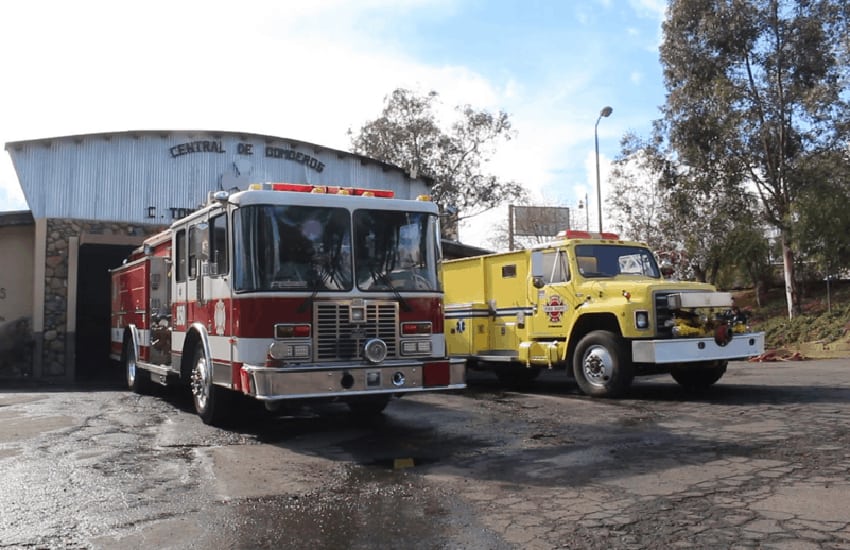
The CJNG is also believed to be responsible for recent attacks on rural fire stations in Tecate, forcing authorities to close all four. The criminal group also allegedly abducted an ambulance paramedic and forced him to treat the wounds of a hitman injured in a gunfight with a rival cartel.
A fire chief in the town of Tecate told El Universal that a young firefighter in the community of La Rumorosa was captured and tied up by cartel members who stole his car to make a getaway before dumping it and setting it on fire. In addition, a fire engine was recently riddled with bullets by gunmen, leading firefighters to walk off their jobs.

“Nobody could guarantee our security. How can I send young men to work like that?” the fire chief said.
It is unclear why the presumed CJNG members have been directly targeting firefighters. One possibility is that they wanted to scare off all authorities in the areas where they are seeking to operate with impunity.
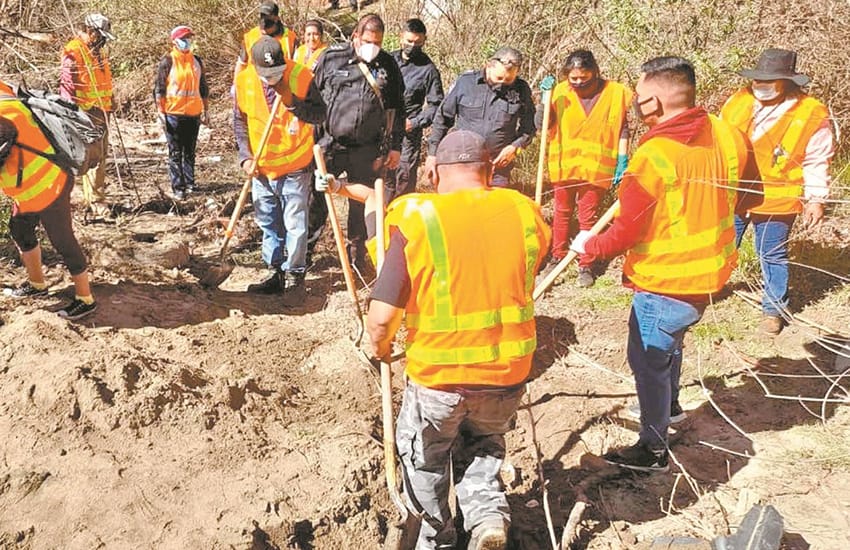
The recent increase in violence in Tecate has interrupted years of tranquility enjoyed by residents, El Universal said. The newspaper also reported that a group dedicated to searching for missing people has been created in the border municipality for the first time.
Madres Buscándote Tecate (Mothers Looking for You Tecate) found the remains of seven men and women in a single month on a track that runs along a local river, El Universal said.

One member of the group said that one of the other mothers was told she would be killed if she continued looking for bodies.
“… I’m afraid. … I ask myself, how do … they know about the people we’re looking for, who gives them that information?” she said.
• In other CJNG news, the bodies of three siblings who were abducted on Friday night were found Sunday in San Cristóbal de la Barranca, Jalisco, a municipality 60 kilometers north of Guadalajara.
Luis Ángel González Moreno, 32, José Alberto González Moreno, 29, and Ana Karen González Moreno, 24, were kidnapped by armed men who broke into their Guadalajara home. According to witnesses, the criminals were hooded and wearing military attire emblazoned with the CJNG initials.
The siblings were forced into a pickup truck and nothing was known of their whereabouts until their bodies were found Sunday on the highway between San Cristóbal de la Barranca and Colotlán. Authorities have not revealed a motive for the abduction and murder.
Luis Ángel was a musician and ran a screen-printing business, José Alberto was also a musician as well as a geography student at the University of Guadalajara while Ana Karen worked at an automotive company.
• The CJNG is also believed responsible for an attack Monday morning in Chinicuila, Michoacán, a municipality in the state’s west that borders both Colima and Jalisco. El Universal reported that presumed cartel gunmen opened fire in the community of Villa Victoria. It also said that an explosive-laden drone came down on a home whose residents had earlier fled the violence.
In El Salitre, another community in Chinicuila, residents reported that criminals seized and set alight three vehicles to block a highway in order to aid their escape from federal and state security forces. Residents said that people were still inside the vehicles when they were set on fire.
The Michoacán government hasn’t reported any deaths or injuries in Chinicuila, which is part of the state’s coastal region. The CJNG is also one of the main instigators of violence in Michoacán’s Tierra Caliente region, which includes several troubled municipalities, including Aguililla, where frequent clashes between the Jalisco cartel and the Cárteles Unidos have recently forced many residents to flee their homes.
Source: El Universal (sp)