For the first time in history, a telescope that is 100% Mexican in terms of design and construction will be used in major scientific studies and the observation of asteroids.
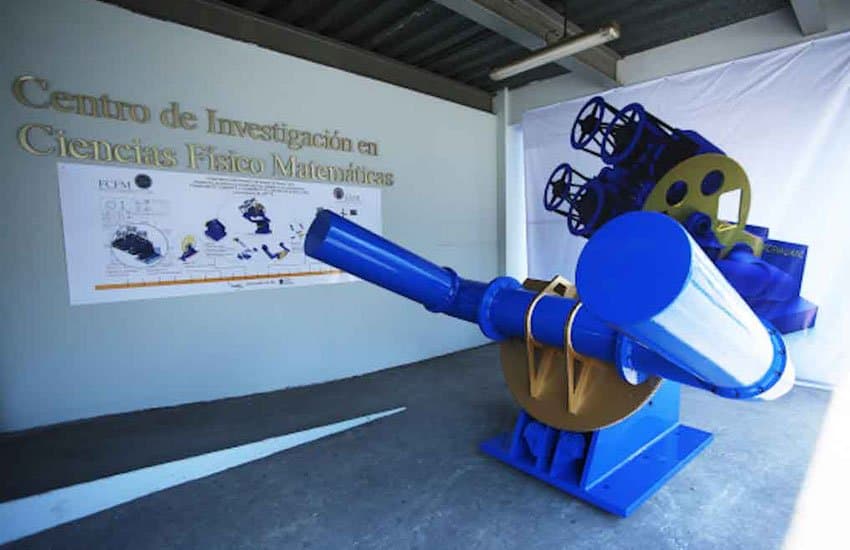
The construction of “Tlapiani,” which means guardian in Náhuatl, has been overseen by scientists at the Autonomous University of Nuevo León (UANL) in collaboration with researchers and students at the university, along with various businesses in the state.
Tlapiani is 90% complete, and scientists hope to finish the remaining work on the telescope by August in order to move it from the university to the Cerro el Picacho in Iturbide with the help of experts from the National Astronomical Observatory in Ensenada, Baja California.
Astrophysics and space science coordinator Eduardo Pérez Tijerina said scientists from several Russian universities will work closely with UANL scientists to monitor space debris, including asteroids, comets and meteoroids; 14,000 tonnes of space debris is estimated to enter Earth’s atmosphere every year.
The program coordinator said the telescope could also be used to observe other space objects, such as extrasolar planets. He added that researchers from Chinese academic institutions had also expressed interest in using Cerro el Picacho for space observation; the telescope’s new home is located 400 meters above sea level and is considered one of the best locations for the observation of extraplanetary objects due to the area’s climate and dependably clear nights.
Pérez Tijerina stressed that the new telescope is the first to be completely designed and built from start to finish in Mexico by Mexicans. Another important telescope in Mexico is the Alfonso Serrano Large Millimeter Telescope in Puebla, which is a binational collaboration between Mexico and the United States.
Upon completion, Tlapiani will join the ranks of other important space research and observation projects in Mexico, such as the San Pedro Martir Observatory in Baja California, the Guillermo Haro Astrophysical Observatory in Sonora and the Puebla telescope.

Source: La Jornada (sp)