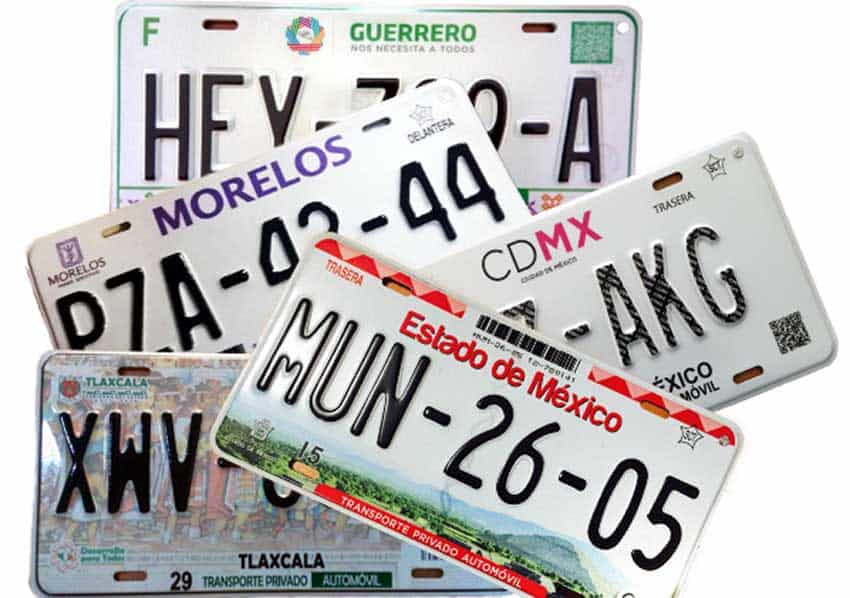
Want to avoid paying photo radar speeding tickets and expensive vehicle taxes? Getting license plates from another state could be the answer.
In many states, including Mexico City, Jalisco and San Luis Potosí, authorities don’t have arrangements in place that allow them to collect fines from motorists who are caught speeding when their vehicles are registered in another state.
Having that kind of immunity has proven to be too tempting to resist for some drivers, and to cater to the growing demand an informal license plate market of questionable legality has sprung up. It doesn’t require customers to go to the state from which they want new plates or, for that matter, even leave the comfort of their homes.
All one needs to do is log on to Facebook, go into one of several virtual license plate marketplaces and find a “gestor de trámite” (procedure agent), known colloquially as a “coyote,” with whom to do business.
According to a report published today by the journalism alliance par.mx, the cheapest plates are generally those from Guerrero and Mexico City, which can be had for as little as 3,200 pesos (US $166), while those wishing to pass themselves off as motorists from Michoacán will need to part with up to 7,000 pesos (US $364).
“The most viable ones are those from Mexico City and Guerrero. With Guerrero plates, they almost don’t stop you at all,” said Luis, one of the self-styled “procedure agents.”
Another, identified only as Alonso, guaranteed that photo radar tickets, known in Mexico as fotomultas, would be a thing of the past as long as motorists stay out of the state indicated by their license plates.

“Only federal fines will affect you, he said.
Tempted?
The so-called coyotes say that the procedure is simple: provide copies of evidence of vehicle ownership and ID and the new plates will arrive in no more than three days.
Another gestor de trámite operating under the name of José promises even greater efficiency.
“If you submit your documents today before two in the afternoon, tomorrow I’ll have plates from Guerrero for you,” he said.
One person who has used the services of a license plate coyote is Mexico City vendor Roberto, who admitted that he changed his local plates to ones from the state of Morelos.
“The truth is that paying the car tax here is expensive and I also avoid fotomultas,” he said, adding that the “agent” he dealt with assured him that there was no sharing of information between transport authorities in the capital and those in Morelos.
All of the coyotes consulted by par.mx said that all the plates are authentic — that is, none are forged or stolen.
But it’s worth noting that some state authorities are taking steps to ensure that they can impose fines on interstate drivers — genuine or otherwise — while federal authorities are acting to make the sharing of information between government departments in different states easier and faster.
Some state governments have also proposed restricting the hours within which interstate-plated cars can circulate.
So the days of immunity and freedom for the drivers of vehicles with plates from other states could well be numbered.
Perhaps the best way to avoid getting a fotomulta is not to speed in the first place.
Source: par.mx (sp)