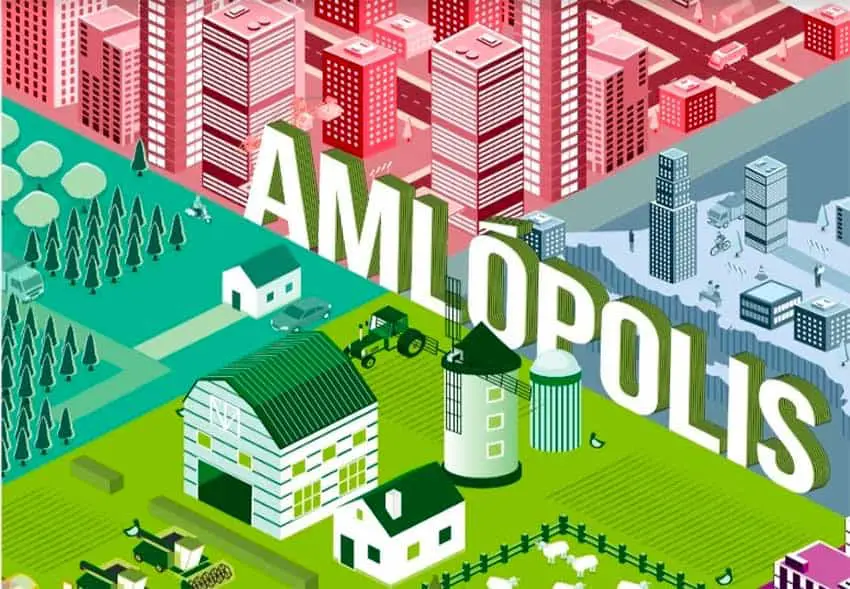
Stimulating regional development, ensuring that cities are well-managed, sustainable and safe, meeting housing needs and improving transportation services are all on the agenda for Mexico’s next federal government, according to a development plan known colloquially as AMLÓpolis.
The plan says the administration of president-elect Andrés Manuel López Obrador, also known as AMLO, will seek to “improve the environment in which millions of Mexicans live through the provision of quality infrastructure, public spaces, facilities [and] affordable and well-located housing.”
Román Meyer Falcón, an architect and academic who specializes in urban development, will be responsible for executing the plan as secretary of agrarian development and urban planning.
In keeping with López Obrador’s pledge to improve the standard of living for millions of poor Mexicans and to make economic growth and development more equitable across the country, the development plan says the administration will seek to “stimulate greater public and private investment in the country’s most disadvantaged regions.”
Directing public resources to the country’s poorest regions to carry out new infrastructure projects will be a priority.
In the nation’s metropolitan areas, the AMLÓpolis document says the government’s objective is to have “harmonious” urban development which contributes to making cities more connected, sustainable and inclusive.
Prudent water management, the provision of adequate sewage treatment services and the security of citizens are also priorities.

To halt or at least slow the uncontrolled march of urban sprawl, the AMLO-led administration will promote higher-density living closer to the center of Mexico’s large cities with both public and private investment slated to contribute to new housing developments.
The government will also develop “alternative models” to help people on low incomes purchase land, while a new housing policy that involves all three levels of government and the private sector will be designed to meet families’ needs.
“New homes will be well-located and have adequate urban facilities,” the document says, adding that financial assistance will be made available to people on low incomes and young people so they can access adequate housing.
With regard to public transportation, AMLÓpolis states that the next government will modernize existing transit systems to make them more integrated and to improve accessibility to essential services and facilities.
It also says the government will seek to make public spending more equitable across all modes of transportation by considering the needs of cyclists and pedestrians as well as users of public transit. Citizen participation in public transportation decisions will be encouraged.
In rural regions, the document states, the government will protect the rights of land-owning collectives and promote democratic participation in decisions related to agrarian and natural resources.
The priorities of the incoming López Obrador-led administration are becoming clearer through documents such as AMLÓpolis and a 12-point plan AMLO outlined this week that sets the next government’s legislative agenda.
López Obrador will be sworn in as president for a six-year term on December 1. He named the members of his prospective cabinet last December.
He won the July 1 presidential election in a landslide and has pledged to stamp out government corruption and transform Mexico.
His sweeping victory gives him a mandate to fulfill his campaign promises and with the three-party coalition he leads winning majorities in both houses of federal Congress, he will have the congressional backing to do so.
Source: Milenio (sp)