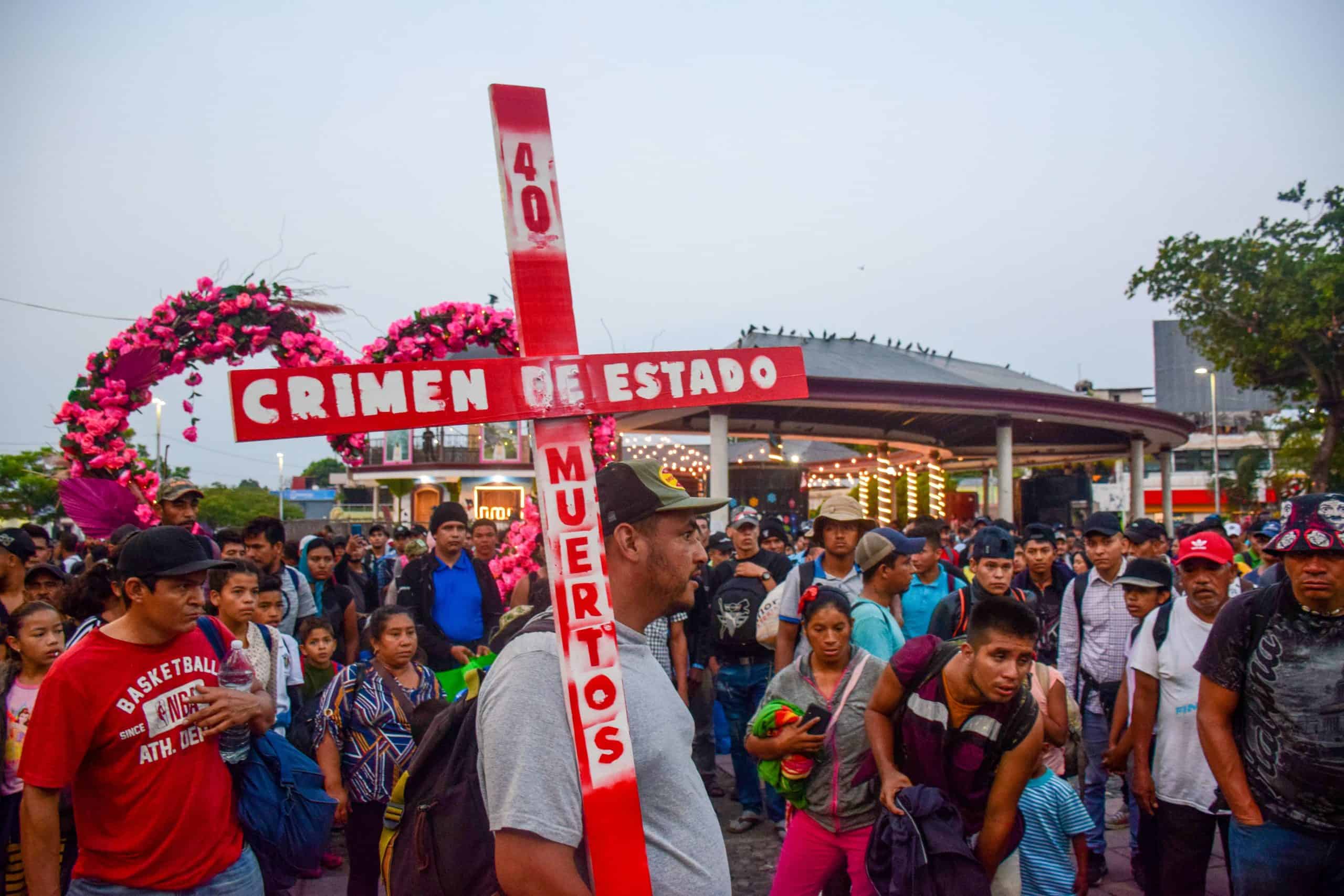
A caravan of 3,000 migrants has left Tapachula, heading for Mexico City, hoping to speed up their asylum process and protest the deaths of 40 migrants in a detention center fire on March 27.
The migrants — mostly from Venezuela and Central America, but some from as far afield as Asia — started their march on Sunday. Many have been held up for months in the Chiapas town on the Mexico-Guatemala border.
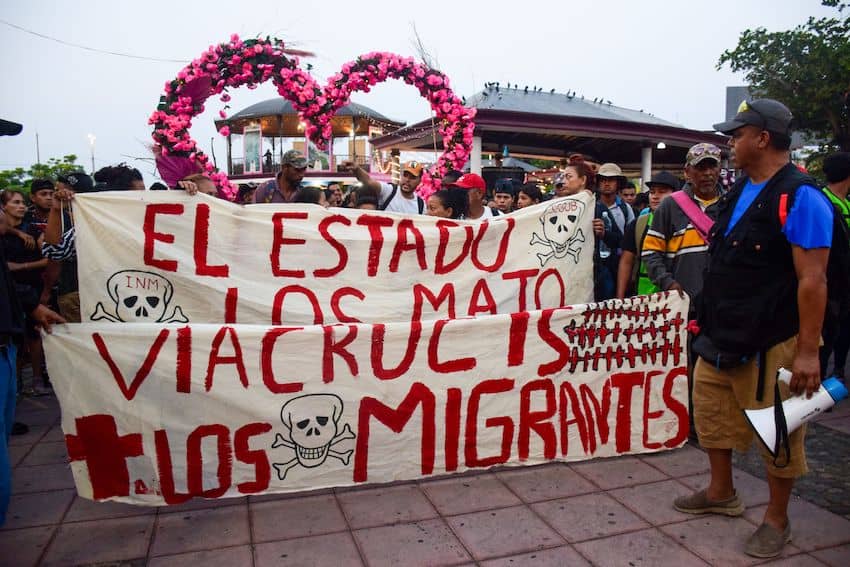
Many protesters are also hoping that the march will help to expedite their own asylum requests. Organizers said the march aims to demand changes in the way migrants are treated, after the death of 40 migrants in a fire in late March while in the custody of the National Migration Institute (INM). Video from the fire at the center showed that INM officials failed to unlock doors to let migrants escape as the fire spread.
Six INM officials, one security guard and one Venezuelan migrant accused of starting the fire are in custody. INM director Francisco Garduño is among those expected to face charges. His hearing is scheduled for April 25.
“It could well have been any of us,” Salvadoran migrant Miriam Argueta told the Associated Press (AP) at the start of the march, referring to those killed in the fire. “In fact, a lot of our countrymen died. The only thing we are asking for is justice and to be treated like anyone else.”
Many migrants on the march carried protest banners or wooden crosses, alluding to the “Viacrucis” (the biblical stations of the cross) theme of previous caravans that sought to raise awareness of migrants’ plights.

“In this Viacrucis, we are asking the government that justice be done to the killers, for them to stop hiding high-ranking officials,” organizer Irineo Mujica, director of the NGO Pueblos Sin Fronteras (People Without Borders) told the AP.

“We are also asking that these jails [migrant detention centers] be ended, and that the National Immigration Institute be dissolved.”
However, many of the migrants are expected to continue their march to the U.S. border to claim asylum, as similar caravans have done in the past.
“We joined the caravan to be safer and not to be detained,” a Venezuelan migrant called Yoani told Reuters, adding that he hoped to speed up his family’s U.S. asylum process in Mexico City.
The caravan successfully crossed the first checkpoint north of Tapachula, where small groups of migrants are usually stopped by immigration agents. On Sunday, the post was only manned by humanitarian organizations and state police, who made no attempt to block the migrants.
The caravan is expected to take between 10 and 14 days to walk the 1,200 km (750 miles) to Mexico City, departing before dawn each day to avoid the strongest heat.
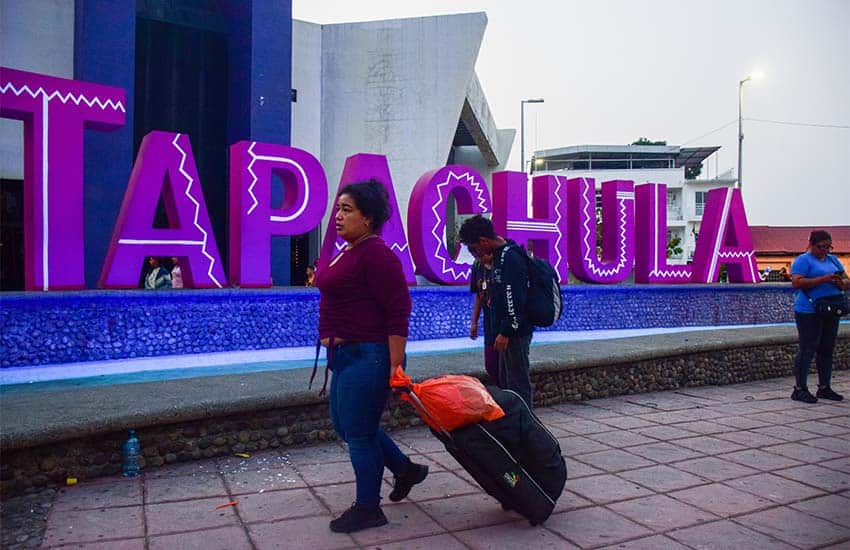
Migrant caravans have been a phenomenon in Tapachula for several years, as impoverished migrants have grouped together for security on the long walk north. Several grew to huge size during 2018 and 2019, although numbers dropped during the pandemic.
Tapachula itself is known as the epicenter of southern Mexico’s migration crisis. Local activists estimate that there are around 40,000 migrants stuck in the city, mostly waiting to process humanitarian visas that would allow them to cross the country legally.
The volume of requests and, allegedly, pressure by the U.S. on Mexico to not allow the passage of these migrants, has caused long delays in processing these visas, leading to growing desperation among stranded migrants.
With reports from Reuters, Associated Press and El País