Mexico and the United States on Monday signed an agreement intended to solve the border sanitation problem plaguing the San Diego and Tijuana metropolitan areas.
According to the U.S. Environmental Protection Agency (EPA), the signing of Minute No. 333 targets the decades-long Tijuana River sewage crisis that has been a point of contention between the U.S. and Mexico.
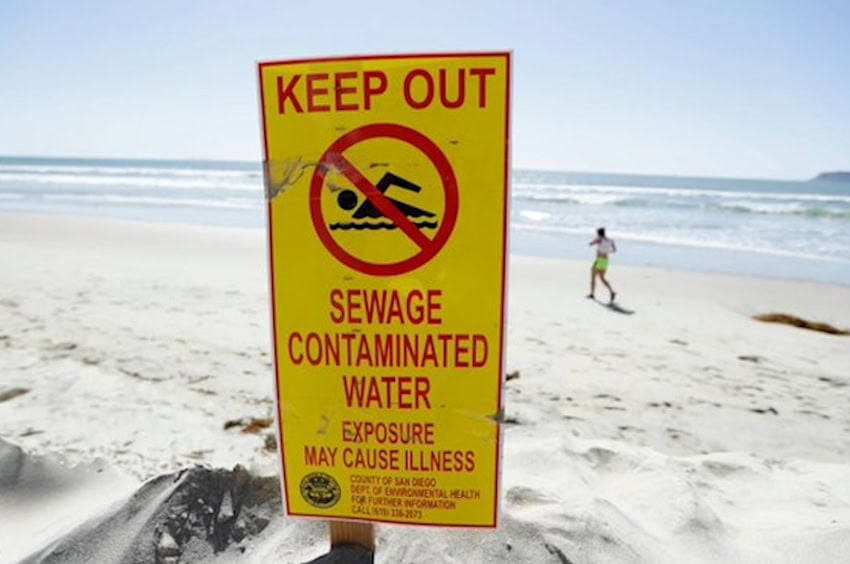
Monday’s agreement allows the U.S. and Mexican Sections of the International Boundary and Water Commission to jointly develop infrastructure projects and enhanced monitoring strategies.
In a social media post, EPA Administrator Lee M. Zeldin said the agreement outlines “the Mexico-side infrastructure projects … and planning for operation and maintenance of critical sites and systems that will account for future population growth in Tijuana.”
The commission was convened in accordance with Article 3 of the 1944 U.S.-Mexico water treaty, by which the governments “agree to give preferential attention to the solution of all border sanitation problems.”
Minute 333 builds on the July 24, 2025, Memorandum of Understanding Addressing the Sanitation and Environmental Crisis in the Tijuana-San Diego Region (MOU) signed in Mexico City by Zeldin and Mexican Environment Minister Alicia Bárcena.
In the MOU, Mexico agreed to begin work soon on US $93 million worth of improvements to the Tijuana sewage system, while also committing to enhanced maintenance projects.

Minute 333 calls for a number of sanitation projects on the Mexican side that were specified in the MOU, including:
- Doubled treatment capacity and installation of an ocean outfall at a wastewater treatment plant in southwestern Tijuana, far enough out to sea to prevent any threat to San Diego beaches.
- A sediment basin to capture polluted runoff in the Matadero Canyon watershed that straddles the border.
- A Tijuana water infrastructure master plan to ensure that sufficient water infrastructure is planned and constructed commensurate with anticipated population growth.
- A new wastewater treatment plant about 5 miles south of the U.S. border.
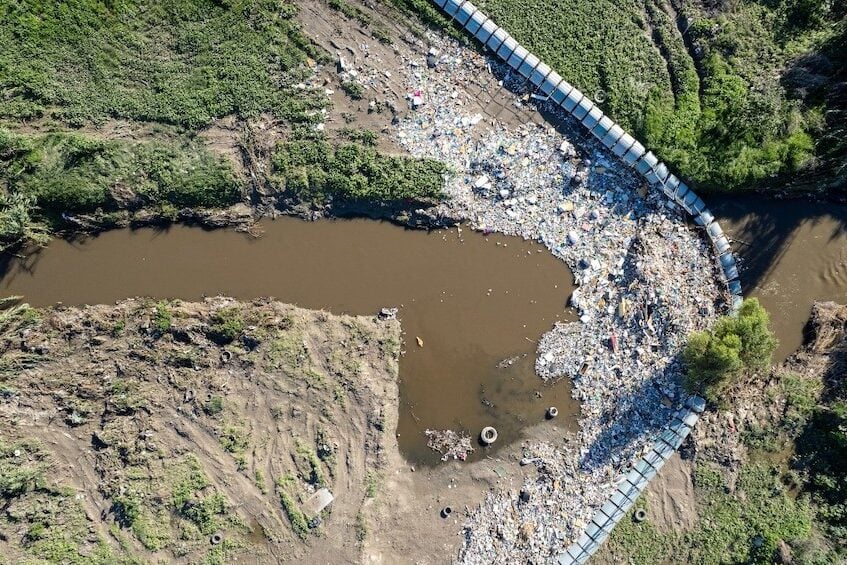
- Implementation of best practices for stormwater management and runoff control to reduce inflow rates and downstream deposition of trash and sediment.
- Funds set aside for maintenance.
EPA officials are saying that the improvements will not cost U.S. taxpayers, but Minute 333 does call for a cost-sharing formula for cleaning and sediment-dredging in the Tijuana River.
Last week, U.S. President Donald Trump threatened Mexico with a 5% tariff on imports if it did not resolve the water delivery issue stipulated in the 1944 treaty. A few days later, he demanded that Mexico resolve the water and sewage problems that affect residents of California.
Earlier this week, the neighboring countries reached an understanding on Mexico’s water deficit, while President Claudia Sheinbaum said Mexico will fulfill its commitments contained in Minute No. 333.
With reports from Reuters, El País, NBC San Diego and Proceso