The Mexican tourism industry is in crisis due to a lack of marketing and insecurity, the president of the National Tourism Business Council (CNET) said yesterday.
Speaking at a tourism forum in Mexico City, Pablo Azcárraga warned that the government’s decision to disband the Tourism Promotion Council (CPTM) and high levels of violent crime will cause tourism GDP growth to slow to 1.6% from 3%.
Hotels have suffered a 15% decline in profits in the first quarter of 2019, he said, because they have had to lower their rates to maintain occupancy levels.
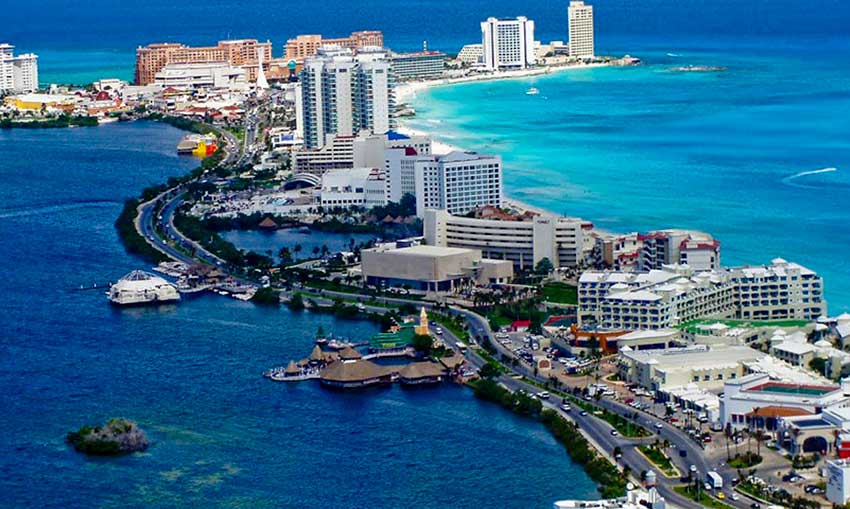
In Cancún, the January occupancy rate of 70.7% was the lowest since 2012, according to federal Tourism Secretariat figures, while Mexico City recorded a rate of 54.2%, the lowest since 2013.
The lack of marketing has caused tourism from the United States to decline, Azcárraga claimed.
“The number of people from the United States – our main market – who are traveling outside their country is higher than last year and consequently the competition, like Jamaica, the Dominican Republic and Puerto Rico, have reported [tourism] growth of 16% to 20% when in Mexico there is a decline,” he said.
Hotel operators in Cancún say that decline has been evident for some time but government officials did nothing in response. The president of the Cancún and Puerto Morelos hotels association claimed that it took two years for state Tourism Secretary Marisol Vanegas to even recognize there was a decline in visitors from Canada and the U.S.

Roberto Cintrón said it was time for a change in strategy to counter negative publicity from insecurity and double spending on new marketing campaigns.
But hotel owners in Cancún and the Riviera Maya expressed alarm in interviews with the tourism publication Reportur over the fact that the state has no plan to address the problem, and has shown no leadership.
CNET’s Azcárraga warned that if the situation persists, Mexico will lose tens of billions of pesos in revenue and jobs in the tourism sector will disappear.
“The country’s business sector is worried [but] there’s still time to take decisions that will allow us to turn around what today is a crisis,” he said.

“The business community has the obligation to insist that our authorities truly seek to defend the [tourism] sector. Today we shout, ‘Help!’ Because we’re in a situation that is not working,” Azcárraga added.
The CNET president was critical of the decision to divert resources that previously funded the CPTM to the Maya Train, President López Obrador’s signature infrastructure project.
Azcárraga said that savings generated by the elimination of the tourism marketing agency that will go to the Yucatán peninsula rail project only represent 4% of the latter’s total cost.
“That makes no difference to the [rail] project” but has a big impact on the tourism sector, he argued.
Azcárraga acknowledged that the Maya Train will “enrich” Mexico’s overall “tourism product” but added that in order for it to be a success, it will also need to be promoted.
The government’s decision to disband the CPTM as part of its policy of austerity has been widely criticized by Mexico’s tourism and business sectors.
Gustavo de Hoyos, president of the Mexican Employers Federation (Coparmex), said in February that the tourism industry “is a victim of the lack of long-term vision on the part of the authorities,” while tourism experts warned last month that other holiday destinations in the region will benefit from Mexico’s withdrawal of tourism marketing funds.
Source: Milenio (sp), El Universal (sp), Reportur (sp)