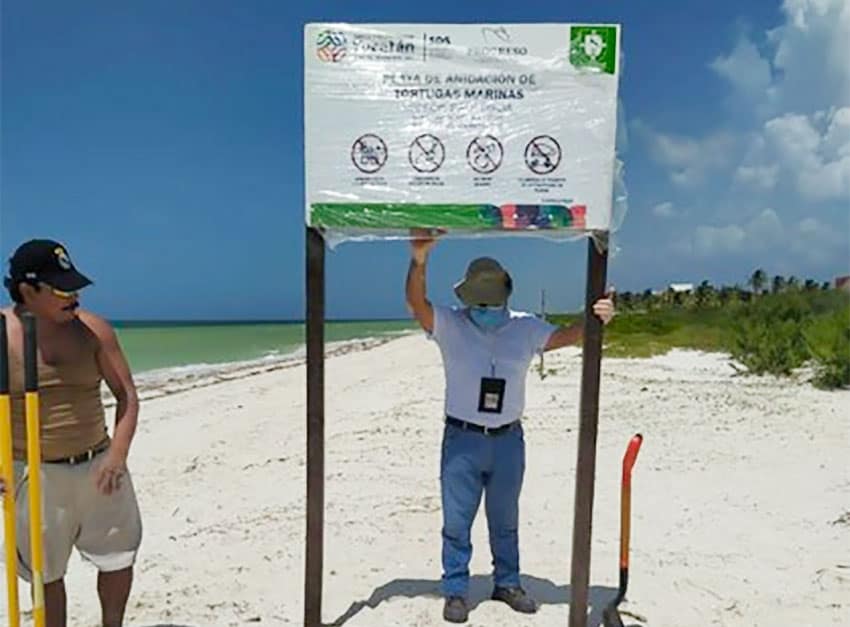
Mexico’s environmental protection agency, Profepa, in coordination with the Yucatán Ministry for Sustainable Development and members of sea turtle conservation organizations have stepped up measures to protect endangered turtle species.
Nesting season is well underway and with the end of coronavirus lockdown beach activities are on the rise. It is estimated that some 15,000 people visited beaches in Yucatán last weekend alone and the increase in traffic puts the sea turtle’s survival at risk.
At the end of June, surveillance tours were carried out along the coastline near the Progreso-Telchac Puerto highway. Four signs were posted to make visitors to the area’s beaches aware that turtles and their eggs could be present and the need to respect their habitat and avoid damaging or disturbing their nests.
The move comes after conservation agencies reported that some nests in Dzilam de Bravo, Telchac Puerto and Sisal had been looted of their eggs. The hawksbill, white, loggerhead and leatherback species of sea turtle dig nests on the beaches during their breeding season, which lasts from March through October.
Since 2017, Profepa has installed more than 30 wooden barriers to prevent people from driving cars and ATVs along the sand and crushing nests in an effort to preserve the species’ habitat.
Sea turtles take decades to reach sexual maturity and lay 50 to 350 eggs in nests that are 40 to 50 centimeters deep that the mothers camouflage to protect them from predators. Baby turtles incubate for 40 to 50 days before emerging and making their mad dash back to the sea.
Predators are many, including humans who poach their meat and eggs which are thought to have aphrodisiacal properties. Scientists estimate that only a tiny percentage of baby sea turtles survive to adulthood.

Source: La Jornada (sp), Diario de Yucatán (sp), Libertad de Expresion Yucatán (sp)