
With sea turtles once again nesting on the coast of Chiapas, turtle eggs have reappeared on the black market in the southern state.
The newspaper Diario de Sur reported that poachers are removing olive ridley turtle eggs from beaches in Mazatán, a coastal municipality in southern Chiapas that borders Tapachula.
On the black market, a dozen eggs sell for around 70 pesos (US $3.40), according to José Alfredo González Gerardo, a biologist who collaborates with a Mazatán community group dedicated to the protection of flora and fauna.
Unfortunately, some people see the poaching and sale of turtle eggs as a money-making exercise, he told Diario de Sur. González said that a single poacher can collect up to 20 dozen eggs in a night and make 1,400 pesos (US $68) by selling them on the black market.
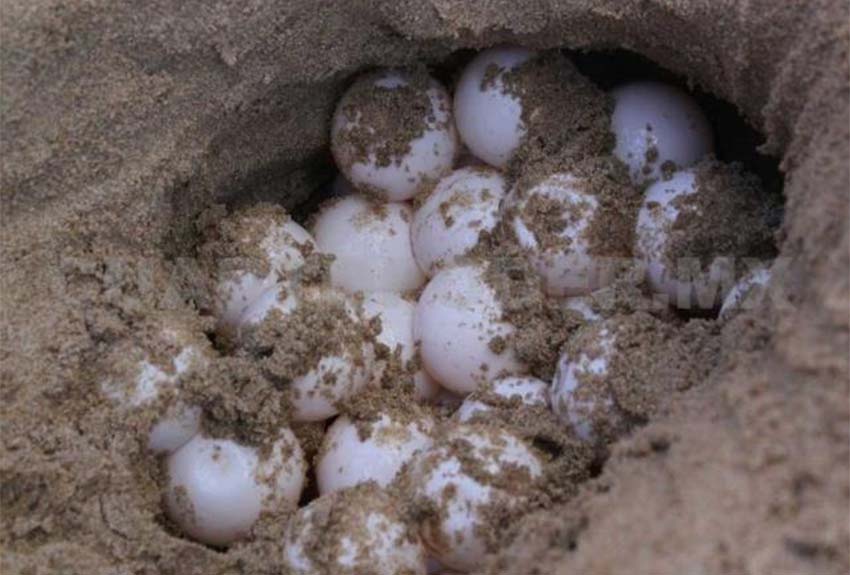
During nesting season, large numbers of poachers descend on Mazatán beaches to look for eggs, he said. Authorities do little to stop the illegal practice and volunteers attempting to protect nests are outnumbered and outpaced by the poachers, many of whom use quad bikes.
González said the eggs are subsequently sold in municipalities such as Tapachula, Tuxtla Chico, Cacahoatán, Unión Juárez and Suchiate. People from those municipalities come to Mazatán to remove eggs from turtle nests, he added.
González said the eggs are illegally sold in public markets and served as snacks in bars and cantinas.

He attributed the high demand for turtle eggs to the erroneous conception that they are an aphrodisiac. There is no conclusive medical evidence that they are, he said.
The biologist called on authorities to do more to stop the poaching, especially on the Emiliano Zapata ejido (communal land), which is easily accessible via a coastal highway that runs through Mazatán. Under federal law, the poaching of turtle eggs is punishable by imprisonment of up to nine years as well as large fines.
Despite a federal ban on the hunting, sale and consumption of sea turtle eggs taking effect over 30 years ago, they continue to be poached, sold and eaten in some other parts of the country, such as Oaxaca’s Isthmus of Tehuantepec region.
With reports from Diario del Sur