A requirement for travelers entering the United States to go into self-quarantine will not be good for Mexican tourism, according to an aviation and tourism expert.
Fernando Gómez Suárez, an academic at the Panamerican University, told the newspaper Milenio that fewer U.S. tourists will come to Mexico if they have to go into isolation for at least seven days upon returning home.
United States President Joe Biden signed an executive order last Thursday that requires travelers to produce proof of a recent negative Covid-19 test and comply with Centers for Disease Control and Prevention guidelines concerning international travel, including recommended periods of self-quarantine.
The new rules take effect Tuesday. The CDC recommends that people stay at home for seven days after returning from high risk international travel even if they test negative for Covid-19.
(Mexico is one of the worst affected countries by the pandemic, ranking 13th for total cases and fourth for Covid-19 deaths. The CDC warns against travel to Mexico due to the “very high level of Covid-19.)
“If you don’t get tested, it’s safest to stay home for 10 days after travel. Avoid being around people who are at increased risk for severe illness for 14 days, whether you get tested or not,” the CDC says on its website.
Gómez said the quarantine requirement is a blow for Mexican and foreign airlines that fly between the United States and Mexico and vice versa. Demand for air travel between the two countries and airlines’ revenue will both fall, he said.

Other tourism businesses are also set to take a hit as travelers from the United States make up about 60% of all international tourists to Mexico, according to Ministry of Tourism data.
Large numbers of international tourists, including many United States citizens, have traveled to Mexico during the pandemic precisely because the government doesn’t require proof of a negative Covid-19 test or stipulate a mandatory quarantine period.
The federal government’s response to the pandemic has been widely condemned, with much of the criticism focusing on Mexico’s low Covid-19 testing rate and the failure to enforce a strict lockdown.
Now, the introduction of the United States rules, and similar ones implemented by Canada this month, will require a significantly higher number of tests to be performed in Mexico to meet the demand from tourists from those two countries who are returning home and Mexicans and foreign residents of Mexico heading north.
Dr. Laurie Ann Ximénez-Fyvie, director of the Molecular Genetics Laboratory at the National Autonomous University, told the newspaper The Guardian that Mexico will struggle to comply with the new rules because it hasn’t established an adequate testing network.
“Simply meeting the demand of passengers traveling abroad is going to be a terrible problem when testing capacity isn’t up to the necessary level,” she said.
Ximénez-Fyvie said that public and private hospitals have the capacity to meet an increased demand but materials for processing the tests, and political will to coordinate the effort, are in short supply.
“It’s not that we don’t have the resources or the abilities or the infrastructure.The problem here has been the lack of willingness to see that it gets done,” she said.
The Guardian reported that the new testing requirements have fueled speculation that non-accredited laboratories and doctors that commonly provide medical services to tourists could create a black market in which falsified test results and medical documentation are provided to people traveling to the United States, Canada or other countries where similar rules are in place.
Adolfo Castro, CEO of Aeropuertos del Sureste, which operates nine airports including that in Cancún, Quintana Roo, acknowledged that the new U.S. testing rule will significantly increase demand for testing in Mexico, which is already scrambling to respond to a worsening coronavirus outbreak that now counts President López Obrador among its victims.
“If you add to the normal situation 15,000 [air passengers] a day, then you have to do something and you have to react,” he said.
Castro’s company, The Guardian reported, is in talks with hotels in Quintana Roo destinations such as Cancún, Playa del Carmen and Tulum to help tourists get tested in the required 72 hours before returning to the United States. The CEO is also seeking an accredited lab to conduct testing at the Cancún airport, a major gateway to Mexico for U.S. tourists.
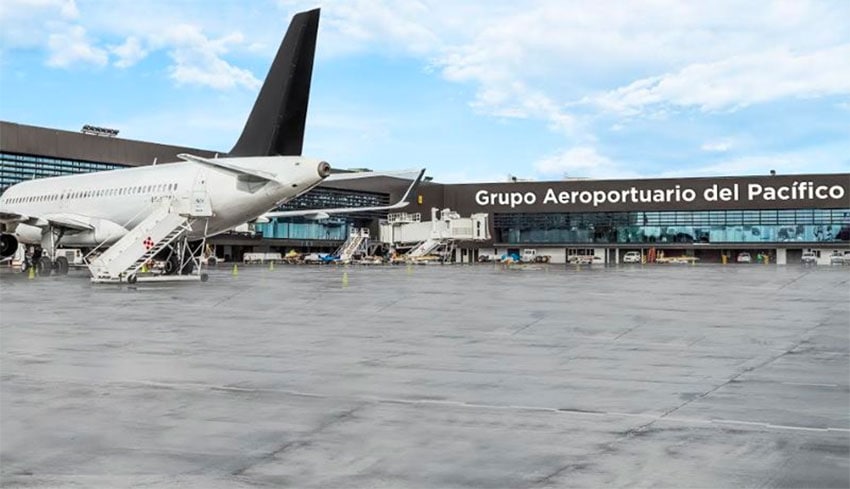
Many large hotel chains that cater to American visitors have already announced they will offer onsite testing or help connect customers to nearby labs and hospitals, while the Pacific Airport Group (GAP) announced that PCR and antigen testing would be available as of Monday to international travelers at all of its airports, which are located in Guadalajara, Tijuana, Los Cabos, Puerto Vallarta, Guanajuato, Hermosillo, Mexicali, Morelia, La Paz, Aguascalientes, Los Mochis and Manzanillo.
A rapid antigen test will cost 450 pesos (US $22) while a PCR test will cost 1,450 pesos (US $72), GAP said. Travelers seeking rapid tests should arrive at the airport an hour earlier than recommended by their airline.
Travelers to the U.S. who have recovered from Covid-19 are exempt from the negative test requirement but must provide documentation showing they have recovered in the 90 days preceding travel.
Source: Milenio (sp), The Guardian (en), Reforma (sp), Animal Político (sp)