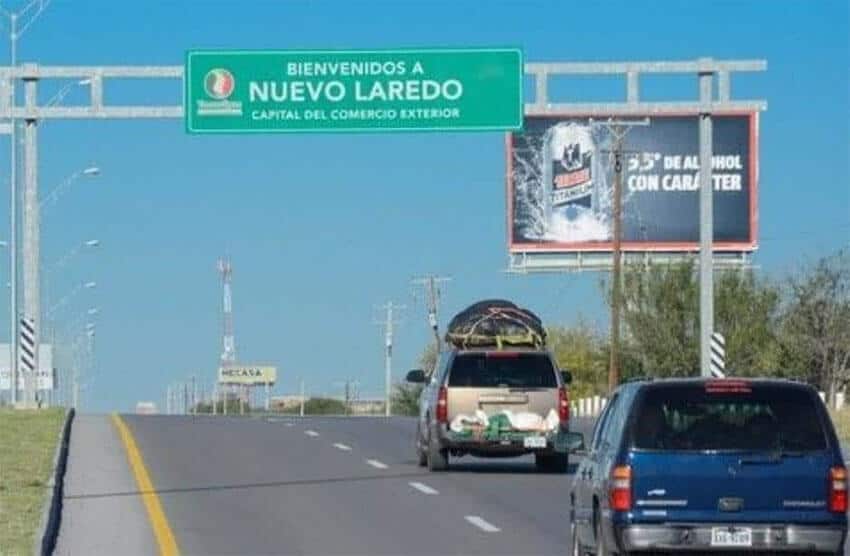
The United States has updated its Mexico travel advisory after the arrest of a cartel boss triggered a violent response in Nuevo Laredo, Tamaulipas.
Northeast Cartel leader Juan Gerardo Treviño Chávez – a United States citizen, according to Mexican authorities – was detained in the northern border city on Sunday and deported to the U.S. on Tuesday.
Gunfire, the torching of vehicles and blockades on main roads were reported in Nuevo Laredo after his capture. A high-ranking Tamaulipas official told the news agency Reuters that there was at least one “collateral” death due to the violence.
The U.S. Department of State on Wednesday reissued its warning not to travel to Tamaulipas due to crime and kidnapping.
In its updated advisory, it said it authorized the departure of non-emergency U.S. government personnel and eligible family members from the U.S. Consulate General in Nuevo Laredo due to security conditions.
“As of March 15, the Department of State is not able to offer routine consular services from the U.S. Consulate General in Nuevo Laredo. U.S. citizens wishing to depart Nuevo Laredo should monitor local news and announcements and only do so when considered safe during daylight hours,” the advisory said.
The State Department said that organized crime activity – including gun battles, murder, armed robbery, carjacking, kidnapping, forced disappearances, extortion, and sexual assault – is common along the northern border and in Ciudad Victoria, the Tamaulipas capital.

Insight Crime, a foundation dedicated to the study of organized crime, said that the arrest of Treviño may only stoke further violence along the U.S. border by providing an opening for the Jalisco New Generation Cartel to continue its national expansion.
The State Department noted that heavily armed members of criminal groups often patrol areas of Tamaulipas and operate with impunity, particularly along the border region from Reynosa to Nuevo Laredo.
“In these areas, local law enforcement has limited capacity to respond to incidents of crime. … U.S. citizens and LPRs [lawful permanent residents] have been victims of kidnapping,” it said.
The State Department also said that travel for U.S. government employees in Tamaulipas is limited to Matamoros and overland travel, but they “may not travel between cities in Tamaulipas using interior Mexican highways.”
The State Department also warns U.S. citizens not to travel to Colima, Guerrero, Michoacán and Sinaloa due to crime and kidnapping.
It advises U.S. citizens to reconsider travel to Baja California, Chihuahua, Coahuila, Durango, Guanajuato, Jalisco, México state, Morelos, Nayarit, Sonora and Zacatecas due to crime or crime and kidnapping, and advocates increased caution in all other states with the exception of Campeche and Yucatán where normal precautions are recommended.
The State Department’s advisory for Mexico as a whole is reconsider travel due to COVID-19.
“The Centers for Disease Control and Prevention (CDC) has issued a Level 3 Travel Health Notice for Mexico due to COVID-19, indicating a high level of COVID-19 in the country,” it said.
Mexico News Daily