The United States Treasury’s Office of Foreign Assets Control (OFAC) announced new sanctions against nine affiliates of the Sinaloa Cartel on Tuesday, accusing them of participating in large-scale fentanyl trafficking to the United States.
The nine men are all part of the “Los Chapitos” faction of the Sinaloa Cartel, operated by the sons of infamous jailed cartel boss Joaquín “El Chapo” Guzmán. Seven were indicted by a New York district court in April, for crimes including fentanyl trafficking, weapons trafficking, and money laundering.
Those charged include:
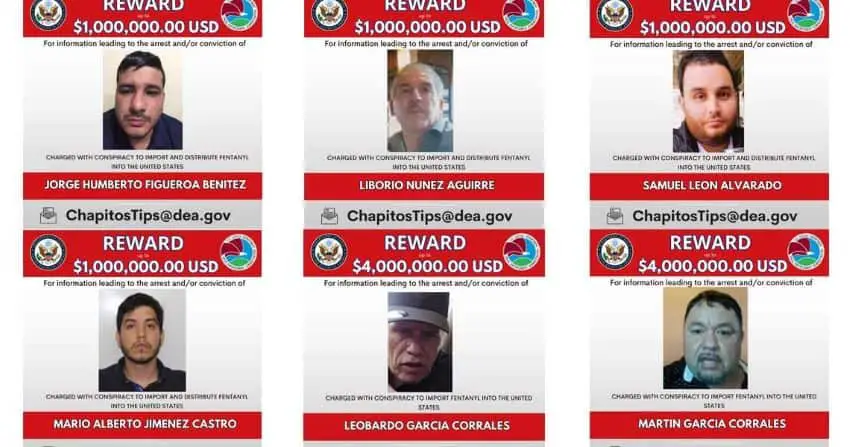
- Jorge Humberto Figueroa Benitez, a leader of the Chapitos’ security apparatus who commands a violent group of assassins.
- Brothers Leobardo García Corrales and Martín García Corrales, who operate fentanyl labs in the state of Oaxaca, using the proceeds to buy weapons.
- Liborio Nuñez Aguirre, Samuel León Alvarado and Carlos Mario Limón Vázquez, who operate a network of fentanyl labs across Mexico, trafficking the drug into the U.S.
- Mario Alberto Jiménez Castro, who operates a money laundering network that transfers proceeds from U.S. fentanyl sales to Sinaloa Cartel leaders in Mexico.

The two other individuals designated by the OFAC are Julio César Domínguez Hernández and Jesús Miguel Vibanco García, described as associates of Jiménez Castro. The sanctions allow the Treasury to freeze the targets’ U.S. assets, and prohibit any U.S. citizen from doing business with them.
“Today’s actions show that Treasury and the Administration will continue to relentlessly target the criminal enterprises threatening international security and flooding our communities with fentanyl and other deadly drugs,” said Brian E. Nelson, Undersecretary of the Treasury for Terrorism and Financial Intelligence.
He stressed that the sanctions were part of a “whole-of-government effort to address the opioid public health crisis plaguing the United States.”
Mexico is coming under increasing U.S. pressure to combat fentanyl, which Mexican cartels manufacture using Chinese precursor chemicals and then smuggle over the border.

President López Obrador has sought to downplay Mexican involvement in the manufacturing of fentanyl, but has also emphasized his administration’s efforts to intercept the drug. Foreign Minister Alicia Bárcena said last week that Mexico accounted for a quarter of global seizures of fentanyl since 2020.
With reports from El Universal