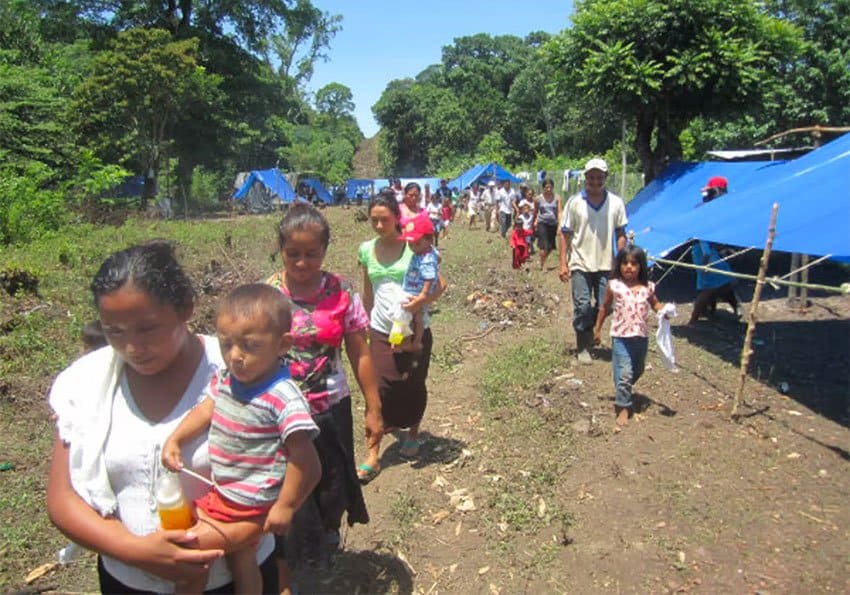
Violence has displaced more than 6,000 people in Guerrero, according to the head of a human rights organization, who is calling for the state government to declare a humanitarian crisis in response.
Manuel Olivares Hernández of the Morelos y Pavón Regional Human Rights Center said 2,000 people have been forced to leave the municipality of Leonardo Bravo and 2,000 more have fled several communities in the state’s Montaña region.
Around 800 families have also been displaced from the municipality of Chilapa due to threats from criminal gangs, while another 40 have fled two towns in Zitlala, he added.
In addition, high levels of violence in the state’s notoriously dangerous Tierra Caliente region and the opium-poppy growing Sierra region have also forced out residents but numbers for that area have not been documented.
“We could say that the number of displaced people due to violence in Guerrero is greater than the number in the Central American migrant caravan but the government has tried to make them invisible,” he said.
Together with Catholic priest and activist José Filiberto Velázquez Florencio, Olivares is demanding that the Guerrero government and Congress declare a humanitarian crisis so that the gravity of the situation is formally recognized and international organizations can intervene.
Olivares said that he and Velázquez are also seeking an urgent meeting with Governor Héctor Astudillo and representatives of the displaced people in order to find a “more effective” solution to the state’s violence and displacement problem.

Astudillo said Wednesday that violence in the Sierra region is a national security issue, a remark that Olivares considers evidence of the state government’s apathy towards tackling the issue.
“What’s happening here is that there is no political will to confront the situation. The state government has allowed this problem to grow and declaring itself incompetent is the only way out that is left for the governor,” he said.
Olivares also called on the state and federal governments to disarm groups posing as community police, claiming they have proliferated.
“It shouldn’t be possible for there to be a hail of bullets in front of the army and the state police. The problem here is there is a hodgepodge [of security forces], an interrelation, an interdependence between authorities and organized crime. We live in a narco-state and in Mexico there is practically a narco-government,” he said.
Source: Milenio (sp)