The Mexico City government reported on Monday that all wells supplying water to the central borough of Benito Juárez are free of contamination, after residents began complaints back on March 31.
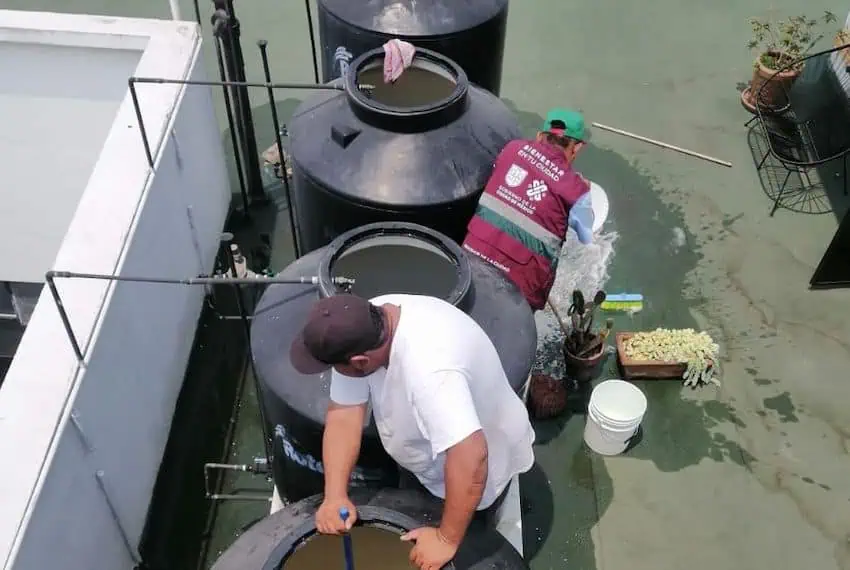
Mayor Martí Batres said that “there is now nothing harmful in the 13 wells that supply Benito Juárez,” adding that the next task is to sterilize the residential cisterns to make sure that no contaminant residue remains.
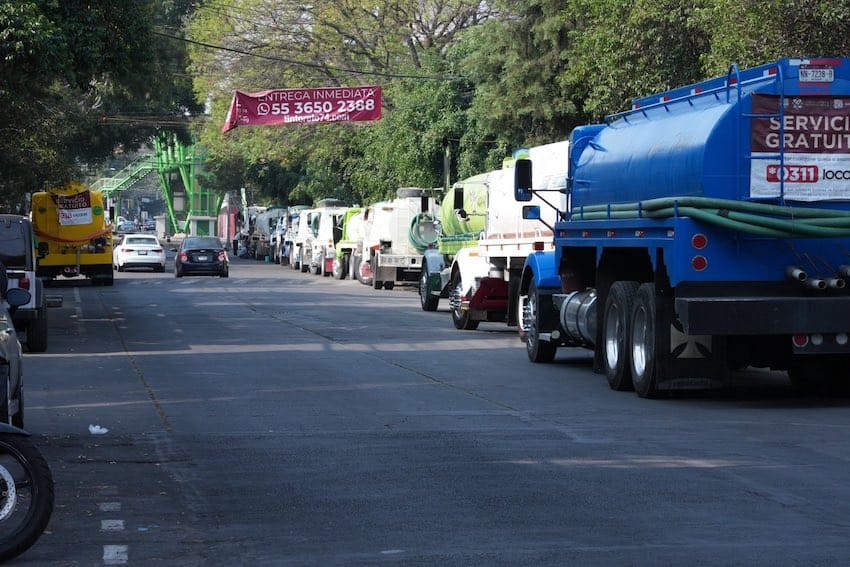
Batres explained that the Mexico City water authority (Sacmex) had issued the all-clear after finding no impurities in the eight water monitoring stations it had set up in northwestern Benito Juárez.
The stations monitored water from 13 wells in Benito Juárez and the adjacent borough of Álvaro Obregón, the newspaper El Universal reported. Sacmex head Rafael Carmona said his agents were conducting daily tests of the water at each of the wells.
Authorities had previously reported that the Alfonso XIII well, located in Álvaro Obregón borough, was the source of at least some of the contamination. The Alfonso XIII well was not among the 13 wells being monitored after it was shut down by the National Guard on April 9 and scrubbed clean.
No trace elements of contaminants were found after the Alfonso XIII well and adjoining pipes and hydraulic systems were sanitized by the water authority, Batres said.
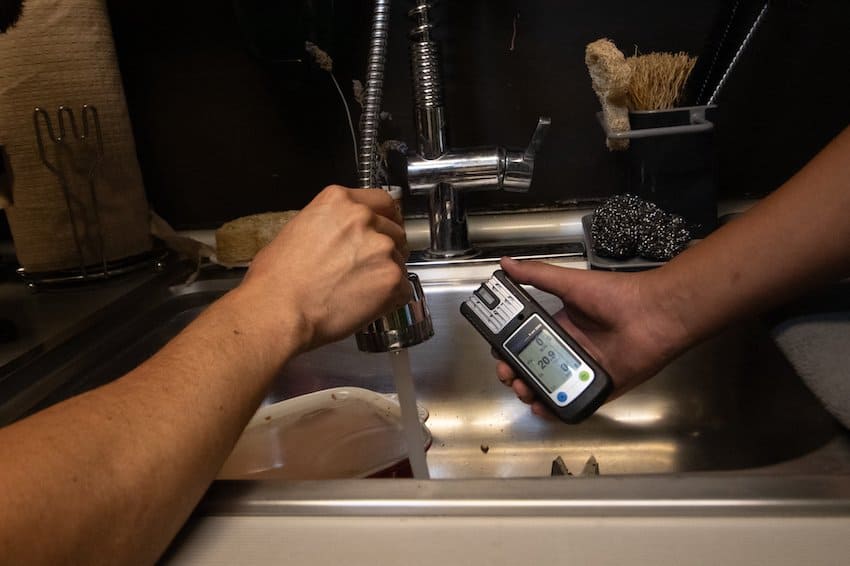
City officials will now focus on sterilizing the individual cisterns that were polluted by water sourced from the Alfonso XIII well at the beginning of the month, although Benito Juárez residents still want answers about how this contamination happened.

A group of neighborhood residents published on Sunday the results of what they say was an independent study of borough water that revealed trace evidence of contaminants including chloroform, difluorobenzene, trichloroethylene, bromodichloromethane, toluene and chlorobenzene.
The city authorities did not address the results and have yet to officially determine what caused the contamination. According to Sacmex, the water was contaminated with industrial oils and/or lubricants. Sacmex filed a criminal complaint last week, alleging that sabotage may have been to blame for the contamination.
“We have not disregarded any hypothesis,” Batres said in response to questions about the investigation. “The district attorney is looking into this with the assistance of Sacmex and Pemex [the national oil company],” he continued. “Pemex detected a mixture of elements, several diverse composites [in the water]. We’ll share details when we have more information.”
In addition, the Mexico City Urban Development and Housing Ministry (Seduvi) revealed it has conducted a survey of 108 construction projects currently underway within the 10 affected neighborhoods of Benito Juárez.
Seduvi director Inti Muñoz told El Universal that it was unusual and excessive to have that many projects within such a small radius. Muñoz also said only one of the 108 construction sites had carried out the necessary urban impact study, and at least three exceeded the local height restrictions.
Muñoz said Seduvi also filed a complaint with the district attorney as most of the construction sites were sitting above the contaminated water pipelines.
With reports from Proceso and El Universal