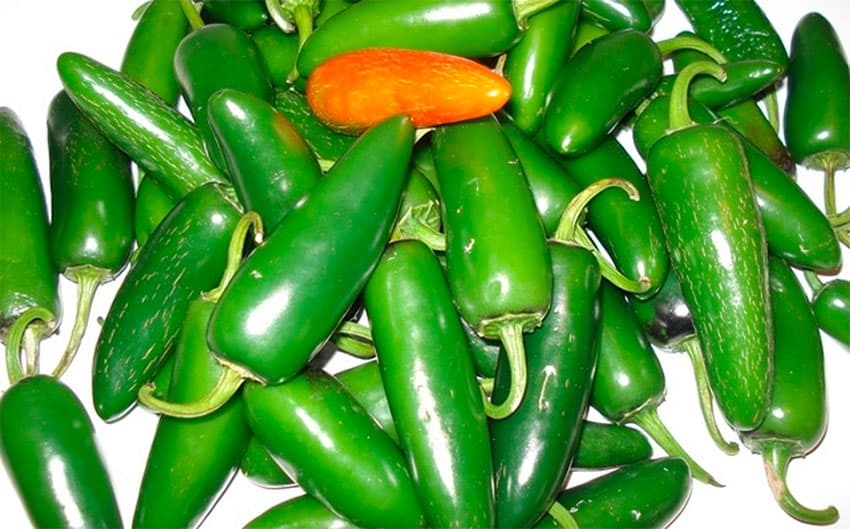
There’s no end to recipes for Mexican salsa, and there are endless varieties of chiles with which to make it. But most of the chiles used in Mexico come from China.
According to the World Wildlife Foundation (WWF), 60% of green chiles consumed in Mexico are imported from China; the remainder are produced domestically.
On Monday, the WWF announced the start of the “Dale Chamba” campaign, which will promote the conservation of more than 1,500 varieties of green chile that are fundamental to Mexican cuisine, but have been in decline because of climate change and dependence on imports.
Silvia Cursain, a chef and gastronomy school teacher, told the news agency Efe that the quality of chiles depends not only on the variety, but where they are grown.
“If they don’t get the same nutrients, when you move them, the fruit changes,” she said. “Like how the dried serrano chiles that come from China, they don’t have flavor or aroma.”
Jorge Rickards, director of WWF México, said that diverse chile varieties are an important part of Mexican culture.
“We have a cultural wealth of over 350 languages, 350 sources of traditional knowledge that are translated into cuisines,” he said. “There are more than 1,500 species that still form part of the ingredients of the traditional diets in Mexico.”

Rickards said that “fast food diets” have put traditional crops like heirloom tomatoes, pumpkin seeds, ayocote and vaquita beans at risk, as well as chiles like chilhuacle, pasilla mixe and poblano.
Chef Ricardo Muñoz Zurita said the decline in traditional Mexican products is also related to the fact that they are mostly consumed in certain regions, because of a lack of knowledge of how to use them.
“In local markets in Oaxaca or Yucatán, we see certain products as strange,” he said. “We think that they have been brought from other places, and because we don’t know what they are, we don’t use them. We should revalue and rediscover our traditional cooking, our historical cooking, based on the foundation of corn.”
Source: Milenio (sp)