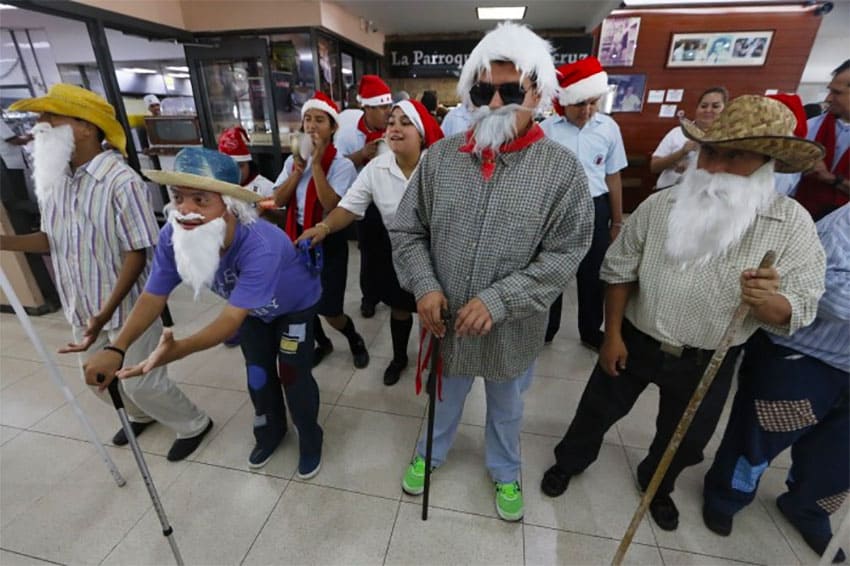
The holiday season is time for young people in towns across Veracruz to dress up as senior citizens and take to the streets to celebrate a tradition called El Viejo (The Old Man), which is believed to date back to 1875.
In the state capital, the youngsters parade through the streets to the sound of drums and trumpets to ask for money from drivers and pedestrians they pass along the way.
In the state’s Isthmus of Tehuantepec region, young men are the ones who don the costumes of both men and women to dance in the streets for a few coins.
In Xalapa, young people are joined by dozens of others from the nearby town of Teocelo to dance around in the dress of their grandparents. They return home around 11:00pm and use the money they earned dancing to buy soft drinks or alcoholic beverages.
In some towns, such as those in the Sierra Altotonga region of the state, the tradition is called Güegües (Old Men in the Náhuatl language), and the youngsters hit the streets at midnight on Christmas Eve and again on Three Kings Day on January 6. They also dance and take along the mandinga, a man dressed as a woman.

As opposed to the El Viejo celebrations elsewhere in the state, these kids don’t ask for coins. They give candy to children and adults that come to admire them and receive traditional punch and sweet fritters called buñuelos from women in the neighborhood.
Each municipality and village in the state has its own way of celebrating this nearly 150-year-old tradition, using trumpets, drums, violins or simply whatever they find along the way that will make noise to say farewell to the old year and ring in the new.

Source: Al Calor Político (sp)