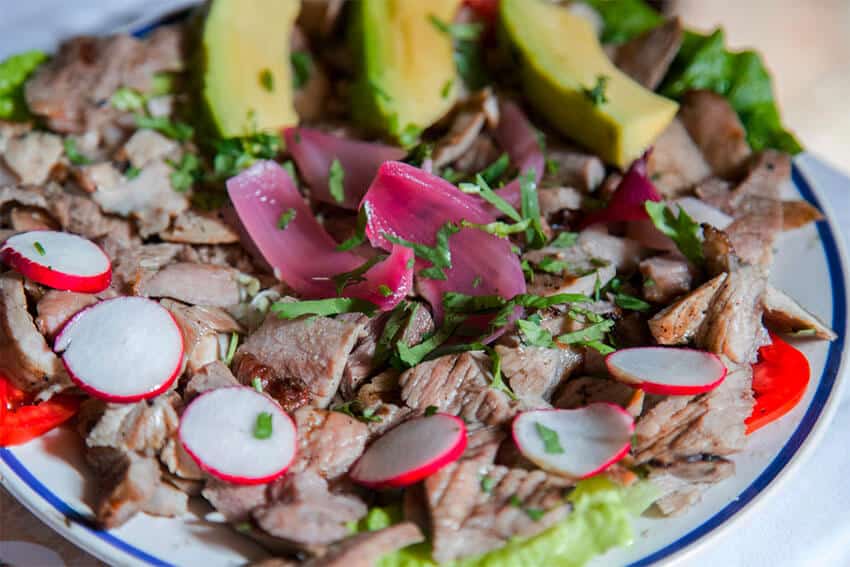
On the 365 Flavors of the Yucatán section of the official Yucatán Travel website, one mouth-watering dish pops up after another. Margaritas made with henquen liquor, ceviche made with chivitas snails, and Papadzules smothered in salsa and cheese.
It’s all part of a campaign to spread the word about the peninsula’s incredible cuisine, which is a mix of ancient mesoamerican recipes and ingredients with some modern additions and presentation.
One of those 365 flavors and one of the area’s most famous flavors is poc chuc, a preparation generally made with pork but also sometimes with fish. The protein is marinated with bitter oranges, black pepper, and roasted garlic, grilled over a wood fire, then served with beans, tortillas, habanero salsa, grilled onions, and chopped cilantro.
The dish has become especially famous on what some are calling the “Ruta de las Tías” or the Route of the Aunts, in the town of Kaua which sits between the resorts of Cancún and the archaeological site of Chichén Itzá.
In an attempt to convince customers of their authenticity many of the town’s 10 traditional restaurants have named themselves variations on the same theme: La Tía de Kaua (Kaua’s Aunt), La Verdadera Tía de Kaua (Kaua’s Real Aunt), and La Auténtica Tía de Kaua (Kaua’s Authentic Aunt). Many of the “tías” that started these restaurants, local women with a flair for traditional cooking, can still be found behind the comal and in the kitchen. Lineups wind out the door on the weekends, with a wait of up to two hours if you don’t make an advance reservation to eat here.
In 2021, despite COVID restrictions around the world, Chichén Itzá was Mexico’s busiest archaeological site with 1.6 million visitors, giving the surrounding area, including the tiny town of Kaua and the big city Valladolid, a boost at a time when many tourist destinations were still bemoaning a loss of revenue.
Now tourists to the area have yet another reason besides towering ruins and expansive jungle to visit this unique region of Mexico, the area’s one-of-a-kind cuisine found at the restaurants of the many aunts.

With reports from EFE