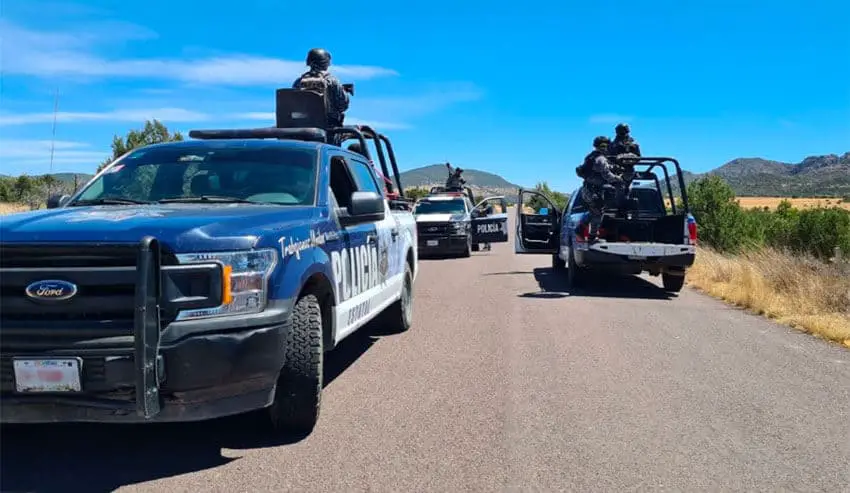
State police in Zacatecas ended their 11-day strike on Sunday after reaching an agreement with Governor David Monreal.
About 800 of 1,000 officers stopped work on March 31 to pressure authorities to remove former army general Adolfo Marín Marín as Zacatecas public security minister and three other high-ranking police officials.
The work stoppage followed a two-day strike earlier in March when a group of officers demanded that the same three officials be dismissed, accusing them of corruption. Marín agreed to dismiss them, but left them in their positions and instead fired seven officers, at least five of whom had taken part in the strike.
The majority of the state’s officers abstained from their duties again on March 31 and said they wouldn’t return to work until Marín was gone.
One officer, who requested anonymity, said a compromise had been struck with state authorities. “[The seven dismissed officers] aren’t going to be reinstated. They’re going to be sent to other sections of the state government … the three commanders that were being requested [to be dismissed] will be removed from their positions,” he said.
The officer added that some of the demands around working conditions had also been met. It appears that Marín will remain in his post.
Since 2020, the Zacatecas state police force has been divided into two groups, the newspaper La Jornada reported. One is made up of approximately 800 police considered career officers of the Zacatecas state force, while the other consists of some 200 officers who transferred into that force from the now-defunct Federal Police.

Members of the former group went on strike, leaving municipal police, the National Guard and the army to carry out public security tasks in Zacatecas, a highly violent state where the Jalisco New Generation Cartel (CJNG) and the Sinaloa Cartel are engaged in a turf war. The three officers accused of corruption were all formerly of the Federal Police.
Being a police officer in Zacatecas is not an easy way to make a living. The newspaper El Universal reported in November that eight municipalities in Zacatecas had few or no police because officers abandoned their jobs due to high levels of violence.
According to the civic group Causa en Común, 16 officers were murdered in the state in the first three months of the year, the highest number in the country.
Meanwhile, the violence continues.
Six bodies were found Tuesday at the side of Federal Highway 49 in the municipality of Pinos, located near the Zacatecas-San Luis de Potosí state boundary. The five men and one woman had been tortured before they were killed.
With reports from Milenio and InSight Crime