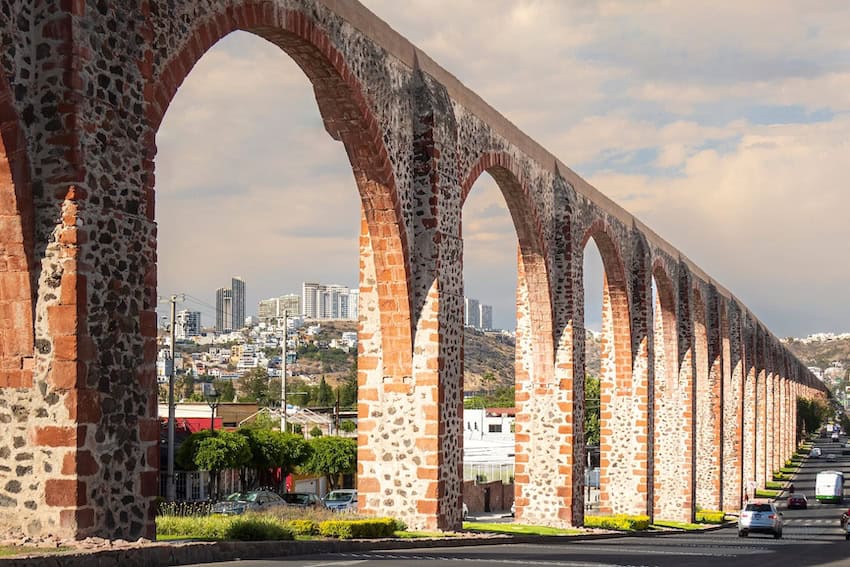
Querétaro, Puerto Vallarta, La Paz and Delicias are Mexico’s most competitive cities, according to the 2026 Urban Competitiveness Index (ICU), which ranks metropolitan areas on their capacity to generate, attract and retain talent and investment.
Compiled by the Mexican Institute for Competitiveness (IMCO), a Mexico City-based think tank, the 2026 ICU ranks Querétaro as the most competitive city in Mexico among metropolitan areas with populations greater than 1 million.
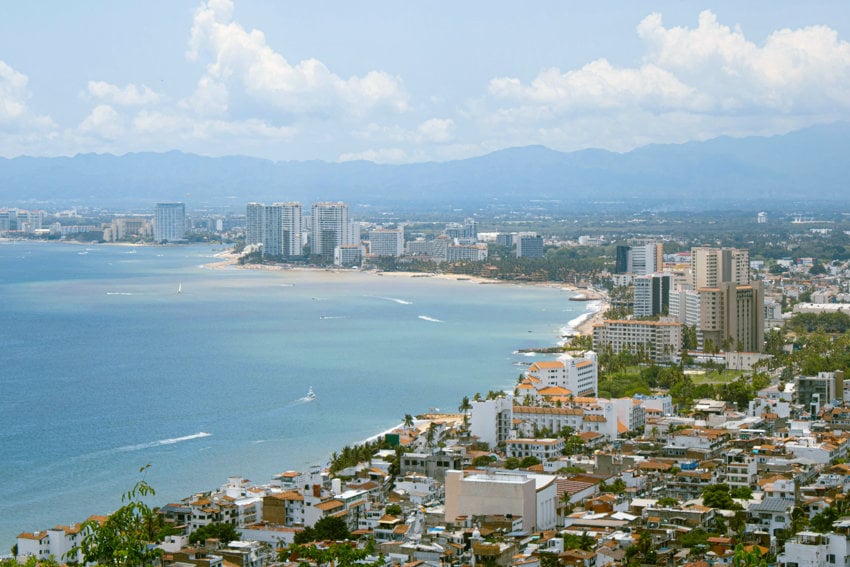
Puerto Vallarta, a resort city on the Jalisco coast, was deemed the most competitive city among metropolitan areas with 500,000 to 1 million inhabitants, while La Paz, the capital of Baja California Sur, came out on top among cities with 250,000 to 500,000 residents. Delicias, a city in the northern state of Chihuahua, ranked as the most competitive city among Mexican metropolitan areas with fewer than 250,000 residents.
“The Urban Competitive Index (ICU) assesses the capacity of 72 metropolitan areas in the country to generate, attract and retain talent and investment,” IMCO said in a statement when it released the new ICU last week.
“These cities are the engine of national economic activity; they represent between 80% and 90% of national GDP and are home to 62% of Mexicans. Therefore, their performance is fundamental for the development and competitiveness of the country,” IMCO said.
The last time IMCO published an ICU was in 2024, when Saltillo, Coahuila; Hermosillo, Sonora; La Paz, Baja California Sur; and Guaymas, Sonora – all located in the north of Mexico – won the top spots for competitiveness in the four city-size categories.
In 2026, the index evaluated each of the 72 metropolitan areas using 35 different indicators grouped into six sub-indexes: innovation and economy; infrastructure; labor market; society and environment; law (security); and political system and government.

In the latest edition of the ICU, “cities showed advances in the sub-indexes of ‘infrastructure’ and ‘political system and government,’ where improvements were observed in digital connectivity, provision of basic services and fiscal autonomy in various metropolitan areas,” IMCO said.
“However, the results reveal setbacks: the average economic growth of the metropolitan areas fell from 4.1% in the previous edition [of the ICU] to 2.4%, violence intensified in various cities and the perception of corruption remained at elevated levels in all metropolises,” the think tank said.
Querétaro is Mexico’s most competitive large city
A total of 21 cities appear in IMCO’s competitiveness rankings for metropolitan areas with populations of over 1 million. Joining Querétaro in the top five are Guadalajara, Hermosillo, Saltillo and Monterrey. Those cities are the capitals of the states of Jalisco, Sonora, Coahuila and Nuevo León.

In the latest ICU, Querétaro, the capital of the state of the same name, moved up five positions in the rankings to take the top spot.
The city — whose full name is Santiago de Querétaro — ranked first on the “innovation and economy” and “political system and government” sub-indexes. The former looks at things such as GDP growth, the presence of research centers and the issuance of patents per capita, while the latter considers things such as residents’ perception of corruption at the state level and government income.
Querétaro ranked:
- Fifth on the “society and environment” sub-index, which assesses things such as water treatment capacity and educational coverage (percentage of school-aged children in school).
- Twelfth on the “labor market” sub-index, which measures things such as salaries and the employment informality rate.
- Twelfth on the “law” sub-index, which looks at homicide and vehicle theft rates as well as the incidence of attacks on journalists and the security perceptions of residents.
- Twentieth on the “infrastructure” sub-index, which considers things such as home construction, hospital beds and the cost of electricity.
IMCO said that the “main driver” of Querétaro’s improvement in the ICU rankings came from the “society and environment” sub-index, in which the city rose to fifth among large cities from 13th in the 2024 edition of the index.
The city “leads the group in average schooling (11.77 years) and its educational coverage increased to 73.25% (above the category average),” IMCO said.
The think tank noted that Querétaro’s “counterweight” is the “infrastructure” sub-index, highlighting that it got a “low score” on the indicator that measures the rate at which new homes are being built in “intra-urban” areas. The city was also marked down for having just six hospital beds per 10,000 residents.
Guadalajara, which ranked second among large cities on the 2026 ICU, ranked in the top 10 on all of the sub-indexes and in the top five in four.
At the bottom of IMCO’s competitiveness rankings among metropolitan areas with populations above 1 million are Cuernavaca (21), Tijuana (20), Culiacán (19), Cancún (18) and Puebla-Tlaxaca (17). Mexico City ranked as the country’s 10th most competitive metropolitan area.
IMCO noted that Culiacán fell to 19th position from 11th in the 2024 ICU. It said the decline was due to the increase in insecurity in the metropolitan area since late 2024, when a long-running feud between the “Chapitos” and “Mayos” factions of the Sinaloa Cartel intensified.
Mexico’s most competitive smaller cities
A total of 17 cities appear in IMCO’s competitiveness rankings for metropolitan areas with 500,000 to 1 million residents.
Ranking second to fifth behind Puerto Vallarta are Tepic, the capital of Nayarit; Veracruz, the port city in the state of the same name; Durango, the capital of the state of the same name; and Pachuca, the capital of Hidalgo.
Puerto Vallarta ranked first on the “political system and government” sub-index among the 17 cities in its population category. It was also in the top five in the “innovation and economy” and “law” sub-indexes. Puerto Vallarta’s worst result was 16th in the “infrastructure” sub-index.
IMCO said that the “driving force” behind Puerto Vallarta’s surge to the top of the rankings (from 10th in 2024) was its high hotel occupancy rate (73.38%) and a GDP growth rate of 2.73%.
The three worst-ranked cities among those with populations of 500,000 to 1 million were Acapulco, the resort city on the Guerrero coast; Celaya, a city in Guanajuato; and Tlaxacala-Apizaco, an urban area in the state of Tlaxcala.
A total of 23 cities appear in IMCO’s competitiveness rankings for cities with populations between 250,000 and 500,000. Along with La Paz — which performed particularly well in the “innovation and economy” and “labor market” sub-indexes — also in the top five are Monclova-Ciudad Frontera, an urban area in the state of Coahuila; Nuevo Laredo, a border city in Tamaulipas; Los Cabos, a municipality on the southern tip of the Baja California Peninsula; and Playa del Carmen, a resort city in the Caribbean coast state of Quintana Roo.
The three lowest-ranked cities in the 250,000-500,000 population category are Tulancingo, Hidalgo; Cuautla, Morelos; and Chilpancingo, Guerrero.
A total of 11 cities appear in IMCO’s competitiveness rankings for cities with populations below 250,000. Along with Delicias — which ranked in the top five on all sub-indexes and first on the “political system and government” one — also appearing in the top five in this group are Piedras Negras, a border city in Coahuila; Ocotlán, a city in Jalisco; Guaymas, a port city in Sonora; and Sabinas, a city in Coahuila.
The lowest-ranked city among the 11 metropolitan areas in the index with fewer than 250,000 residents is Ozumba, a small city in México state.
IMCO’s ICU report, which includes the rankings of all 72 metropolitan areas and details their performance on each of the 35 indicators across the six sub-indexes, can be downloaded at the bottom of this page by clicking the “Índice” tab.
IMCO identifies 3 public policy priorities
From an analysis of the 2026 ICU results, IMCO identified “three public policy priorities.”
- It proposed the creation of a “Productive Diversification Fund” for “cities with high sectorial concentration,” such as Campeche, which has a “high dependence” on the oil industry. IMCO said that “the reference model is the Euskadi 2030 Industry Plan, implemented by the Basque Country, which seeks to modernize the historical industrial base and transition toward new areas focused on digitalization, automation and innovation.”
- IMCO also proposed making gradual reforms to the IMSS (Mexican Social Security Institute) contribution scheme, “with staggering” of the contributions required based on the size of the company and employees’ wages in order to reduce the cost of entering the IMSS system for small and very-small businesses. “Uruguay’s SIMPLE model reduced the [worker] formalization burden by 40% for small companies and increased [employment] formality by 12 percentage points in target sectors,” IMCO said. The think tank said that in Mexico, the RESICO tax payment scheme, an initiative of the SAT federal tax agency, didn’t address the “main disincentive” to IMSS registration for workers: employer contributions. More than 50% of all workers in Mexico work in the country’s vast informal sector.
- Finally, IMCO proposed the modernization of municipal land registries using “satellite images and artificial intelligence” in order to improve tax collection at the local level. It proposed that federal transfers to municipalities be tied to “verifiable improvements” in the collection of property taxes. IMCO said that Bogotá, the capital of Colombia, “tripled its tax collection without increasing [property tax] rates in this way, and Mexico has dozens of cities with land registries that haven’t been updated in decades.”
Mexico News Daily