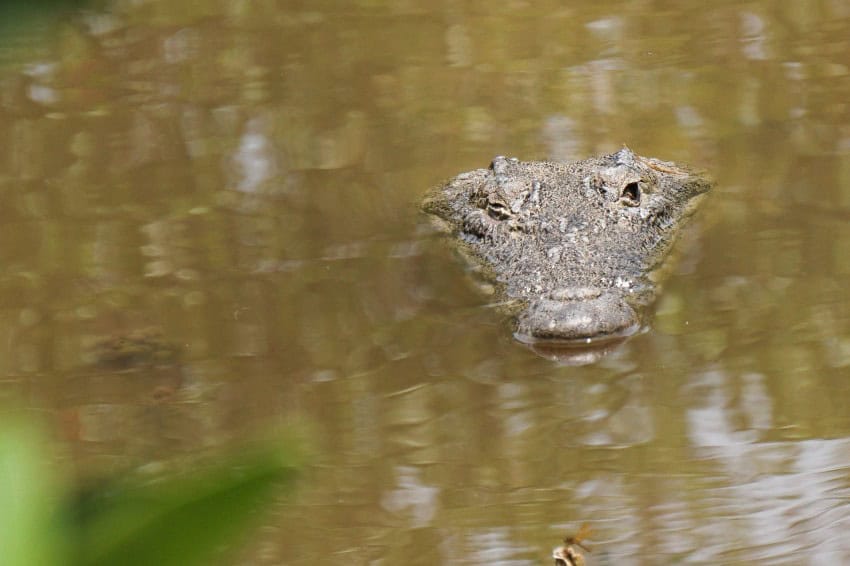
Last week, MND’s news desk reported on the growing number of encounters between people and crocodiles in Puerto Vallarta, including the deaths of 11 American crocodiles (Crocodylus acutus) across the region in recent weeks.
The number is disturbing. So, too, is the timing. Puerto Vallarta is in the middle of a rather active rainy season. Rivers are swelling, estuaries are filling and waterways that are normally separated from one another have become connected.
But there’s another part of the story that’s worth looking at more closely.
According to Jalisco’s Ministry of Environment and Territorial Development (SEMADET), the increase in crocodile sightings isn’t evidence that Puerto Vallarta suddenly has too many crocodiles. It’s largely about what the animals are doing, and where the water is taking them.
SEMADET says monitoring in the Bahía de Banderas region estimates a population of 300 to 350 crocodiles, at different stages of development. That figure covers the wider bay area, which straddles Jalisco and Nayarit, rather than Puerto Vallarta alone.
Attacks by and towards crocodiles are on the rise in Puerto Vallarta

The agency specifically notes that the recent increase in encounters isn’t the result of overpopulation. That matters because it changes how we should view what’s happening.
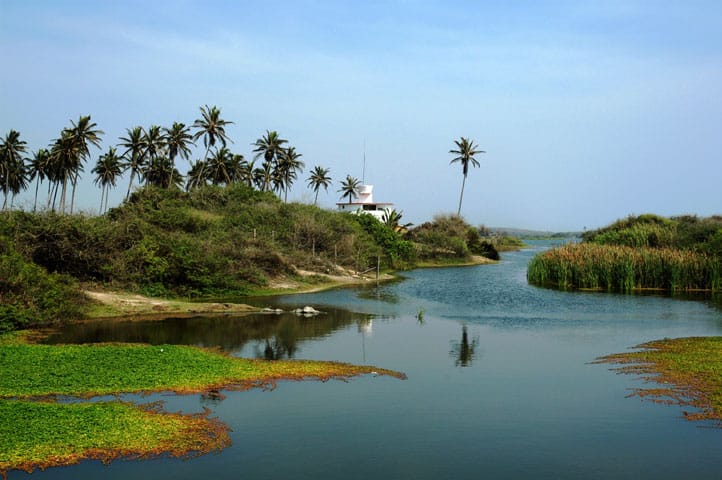
During the rainy season, crocodiles naturally move between rivers, estuaries and the bay. Heavy rainfall and increased water flow can carry them into areas they may not normally occupy, including closer to beaches and places where people live, work and play.
In other words, a crocodile appearing somewhere unexpected doesn’t necessarily mean there are more crocodiles. It also means that the boundaries between their usual habitats have temporarily changed. And that’s where things get complicated for a city like Puerto Vallarta.
Development on crocodile habitat in Puerto Vallarta
We’ve built homes, hotels, roads and businesses around the same waterways that crocodiles have used for generations. The animals haven’t suddenly moved into our neighborhoods. In many cases, we’ve expanded into theirs.
That doesn’t mean people should accept dangerous encounters or take unnecessary risks. A crocodile is a wild predator, and the fatal attack on a 28-year-old Mexico City visitor in June was a sobering reminder that these animals can pose a very real threat.
But SEMADET’s message is that protecting people and protecting crocodiles aren’t mutually exclusive goals. The agency is calling for coexistence, not the removal or killing of animals simply because they’ve appeared where people can see them.
SEMADET LLAMA A PROTEGER FAUNA SILVESTRE TRAS MUERTE DE 11 COCODRILOS EN PUERTO VALLARTA
La Secretaría de Medio Ambiente y Desarrollo Territorial @SemadetJal hizo un llamado a respetar la fauna silvestre de la región de Puerto Vallarta y Bahía de Banderas, luego de que en las…
— Jalisco Noticias (@notijaliscotv_) August 15, 2026
The American crocodile is protected under Mexico’s environmental regulations because of its role in the ecosystems associated with rivers, wetlands, estuaries and coastal areas. SEMADET has explicitly condemned acts of aggression towards the animals and says coordinated efforts are being strengthened to address both conservation and public safety.
That’s particularly significant following the deaths of the 11 adult crocodiles reported in the region. While authorities are investigating the circumstances surrounding those deaths, the agency’s position is clear. Encounters with wildlife aren’t a license to kill them. The response, instead, is supposed to be prevention.
Response to crocodile attacks
SEMADET says it is working with federal, state and municipal authorities, academics and conservation organizations through the Mesa de Trabajo Humano–Cocodril (Human-Crocodile Working Group), a longstanding interagency effort focused on improving coexistence between people and crocodiles in the region. Plans include improving and standardizing warning signs in areas where interactions are more likely, particularly river mouths, as well as strengthening monitoring and public education.
The city has also increased surveillance in areas where crocodiles are more likely to appear, while warning flags and other measures are being used to alert residents and visitors.
For those of us who live here, perhaps the most useful part of SEMADET’s message is also the simplest. During the rainy season, assume that waterways can change.
A river that looks familiar in February may be a very different environment after days of heavy rain in August. An estuary can connect with the ocean, floodwaters can move wildlife, and a crocodile that normally stays well away from people can suddenly find itself somewhere neither it nor we expected, or want, it to be.
If you see one, the advice is not to approach it, feed it, throw things at it or try to chase it away. SEMADET recommends increasing your distance immediately and moving away calmly. If the animal approaches or behaves aggressively, move quickly away from the water in a straight line.
New app for crocodile sightings
Sightings should be reported to 911, particularly if the animal is near people or in an area where an encounter is likely. SEMADET’s Puerto Vallarta regional office can also be contacted at 33 3030 8250 for environmental information and follow-up.
The Jalisco Alerta app, available on both the Apple and Google Play stores, is a state emergency and public-safety platform that provides alerts and information about incidents and potential risks. It is currently being expanded to provide real-time information about crocodile sightings in Puerto Vallarta.
According to Jalisco Civil Protection, information within the app will be updated using reports from residents, Civil Protection monitoring and known crocodile locations. The app will allow users to see areas where crocodiles have recently been reported, giving residents and visitors another way to stay informed and avoid potential encounters.
View this post on Instagram
None of this information makes seeing a crocodile on a beach any less startling. But it does give us a better understanding of why it’s happening. Puerto Vallarta’s rainy season crocodile encounters aren’t simply a story about animals becoming a nuisance. They’re a reminder that this is still a place where rivers, wetlands, mangroves and the ocean are part of a living ecosystem, even as the city around them continues to grow.
The answer, according to SEMADET, isn’t to eliminate the animals because they’re inconvenient or frightening. It’s to better understand where they are, why they’re moving and how people can avoid encounters in the first place.
Learning to live alongside wildlife doesn’t mean ignoring the risk. It means understanding it.
Charlotte Smith is a writer and journalist based in Mexico. Her work focuses on travel, politics and community. You can follow along with her travel stories at www.salsaandserendipity.com.