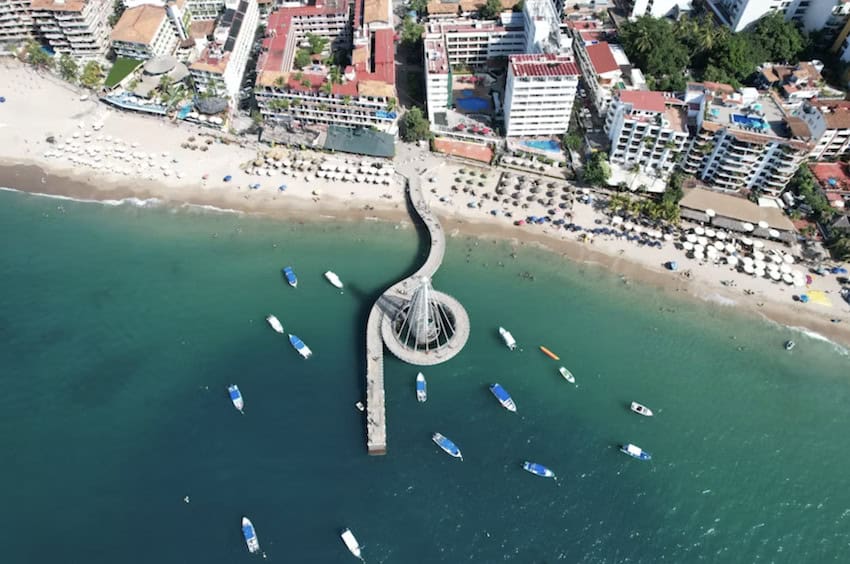
Puerto Vallarta and the surrounding region are undergoing rapid change. However, with new investment and infrastructure comes mounting pressure on public services, transportation, housing and the coastline.
In this week’s roundup, we examine questions surrounding the municipality’s growing payroll, the deeper forces behind Vallarta’s worsening traffic, the long-awaited Amado Nervo Bridge, and the continuing debate over development at Punta de Mita.
The Amado Nervo Bridge connecting Jalisco with Nayarit is 70% complete
Questions raised over Vallarta’s growing municipal payroll
Puerto Vallarta’s municipal government is facing questions over the size and cost of its workforce after independent councilor Melissa Madero presented an analysis of the city’s 2026 payroll.
According to reporting by Urritia Comunica, Madero stated the municipal council originally approved 2,707 positions for 2026. Her review of current records alleged there were 3,375 active positions, 668 more than authorized, representing an additional cost of more than 151 million pesos (US $8.8 million).
She also pointed to what she described as 778 unauthorized positions, including assistants, coordinators and other administrative roles, with an estimated annual cost of nearly 180 million pesos.


Perhaps more striking is the contrast she drew between administrative staffing and the city’s operational services. Madero alleged that positions have increased in areas connected to the mayor’s office while other departments responsible for services such as public safety, parks, gardens and municipal infrastructure face staffing and resource pressures.
Madero says she intends to take the matter first to the municipal comptroller and, if necessary, to Jalisco’s Anti-Corruption Prosecutor’s Office.
Although only allegations, the questions are significant.
As Puerto Vallarta spends heavily to keep pace with a rapidly growing city, residents have every right to ask where their municipal money is going, and whether the bureaucracy is growing as quickly as the services people actually depend on.
Vallarta’s traffic problem is about more than cars
If it feels like there are more cars on Puerto Vallarta’s roads every time you leave the house, you’re not imagining it.
Traffic congestion has become one of the city’s defining daily frustrations, with a road network that was never designed for the population and development Vallarta is now supporting. New housing construction and the sheer number of people moving around the metropolitan area are putting additional pressure on already limited routes.
But there’s another part of the story that doesn’t always get enough attention: Who’s living here, and where?
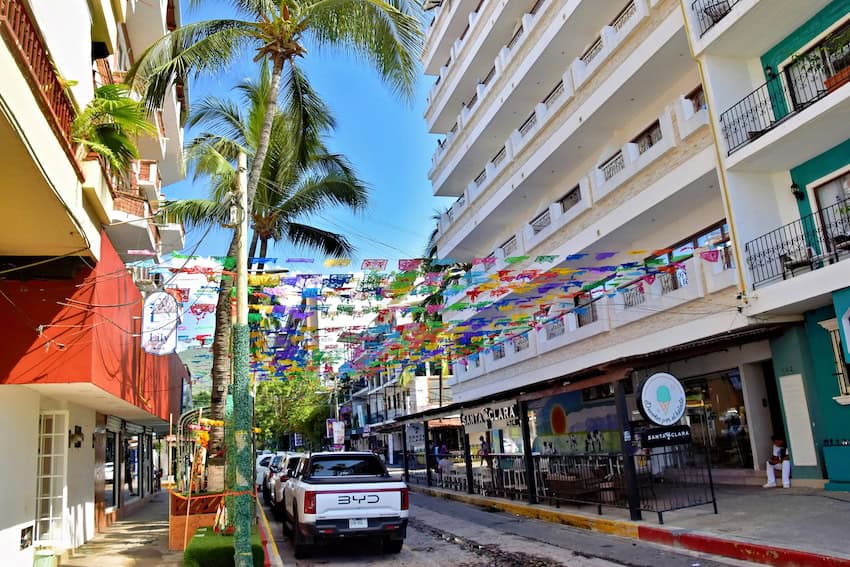
The cost of living in Puerto Vallarta, particularly housing costs, has risen sharply in recent years. For many local workers, remaining in the city is becoming increasingly difficult. As rents push people farther from the center, some workers who once lived close to their jobs are now commuting from places such as Ixtapa, Las Juntas, El Colorado, Bahía de Banderas and farther afield.
That means more vehicles on the road. Not necessarily because more people suddenly decided they wanted a car, but because the geography of everyday life changed, thereby creating a need for one. At the same time, Puerto Vallarta continues to attract new residents, businesses and visitors, adding to demand for roads that were already struggling.
So, the traffic problem isn’t simply about too many cars. It’s another symptom of a city trying to figure out how to accommodate growth without pricing the people who keep it running out of the places where they work.
Passenger traffic to Puerto Vallarta on the rise as Cancún reports continued decline
The still not-quite-ready-yet bridge
For anyone who regularly crosses between Puerto Vallarta and Bahía de Banderas, the Amado Nervo Bridge has become something of a local obsession. And this week, there was another reminder that while the long-awaited connection is getting closer, it isn’t ready for prime time just yet.
The bridge crosses the Ameca River, connecting the Ixtapa area of Puerto Vallarta on the Jalisco side with San Vicente in Bahía de Banderas, Nayarit. When completed, the roughly 2-kilometer project is expected to cut travel times between the two municipalities by about 25 minutes and accommodate thousands of vehicles each day.
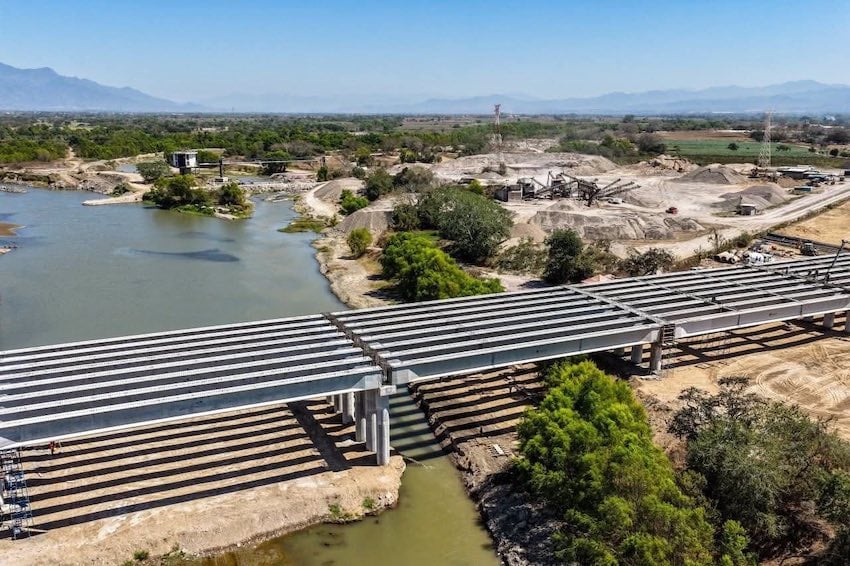
Construction is now reported to be about 90% complete, with an opening currently expected later this year.
But that hasn’t stopped some drivers from attempting to get onto the new connection. It is easy to understand the impatience. The Ameca River has long been a bottleneck for a metropolitan area that has grown dramatically on both sides of the bay.
The new bridge won’t solve every transportation problem facing Vallarta and Bahía de Banderas. But once it finally opens, it’ll give commuters another option and, perhaps more importantly, provide a much-needed piece of infrastructure for a region that’s been growing faster than its roads can handle.
Punta de Mita’s coastline is the latest development battleground
The fight over development in Punta de Mita and its coastline isn’t going away.
Last week, the Committee of Punta de Mita and environmental groups called on authorities to move beyond announcements and actually remove the rock barrier at Playa Las Cocinas and begin restoring the affected beach.
The demand follows recent statements from Environment Secretary Alicia Bárcena regarding the site. Local environmental groups say the issue now is what happens next.
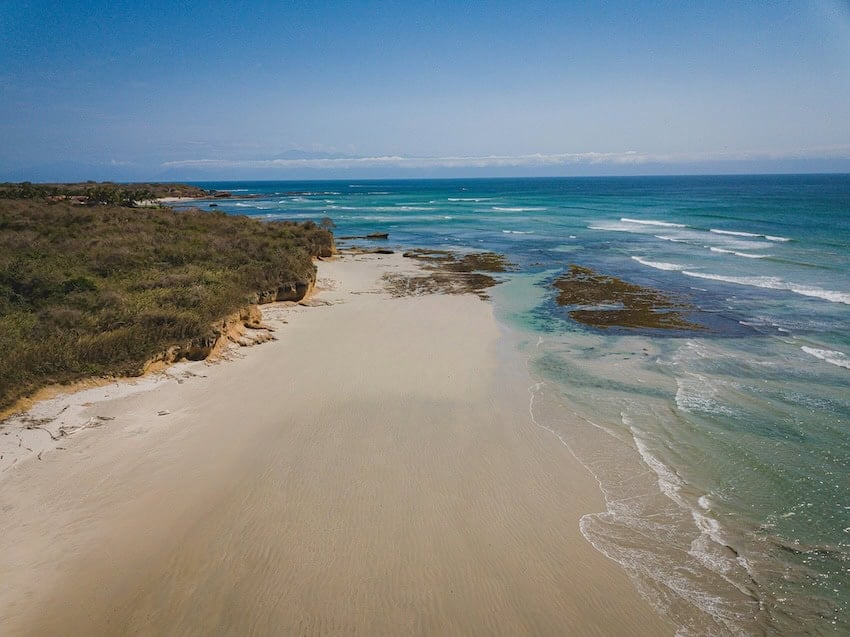
Will authorities follow through with restoration rather than simply declaring that action is being taken?
The dispute is part of a larger conversation playing out across Riviera Nayarit. Development has transformed Punta Mita and its surrounding communities into some of the region’s most valuable real estate, but the coastline itself remains a public and environmental resource.
The latest demands from Punta de Mita residents and environmental groups show that the argument isn’t simply about one project or one stretch of beach. It’s about what happens when a coastline becomes extremely valuable, and who gets to decide how much of it can be changed in the name of development.
Charlotte Smith is a writer and journalist based in Mexico. Her work focuses on travel, politics and community. You can follow along with her travel stories at www.salsaandserendipity.com.