Republished from InSight Crime
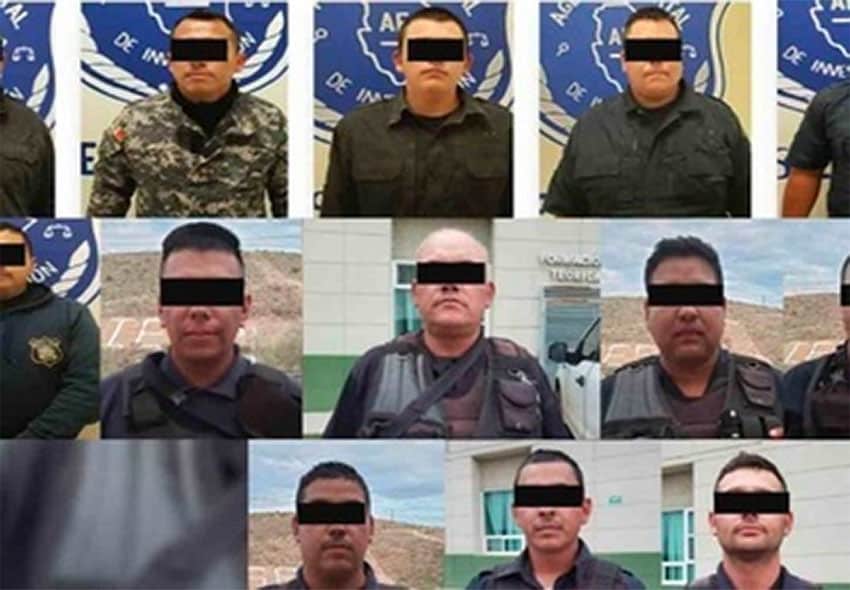
The arrest of a town’s entire police department in Mexico’s state of Chihuahua reflects just how insidious police corruption continues to be in the country, with governments at all levels seemingly unable to make any real difference.
Fifteen police officers from the municipality of Madera, Chihuahua, in northern Mexico, were arrested on August 15 during a joint operation by state and federal agencies, the Chihuahua Attorney General’s Office reported.
Madera’s police commander was among those arrested. Identified only as José Luis M. M., he had apparently provided protection services to drug traffickers in the area and obstructed the work of local authorities.
The arrest occurred after the police chief stopped operatives from state security agencies and threatened them at gunpoint to abandon an investigation in the region.
InSight Crime analysis
Entire police forces being rounded up for corruption and collusion with organized crime is nothing new in Mexico. In August 2018, 205 police officers were disarmed and suspended in the municipality of Tehuacán in central Puebla state, while 113 more were believed to have fled.
The ease with which corruption spreads inside the police forces and the vast impunity for participating officers means that successive government reforms have shown no concrete results.

An average of 1,688 corruption cases were registered for every 1,000 active-duty police officers in Mexico in 2017, according to a survey conducted by the National Institute of Statistics and Geography (Inegi). That translates to 1.6 acts of corruption for every police officer at the national level.
The state of Chihuahua reported that for every 1,000 police officers registered in the state, 133 had been participating in criminal activities. The state’s corruption rate is only surpassed by Mexico City, with a rate of 179 for every 1,000 police officers.
Mexican police forces are particularly vulnerable to corruption and infiltration by drug cartels, due to low salaries and a lack of government support. This makes the bribes paid by criminal mafias extremely attractive.
“It is far easier to develop training programs and improve selection criteria than to reverse a long history of extortion and bribery,” investigator Daniel Sabet was quoted as saying in a report published by the Washington Office on Latin America (WOLA).
Each new government in Mexico has proposed a new way to address the issue of police corruption, and it seems that none has been effective.
In fact, there have been repeated protests by police forces that have been invited to be part of the new National Guard force enacted by President Andrés Manuel López Obrador. According to federal police, the new law enforcement entity would not respect severance, hierarchy or seniority.
The writer is an investigator with InSight Crime, a foundation dedicated to the study of organized crime in Latin America and the Caribbean.