The Pew Research Center report covered this week contains a figure worth sitting with: 59% of Mexican adults hold a favorable view of China, compared with 40% who say the same of the United States.
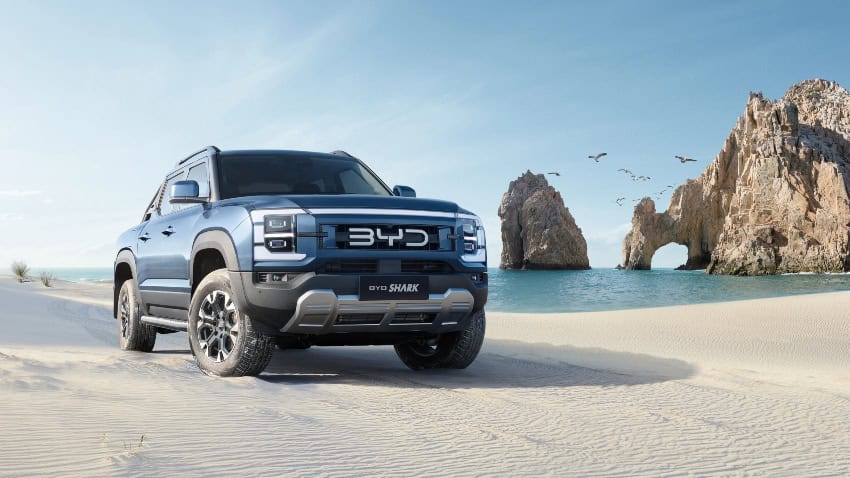
You don’t need a survey to sense it. Until a few years ago, “Chinese product” meant cheap, badly made and disposable. Today, my nephews shop on Temu and Shein without it occurring to them that anything needs explaining. My best friend is pricing a BYD truck that costs nearly a million pesos. My parents — who are enthusiasts of nothing — built a comparison table pitting a Chinese car against a Jeep at the same price and concluded that the Chinese option offered more technology, better finishes and a vehicle that looks a class above for less money. They built that table themselves. Nobody talked them into it.
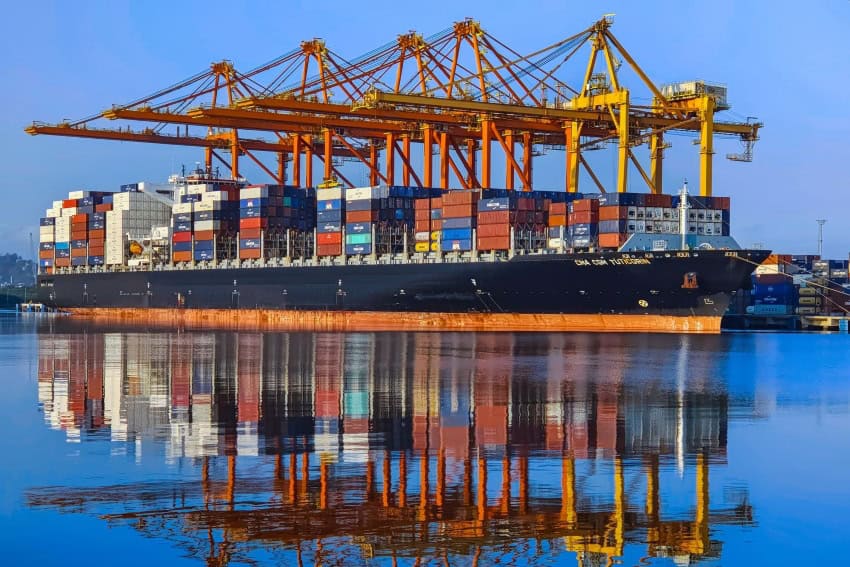
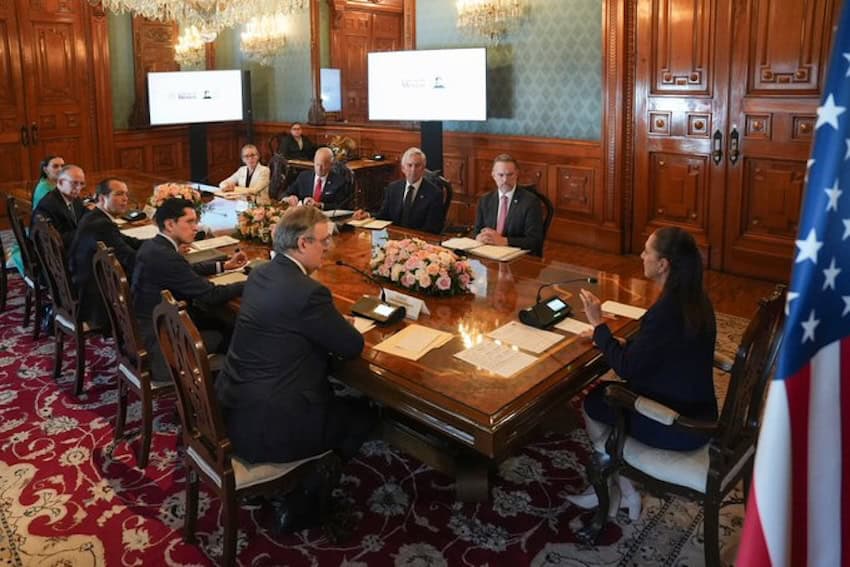
The Mexican state, meanwhile, is moving in the opposite direction: since January, it has applied tariffs of up to 50% on imports from countries without a trade agreement, China among them.
Both things are true at once, and that simultaneity is the subject of this column.
The dissonance
The numbers reported by Pew describe a public tilted toward China on nearly every measure: reliability as a partner, contribution to global peace and respect for personal freedoms.
On the state’s side, policy answers to a different logic. The decree that took effect Jan. 1 — rates of 5% to 50% across 1,463 tariff lines, with automobiles and steel in the highest bracket — forms part of Plan México, the development strategy the president introduced in January 2025. Its targets include raising domestic content in electronics, auto parts and batteries, and bringing Mexican-made supply to 50% in sectors such as textiles, footwear, furniture and toys. The Economy Ministry framed the tariff measure as a defense of some 350,000 jobs in sensitive sectors, and the president has consistently maintained that it targets no country in particular.
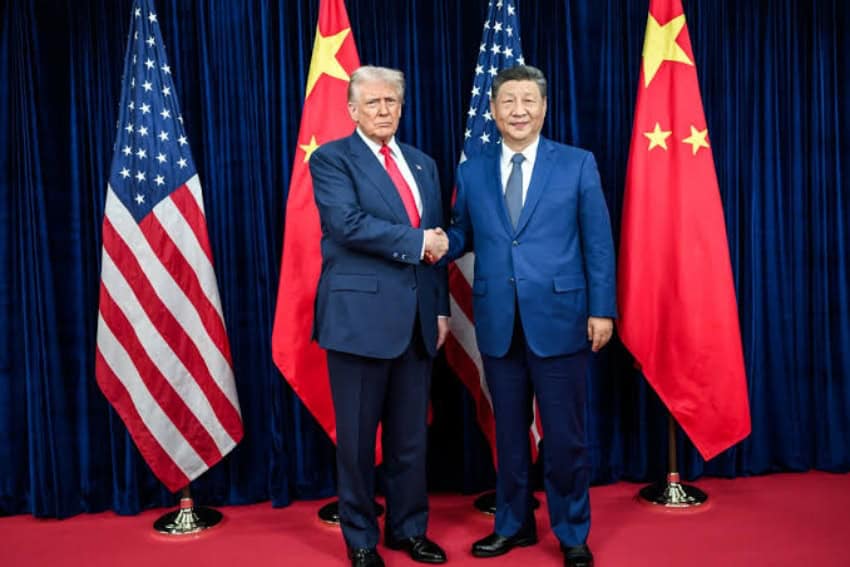
None of this resolves the underlying asymmetry. Roughly 80% of everything Mexico exports goes to the United States. At the same time, China is Mexico’s second-largest supplier, accounting for close to one-fifth of imports. Mexico sells to one and buys from the other, and in that arithmetic the margin is narrow: you can make what you buy more expensive, but you cannot replace the country that buys from you.

What the survey actually measures
Pew flags it in the report itself: Mexicans had already viewed China more favorably than the United States in several earlier Center surveys. This is not a 2026 discovery. It is a recurring pattern.
The historical series confirms it. Since Pew began asking in Mexico in 2007, favorability toward China has climbed slowly and without drama: 43% that year, 38% in 2008, 50% in 2019, 57% in 2023 and 59% today. Twenty-one points across 18 years, with no visible campaign to explain it. Favorability toward the United States, by contrast, moves like a seismograph: 63% in 2014, 29% last year and 40% this year.
That last stretch deserves emphasis, because the headline obscures it: favorability toward the United States rose 11 points in a single year. The number now being read as a collapse is, in fact, a recovery underway. China gained no ground this year; the United States recovered part of what it had lost.
The China that goes unpublished
There is, however, one figure that volatility in U.S. ratings does not explain, and it is arguably the most revealing of all.
Mexicans are now more likely to say the Chinese government respects its people’s personal freedoms (35%) than to say the same of the U.S. government (20%). Of the six Latin American countries Pew surveyed, Mexico is the only one where that comparison inverts: in Argentina, Brazil, Chile, Colombia and Peru, the reverse holds. Across all 36 countries, the median share crediting the Chinese government with respecting personal freedoms is 26%.
More telling still: that Mexican 35% has barely moved in 18 years — 33% in 2008, 31% in 2017, 30% in 2018 and 35% today. One-third of Mexicans have held the same view of personal freedom in China across three presidential administrations, a pandemic and a trade war. A number that does not respond to events is probably not based on information.
Which brings us to something elementary that conversations about polling tend to skip: international perceptions almost never come from direct experience. They come from exposure. We form opinions about the countries that appear before us, at the frequency they appear and in the place they appear. Since the 1970s, agenda-setting research — McCombs and Shaw — has held that the press shapes less what we think than the inventory of subjects we end up having opinions about.
China in the Mexican press compared to the US
Applied to Mexico, the result is predictable. China barely appears in the Mexican press. When it does, it appears in the international section: the one fewest readers open, the first to be cut when cuts are needed and the one that rarely sets the day’s conversation. Very little of what Mexicans believe they know about China reaches them through Mexican reporting.
That does not mean China fails to reach Mexico. It reaches through the phone: TikTok, Shein, Temu; and through the Periférico, in the BYDs, Chireys and MGs that in five years went from under 1% of sales to displacing Germany as the third-largest origin of brands sold in the country. China reaches through the Centro Histórico, in full containers of merchandise that over two decades built fortunes both modest and less so. It reaches, in short, through consumption: affordable, efficient and surprisingly good for the price.
The United States, by contrast, is not a section. It is the front page — not by editorial choice but by arithmetic. When four of every five dollars Mexico exports cross a single border, any decision taken in Washington stops being foreign news and becomes domestic economic news. A tariff is employment in Coahuila. A treaty review is the exchange rate. A migration policy is a relative waiting on a consular appointment.
Add to that something with no counterpart on the other side: in American political speech, Mexico gets named — frequently and explicitly. In late July, at an event at a General Motors proving ground in Michigan, the U.S. president celebrated Toyota’s decision to shift Tacoma production from its Baja California plant to San Antonio and touted that his tariff policy had left the United States without a single Chinese car. That speech, delivered to plant workers in the Midwest, appeared in Mexican newspapers the following morning.
So the comparison the survey proposes is skewed from the start. This is not a comparison of two countries; it is a comparison of a commercial presence and a media presence. From China come products. From the United States comes news — and that news is almost always decisions made there and felt here.
China does not appear on Mexico’s list of grievances because it does not appear on its list of subjects.
The generation coming up
View this post on Instagram
One last figure remains, and it points furthest.
Among Mexicans under 35, 70% view China favorably. Among those 50 and older, 44% — a gap of 26 points. Ideology does not explain it: in Mexico this year, views of both powers do not differ significantly between left and right. This is not a political position. It is a generational experience.
It is also, predictably, an experience shaped by media consumption. That generation does not form its view of China in the international section of a newspaper it does not read. It forms that view on a phone screen, where China is not a state but an interface: fast, cheap and available. It grew up with those goods, considers them normal and in many cases prefers them. Twenty years from now, it will be negotiating treaties, running ministries and writing Mexican foreign policy.
None of this will move geography. Mexico will continue sharing more than 3,000 kilometers of border with the United States and will continue selling it four of every five export dollars. But the disposition with which that interdependence is managed does change. And it is forming now — in a Temu app open around the clock and in a comparison table my parents built without anyone asking them to.
Maria Meléndez writes for Mexico News Daily in Mexico City.