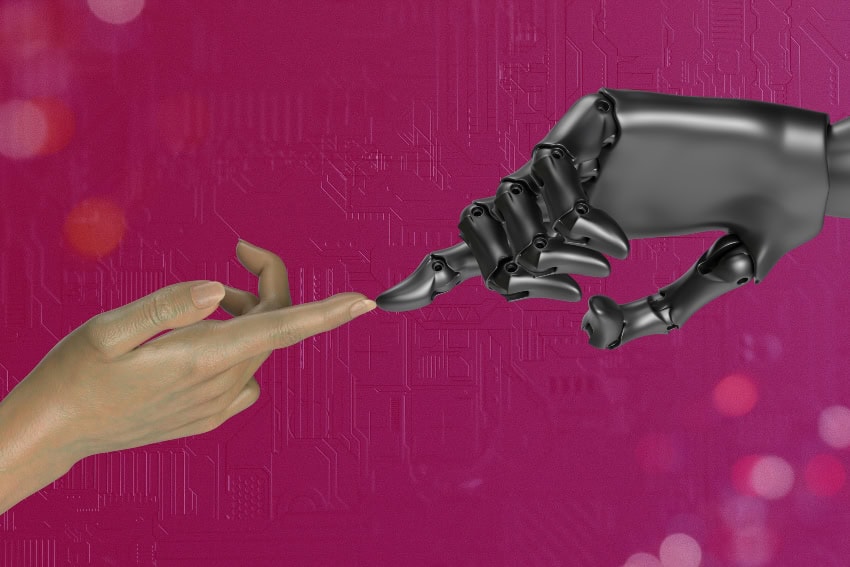
Artificial Intelligence is coming for us all, and Mexico is no exception.
I’ve discussed the issue a bit here before, like when I argued AI wasn’t a solution to your language-learning problems, for example.
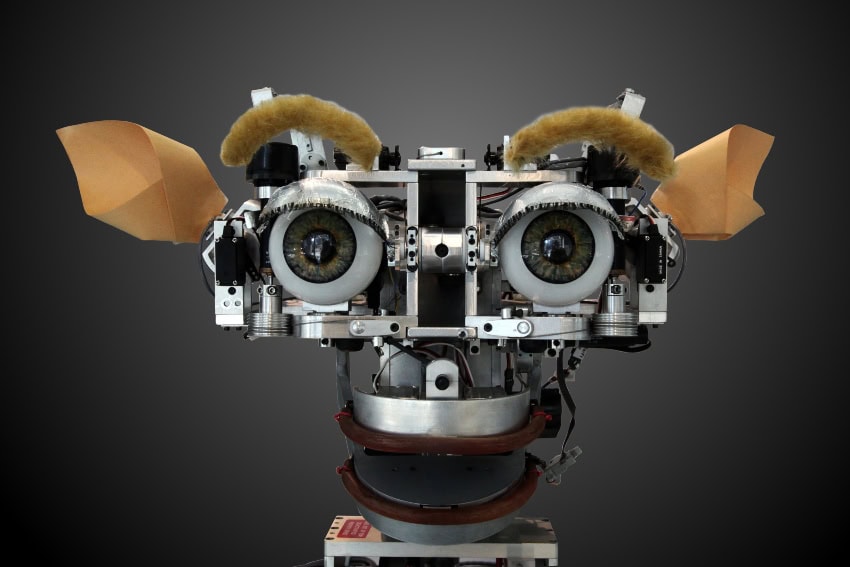
But as Mexico inches cautiously, and as blindly as the rest of us, toward what everyone says is its inevitability, I’d like to revisit it and look at how Mexico is considering handling it.
The people didn’t vote for AI
As I argued last time I wrote about this, it’s important to remember, really above all else, that AI is not something the world asked for. We didn’t vote on it. We’re not getting paid for our contributions to it. In fact, some of us are paying to use it!
It was created with the entirety of (free) recorded available human output … at least what AI tech could get ahold of before the companies that could afford to sued them. All of our information has been free for the taking, mostly in exchange for things like getting discounts at the movie theater snack counter by downloading an app.
As the saying goes, if the service is free, the product is you.
Mexico’s adoption of AI
But as we’ve read over this past year, much of Mexico has been quite happy to adopt AI. Around 40% of Mexican businesses are already using AI. If you include basic services like writing and translation, that number increases to over 70%.

As of 2022, 65% of Mexicans agreed that “AI would positively transform their lives.” Indeed, a rush to “train” people to use AI is ensuing. (As far as I’ve been told from those in the field, “training” is mostly just about teaching people to come up with the right prompts for what they want AI to do — hardly rocket science.)

There’s even an “AI forward” school here in Mexico. Decidedly sadder and, let’s face it, creepier, is the use of AI to create fake videos. Yes, in this particular case, it’s for a good cause, and they’re honest about them being AI-generated — this time — but yikes. Perhaps we shouldn’t make this a habit.
You may have also seen the report that Mexico leads all the other Latin American countries when it comes to AI patents. For what, exactly? Well, that’s not information I was able to find.
And that worries me, because I personally believe that we’re already at a point where this is getting out of hand.
The declaration of ethics and best practices for the use and development of AI in Mexico
Okay, good. This is a good starting place. It doesn’t quite make up for the fact that Mexico hasn’t actually passed any laws yet regarding the regulation of AI. But hey, a list is a start. Right?

For now, I will try to remain optimistic, forgetting about the fact that there are plenty of other good laws on the books that are, essentially, unenforceable. Maybe this will be different. Without further ado, here’s our veritable “10 Commandments of AI” (translated by yours truly, which is a little ironic as AI has rendered my translating skills economically useless):
- AI should expand rights, not reduce them.
- Every decision made by AI must have responsible humans behind it, supported by clear institutional frameworks.
- If a decision can’t be explained, then it shouldn’t be automated.
- Decisions about AI are best made when they’re made collectively.
- AI is only valuable when it generates well-being for people.
- Before automating, we must understand who and what the automation affects.
- Strategic technology must be implemented based on the necessities of the country.
- AI development requires strengthening education and knowledge in the country.
- AI cannot be removed from the country’s linguistic and cultural diversity.
- Data is a public good that must be responsibly protected.
If you ask me, this is an excellent starting point. The list does not bother me at all. In fact, I love the list.
What worries me is that so far, that’s all it is: a wish list.
The lack of regulation over AI
And if you’ve been paying attention since the institution of AI really came on the scene, the AI “gods” — those who decided it would be part of all of our lives whether we liked it or not — haven’t exactly been jumping at the chance to get regulated.
I mean, who wants pesky rules when you’re trying to make a bunch of money under the guise of creating AI to save humanity out of the goodness of your heart? That’s been the attitude of the major AI companies in the U.S., anyway.

But one major difference with the U.S. is that the Mexican government is actually talking about rules. That’s more than I can say about my own country, where they tucked a nice little provision in the “Big Beautiful Bill” (ugh) about states not being allowed to regulate AI for the next 10 years.
But back to the list! It’s a good one. The only thing I’d say is missing is perhaps something about data centers not consuming all our water and electricity?
In the end, we’ve got a long way to go toward an actual legal framework around AI. There are a lot of questions Mexico will need to answer, hopefully through enforceable laws:
- How will we balance the vast requirements of data centers with the water and energy needs of the population? Surely we won’t let AI become the next Coca-Cola. Right?
- How will the country respond to the inevitable job losses that AI causes, should it succeed in doing everything it purports to do? We’re going to need a plan other than “Oh, but it will create more jobs!” Funny, no one can tell us what these jobs will be other than “checking AI’s work.” (I’ve been asked to do it myself, and trust me: it’s not lucrative.)
- How will we make sure that people can tell the difference between AI and human-created content? (Lots of people I know assure me they can tell the difference. I assure you, they can’t. And they wouldn’t know if they couldn’t, because they wouldn’t. See?)
Perhaps, in the end, AI will fizzle. As a friend with multiple degrees in Artificial Intelligence recently told me, most AI companies (like OpenAI, for example) are not actually profitable yet, and much of AI is so error-riddled as to be rendered useless — especially in the area of computer programming. Websites built with AI are more vulnerable to attack, and by all accounts, AI is, currently, simply not trustworthy.
Will it go up in smoke as quickly as it appeared in our lives? Honestly, I hope so. Because for all the fanfare about its ability to “someday” save humanity, that’s not what it was built for. It was built to make money.

And when money is the top goal, humans will necessarily not be. Let’s hope we realize that before this gets too out of hand.
Sarah DeVries is a writer and translator based in Xalapa, Veracruz. She can be reached through her website, sarahedevries.substack.com.