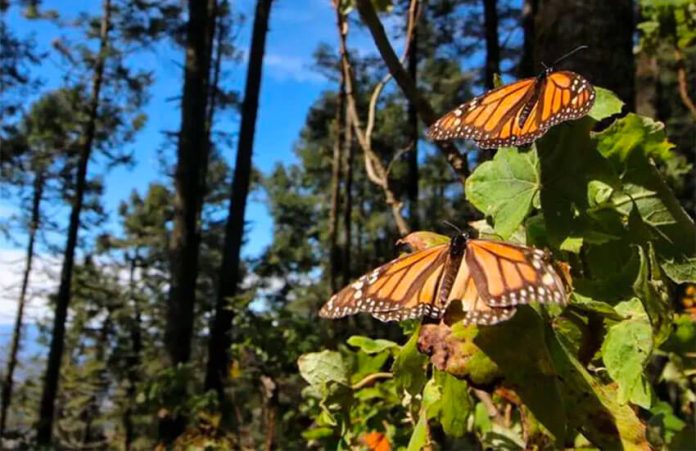
As many as 150 million butterflies have arrived at the El Rosario sanctuary.
Monarch butterfly numbers in the El Rosario sanctuary in Michoacán are up about 30% compared to recent years, according to a sanctuary official.
The black and gold-winged insects migrate thousands of kilometers from Canada and the United States to overwinter in the oyamel fir forests of Michoacán and México state.
Marino Argueta told the newspaper El Heraldo de México that 130-150 million butterflies have reached El Rosario, located in the municipality of Ocampo.
“Millions of butterflies arrived this year and the climate … up until now has been very favorable, they’ve even come down to the sanctuary entrance,” he said.
An increase in the number of overwintering monarch butterflies has also been reported in coastal California, where the insects arrive from inland areas of the western United States.
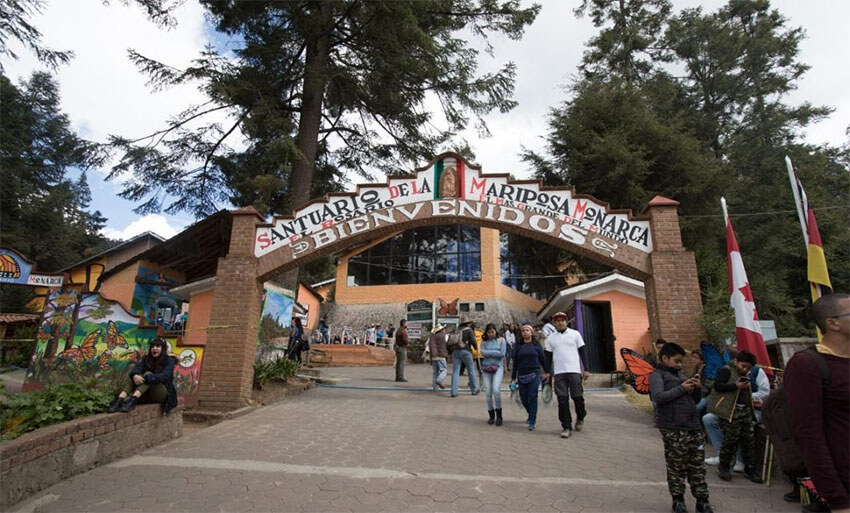
The entrance to El Rosario butterfly sanctuary.
El Rosario, which calls itself Mexico’s largest and most visited butterfly sanctuary, opened to visitors in late November and some 10,000 arrived in the first two weeks. Almost 70,000 people visited the sanctuary during the 2020-21 winter but numbers are expected to be almost three times higher this season.
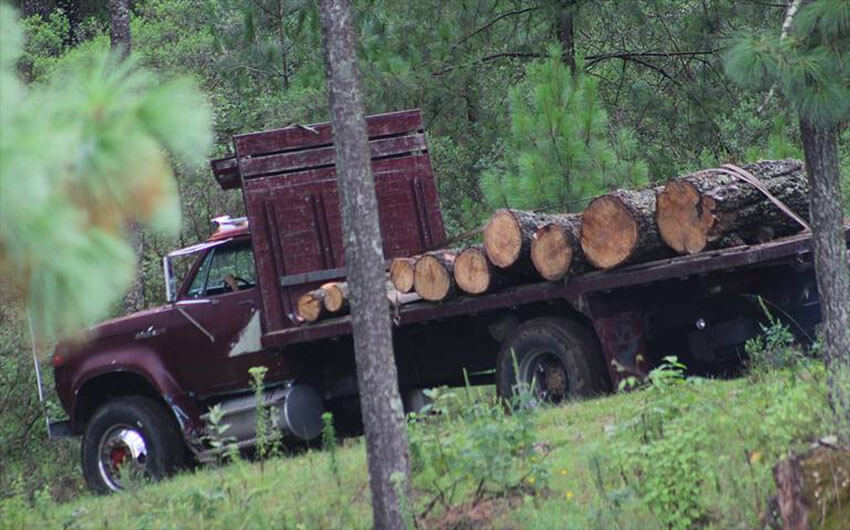
Meanwhile, in the neighboring municipality of Zitácuaro, indigenous Mazahua residents of the town of Cresencio Morales have created a “forest guard” to protect the monarch butterflies’ winter habitat from illegal logging.
Groups of 20 armed residents take turns to patrol the Cresencio Morales ejido (community owned land), part of the Monarch Butterfly Biosphere Reserve, a World Heritage site. Guards fire warning shots to let would-be loggers know they are there and that cutting down trees won’t be tolerated.
One guard told the newspaper El País that they have to carry firearms because the criminals that illegally log the forest are armed. He asserted that the government does nothing to protect the forest from illegal logging.
“We’re here to take care of our forest and we’re going to continue … until we see there’s no illegal logging,” a female guard said.
El País reported that the forest guards know the identity of the illegal loggers because they all live in the same town. However, they declined to name them or the criminal group with which they collaborate.
Illegal logging threatens the oyamel fir forests where the butterflies overwinter in Michoacán and México state.
“La Familia Michoacana? The Jalisco cartel? They shrug their shoulders. It’s not prudent to say,” the report said.
Illegal logging, a huge problem in Mexico, and climate change were the main factors in a 26% reduction in the number of monarch butterflies overwintering in Mexico in 2020-2021, according to the World Wildlife Fund and the National Commission of Natural Protected Areas.
The Cresencio Morales ejido was identified as one of the areas most affected by illegal logging. But the forest guards are determined that won’t be the case in the future.
“What they want is our land, but we won’t allow them to have it. We’re going to defend it to the end,” one guard said.
The two visitors during their interrogation by armed men.
Two tourists got more than they bargained for when their bird-watching trip in Tabasco was interrupted by a group of armed men.
The incident was recorded by a dashcam video that was taken in Feburary 2020, but only uploaded to YouTube on Wednesday.
The beginning of the video shows two men, Aaron and Logan, discussing directions, apparently lost.
“Just pick one,” Logan said.
“I’ll go straight,” Aaron replied. “There’s a bike on this road so there must be civilization somewhere around here.”
Then the driver, Aaron, noticed a large white SUV quickly gaining on them, and the two began to worry.
“Oh God, they have guns,” Aaron exclaimed as the SUV pulled up.
The tourists rolled up the windows and Logan fastened his seatbelt, telling Aaron to drive away. But the armed men stopped and questioned them.
One asked in Spanish, “Are you lost or what?”
“What? Please, no español, please,” Aaron said, starting to panic.
The tone quickly changed, as one man in the gang can be heard trying to calm down the frightened tourists, patting Aaron on the back and even offering him a hug.
“No problem, no problem,” the man repeated in English.
The tourists and their questioners struggled to communicate across the language barrier, the latter saying in Spanish that they wanted to know why the two entered their land, and asking them where they were going.
The tourists, petrified, tried to understand.
“I’m going to pass out,” Logan said.
“Tranquilo, güero,” (“Take it easy, whitey,”) helpfully responded one of the men.
Eventually, Logan managed to explain that they were taking pictures of birds while on their way to visit his mother in Cancún.
One of the men introduced himself as Phillip, trying to calm the still terrified tourists.
“You speak English a little? Please don’t kill us,” Aaron begged.
“No problem, no problem,” Phillip replied.
In Spanish, a man warned them to be careful about driving onto private land because it could belong to narcos. Then another asked if the dashcam was recording.
“No más,” Logan responded, turning it off.
In the YouTube comments, the video sparked a debate about whether the armed men were really cartel members, part of a self-defense group, or simply landowners defending their property.
“Even the cartel members were trying to calm them down, lol, that was nice,” wrote one user, apparently agreeing that the men were narcos.
“These weren’t cartel members, they are civilians who fight against them to protect the land,” another commented.
The Pacific Cartel, the Jalisco New Generation Cartel, Los Zetas and various self-defense groups all operate in Tabasco.
According to the coordinates on the men’s dashcam video, they were half way between Villahermosa, Tabasco, and Coatzacoalcos, Veracruz.
President López Obrador defended the plan to eliminate several government agencies.
President López Obrador has defended the government’s plan to incorporate the federal ecology and climate change agency into the Environment Ministry (Semarnat), asserting that its creation was part of a “looting scheme.”
As part of its austerity drive, the government intends to dismantle the National Institute of Ecology and Climate Change (INECC) and the Mexican Institute of Water Technology in their current form and incorporate them into Semarnat and the National Water Commission, respectively, according to a draft law seen by the newspaper Milenio.
“It can be concluded that the Ministry of the Environment and Natural Resources can not only enact and lead policy on matters of natural resources, ecology and climate change but implement it on its own without the necessity of contributory bodies,” the draft law states.
Asked about the government’s plan for the INECC at his morning press conference on Thursday, López Obrador said the purpose of eliminating it is to avoid the perpetuation of policies from “the neoliberal period,” which he defines as the 36 years before he took office in December 2018.
The president asserted that many government agencies established in that period didn’t attend to the problems they were created to combat. The forerunner to the INECC, the National Institute of Ecology, was created in 1991. It has a research mandate and has completed various studies over the past eight years on topics such as mitigation of climate change and adaptation to it.
López Obrador said his government has a plan to address environmental problems but would not allow the “looting” of public resources via unnecessary agencies to continue.
“It’s not that we don’t care about the environment, quite the contrary. What we don’t want is … [for people] to take advantage of these causes,” he said.
“[Previous governments] created a constellation of bodies … with public money – money that didn’t reach the [nation’s] poor people. In the best cases [the agencies were created] to analyze reality not transform reality,” López Obrador said.
In addition to the Environment Ministry and the INECC, two or three other agencies were created “for the same thing – to look after the environment,” he said. “Can’t you do that with one?” he asked.
The president also took aim at environmentalists who didn’t speak out when previous governments ravaged the environment.
“How can it be explained that environmentalists, seeing how the country was destroyed in the neoliberal period, didn’t say anything? Do you think that I could be worried if they say that the government isn’t concerned about the environment. I don’t have any problem with my conscience. They are the ones who aren’t concerned about the environment, they’re frauds. … They live well, they even receive money from abroad, from non-governmental organizations, they have good salaries,” he said.
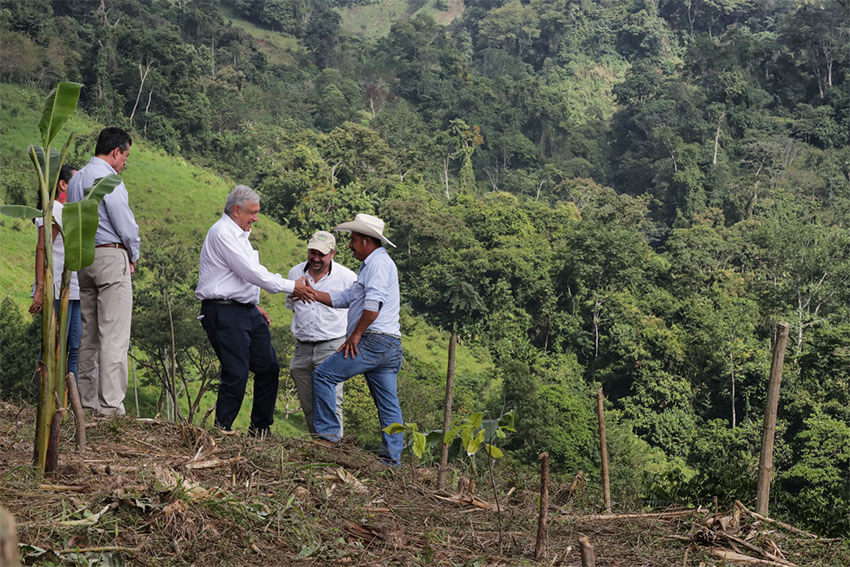
The president visits with Sembrando Vida program participants in Chiapas in 2019. He has touted the Sembrando Vida tree-planting program as an example of an environmentally-friendly government program.
López Obrador also railed against foreign governments that contend they are working to combat climate change but allow the extraction of oil to increase.
“Be careful. In all these climate change issues there is a lot of hypocrisy,” he said. Those who talk up their climate credentials and “even host summits” are authorizing the production of more oil at the same time, López Obrador said.
Mexico, in contrast, is decreasing the amount of oil it extracts, he said.
While López Obrador touts his environmental credentials, he has faced criticism for his support for the continued use of fossil fuels and antagonism toward private renewable energy companies.
Mexico took second place in the Climate Action Network’s “Fossil of the Day” award at this year’s United Nations Climate Change Conference in Glasgow, Scotland, “for pumping more, not less, money into the fossil fuel industry, building oil refineries, and delaying policies aimed at carbon emissions reductions.”
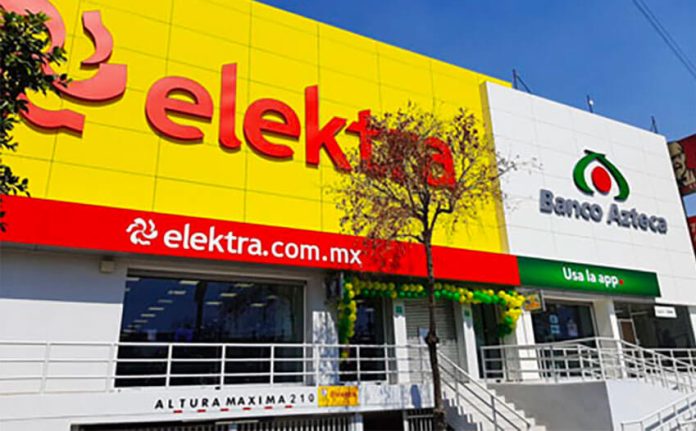
Elektra is the first chain of retail stores in the country to accept Bitcoin, the company announced on its website this week, explaining that it will offer a 20% discount to customers who pay with the cryptocurrency. Elektra will accept Bitcoin through the cryptocurrency payment platform BitPay.
Ricardo Salinas Pliego, the owner of Grupo Elektra as well as Banco Azteca, is a Bitcoin enthusiast and had previously hinted that Elektra might accept it as payment. In June, he announced that Banco Azteca would be the first bank to accept Bitcoin.
But that announcement was premature: in response, financial authorities proclaimed that the unregulated cryptocurrency was not legal tender, and any banks that accepted it would be subject to sanctions. Some opponents warn that the electronic currency could be used for tax evasion and to conduct illegal transactions.
The opposition clearly has not dampened Salinas’ interest in Bitcoin, which he has called “the new gold.”
Los rumores son ciertos 😎, @ElektraMx es la 1er tienda (de retail) en México 🇲🇽 que permite comprar con #Bitcoin.
“The rumors are true, Elektra is the first (retail) store in Mexico to allow buying with #Bitcoin. I’m so sorry to once again beat out the competition,” Salinas wrote in an emoji-filled message on Twitter on Thursday.
Bitcoin has gained popularity in Mexico as a tool for sending international remittances. Roughly 12% of Mexicans owned some type of cryptocurrency as of October.
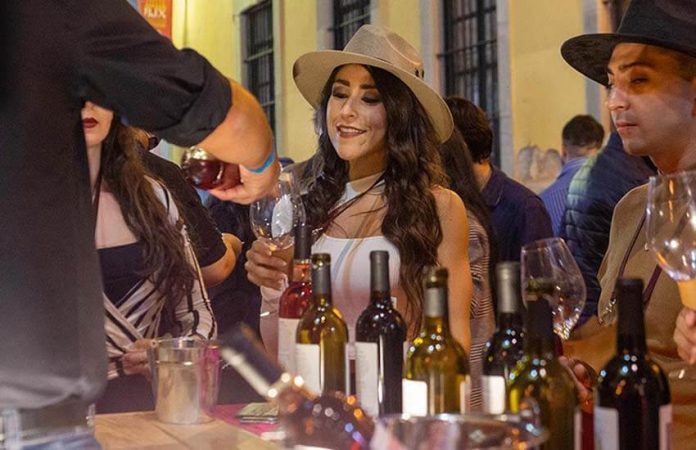
With one ticket price, Catando México's guests could try wines from more than 45 of Mexico's vineyards. photos courtesty of Catando México
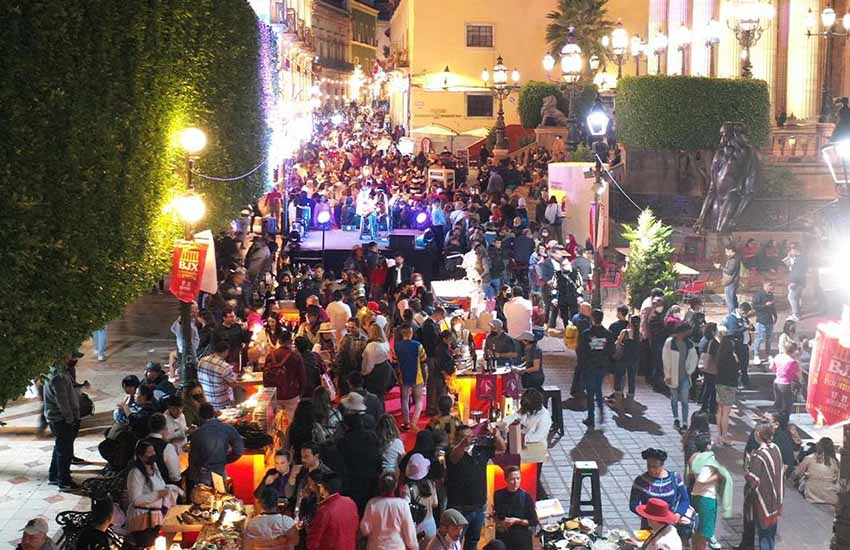
A more than 300-meter red carpet took over downtown Guanajuato as attendees of the Catando México wine festival got a chance to meander past the city’s biggest landmarks and sample the fare of nearly 50 vineyards from all across the nation.
The annual Mexican wine festival in late November featured not only fine vintages but also food, music and crafts, all adding to attendees’ enjoyment as they walked along the extensive carpet laid down on the cobblestone streets and discovered Mexico’s latest and greatest offerings for wine lovers.
Participating wine producers came from all over Mexico, including Baja California, Coahuila, Chihuahua, Nayarit, Jalisco, San Luis Potosí, Querétaro, Aguascalientes, Puebla and Guanajuato. Scheduled tastings led by sommeliers and other activities also added to the enjoyment.
While the event was held in the state of Guanajuato, the majority of the wines at the event hailed from Baja California, particularly Ensenada, featuring both newer wineries and those with a long history in the northern state. Bottles from Casa Zamora, Casa Maciel and Casa Emiliana were surprise standouts among the offerings.
But despite Baja California’s dominance, the state of Guanajuato had a definite presence at the competition too, proving that its wine industry has become a serious contender for national prizes.
Not only vineyards from across Mexico but also several gourmet food makers participated in the event.
Guanajuato wineries such as Tres Raíces — an ultramodern winery and part of a wave of newer wine producers in Mexico — as well as Viñedos San Bernardino, Bodegas La Vista and Dos Buhos all took part. Also, one of the country’s few female-owned wineries, Vinicola Renacimiento of Aguascalientes, caught my attention with its excellent nebbiolo and malbec.
However, perhaps one of the biggest surprises came from Bodega Gravitas’ high-quality vintage, as Jalisco is not particularly known for its wines. But winemaker Alberto Flores learned his craft in Germany and selected clones of French pinot noir grapes when he began his project in Chapala.
A decade later, Gravitas is producing six varietals – two whites, two reds, and two rosés – of which their pinot noir rosé and pinot noir red are real standouts.
The event was relaxing and fun despite as many as 4,000 people circulating throughout. Admission was free, although one could buy a wine-tasting package giving full access.
The one ticket allowed attendees to sample wine from every one of the event’s participating vineyards. Tastings were accompanied by chocolate, cheese and charcuterie.
Silver place settings and Cuban cigars added to the luxurious feel of the event. There was also handmade clothing on sale to guests at special prices.
Visitors sampled wine at a leisurely pace as they strolled through Guanajuato’s downtown.
While people wandered along the Guanajuato city streets, live mariachi music played and roving musical groups led visitors around the downtown. Catrinas and other fantastical characters added yet more color and vibrancy to the seductive blend of scents and sounds.
All in all, Catando México was an incredible way to spend a couple of days. Each year, it improves the breadth and quality of its offerings, and you would do well to keep an eye out for when next fall’s 11th edition arrives.
Wanted posters for Jesús Alfredo Guzmán Salazar and Ovidio Guzmán López, two of drug lord Joaquín 'El Chapo' Guzmán's sons. U.S. Department of State
The U.S. Department of State has released wanted posters for the four sons of jailed drug lord Joaquín “El Chapo” Guzmán Loera.
The posters were published online on Thursday, one day after the State Department announced rewards of up to US $5 million each for information leading to the arrest and/or conviction of Iván Archivaldo Guzmán Salazar, Jesús Alfredo Guzmán Salazar, Joaquín Guzmán López and Ovidio Guzmán López, also known as Los Chapitos.
The four men, all in their 30s, are high-ranking members of the Sinaloa Cartel and subject to federal indictments in the United States for their involvement in the illicit drug trade, the State Department said.
The eldest brother is Iván Archivaldo, who first appeared in the news after the 2004 death of Canadian student Kristen Deyell in Guadalajara. She and a man named César Pulido were shot and killed after leaving a nightclub together in the Jalisco capital.
Iván Archivaldo, also known as “El Chapito,” was the prime suspect and spent time in jail as he fought the murder charges as well as money laundering and organized crime allegations. He was released in 2008 and the murders of Deyell and Pulido officially remain unsolved.
Iván Archivaldo Guzmán Salazar and Joaquín Guzmán López, two of ‘Los Chapitos.’ U.S. Department of State
The State Department said investigations indicate that Iván Archivaldo and the second eldest brother, Jesús Alfredo, aka “Alfredillo,” provided “significant operational assistance” to their father in his drug trafficking activities.
It said the assistance included coordinating the transport of narcotics from Central and South America to Mexico, coordinating the transport of narcotics into the United States, distributing drugs to wholesale customers in the U.S. and collectingdrug proceeds from customers in the U.S. fortransfer to Mexico for the benefit of Sinaloa Cartel members and associates.
The State Department said that Iván Archivaldo and Jesús Alfredo have used a variety of tactics to protect their interests including obtaining guns and other weapons, bribing corrupt public officials, engaging in violence and threats of violence and kidnapping, and intimidating members of law enforcement, rival drug traffickers, and members of their own drug trafficking organizations.
After El Chapo’s arrest, extradition to the United States and conviction in a New York court, Iván and Jesús increased their power within the Sinaloa Cartel, it said.
“Theyhave expanded their enterprise with sophisticated fentanyl laboratories in Culiacán …and expanded their transportation operations utilizing maritime and air transportation in addition to tunnels and border crossings,” the State Department said.
After their father’s arrest, El Chapo’s sons Iván and Jesús became more powerful players within the Sinaloa Cartel.
The third eldest brother is Joaquín, aka “El Güero,” “Moreno” and “Güero Moreno.”
The State Department said that investigations indicate that Joaquín and the youngest brother, Ovidio, aka “El Ratón” and “El Nuevo Ratón,” operate their own drug trafficking organization, the Guzmán López Transnational Criminal Organization, under the umbrella of the Sinaloa Cartel.
“The Guzmán López brothers began their narcotics trafficking careers early by inheriting relationships from their deceased brother, Édgar Guzmán López. Following Edgar’s death, Joaquín and Ovidioinherited a great deal of the narcotics proceeds and began investing large amounts of the cash into the purchasing of marijuana in Mexico and cocaine in Colombia,” the State Department said.
“They also began purchasing large amounts of ephedrine from Argentina and arranged for the smuggling of the product into Mexico as they began to experiment with methamphetamine production.”
The State Department also said that the two brothers are currently overseeing about 11 methamphetamine labs in Sinaloa, where an estimated 1,360-2,267 kilograms of meth are produced per month. The drugs are sold wholesale to other Sinaloa Cartel members and to distributors in the United States and Canada, it said.
Ovidio is believed to have ordered the murders of informants, a drug trafficker, and a popular Mexican singer who refused to sing at his wedding.
He was captured in Culiacán in October 2019 but was promptly let go to avoid a bloodbath in the Sinaloa capital. President López Obrador reiterated Thursday that he personally ordered his release.
He told his regular news conference that the arrest of each of the Guzmán brothers is a priority for his government and that if they are in Mexico their detention is the responsibility of Mexican authorities.
“If they are in national territory it’s up to our authorities to detain them, no foreign force is allowed to act on these matters,” López Obrador said, adding that his administration won’t tolerate impunity for any criminals.
With regard to the events in Culiacán in October 2019 – referred to colloquially as the Culiacanazo – the president said that 200 people could have died if Ovidio wasn’t released.
“… There was going to be a confrontation with a lot of deaths and we didn’t want there to be more deaths. There was a calculation that 200 people could lose their lives. It will be history [that decides whether] we did the right thing or the wrong thing; I made the decision,” López Obrador said.
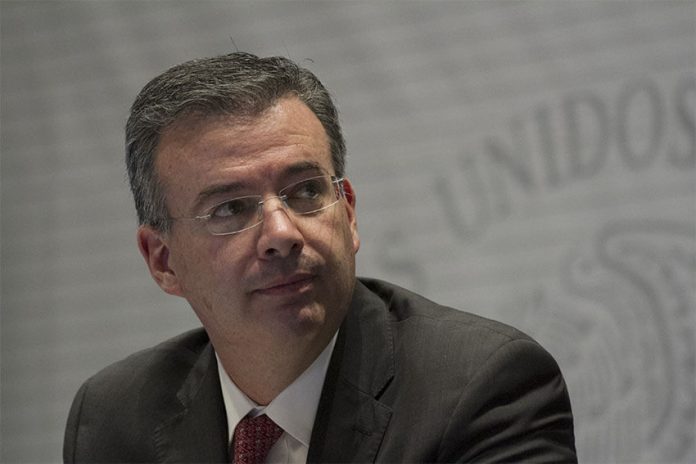
The Thursday board meeting was Governor Alejandro Díaz de León's last.
The Bank of México has raised interest rates more than analysts had expected as it tries to smooth over a rocky leadership transition while the country faces its highest inflation in two decades.
The central bank raised its benchmark rate by 50 basis points on Thursday to 5.5%.
Four of five Bank of México (Banxico) board members voted for a 0.5% increase with only deputy governor Gerardo Esquivel in favor of a 0.25% rise. It was the fifth consecutive board meeting at which the benchmark interest rate was raised, but the first 0.5% spike since February 2017.
Banxico cited inflation concerns in a statement explaining its justification for the 0.5% increase, double what most analysts anticipated. Annual inflation hit 7.37% in November, its highest level in more than 20 years.
The central bank revised its end of year inflation forecast to 7.1%, a 0.3% increase compared to the prediction it published in November.
The bank simultaneously faces an internal challenge in smoothing over a turbulent transition to new leadership. In November, President López Obrador shook markets when he withdrew his nominee for central bank governor and replaced him with a little-known public sector economist.
Victoria Rodríguez Ceja has since been officially confirmed as Banxico’s next governor and will be the first woman to hold the role, although the opposition has questioned her monetary policy experience and her independence from the president.
Rodríguez, who is set to take over from current governor Alejandro Díaz de León on January 1, has vowed to fight inflation, not touch international reserves and maintain the bank’s autonomy.
Like many countries, Mexico is trying to tame soaring prices. From Brazil to Poland, central banks around the world are tightening monetary policy in an effort to contain inflation.
The U.S. Federal Reserve is also taking a more aggressive approach, and said on Wednesday that it expects to raise interest rates three times next year.
Alonso Cervera, chief Latin America economist for Credit Suisse, predicted that the Banxico board will continue to raise its benchmark interest rate next year, with accumulated hikes adding up to 1-1.25%. That would result in a rate of between 6.5% and 6.75% at the end of 2022.
The bank is also contending with a fragile recovery in Mexico’s economy, which saw a sudden contraction in the third quarter. More recent data suggests a rebound, but analysts have revised down their gross domestic product growth projections for 2021 to 5%, according to a monthly Banxico survey.
“Growth data has been disappointing, and the 4Q rebound does not seem to be strong,” analysts at Morgan Stanley wrote before the decision.
The peso strengthened on the announcement of the latest interest rate increase, rallying as much as 1.2% to 20.75 per US dollar, Reuters reported. One greenback was worth about 20.8 pesos shortly after 5:00 p.m.
Uncertainty over the central bank’s leadership has weighed on foreign investment. Foreign investors pulled nearly $1.3 billion from government securities in November, while foreign investments in equities also show outflows of nearly $4.8 billion to November, according to analysts at BBVA.
“We would expect foreign inflows to remain stagnated, as uncertainty regarding the current tightening cycle will continue due to the probable noise resulting from the new composition of Banxico’s board,” the analysts wrote before Thursday’s decision.
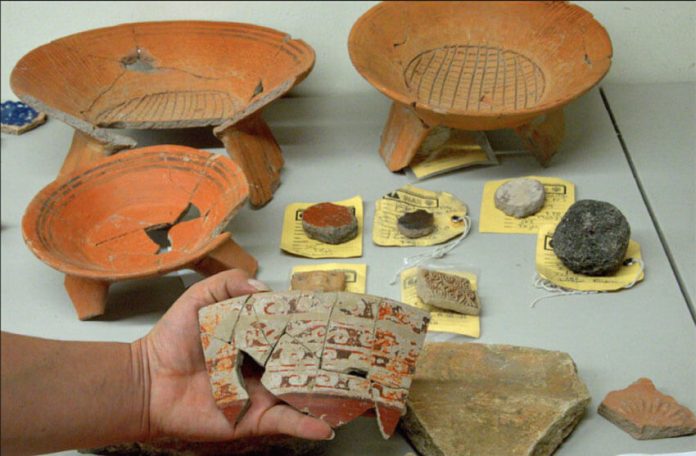
Artifacts related to a Mexica 'New Fire' ceremony. Melitón Tapia (INAH)
Archaeologists have discovered relics related to a ceremony carried out by the Mexica people every 52 years to mark the beginning of a new calendar cycle.
Artifacts linked to a pre-Hispanic New Fire ceremony were found by National Institute of Anthropology and History (INAH) archaeologists near the historic center of Mexico City. The capital was built on land where the Mexica city of Tenochtitlán formerly stood.
Before the New Fire ceremony took place fires across Tenochtitlán were extinguished. Then a new one was lit on Huixachtlan – a hill in the Mexico City borough of Iztapalapa now known as Cerro de la Estrella – to stave off the end of the world. The fire was started on the chest of a sacrificed person whose heart was removed to fuel the flames.
Residents of Tenochtitlán, which was founded in 1325 and conquered by the Spanish in 1521, destroyed and threw out figurines of gods and domestic utensils as a kind of spring cleaning in the days before the ceremony.
INAH archaeologists discovered such items buried at a depth of almost one meter outside the San Fernando cemetery, located in the neighborhood of Guerrero. Among the items they found were pots, mortars and clay figurines. The discovery was made while the archaeologists were inspecting public works that were being undertaken outside the cemetery.
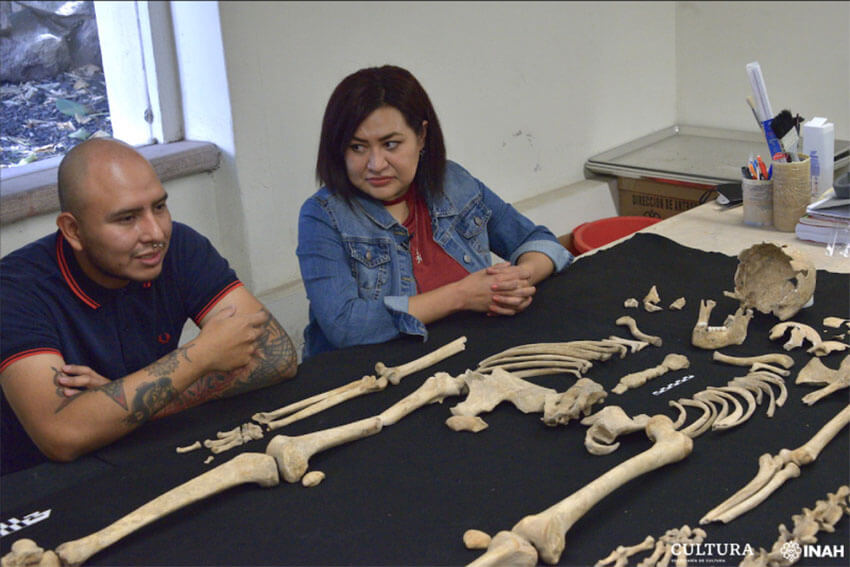
Excavation coordinator Nancy Domínguez Rosas and anthropologist Eduardo García Flores with remains found near San Fernando. Melitón Tapia (INAH)
INAH archaeologist Nancy Domínguez told the newspaper El País that the location where the artifacts were found was formerly a swamp where Mexica people discarded items in the lead-up to the New Fire ceremony.
“The pre-Hispanic garbage dumps were associated with the New Fire ceremony … [because] people went [to them] to deposit their important objects to symbolize [the beginning of] a new cycle,” she said.
In addition to figurines of gods and domestic utensils, Mexica people got rid of clothes, hearth stones and objects used to make fire such as flint.
The INAH archaeologists also uncovered 17 burial pits from the 19th century outside the San Fernando cemetery, where the tombs of luminaries such as independence hero Vicente Guerrero and 19th century president Benito Juárez are located.
They found the remains of various individuals, some of whom may have died during large outbreaks of illness in the capital during the 19th century.
Around 7,000 Mexico City residents died during a cholera outbreak in 1833, INAH said in a statement, noting that the figure represented 5% of the entire population at the time.
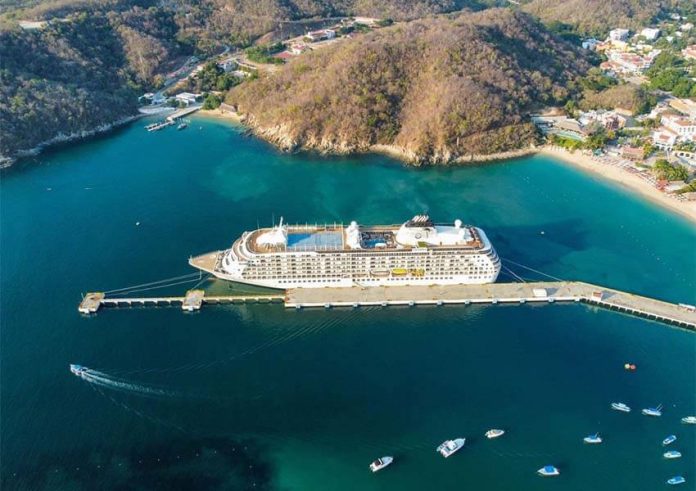
The World, a luxury residential yacht, arrived this past weekend in Huatulco.
After more than a year of COVID-related cancellations, cruise ships are back in Oaxaca, led by The World, a luxury residential yacht that arrived this past weekend at Bahías de Huatulco, a resort destination on the Oaxaca coast.
The ship, which calls itself the largest private property residential yacht in the world, arrived with more than 350 resident-tourists who were expected to spend more than US $25,000 per day as a group.
The 644-foot ship’s passengers stay in owned or rented apartment-sized cabins that the company refers to as residences — accommodations that can have up to three bedrooms and other amenities like living rooms and a kitchen.
The visitors will explore not only Huatulco but also other Oaxaca destinations, including Puerto Escondido, the Magical Town of Mazunte, coffee plantations and the lagoons of Chacahua and Manialtepec.
This cruise season will be guided by strict health safety measures, said state Tourism Minister Juan Carlos Rivera Castellanos. The guidelines have been approved by the state health ministry and are part of a state effort to position itself as a safe tourism destination.
The state expects to welcome between 27 and 31 ships this tourist season. The World, pictured here, was the first.
Oaxaca also has received the “Safe Travels” stamp from the World Travel and Tourism Council, a certification for high standards of health and hygiene protocols.
The state expects to welcome between 27 and 31 ships this tourist season, with an average of 1,900 passengers per ship. Passengers typically spend US $50 to $70 a day, Rivera said.
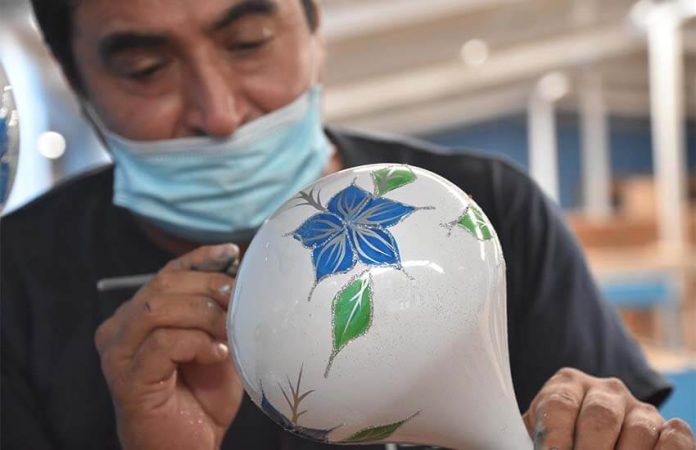
Eduardo Rueda Caballero of the Castillo de la Esfera artisan workshop paints flowers onto an ornament's surface. He can do 60 a day. Photos by Joseph Sorrentino
With all the problems piling up in the world — worries about climate change and the continuing pandemic to mention just two of the biggest — it can be little tough to get into the Christmas spirit. But a trip to Chignahuapan, Puebla, can definitely help put you in the mood.
That’s because Chignahuapan, one of Mexico’s designated Pueblos Mágicos, located two hours north of Puebla city, boasts 400 stores and factories dedicated to making just one thing: hand-made artisanal Christmas ornaments, known in Mexico as esferas.
The art of making esferas was brought to Chignahuapan when Rafael Méndez Nuñez, a chemical engineer who had an interest in making ornaments, moved to Chignahuapan from Uruapan, Michoacán in 1966. Initially, the esferas that he made were very simple: round, silver and undecorated. Today, using the same techniques that Méndez pioneered, other artisans make ornaments that are much more elaborate.
Esferas today come in countless shapes, sizes and decorations. Some are simple bulbs painted in bright strips; some have snowflakes or other winter scenes; others are shaped like small tops; still others have been made to look like hot-air balloons.
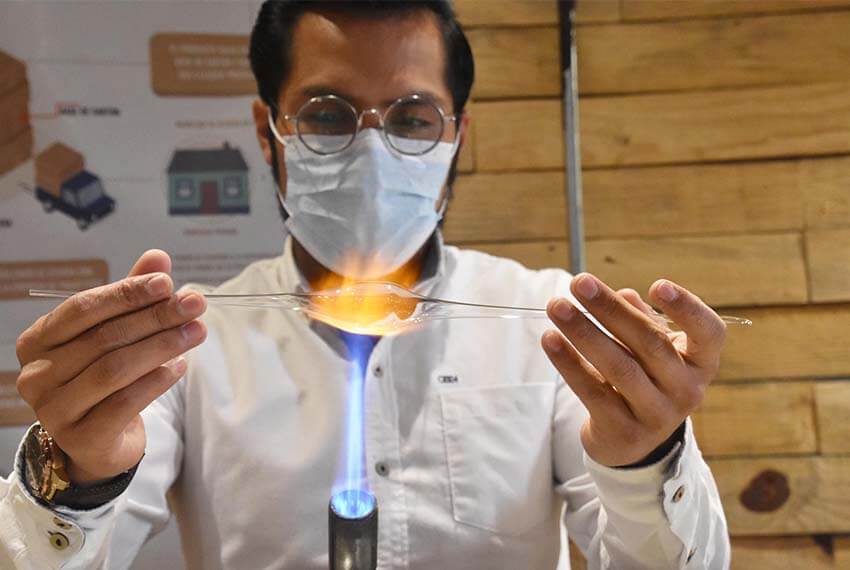
The first step in making an esfera is transforming a long, narrow tube of glass into a globe or some other figure using a blowtorch. This is done by craftsmen known as globeadores.
A holiday ornament begins life at the Esferas Campanita workshop as a thin glass tube.
“The glass we use is Pyrex, which we import from Germany,” said Josué Santos Galindo, who works at Esferas Campanita, a family-owned business started by Evodio Hererra and Arminda Olvera in 1998.
“One needs to know how much temperature to use, [and one] needs to control it,” Santos said.
The glass is heated and pulled by a globeador so that there are two thin tubes connected to a larger mass in the middle. The glass is ready to be shaped into a bulb when that mass is softened and turns orange. The end of one of the tubes is then heated and sealed.
“The difficult part is when the bulb is made,” Santos said.
This is done by gently blowing into the unsealed tube. “One needs to let the air in while turning the glass, only using the lips to blow,” he said. “It is difficult to control the air.”
Shoppers can try their hand at making a bulb at the store, working under the watchful eye of Santos or another employee. But it’s a difficult skill to do well; it could take as long as two weeks to learn how to make a perfectly round bulb.
Juanita Solano Cruz has worked as a globeadora for 27 years. The esferas she makes are much more complicated than a simple bulb.
With seemingly little effort, she’s able to expertly transform a single thin piece of glass into an elaborate esfera of five differently sized bulbs. To make each of the bulbs, she first heats a small part of the glass, blows into the tube to obtain the size she wants, heats another section, then blows another perfect bulb, continuing the process until she completes the esfera.
She laughed slightly when asked how long it would take to learn how to make something like that. “It would take about a month to learn to make the smallest one,” she said. “For a large one, one needs more experience. In about two years, a person would be an expert.”
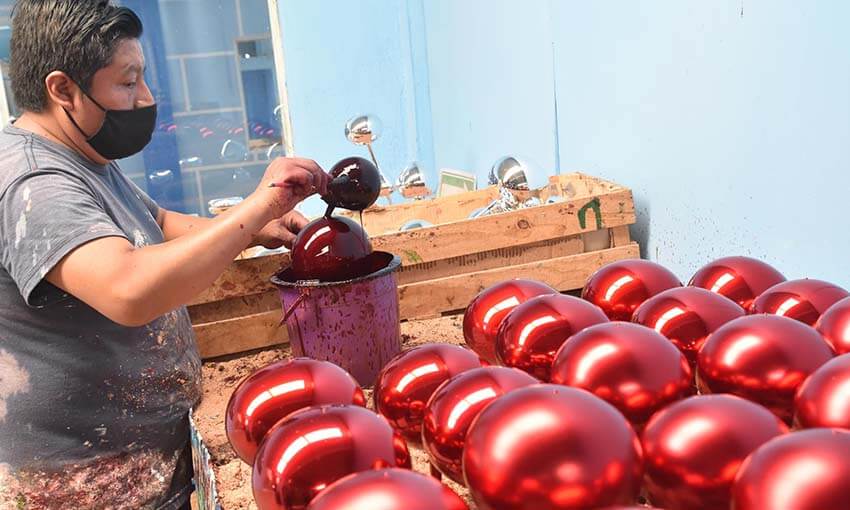
Once a bulb’s made and cooled, it’s filled with a silver nitrate solution, dipped into warm water and gently shaken to evenly coat the bulb. This makes the esfera opaque and ready for the next step, which is painting.
About a 10-minute ride from Esferas Campanita is El Castillo de la Esfera, the largest maker of holiday ornaments in Mexico, founded by Javier Tirado Saavedra in 1993. José Romero Sánchez is a pintador (painter) who has worked there for 27 years. “It is a special paint,” he explained as he gently turned the bulb while pouring the color over it.
Although this may seem like a simple step, it’s not. “The important thing is to know how to turn the bulbs,” Romero said. On a typical day, he can paint 5,000 of them.
Each ornament is also dyed by hand before it is decorated with a painted design or scene.
Once dried, the stem that’s still attached to the bulb is cut using a small emery stone. Once that’s done, the bulb’s ready to be decorated.
Eduardo Rueda Caballero sits at his workbench, focusing intently on the flowers he’s painting on a bulb. “I can decorate 60 in a day,” he said. To learn how to paint a bulb like the one he was working on takes about a week, he said. “Practicing daily.”
Nearby, Orlando Reyes painted something more complicated, el Nacimiento — a Nativity scene — on bulbs. He can make 100 of these over the course of three days, painting the scene in stages. “Although we take longer to make them,” said Carolina Vázquez, another pintadora, “we make them well.”
Both El Castillo de la Esfera and Esferas Campanita also make personalized esferas, painting whatever a customer requests on the outside or tucking a photograph on the inside. Small esferas go for as little as 50 pesos (US $2.50) per dozen, while the most expensive ones cost 500 to 600 (US $25 to $30) a piece.
“When people see esferas in a store, they do not know how much work goes into it,” said Santos. “This is why it costs more. If people knew how much work goes into it, they would value it more.”
Esferas Campanita is on the smaller side, employing 15 people in its store and — during the busy season from October through early January — another 15 in its workshop.
El Castillo de la Esfera is several times larger.
“Here, 200 families depend on the company,” said Arturo Amezcua Muñoz, who has worked there for three years as the director of online sales. “This includes salespeople, drivers, carpenters. One hundred people work in the factory.”
He said that the factory turns out “millions” of esferas a year, operating year-round. “We have to,” he said, “to prepare for this season.”
The business also offers tours of the factory. On a recent Sunday, 4,000 people passed through.
If you’re hoping to make a day of it in Chignahuapan, in addition to its multitude of stores selling esferas, has a lovely zócalo featuring a colorful gazebo. During the season, there’s a huge Christmas tree with performers decked out as Santas, Grinches and other characters.
There’s also the Basilica of the Immaculate Conception, a Baroque-style church with a beautifully painted facade and its 14-meter-tall carving of the Virgin Mary inside. For those seeking a bit more nature, there’s the Laguna Almoloya, the pueblo’s lake, as well as nearby waterfalls, rivers and hot springs.
Ornaments from Esferas Campanita made to look like hot air balloons. Courtesy of Esferas Campanita
It’s estimated that the workshops in Chignahuapan turn out 70 million esferas a year, every one of them made by hand — a laborious process but not one that’s going to change.
“It is important to make these by hand to preserve tradition and for employment,” Santos said. “We all have work. It helps people economically in Chignahuapan. The character of this pueblo is as a producer of hand-made ornaments.”
When asked if there were plans to mechanize the process in the future, he simply said, “No.”