Home Blog Page 1132

Can Mexico be a leader at the UN Climate Change Conference in Glasgow?

0
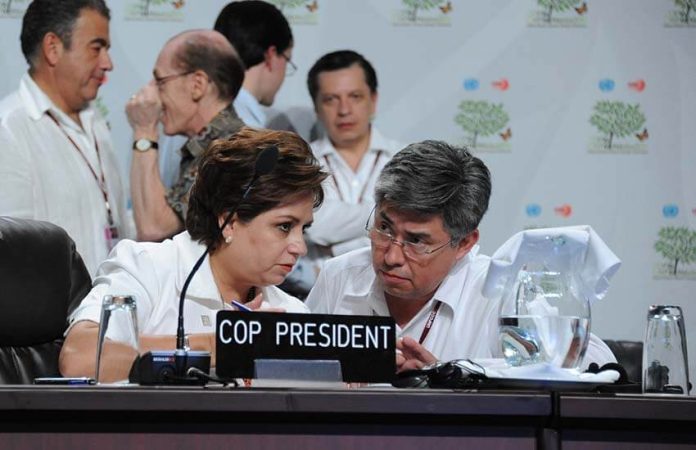
Patricia Espinosa at COP16 conference
Mexico's Patricia Espinosa at the Cancún conference in 2010. She's at COP26 as executive secretary, but Mexico's level of commitment could now be very different. UNFCCC

The United Nations Climate Change Conference (COP26) in Glasgow, which begins this week and ends on November 12, is occurring at a particularly critical time for the future of humankind and planet Earth. Lessons from the COVID-19 pandemic, which postponed the COP26 in 2020, must force us all to reflect on the significance of solidarity among rich and poor nations — for the safety of everyone on the planet.

The concrete results of this climate summit are uncertain. China’s ambition and pledges, as the principal global emitter of greenhouse gases (GHGs), are disappointing — President Xi Jinping, a chemical engineer who is also general secretary of the Chinese Communist Party, did not even attend the summit. Russian President Vladimir Putin also didn’t show up despite his country being the world’s fourth largest GHG emitter.

However, some powerful countries such as the United States (the world’s second highest GHG emitter) and those of the European Union (the world’s third highest GHG emitter) seem to be keen on doing what it takes to ensure the conference is a success. At the Copenhagen COP15 in 2009, rich countries promised to mobilize US $100 billion a year by 2020 to help developing countries adapt to the impacts of climate change and mitigate GHGs. Those pledges were reiterated at the Paris COP21 in 2015 but were not fulfilled. Will the U.S., the European Union and other rich countries deliver on their promise in Glasgow?

Mexico has played an important role in previous climate change summits, in particular as host and president of the Cancún COP16 in 2010. According to the secretariat of the U.N. Framework Convention on Climate Change (UNFCCC) at the time, that conference “produced the basis for the most comprehensive and far-reaching international response to climate change the world had ever seen to reduce carbon emissions and build a system which made all countries accountable to each other for those reductions.”

In Cancún, the parties agreed to commit to a maximum temperature rise of 2 C above preindustrial levels and to consider lowering that maximum to 1.5 degrees, as well as establishing a Green Climate Fund to provide financing for developing countries. They also agreed to the Cancún Adaptation Framework to promote the implementation of stronger action on adaptation in order to reduce vulnerability to climate change and build resilience in developing countries.
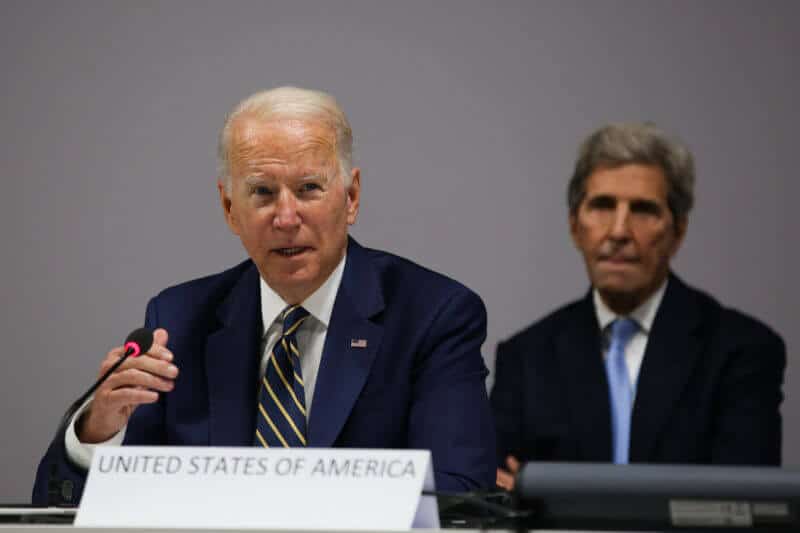
Joe Biden at COP26 Glasgow
US President Joe Biden speaks at the UN Conference on Climate Change in Glasgow Monday. Kiara Worth/UNFCCC

Will Mexico show the same kind of leadership at the COP26 in Glasgow?

For U.S. President Joe Biden, the conference is crucial because one of his main presidential campaign pledges was to deal with climate change. Also, the Paris Accord, negotiated in 2015, was a large part of Biden’s and (his boss at the time) President Barak Obama’s legacy.  At his own inauguration, President Biden signed an executive order reinstating the U.S. into the Paris Accord after his climate-denying predecessor Donald Trump had withdrawn from the agreement.

We can therefore expect that, in Glasgow and over the next two weeks, the U.S. and the European Union will use their traditional carrot and stick policy to try to convince the leaders of other countries to augment their pledges on reduction of GHGs. But let’s make no mistake: if global temperatures rise beyond the crucial threshold of 1.5 degrees, the consequences to all nations, rich and poor, will be dire and the suffering of billions across the world unimaginable. Our future and that of life on Earth are on the line.

This is what thousands of scientists around the world are saying, and the enormous wealth of evidence is irrefutable.

In a report published this August — based on more than 14,000 scientific studies and supported by 195 nations — the Nobel Laureate Intergovernmental Panel on Climate Change (IPCC) concluded that countries had delayed actions to reduce fossil fuel-driven GHGs for so long that many of the impacts of climate change are already irreversible; that we cannot avoid global warming and its intensification over the next 30 years, and some of its most dreadful consequences are already inevitable; and that the situation will get even worse if we do not drastically reduce global emissions in this decade.

The COP26 is not just one more conference. There is much at stake for us and for the planet.  The outcome of this summit depends on the tangible and ambitious pledges that countries and international funding agencies bring forward to contribute to achieving the global goals that the United Nations has put forward.

And, of course, those pledges will be contingent on all parties delivering on their promises — which, as we all know, is the weak side of global summits and multilateral agreements.

The goals of the COP26 are grouped into four sections: mitigation (meaning securing global net-zero GHGs by 2050 and keeping the 1.5-degree goal within reach); adaptation (i.e., urgently adapting policies to protect communities and natural habitats); finance (mobilizing enough resources to deliver on the previous two goals); and collaboration (governments, businesses, and civil society working together to deliver on any pledges or goals).

It should be crystal clear that success or failure in Glasgow heavily depends on the ambitions and moral principles of every leader in every country.  In the end, we elected them precisely to deliver at times of crisis such as climate change.

Mexico is the 13th highest GHG emitter and the second in Latin America, after Brazil. I don’t know what pledges the Mexican delegation will bring to Glasgow. One can, however, derive some insight based on what the current federal administration has done in its first three years.

I will focus on what may be the most crucial goal of the COP26: mitigation of greenhouse gases. Both the actions and the omissions of Mexico’s government offer insight into what we (and the world) can expect from its delegation attending the summit.

According to UNFCCC executive secretary Patricia Espinosa (a Mexican citizen) and the United Kingdom (as the COP26 host and president), in order to reach GHG mitigation goals and avoid global temperatures exceeding the 1.5-degree precipice countries must pledge (and deliver on those pledges) to substantially reduce their emissions by 2030. This will be possible only if the participating nations accelerate their reduction of fossil fuel use, decrease deforestation and encourage investment in renewable energies.
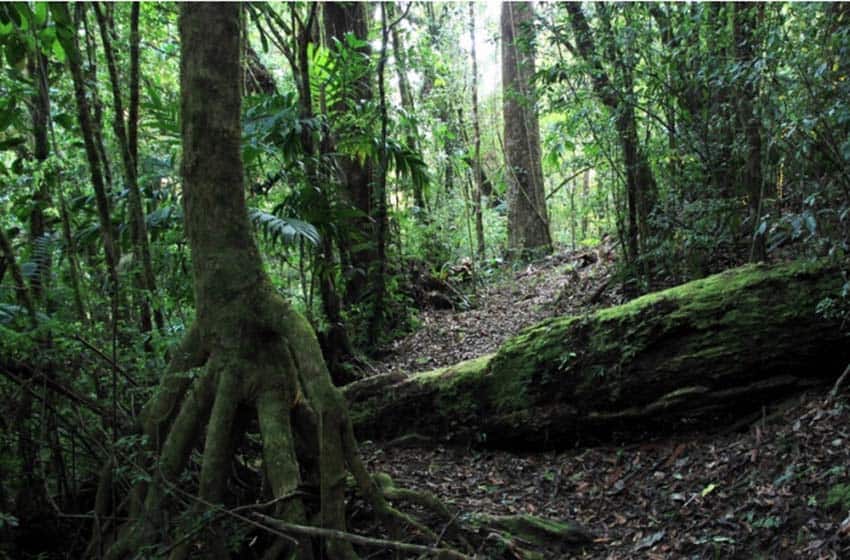
Xalapa's cloud forests in Veracruz, Mexico
Xalapa, Veracruz’s cloud forests are an example of climate change impacts on Mexico: the threatened area provides a third of the city’s water supply. Conacyt

In Mexico, achieving those goals looks extremely difficult in light of what we have seen so far of the current administration’s energy policy, which has been essentially centered on strengthening the state oil company Pemex and the Federal Electricity Commission (CFE), in what seems an awkward race to accelerate oil and gas extraction. It’s an energy policy that many experts say creates major obstacles to and disincentivizes investment in renewable energies, particularly solar and wind power.

The construction of the Dos Bocas oil refinery in Tabasco and the “modernization” of another six refineries in Cadereyta, Nuevo León; Ciudad Madero, Tamaulipas; Minatitlán, Veracruz; Salina Cruz, Oaxaca; Salamanca, Guanajuato; and Tula, Hidalgo, leaves no doubt whatsoever about the government’s preference for fossil fuels. Add to that the Deer Park refinery in Texas that Pemex recently bought from the Shell company.

With regards to deforestation, according to the U.N.’s Food and Agriculture Organization, between 2010 and 2020, Mexico lost more than 1.2 million hectares of forests (128,000 hectares were lost in 2020). And all this is happening while the country’s main environmental agencies are being weakened as never before.

Clearly, Mexico’s climate policy is inconsistent with the pledges the country made as part of the 2015 Paris Accord. And our current policies are not consistent with what is expected from countries at Glasgow in 2021.

In Paris, Mexico made ambitious pledges that were later reflected in its first Nationally Determined Contributions (NDC) — i.e., its stated goals in domestic climate change mitigation and adaptation. It was the first developing country to submit them in 2016, and these pledges were later ratified by the Mexican Congress.

In 2021, however, Mexico presented a revised NDC that falls below its original pledge and also well below the equitable contribution that the country needs to make toward efforts in avoiding the planet warming more than 1.5 degrees.

If Mexico’s proposed electricity reform is approved, the nation will continue to fall short of its international climate change commitments.  The major source of GHG (60–70%) is energy production, and the production of electricity is the activity that contributes to most of these gases.

Instead of diversifying energy sources and markets, the electricity reform will mean that the CFE produces the majority of its electricity from fossil fuels — the most inefficient, costly and polluting energy source.

If the electricity reform is passed by Congress in its current form, it will have serious environmental implications, not only for climate but also for the health and economy of all Mexicans.

As many experts have said, the reform would also raise electricity prices. For the first time, Mexicans were beginning to see a competitive electric market with a diversity of sources and a wide array of actors — which is healthy in a marketplace if your goal is competitiveness and lower prices for citizens. Thanks to such diversification and the issuing by Mexico of clean energy certificates, in 2017 the country achieved the world’s lowest solar energy price at US $17.7/MWh.

I fear that Mexico will arrive in Glasgow this week with pledges far below what is needed at these crucial global climate negotiations. I hope I’m proved wrong because, with Brazil President Jair Bolsonaro’s well-known disdain for climate issues and negligence that is accelerating the Amazon’s destruction, the world needs a strong Latin American country willing to take the lead. For both humanity and our planet.

Omar Vidal, a scientist, was a university professor in Mexico, is a former senior officer at the UN Environment Program, and former director-general of the World Wildlife Fund–Mexico.

Gas theft blamed for explosion that killed 1, injured 8 in Puebla city

0
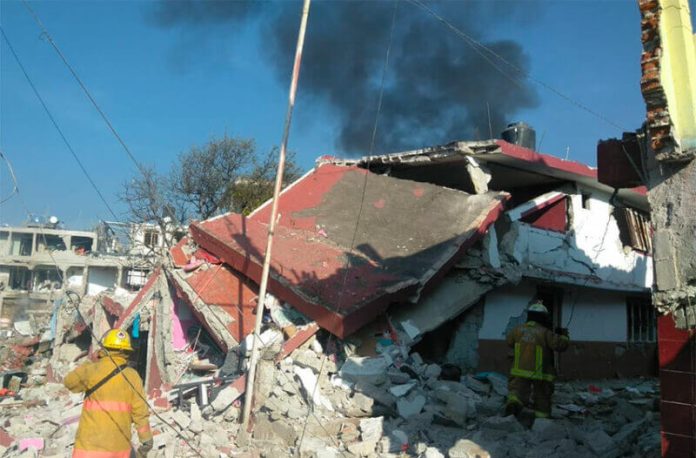
Damage from Sunday's blast in Puebla. civil protection puebla

An illegal pipeline tap is to blame for an LP gas leak that caused an explosion that claimed the life of one person and seriously injured eight others in Puebla city early Sunday, a state oil company official said.

Javier González del Villar, director of Pemex’s logistics division, said the leak in San Pablo Xochimehuacán in the city’s north end occurred after thieves perforated the pipeline to extract gas into a tanker owned by the company Hidro Gas. At least two other explosions occurred after a powerful initial blast.

Accompanied by Puebla Governor Miguel Barbosa, González told a press conference that the explosion occurred on the gas pipeline that runs between Tecamachalco and San Martín Texmelucan. More than 180 houses and numerous cars were damaged in the blast. The fire it caused was brought under control just before 5:00 a.m. Sunday.

Barbosa said that a “a tragedy of enormous proportions” was prevented thanks to a rapid evacuation of people in the vicinity. Some 2,000 people who live within a one-kilometer radius of the site were evacuated prior to the explosion in the early hours of Sunday morning.

González said that a Hidro Gas tanker entered the property where the explosion occurred at 1:00 a.m Sunday and was extracting gas by 1:30 a.m.

He said Pemex believes that a hose being used to extract gas became detached from the pipeline due to the pressure of the gas running through it. Realizing that gas was leaking, the thieves got scared and fled, González said. A transformer located in front of the illegal tap served as a “point of ignition,” he added.

The Pemex official said that LP gas theft is a common occurrence in Puebla city and other municipalities in the state such as San Martín Texmelucan, San Matías Tlalancaleca and Tepeaca. Thieves tap a pipeline, connect a tanker to the breach, fill up and leave, he said.

Barbosa said he had asked federal authorities to review the permits they have granted to gas companies in Puebla and the way in which they obtain their product. He also said that his government will collaborate with the federal government to patrol gas pipelines “meter by meter” to apprehend gas thieves.

A gas station located near the property where the gas pipeline was tapped will also be investigated, the governor added.

According to Pemex data, 1,511 illegal taps on gas pipelines were detected in the first eight months of the year, a 17% increase compared to the same period of 2020. Two-thirds of the perforations were detected in Puebla.

Taps on gas and gasoline pipelines have caused dozens of explosions in recent years, including one in Tlahuelilpan, Hidalgo, that claimed 137 lives in January 2019.

With reports from Milenio, Reforma and Reuters 

Researchers conclude headdress of Cuauhtémoc wasn’t his after all

0
What was thought to be the headdress of Cuauhtémoc.

An artifact purported to be the headdress of Aztec tlatoani Cuauhtémoc is not in fact a headdress and didn’t belong to the last ruler of Tenochtitlán, according to a group of Mexican and French researchers.

The penacho de Cuauhtémoc, or Cuauhtémoc’s headdress, is currently on display at the National Museum of Anthropology, which secured a loan of the piece from the Quai Branly Museum in Paris, France. It was sent to Mexico for a temporary exhibition marking the 500th anniversary of the downfall of Tenochtitlán, the Aztec or Mexica capital, and the 200th anniversary of independence from Spain.

But a multidisciplinary team of Mexican and French experts have concluded that the circular artifact – which is mainly made of feathers – is not a headdress (wearing it on the head would be impossible, they deduced) and was made between the 17th and 19th centuries, probably in South America.

The experts sent two minute samples of the purported headdress to a laboratory in Poznan, Poland, which used carbon dating to determine with 75% certainty that it was made between 1626 and 1810. Even the former year is more than 100 years after Cuauhtémoc was executed on the orders of Spanish conquistador Hernán Cortés in 1525.

Eugène Boban, a 19th century French art dealer employed as the personal antiquarian of the Mexican Emperor Maximilian, brokered a sale of the artifact, claiming that it was indeed the headdress of Cuauhtémoc, who ruled Tenochtitlán from 1520 t0 1521.

But Leonardo López Luján, a National Institute of Anthropology and History researcher and member of the team that studied the object, said that Boban made the assertion simply to get a better price.

“You had to say it was pre-Hispanic, Aztec or Inca because Mayan [artifacts] weren’t so well known then, and that it belonged to a king – Cuauhtémoc, Moctezuma or [last Inca Emperor] Atahualpa,” he said.

López said that a lot of artifacts passed through Boban’s hands, and some of them were fake. Two crystal skulls sold by the antiquarian and currently held in the Quai Branly museum and the British Museum in London have been proven to be 19th century fakes rather than pre-Hispanic artifacts.

“There are a lot of pieces like that in Europe because American objects were not well known,” López said.

Although the penacho de Cuauhtémoc apparently didn’t belong to the 16th century tlatoani, it is a “spectacular, very beautiful, very rare ethnological piece,” he said.

However, it has never been put on public display at the Quai Branly Museum due to doubts about its authenticity.

The multidisciplinary expert team – of which Laura Filloy, María Olvido Moreno, Fabienne de Pierrebourg, Stéphanie Elarbi, Christophe Moulherat and Jacques Cousin are also members – hypothesizes that the object was made in either an Amazonian or Andean region of South America.

“It could be part of a scepter. … It wasn’t worn on the head [but] maybe [it was held] in the hand,” López said. “What is clear is that it has nothing in common with the other Aztec feather pieces there are in Europe and Mexico.”

The best known such piece, the penacho de Moctezuma, is on display at the Museum of Ethnology in Vienna, Austria.

With reports from El País 

Mexico detained a record 41,000 migrants in September

0

September broke the record for the highest number of migrants detained in a single month. At 41,225 it’s the most for any month since record-keeping began in 2001. 

The first nine months of the year were nearly record breaking too: more than 190,476 migrants were detained from January through September, which places the first three quarters of 2021 second only to the same period in 2015. In January-September of that year, 198,141 migrants were apprehended. 

However, the number of Mexicans sent back home from the United States was in the same ballpark: 168,498 were repatriated in the first nine months 0f 2021, and 224 from Canada.

In Mexico, far fewer of the detained migrants have been repatriated. The country with the largest number of returnees was Honduras, with 39,294. Guatemala was next with 28,838.

In terms of age, the vast majority of detained migrants in Mexico were adults. However, 39,076 were 12-17 years old and 13,614 were under 12. 

Chiapas, which borders Guatemala, was the most prominent state for detentions: 22,981 migrants were taken into custody there from January to September. Tabasco, another state which borders Guatemala, registered 8,032 detentions; Veracruz recorded 7,002; Tamaulipas 6,256; and Mexico City 4,579.

The National Immigration Institute and the refugee agency COMAR have struggled to keep up with the number of migrants trying to secure their papers. In the first nine months of 2021, 35,412 temporary resident cards were issued, and 28,240 humanitarian visitor cards.

Being a migrant in Mexico can be a risky affair. Data from the Interior Ministry shows 552 crimes against migrants were recorded. They were largely perpetrated in Hidalgo, which saw 282 such reports. The most commonly reported crimes were migrant smuggling, robbery, human trafficking, extortion, abuse of power and kidnapping.  

With reports from Animal Político

Don’t write about violence for sake of tourism, Acapulco mayor tells reporters

0
Media is spreading alarm, accuses Mayor López.

The mayor of Acapulco suggested Friday that the media shouldn’t report on violence in the resort city because doing so damages the tourism industry.

Abelina López Rodríguez told reporters that the media is responsible for causing alarm about violence in Acapulco, described by The Washington Post in 2017 as Mexico’s murder capital.

“If we don’t take care” of the tourism industry, “I don’t know how we’re going to eat,” said the Morena party mayor, who took office at the start of last month.

“Why is Cancún keeping quiet? Because we all understand we have to eat something,” López said.

Her remarks came after a string of violent incidents in Acapulco last week. A photojournalist was kidnapped and shot (he died in hospital on Sunday), two public transit drivers were murdered and a large group of armed men set Acapulco’s main wholesale market on fire after dousing it with gasoline. Authorities said that 20 market stalls were damaged but there was no loss of life.

Just before López was sworn in on October 1, the city’s iconic Baby’O nightclub was destroyed by fire, triggering speculation that a crime group was sending a message to the new mayor.

The mayor said Friday that all cities face difficulties from time to time and that they all take care to protect their main sources of revenue. “… It’s time to love Acapulco,” she said.

Earlier last week, President López Obrador announced a new support plan for Guerrero, the state in which Acapulco is located. Part of the plan entails deploying an additional 700 soldiers and National Guard troops across the municipalities of Chilpancingo, Acapulco and Iguala.

Federal homicide statistics show that Acapulco, Guerrero’s largest city and top tourism drawcard, was Mexico’s fifth most violent municipality in the first five months of 2021. There were just under 30 homicides in the city in October, the newspaper El Sol de Acapulco reported.

With reports from Proceso and Infobae 

The leaders of the migrant caravan: in their own words

0
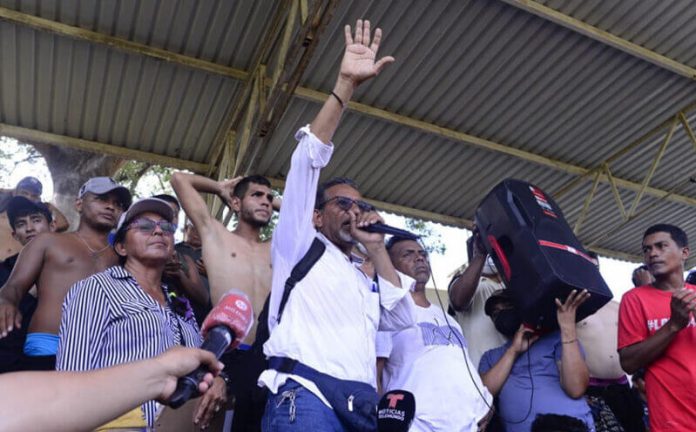
Pastor and migrant advocate Luis Rey García Villagrán shouts into a microphone in a crowded area shaded by a tin roof
Pastor and prominent migrant advocate Luis García Villagrán accused Mexican officials of tricking migrants into accepting bus rides to far-flung cities. (File photo)

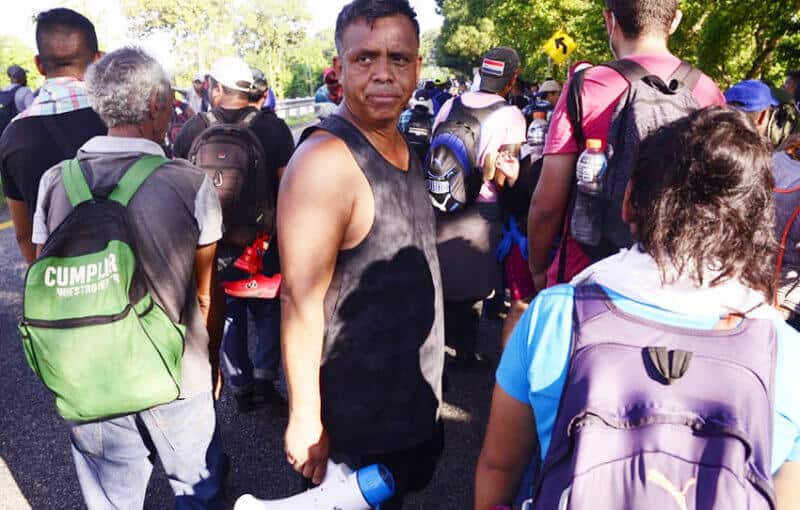
Irineo Mújica and Luis Rey García Villagrán are the two people leading the 2,500-strong migrant caravan which left Tapachula, Chiapas, on October 23 and is slowly making its way north. The convoy is largely Central American and partly composed of pregnant women, young children and disabled people.

They’re an unlikely couple. Mújica is a firebrand activist: combative, energetic, instinctive. In contrast, García is more pastor than protester: pensive, eloquent, cool-headed. Both understand the power of public opinion, and have a knack for politics and an eye for the camera.

Their faith also binds them: Mújica is Catholic and García is an Evangelical Christian. The caravan itself is spearheaded by a large wooden cross.

The pair spoke separately to Mexico News Daily about what motivates them to assemble and lead migrant caravans.

Luis Rey García Villagrán, of the Center for Human Dignity: 

“I was in prison for 12 years here in Mexico accused of a crime that I didn’t commit. There were a lot of organizations that helped me: Amnesty International, Human Rights Watch, Christian Action for the Abolition of Torture and in Mexico, the Center of Human Rights Fray Bartolomé de Las Casas, until they finally declared me a prisoner of conscience and I won my freedom. That motivated me to help other people. God motivates me to do this. I found God at university; I studied at the UNAM [National Autonomous University].

“I was first held in the most dangerous prison in Chiapas because I insisted I was innocent … that’s a crime in itself … They took me to federal maximum security prisons. I was in Puente Grande [Jalisco] and in Matamoros [Tamaulipas] for five years. In total I was [in prison] for 12 and a half years. In the maximum security prisons I was with the bosses, the leaders of narco trafficking.

“It was for political reasons … a crime that the authorities invented. The criminal records were full of white correction fluid, false signatures. There were graphoscopic investigations … Despite all that, I was sentenced to 78 years in prison until the Inter-American Commission for Human Rights, with headquarters in Washington, took my case and told the Mexican state to free me or to go to the Inter-American Court in Costa Rica. A friendly agreement was reached in which public apologies were given … They paid me and I formed the Center of Human Dignity [with the money].

“The political motive [against me] was that I worked for the government and I didn’t lend myself to corruption … in the federal Attorney General’s Office [as a lawyer].

“We all know narco trafficking turned Mexico into a narco state and we didn’t want to lend ourselves to it, so they fabricated a crime. I was tortured, I lost my vision in my right eye … it motivated me to help other powerless people. Other people in the same condition as me.”

Irineo Mújica
Irineo Mújica: a passion for helping migrants. chasper senn

Irineo Mújica, of Pueblos Sin Fronteras, or Peoples Without Borders:

“I’ve been doing this for 20 years, I’ve heard all the stories; it began with my own family. They didn’t want to attend to my father because he was a migrant. I’ve been a migrant [to the United States from Michoacán]. I swore on my life that I would help migrants like my father, that’s why I don’t get tired of it.

“Injustices get stuck in my throat, I’m stuck going back over and over again to what they did to my family. God has a path and a destiny for everyone, and this one is mine. I don’t want to be a politician … the only thing I would have wanted is to help my father and through that I made the promise … if I couldn’t defend him at that time I think being able to defend the many injustices that these people carry, who are just like him [is my path]. The blessing is for him … I have been fulfilling the promise for 20 years.

“We’re going to Mexico City — I’m not going to the border — so that they give them their papers. I firmly believe that Mexico has a responsibility.

“I don’t lie to anyone. What are they [the government] saying? That I’m lying to whom? Who do you think is really lying to whom? I don’t care what [Foreign Minister] Ebrard says to be honest.

“He’s a politician. What has the government’s defense been, that we’re lying? Poverty doesn’t lie, necessity doesn’t lie, prison doesn’t lie, children in the street don’t lie, hunger doesn’t lie. You don’t have to lie because you feel it. You feel all of the damage that they’ve done to you.”

Mexico News Daily

After 91 days, security forces clear teachers’ rail blockades in Michoacán

0
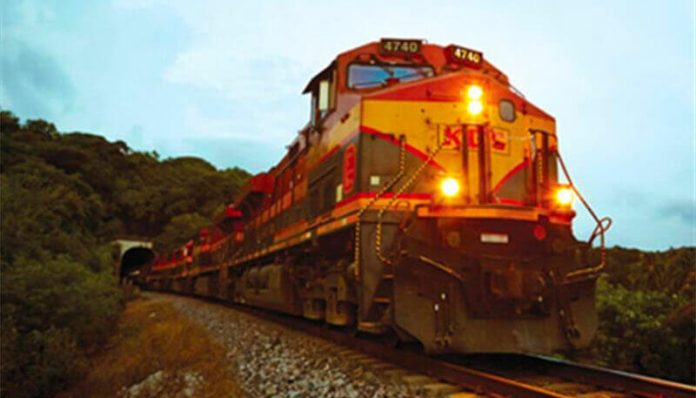
A Kansas City Southern train in Michoacán.
A Kansas City Southern train in Michoacán. (Archive)

Teachers who blockaded train tracks in Michoacán for the last 91 days were removed by security forces on Sunday. 

Members of the CNTE teachers union installed blockades on the tracks on July 31 in Caltzontzin, on the outskirts of Uruapan, claiming the state government had failed to pay wages owed to some 28,000 teachers. Five weeks ago, they expanded the blockade to the railway to Pátzcuaro, 54 kilometers from the state capital Morelia. 

The teachers said there were no confrontations or violence during the evictions, the newspaper Reforma reported. National Guard troops and state police cleared the tracks at about 3:30 p.m., and the Michoacán industry association AIEMAC said on Sunday it expected railroad Kansas City Southern de México (KCSM) to start running trains the same day. 

State Governor Alfredo Ramírez Bedolla said 1.5 billion pesos (about US $71 million) was paid to teachers to settle four fortnightly payments, and unpaid bonuses. The disagreement predates Ramírez’s time in office, going back to his predecessor’s administration; the Democratic Revolutionary Party’s Silvano Aureoles. 

The leader of the CNTE’s so-called “power base” group, Benjamín Hernández, confirmed that he received a warning about the operation after the state government settled payments.

“The pressure was very strong … finally today the governor told me that he could not stop the eviction … I asked them [the teachers] to withdraw and not come to confrontation. In Caltzontzin, the Michoacán police and the National Guard arrived. They began to remove everything. In Pátzcuaro, they also arrived and asked [the teachers] to retreat, and if not, they said they would act,” he said.

However, the battle might not be over quite yet. Hernández said that union members would meet on Wednesday to discuss further strike action. They say they are owed a salary increase and their bonuses for 2020, and that they want to secure jobs for trainee teachers that graduated in 2019, 2020 and this year.  

The industry association AIEMAC said companies were losing a combined total of approximately 50 million pesos ($2.4 million) each day due to the obstruction of access to the port of Lázaro Cárdenas, Reforma reported on September 2. 

With reports from Reforma

Sinaloa police crack down on cartel-related Halloween costumes

0
A truck splattered with 'blood' was among the vehicles seized.
A truck splattered with 'blood' was among the vehicles seized. seguridad publica sinaloa

There are limits to what you can wear for a Halloween costume in Sinaloa: don’t dress up as a sicario.

At least 28 people were arrested and eight vehicles were seized due to Halloween-related infractions committed in Culiacán, the capital, over the weekend.

State police took two people into custody for carrying fake weapons to complement their Halloween costumes, while at least some of the vehicles were seized and their drivers detained because they were painted to appear like they were covered with blood. One car splashed with red paint had a mock corpse on its roof.

Many other people were arrested because they were drinking alcohol in public places during Halloween celebrations, the Sinaloa Security Ministry (SSP) said. The army, National Guard and municipal police also participated in an operation against anti-social behavior in the Sinaloa capital.

The SSP published photos of two of the detainees on Twitter. One showed a man dressed in black toting a fake assault weapon and wearing a mask used by one of the fictional characters in the Friday the 13th film series.

“This Saturday in Culiacán this civilian was referred to the relevant authority for carrying this type of object,” the SSP said, adding that anyone else in possession of toy weapons will meet the same fate.

Another photo published on Sunday showed a young man in a Squid Game costume standing in front of a phony firearm.

The SSP said he had been detained in Culiacán for being an apologist for violence and using a toy gun. “Let’s avoid using these artifacts that can generate fear among the public,” it said.

Sinaloa Security Minister Cristóbal Castañeda said Saturday in a post on his own Twitter account that there would be no tolerance for the use of fake weapons during Halloween celebrations.

In another post that included two images of a white car painted with red streaks of “blood,” Castañeda stressed that “these kinds of situations that cause anxiety for the public will not be permitted.”

Citizens of Culiacán, a stronghold of the powerful Sinaloa Cartel, have also been terrorized by real violence. After one of Joaquín “El Chapo” Guzmán’s sons was arrested in 2019, the Sinaloa Cartel carried out a wave of attacks across the city that prompted federal authorities to release the suspected trafficker.

More recently, a group of armed men shot out more than 80 security cameras with automatic machine guns, causing panic in several parts of the city.

With reports from El Universal and Informador 

Attorney general says no to revealing accusations filed against AMLO

0
lopez obrador
The president has been accused of a number of crimes but justice officials won't reveal details.

The federal Attorney General’s Office (FGR) has refused to disclose the number of complaints it has received against President López Obrador or whether it is investigating the president for any crime.

In response to a request for such information submitted by the newspaper El Universal, the FGR said it couldn’t divulge it because doing so would violate a privacy and confidentiality clause in the federal transparency law.

“Affirming or denying the existence or nonexistence of an inquiry, complaint [or] preliminary investigation against an identified or identifiable person, as is the case at hand, would infringe on the privacy, honor, good name and presumption of innocence of the person,” it said.

The FGR’s refusal to reveal the information breaches an order from the national transparency watchdog (INAI) for it to disclose any complaints made against the president and his predecessors. INAI said in January that the dissemination of such information would aid accountability and help to guarantee citizens’ right to access information.

The Supreme Court has also opined that the right to the protection of one’s honor and good name should not apply as stringently in the case of public officials.

Although the FGR refused to say how many complaints have been filed against López Obrador, it is known that several individuals and organizations have gone to the Attorney General’s Office to make formal accusations against him.

The National Anti-AMLO Front filed a wide-ranging complaint in May, accusing him of electoral crimes, treason, embezzlement and crimes against humanity. The complaint also accused López Obrador of acting illegally for ordering the release of one of Joaquín “El Chapo” Guzmán’s sons after his arrest triggered a wave of cartel attacks in Culiacán in October 2019.

Also in May, Democratic Revolution Party national president Jesús Zambrano formally accused the president of interfering in the electoral process leading up to the June 6 elections.

National Action Party senators filed a criminal complaint against López Obrador late last year for illicit use of public service after several communities in Tabasco were inundated as a result of a decision to divert floodwaters away from the state capital Villahermosa.

And parents of children with cancer have accused the president and health officials of homicide due to the lack of chemotherapy drugs.

There is nothing to stop the FGR from investigating the accusations as the president’s immunity from prosecution, known as the fuero, was abolished in February.

The FGR is ostensibly independent of the federal government but according to El Universal it has appeared to act on the instructions of the president, or to divert attention from unwanted focus on López Obrador, on at least four occasions.

One case was that of former economy minister Ildefonso Guajardo, who was ordered to stand trial on charges of illicit enrichment after the FGR presented a case against him because he “probably” acquired “an unjustified increase to his wealth” between 2014 and 2018 and couldn’t prove its legal origin.

The FGR’s announcement on July 9 that a judge had ordered Guajardo to stand trial came just hours after a video surfaced showing one of López Obrador’s brothers receiving a large amount of cash from a man who served in the current federal government.

With reports from El Universal 

White collar crime, vaccines done on time: the week at AMLO’s press conferences

0
Friday's conference in Campeche.
There was a large crowd of officials out for Friday's conference in Campeche.

For Andrés Manuel López Obrador, there is more to his beloved sport béisbol than a bat and a ball. The avid fan, and player, is more concentrated on the ethics of the sport than the score. That, in this writer’s view, is to his advantage: the alternative win-at-all-costs mentality, evangelized by Mexico’s northern neighbor, rather misses the point.

The government has invested heavily to renovate dilapidated stadiums. AMLO has quoted baseball’s favorite son Babe Ruth at his weekly press conferences, and expressed his support for L.A. Dodgers pitcher Julio Urías. Player turned politician Fernando “The Octopus” Remes also gained AMLO’s backing, whom he said “… knows very well that you have to steal the bases, but not the budget.”

Last week the president was injured in a veterans’ game, but that surely won’t deter him for long.

Monday

Once formalities were dealt with, i.e. the standing fuel prices and video presentations of infrastructure projects, journalists were given the floor.

On the budget, AMLO offered unlikely praise to Porfirio Díaz, who like many dictators laid train tracks. “My generation traveled by train … Porfirio Díaz linked up almost all the country. The revolution was done by horse and by train,” he said.

The president, who has riled against neoliberal politics on no few occasions, had the International Monetary Fund in his sights. “I don’t believe in their policies. They caused the world’s socio-economic decline, they are responsible for the global [economic] crisis,” he said.

Politics was sidelined later in the conference, in favor of lyrical endeavor. When asked about his plans for the Day of the Dead celebration on November 1, the president offered a poem by Tabascan Carlos Pellicer: “‘Of all the flowers, ladies and gentlemen, it is the purple lily that amazes me the most. The Mexican people have two obsessions: the taste for death and the love of flowers.'” He confirmed he would be taking the holiday off to reflect. 

The president said criticisms of his government were welcome, and called for a song: I Always Say What I Think, by Puerto Rican hip-hop group Calle 13.

Tuesday

They had been heading downward for three months, Deputy Health Minister Hugo López-Gatell said, speaking about COVID-19 cases. On Friday, he added, the president would celebrate the vaccination — with at least one shot — of the entire adult population at an event in Campeche city. Mexico City would complete its two-shot vaccination program this week.

AMLO updates the conference progress of the Maya Train.

Health Minister Jorge Alcocer took to the podium to pay homage to doctors, past and present, for October 23rd’s Day of the Doctor.

What did AMLO make of the Supreme Court’s decision to get rid of pre-trial detention for some financial crimes? Justice, he said, was “still at the service of money, of the powerful … it’s going toward protecting corruption and supporting minorities … I don’t think the court acted well,” he said. “It’s about white collar criminals, [it supposes] posh people can’t go to prison,” he added.

The National Autonomous University (UNAM) was next in line: “They feel offended because I said it became more right wing … they didn’t say anything during the biggest looting in the history of Mexico … it gentrified … social science, political science, sociology, economics, philosophy, law …” the UNAM graduate said.

Young girls were being sold in Guerrero, a journalist posed. “Indigenous peoples have a great reserve of cultural values … There is a very classist and racist tendency to accuse the poor of all evils,” the president responded.

“There are terrible things that the media hides … about prostitution in elite circles,” he added.

Wednesday

The president confirmed he would fly to Mérida, Yucatán, in the evening, and Campeche the following day, to inspect the progress of the Maya Train from a helicopter.

Elizabeth García Vilchis lined up the media lies. The chief police investigator under former president Calderón, Iván Reyes Arzate, had admitted to trafficking in the United States, but few had covered it, García said. Reports on the 2022 budget were riddled with falsehoods, there would be no reduction in funding for NGOs, and writer-historian Enrique Krauze’s tweet about excess mortality in Mexico was intentionally misleading, she added.

The president turned back to his favorite historian later in the conference: “Do you think that I’m surprised that Krauze manipulates a graph, if he dared to tell colossal historical lies? He dared to say that Porfirio Díaz had not ordered the assassination of as many people as other presidents. He forgot the extermination of the Yaquis, 15,000 Yaquis murdered, he forgot the murdered Mayans.”

AMLO extended his thanks to politicians at all levels for passing new fiscal legislation. It means taxes will not rise and paperwork for small business owners will be simplified.

Another piece of good news,” the Tabascan began. “A newspaper, which is like Reforma, which is called the Financial Timesrecognizes that we are in second place, we have a silver medal, the government of Mexico,” he said, referring to the Global Leader Approval Rating Tracker, developed by the data intelligence company Morning Consult.

The source made it all the sweeter for the 67-year-old: “That’s one for the vanity file … our adversaries; those high up, the elites, consider a newspaper like this to be the Bible,” he said.

Deputy Health Minister López-Gatell reports on the COVID situation.

Thursday

Mérida, Yucatán, where the conference was held Thursday, is the state with the lowest levels of criminality in the country, AMLO confirmed.

Governor Mauricio Vila Dosal said that video surveillance, better conditions for police and preventative measures for crime had helped the state achieve it.

The electricity reform was the first topic from the floor. A study by the U.S. Department of Energy said the reform would put carbon emissions up 65% and would increase the cost of electricity by 54%, a journalist noted.

“With all respect, they don’t have the information about what’s being done in Mexico … it’s false, it’s false, it doesn’t sound logical, it sounds metallic,” AMLO replied, suggesting that money could be the motive.

In local matters, the president guaranteed that nature would be protected against mega pig farms in the state. It is not clear if it was a pig-by-pig strategy being promoted, given his declaration that called time on the conference: “We need some cochinita pibil [marinated pork] and some panuchos,” he said.

Friday 

Campeche city was the venue on Friday, home to the Maya ruins at Calakmul. “All of the natural beauty, the art of pre-Hispanic culture, of the Maya world, all of that is Campeche,” the president said.

AMLO then reminded the audience that Pemex would soon move its home to Ciudad del Carmen, Campeche, and that the Maya Train was set to serve almost the whole state.

The governors of Quintana Roo and Baja California, Carlos Joaquín and Jaime Bonilla, alongside Mexico City Mayor Claudia Sheinbaum, all spoke to pat one another, and themselves, on the back for the vaccination program. Adults in the country had all been vaccinated with one shot, and with two shots in Mexico City, Sheinbaum confirmed.

Later in the conference, AMLO’s imagination ran back to Calakmul. “[It] is Athens, it is like Egypt. The culture in Calakmul dates back to 300 years before Christ, it dates back 2,300 years … notice how the Mayans in those times were taking care of their art, and they built the new sites, but they protected and covered the ancient ones,” he said.

On retirement, the Tabascan has declared he will rest and dedicate himself to writing from a ranch near the famous Maya ruins in Palenque, Chiapas.

Mexico News Daily