Home Blog Page 1267

Presidential indifference leaves anti-corruption system in ‘vegetative state’

0
Jorge Alberto Alatorre
Jorge Alberto Alatorre is the only person who has been named to the five-member citizens' committee.

A citizens’ committee that is supposed to lead the federal government’s National Anti-Corruption System (SNA) only has one of its five required members, while the system itself is in a “vegetative state,” according to the director of a think tank.

The role of the Citizen Participation Committee (CPC) in the SNA – created by the previous federal government – is to contribute to the formation of anti-corruption policy and oversee from a citizen’s perspective the activities of the six corruption-fighting institutions that make up the system: the Federal Auditor’s Office, the Federal Judiciary Council, the Anti-Corruption Prosecutor’s Office, the Ministry of Public Administration (SFP), the National Institute for Transparency and Access to Information and the Federal Administrative Justice Tribunal.

The committee should have five members who are experts on anti-corruption policy and not involved in party politics, but it has only one – Jorge Alberto Alatorre Torres, a professor at the University of Guadalajara.

Alatorre, the newspaper Milenio reported, has been left on his own after previous CPC members quit or concluded their terms and were not replaced.

No replacements were named initially because the authority tasked with appointing CPC members, the Selection Commission, had no members of its own. The federal Senate should have named replacements for outgoing Selection Commission members in October 2019 but failed to do so and continued to neglect its duty for more than a year.

The upper house of Congress did finally appoint new Selection Commission members in March this year but only after a federal court ordered it to do so. The directive came after three CPC members filed an injunction request in August 2020 that sought to compel senators to comply with their responsibility.

But four months after nine new members of the Selection Commission were appointed, the vacant CPC positions have still not been filled. If Alatorre were to resign from the CPC, the body that heads up the SNA would effectively disappear.

If that were to occur, the entire anti-corruption system – already out of favor with President López Obrador, who has relied heavily on two non-SNA institutions, the federal Attorney General’s Office and the government’s Financial Intelligence Unit, to combat corruption –  would run the risk of losing legitimacy, Alatorre himself told Milenio. 

However, the academic said he is committed to his position on the CPC and is not thinking about leaving.

Edna Jaime, general director of public policy think tank México Evalúa and president of the Selection Commission until October 2019, asserted that López Obrador – who has faced criticism for neglecting the SNA – has passed his indifference toward the anti-corruption system birthed by his predecessor onto the Senate, in which the ruling Morena party and its allies have a majority.

“… The president of the republic has never given any support to the SNA, he doesn’t consider it a suitable instrument [to combat corruption],” she told Milenio.
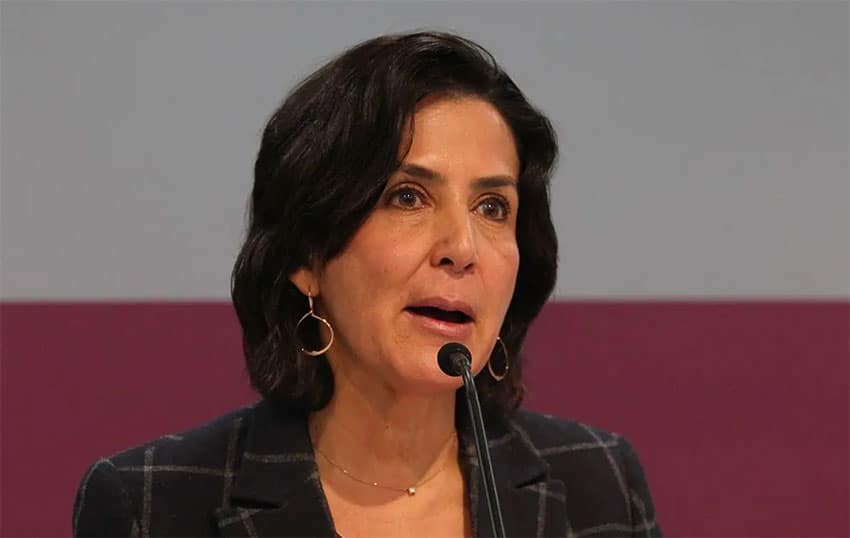
Edna Jaime
The president has never given any support to the national anti-corruption system, says Edna Jaime.

“… The president’s scant enthusiasm toward the SNA infected his party, Morena, … and other legislators who believed they could postpone the formation of [a new] Selection Commission,” Jaime said. She was also critical of the commission for not fulfilling its central task.

“The CPC only has one of its five members and is doing what it can, but everything related to the SNA is completely stalled and that has led it to a vegetative state, which hopefully can be overcome,” Jaime said.

There is at least some cause for optimism. In a report published Wednesday, Milenio said the Selection Commission is on the verge of starting the process to appoint four new members to the CPC.

However, there is some concern that the commission members – appointed by a Senate dominated by Morena – could make politically motivated appointments. In that context, several civil society organizations banded together to form a collective that launched a social media campaign based around the hashtag #PerfilesIdóneosYa (Suitable Profiles Now) in order to pressure Selection Commission members to promptly appoint properly qualified and independent CPC members.

The sole current member told Milenio that driving forward efforts to combat corruption – which López Obrador characterizes as the raison d’etre of his administration – is very difficult when he has no colleagues with whom he can share CPC work.

“… Dividing work between five [members] is not the same as dividing it between one. This effectively represents a challenge to moving the [anti-corruption] agenda forward,” Alatorre said.

However, he stressed that, on his own, he has taken on the responsibility of promoting the full implementation of the national anti-corruption policy.

Luis Ángel Martínez Ramíreza corruption and transparency expert at the Ethos Public Policy Laboratory, said last year that the López Obrador administration was not making use of the policy.

With regard to the designation of new CPC members to join Alatorre, members of the #PerfilesIdóneosYa collective say that a meticulous selection process that ensures the appointment of suitable people must be carried out.

People who are qualified and completely free of political influence must be named, said Marco Antonio Zamarripa, a member of a Coahuila-based citizens’ group that is part of the collective.

Many people without relevant experience and with links to political parties have been involved in state-based anti-corruption systems, he said. The participation of such people in an anti-corruption system “puts its credibility and operation at risk,” Zamarripa said.

Amparo Menchaca of the Nuevo León-based Civic Council of Institutions said that it is “super important” that the process to appoint new CPC members be carried out “so transparently that there is no room for doubt that the best people are being chosen.”

Those people, she added, must meet “all the requirements established by the law, one of which is precisely that [CPC members must] come from civil society.”

With reports from Milenio 

Pemex says lightning strike set gas on fire in Gulf of Mexico

0
Friday's fire in the Gulf of Mexico.

State-owned oil company Pemex said a combination of a gas pipeline leak and a lightning storm caused the oceanic fireball which lit up the water in the Gulf of Mexico on Friday.

The fire started around 5:15 a.m. 150 meters from the Ku-C drilling platform in the Ku-Maloob-Zaap extraction complex, located on the Bank of Campeche. The Ku-C platform was unoccupied at the time and there were no injuries reported.

Pemex sent out fire control boats to tackle the blaze, which took five hours to extinguish.

A leak in an underwater pipeline allowed natural gas to build up on the ocean floor and once it rose to the surface it was most likely ignited by a lightning bolt, the company said.

The storm was so intense that operators had already shut off pumping stations serving the offshore rig before the accident.

“There was no oil spill and the immediate action taken to control the surface fire avoided environmental damage,” the company added.

Gusatvo Alanis, a board member with Mexico’s environmental law center CEMDA, told Reuters he thinks it is much too soon to conclude that the fire caused no environmental damage.

Pemex should commit to preparing a “detailed study of the (environmental) impact caused by the fire” as well as a plan to repair the damage, according to a statement signed by more than two dozen environmental groups, including Greenpeace as well as CEMDA.

Climate activist Greta Thunberg reposted a video clip of the fireball on her Twitter account. “The people in power call themselves ‘climate leaders’ as they open up new oilfields, pipelines and coal power plants — granting new oil licenses exploring future oil drilling sites … This is the world they are leaving for us,” she wrote.

The president has bet heavily on drilling more wells and buying or building oil refineries and touts oil as “the best business in the world.”

With reports from Reuters and AP

US organization urges Mexico to reconsider decision on Zama oil field

0
Pemex doesn't have the funds, capacity or infrastructure required to operate the field, says Larry Rubin.

A business and community organization that represents United States interests in Mexico has urged President López Obrador to reverse a federal government decision to award control of a huge oil discovery to state oil company Pemex.

The Energy Ministry awarded Pemex the rights to operate the nearly 700-million-barrel Zama field in the Gulf of México, which was discovered in 2017 by a consortium comprising Texas-based Talos Energy, Premier Oil of the United Kingdom and Germany’s Wintershall DEA.

The three companies have already invested US $325 million in the development of the field but in a move described as being close to an expropriation by former hydrocarbons deputy minister Lourdes Melgar, the federal government has seized control of Zama, claiming that just over half of it is on acreage owned by Pemex.

Speaking at a virtual press conference, the president of the American Society of Mexico asserted that the state-owned company doesn’t have the funds, capacity or infrastructure required to operate the field. Larry Rubin warned that the field could be abandoned in the medium term if Pemex takes control of it.

“…[That] would be a loss for the competitiveness of Mexico, not just for Talos, which decided to bet on the country,” he said.

“… It would be a big loss for the country,” Rubin said, adding that the organization he heads believed that the private companies’ right to control the field would be respected.

He called on López Obrador to return the operation rights to Talos and asserted that the government’s decision would send an unequivocal message to investors that there is a lack of legal certainty in Mexico.

“We believe that American investors are here to create jobs and opportunities for small and medium businesses. That’s why we want a stable legal framework and for free enterprise and the creation of opportunities in Mexico to be respected,” the American Society chief said.

Giving Pemex control of the field could even delay Mexico’s economic recovery from the pandemic, said Rubin, who is also a trade ambassador for the Confederation of Industrial Chambers and the Mexico representative of the United States Republican Party.

“… We believe that the best way is to work together on projects that can’t be developed [by one company] alone,” he said.

The likelihood of López Obrador overturning the Energy Ministry’s decision would appear to be extremely slim given that he is a staunch energy nationalist who is aiming to boost Pemex’s participation in an oil sector that was opened up to foreign and private companies by his predecessor. The president previously denied that Pemex was planning to take over Zama after a 2019 report by news agency Reuters asserted as much.

Pemex has more than US $100 billion in debt but claimed last month that it has the financial capacity to operate the field. The state oil company has also said that it has infrastructure near Zama – located off the coast of Tabasco – to receive, store and export crude. However, the depth of the field, at 168 meters, is deeper than most of Pemex’s shallow-water projects in the southern portion of the Gulf of Mexico.

Houston-based energy expert Miriam Grunstein described the decision to give control of the field to Pemex as a political move. 

“They wanted to give Pemex the medal, but it will come at a high cost,” she told Reuters, explaining that Zama’s other stakeholders could take legal action if the field fails to operate successfully under the state oil company’s management.   

Talos – which won the exploration and production rights for the area where Zama is located at a 2015 oil field auction and commissioned an independent study that found that 60% of the deposit was on its acreage – said Monday it was “very disappointed with [the energy ministry’s] sudden decision …”

The company, which has significant experience developing fields at similar depths to Zama, also said it would explore all its legal and strategic options to maximize value for its shareholders.

With reports from El Economista and Reuters 

Bishop steps in to seek whereabouts of 5 missing in Guerrero

0
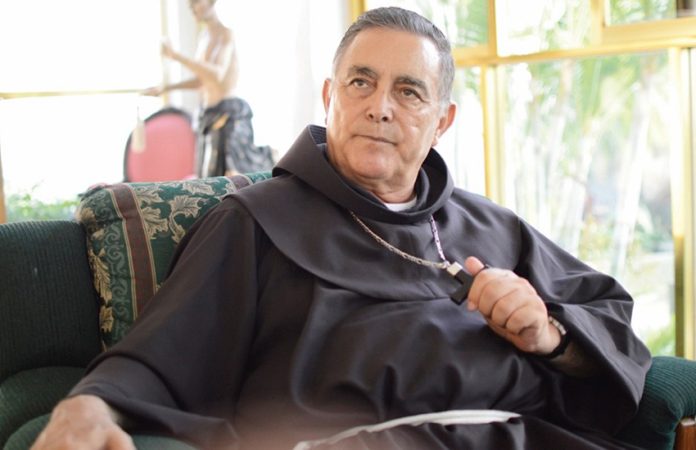
Bishop Salvador Rangel Mendoza
Salvador Rangel Mendoza, bishop of the Chilapa-Chilpancingo diocese in Guerrero.

A bishop in Guerrero — known for his willingness to engage with criminal organizations — is attempting to secure the release of five kidnapping victims.

Salvador Rangel Mendoza, bishop of the Chilapa-Chilpancingo diocese, said in an interview that he is trying to identify and make contact with a crime gang that kidnapped three men and a woman in Chilapa several weeks ago.

“… We’re trying to intervene for these four people from Chilapa and another person from Chilpancingo so that they are freed,” he said.

Rangel, who has met with criminal leaders and three years ago sought a Christmas truce between feuding cartels, said he was acting on the request of the victims’ families in the case of the missing Chilapa residents.

He said the Guerrero Attorney General’s Office is looking for the missing people but has failed to find them. The bishop said he was previously able to secure the release of one kidnapping victim thanks to contacts he has within one criminal group, which he didn’t name.

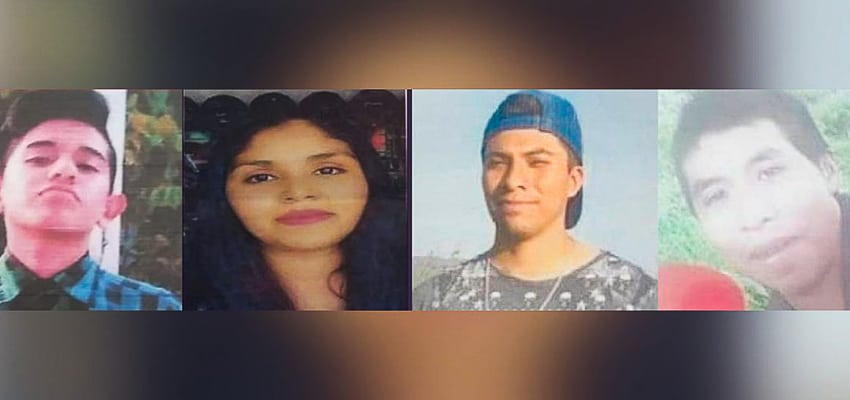
Four missing youths from Chilapa, Guerrero.
The four missing youths from Chilapa, Guerrero.

The four people from Chilapa were abducted by a different group, Rangel said.

“… We’re sending little messages to find out which group kidnapped them, and we’re looking for any clues,” he said, adding that whether they are still alive is unknown.

Chilapa, located about 60 kilometers east of the state capital Chilpancingo, has been plagued by violent crime in recent years. Rival gangs Los Ardillos and Los Rojos engaged in a turf war in the opium-poppy growing municipality for years. The former group currently controls Chilapa, but a cell of its rival recently returned to the municipality, Rangel said.

The bishop said that violence has increased in some Guerrero municipalities since the June 6 elections because crime groups are seeking to pressure incoming municipal officials. They want the officials to commit to giving them part of the municipal budget, he said.

New mayors will take office in all 81 Guerrero municipalities on October 1.

Rangel said that Iguala — where 43 teaching students were abducted in 2014 in one of Mexico’s most shocking recent cases of violence — is one municipality where violence has recently increased. There was a shootout between state police and criminals last Saturday, he said, adding that three or four crime groups are vying for control of the municipality.

The bishop said the National Guard should act with greater force against organized crime, which operates with virtual impunity in large parts of the country.

“I don’t understand why there is so much complacency, so much gentleness,” Rangel said.

With reports from Reforma 

Two teens caught in crossfire mourned in Veracruz

0
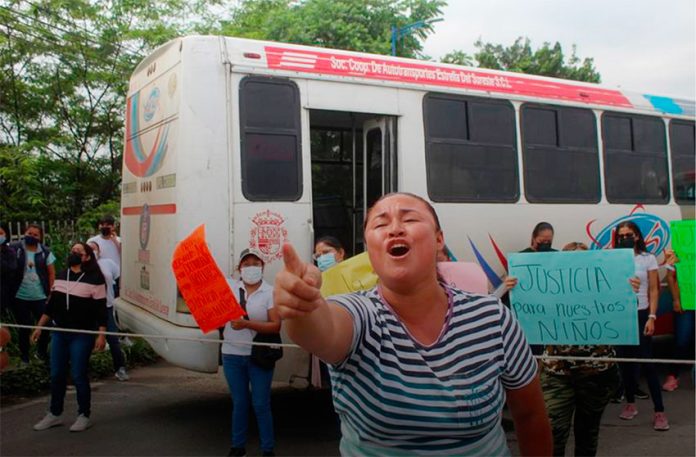
Angry citizens demanded justice with a protest in the streets of Amatlán.

The deaths of two teenagers killed in crossfire in mountainous Amatlán, Veracruz, have created conflicting emotions.

Sorrow echoed around a humble house of metal sheets and wooden planks, where two white coffins lay adorned with candles and flowers, and dozens of people mourned their loss. Outside, fury reigned as protesters demanded justice.

Cousins Jonathan, 13, and Eduardo, 14, were caught in a shootout between state police officers and presumed members of the Jalisco New Generation Cartel (CJNG) on July 2.

Residents occupied the Córdoba-Cuichapa highway, which was closed to traffic. On Saturday, the blockade was extended to a junction that connects the road with the Puebla-Veracruz highway.

Jonathan was shot three times and Eduardo was shot twice, their relatives confirmed. The teenagers had walked a few blocks from home to wash a pickup truck and earn some money.

Before leaving the house, their mothers had congratulated them on their high school grades. “They were the kind of kids that studied … we told them that they had done well and they were thrilled,” Jonathon’s mother said.

“They didn’t deserve to be killed like this … all for a few pesos, ” she added.

State Governor Cuitláhuac García Jiménez confirmed that the cousins were innocent bystanders.
“Unfortunately it was in a populated area, it was in the vicinity of the central square … there were vans with armed people, who faced state officials and an attack started. Unfortunately two young people died who had nothing to do with it,” he said.

With reports from El Universal and e-Veracruz

Traditional Maya liquor makes inroads as Mexico’s latest hip export

0
Four of the 20 flavors of pox made by Posheria.

Mexico is a country that offers such a dizzying array of native alcoholic beverages that for the astute researcher, a prolonged stay may require packing an extra liver.

As mezcal is becoming more popular in cocktails at high-end bars across the world and pulque is being canned in Chicago, it surprised me to discover another pre-Hispanic drink, pox.

Pronounced posh, this traditionally fermented corn-based spirit (although more modern variants are made with wheat or cane or both) has for centuries been sacred to the Tzotzil Maya of Chiapas, chiefly in San Cristóbal de las Casas, San Juan de Chamula, and Tenajapa. First and foremost, a medicine (poshil means means medicine in Tzotzil), this enchanted elixir is also believed to act as a mediator or doorway to the underworld, to ensure that both are in balance.

Pox is used in major ceremonies such as births, baptisms, weddings and funerals.

In the book Ancient Mayan Commoners, anthropologist Evon Z. Vogt writes that at most Tzotzil ceremonies, “a ritual meal is always served on a rectangular table oriented along the daily path of the sun … at the center of the rising sun end of the table are placed a bottle of sugarcane liquor, a shot glass and a bowl of salt.”

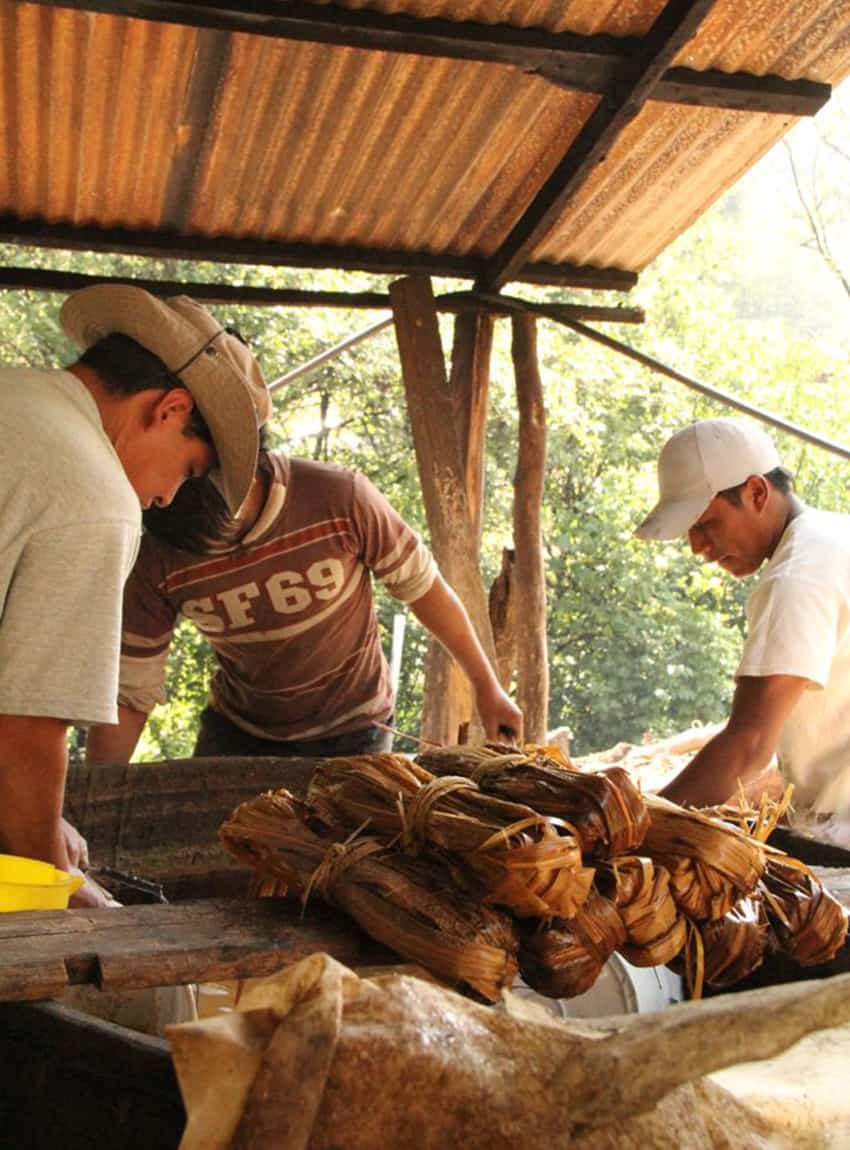
Posheria distillery workers preparing the beverage pox
Posheria’s workers prepare the pox beverage over a roughly 28-day lunar cycle, in accordance with traditional methods.

“It is here at the head of the table that the tot’il-me’iletik [fathers-mothers], the ancestral gods of the patrilineage, are believed to be seated,” he writes. “These ancestors inhabit hills or mountains above the lands on which their descendants live, but they come to participate in the ceremony … the senior man signals the young man designated as the drink pourer to serve the first round of liquor from the bottle at the head of the table. (Here the participants are symbolically drinking with the ancestors, and the liquor is believed to open the circuits of communication with these supernaturals).”

There has been little chance to appreciate this nectar of the ancestors outside of several villages in Chiapas, which is why the rest of us are fortunate that in 2010, Julio de la Cruz opened Posheria, which has opened the palate of the world to this magical medicine.

In 2010, when he discovered the magic of pox for himself, Cruz was a jewelry maker who happened to go on a tour with a friend who was a prominent local guide in San Cristóbal and the surrounding areas. On this occasion, they visited the village of Tenejapa, and a family invited them into their house where a ceremony was being prepared.

Glasses were produced, and Cruz and his friend were offered the transparent liquid. Feeling as if he needed to drink it so as not to offend their hosts (among them the mayordomo, or host), he drank and marveled at the taste, filled with an immediate need to know more about this spirit.

“It was in the highlands, with the copal [a type of tree], with the traditional music of this community, in their traditional dress. At that moment, the magic started, the adventure,” Cruz said.

Later, he asked his friend, “What was that drink they gave us?”

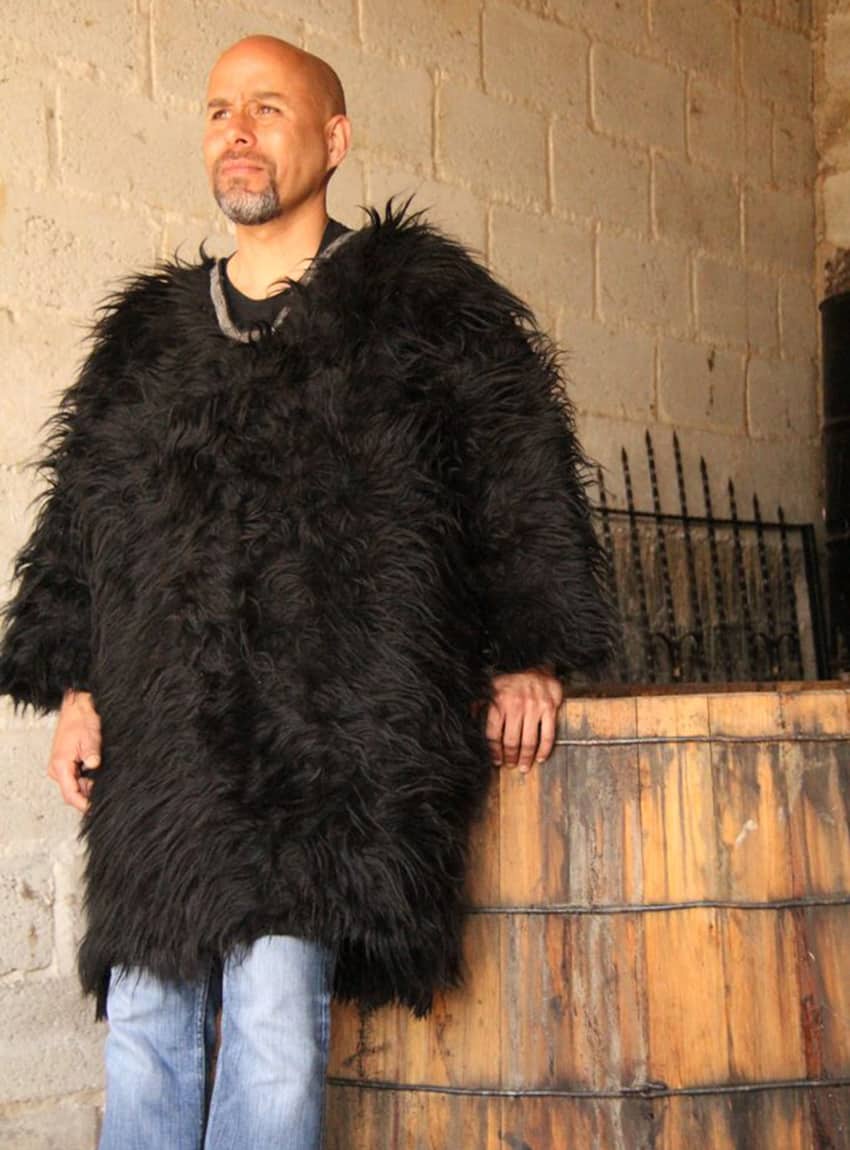
Julio de la Cruz, founder of Posheria.

After he was told it was pox and that it was a traditional drink among the Tzotzil Maya, Cruz decided then and there to explore more about this sacred beverage.

He was introduced to a man named Don Lorenzo, who would become his teacher and mentor as he learned the subtleties of making pox in the traditional way. Going back to Don Lorenzo’s grandfather, the family had only produced pox made of corn.

This is the more traditional way to make it, and on one particularly meaningful occasion, Don Lorenzo gave Cruz his family’s recipe.

At first, Cruz needed to convince people that pox was not dangerous, that it would not make them blind, that it was a liquor to be esteemed alongside tequila and mezcal. Now, fortunately, that is not part of Cruz’s job, and the popularity of Posheria is growing every year, so much so that they are looking at opening an office in New York to allow for greater export to the very thirsty United States market.

It took years of work and patience to legitimatize Posheria by all local and national standards. In 2012, the Mexican government created the Marca Chiapas distinction, whose stamp verifies products made in Chiapas. Posheria was the first producer of the spirit to receive this auspice.

As more people became aware of Posheria and more media told Cruz’s story, the brand grew to open another location on the popular Paseo do Montejo in Mérida, Yucatán.

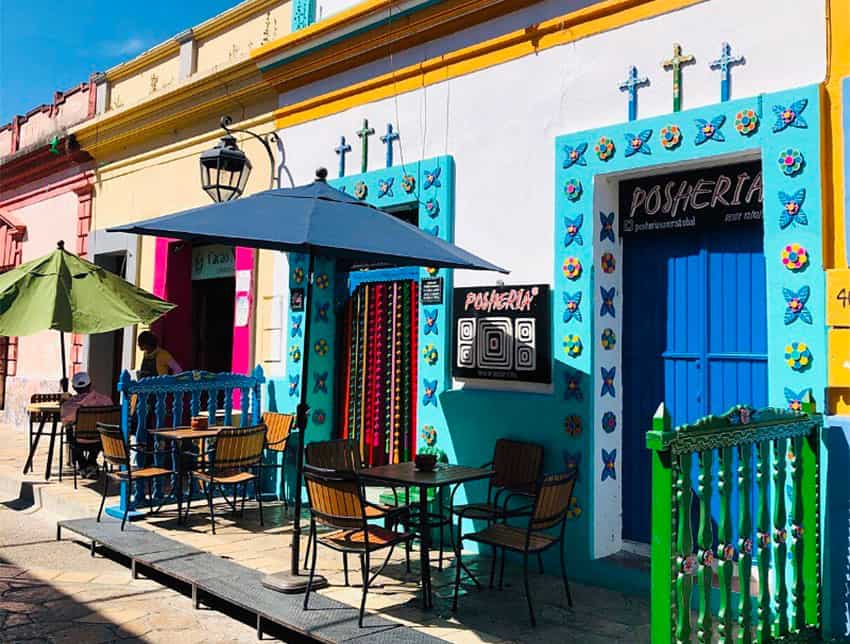
Posheria in San Cristóbal de las Casas.

In accordance with the sacred, cosmic import of pox in Tzotzil Maya culture, all batches made by Posheria follow a 28-day period, starting with the new moon and culminating in a finished product at the end of the lunar cycle.

Spring water and ingredients are added to a large wooden barrel, whose contents must then be stirred with a wooden paddle from 7 a.m. to 10 p.m. Stirring is done in shifts among a group of people to ensure consistency.

After this, the barrel is covered for roughly seven to nine days, when the lid is taken off and, as Cruz explains the fermentation process, “You see the soul, the life of the posh. You can see the way that it moves, that it’s alive.”

After this, the liquid is put into barrels on top of a wood fire and distilled. The pox is then bottled and labeled by hand roughly a full lunar cycle after the process started.

Currently, Posheria offers various poxes — Pox Tradicional, Pox Ancestral, Pox Ceremonial, and Pox Sabores (with over 20 flavors, from coffee to mango), which can be purchased in bottles or in a cocktail in their two locations, as well as in shops and bars from Mexico City to Tulum.

Pox has made its way since the 2010s into high-end bars in places like Mexico City and Tulum, but interest in the beverage is also gaining outside Mexico, with several establishments in the U.S. pouring the beverage for their customers. In fact, the international market is growing to the extent that Cruz is planning to open an office in New York, and he recently received a call from a restaurant in Ireland interested in making an order.

Cruz emphasized how honored and grateful he felt to introduce pox to people from around the world, showcasing a previously little-known facet of Mexico’s history and culture. By focusing so acutely on preserving the traditional way of doing things, as well as bringing pox to people who have never experienced or heard of it, Posheria is maintaining and enlarging the reach of traditional Mayan medicine for generations to come.

• To find out more about Posheria visit their website at www.posheria.mx.

Andy Hill is a traveler and writer living in San Cristóbal de las Casas, Chiapas.

Man charged in murder of Yaqui rights leader in Sonora

0
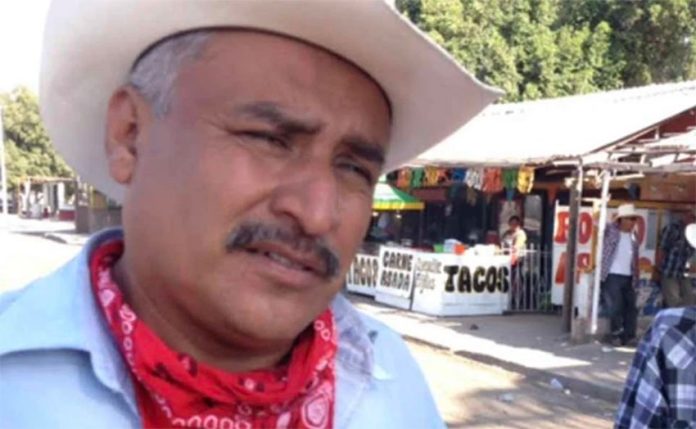
Tomás Rojo
Tomás Rojo diappeared May 27; his body was found three weeks later.

The man accused of murdering a Yaqui leader in Sonora has been named as 26-year-old Francisco “N,” also known as “El Morocho,” and money is the suspected motive.

Tomás Rojo Valencia, a spokesman for his community, disappeared May 27 amid tensions over months of periodic blockades over gas ducts, water pipelines and railway lines that run across Yaqui territory.

Rojo’s body was found half buried in a rural area near the Yaqui town of Vícam on June 17, according to prosecutors, who said his head had been bashed in, probably with a hammer found near the scene.

State Attorney General Claudia Conteras said criminal gangs wanting money could be at the root of the murder.
“Criminal groups were interested in illegal benefits from charging tolls on the highway,” she said. “Tomás Rojo was pushing for the installation of a toll booth to bring order to the process of charging tolls, to benefit the Yaqui people,” she added.

Toll roads are tied to the politically sensitive topic of roadblocks, in which protest groups take over existing booths or set up an improvised blockade to charge motorists to pass. Officials say protesters raised about US $150 million by occupying toll plazas in 2020.

Businessmen and truckers have said that roadblocks in Yaqui territory inhibit the movement of raw materials and exports, and have complained protesters were sometimes abusive or demanded money to allow them to pass. In February, a trucker plowed through a Yaqui roadblock, hitting and killing a member of the group.

In late 2020, President López Obrador launched an offensive against the practice, sending the National Guard and police to clear many of them, though apparently not including Yaqui blockades.

The president is expected to apologize to the Yaqui people for crimes committed against them by the state between 1870 and 1880 in what is known as the Yaqui War.

With reports from AP News and Reforma

Jalisco sicarios remove face masks, show off their strength in Aguililla

0
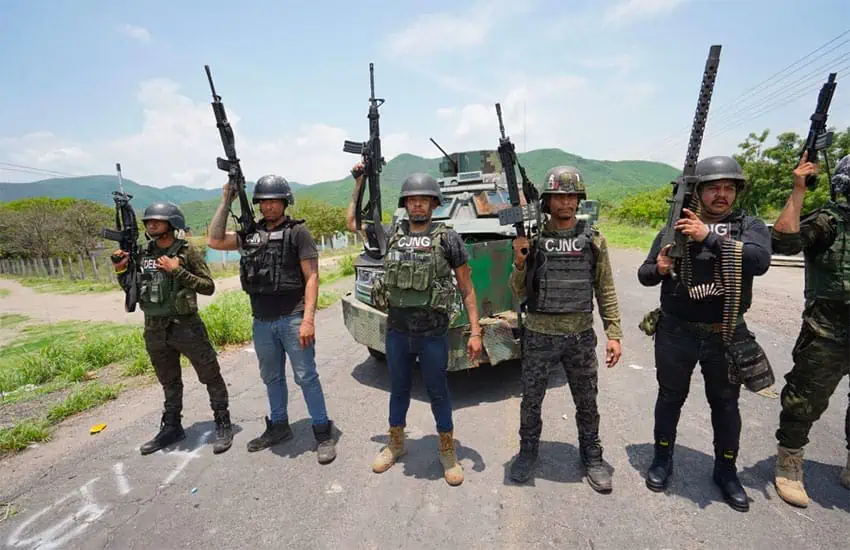
CJNG sicarios posed with their faces uncovered in a series of 2021 photos.
CJNG sicarios posed with their faces uncovered in a series of 2021 photos. cuartoscuro

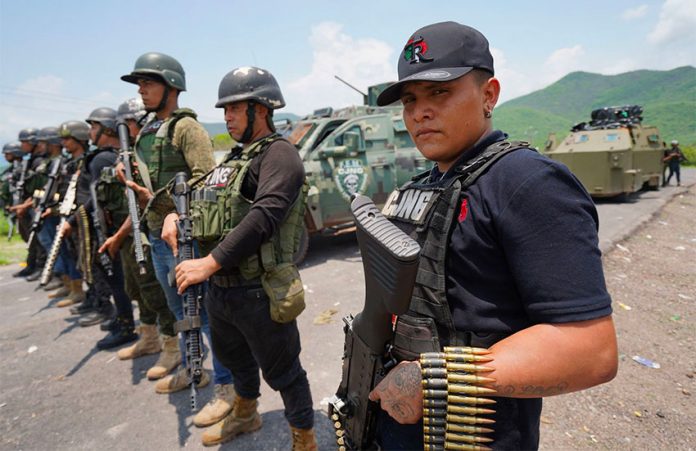
Some members of the Jalisco New Generation Cartel (CJNG) have no qualms about showing their faces, a sign they’re confident that official security forces are powerless to stop them and they will be able to continue their criminal activities with impunity.

The photo agency Cuartoscuro has published a series of images taken in Aguililla, Michoacán, that show heavily armed CJNG members without the face coverings they are typically seen wearing in photographs and videos posted to social media.

Gunmen sporting bulletproof vests emblazoned with the CJNG initials stare directly and menacingly at the camera in some of the photos, which were taken by a photographer who asked to remain anonymous out of fear of reprisals.

The images show off the immense firepower of the cartel, generally considered Mexico’s most powerful and violent criminal organization.

The photos were taken during a military-style march held last week in Aguililla, the Tierra Caliente municipality from which CJNG leader Nemesio “El Mencho” Oseguera Cervantes hails.

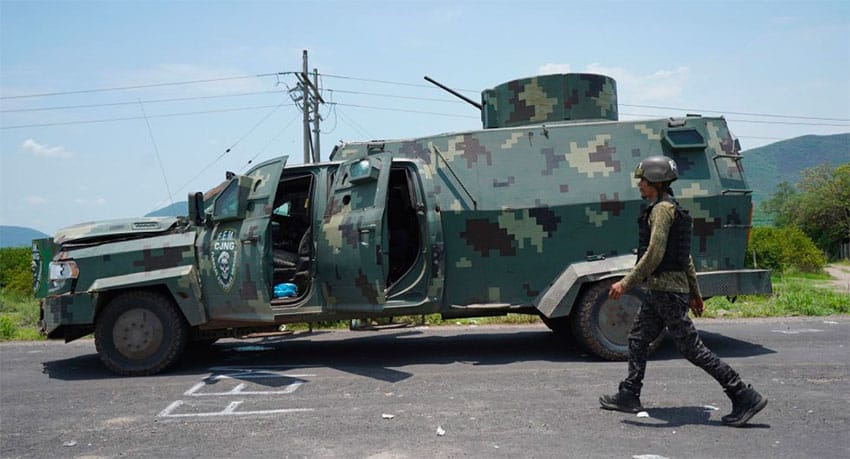
Armored sicario transport.

The municipality has become a battleground for the CJNG, which has been fighting the Cárteles Unidos for control. According to some media reports, the Jalisco cartel seized control of Aguililla earlier this year but violence has continued to plague the municipality, causing many residents to flee. The region of which Aguililla is part is coveted by criminal groups due to its proximity to Pacific coast ports, through which illegal drugs are smuggled into the country, as well as its iron mines and forests, according to a report by the newspaper El País.

That some CJNG members have now chosen to reveal their faces to a photographer in broad daylight is perhaps unsurprising given that the cartel has become increasingly brazen. It paraded a homemade tank it apparently seized from the Viagras crime gang in the municipality in March, and attacked police with explosive-laden drones in April.

The cartel has also set up roadblocks preventing access to Aguililla, where organized crime is flourishing due to the absence of the state, according to the Vatican’s ambassador to Mexico.

Authorities have faced a constant battle to keep roads into the municipality open because roadblocks and trenches are often reestablished and dug again shortly after they are dismantled and filled in.

Residents have faced shortages of essential goods because delivery trucks have frequently been unable to get into Aguililla and citizens been unable to get out to shop and access services in neighboring municipalities. Some residents last week prevented an army helicopter from landing in the town because they were fed up with soldiers getting supplies while they are forced to go without.

At a meeting between residents, authorities and soldiers in Aguililla on Tuesday, the army committed to ensuring that the Aguililla-Apatzingan highway remains open during daylight hours, reported the newspaper Milenio, which was granted access to the gathering.

Sicarios unmasked in Michoacán
Sicarios unmasked in Michoacán. cuartoscuro

Aguililla residents also called for social programs to be restarted, for a government well-being bank to be opened in the town and for electricity, telephone and internet services to be guaranteed. Community activists said that federal and state authorities committed to meeting the demands.

With reports from El País and Milenio 

Naming and shaming media shows a flexible approach to facts

0
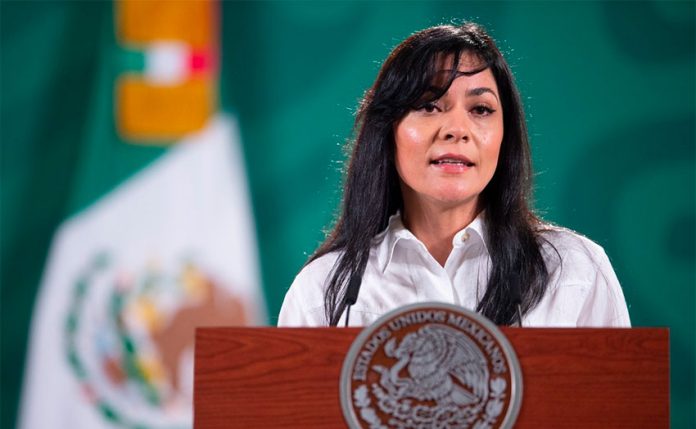
Ana Elizabeth García
Ana Elizabeth García hosts the first weekly episode of Who's Who in This Week's Lies last Wednesday.

It takes chutzpah to disregard facts and then lecture the media about telling the truth.

President López Obrador has long harangued journalists — the Financial Times included — for publishing “unprofessional” and “unethical” stories that criticize him.

But now he has gone a step further, devoting a weekly segment of his morning news conferences, or mañaneras, to naming and shaming columnists and media outlets for publishing news he deems untrue.

The new exercise, “Who’s Who in This Week’s Lies?”, is rich in irony, coming from a president who has been less than truthful 56,181 times at the “mañanera” conferences since December 2018, according to the consultancy Spin. By its tally, López Obrador utters an average of 88 untruths per news conference.

In this he is similar to former U.S. president Donald Trump, who has been accused of making more than 30,000 false claims — not least that he, rather than Joe Biden, won the presidential election.

López Obrador
López Obrador: attempting to monopolize the truth.

López Obrador’s mañanera — held Monday to Friday in an imposing salon in the National Palace after the president’s 6 a.m. security cabinet meeting — is both a remarkable democratic exercise and a daily display of stamina from the 67-year-old, who never sits down, even when it drags into a third hour.

Listening can be tedious, with endless repetition and regular digressions — sometimes inaccurate, according to academics — that reflect the president’s passion for 19th-century history. His delivery is slow and yet he is a highly effective communicator who can be mesmerizing.

The inaugural Who’s Who segment last week was littered with inaccuracies — including an erroneous claim about a Forbes report into government spying on journalists and activists dating back to 2017, before the president took office.

López Obrador maintains that his media critics deliberately distort or overlook his achievements because they oppose his plans to “transform” Mexico and hark back to a past in which they received political favours. For him, the mañanera, and “Who’s Who in This Week’s Lies” in particular, is a way to redress the balance.

“I’m really sorry a journalist like you is so ill-informed,” the president this week told Jorge Ramos, as the Mexican reporter and anchor at U.S. network Univision hauled him over the coals about his handling of crime and Covid-19.

Quoting the government’s own figures, Ramos pressed the president on his failure to reduce homicide levels and about Mexico having racked up the world’s fourth highest pandemic death toll.

Looking irritated, López Obrador called the criticism “slander” and anti-government “bias.” He claimed that Ramos had been misinformed and that he had “other data” — an excuse he regularly falls back on.

The government’s message has also clashed with reality over shortages of cancer drugs for children. Hugo López-Gatell, deputy health minister, caused a storm last month when he said protests by desperate parents were being whipped up by international rightwing groups with a “quasi coup-like vision.”

The government has also been accused of making the facts fit the narrative in this year’s commemoration of the 500th anniversary of the fall of the Aztec capital, Tenochtitlán, and the 200th anniversary of Mexico’s independence from Spain.

Although scholars often cite 1325 as the year Tenochtitlán was founded, López Obrador insists it was 1321 and has thus added the 700th anniversary of the founding of the ancient city to this year’s commemorations as a way of reclaiming Mexico’s indigenous heritage.

López Obrador’s attempt to monopolize the truth is worrying even for some of his supporters.

“It’s a serious problem, and it’s dangerous,” says Germán Anonio Hernández, a López Obrador voter from the working-class suburb of Ecatepec. Hernández praises the president for delivering more money to the poor but says he had hoped to see more results by now, halfway through the president’s term.

“He needs to listen to and accept criticism,” he says.

© 2021 The Financial Times Ltd. All rights reserved. Please do not copy and paste FT articles and redistribute by email or post to the web.

Health minister acknowledges third wave of coronavirus is underway in Mexico

0
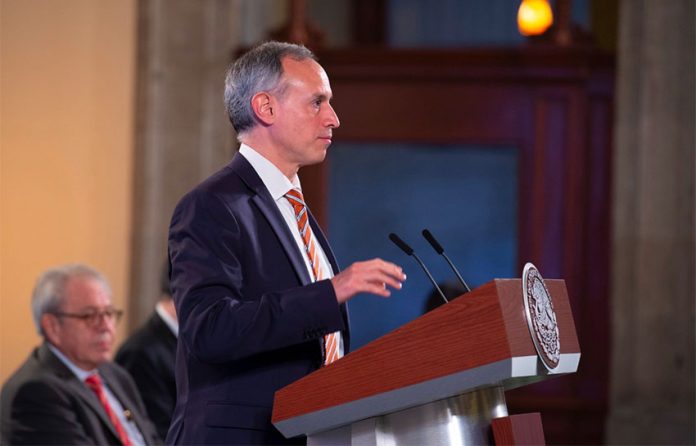
Deputy Health Minister López-Gatell
Deputy Health Minister López-Gatell speaks to reporters Tuesday morning.

Mexico has entered a third wave of the pandemic, the federal government’s coronavirus point man acknowledged on Tuesday.

“We have a situation where there is a spike [in case numbers], the third of the pandemic and second of the year,” Deputy Health Minister Hugo López-Gatell told reporters at President López Obador’s morning press conference.

“But fortunately, and for a known reason, which is vaccination, deaths are not increasing at the same speed,” he said.

However, Covid-19 fatalities did increase significantly in June compared to May. The Health Ministry reported 9,479 deaths last month, a 42% spike compared to 6,661 in May. Confirmed case numbers increased 53% in June to 105,527 from 68,987 in May.

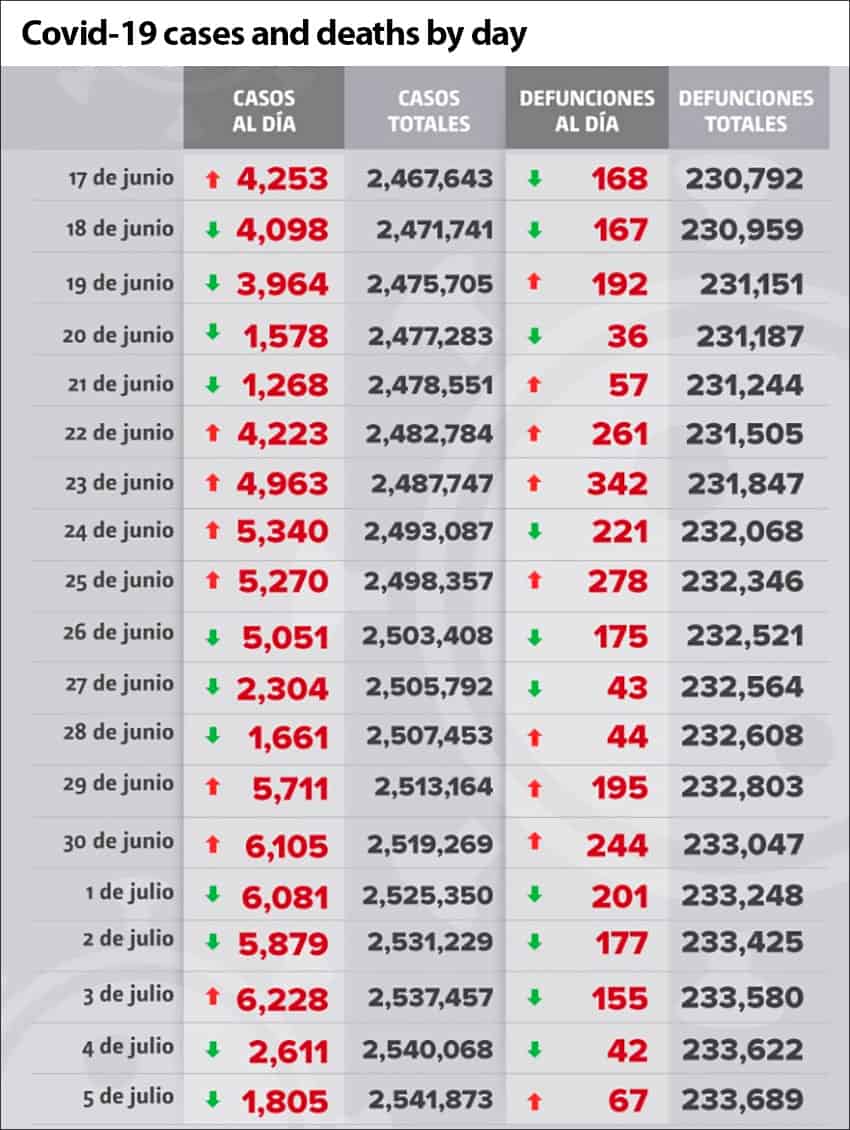
An additional 642 deaths and 22,604 cases were reported in the first five days of July for daily averages of 128 fatalities and 4,521 new infections. The accumulated case tally currently stands at 2.54 million, while the official Covid-19 death toll is 233,689.

López-Gatell said that vaccination is preventing severe Covid-19 disease but also acknowledged that hospitalization rates have recently increased. He noted that some states have seen “very significant” increases in case numbers and hospitalizations.

At least one-third of Mexico’s 32 states, including Quintana Roo and Yucatán, have seen an increase since the beginning of June, the news agency Reuters reported, but few new restrictions have been introduced and the federal government last week chose not to make any changes to its coronavirus stoplight map, which shows that the risk of infection is green light low in most of the country.

Baja California Sur, one of just five high risk orange light states, recorded the biggest jump in case numbers in June, with new infections surging 366% to 1,721 from 369 in May.

Many of the new cases recently detected in Mexico were among young people, most of whom have not yet been vaccinated against Covid-19. The highly infectious Delta strain of the virus is now circulating in at least a third of Mexico’s states, but it has not yet become the dominant variant here, as has occurred in some countries.

Some studies have indicated that some vaccines don’t offer robust protection against the Delta strain but López-Gatell said recently that such a finding was “still controversial.”

Laurie Ximénez-Fyvie, a professor of molecular genetics at the National Autonomous University, told Reuters that if the Delta variant does spread widely in Mexico – where less effective Chinese vaccines have been widely used – the nation’s coronavirus situation could deteriorate further.

Coronavirus cases and deaths in Mexico as reported by day.
Coronavirus cases and deaths in Mexico as reported by day. milenio

She said that a new rebound in case numbers was “definitely” underway and warned that the current vaccination rate in Mexico – where about a quarter of the entire population and approximately 40% of adults have received at least one shot – may be insufficient to blunt the third wave.

“If Uruguay and Chile, which have vaccinated around 60% of their population, cannot stop the rebound, why could we with 20%?” Ximénez-Fyvie said.

Both South American countries have relied heavily on Chinese-made vaccines to inoculate their populations.

The SinoVac and CanSino vaccines, which Mexico has used to vaccinate millions of people including large numbers of seniors and teachers, are only 51% and 65% effective, respectively, in preventing the symptomatic disease, whereas studies show the Pfizer, AstraZeneca and Sputnik shots – which have also been used here – have significantly higher efficacy rates. It was recently reported that at least four people in Oaxaca vaccinated with CanSino were seriously ill with Covid-19. The protection the Chinese vaccines offer against the Delta strain is unclear.

More than 47 million vaccine doses have been administered since the national vaccination rollout began on December 24 but tens of millions of Mexicans, mainly young adults, have not yet been inoculated.

However, the government has opened up the vaccination registration process to people aged 18 and above across Mexico – even as some people in their 40s are yet to receive their first shot.

Adults wishing to get a shot can register using their CURP identity number on the government’s vaccination website.

With reports from Milenio and Reuters