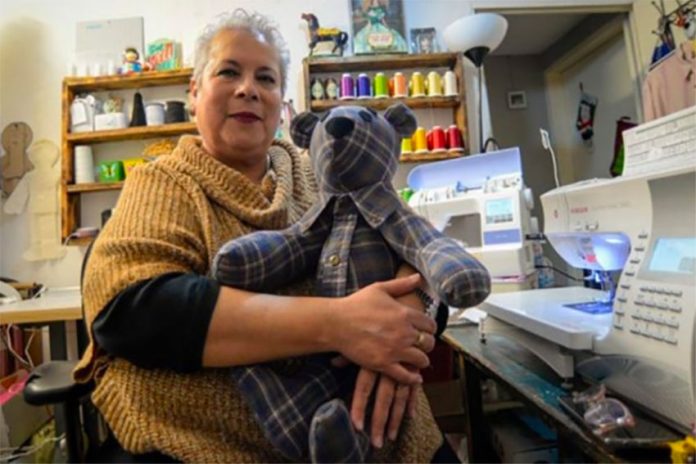
Chihuahua artisan Guerrero and one of her teddy bears.
Hundreds of thousands if not millions of Mexicans have lost family members from Covid-19 without being able to bid them farewell properly due to the risk of infection.
But an artisan in Ciudad Juárez, Chihuahua, is giving some of them something to hold onto after their loved ones pass away: teddy bears made from the Covid victims’ clothing.
Eréndira Guerrero made face masks at the start of pandemic but as the infectious disease began to take lives in the northern border city, she discovered there was also demand for custom-made teddy bears among people who lost a family member.
One person who sought out the services of the seamstress is Araceli Ramírez.
After her 70-year-old father died two days after being admitted to hospital for Covid, she took one of his flannel shirts to Guerrero who used it to make a teddy bear.
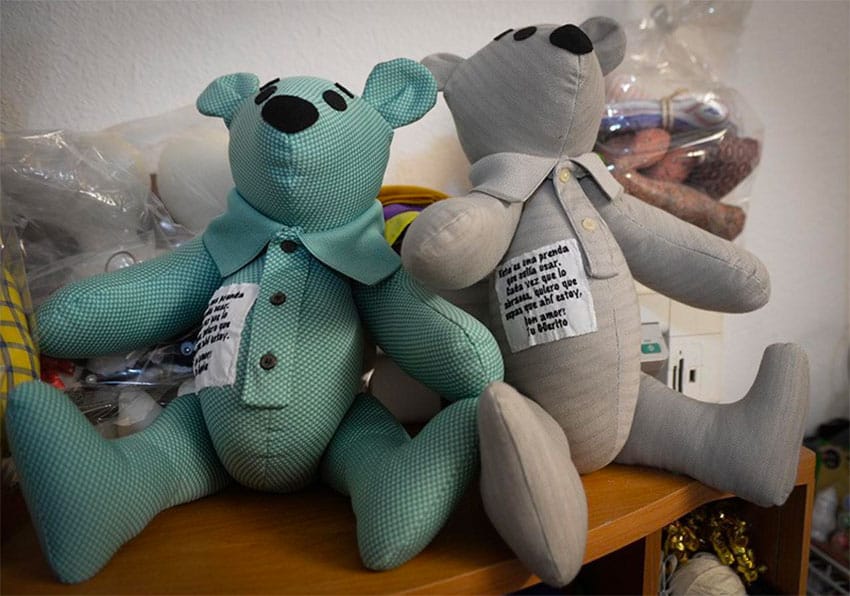
Some of Guerrero’s teddy bears, made for family members of coronavirus victims.
The artisan estimates that she has made about 200 bears for the family members of Covid victims, telling the newspaper El Universal that they become very emotional when she delivers their order.
“The majority cry and hug [the bear] because the item of clothing becomes something that reaches their heart,” Guerrero said.
To make each teddy bear even more personalized, Guerrero sews messages onto them at the family members’ request.
In the case of Ramírez’s bear, the message reads: “This is a shirt I used to wear, every time you hug it I want you to know I’m there. With love, dad.”
Guerrero has even sewn small speakers into the teddy bears she makes that are activated when pressed and recite a prayer, offer some words of affection or even play voice messages from the deceased Covid victim.
“These days we have audio of the people we love in our phones. If someone wants to, that audio can be placed in the piece we’re making,” she said.
Guerrero, who has been making arts and crafts since she was 13 and previously made teddy bears for the family members of victims of violence in Juárez, said she finds her work very gratifying because it helps people in mourning turn their pain into affection and love.
“It allows them to have a different [kind of] contact with the pieces of clothing of their loved ones. … The family members couldn’t close the cycle of their loss [because they couldn’t say goodbye in person] but when they receive their little bear they completely change. They look at it and embrace it with affection as if it was their loved one,” she said.
Ramírez said she wasn’t able to keep vigil over her father’s body because he died from Covid so she struggled to accept that he was really gone. She added that the pandemic prevented her from gathering with family members to say goodbye to her father at a funeral.
As a result she struggled to find an outlet for her pain. But her flannel shirt teddy bear is now helping her recover from her loss.
“I can talk to the bear, express what I didn’t tell [my dad] and feel like he is with me,” Ramírez said.
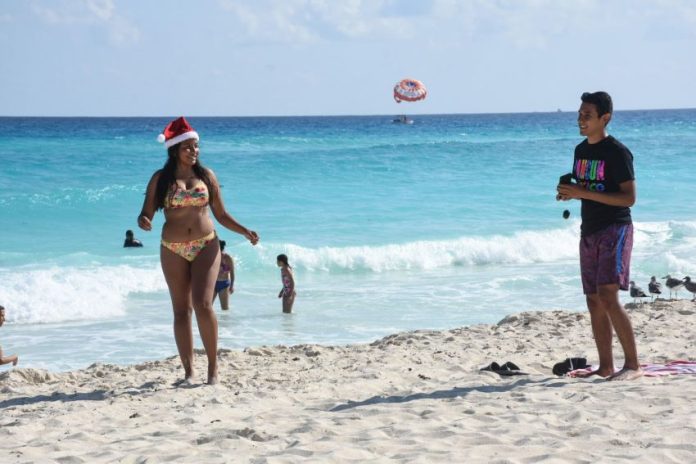
Beaches in Cancún and other tourist destinations throughout Mexico welcomed thousands of visitors this Christmas despite the government's advice not to travel.
The authorities said it, and now it’s happening. This is going to be a rough next several months.
The combination of circumstances has been brutal: a more tired, more desperate and much poorer citizenry; floundering businesses fighting to stay open because the other option is to close forever and knock a bunch of workers into poverty while they’re at it; colder weather keeping more people inside together; a new, more easily spreadable Covid strain that is for sure already in Mexico; hospitals quickly filling up with not enough equipment or space to attend to them, with staff whose emotional crises I can’t even begin to imagine; a dismally low testing rate; an illness that’s now spreading like wildfire because, new strain or not, the more people catch it, the more people catch it.
People were already tired of the pandemic and its restrictions at the end of March. They were also tired of it at the end of July and at the end of October. By the time the holidays rolled around, they were really sick of it, and many could simply not resist the pull of tradition paired with a desire to gather with their families and friends. Heck, even the head of our coronavirus task force went to the beach.
All right, he shouldn’t have. It’s not that I approve, but really — I doubt the majority of us are in any position to be casting stones on others for their unsafe or hypocritical behavior. The difference with Hugo Lopez-Gatell is that he’s a well-known, recognizable public figure who just days before had encouraged people not do precisely what he ended up doing. Yes, that was hypocritical, which unfortunately is a very human trait no matter how good we try to be. You’d think he’d at least have worn a disguise or something.
In fact, let’s take a moment out of this despair-filled diatribe to grin as we picture him at the beach in dark glasses and one of those Rasta tams with fake dreadlocks hanging down from it, and maybe a fake mustache. (Really, do it.)
Okay, that’s done! I don’t know about you, but I could always use a laugh these days.
Now, back to where we were: remember, beaches and resorts were and are open for business. If the rule is “don’t leave for unnecessary travel,” then close the places we’re able to unnecessarily travel to. Water flows to where it can, yo. And you know what we’re mostly made of, right?
Of course, those pictures of him at the beach were enough to trigger the resignation of several doctors right when we need them the most. Other doctors have resigned out of exhaustion, and more still in protest over a lack of necessary equipment to do their jobs.
I don’t blame our medical personnel; they’re basically being asked literally to be Jesus Christ right now, and have been, one could argue, even since before the pandemic started. I was struck by their plea last week: “If you come into ICU, you will die.”
So the optics on Lopez-Gatell’s trip were not fantastic, and the doctors have a right to be angry. The optics aren’t great on President López Obrador either, who still seems not to see the point of wearing a mask or taking any precautions at all.
In fact, we’ve all got a right to be angry. And people directing that anger toward a government that sends mixed signals about what’s safe and what’s not and that refuses to give desperately needed financial support that could tide its people through this crisis seems like a pretty natural consequence of such behavior.
People do need guidance on what to do and how to behave until we finally get the vaccine to most people, and I think Lopez-Gatell and the Ministry of Health have done a fairly good job at it. But that’s only one piece of the puzzle. As I said last week, 45% of the population is in poverty and counting. And, sure, Mexico will come out with the lowest budget deficit in Latin America at the end of this, but so what?
Seeing restaurant owners and workers demanding to be allowed to work made me hang my head in sorrow and frustration. It’s not that they’re dying to serve people hamburgers and enchiladas because that’s their favorite thing in the world to do. It’s that there’s been no help. The kind of willful blindness that I only experience in my most frustrating dreams is currently ever-present.
“Restaurants are a source of jobs, not infections!” is the owners’ rallying cry. Well, I’d change that to “and infections,” which is not a moral judgment but rather an epidemiological fact.
But the question I’ve repeated over and over, to myself and to others throughout the pandemic, is this: “What do they expect people to do?”
Until most of the population is vaccinated, there are going to be many more illnesses and deaths. And until the economy can get rolling again, I fear crimes of desperation will also increase.
Hold tight, people. We’ve got some punches to roll with.
Sarah DeVries is a writer and translator based in Xalapa, Veracruz. She can be reached through her website, sdevrieswritingandtranslating.com.
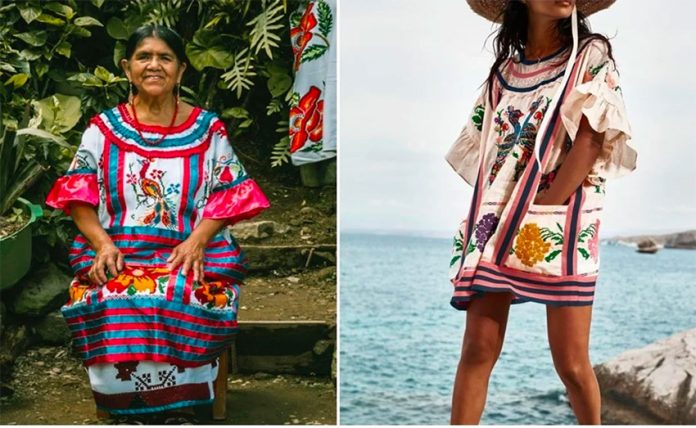
The Mazatec huipil, left, and the Australian design house's product, right.
An Australian fashion brand has withdrawn a dress from its 2021 collection after facing accusations by members of the Mazatec community in Oaxaca that it plagiarized the design of a traditional huipil, a loose-fitting tunic commonly worn by both indigenous and non-indigenous women in Mexico.
Mazatec people from the Cañada region of the southern state took to social media to denounce Zimmermann, a fashion house that has stores in several countries including the United States, England, Italy and France.
They claim that the company, founded in Sydney by the sisters Nicky and Simone Zimmermann in 1991, copied a Mazatec huipil design to make its Riders Paneled tunic dress, which was part of its 2021 Resort collection and retailed for US $850 on the Zimmerman website before it was withdrawn due to the criticism.
The cut of the Zimmermann garment, the birds and flowers embroidered on it and its colors all resemble a traditional Mazatec huipil.
Changes made to the original design – the Zimmermann dress sits above the knees and unlike a huipil is not intended to be worn with pants or a skirt – are disrespectful of the Mazatac culture and world view, according to members of the Mazatec community.
The Oaxaca Institute of Crafts also condemned Zimmermann and called on the brand to clarify the origin of its design.
Zimmermann subsequently issued a statement on social media, acknowledging that the tunic dress was inspired by huipiles from Oaxaca
“Zimmermann acknowledges that the paneled tunic dress from our current Swim collection was inspired by what we now understand to be a traditional garment from the Oaxaca region in Mexico,” it said.
“We apologize for the usage without appropriate credit to the cultural owners of this form of dress and for the offense this has caused. Although the error was unintentional, when it was brought to our attention today, the item was immediately withdrawn from all Zimmermann stores and our website. We have taken steps to ensure this does not happen again in future.”
It is far from the first time that a large fashion house has been accused of plagiarism of indigenous Mexican designs.
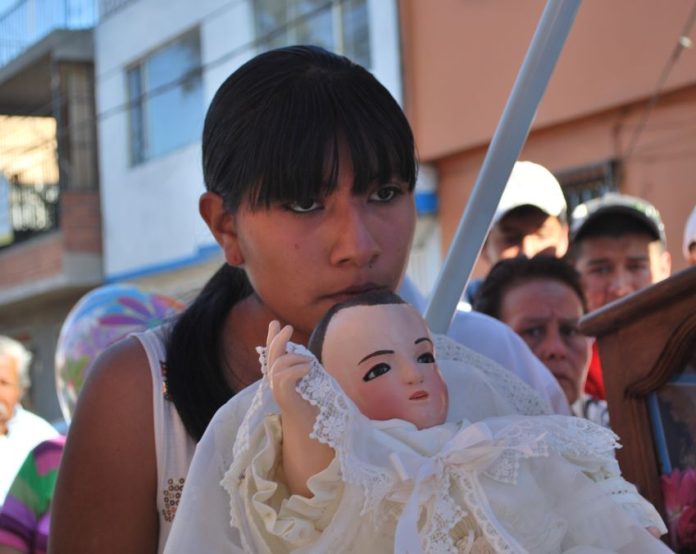
A 4 1/2-century-old “child” called the Niñopa is the most important religious icon in Mexico City’s borough of Xochimilco and the star of an upcoming celebration.
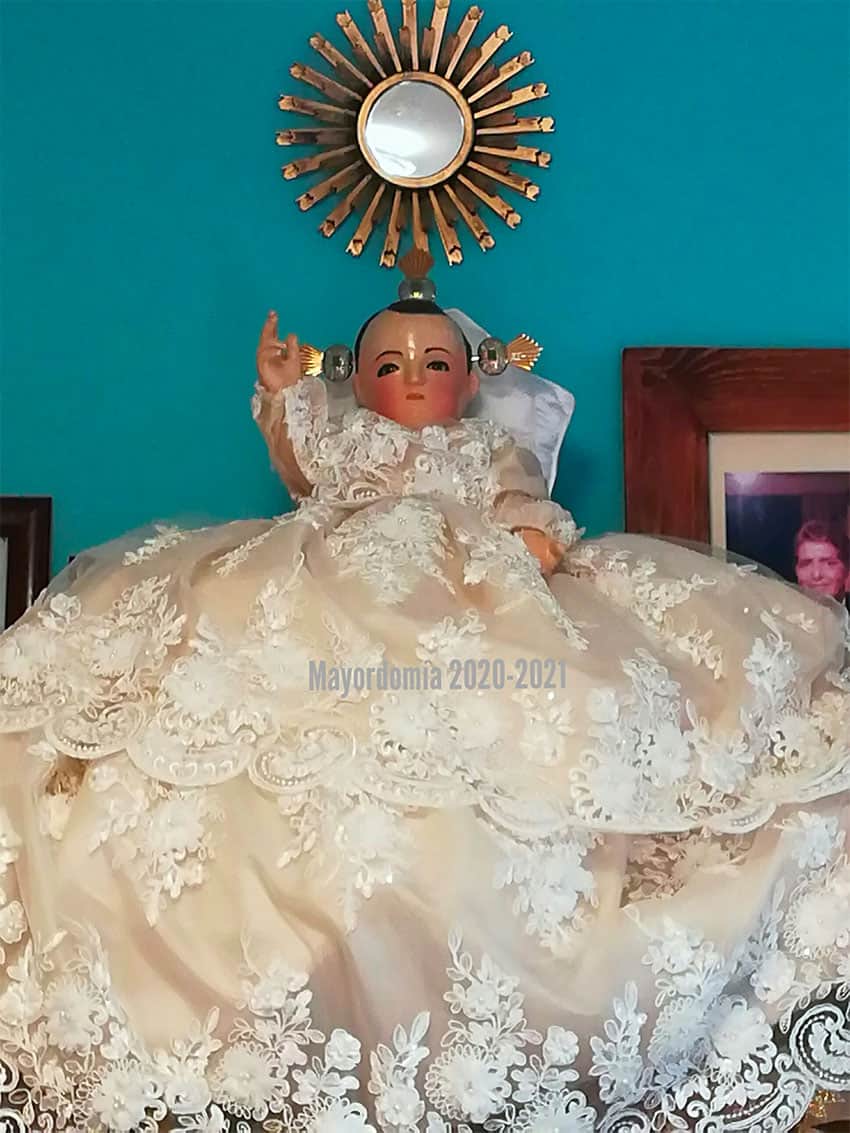
Despite its age and the pandemic, this image of the infant Jesus continues its important role in this formerly agricultural area. At 51 centimeters tall and weighing 600 grams, it looks much like any other baby Jesus that appears in manger scenes all over Mexico. But this statue is the star of Mexico’s last hurrah of the Christmas season – Candlemas on February 2, marking the presentation of the infant Jesus to the temple — these days done at a church.
This representation is indeed special, even with its own name — the Niñopa (or Niñopan). The niño part is from the Spanish word for “child,” but the “pa/pan” part is in dispute. It may be a shortening of padre (father) or patrón (patron), or it could be from the Náhuatl word for “place.”
What is known is that this image and the popular rites associated with it have a long history.
The Niñopa was created in 1573. Although legend says it was brought from Spain and made of orange tree wood, it was created in Xochimilco from a local tree, most likely by an indigenous artisan. There are several stories about how and why the image has its highly venerated status. One says that it belonged to the last indigenous ruler of Xochimilco, Martín Cortés de Alvarado.
The Niñopa dates back to the 16th century.
The historical context indicates that it was part of an effort by evangelists to substitute Catholic imagery into indigenous rituals. It is known that Huitzilopochtli, the god of war, was worshipped here in the form of a child. So it would not be too difficult to substitute one “child” with another. In fact, one of the persistent tales told about this image is that it hides a figure of Huitzilopochtli inside.
Like other famous religious images and statues, the Niñopa has been credited with miracles. These tend to be related to health, domestic peace and economic help. Almost all claims of miracles are local, but some have come from as far away as the United States, supposedly just from seeing the statue’s image on television.
In many ways, this image is thought of as a real child. Many believe that it comes alive at night, playing with donated toys and even wandering around outside. People state that in the morning they find the Niñopa’s belongings strewn about the room in which it sleeps, small footprints in the earth outside or its dirty clothes.
The Niñopa is indeed cared for as if it were a living child. It does not reside in the parish church; instead, each year, a family becomes the child’s “nanny” for 365 days.
The child is “laid down to sleep” each night and “woken” each morning with music before being dressed for the day. Care of the Niñopa, as well as ensuring that it does its official duties — such as attending Mass — is the responsibility of the family hosting him, who are called mayordomos.
Becoming a mayordomo is a serious and expensive undertaking. Chosen families prepare for years, even decades, for the honor of spending a year as the official caretaker of the statue. A room is dedicated to the child, often added to the house. In normal years, this room needs to be accessible so that the public can easily visit, and the image is taken out daily to visit the sick, go to Mass, and appear at festivals. Even routine outings are done with great fanfare, with the mayordomos footing the bill for dancers, food for everyone and more.
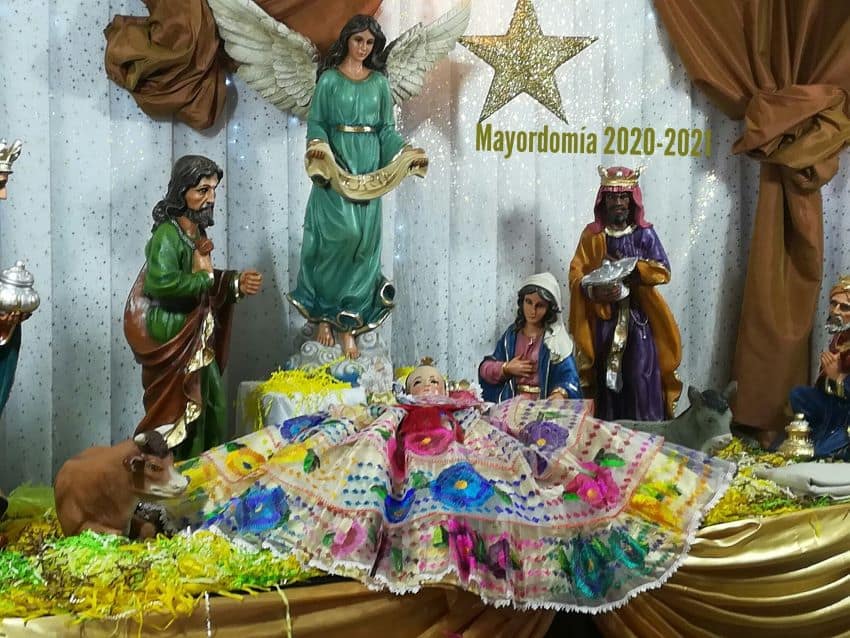
The Niñopa in its current location until February 2.
Important festivals related to the Niñopa are Children’s Day (April 30), the posadas before Christmas (December 16–24) and Kings’ Day (January 6). But by far the most important event is Candlemas, when the image moves onto a new family and home. The festival is important enough that it is covered every year by Mexico City media.
Concerns about preserving the condition of the centuries-old statue have led to some changes in how it is handled and how it performs its duties. Clothing cannot have zippers or other metal. Worshippers cannot touch the image directly, only its clothes. It has been on “sabbatical” on several occasions for restoration work by the National Institute of Anthropology and History — locally called “going for a check-up with the doctor.”
The year 2020 has not been normal for anyone, the Niñopa included. As you can imagine, the pandemic has all but shut down festivities related to the image, and visits at the mayordomo’s home are not permitted either. When the transition to the new mayordomo household occurs on February 2, few people will be authorized to attend the ceremonies in person.
However, the current mayordomos, the Paredes Valverde family, says the transfer will be shown live online. This promises to be a positive long-term development, maybe a precedent that will make the child even more accessible to more believers and those of us who are fans of Mexican culture.
There are several Facebook pages dedicated to the Niñopa, but the official is updated regularly with new photos and videos, and believers leave heartfelt messages in the comments section.
Leigh Thelmadatter arrived in Mexico 17 years ago and fell in love with the land and the culture. She publishes a blog called Creative Hands of Mexicoand her first book, Mexican Cartonería: Paper, Paste and Fiesta, was published last year. Her culture blog appears regularly on Mexico News Daily.
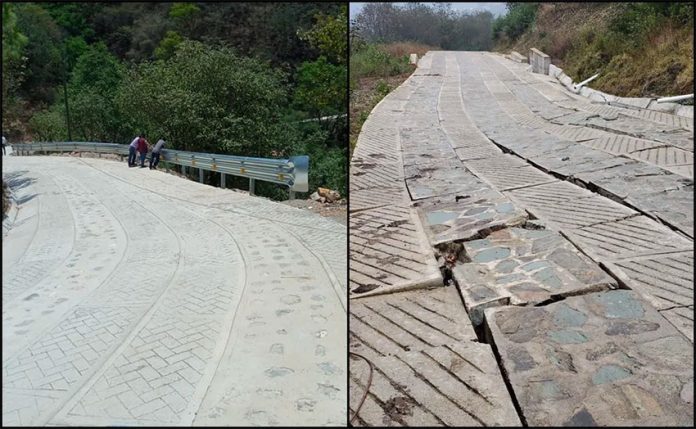
At left, how the road is supposed to look; at right, the damaged road in San Pedro Yolox.
A recently built road in Oaxaca that was part of a highly promoted federal program to connect remote towns to more populous areas in the state may have to be relocated.
A stretch of highway that connects the municipality of San Pedro Yolox, located in the northern Sierra region, to the rest of the state has sustained severe damage since it was opened just four months ago.
At least 30 meters of the 9-kilometer hydraulic concrete road is collapsing due to a geological fault, according to the National Institute of Indigenous Peoples (INPI).
The federal Ministry of Communications and Transportation is currently inspecting the damage to determine whether the road can be repaired or if it should be relocated.
INPI director of infrastructure Vladimir Ortiz Sánchez promised there would be a plan of action by January 18. The choices available to officials are either finding a way to contain the earth in and around the road or reroute that section of the highway.
Despite the collapse, the road has not been closed, and vehicles still travel on it despite the difficulties presented by the damage, authorities said.
The program that built the road has been touted by President López Obrador as a means of providing local employment and keeping infrastructure spending in the communities that benefit.
However, he has also been criticized for not using relevant specialists.
In some reports, poor drainage was cited for the damage in Yolox but a Oaxaca-based civil engineer said it was due to a lack of technical supervision and a failure to control the quality of materials used to build the road.
In 2019 and 2020, 58 roads have been built in Oaxaca under the initiative.
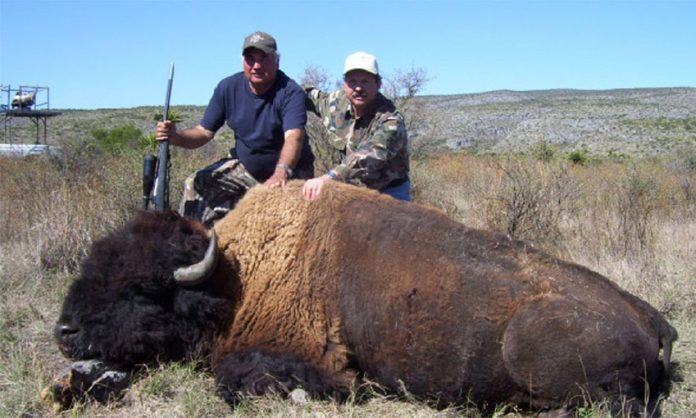
Photo that appeared on hunting ranch's website until yesterday.
Federal environmental authorities have launched an investigation after a photograph appeared Tuesday showing two men next to an American buffalo they had killed in Coahuila.
The photo was taken from the Facebook and Instagram accounts of a hunting ranch near the northern border city of Piedras Negras that offered hunting trips for protected species such as American bison, as American buffalo are also known, and white-tailed deer.
The newspaper El País reported that several photos of bison that were apparently hunted between 2011 and 2015 were posted to the social media accounts of the Buena Vista ranch. The ranch’s Facebook and Instagram accounts, as well as its website featuring more images of slain wild animals, have now been deleted.
The circulation of the image showing two men posing next to a slain bison, one of whom is toting a firearm, came just days after Environment Minister María Luisa Albores celebrated the successful reintroduction of a second herd of the large mammals, in northern Mexico, writing on Twitter that the “beautiful animals” have returned to the plains of Coahuila after an absence of almost 100 years.
El País said there was no evidence that the buffalo that appears in the photo was reintroduced as part of Mexico’s conservation efforts but the hunting of the animal was nevertheless heavily criticized on social media.
The federal Environment Ministry said in a statement that it checked its records and determined that authorization to hunt bison had never been granted to the Buena Vista ranch.
The ministry said it was collaborating with the environmental protection agency Profepa and the Coahuila government to “clarify the facts,” adding that if it is proven that bison were illegally hunted those responsible will be held to account.
“The government of Mexico is committed to the conservation of this species and its habitat,” the statement said. “We are working for its recovery and … the inquiries to clarify the facts and enforce the environmental law will continue.”
Tens of millions of American bison once roamed Mexico, the United States and Canada but by 1880 there were only about 1,000 of the mammals in the wild in Mexico due to destruction of their habitat, disease and hunting, according to the National Commission for Natural Protected Areas (Conanp).
A herd of 23 bison from the Wind Cave National Park in South Dakota was reintroduced to the Janos Biosphere Reserve in Chihuahua in 2009, while a herd of 19 of the mammals from Janos was released into the El Carmen nature reserve in Coahuila last year.
“The establishment of herds in Mexico contributes significantly to the recovery of the species on a continental scale,” according to Conanp.
His worship is punished for an allegedly substandard water tank.
Eschewing long, bureaucratic legal processes to hold him accountable, residents of a southern Chiapas municipality decided to take direct measures against their mayor for what they said was a public works project so poorly done that it was useless.
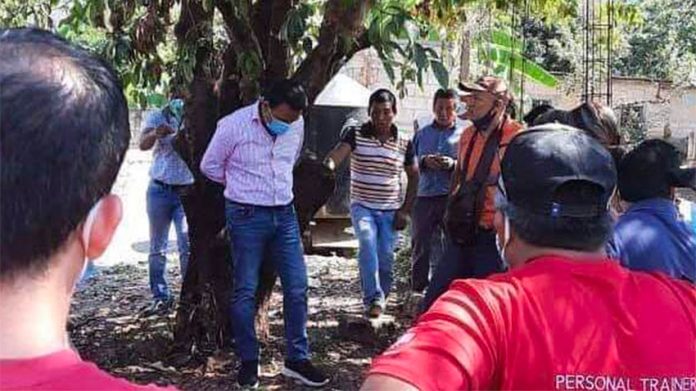
They tied him to a tree.
Residents of 11 neighborhoods in Frontera Comalapa told the newspaper Diario de Chiapas that they secured Mayor Óscar Ramírez Aguilar to a tree in a public area to expose him to the rest of the town as a “bad public servant” who should not be reelected.
The townspeople say the municipal water storage cistern — whose installation they say was a campaign promise — is in such poor condition that it does not comply with water safety requirements. It currently has no water, they said, due to leaks, and the residents accuse the government of merely patching the tank — badly — to stop them.
In a video on social media, residents showed how the concrete patch job is already chipping away and easily crumbles.
“He promised us that this would be a public works project worthy of Comalapa residents, but [this tank is] a farce; the water system doesn’t work well. It’s an old problem that he should have attended to properly and should have been a priority during his administration because he came to see us in our homes with this promise, and now he doesn’t want to live up to it,” a resident told the newspaper.
After he was released, Ramírez posted a video on his official social media account to counter the residents’ version of the story.
“They did not tie me up,” he claimed. “The meeting was with 11 representatives of Comalapa neighborhoods in order to agree upon details regarding a major public project, the introduction of potable water.”
However, photographs clearly showed the mayor standing before a tree with his hands behind his back.
Three years ago, another local official suffered a similar fate after allegedly failing to deliver promised funds. He was bound to a post in the the central plaza of Comalapa.
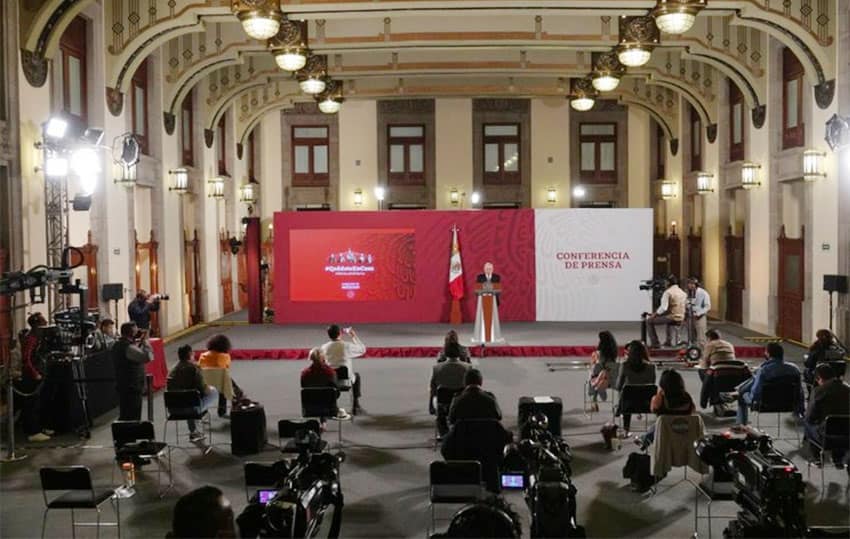
A battle is brewing between the federal government and the National Electoral Institute (INE) over a possible ban on the transmission of President López Obrador’s daily press conferences during the lead-up to elections in June.
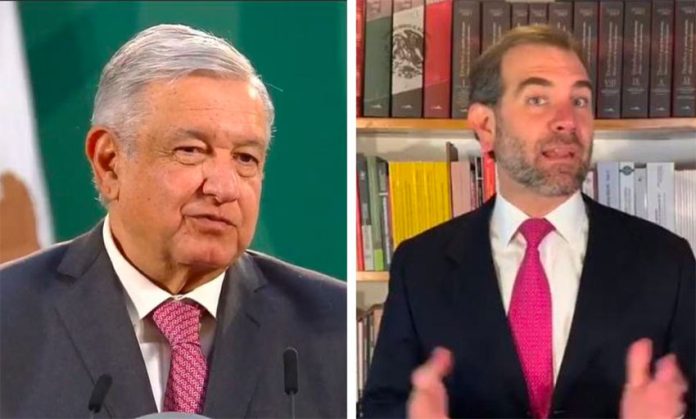
INE president Lorenzo Córdova said Monday that the broadcast of López Obrador’s morning pressers, known colloquially as mañaneras, must be suspended from April 4 because they constitute government propaganda.
But the president may continue holding his press conferences in the lead-up to state and federal elections on June 6, he said.
“Nobody has proposed suspending or canceling them,” Córdova said.
However, transmission of the conferences – which López Obrador uses to attack opponents as well as tout government programs and policies – must be suspended because the president uses them to promote the achievements of his administration, the INE chief said.
“They constitute government propaganda whose dissemination is prohibited during [election] campaigns by our constitution,” he said.
Córdova noted that the INE applied the law in the lead-up to previous elections and that governments and the media abided by it. He insisted that it is not an attempt to censor or silence the president.
“Freedom of speech prevails in Mexico … but conditions of equity and legality in political competition must also be maintained,” Córdova said.
“The INE will preserve them in accordance with its constitutional responsibilities, just as happened in 2018 [the year of the most recent presidential election], 2019 and 2020. And it will guarantee that citizens can freely vote this year, that their votes are respected and that the conditions of equity are maintained so that we once again have fully democratic elections,” he said.
(The entire lower house of federal Congress will be renewed on June 6 and voters will choose new governors in 15 states and new lawmakers in 30.)
INE councilor Ciro Murayama also spoke out in favor of suspending transmission of the president’s press conferences, which are broadcast on López Obrador’s personal social media accounts, including his popular YouTube channel, as well as government accounts and by media outlets.
The daily press conferences are generally a platform for promoting the government.
“#NoEsCensura [It’s not censorship]. The constitution orders the suspension of all government propaganda during election campaigns. The exception: health, education and civil protection issues. In this way the constitution protects the right to information and avoids government interference in elections,” Murayama wrote on Twitter.
López Obrador takes a very different view, which he outlined at his mañanera on Tuesday.
“Yesterday it was announced that the INE president is proposing the cancellation of the transmission of [press] conferences during two months. As censorship is now in fashion at a global level, they want to silence us,” the president said, apparently referring to the recent suspension of United States President Donald Trump’s social media accounts, which he criticized.
“It really is an attitude of great intolerance. How can they take away the right to freedom of speech? … How can they take away people’s right to information?”
López Obrador told reporters that his government would launch legal action if the INE goes ahead with the plan.
“It would be an act of censorship, an affront, an attack on freedom; this [plan] cannot succeed from a constitutional point of view, from a legal point of view,” he said.
AMLO, as the president is best known, called on Mexicans to express their opinion on whether the INE’s plan is a good idea.
“Is it OK in Mexico, in our country, that the president can’t speak, can’t inform?” he asked.
López Obrador asserted that Córdova shouldn’t be concerned about the transmission of his press conferences during the campaign period because his administration is different from the corrupt governments of the past and wouldn’t seek to use them for electoral gain.
“We’re not the same, we come from a struggle in which we always faced anti-democratic practices that he [Córdova] endorsed, … he always turned a blind eye to electoral frauds, to violations of the law,” AMLO said.
(Córdova has been at the helm of the INE since 2014, overseeing the 2015 midterm federal election at which the president’s Morena party finished a distant fourth.)
López Obrador asserted that he wouldn’t allow the government to use public money to promote itself in the lead-up to the election, which he claimed happened in the past without any opposition from the INE chief.
“We have principles, ideals, we’re not going to do anything that affects democracy. On the contrary, we’re going to promote it. What does that mean in practice? … The government won’t … [interfere] in the electoral process [and] won’t use the government budget” to boost its electoral prospects, he said.
Following his remarks, some opposition lawmakers called on the president not to distort information, asserting that his claim that the INE is trying to silence him is false.
Verónica Juárez, leader of the Democratic Revolution Party in the lower house of Congress, and National Action Party Senator Juan Antonio Martín del Campo said that the INE’s intention is simply to ensure a level playing field for the various political parties.
Juárez said that López Obrador uses his pressers to promote the government and attack his opponents and to do so in a broadcast from the presidential lectern during the campaign period would be illegal.
Martín expressed his support for the possible ban and affirmed that at no time have electoral authorities said their aim is to silence the president and his government.
For his part, Deputy Raúl Eduardo Bonifaz of the ruling Morena party said that Córdova’s intention is misguided because the president uses them to inform the public about government actions – López Obrador said this week that the national transparency watchdog is not needed because his administration maintains “permanent communication” with citizens – and not for promotional purposes.
“We’re in a health emergency and the people must be informed. The INE is violating … the constitution and making a very serious mistake.“
A Guanajuato state legislator who was hoping to run for mayor of Juventino Rosas was shot in the back and killed Tuesday morning.
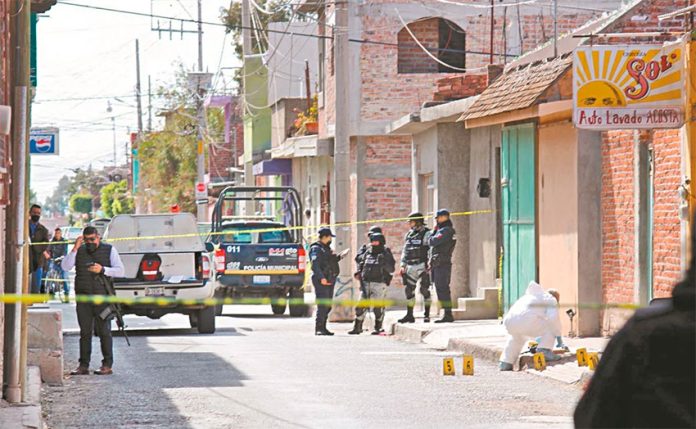
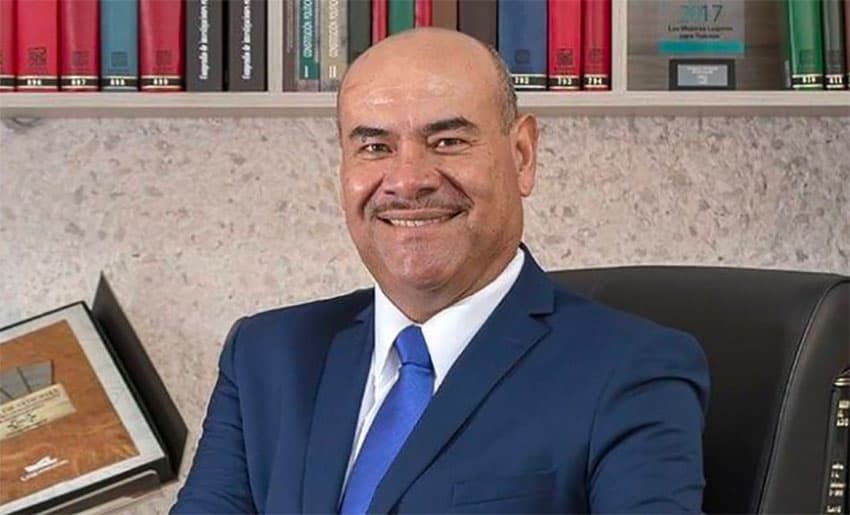
Authorities said Juan Antonio Acosta Cano’s killers shot him seven times from behind, then left him for dead in his exercise clothes on a downtown street in the city of Juventino Rosas.
Acosta, 55, had registered as a National Action Party candidate for mayor of the municipality, where he had served two previous terms from 2006–2009 and 2012–2015.
“I profoundly lament the killing of state Deputy Juan Antonio Acosta Cano and vehemently condemn these deeds,” Guanajuato Governor Diego Sinhue Rodríguez Vallejo said on social media. “I call on the state Attorney General’s Office to investigate this case and bring justice to those responsible.”
Attorney General Carlos Zamarripa Aguirre has assigned the case to a specialized, high-impact-crimes unit for investigation, according to a statement by his office.
[wpgmza id=”279″]
Acosta is the second precandidate for the 2021 elections to be killed. Antonio Hernández Godínez, a Democratic Revolution Party hopeful for mayor of Chilapa de Álvarez, Guerrero, was shot and killed on November 25 at his construction materials business.
It was just a few weeks after he had announced his intention to run for office.
Acosta’s killing cut short a diverse political career. In addition to serving as mayor of Juventino Rosas, he had also served as director of municipal services and as director-general of the DIF family services agency for Guanajuato.
State PAN president Román Cifuentes Negrete said Guanajuato had lost a man committed to Mexico.
Violence in the state, which led the country in homicides last year, has carried on into the new year: 119 people were killed in the first 11 days, including nine members of a family attending a funeral last week in León for a man believed to be a lower-level member of the Santa Rosa de Lima Cartel. The man himself had been shot and killed the day before.
Juventino Rosas, considered by many to be territory of the Santa Rosa de Lima Cartel, is bordered to the south by Villagrán and to the southeast by Celaya.
State lawmaker Acosta was killed while jogging in Juventino Rosas.
The two municipalities were the sites of five firefights between security forces and presumed members of the Jalisco New Generation Cartel on Monday that left 10 dead, including one state police officer.
Police attributed those attacks on police to the CJNG and said they had found messages to another unidentified criminal group afterward among the vehicles, explosives, and weapons they confiscated.
There were 9,459 Covid patients in hospitals in the Mexico City metropolitan area Tuesday night.
The number of coronavirus patients in hospitals in the Valley of México metropolitan area is just 53 short of the maximum predicted by the Mexico City government, while the national Covid-19 death toll hit a new single-day high on Tuesday.
Mayor Claudia Sheinbaum said in late December that government modeling showed that 9,512 beds could be occupied by coronavirus patients in January in a worst case scenario.
As of Tuesday night, there were 9,459 patients in hospitals in the metropolitan area, which includes the 16 boroughs of Mexico City and many municipalities in neighboring México state. Of that number, 7,205 are in general care beds and 2,254 are in intensive care beds.
There are 6,912 patients hospitalized in Mexico City itself, according to a government report published Tuesday, yielding an occupancy rate of 87%. Federal data currently shows a 91.5% occupancy rate for general care beds in the capital and an 87% rate for beds with ventilators.
A total of 929 beds in Mexico City hospitals remain available to coronavirus patients, of which 225 have access to ventilators.
Authorities in the capital have added just over 2,000 additional beds to the health system over the past four weeks, increasing overall capacity by 38%. Another 300 beds will be installed in hospitals by the end of January, Sheinbaum told a press conference Tuesday.
The mayor emphasized that increasing hospital capacity doesn’t just involve installing new beds but also ensuring that there are enough medications and healthcare workers to treat the patients that occupy them.
Authorities in Mexico City and México state are aiming to have a total of 10,500 Covid-designated beds by next week but it remains to be seen if their efforts to increase hospital capacity in the Valley of México area will be sufficient in the coming weeks. The coronavirus is spreading more quickly now than at any other time in the pandemic, and a group of Mexican and United States academics predicted last month that the outbreak in the capital would overwhelm its health system this month.
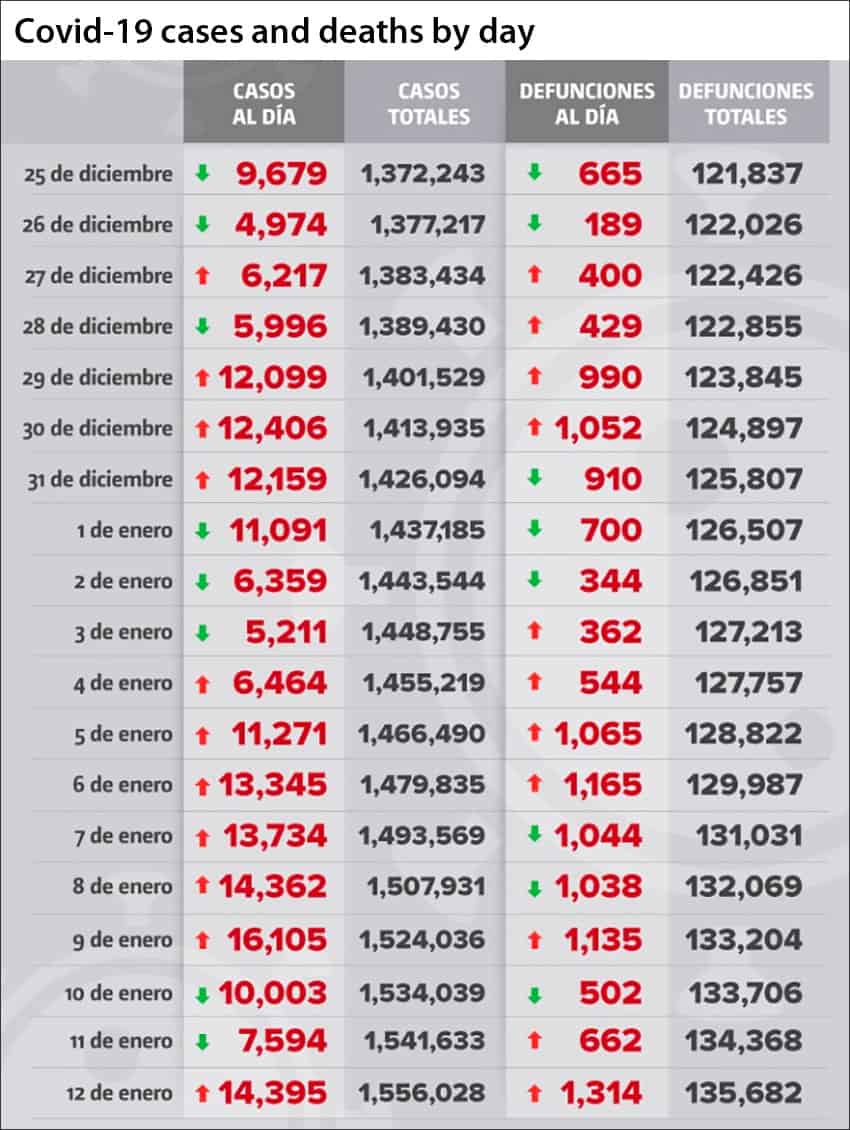
A daily average of 10,827 new cases was reported during the first 12 days of January, a 7% increase compared to December, which was the worst month of the pandemic in terms of new infections with more than 312,000. The single-day record for case numbers was broken on four consecutive days last week, peaking at 16,105 on Saturday.
The Health Ministry reported 14,395 new cases on Tuesday – the second highest single-day total of the pandemic – pushing Mexico’s accumulated tally to 1.55 million.
Coronavirus cases and deaths in Mexico as reported by day. milenio
Mexico City leads the country for confirmed cases with almost 375,000 followed by México state with just over 158,000.
Health authorities also reported a record 1,314 Covid-19 deaths on Tuesday, a figure that exceeds the previous single-day high of 1,165 by 149, or 13%. Mexico’s official death toll now stands at 135,682, the fourth highest total in the world.
Hospital occupancy across the national health system is 58% for general care beds and 49% for beds with ventilators. Federal data also shows that only 92,879 people – mainly health workers – have received a dose of the Pfizer/BioNTech Covid-19 vaccine since the vaccination program began three weeks ago, but that number should now increase more rapidly as almost 440,000 doses arrived Tuesday and were to be distributed to all 32 states.
A wider rollout of the vaccine is urgently needed as Mexico contends with a growing coronavirus outbreak largely fueled by gatherings and parties over the Christmas-New Year vacation period and braces for a possible outbreak of the new, more contagious strain of the virus first detected in the United Kingdom in September.
Unlike many countries, Mexico didn’t restrict flights from the U.K. in light of the emergence of the new strain, which is considered up to 70% more transmissible than other strains.
One confirmed case of the new strain and a possible one have already been detected here, the former in Tamaulipas and the latter in Nuevo León.
Nuevo León Health Minister Manuel de la O Cavazos said Tuesday that a man infected with a virus that was 96% similar to the B117 strain had died. Aged in his 60s, the man suffered from diabetes and passed away in a Pemex hospital, the health minister said.
A U.K. citizen confirmed to be infected with the new strain of the virus remains in serious condition in a Tamaulipas hospital. While the new strain of the virus is more contagious than others, health experts say there is no evidence that it causes a more serious Covid-19 illness.