Home Blog Page 1380

125,000 consumers without water after CFE turns off power for unpaid bills

0
Treatment plants and pumping stations were idled by Tuesday's power cut.

Some 125,000 households and businesses in Guasave, Sinaloa, woke up Tuesday to no running water after the Federal Electricity Commission (CFE) cut off power to a water treatment plant and six wells for nonpayment of a 22-million-peso debt (US $1.07 million).

The city’s water board manager, Nubia Yazmin Puentes Llanos, said the cutoff had left most of the city and 16 surrounding rural communities dry.

The board and the CFE have an agreement to whittle down what was a 49.9-million-peso debt, she said, of which it had paid off about 27 million. The CFE cutoff had come without warning and without consideration of the fact that the city currently has 62 cases of Covid-19, she said.

Due to concerns about public safety, Puentes said the board is turning for help to the Mexican National Association of Water and Sanitization Businesses, a nonprofit organization, and Sinaloa’s state-owned water treatment commission.

However, electrical service was restored Tuesday afternoon after the mayor and other local politicians interceded with the electricity commission. The municipality also deployed police officers to its pumping facilities to prevent CFE workers from cutting off the power again.

The CFE often cuts off power to municipal and even state and federal agencies for nonpayment of debt, affecting thousands of municipal customers of electrically powered water pumping and treatment systems. However, since the beginning of the coronavirus pandemic, the practice has become more complicated and fraught due to the need for clean water to combat spread of the virus.

In June, the commission cut off power to a federally owned wastewater treatment plant in La Paz, Baja California Sur, run by the federally-owned National Water Commission (Conagua), although thanks to an available emergency electricity generating plant, service was not interrupted. However, Governor Carlos Mendoza Davis said if the emergency plant had not been available, the risk would have been “enormous and unacceptable for the population” of La Paz.

In August, the CFE turned off power to pumping stations in Cuernavaca, Morelos, for not paying a 111-million-peso debt. The cutoff affected 100 neighborhoods.

Also in August, the CFE cut off power to 34,000 customers with overdue electricity bills throughout Tabasco, including the state’s commission for water and sanitization (CEAS) offices in Villahermosa, which at the time owed CFE over 5 million pesos.

CEAS director Armando Padilla Herrera at the time warned that the CEAS owes debts in other cities around Tabasco, and that if CFE decided to cut off power to its water plants, the resulting situation would be a “crime against humanity” that would put public health in jeopardy during the height of the Covid-19 pandemic.

The coronavirus pandemic appears to have created a perfect debt storm for some municipal and state utility providers. Many regularly carry outstanding debts to the CFE, but in some cases the pandemic has pushed their debts high enough that the commission has chosen to implement cutoffs.

In Guasave, for example, Puentes said that revenues for the municipally-owned entity have gone down 50% since the start of the pandemic, which has made it difficult for the entity to meet its financial commitments. Although Puentes said the board has reached out to CFE officials, they have been told that payment in full of the back debt is the only acceptable option.

In Reynosa, when power was cut off to the city’s water commission last month, its general manager Jesus Maria Moreno told local media that the commission was behind in its payments due to the pandemic, a period which has seen lower customer use and also fewer bills being paid on time.

Source: El Universal (sp), Tabasco Hoy (sp), Hora Cero (sp)

Quintana Roo security chief resigns over Cancún shootings

0
alberto capella
Alberto Capella resigned after police opened fire during a protest.

Police officers’ aggression against a women’s protest in Cancún Monday has cost two officials their jobs.

The Quintana Roo public security minister resigned on Tuesday, a day after police opened fire on the protest, and the municipal police chief was fired.

Governor Carlos Joaquín said in a video message that he had accepted the resignation of Alberto Capella, a former Tijuana police chief and one-time security commissioner in the state of Morelos.

Mara Lezama, mayor of the municipality where Cancún is located, said that Police Chief Eduardo Santamaría had been dismissed in connection with the officers’ improper use of force.

Joaquín appeared to leave open the possibility that Capella would be reinstated, saying that he was stepping down while the Quintana Roo Attorney General’s Office and the Ministry of Public Security conducted an investigation to determine who was responsible for the shooting.

Capella, who took up his position in 2018, thanked Joaquín for the “great opportunity” to lead the security strategy in Quintana Roo.

The governor’s “vision, leadership and support have been key,” he said in a Twitter post, adding that he decided to resign in order to “act with transparency” during the investigative process.

In his video message, Joaquín apologized for the actions of the municipal police officers who shot in the air and at the ground to disperse people protesting outside the Cancún municipal palace against Sunday’s femicide of 20-year-old Blanca Alejandrina Lorenzana Alvarado.

He said that police and their commanders will be given additional training to ensure that something similar doesn’t happen in the future.

“We have to make sure that this doesn’t happen again and that citizens can protest freely and safely,” the governor said. “We’re going to strengthen protocols … and provide better training to police, especially in the use of public force.”

Joaquín said that eight people were injured during the protest including two journalists who were shot.

A man who was shot in the arm was successfully operated on and remains under medical observation, he said, while a woman who received a gunshot wound to her leg was discharged from hospital Tuesday morning.

The governor said the state was covering the costs of the medical treatment and would do the same for anyone else injured during Monday’s protest.

Joaquín reiterated that he gave clear instructions for police attending protests on Monday to be unarmed. He said his instructions were followed in every municipality in the state except Benito Juárez, where Cancún is located.

The governor said the municipal officers who opened fire are part of the single-command state police force but asserted that municipal forces are not under state government control. Chief Santamaría was responsible for the officers who opened fire, he said.

In an interview, Joaquín said Santamaría gave the instruction to officers to shoot to disperse the protesters. The ex-police chief explained his decision by saying that the safety of officials inside the municipal palace was at risk as a result of the protesters’ attempts to break into the building.

The governor also confirmed that the officers shot real bullets, not rubber bullets as some preliminary reports suggested.

He stressed that the femicide of Lorenzana, known to her friends and family as Alexis, and any other acts of violence against women will not go unpunished.

There have been 12 femicides in Quintana Roo this year, according to the state government, and the murderers of nine women have been taken into custody. Across Mexico, approximately 10 women are murdered every day.

Feminist groups have held numerous protests this year against gender violence and what they say is government inaction in the face of the problem.

Protests in several states coincided with Independence Day celebrations in September, while millions of women participated in a national women’s strike in March.

Source: Milenio (sp), Infobae (sp) 

Sculpture garden in San Luis Potosí joins list of world’s great gardens

0
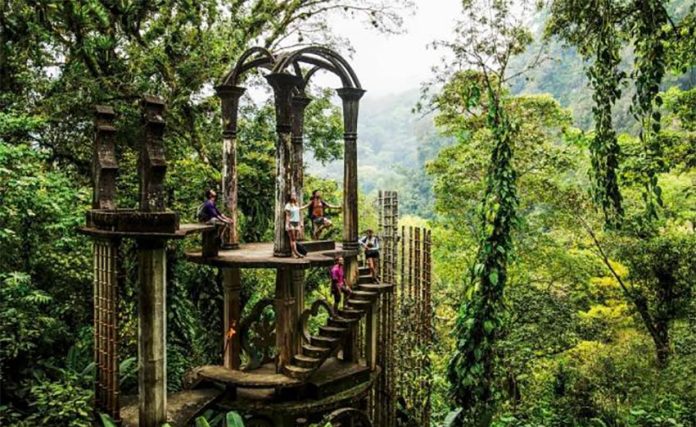
Edward James' garden, located near Xilitla in the Huasteca region.

A surrealist sculpture garden in San Luis Potosí created by an eccentric Brit in the second half of the 20th century has been included on a list of the world’s great gardens.

The Sculpture Garden of Edward James, located near the town of Xilitla in the tropical Huasteca region of the state, is now one of almost 100 gardens recognized by Great Gardens of the World, a worldwide network of international gardens, garden designers and landscape architects.

Commonly known as Las Pozas (The Pools), the 9-hectare garden is the first in Mexico to be included on the Great Gardens list.

It was chosen for inclusion in the “follies” category, “where owners and architects alike have obviously had fun, and where we can let our imagination go free.”

Featuring 40 buildings, structures and sculptures along with natural and artificial pools and waterfalls, Las Pozas was the brainchild of Edward James, a poet and artist who was also a great patron of the surrealist art movement.

Primavera en Las Pozas, Xilitla

The garden is located on land once occupied by a coffee plantation that James purchased in 1947 and registered under the name of his close friend Plutarco Gastelum.

According to the Great Gardens of the World website, James initially used the land as a plantation for his orchid collection and as a home for a range of animals including deer, ocelots, snakes and flamingos and other birds.

But after an unprecedented frost in 1962 that destroyed many of his plants, he decided to use concrete to build an array of surrealist sculptures and structures that could withstand the whims of the weather.

More than 150 locals including bricklayers, carpenters and gardeners helped James realize his vision over a period of years. Construction was finally halted in 1984, the year James died, and seven years later the garden was opened to the public.

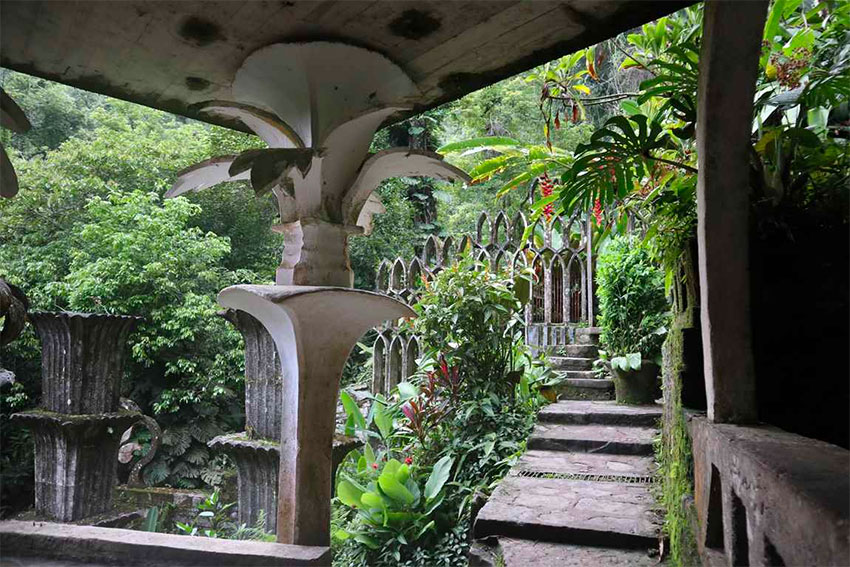
According to Great Gardens of the World, visitors to Las Pozas enter into a “dream world” that is home to a “surrealistic labyrinth.”

There are “buildings that evoke fantasy, doors that open up to nothing, stairs that lead to the sky, and concrete flowers that grow along with natural ones.”

edward james' garden
‘A dream world that is home to a “surrealistic labyrinth.’ fundacion pedro y elena hernandez ac

Among the structures is the Bamboo Palace, which James, who called it “the tower of hope,” said would one day be his home.

[wpgmza id=”265″]

Other structures also have intriguing names – there is the House of the Stag, the House of the Ocelot, the Stairway to Heaven and the Three-Story House that Might Have Five. One of the garden’s walkways is called the Path of the Seven Deadly Sins.

The Pedro y Elena Hernández Foundation, an organization dedicated to the conservation of Mexico’s natural assets, acquired Las Pozas in 2007 and the garden was declared an artistic monument by the National Institute of Fine Arts in 2012.

The sculpture garden is located about 400 kilometers north of Mexico City and approximately 350 kilometers southeast of San Luis Potosí city. Entry is 100 pesos for adults and tickets can be bought in advance on the garden’s website.

Source: El Universal (sp) 

Source says one of Interjet’s new investors has pulled out

0
interjet

There is more bad news for problem-plagued airline Interjet: one of its new investors has decided to withdraw his capital.

A source with knowledge of Interjet’s finances told the newspaper El Financiero that businessman Carlos Cabal Peniche decided to take back his funding from the airline.

Speaking on the condition of anonymity, the source said it was unclear how much of a US $150-million capital injection announced in July would be maintained.

Cabal and Alejandro del Valle had committed to provide that amount of money to the airline, which has significant unpaid tax obligations and appears to be on the verge of bankruptcy.

Under the arrangement, the two men were to acquire 90% of the airline’s shares, leaving the original owners, the Alemán family, with a stake of just 10%.

It is unclear what impact Cabal’s withdrawal will have on the ownership structure of Interjet, which hasn’t paid its employees for two months and canceled flights earlier this month because it didn’t have the funds to pay for jet fuel.

As a result of the cancellations, the federal consumer protection agency Profeco issued a statement last week warning people of the risks of buying flights with Interjet.

Miguel Alemán Magnani, the president and CEO of Interjet, took umbrage at that stance at a business summit on Monday.

“I believe that it was a mistake. … It’s pathetic that someone from the government [Profeco chief Ricardo Sheffield] tells [consumers] not to buy something from a Mexican company,” he said.

He said that Interjet would file a complaint against Profeco for the damage it caused the airline but didn’t specify with whom.

Alemán expressed confidence that that the airline will be in a better position by the end of the year and start next year strongly. He also said that Interjet’s customers are loyal and won’t abandon the airline.

The budget carrier will also need loyalty from its employees if it is to turn things around. But given that it hasn’t paid them since September there is no guarantee that they will be able to count on it.

Interjet workers protested outside the airline’s Mexico City airport airport offices last week and ground staff in Cancún demonstrated Sunday, forcing the cancellation of 10 flights to and from the Caribbean coast resort city.

About 80 workers protested at a traffic circle in the Cancún hotel zone to demand the payment of four fortnightly pay packets, the newspaper Reforma reported.

“It’s frustrating, we’ve been without our salaries for two months. We also had grocery vouchers and we haven’t received them for four months,” said one employee who participated in the protest.

At a meeting with workers and union representatives at offices of the federal Interior Ministry last Tuesday, Interjet made a commitment to transfer one fortnightly salary payment to employees by the end of last week. But the airline failed to keep its word.

Source: El Financiero (sp), El Norte (sp), Reforma (sp) 

Chinese Covid vaccine trials to be expanded to five more states

0
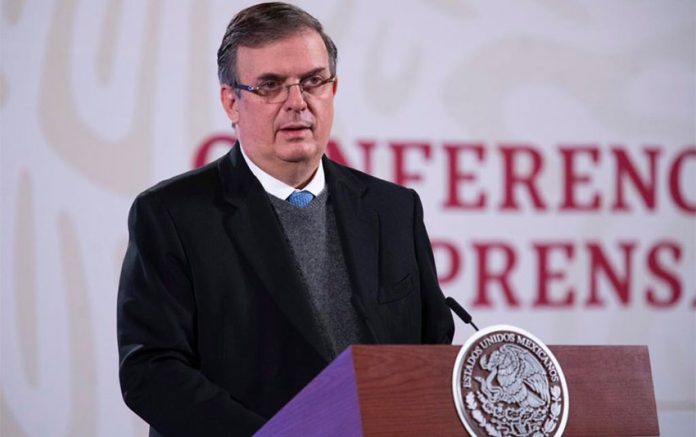
Marcelo Ebrard announces trials plans at the president's press conference.

Phase 3 trials of a Chinese coronavirus vaccine will begin in five Mexican states this week after having already started in Guerrero and Oaxaca, Foreign Minister Marcelo Ebrard said Tuesday.

Ebrard told President López Obrador’s regular news conference that trials of the CanSino Biologics vaccine will start this week in Aguascalientes, Mexico City, Michoacán, Nuevo León and Coahuila.

He said that the trials of the vaccine – which has already been approved by the Chinese military – started in Guerrero and Oaxaca because López Obrador asked for people all over Mexico, not just those in large cities, to have the opportunity to participate.

Ebrard said that between 12,000 and 15,000 volunteers in 10 to 14 states will participate. He said that a shipment from the Chinese company of 7,000 vaccine doses and 7,000 placebos is expected to arrive in Mexico this week.

Cansino is investing more than US $140 million in its Mexican trials, the foreign minister said.

Ebrard noted that the federal government has an agreement with the companies Pfizer and BioNTech to purchase up to 17.2 million doses of its vaccine should it pass phase 3 trials.

The companies announced Monday that preliminary results suggested that their vaccine was more than 90% effective in preventing coronavirus infections.

Ebrard also noted that Mexico has agreements to purchase vaccines from the companies Moderna and AstraZeneca if they are shown to be safe and effective.

Results of Moderna’s phase 3 trials are expected this month, he said.

Developed at Oxford University, the AstraZeneca vaccine is slated to be manufactured in Mexico thanks to the financial support of the charitable foundation of billionaire telecommunications mogul Carlos Slim.

Ebrard also said the government is in discussions with Russia about holding phase 3 trials of its Sputnik V vaccine in Mexico in the coming months. He noted that Russian authorities have said the vaccine is highly effective and doesn’t cause serious side effects.

Johnson & Johnson’s Janssen unit has already received authorization to carry out phase 3 trials of its vaccine in Mexico, the foreign minister said, while the United States company Novavax has lodged an application with health authorities to do the same.

“Today we can be optimistic because the results that some of these possible vaccines are showing are very good,” Ebrard said.

He claimed late last month that a coronavirus vaccine will be available by the end of March in a worst-case scenario.

Mexico ranks 11th in the world for confirmed coronavirus cases and fourth for Covid-19 deaths, according to data compiled by Johns Hopkins University.

The accumulated case tally rose to 972,785 on Monday with 4,960 new cases reported by the federal Health Ministry. Mexico’s official Covid-19 death toll rose to 95,225 with 198 additional fatalities registered.

Source: Reforma (sp) 

Chiapas program teaches students how to aim higher

0
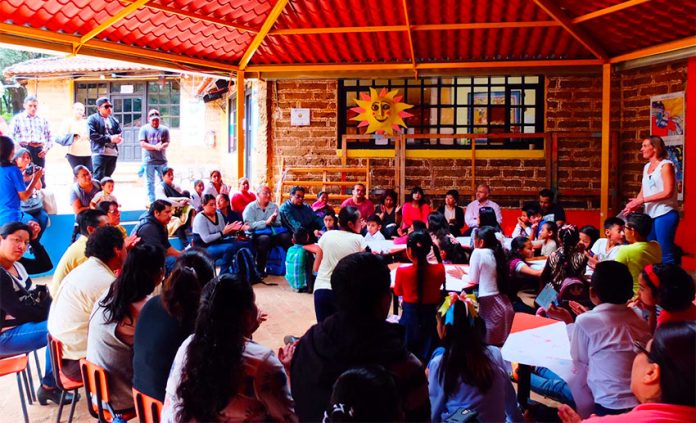
Students and parents begin a new cycle of activities in September 2019.

With only one state at the green level on Mexico’s coronavirus stoplight risk map, there appears to be no clear end in sight to Mexico’s approximately 33 million schoolchildren learning at home virtually via the internet, television, and radio.

However, a small education and vocational training program working with elementary school children in San Cristóbal de las Casas, Chiapas, has brought its students back together this fall for in-person classes, and staff say they see the impact of months of isolation on their students’ emotional well-being.

“They missed being together and working together, and shared with us that they had felt sad during the past months,” said Eleni Asimakopoulos, strategic director for Mundo de Talentos, a nonprofit program that offers children aged 10–13 in San Cristóbal a curriculum to prepare them academically and socioemotionally for higher education and fulfilling careers.

Founded in 2017, Mundo de Talentos educates children on a wide range of topics, including journalism, medicine, law, the arts, science, and entrepreneurship but also presentation, debate, collaboration, and conflict resolution skills. Since returning to hybrid classes in September, students meet on Saturdays with new safety protocols for the in-person classes and also take part in classes on WhatsApp video.

Before September, it had been using WhatsApp video exclusively since Mexico closed its schools in March.

The program is an offshoot of an academic enrichment and careers program for low-income students in the Netherlands, The IMC Weekendschool, founded in 1998. The San Cristóbal program is funded by donations from European and Mexican companies and maintains ties with the Dutch organization. Admission to the San Cristóbal program is free. The program expects to have its first class of graduates in April 2021.

Chiapas is a challenging environment for children to succeed in higher-level careers. According to Mexico’s statistics agency, Inegi, the state has the lowest percentage of school attendance for children 6–14 years old, with 7% not receiving any formal education. On average, residents over 15 have only about seven years of education, equivalent to little more than the first year of middle school. Statewide, more than 80,000 children aged 5–14 work.

In San Cristóbal, according to the children’s rights organization Melel Xojobal, 2,594 children citywide either work or accompany their families to work activities.

“Although the economic situation of families is a major cause of school dropout, another important reason why young people do not study or drop out of school is that they have not received any appropriate guidance on what future options and opportunities exist,” says Asimakopoulos. “We want to focus on supporting children from public schools in San Cristóbal to discover who they want to be.”

Mexico News Daily

AMLO slams newspaper, anti-graft group after exposé about his secretary

0
Alejandro Esquer signed contracts with bogus companies.

President López Obrador has lashed out at a major newspaper and an anti-corruption organization after they published an exposé detailing suspicious dealings by his personal secretary.

The newspaper El Universal and Mexicans Against Corruption and Impunity (MCCI) published the same report Monday that revealed that Alejandro Esquer Verdugo hired two front companies to provide logistics services and to put up political advertising at campaign events for López Obrador in Puebla for the 2018 presidential election campaign.

At the time Esquer was the finance secretary of the National Executive Committee of Morena, the party that was founded by López Obrador in 2014. He has worked for López Obrador on and off more than two decades.

The two firms Esquer contracted – Ligieri de México and ENEC Estrategia de Negocios y Comercio – were identified by the Federal Tax Administration this year as ghost, or bogus, companies.

The report published by El Universal and MCCI said the contracts signed by Esquer and the companies were available on Morena’s website until a few days ago.

ENEC was dissolved in October 2018, nine months after it signed contracts with Morena and three months after López Obrador won the presidential election. Ligieri de México was dissolved in February 2019.

The National Action Party, currently Mexico’s main opposition party, filed a complaint with the National Electoral Institute in July 2018 alleging that Morena exceeded permitted pre-campaign expenditure limits by paying Ligieri at least 398,000 pesos for each of 15 rallies for which it provided logistics services.

But Morena said that it only paid the company 36,450 pesos for each event at which it set up a stage, installed security barriers and provided a sound system among other services.

The El Universal/MCCI report said that poor people were listed as the owners of Ligieri and ENEC, presumably without their knowledge.

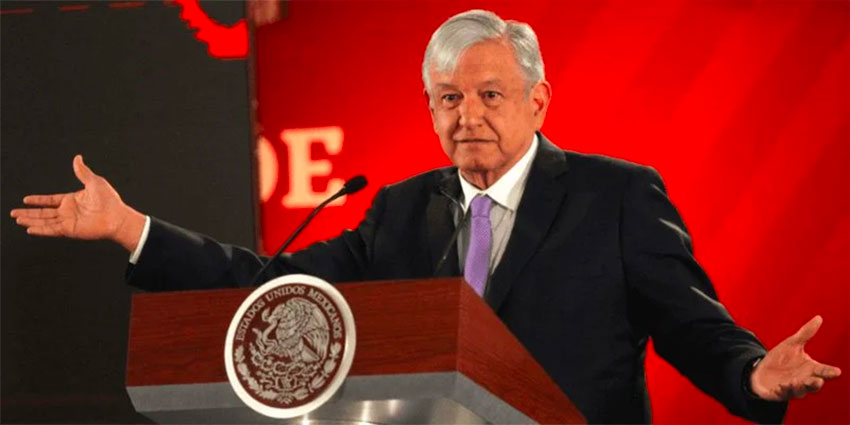
At his regular news conference on Monday, AMLO, as the president is known, said he had no knowledge of the matter but added that he had no problem with it being investigated. He then claimed that the report was part of a “smear campaign” against his government.

The owner of El Universal and Reforma – a newspaper that the president frequently derides as part of the prensa fifi, or elitist press – are “like moral or spiritual leaders of Frenaaa 1 and Frenaaa 2,” López Obrador said.

López Obrador
López Obrador said one of Mexico’s leading newspapers was ‘inspired by corruption.’

Frenaaa is the National Anti-AMLO Front, which established a protest camp in Mexico City’s central square in September. The group López Obrador has dubbed Frenaaa 2 is Sí Por México (Yes for Mexico), a new political movement opposed to the federal government.

López Obrador said the “idol” of Reforma is Carlos Salinas, widely considered one of Mexico’s most corrupt presidents, and claimed that El Universal, which he described as a “dirty” publication, takes inspiration from all corrupt past presidents.

The broadsheet, which describes itself as “the great newspaper of Mexico,” has understood past presidents “very well,” burned incense for them, applauded them and obeyed them but “with us its conduct is not the same,” he said.

The president also took aim at MCCI, charging that it is funded by “powerful businessmen” who don’t pay taxes. He has previously claimed that it has received funding from foreign foundations to oppose the government’s Maya Train railroad project.

The group’s co-founder and former president is Claudio X. González, a businessman and outspoken critic of López Obrador.

AMLO said Monday that MCCI’s funding will be investigated. He claimed last year that the anti-graft group is carrying out a campaign of “sabotage” against his administration.

MCCI responded to the president in a statement, saying that it’s funded by donations that are properly reported to tax authorities.

“MCCI doesn’t operate in opacity,” it said, although it acknowledged that it doesn’t publicly divulge the identity of its donors. The group claimed that López Obrador’s questioning of its funding is designed to “intimidate those who support our work.”

“These actions are one more example of the repeated attempts by the federal government to silence critics, limit freedom of expression and promote polarization,” MCCI said.

MCCI also noted that Claudio X. González hasn’t been its president since July and now has no involvement in the organization.

The group also said that it has no “institutional relationship” with Sí Por México, which González co-founded, but added that “we respect its work.”

MCCI, a member of a collective that launched legal action against the government’s new Mexico City airport project, has published other exposés about corruption in the current federal government.

The government’s youth employment program and a new tertiary education scheme have been among its targets.

Source: Infobae (sp), El Universal (sp) 

Reporter killed upon arriving at Guanajuato crime scene

0
Israel Vázquez was a reporter with a newspaper in Salamanca.

A journalist who arrived before police at a crime scene in Salamanca was killed Monday by the armed men he encountered there.

Israel Vázquez Rangel, 31, a reporter with the digital newspaper El Salmantino, was shot and while attempting to cover the discovery of a body in the Villa Salamanca 400 neighborhood.

His vehicle bore the newspaper’s logo.

According to authorities, Vázquez was preparing to do a live broadcast from the scene when he was shot at least eight times.

When the National Guard arrived, they found him seriously wounded. He was taken by ambulance to a nearby hospital, where he died.

At the scene, the state Attorney General’s Office located several spent ammunition shells.

El Salamantino officials condemned the attack and demanded that local, state, and federal authorities find those responsible. The newspaper issued a statement saying that citizens in Salamanca needed to feel a sense of safety, as did “all the journalists who every day put their lives at risk to do this noble work.”

In a press release, the state Attorney General’s Office said that it had already assigned its specialized homicide unit to investigate the case.

Governor Diego Sinhue Rodríguez Vallejo and the Salamanca council both made statements condemning Vázquez’s killing and calling upon authorities to act swiftly.

“We expect a prompt resolution of the case by the attorney general,” Sinhue said Monday on his Twitter account.

Guanajuato has a state government body that is supposed to address threats and acts of violence against journalists, known as the State Council for Protection of the Human Rights of Activists and Journalists. Soon after the killing was made public, the council issued a statement saying that while it has addressed 30 reports of aggression by journalists in the state since 2018, the killing of a journalist in Guanajuato was unusual.

“We vow that these sorts of incidents will not happen again in Guanajuato. We call upon the authorities to go hand-in-hand with us to end this scourge, this lack of safety, that afflicts Guanajuato,” they said.

Source: El Universal (sp), El Sol de Salamanca (sp)

Rain has stopped but swollen river causes severe flooding in Villahermosa

0
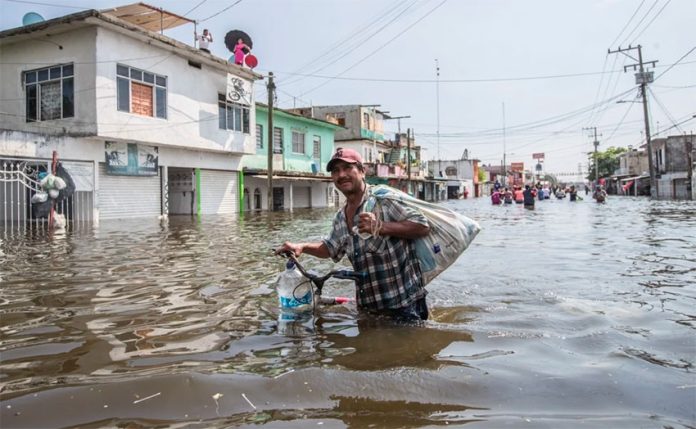
Watery conditions Monday in Villahermosa.

Water released from a dam in Chiapas after heavy rains in recent days continued to cause severe flooding in parts of Villahermosa, Tabasco.

The Grijalva River burst its banks in the Tabasco capital after large amounts of water were released from the Peñitas dam, located in a northwestern Chiapas municipality that borders the Gulf coast state.

Poor neighborhoods in the south of Villahermosa, where rain hasn’t fallen since Friday night, bore the brunt of the flooding on Monday.

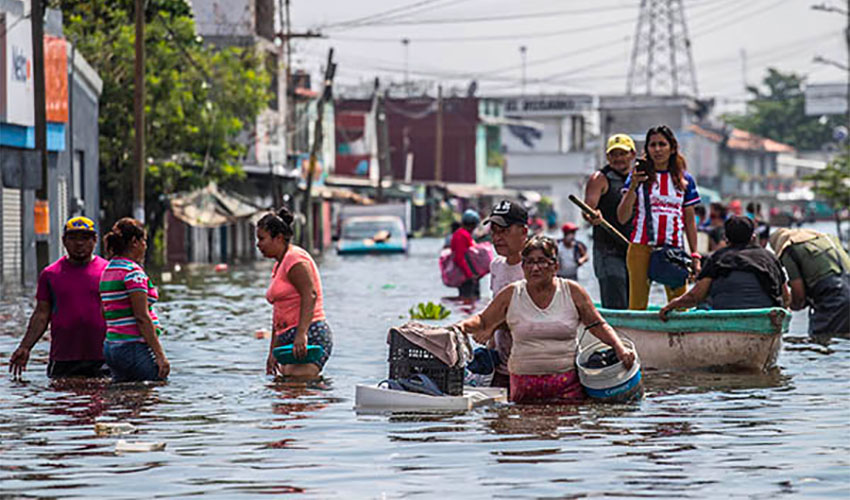
Many residents were forced to take shelter on the second floors or roofs of their homes, while others fled on boats with their pets and a few possessions. Some people waded through the floodwaters to reach safe – and dry – ground.

The Gaviotas Sur neighborhood, which is located near the Grijalva River, was especially hard hit. Many of those affected by the flooding blamed the Federal Electricity Commission (CFE) for the flooding, accusing the state-owned company of mismanaging the release of water from the Peñitas dam.

Tabasco Governor Adán Augusto López Hernández warned last week that the CFE would be responsible for any flooding caused by an increase in the release of water from the dam after it lobbied the National Committee of Large Dams to do so.

He said Saturday night that 1,300 cubic meters per second were being released from the dam and that the Grijalva had burst its banks near Villahermosa’s riverside promenade.

José Luis Arias, one of many Villahermosa residents affected by the flooding, told the newspaper Reforma that he had heard that water levels were continuing to rise due to the ongoing release of water from the dam, which was inundated with rain brought by two cold fronts and Tropical Storm Eta.

“It hasn’t rained much here but as they’re opening up the dam we’re having these floods,” he said.

Some residents complained that they haven’t received any assistance from authorities despite the dire situation, saying that the army is concentrating its efforts on stopping flooding in the center of Villahermosa.

“The president and the government don’t do anything for us,” said one man as he helped a woman sick with kidney problems navigate the dirty floodwaters.

A flooded street in the Tabasco capital.

“To save the center of Villahermosa, they [allowed us] to be flooded here,” said Diana Vázquez, a resident of Gaviotas Sur.

Indeed, Governor López said Monday that there was no risk of flooding in the downtown area of the state capital, explaining that water that inundated the nearby riverside promenade had been controlled.

The army, state authorities and civil society organizations sandbagged the promenade wall to prevent further flooding.

“Of course we have to be alert but at the moment the situation at the city promenade is controlled,” López said after inspecting their work.

Flooding has affected 10 of 17 municipalities in Tabasco in recent days, damaging about 60,000 homes and affecting more than 140,000 people.

Flooding in Macuspana, located southeast of Villahermosa, was the worst in at least 50 years, according to local residents.

Tabasco Civil Protection chief Jorge Mier said Monday that six people had drowned in floodwaters in the state including a 6-year-old boy.

Flooding has also affected Chiapas and Veracruz in recent days, affecting tens of thousands of people and homes in the two states.

The heavy rains claimed the lives of at least 22 people in Chiapas, some of whom were killed in landslides.

Source: El Universal (sp), Reforma (sp) 

6 cops investigated after opening fire against women’s protest in Cancún

0
An officer fires his gun during Monday's protest.

Six police officers are under investigation after they opened fire at a protest in Cancún, Quintana Roo, on Monday, wounding at least two people.

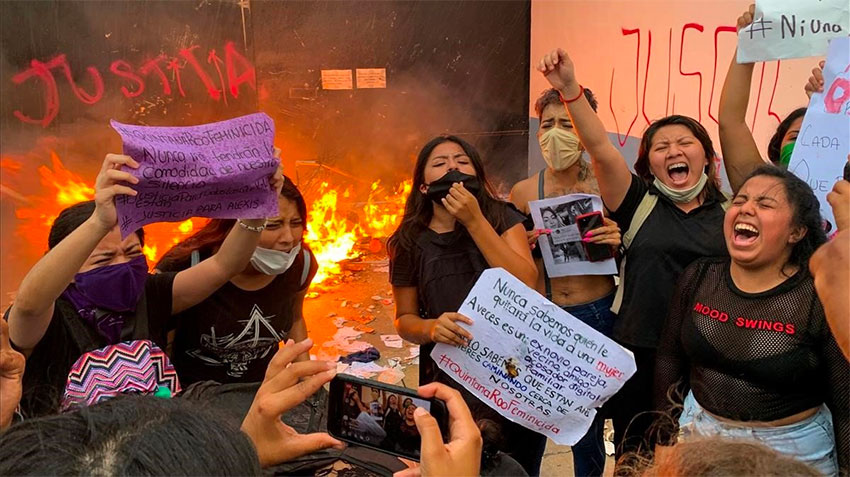
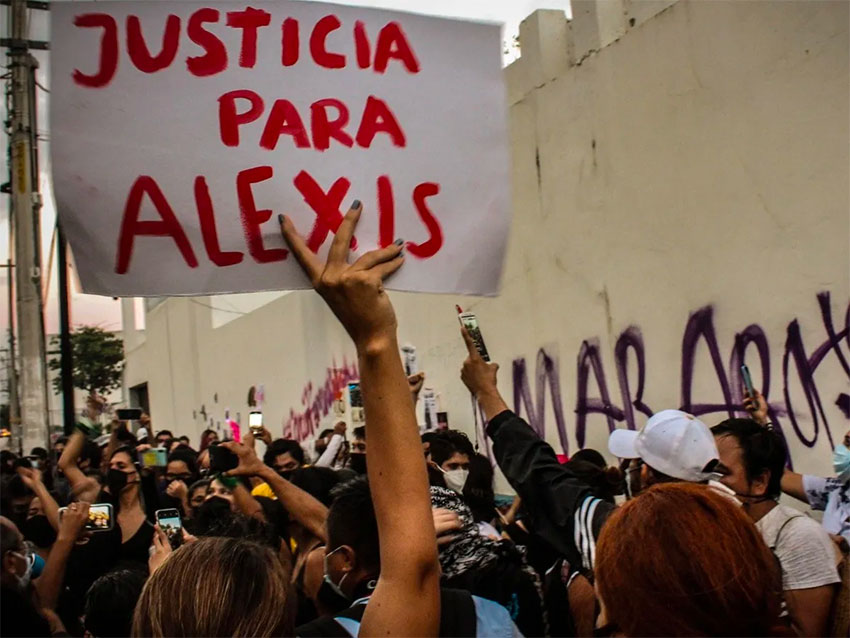
A group of approximately 500 people, mainly women, had gathered outside the municipal palace to protest the femicide of 20-year-old Blanca Alejandrina Lorenzana Alvarado, whose body was found Sunday, a day after she disappeared in Cancún.

Some radical demonstrators were attempting to break into the municipal palace and setting fire to wooden boards that protected its facade when municipal police used tear gas and fired weapons into the air and at the ground to disperse them.

About 20 gunshots can be heard in video footage of the incident.

According to media reports, two journalists were wounded by gunshots, two others were allegedly beaten by police and some protesters were injured during the panicked rush to flee the gunfire.

Women in Cancún protest the weekend murder of Blanca Alejandrina Lorenzana.

There were preliminary reports that the police officers – members of a single-command Quintana Roo police force – used rubber bullets against the protesters but a women’s collective said that wasn’t the case.

“Don’t let the media and/or the government deceive you. It’s been circulating that they shot rubber bullets at our colleagues at the municipal palace. Several of them are wounded because the bullets weren’t rubber, they were real. There are several girls and women wounded,” the collective Furias Violetas said in a Facebook post.

The group also said that several protesters had been detained by police, including a young girl.

The mayor of Benito Juárez, the municipality where Cancún is located, said in an interview that she had been told that casings of real bullets were found at the scene but added that she hadn’t corroborated the information.

Mara Lezama rejected any suggestion that she ordered the aggression against the protesters, asserting that police in Cancún belong to the single-command force and receive their instructions from the state government.

“In no way did I order … repression of this nature,” she said.

In an interview with Milenio Television, Quintana Roo Police Chief Alberto Capella described the use of force against the protesters as stupid.

“It’s unacceptable, an enormous act of stupidity that violates the protocols of service and the use of force,” he said.

Capella, who was not in Quintana Roo when the incident occurred, said there was evidence that six police officers had panicked and fired their weapons because they believed the municipal palace was being set on fire and there were people inside.

However, the police chief said he couldn’t rule out the possibility that the actions of the police were motivated by their opposition to the enforcement of discipline measures in the single-command force. The use of force might have been an attempt to destabilize the police force and its security strategy, Capella said.

“I have a hypothesis that they did it with the intention of destabilizing the security efforts that are being made in the state,” he said.

The police that committed “this barbarity” could be “the same police who don’t agree with the discipline policy,” Capella said.

Protesters called for 'Justice for Alexis' in Cancún protest.
Protesters called for ‘Justice for Alexis’ in Cancún protest.

“We’re not just annoyed but extremely ashamed because it’s not possible to understand it [the aggression], let alone explain it,” he said.

The police chief said he didn’t know how he could explain to Quintana Roo Governor Carlos Joaquín why the offending police officers, “who shouldn’t have been armed,” were not being closely supervised, adding that his resignation was a possibility.

“Resignation always has to be on the table. We take complex decisions every day and an absence of supervision that resulted in such an unfortunate and regrettable situation [is unacceptable],” Capella said.

Governor Joaquín condemned the use of force and asserted that he didn’t order it.

“I condemn the acts of violence that occurred in Cancún tonight. I completely condemn the intimidation and aggression against the protesters. I gave precise instructions of NO aggression and NO weapons in the marches,” he wrote on Twitter.

“I will investigate the irresponsible person who gave different instructions to these and which have caused this complicated situation for Quintana Roo society. I will act firmly so that the law is applied against those who committed this aggression.”

The state Attorney General’s Office contradicted the women’s collective’s claim that protesters had been arrested, saying that no one was detained during or after protests in Cancún and other Quintana Roo cities.

The federal Interior Ministry demanded that state and municipal authorities conduct an investigation into the “repression and armed aggression” against the “feminist protest.”

“As the [department] responsible for the country’s domestic policy with respect to human rights and the defense of freedom of expression, the ministry will be attentive to the course of the case.”

President López Obrador condemned the violence at his morning news conference on Tuesday and called for “rapid justice.”

“An investigation has to be carried out, … the guilty have to be punished, it’s clear that force mustn’t be used. Weapons mustn’t be used, … this has to do with authoritarian attitudes,” he said.

Source: Milenio (sp), Animal Político (sp)