Home Blog Page 1384

There’s lots to cry about this year and cry they did in San Juan del Río

2
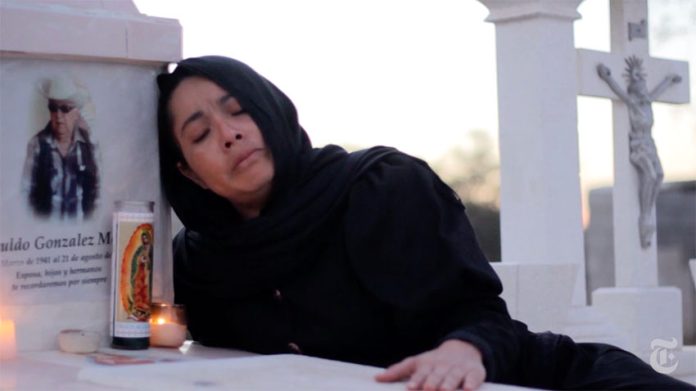
Grieving mourner Katleen Chávez
Grieving mourner Katleen Chávez won first place in the annual contest.

There is plenty to cry about in 2020 as the coronavirus pandemic continues to take a heavy toll on Mexico and many other countries around the world.

Accordingly it’s perhaps not surprising that an annual Day of the Dead mourning contest in Querétaro attracted double its usual number of participants this year.

Held virtually due to the risk of coronavirus transmission, the San Juan del Río Concurso de Plañideras (Mourners Contest) received video entries from 27 contestants.

First held 14 years ago, the contest, which is sponsored by a local funeral home, was created to pay tribute to women known as plañideras who were once hired by well-off families to cry at the burials of loved ones.

The San Juan Tourism Bureau announced last month that it would accept entries by email this year and soon after the tears started flowing and the videos flooded in.

The quality of entries was high, leaving the panel of judges with a difficult job to select a winner but they eventually settled on Princesa Katleen Chávez Arce of La Paz, Baja California.

Chávez, who won a prize of 3,500 pesos (US $167), submitted a slickly produced video which shows her clad in black and sobbing while lying beside a dead man’s tomb.

“But to forget you? Never, never, never, never,” she says before breaking down.

Chávez, an actor who moved home after the pandemic affected her work opportunities in Mexico City, said that she had never cried professionally before but admitted she shed a lot of tears after returning to La Paz in September.

“The crisis hit me,” she said. “So yes, I cried, and for about a week I did absolutely nothing,” she said.

The second place winner was María Silveria Balderas Rubio of Tequisquiapan, Querétaro.

According to the New York Times, Balderas’ daughters heard about the mourning contest and convinced their mom to enter. The 58-year-old runner-up said that she took inspiration for her performance from inconsolable mourners she has seen at funerals.

Balderas’ entry was shot on a cellphone in a single take, the Times said, adding that although there is no coffin in the footage, her “anguished weeping, hyperventilated breathing and insistence that she ‘just saw him yesterday’ seem startlingly real.

Juan Carlos Zerecero, a theater teacher and member of the judging panel, noted that “the the video is very homemade, and all she does is cry” but added: “That’s what we’re asking them to do, no? To me, she’s crying in a very truthful way.”

María Ofelia Ramírez Arteaga, a local San Juan del Río woman, took third place for her mock mourning of the death of the local mayor – who is still very much alive.

According to local news outlet Crónica Regional, her performance was filled with comedic and sarcastic elements.

An Aguascalientes woman also put in a comedy-filled performance, bewailing the onset of menopause and addressing her laments to her absent period.

“You were always so punctual and then one day, without saying anything, you never came back,” she bemoaned.

Another entrant was Brenda Anakaren Torres Villarreal, who submitted a video that the Times described as “perhaps the most relatable entry.”

The 31-year-old took inspiration for her mourning from 2020, a year she said left people “depressed, out of work and in quarantine.”

“It is without a doubt one of the worst years that we have ever lived,” Torres said, explaining her inspiration. “If you’re not crying about 2020, you’re not crying about anything.”

She added that the idea wasn’t to dwell on misery but to laugh at it. “Mexicans always have the capacity to find comedy in tragedy – to find the good part of it, even if that doesn’t exist.”

Similarly, the head of the San Juan del Río Tourism Bureau said that “laughing at death is part of Mexican culture.”

“It’s a way of confronting the problem and feeling less vulnerable,” Eduardo Guillén said.

He said that only women have been invited to participate in the mourning contests due to tradition but added that local authorities are open to allowing men to compete in the future.

Any would-be wailers have just about a year to get ready for next year’s event, which will hopefully be held once again in front of a live audience.

Source: Crónica Regional (sp), The New York Times (en) 
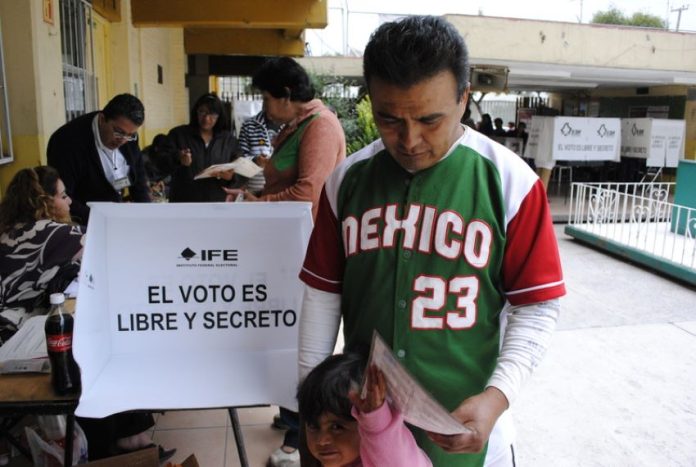
Voter envy: What can Mexico teach US about running elections?

0
With free citizen IDs, local polls, and Sunday voting, are Mexico’s elections run better than in the U.S?

Sitting here on the eve of my own country’s election, I find myself wishing we could be more like Mexico when it comes to voting.

Pretty much anyone will tell you that Mexico is by no means a beacon of democracy (the lack of the rule of law is of particular concern despite the strongest efforts by many).

But take a closer look at the makeup of the government and you’ll see at least an institutional effort at keeping things representative of voters’ wishes. Both Mexican chambers of Congress, for example, reserve a portion of their seats for the party that got the second highest number votes to guard against a “winner-take-all” makeup.

Another striking difference to the US system is that there is no reelection for the president, although as of the 2018 elections, members of the legislature can be reelected.

When it’s time to head to the polls, Mexico also seems to have a much more straightforward process in place. And I won’t lie: I’m a little jealous.

Whereas in the U.S. our main “never-leave-home-without-it” government-issued ID is a driver’s license, in Mexico it’s the INE, Mexico’s National Electoral Institute card, which is essentially a voter ID card. (Note: Many Mexicans still refer to this card out of habit as the IFE, which refers to the INE’s predecessor, the Federal Electoral Institute.) Since this card goes everywhere with everyone, it’s rare that one wouldn’t be able to vote because they didn’t have it … They always have it!

When it’s time to vote, they simply go to their local assigned voting booths, show their IDs — which are checked against the lists of voters the officials have — and then they vote, leaving with ink on their fingers to ensure that they only vote once.

Voting is held on a Sunday, ensuring that as many people as possible can participate. At the end of the day, the results from each voting station are taped up on the outside and left there for a few days for everyone to see. Now that everyone has phones, it’s easy to snap a picture and compare it with the numbers on the INE (Instituto Nacional Electoral) site. All in all, it’s a pretty straightforward process.

The president is elected by a nationwide popular vote: whichever candidate gets the most votes wins, period.

In my own country of the United States, the president is ultimately elected by the Electoral College, a system that no one was ever enthusiastic about but one we can’t seem to shake. To be fair, no country at the time it was created elected their leaders by popular vote, and it was considered too risky to give that much power to everyday people.

And now, well, it’s tradition. It’s also more than evident that the party that’s currently in power would lose over and over again if the president were selected by popular vote. After all, both Al Gore in 2000 and Hillary Clinton in 2016, both Democrats, received the majority of votes cast, but did not wind up being president. In tomorrow’s election, Donald Trump wouldn’t stand a chance if he had to be chosen by popular vote.

While Mexico hasn’t had to deal with a state-by-state system that ultimately has given certain states much more power than others in selecting the president (I sometimes scoff when I remember that Wyoming’s two senators get just as much say in decisions that affect the entire country as Texas’ or California’s), one thing they have had to deal with are too-close races.

Some of you might recall the 2006 election in Mexico, in which our current president, Andrés Manuel López Obrador, was neck-and-neck with the man who was ultimately declared the winner, Felipe Calderón. I never heard a great explanation for why they didn’t sit down and recount all those votes, but I sure remember it being a stressful time.

López Obrador set up shop as the “legitimate president” for months in Mexico City’s zócalo, and surely the U.S. would like to avoid precisely that kind of thing happening.

All that said, Mexico’s got the basic idea right: a president is a president for everyone. So it makes sense that everyone votes for the president and that the candidate who gets the most votes wins.

That’s one way I’d love the U.S. to be more like Mexico. Voting on Sundays? Also an excellent idea! Or perhaps we could make election day a national holiday? A paid national holiday?

Just imagine! Making our main IDs voting cards would also be a great step in the right direction, as not everyone has nor can get a driver’s license. Let’s take a cue from Mexico on that one and do the same, making those cards easily accessible and free. Maybe seeing that card every day will remind people to vote when it’s time!

And if we ensure that there are actually enough voting booths to accommodate everyone without making them wait in line for hours, what a step that would be! Surely it can’t be that hard. Mexico might only have a third of the population of the United States, but they’re pretty much rocking it on this front.

All that said, I’m not as naïve as I seem. We don’t do all of this, of course, because one party in particular knows that if everyone who were eligible actually showed up to vote, they’d be toast. Over the past few days, in the face of greater voter turnout than we’ve seen in a very long while, efforts at voter suppression are reaching ridiculous heights: highways are blocked, campaign buses for the other side are run off the road, and vigilantes “patrol” voting spaces at the direction of the president.

Here’s hoping that by the time the U.S. elections roll around again in 2022 and 2024, we’ll have learned a thing or two from Mexico.

Sarah DeVries writes from her home in Xalapa, Veracruz.

CORRECTION:  A previous version of this article stated that no one in the federal legislative branch could run for additional terms. For legislators elected in 2018 and after, this has changed. The previous version also incorrectly referred to Mexico’s National Electoral Institute (INE) by its predecessor’s name, the Federal Electoral Institute (IFE). Mexico News Daily regrets the error.

Bike tour offers sightseeing while helping local artisans survive

0
Artisan Obdulia Almazán, whose lacquering technique dates back centuries before the Conquest, is just one stop on a Mexico City artisan bike tour on Saturday.

Interested in a safe way to get some fresh air and see some art — and perhaps help some artisans in need of income? Mexico City nonprofit CDMX Ayuda Mutua can offer all three in its first bike tour of the city’s artisans, taking place on November 7.

The Tour de Artesanos event is meant to benefit Mexico City artisans suffering from the loss of income due to the cancellation of community events during the Covid-19 pandemic. Working with the artisans’ collective Red de Artesanos Anáhuac, the tour takes advantage of the light weekend traffic to explore the oldest parts of the city and meet artisans and look at their works.

There will be three main stops: La Ceiba, Xota Nima and Tekitl, all located in the city’s historic center. These locations are cooperative stores that feature traditional, innovative handcrafts. One of the artisans, Obdulia Almazán, is a master of a lacquering technique that has been practiced in Guerrero and other areas in Mesoamerica for centuries before the Conquest.

Participants will have time to speak with the artisans. Spanish-English translators will be available if needed.

The tour meets up at the Huerto Roma Verde, Jalapa 234, in Colonia Roma Sur at 12:00 p.m. At the end of the tour, the group will gather at Doña Vero restaurant, also in Roma Sur, for drinks and food.

The Tour de Artesanos will visit three artisan cooperatives. Advance online reservations are required.

The use of masks is obligatory for the entire event.

Participation is by reservation and donations are requested. Contact organizers via direct message on Facebook or on Instagram

CDMX Ayuda Mutua is an organization that began in the spring of this year to provide economic assistance to Mexico City’s vulnerable populations during the Covid crisis. Red de Artesanos Anáhuac is a formal nonprofit organization that supports Mexico’s artisans, especially those based in Mexico City.

Mexico News Daily

CFE angers Tabasco governor again over release of water at Chiapas dam

0
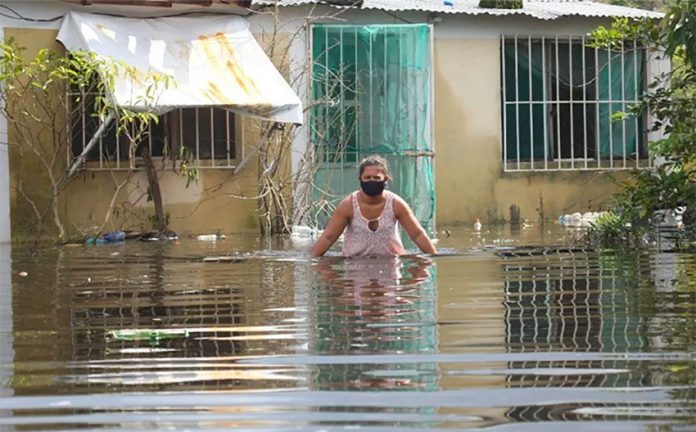
A woman ventures into a flooded street in Tabasco.

The Federal Electricity Commission (CFE) will be responsible for any damage caused by an increase in the quantity of water released from a dam in Chiapas, warned Tabasco Governor Adán Augusto López Hernández on Tuesday.

The governor said he had been notified by the National Water Commission that the National Committee of Large Dams, after being lobbied by the CFE, proposed increasing the quantity of water released from the Peñitas dam to 950 cubic meters per second. Only 600 cubic meters per second have previously been released.

“We urge the CFE and the departments that are members of the National Committee of Large Dams to manage the volumes [of water] in the dam by placing the protection of population centers first,” López said in a Twitter post.

“… The CFE will be responsible for damage and harm that might be caused to the people of Tabasco and their assets,” he wrote.

The governor claimed in early October that there was a “mafia” within the state-owned electricity company linked to past “neoliberal” governments that is really managing Mexico’s dams. The mafia’s water management is detrimental to Tabasco and its residents, López charged.

Parts of the Gulf coast state are currently flooded and releasing more water from the Peñitas dam, located in a Chiapas municipality that borders Tabasco, will result in more water reaching rivers that are already overburdened.

The state capital Villahermosa was inundated in late September and early October due to torrential rains that washed away the belongings of hundreds of families.

Just a few days later heavy rain brought by Tropical Storm Gamma flooded large parts of Tabasco, affecting some 600,000 citizens. Water that was being released from the Peñitas dam at the time only made the flooding worse.

On Tuesday the Tabasco government issued a weather alert, warning Tabasco residents of the risk of more flooding.

It said that rain brought by cold fronts No. 9 and No. 11 and the release of water from the Peñitas dam could cause the Samaria River and its tributaries to burst their banks. As a result, 24 communities in the municipality of Nacajuca are at risk of flooding, the weather alert said.

Some neighborhoods in Villahermosa have been flooded for the past six days due to rain brought by the two cold fronts, the newspaper Milenio said. The army and state Civil Protection personnel helped to evacuate some people from their homes on Tuesday afternoon and night.

Soldiers also built a sandbag wall to protect eastern parts of the capital from a possible overflow of the El Negro Lagoon. Some Villahermosa residents were also working to protect their neighborhoods and homes from possible flooding.

Tropical Storm Eta is expected to dump more water on Tabasco later this week.

Eta, which was 200 kilometers north-northeast of Managua, Nicaragua, at 12:00 p.m. CST, is expected to bring inclement weather to Chiapas, Tabasco and Oaxaca on Thursday and Friday.

Source: Milenio (sp) 

High winds topple 18 tractor-trailers in Oaxaca’s isthmus

0
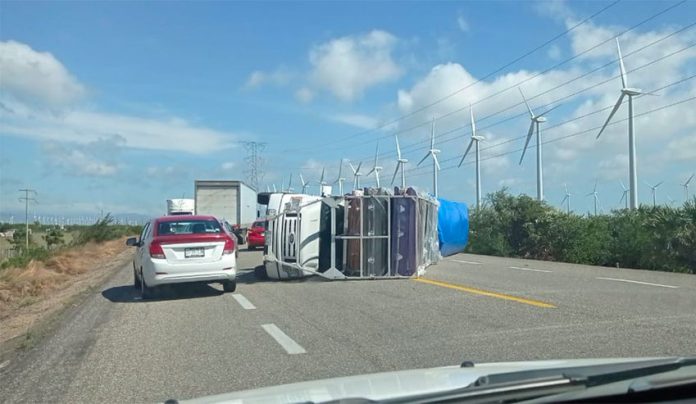
A semitrailer on its side in Oaxaca on Tuesday.

Winds clocked at 169 kilometer per hour — equivalent to a Category 2 hurricane — blasted across Oaxaca’s Isthmus of Tehuantepec on Tuesday, causing 18 tractor-trailers traveling on a stretch of the La Venta–La Ventosa highway to roll over.

There were no fatalities or serious injuries in the crashes, state Civil Protection officials said.

The winds also took out trees and billboards as well as roofs off some buildings, authorities said.

State Civil Protection head Antonio Amaro Cancino said the strong winds were the result of a cold front running through the southern and central region of the country.

Emergency officials closed the 15-kilometer stretch of highway to most heavy-cargo traffic following the crashes. As a result, 129 trailers carrying no cargo suspended their travel and waited until the winds died down, Amaro said.

The area is prone to high winds at this time of the year.  The name La Ventosa translates to “the windy one.” The area is also host to wind turbines that take advantage of the fact that it is situated near an unusually warm ocean current which, combined with the area’s temperature and its tendency to see rapid air movement from high to low pressure, results in a strong northern wind.

Already, the highway has seen four other tractor-trailers crash due to winds in the last 48 hours. Another 18 trailers have been blown over in the area during this year’s windy season.

Meanwhile, port authorities responded to the hurricane-force winds by closing marine activity between the cities of Pinotepa Nacional and Salina Cruz due to concerns about the winds provoking dangerously high swells.

Source: Milenio (sp)

Sonora Congress votes to make face masks mandatory

0
deputy colosio
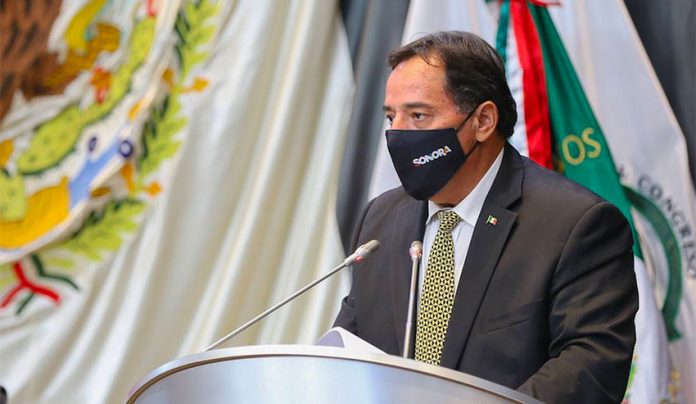
Deputy Colosio's version of the bill included penalties but they were removed.

The Sonora Congress has approved a law that makes the use of face masks mandatory in public places although it doesn’t establish any penalties against people who fail to do so.

A majority of lawmakers in the northern state’s unicameral Congress passed the law on Tuesday.

The original bill presented by Morena party Deputy Luis Armando Colosio Muñoz proposed sanctions that included fines for people not wearing masks in public places.

The bill that was approved states that face masks are obligatory for all people aged 13 or over when in public and “common use” spaces. They include commercial, service and industrial establishments – namely shops, offices and factories – all other workplaces, shopping malls and public transit. Entry can be denied to anyone not wearing a mask without a valid reason.

People who may have difficulties breathing while using a mask and those who are unable to remove one on their own are exempt from the law. If children younger than 12 wear masks, they must be supervised by adults while doing so.

The law also stipulates that businesses must establish a health checkpoint at their entrances where customers are provided with antibacterial gel and have their temperatures taken. Businesses must also put up signs that indicate that the use of face masks is a condition of entry.

The law will take effect one day after its publication in the state government’s official gazette. That could happen as soon as today.

Authorities in many other states have made the use of face masks mandatory but most have done so via governors’ decrees rather than through the Congress.

The federal government last week ruled out any possibility of an enforceable nationwide mask mandate despite the heavy toll the coronavirus pandemic has taken on Mexico.

The accumulated case tally rose to 938,405 on Tuesday with 5,250 new cases reported by the federal Health Ministry. Mexico’s official Covid-19 death toll stands at 92,593 with 493 additional fatalities registered on Tuesday.

Sonora ranks fifth among Mexico’s 32 states for total cases and 10th for deaths. As of Tuesday, it had recorded 38,482 cases and 3,174 deaths, according to federal data.

Source: Reforma (sp) 

3 years after court ruling, Puebla lawmakers approve same-sex marriage

0
puebla state congress
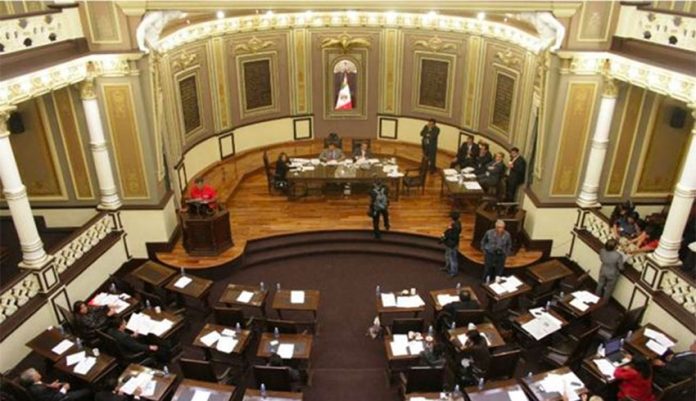
The state Congress voted 31-5 in favor of the change.

After three hours of debate, Puebla’s state Congress voted overwhelmingly on Tuesday to change the state civil code to recognize same-sex marriage, a highly anticipated move that comes years after Puebla’s ban against same-sex marriage was struck down by a court order.

The vote came three years after the Supreme Court (SCJN) upheld the legality of same-sex marriage in the state in 2017, when it struck down as unconstitutional the articles of Puebla’s civil code defining marriage and common-law marriage as between a man and a woman.

Yesterday’s vote, which passed 31-5, officially changed parts of the civil code to be in compliance with the court decision, changing gender-specific references in parts of the civil code that referred to marriage and to common-law relationships from “man and woman” to “persons.”

The part of the civil code relating to marriage will now state, “Marriage is a civil contract by which two persons who join together voluntarily in society in order to carry out a life together with respect, mutual aid, and an equality of rights and obligations.”

The vote was not without controversy. Some opposition lawmakers accused the governing Morena party, which holds the governorship and a majority in the state Congress, of bad faith and trying to curry favor with voters in next year’s elections.

They said similar legislation was proposed last year by a coalition of opposition parties but Morena members turned it down.

By contrast, the lawmakers said, Morena quickly passed the changes within eight days of the bill being proposed.

An August survey by pollster Massive Caller predicted that Morena would defeat its main opposition, the National Action Party, next June but by a narrow margin of only 2.2%.

Yesterday’s vote makes Puebla the 19th state to approve same-sex marriage.

Source: El Financiero (sp)

Interjet hopes to pay its employees this week but admits there’s no money

0
interjet

Following a protest by workers who say they haven’t been paid since September, the budget airline Interjet made a commitment Tuesday to transfer one fortnightly salary payment to employees this week.

But its capacity to do so is in doubt – one of Interjet’s owners acknowledged that the airline doesn’t have any money.

The federal Interior Ministry said it organized a meeting Tuesday night between Interjet, its workers and representatives of their union where the airline agreed to pay one quincena, or fortnightly payment, to workers this week.

Interjet executive president Alejandro Del Valle, one of the company’s new owners, told workers before the meeting that the airline hoped to make one salary payment on Tuesday or Wednesday.

Speaking to workers protesting outside Interjet’s offices at the Mexico City airport, Del Valle said the airline actually hopes to pay three quincenas by the end of the week but he also acknowledged that it doesn’t have any funds.

He said the situation is complicated for the airline due to its lack of cash flow and unpaid tax commitments. Interjet canceled all its flights on both Sunday and Monday, apparently because it was unable to pay for fuel.

Despite its lack of cash and tax problems, Interjet is aiming to add 16 planes to its fleet and increase its capacity to attract more passengers, Del Valle said.

“A company with 5,000 employees can’t operate [profitably] with four planes,” he said.

“We ordered 16 planes; we can’t bring them [all] due to a lack of cash flow [but] there is a possibility that we’ll bring the first three,” Del Valle told the protesting workers.

The disgruntled employees blocked the Circuito Interior freeway outside Interjet’s airport offices for several hours on Tuesday to demand payment of salaries and benefits.

One maintenance worker told the newspaper El Financiero that employees haven’t received their last four salary payments.

“They haven’t paid us since September,” said the employee who asked to remain anonymous.

The worker said that some benefits, including uniform allowances, housing credits and health insurance payments, haven’t been paid since March.

Interjet has been plagued by problems this year as airlines around the world struggle to stay afloat amid the coronavirus pandemic and resulting decline in demand for air travel.

The federal tax agency SAT placed an embargo on property belonging to the father of Interjet president Miguel Alemán Magnani due to the airline’s unpaid tax bills, 25 of its leased aircraft were repossessed, the city of Chicago launched legal action against it for failing to pay taxes and fees owed to O’Hare International Airport, customers are preparing a class action suit against it over the constant cancellation of flights and its reimbursement practices and the Canadian Transportation Agency suspended its license to operate in Canada for failing to have liability insurance coverage.

And all that was before this week’s cancellations due to Interjet’s apparent inability to purchase fuel.

According to the airline, the cancellations on Sunday and Monday affected 2,690 passengers but the consumer protection agency Profeco disputed that number, saying that more than 3,000 people were left stranded.

Profeco issued a statement on Tuesday, warning people of the risks of buying flights with Interjet due to the airline’s repeated cancellations. It said that it has received 1,542 complaints from dissatisfied Interjet customers this year.

“Interjet doesn’t provide certainty, fairness or legal security to consumers,” Profeco said. “Profeco informs and alerts [potential customers] about the risk of establishing commercial relationships with Interjet.”

When a flight is canceled, airlines under Mexican law are required either to refund passengers the cost of their ticket or put them on another flight at no extra charge. In addition, they must pay 25% of the value of the ticket in compensation.

However, there is evidence that Interjet hasn’t been complying with the law.

Passengers who have indicated they will sue the airline say that Interjet is guilty of practices that have caused customers to lose significant amounts of money.

According to Pablo Martínez Castro, the moderator of a Facebook group called Queja Colectiva a Interjet (Collective Complaint Against Interjet), one illegal practice is that when a flight is canceled, Interjet issues customers with vouchers for amounts less than what they paid for their tickets.

As a result they are forced to pay extra when rebooking a flight on the same route, he said.

There is also evidence that Interjet is not paying the 25% compensation within 10 days as required. One passenger affected by a flight cancellation this week said that she was also stranded by a cancellation in March.

However, Andrea Lozada said that eight months later she still hasn’t received any financial compensation.

Source: El Financiero (sp), Reforma (sp), Milenio (sp) 

Governor’s photos don’t necessarily reveal truth about lockdown measures

0
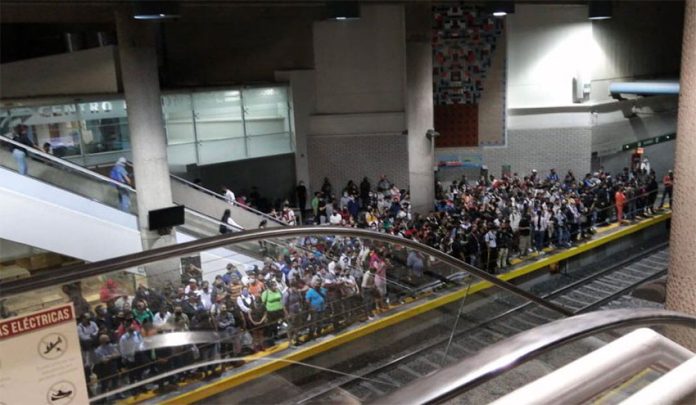
A photo of the Metro in Guadalajara Saturday.

The governor of Jalisco and many social media users have a very different perception about the success of coronavirus restrictions in the state capital.

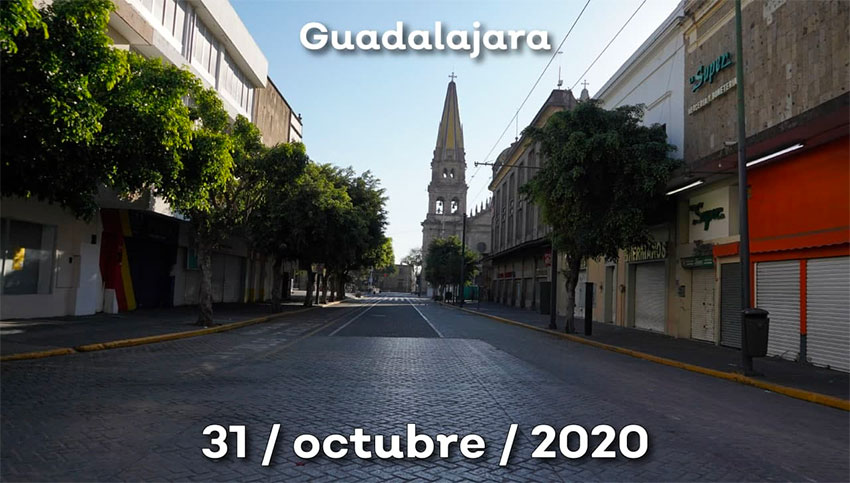
Governor Enrique Alfaro posted photos to his Twitter and Facebook accounts on Monday that purportedly show an empty street in Guadalajara on Saturday and the city’s central square devoid of people on the same day.

The images were juxtaposed with photos of packed streets in Mexico City over the Halloween/Day of the Dead weekend.

“In the country’s two main cities, on a high-risk weekend when the virus is gaining momentum in all of Mexico, this is the difference between taking difficult decisions to do things well, even though there are political costs, and doing nothing,” Alfaro wrote above the contrasting images.

“… We’re continuing to set the national example. It’s worth doing the right thing in order to take care of ourselves, cut the chain of infections and save lives.”

One of Alfaro's photos intended to demonstrate successful Covid measures.
One of Alfaro’s photos intended to demonstrate successful Covid measures.

His online remarks came three days after his government implemented stricter coronavirus restrictions in Jalisco due to an increase in new case numbers.

Some social media users were quick to rebut the governor’s claim that the new rules were having the desired effect.

Twitter user @israelijacoboj tweeted a photo to Alfaro showing the crowded platform of a Guadalajara subway station.

“An hour ago, while your community manager was managing your social media, this was happening in central Guadalajara,” he wrote above the image.

On Facebook, where Alfaro’s post attracted more than 8,000 comments, one woman posted a picture of a crowded train with the message, “This is real life. Welcome!”

Crowded subway scenes were shown in many photos posted to both Facebook and Twitter, while a smaller number of images showing busy Guadalajara streets were also posted online in response to the governor’s posts.

Pithy remarks accompanied many of the photos sent to Alfaro. Among them: “The Jalisco you don’t know,” “You forgot to post this image,” “Don’t be a liar” and  “Your strategy is a failure.”

Jalisco, Mexico’s fourth most populous state, currently ranks eighth among the 32 states for total coronavirus cases and fifth for Covid-19 deaths.

As of Monday, the state had recorded 34,797 confirmed cases and 4,096 Covid-related deaths, according to federal data.

Source: El Universal (sp) 

Ex-Odebrecht director challenges Lozoya’s claims over use of bribes

0
luis weyll
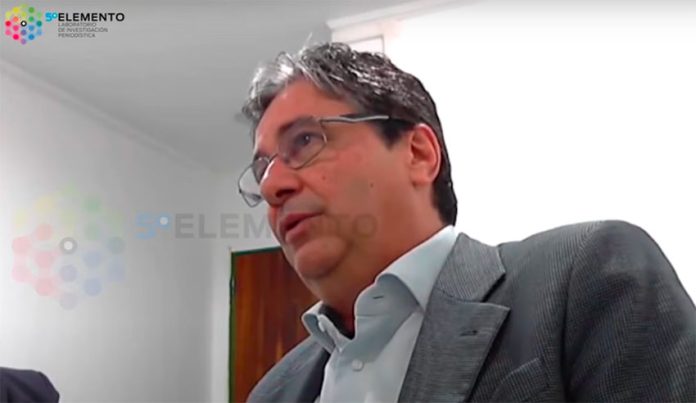
Weyll says he has no knowledge of how the bribe money was to be used.

The former Mexico director of the Brazilian construction company Odebrecht has rejected ex-Pemex CEO Emilio Lozoya’s version of events about bribes he paid on behalf of his employer.

Lozoya, arrested on corruption charges in Spain in February and extradited to Mexico in July, told the federal Attorney General’s Office (FGR) that after he met with Odebrecht director Luis Alberto de Meneses Weyll in Mexico City in 2012, the firm gave US $4 million to the campaign of former president Enrique Peña Nieto and another $6 million to his government after he took office.

He said he met with the company director on the orders of Luis Videgaray, a Peña Nieto-era cabinet minister, who instructed him to negotiate resources to cover campaign costs.

The former state oil company chief, who worked on Peña Nieto’s 2012 campaign, alleged that Odebrecht paid the bribes in exchange for preferential treatment from the former federal government. He said that the $6 million was paid in exchange for a 3-billion-peso ($141.5 million at today’s exchange rate) contract for work on the Pemex refinery in Tula, Hidalgo.

Part of that money was used to bribe lawmakers to ensure support for the former government’s 2014 energy reform, he told the FGR.

Lozoya, who is cooperating with authorities in the hope that he will be acquitted or given a lighter sentence, also accused officials in the government of Peña Nieto’s predecessor, Felipe Calderón, of taking bribes from Odebrecht in exchange for approving an ethane plant deal in Veracruz.

But through his lawyer, de Meneses Weyll (commonly known as Luis Weyll) rejected Lozoya’s claims.

Carlos Kauffmann told the investigative news website Quinto Elemento Lab that his client – who has admitted to paying bribes to Lozoya on Odebrecht’s behalf – didn’t specifically provide money for Peña Nieto’s campaign or to pay off lawmakers in exchange for approving the energy reform.

The lawyer also told the website that Weyll didn’t make payments to the Calderón government in exchange for ethane plant contracts and would have said so if he had.

Kauffmann asserted that his client had no knowledge of how the money he transferred to Lozoya would be used.

“What Emilio Lozoya did with the payments – that wasn’t up to Luis Weyll to decide or question. … The only person who knows what was done with the money is Lozoya himself,” he said.

“Luis Weyll assumed complete responsibility for all the payments he made and proved all the payments with documents but he won’t take responsibility for what he didn’t do.”

Weyll told Brazilian prosecutors in 2016 that the money he transferred to Lozoya was exclusively for his use. He said that he gave the money to the former Pemex CEO in exchange for helping Odebrecht win Pemex contracts at the Tula refinery and in the state of Veracruz.

In his submission to the FGR, Lozoya claimed that Peña Nieto and Videgaray had a close relationship with former Odebrecht CEO Marcelo Odebrecht and Weyll and led the Odebrecht bribery scheme, depicting himself as a victim of their corruption.

Two meetings serve as evidence of the close relationship between the Odebrecht officials and the former government, Lozoya told the FGR.

He said that Peña Nieto met with Odebrecht and Weyll in Brazil in 2010 when he was governor of the state of México. After a meal together, the Odebrecht officials offered to support Peña Nieto financially in the event that he ran for president at the 2012 election, Lozoya said.

After winning the 2012 election but before taking office, Peña Nieto met with Odebrecht again, he said. At a meeting at Odebrecht’s Sao Paulo home, a “more direct relationship” between the Brazilian firm and the former Mexican government began to be forged, Lozoya said.

Kauffmann refuted Lozoya’s claim that his client met with Peña Nieto, asserting that Weyll never had contact with any Mexican government official apart from Lozoya.

“Luis Weyll only had direct contact with Emilio Lozoya. He never had contact with the president nor any other lawmakers,” he said before reiterating the his client did not know how the Odebrecht bribes would be used.

The lawyer rejected Lozoya’s claim that Odebrecht congratulated the government after Congress passed the energy reform that opened up the sector to foreign and private companies for the first time in more than 70 years.

“They were happy because with the reform they could obtain a greater volume of work,” the former Pemex boss told the FGR.

However, Kauffmann said that Odebrecht never had any interest in the energy reform and didn’t benefit from it in any way.

“If there was no interest … [the company] wouldn’t pay legislators” to approve the reform, he said.

Authorities in Mexico haven’t called on Weyll to provide a statement in relation to the Lozoya case but his lawyer said that his client is willing to cooperate.

However, the lawyer stressed that his client would only talk after Mexican authorities made a commitment not to pursue the former Odebrecht director.

“Luis Weyll is in Brazil. He can speak to Mexican authorities as long as they respect the commitment they entered into with Brazilian authorities,” Kauffman said.

Weyll previously struck a deal with those authorities to cooperate in exchange for a reduced sentence.

In light of the article published by Quinto Elemento Lab, President López Obrador said Tuesday morning that the FGR should investigate the veracity of Lozoya’s claims.

Lozoya is one of three high profile Peña Nieto-era officials who have been arrested since the new government took office.

The others are cabinet minister Rosario Robles, who is awaiting trial on charges related to the so-called Master Fraud embezzlement scheme and ex-army chief Salvador Cienfuegos, who was taken into custody in the United States last month on drug trafficking and money laundering charges.

Today it was revealed that the attorney general has sought an arrest warrant for Videgaray.

Source: Quinto Elemento Lab (sp)