Home Blog Page 1433

At Villa Fantasía, meet Pancho the croc and the Ocelot without a name

0
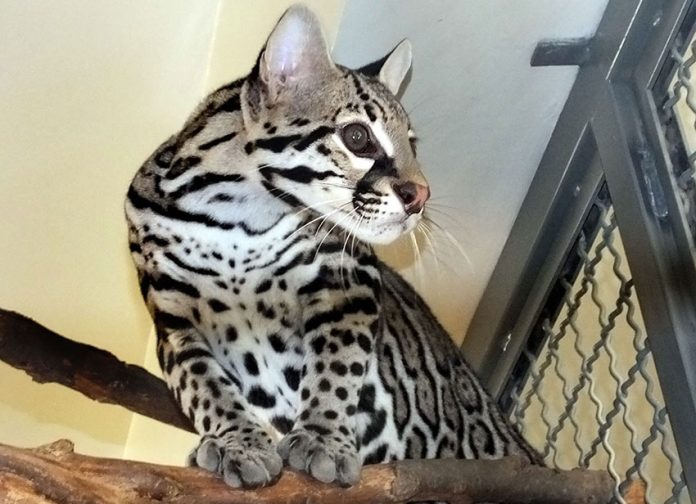
The ocelot without a name will be released at the end of the month.

Once upon a time, Mexico had a first-rate network of Animal Rescue Centers. The Centros para la Conservación e Investigación de la Vida Silvestre (CIVS) were started in 1988 and over the years they rescued countless thousands of mammals, birds and reptiles. Then, during the presidency of Enrique Peña Nieto, all 11 CIVS centers were unceremoniously shut down.

Wild animals, however, are still turning up in unexpected places and Mexican vets and biologists are scrambling to find temporary shelters for them, as well as the ways and means to return them to their natural habitat, whenever possible.

Guadalajara’s Parque Agua Azul was one of the first organizations to come to the rescue of displaced, misplaced or mistreated wild animals and I described their work in Animal rescue has been dealt a hard blow in Mexico but is bouncing back.

Recently, I was invited to another city park inside Greater Guadalajara, which is collaborating with Agua Azul in these efforts.

Villa Fantasía, located in Zapopan, used to be a zoo but is now dedicated full time to the rescue, rehabilitation and return to the wild of hapless mammals, reptiles and birds which were somehow removed from their natural environment.
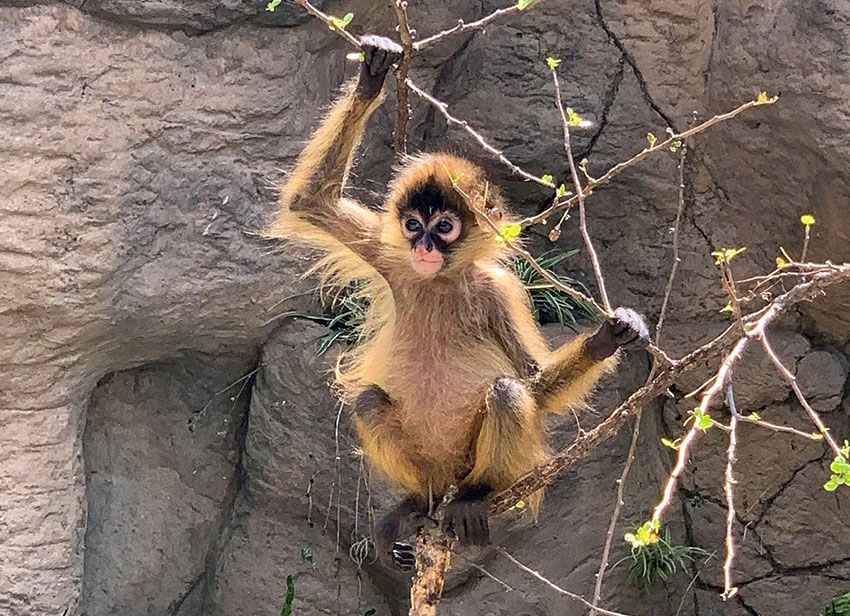
Spider monkey “Britney López”
Spider monkey “Britney López” is one of many pets that got too big for their owners to handle.

Slowly, a network of such organizations is being formed not only in Jalisco, but all over Mexico.

I asked the director of Villa Fantasía, Yamile Lotfe, if her rescue center was an initiative of the government.

“In no way!” she replied. “This project was started by people like my staff and me who have worked with animals all our lives. We began talking among ourselves and then to our directors and they said, ‘OK, if you all want to work together on this, we will support you.’”

Lotfe and friends found that the municipality of Zapopan was open to the idea of turning Villa Fantasía into an animal rescue center. The reason may be because Zapopan is a member of an international coalition of city leaders addressing climate change.

“Zapopan joined the The Global Covenant of Mayors for Climate & Energy, but Guadalajara did not!” says Lotfe. “I think that’s because Guadalajara is focused on reforestation using endemic or native species of plants and trees. So we went to the mayor and his cabinet and explained to them that endemic trees and plants without endemic animals will fail. You need the animals! So this is the project of Villa Fantasía, to create that equilibrium. For example, this is why Zapopan has a program for the reintroduction of honey bees. We are concerned about the whole picture: insects, plants and animals.”

As I toured the grounds at Villa Fantasía, I was introduced to possums and parakeets, false rattlesnakes, a gila monster, a jaguar, a red-tailed hawk with only one wing and a whole gang of howler monkeys.
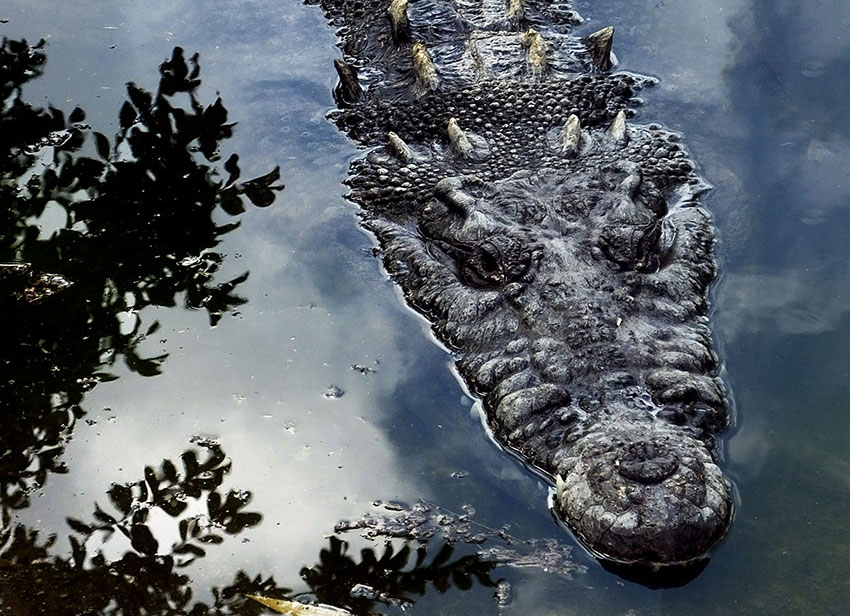
pancho crocodile
A portrait of Pancho, who grew too big for his owner’s patio.

I also met Pancho the crocodile who, I was told, had grown up in a little pool too shallow for him to swim in. His owner loved Pancho dearly, but eventually the croc grew so big that the woman practically had to climb over him to get across her patio. Reluctantly, she turned Pancho — now 3.8 meters long — over to the biologists at Villa Fantasía who then created a sort of Fantasy Park for the croc, with a deep, wide pool where he can finally swim to his heart’s content.

To photograph Pancho in his new digs, I had my first experience of standing one meter away from a huge crocodile with no fence between us. I’m happy to report that neither of us tried to eat the other!

Another resident of Villa Fantasía whom I met was The Ocelot without a Name.

“Somebody in Zapopan phoned us,” said Lotfe, “claiming they had found a wild animal on the roadside. When we arrived, we discovered it was an ocelot, one of the six big cats found in Mexico. This creature, however, was in perfect condition, with no parasites, so we imagined these people had bought it illegally when it was very small and cute, only to discover this was no kitten, but a really wild animal. So they decided to claim they had found it and to turn it over to us. This took place six months ago. When we got it, it was really small.

“We decided to give it special treatment so it won’t get used to humans. Therefore we stay away from it and we feed it live food, creatures that it will be finding in its normal environment. We plan to liberate it on land we have purchased along the Pacific Coast between Nayarit and Puerto Vallarta. This is a really pristine area where researchers are monitoring animals, birds, reptiles and tarantulas. We’ll be studying this ocelot through a satellite collar over a period of 14 months. We’re initiating this project because in Mexico and especially here in Jalisco, there has never been a proper study of this species of feline.

“In Mexico we have six big cats, but the only one that’s been well studied is the jaguar, because of its role in pre-Hispanic Mexico. The ocelot has not been researched and it’s in danger of extinction, like the puma. So our aim in monitoring it is to follow it around, see if at some point it finds a mate and if so, what sort of place it will choose for its den.

[soliloquy id="123800"]

“We are now waiting for the telemetry collar and then, at the end of September, we expect to liberate it. When we tranquilize it, we’ll put on the collar and we’ll take advantage to do blood samples, ultrasound studies and we’ll also check its heart.

“So it will stay with us for 20 days while it gets used to the collar, which has a special battery that lasts for a year and a half. We have contracted with the manufacturer, Telenax, for 14 months. At that point, the collar will open by itself and fall off. It will then transmit a signal that will hopefully lead us to it. If we can recuperate it, the same collar can be reprogrammed for another animal.”

Lotfe told me the Telenax satellite collar costs 51,000 pesos. To help pay for it, and to finance their research program on the Pacific coast, she and her friends started a private foundation called Garras de Libertad which is dedicated to raising funds for the protection and investigation of wild animals.

“In this world we have three big problems,” Yamile Lotfe told me. “These are drug trafficking, arms trafficking and trafficking in exotic animals. We may not be able to do much about the first two, but I think it’s possible to help those mistreated animals.”

If you agree check out Garras de Libertad.

The writer has lived near Guadalajara, Jalisco, for more than 30 years and is the author of A Guide to West Mexico’s Guachimontones and Surrounding Area and co-author of Outdoors in Western Mexico. More of his writing can be found on his website.
Last month was second hottest August in 67 years

0
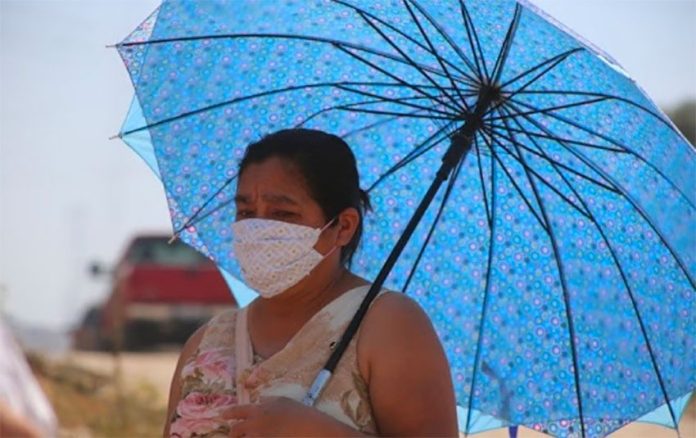
A woman braves the heat in Mexicali
A woman braves the heat in Mexicali in August, when the city recorded a temperature of 50.2 C.

August 2020 was the second warmest August in Mexico since 1953, with an average temperature of 26.6 C, 2.9 degrees above average.

The National Meteorological Service reports that August 2019 was the warmest with an average temperature of 27, but two high-temperature records were broken this year. The first was on August 14 when Mexicali, Baja California, reached 50.2 C. The second record was broken on August 18 in Sahuaripa, Sonora, with a high of 48 C.

“The high temperatures that were recorded during the month of August were generated by a high-pressure system in the middle and upper levels of the atmosphere, over 3,000 meters high, which was positioned over northern Mexico since the month of July, and later in August it moved to the northwest of the country,” the National Water Commission said.

For the rest of the hurricane season, which ends in both the Atlantic and Pacific on November 30, more storms are expected to form. However, rainfall in northern and central Mexico is expected to remain below average, whereas on the Pacific coast, in the Gulf of Mexico and on the Yucatán Peninsula above-average rainfall is expected due to the La Niña phenomenon.

La Niña is present when the Pacific Ocean’s temperature is cooler than average, and it can mean less chance of storm formation in the Pacific. It has the opposite effect on the Atlantic Ocean, where between 19 and 25 named storms are forecast this season due to the phenomenon. Twenty storms have been named thus far in the Atlantic, and 12 in the Pacific. 

Source: Forbes (sp)

Spending a day at the park has new meaning for Mexico City family

0
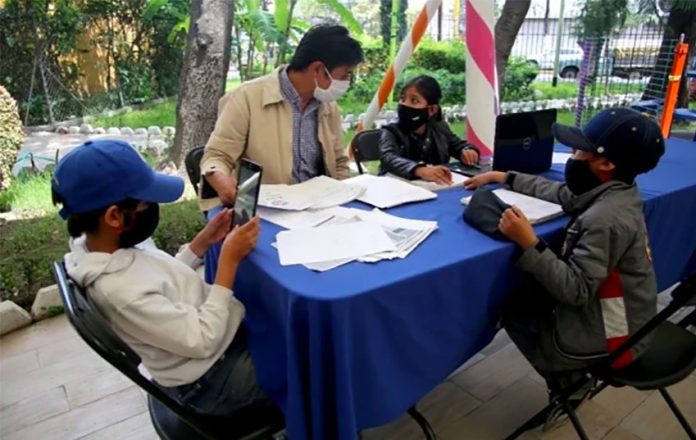
Jair helps his children with their studies at a park in Venustiano Carranza.

A day in the park might sound like fun but for some children in Mexico City it’s all about hard work.

The Fortino Serrano Park is one of 80 places in the borough of Venustiano Carranza where authorities are lending tablet computers to students so they can complete their schoolwork, which has largely shifted online due to the coronavirus pandemic.

Jair, an architect, takes his three primary school-aged children to the park every weekday so they can keep up to date with their classes.

In addition to borrowing tablets and connecting to the park’s wireless internet, students can also print documents free of charge.

Jair (whose last name was not given) told the newspaper El Universal that he gets up early every morning to start his own work – he’s not currently going to his office due to the pandemic – before preparing breakfast for his children.

Pasa hasta siete horas en parque con internet para hacer la tarea

The kids then watch televised classes until 10:00 a.m. after which they set off for the park with their dad.

“We’ve been coming daily for the internet and to print,” Jair said.

“We only have one computer at home and sometimes the video calls [from teachers] come at the same time. … Printing and scanning is also expensive,” he said.

“It’s not easy, I have to divide up my work. I work in the morning, I come with them [to the park] and I keep working afterwards. Sometimes I also have to work here,” Jair added.

He spends a lot of his time, however, helping his third grade twins – a boy and a girl – and his fifth grade son understand their schoolwork and checking it when they’ve finished.

At 2:00 p.m. they take a break while cleaning staff sanitize the area where the students work but by 4:00 p.m. the kids are back at it, finishing off their class work and doing any homework they might have.

Manuel Vargas Cardoni, director of culture, recreation and sport with the Venustiano Carranza council, said that any students who live in the municipality can borrow a tablet and print out the school documents they need.

“We have 50,000 families with economic deficiencies in the municipality and they can’t take their children to internet cafes. That’s why we provide [free internet] service at 80 places including 16 libraries and five parks,” he said.

Vargas explained that access to the park during the week is limited to students doing school work.

“It’s not a good idea to have children running and playing while others are concentrating,” he said.

Hundreds of thousands if not millions of students across Mexico don’t have access to a computer and/or the internet at home, and some don’t have televisions or can’t pick up the signal to watch televised classes.

As is often the case in Mexico, some innovative solutions to the problems have been found.

A tortilla maker in Mexico City converted the bed of a pickup truck into a virtual classroom for disadvantaged children while a devoted teacher in Michoacán decided to travel to the homes of each of her students and teach them in person.

Source: El Universal (sp) 

Area of zero tolerance enlarged to protect endangered vaquita

0
The vaquita marina, of which an estimated 10 remain.

The federal government has enlarged by 50% an area of what it calls zero tolerance in the upper Gulf of California to protect the critically endangered vaquita marina porpoise.

The Agriculture Ministry, the Environment Ministry and the navy published a decree in the government’s official gazette Thursday that declares that all gillnets are permanently prohibited in the zero tolerance zone, which is 75 square kilometers larger than the one previously in place.

A permanent ban on gillnets has been in place since 2017 but conservationists have accused the government of failing to enforce it, allowing illegal fishing to continue.

Some other nets including shrimp push nets can still be used in the area, according to the decree, and line fishing and diving for fishing purposes are permitted.

Gillnet fishing for totoaba, a species of fish prized in China for its swim bladder, has decimated the vaquita marina population to such an extent that it is now thought that there are fewer than 10 in the upper Gulf of California, the only place in the world they live. The mammals are prone to becoming entangled in the nets and drowning.

To ensure compliance with the fishing rules in the zero tolerance area, authorities will carry out sea and air patrols around the clock, according to the document published Thursday.

The government departments said that anyone planning to fish in the zero tolerance area using small boats must inform the nearest office of the National Aquaculture and Fisheries Commission (Conapesca) prior to launching.

They also said that fishermen must inform Conapesca if they have any interaction with marine mammals including vaquitas while on the water.

“All small boats … will be inspected without exception at the time of departure and at disembarkation,” the decree said.

Navy personnel, members of the National Guard, and officials with Conapesca and the environmental protection agency Profepa will be responsible for carrying out the inspections, the document said.

Sea Shepherd Conservation Society vessels have also patrolled the upper Gulf of California to ensure compliance with fishing rules. One of them, the M/V Sharpie, came under gunfire in February as it was being chased by four fishing skiffs known as pangas.

Source: Milenio (sp) 

Mexico City takes delivery of first of 10 fully electric buses

0
One of the capital's new Chinese-made buses.

Mexico City’s first 100% electric bus debuted Thursday on Line 3 of the Metrobús, which runs from Tenayuca to Ethiopia. Nine additional units will arrive by the end of this year, at a cost of about US $750,000 each.

“It is the first fully electric bus to operate in Mexico City in Metrobús, and our objective is to continue advancing in electromobility with buses and trolley buses that operate with electricity to replace diesel,” Mayor Claudia Sheinbaum said at the bus’s unveiling.

“This helps us in two very important areas: the reduction of polluting emissions and greenhouse gases, which causes climate change, and even though the investment is a little higher, in the long run, it is much cheaper,” Sheinbaum said.

Metrobús director Roberto Capuano announced that the operating cost is 30% less than that of a diesel-fueled bus.

The new bus also promises a better experience for passengers and drivers, offering a smooth ride, free of vibrations, Capuano said. It also has spaces for wheelchairs and guide dogs, overhead monitors and USB ports for charging electronic devices. 

The bus's interior has space for wheelchairs and guide dogs and comes with USB charging ports.
The bus’s interior has space for wheelchairs and guide dogs and comes with USB charging ports.

Retractable doors mean passengers won’t be hit by the door as they embark or disembark, and the buses will be equipped with a camera system for security. 

They can travel 330 kilometers on a single charge and will recharge at night in just 3.5 hours.

Capuano said it is the first unit of its kind to go into commercial operation in Mexico.

Compared to a diesel bus, Capuano says “the new electric unit reduces energy use by 80% and in 10 years of operation avoids the emission of 1,300 tonnes of carbon, he noted. “Likewise, it contributes to improving air quality by eliminating, in the same period, 14 tonnes of pollutants, including particulate material, harmful to the respiratory system, and nitrogen oxides, associated with ozone contingencies.”

The vehicles, which were manufactured by the Chinese company Yutong, which also made the city’s electric trolley buses, are 18 meters long and can carry 40 seated passengers and 120 standing. 

Source: El Universal (sp)

3-meter-long crocodile spotted on Acapulco beach

0
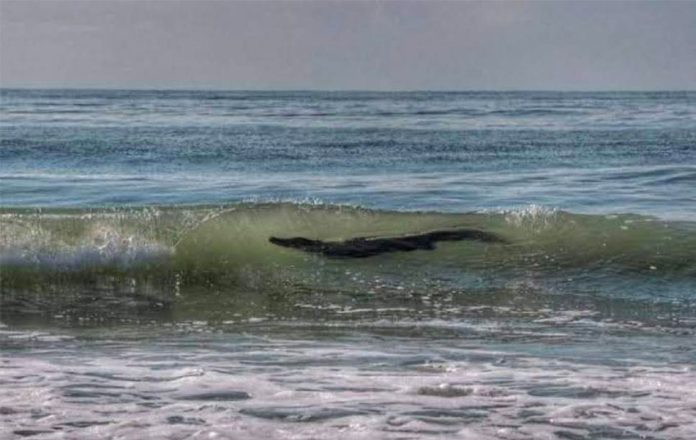
Crocodile in the surf on Thursday afternoon.

A crocodile measuring more than three meters long was spotted at the Pie de la Cuesta beach in Acapulco Thursday, putting tourists and residents on high alert.

According to reports, the crocodile came out of the water at around 4 p.m. on Thursday, pausing for a few minutes on the beach while people snapped photos before retreating back into the surf.

Civil Protection personnel and firefighters were summoned to the area to search for the crocodile but were unable to locate it, and they suggested that residents and tourists in the area be extremely cautious.

The beach where the croc was spotted is close to Coyuca Lagoon where fresh and saltwater meet and currents may have pulled the reptile out of its natural habitat and into the sea, which often happens when the sandbar gives way.

This is the second crocodile sighted in the area this month. A crocodile that attacked and ate a stray dog was captured on September 7.

That was the 10th crocodile spotted in the municipality in recent months.

So far no one has been injured by crocodiles on the beaches of Acapulco, but in July a six-year-old boy was attacked by a crocodile in Ixtapa when he and his sister were playing near El Palmar beach and wandered away from their parents.

As the boy played near a fenced-off area under a bridge, a female crocodile with young grabbed him by the head, dragged him into the water and tried to drown him for approximately 10 minutes, biting him in the head, arms, chest and legs.

He was taken to the hospital with severe injuries. 

Source: ADN 40 (sp)

The world’s most obese man shed nearly 400 kilos, went on to beat Covid-19

0
Franco weighed 595 kilos in 2016, breaking a Guinness record.

The man who was the most obese person in the world before losing nearly 400 kilos through weight loss surgery has successfully fought another battle for his health. 

Juan Pedro Franco of Aguascalientes has now survived the coronavirus as well, according to a report by Agence France-Presse.

Back in 2016, the 32-year-old weighed 595 kilos, the size of an average male polar bear, certifying him as the world’s fattest man by Guinness World Records.

But that was before he traveled to Guadalajara, Jalisco, and met Dr. José Antonio Castañeda, who put him on a Mediterranean diet that emphasizes vegetables and fruits and then performed two operations. After gastric sleeve, gastric bypass, and gastric band surgeries, Franco lost nearly 400 kilos and now weighs in at 208. 

And although he suffers from comorbidities including diabetes, hypertension and chronic pulmonary disease due to his weight, he managed to shake off the coronavirus after testing positive a month ago.

“It is complicated because it is a very aggressive disease. I had a headache, body aches, my air was gone, a fever. I was a very at-risk person,” Franco said of his bout with the disease. 

Franco considered that the complex treatment he underwent to lose weight helped him defeat Covid-19  because his diabetes and hypertension are now under control. 

But Franco’s mother and caregiver, María de Jesús Salas, was not so lucky. The 66-year-old, who also had diabetes and hypertension, died of the disease after being intubated. 

“Just because you are a thin person without comorbidities, you are not exempt from complications. All bodies behave differently when faced with the disease,” Franco said.

Mexico has one of the highest rates in the world for obesity in both children and adults, which has been an obstacle in the fight against Covid-19. One in four of the 75,439 coronavirus deaths in Mexico occurred among people who were overweight, and a fifth of the 715,457 who have been infected are obese.

Source: Uno TV (sp), La Nación (sp)

Chihuahua has paid its share of water debt, governor says as protests continue

0
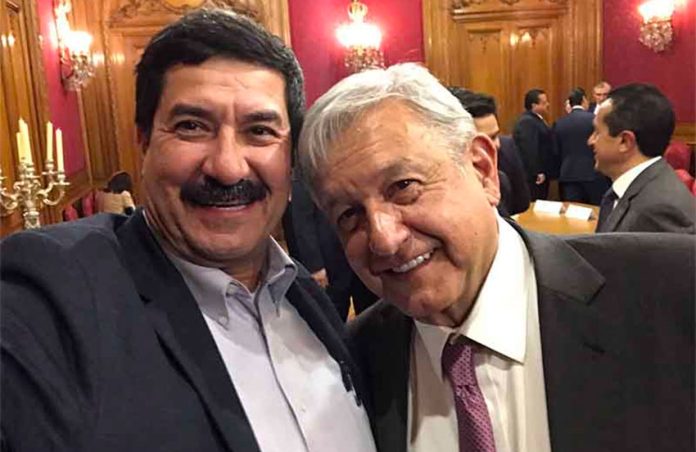
Corral, left, and López Obrador: the relationship has soured since this photo was taken.

Contrary to President López Obrador’s claims, Chihuahua is complying with its obligation to send water to the United States to meet Mexico’s water debt under the terms of a 1944 bilateral treaty, according to Governor Javier Corral.

The governor said in an interview that Chihuahua has met its past obligations and will deliver more water to the United States by October 24, the deadline for Mexico to settle its current debt to its northern neighbor.

Corral said that by then Chihuahua will have delivered 905 million cubic meters of water to the United States during the treaty’s current five-year cycle.

His remarks came after Texas Governor Greg Abbott wrote to United States Secretary of State Mike Pompeo to urge him to ensure Mexico meets its obligations under the 1944 treaty.

Mexico has to send just over 431 million cubic meters of water annually to the United States but as of last week was 319 million cubic meters short of that target.

President López Obrador has been pressuring Corral to ensure that water is sent from Chihuahua, where farmers have been protesting its diversion from the Boquilla dam to the Rio Grande.

“Instead of helping to comply with this agreement, the governor opposed it,” López Obrador said Thursday, asserting that Corral’s actions are politically motivated as elections will be held in Chihuahua in 2021.

The governor countered that National Water Commission (Conagua) officials are to blame for the failure to keep up with Mexico’s water obligations to the United States. He accused the president of wanting to subjugate and humiliate him and other state governors.

“The president asks blind obedience of his collaborators,” Corral said, referring to remarks made by a government official who resigned this week, “and wants governors to be submissive and silent.”

“He never accepts responsibility and always looks for a culprit elsewhere,” he added.

However, Corral asserted that López Obrador won’t find a willing scapegoat in the government he leads.

One of eight railway blockades in Chihuahua.

“With us, he’ll hit a wall,” he said, adding that the president’s attempts at intimidation might work with other governors but not with him.

“He won’t intimidate me, he won’t keep me quiet. We’re going to respond with respect but also firmness,” Corral said.

The governor asserted that from López Obrador’s point of view,“everyone that is not with him, is against him – a traitor, a hypocrite, corrupt.”

“The country cannot be run with this temperament; the president needs to pause and think about what he’s doing and bring himself back to reality,” he said.

Corral, member of a group of 10 state governors who announced their withdrawal from the National Conference of Governors earlier this month after deeming that López Obrador was a threat to democracy, said López Obrador has no evidence for his claim that the Chihuahua government is involved in the water protests. Those have included the occupation of the Boquilla dam and toll plazas as well as a blockade of railway tracks.

Piles of earth and gravel have been dumped on the tracks in eight locations in the municipality of Meoqui in the month-long blockade, halting cross-border shipments of freight. The leader of one business group said 1.5 million tonnes of corn and wheat are among the trade goods awaiting shipment.

Source: El Universal (sp), Luces del Siglo (sp)

Indigenous activist who denounced lack of water murdered in Baja California

0
Óscar Eyraud Adams was shot to death in Tecate.

An indigenous water rights activist was murdered Thursday night in Tecate, Baja California. 

Witnesses say two vehicles with tinted windshields arrived at the house where Óscar Eyraud Adams lived and shot him at around 7 p.m.

A member of the Kumeyaay indigenous group, Eyraud had been an activist for years, speaking out about issues of ethnicity and environmental injustice, a family member said.

Last month, Eyraud publicly denounced the lack of water in his community and warned of cultural consequences to come.

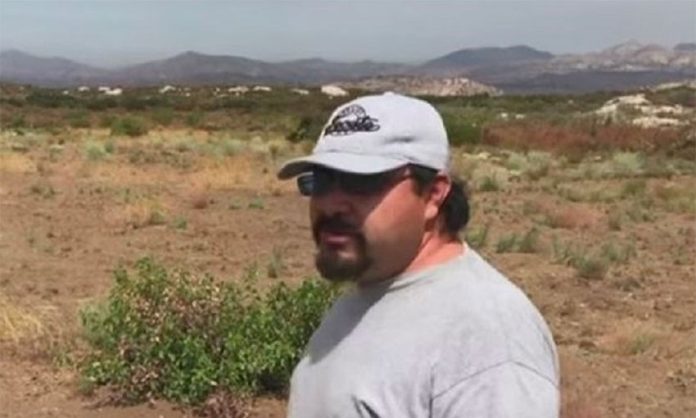
In an interview with the newspaper Reforma in August, conducted in a dried-up field, Eyraud complained that water that should go to indigenous communities to irrigate their crops was being diverted to transnational companies, such as Heineken.

“All this disappeared due to lack of water,” he told the newspaper as the camera panned the desiccated plot of land where he said fruit trees used to grow.

“These [water] rights should be for the indigenous community first rather than businesses and people who have the purchasing power just to have them … That puts the culture of this community at risk,” he added.

In what would prove to be his last social media post on Thursday afternoon, Eyraud called for the struggle to continue.

“Express your concern for water and disappearances, for indigenous communities,” he wrote.

Activists from Baja California shared the news of Eyraud’s death over social media and highlighted his struggle in favor of indigenous peoples.

“Óscar was willing to fight in search of self-determination for the Kumeyaay community, and the use of water concessions that Conagua had denied them,” she continued. “He was assassinated by the narco-state in Tecate, Baja California. The fight for the defense of water and the territory has taken comrades from us because they want to silence us by sowing terror,” activist Diana Tlazohcamati wrote on her Facebook account.

At least four other activists have been killed in Mexico this year, and the country is one of the most dangerous in the world for those who publicly condemn environmental injustice, according to Amnesty International. Fifteen activists were killed in Mexico in 2019.

Source: Sin Embargo (sp)

Suspected gangster linked to missing Ayotzinapa students to stand trial on drug charges

0
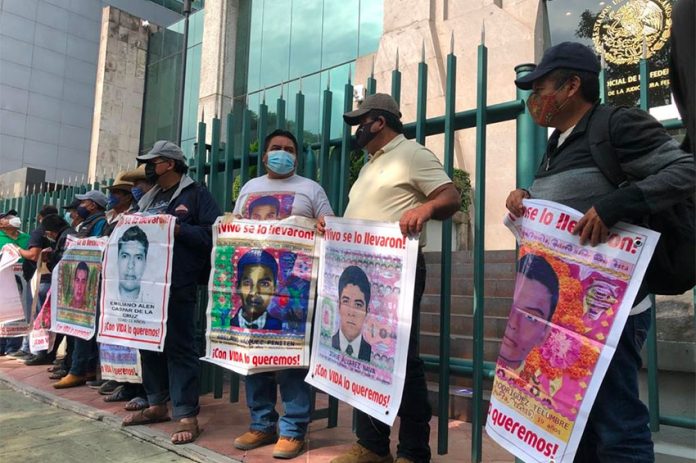
Parents of the 43 missing students protested at the Federal Judicial Council.
Parents of the 43 missing students protested at the Federal Judicial Council. They claim corruption among judges is delaying progress in the case.

A suspected gang leader allegedly involved in the abduction and presumed murder of 43 teaching students in Guerrero in 2014 has been ordered to stand trial on organized crime charges not related to the students’ disappearance.

A federal judge on Thursday ruled that José Ángel “El Mochomo” Cassarrubias Salgado, presumed leader of the Guerreros Unidos gang, and his lawyer, Arturo Rodríguez García, must go on trial on drug trafficking charges.

Both men are being held in preventative custody in the Altiplano federal prison in México state.

The federal Attorney General’s Office (FGR) alleges that Rodríguez was also a member of the Guerreros Unidos gang, which is accused of abducting students from the Ayotzinapa Rural Teachers College on September 26, 2014 and killing them.

According to FGR investigations, the lawyer was involved in the transport of drugs, colluded with authorities and acted as a front man for the gang in the purchase and sale of properties.

Cassarrubias has been accused of ordering the murder of the 43 students, who were abducted after being stopped by police in Iguala, Guerrero, in a bus they had commandeered to travel to a protest march in Mexico City.

He was arrested in June after almost six years on the run but released from the Altiplano prison on July 1 due to a lack of evidence. However, he was rearrested upon leaving the correctional facility.

The FGR alleged that El Mochomo’s mother paid multi-million-peso bribes to the presiding judge’s staff to secure her son’s release.

Rodríguez, who represented Cassarrubias at the July 1 hearing at which he was freed, allegedly acted as an intermediary in the arrangement.

Saturday will mark six years since the Ayotzinapa students went missing but the remains of only three of the young men have been found.

According to the  previous federal government’s “historical truth,” the students were intercepted by corrupt municipal police in Iguala and handed over to the Guerreros Unidos, whose members killed them, burned their bodies in a dump and scattered their ashes in a nearby river. The students were allegedly mistaken as members of a rival gang, Los Rojos.

Casarrubias, right, and his attorney have both been ordered to stand trial.

The current government rejected its predecessor’s official version of events and launched a new investigation shortly after President López Obrador took office in late 2018.

While the government claims to have made progress, what really happened to the students remains unclear and no alleged perpetrators of the crimes have been convicted.

There are, however, a number of suspects in prison awaiting trial.

El Mochomo’s brother, Sidronio Cassarubias Salgado, is in custody as are former Iguala mayor José Luis Abarca, his wife María de los Ángeles Pineda Villa, former Iguala security director Felipe Flores Vázquez and former municipal police chief Francisco Salgado Valladares.

Sidronio Cassarubias was allegedly the top leader of Guerreros Unidos while the former mayor and his wife – once known as the Imperial Couple of Iguala – have been accused of being the masterminds of the students’ abduction.

It is unclear when the suspects in the case of the students’ abduction and presumed murder, including El Mochomo, will be brought before a court on those charges.

Many other suspects, including former police officers and alleged Guerreros Unidos members, have been released from prison due to a lack of evidence or because they were found to have been tortured during the interrogation process.

Alejandro Encinas, deputy interior minister for human rights, said a year ago that the release of 21 municipal police officers detained in connection with the disappearance of 43 students was a sign of the “wretchedness and rot” of Mexico’s justice system.

At the end of June, Attorney General Alejandro Gertz Manero said that authorities were seeking to arrest 46 municipal officials in Guerrero for the crimes of forced disappearance and organized crime in relation to the kidnapping of the students. It’s unclear how many of those officials have been detained.

Meanwhile, parents of the students continue to seek the truth about what happened to their sons and where their remains are today.

The parents and other relatives of the victims will march on Saturday from the Angel of Independence in Mexico City to the capital’s central square, the zócalo, where a rally will be held to call for justice.

On Thursday they protested outside the headquarters of the Federal Judicial Council, where they accused judges of acts of corruption in the case. Although the federal government has shown a willingness to get to the bottom of the mystery, a lawyer for the parents said, the Federal Judiciary has not been moving in the same direction.

Source: El Universal (sp), Milenio (sp)