Home Blog Page 1440

The antigrita goes viral: women’s protests spread across Mexico

0
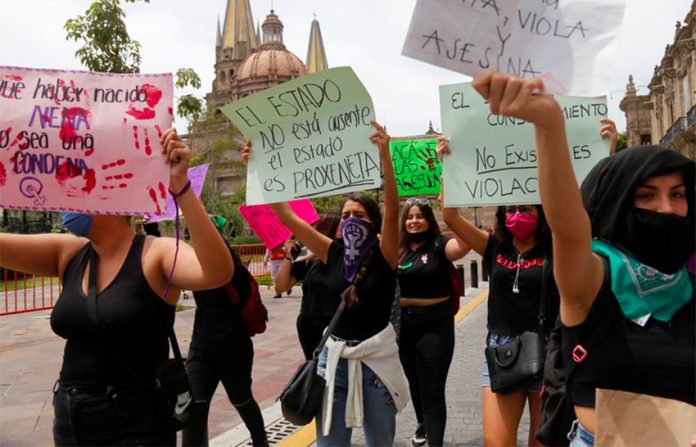
Women march in Guadalajara on Wednesday.

Anger among women over gender violence and a perception that government is doing little to address the issue has been surfacing once again, spreading across Mexico into at least eight states this week.

Female activists in Mexico City demonstrated their anger with a boisterous protest on Monday at which they called for justice with an antigrita, or anti-cry, to draw attention to the security situation for women in Mexico.

It was their own version of the grito, the September 15 cry of independence that celebrates the anniversary of the start of the independence struggle against Spanish forces.

And it was was heard beyond the historic center of the capital where their protest took place.

Women in Chihuahua, Quintana Roo, Jalisco, Morelos, Baja California, Tamaulipas, Oaxaca and Puebla followed suit and mounted their own protests on Tuesday and Wednesday with antigritas and declarations that there was little to celebrate.

In Chihuahua, about 50 women managed to get past police and break down security barriers to enter Plaza Hidalgo in the state capital where Governor Javier Corral was presiding over a cry of independence ceremony on Tuesday night.

Shouting “murderer!” they asked him what he was celebrating given that more than 200 women have been victims of femicide in the northern border state this year.

In Quintana Roo, women protested Tuesday night at state Human Rights Commission offices in Chetumal, Cancún and Tulum, where they called for justice for daughters, friends and mothers who were murdered or disappeared.

In Guadalajara, hundreds of women called for justice with an antigrita as they marched through the city streets on Wednesday afternoon.

As they passed the metropolitan cathedral the women chanted, “Remove your doctrine from our vaginas, get your rosaries off our ovaries,” according to a report by the newspaper La Jornada.

In Cuernavaca, Morelos, members of several feminist collectives protested at the state Attorney General’s Office where they declared that they were fed up with the violence women face in the state and the country as a whole.
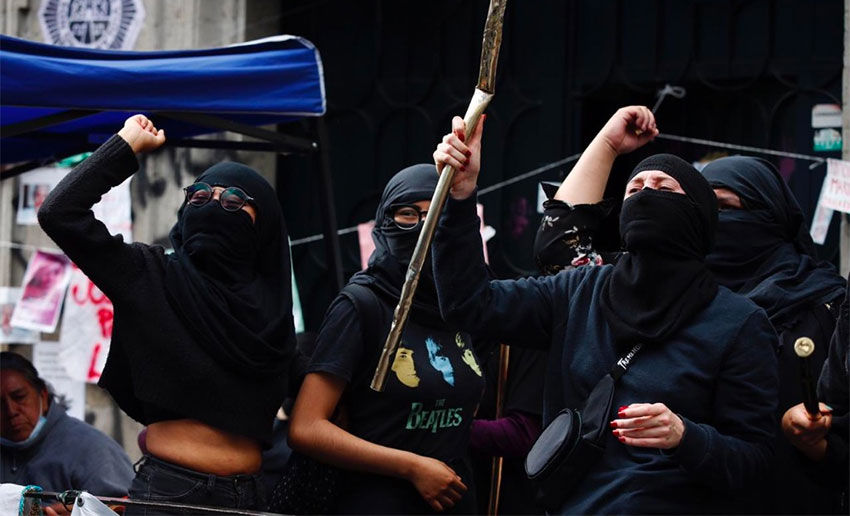
Women at the antigrita in Mexico City this week.

They said they had nothing to celebrate despite it being Independence Day, saying they were all victims of successive bad governments.

“We’re tired of government authorities not assuming their responsibility [and] being incapable of guaranteeing our security,” the women said.

Members of women’s collectives in Tijuana, Baja California, also said that they had nothing to celebrate as they gathered outside a cultural center on Tuesday night. The women graffitied part of the spherical Tijuana Cultural Center and its forecourt with messages that denounced gender violence and the government.

In Tamaulipas, women protested in Ciudad Victoria and Reynosa on Tuesday because they were not consulted about a new law that sets harsher penalties for cyber-harassment and the online dissemination of intimate photographs. They argued that the law doesn’t do enough to protect women from online abuse.

The protests over the past two days came as activists in Mexico City continue to occupy the headquarters of the National Human Rights Commission (CNDH) in the capital’s downtown. The Ni Una Menos (Not One Woman Less) Collective took over the building two weeks ago and converted it into a shelter for victims of gender-based violence.

Monday’s antigrita event, attended by at least 300 protesters, was held outside the CNDH headquarters, located a few blocks from Mexico City’s central square.

According to The Guardian newspaper, one woman whose daughter and sister have disappeared held up documents from their CNDH case files as she denounced the authorities’ lack of action against those responsible for the crimes.

“I did this correctly,” she said of the effort she made to follow official protocols. “I sat here for hours and nothing happened,” she shouted before tearing the documents up and throwing them off the CNDH building’s second floor balcony. “The institutions can go to hell, because they don’t respect people’s human rights.”

About 10 women per day were killed in Mexico last year, while the murder of a 7-year-old girl earlier this year and the particularly brutal killing of a 25-year-old woman by her partner – as well as a newspaper’s publication of her mutilated body – triggered massive protests and Mexico’s first ever national women’s strike in March.

A lot of the anger then and now has focused on López Obrador, who has refused to acknowledge the full extent of the crisis.

In May he claimed that 90% of calls made by women to denounce domestic violence and seek help are false, and after the takeover of the CNDH building claimed without evidence that the activists have a partisan political agenda and are backed by “conservatives,” a byword the president uses for his political opponents.

López Obrador also criticized the activists for defacing portraits of erstwhile presidents that hung in the CNDH building, taking particular umbrage at the embellishment of revolutionary hero Francisco Madero’s likeness with lipstick and an anti-police message.

The mother of a 7-year-old girl who was unable to get authorities to investigate abuse against her daughter promptly hit back at the president with a response that went viral.

“The president was indignant about a portrait – but why wasn’t he indignant when my daughter was abused?” Erika Martínez asked.

Emboldened by the activists’ success in seizing control of the CNDH headquarters in Mexico City, a group of women last Thursday took over the offices of the México state Human Rights Commission in Ecatepec, a municipality that borders the capital that is notorious for violence against women and crime in general.

But in the early hours of Friday morning, police entered the building and “beat the women and children with them,” The Guardian said, before taking them in unmarked vehicles to a prosecutor’s office in another México state municipality.

Source: La Jornada (sp), Infobae (sp) El Universal (sp), The Guardian (en) 
Migrating to Mexico with an aging parent proved to be right for US couple

0
Many boomers cozy up to the idea of living overseas. Many have chosen Chapala.
Many boomers cozy up to the idea of living abroad. Many have chosen Chapala.

If you’re in your 60s and from the United States it’s likely you are pondering a “What next?” dilemma, appraising lifestyle choice in the glaring light of America’s Covid-19 medical care debacle, a dearth of savings, and a pending social security train wreck.

Adding to the complexity is a likelihood that your parents’ futures are part of this life 2.0 decision. Like never in our history, our parents are living longer, staying active, and facing (with their grown-up children) an uncertain future. The question for many is, “Can we afford quality senior care, while not draining a lifetime of assets and savings?”

For my family, this quandary was more than philosophical. Things up north in Bend, Oregon, changed as my wife and I were joined by a new roommate — my 83-year-old mom. We embraced this change with open arms — yet over time came to accept how tenuous our situation had become.

Today, millions of Americans are at least considering abroad options (some nine million U.S. passport holders now live outside the U.S.), choices scarcely considered a generation ago. And for many, the reality of taking along aged parents is now squarely part of our “what next” lifestyle decision.

Many of us boomers cozy up to the idea of living abroad. It might have started as a trivial, somewhat voyeuristic form of inquisitiveness, peeking from our U.S. living rooms at media outlets such as House Hunters Abroad and International Living. A “Wouldn’t it be fun?” form of escapism has seeped into our retirement consciousness.

For us, the first decision to resolve was, “Is migrating with Mom the right thing to do?” An unsuccessful and expensive go at assisted living in Oregon (more and more like all-inclusive resorts for active boomers and/or their parents), left us seriously talking about options. There had to be a better way.

The jaw-dropping cost and insular, institutional memory care experience convinced us to do some exploring, and led to our first of many “Ah ha!” moments.

It’s not unlike the path many of you have entered upon over the last 30 or so years. Go on vacation, find a place that clicks, make the timeshare down payment, and start to wonder why your special place can’t become your year-round home.

For some places, like Mexico, the boom began long before the 2007 housing crash. No one really knows the real number, but a commonly-sited statistic is that over one million Americans are now residing full-time under the Mexican sun.

Another “Ah ha!” moment came following a visit with a friend in Guadalajara when my wife Jane brought me two 1940s books about Mexico lakeside living by writer Dane Chandos (he’s really Englishman Peter Lilley), who adopted Lake Chapala as his home and lived lakeside for over 30 years. 

His “House in the Sun” still stands lakefront in San Antonio Tlayacapan. In an era before gated expat communities, the books recount the challenges and everyday curiosities that enchant so many norteamericanos with Mexico.

A commonly-sited statistic is that over one million Americans reside full-time under the Mexican sun.

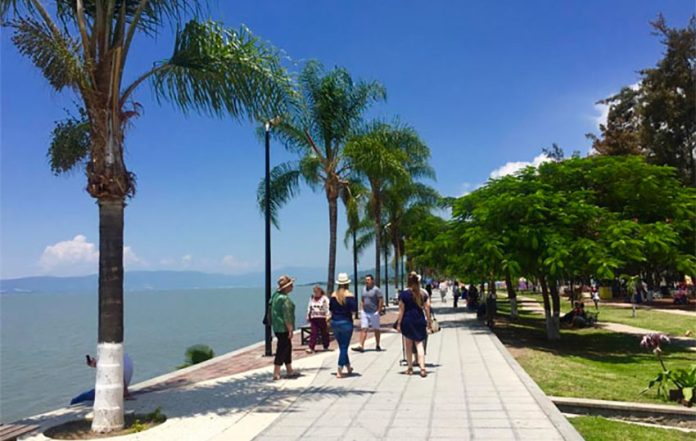
“Chapala, huh? Didn’t Americans and Canadians used to go there to retire?” In fact, yes; the villages lining the lake’s northern shore have been attracting expats for decades. Chapala is both a town and a lake (Mexico’s largest). Tucked between shoreline and sierra is a string of cobbled and colorful colonial-era villages.

At a quite comfortable 5,000 feet altitude, Chapala is half an hour from Guadalajara’s international airport and under an hour to the nearest Costco and the city’s world-class medical care. We’d be under a three-hour drive to the coast (Manzanillo), be able to get familiar brands at Ajijic’s “scenic-view” Walmart and be sure to find an assortment of home rentals for under US $800 a month.

But we weren’t really looking for a gringo bubble of country clubs and expat-led organic markets. What cinched the deal for us was Chapala’s amalgamation of Mexican village simplicity, spectacular scenery, the world’s best climate, and a better place for Mom.

Yes, there are going to be decisions and trade-offs – and some hard ones. You will collaborate with your spouse and perhaps conclude that it’s just not practical, it’s not the right time, we won’t see our grandkids, we need to work a few more years before retiring, we don’t speak any foreign languages.

Picking up and moving abroad is daunting to even the most seasoned global traveler. And it’s not everyone’s path to a successful, sustainable lifestyle migration. But many, many of us overcome our apprehensions and take the proverbial plunge.

We moved with Mom to the Chapala lakefront in 2015. Mom passed away on Easter Sunday, 2020.

Demographers tell us that an astounding 10,000 Americans reach retirement age every single day, and few are either financially equipped or emotionally prepared to manage our own retirement – and even fewer of us are able to do so while caring for an aging parent.

Your first inclination might be to jot down a short list of “Why we CAN’T do this now.” Be careful! You might find writing down the obvious obstacles becomes a roadmap rather than an offramp to a new generational partnership in a foreign land.

For us, fulfilling a decades-old dream became something much more than an escapist TV show. Ironically, it was Mom’s fading memory that helped us decide that it was time to start making new memories, while living atop Mexico’s hospitable altiplano.

Greg Custer lives lakeside in Ajijic and helps expats find their own village in the sun with his company www.choosingmexico.com.

Media attacks seen as distraction that threatens freedom of expression

0
Jan-Albert Hootsen of the Committee to Protect Journalists.

Although the federal government’s frequent attacks on the media are designed to divert attention from its lack of results they also threaten freedom of expression, says the Mexico representative for a United States non-governmental organization that promotes press freedom and defends the rights of journalists.

In an interview with the newspaper El Universal, Jan-Albert Hootsen of the Committee to Protect Journalists (CPJ) expressed concern that state and municipal officials have followed the lead of President López Obrador and other federal functionaries by denigrating the media for their own political gain.

Asked to give an assessment of the current situation in Mexico in terms of freedom of expression, Hootsen responded:

“The political climate in Mexico doesn’t encourage freedom of expression. When the government of Andrés Manuel López Obrador took office we saw some positive signs; for example, the commitment to put an end to impunity, censorship and the murder of journalists.”

“Unfortunately,” he added, “almost two years later there is a climate of significant polarization, … a rhetoric of confrontation with the press [and] a division between good press and bad press.”

(López Obrador has described sections of the media critical of his government as prensa fifi, or elitist press, and “conservatives” among other disparaging terms.)

Hootsen said that it is clear that the president and other officials use such language to try to gain a political advantage.

“When there is a decision or … policy that hasn’t had the results the government wants, attacking the media is a kind of distraction,” he said, adding that the leaders of other countries use the same strategy.

“There is a very clear political communication strategy and we don’t just see this in Mexico. It also happens in the United States with Donald Trump, in Brazil with Jair Bolsonaro and in El Salvador with Nayib Bukele,” Hootsen  said.

He said that attacks on the media can have serious repercussions for journalists, explaining that reporters who have been criticized by López Obrador at his weekday news conferences have received thousands of adverse and hostile messages on social media and even death threats.

“It’s a situation that all of Mexico knows about, it’s not new … and it’s something that the federal government also knows, although its practices continue to be the same in the morning [press] conferences in the National Palace,” the CPJ representative said.

lopez obrador and reforma
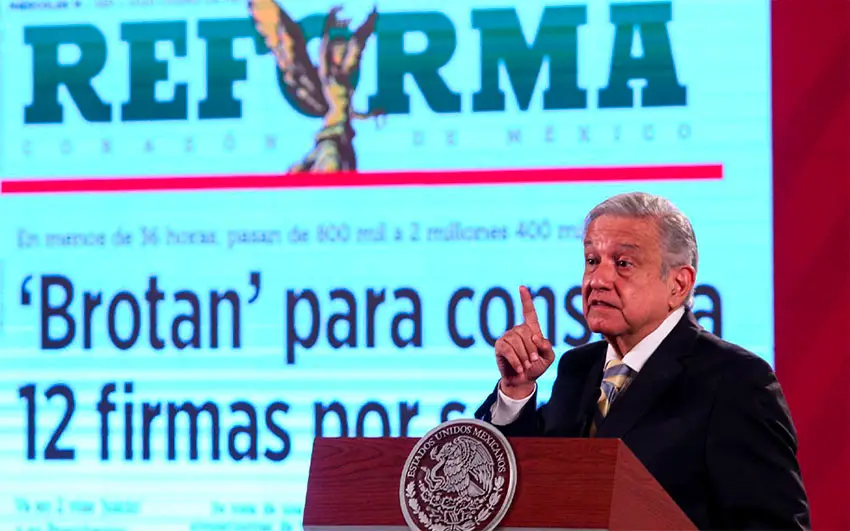
The president went after Reforma again on Thursday, calling it ‘a trashy rag.’

Asked how the attacks on members of the media can be stopped, Hootsen responded:

“We have to continue on the path of dialogue and make it clear that certain types of statements are not acceptable. For example in the case of the magazine Nexos, it concerns me that the Ministry of Public Administration didn’t just announce an investigation against this media outlet but did so with clearly political rhetoric.”

Hootsen charged that powerful public officials and the media are not on a level playing field and that the former have a responsibility to moderate the way they express themselves.

“It’s a matter of proportionality; there are public officials who have an enormous platform with all the tools to attack the media but the media doesn’t have the same platform or reach,” he said.

The relationship between the president and the media should be based on “facts, mutual respect and a sense of equality,” Hootsen said, adding that hate speech toward the latter “doesn’t help in any way.”

“If the president believes that [media] coverage isn’t fair he can say it but he also has to respond in the correct way, … not just disparage,” he said.

Asked about the current security situation for journalists, the CPJ representative said that Mexico was the most violent country in the world last year and remains so this year.

(Press freedom advocacy organization Article 19 said this week that 2020 will likely be the most violent year in a decade for Mexico’s journalists, with four murders recorded to date.)

Hootsen said that mechanisms to protect journalists here are clearly insufficient to do the job properly because they don’t receive sufficient funding.

“They [the authorities] react after the aggression and the main factor that continues encouraging violence in Mexico is impunity,” he added.

With regard to the outlook for authorities’ treatment of the media in the final four years of López Obrador’s term, Hootsen said, “I hope that the federal and state governments reconsider their language in the public debate with the media but the reality will be quite complex because economically and socially, and in terms of security, we’re [in a] very bad [situation] in Mexico.”

In other words, the government is likely to have plenty of reasons for wanting to continue to divert attention away from its performance in managing the country’s myriad problems.

Source: El Universal (sp) 

Mexico, US extend land border closure till October 21

0
mexico-us border crossing

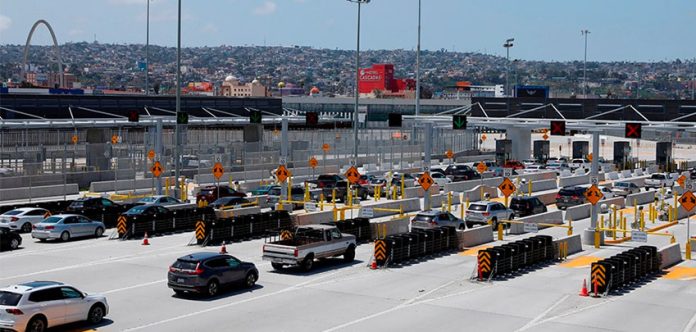
The border between Mexico and the United States will remain closed to nonessential travel until at least October 21, Mexico’s Ministry of Foreign Affairs said Thursday.

“After reviewing the development of the spread of Covid-19, Mexico proposed to the United States the extension, for another month, of the restrictions on nonessential land transit on their common border,” the Foreign Ministry reported on its Twitter account.

The governments of Mexico and the United States agreed to close nonessential travel in March in order to inhibit the spread of the coronavirus. This is the sixth renewal of that order, which is evaluated on a monthly basis.

The measure does not affect trade between neighboring countries or Mexicans who have work permits or essential business in the U.S. The closure mainly affects vehicular travel and residents of the border region. Citizens and permanent residents of the United States do not face restrictions entering the U.S., nor do those with temporary work visas, emergency personnel, students or government officials.

Access by land will be denied to those traveling for tourism or recreational purposes, such as people who cross into the United States or Mexico to shop, go on vacation or visit relatives.

Mexicans and Americans arriving in either country by plane are not affected and may travel freely.

Non-U.S. citizens may travel from Mexico to the United States via Tijuana’s Cross Border Xpress (CBX), a 390-foot pedestrian bridge for passengers linking the Tijuana International Airport with a terminal in San Diego, if they can demonstrate an essential reason to travel.

Passengers whose purpose for travel is considered essential may cross through CBX with official documentation.

However, there are no restrictions for CBX passengers headed south, but travelers have to fill out a questionnaire that is reviewed by Mexican authorities.

The United States eased its travel advisory for Mexico on September 8, from level 4 “Do Not Travel” level 3 “Reconsider Travel.”

The advisory reads, “Reconsider travel to Mexico due to Covid-19. Exercise increased caution in Mexico due to crime and kidnapping. Some areas have increased risk.”

Mexico’s border with the United States, which stretches for more than 3,000 kilometers, is normally one of the busiest in the world.

On the U.S. side, border states Texas, New Mexico, Arizona and California have a combined total of 1.71 million accumulated coronavirus cases. On the Mexican side, border states Baja California, Sonora, Chihuahua, Nuevo León, Coahuila and Tamaulipas have a total of 137,548 cases, according to official records.

Limited Covid testing in Mexico could be a reason for the vast difference in the numbers.

Source: El Financiero (sp)

CORRECTION: Non-U.S. citizens heading north may use Tijuana’s Cross Border Xpress if they can demonstrate an essential reason for traveling. Incorrect information appeared in the earlier version of this story.

Financial Intelligence Unit unblocks Chihuahua municipality’s accounts

0
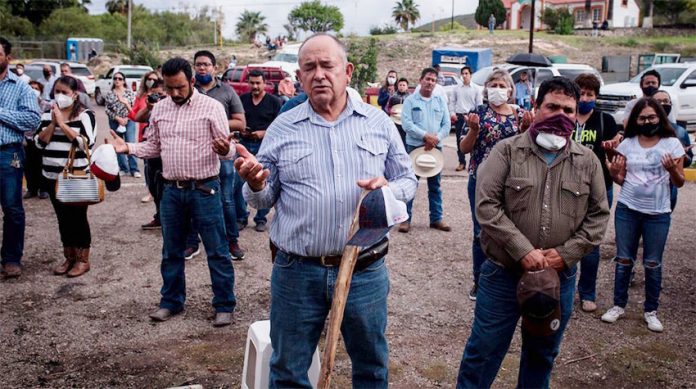
Farmers protesting against water diversion at the dam in Chihuahua.

The federal government’s Financial Intelligence Unit (UIF) has unblocked 44 bank accounts of a Chihuahua municipal council led by a mayor who has participated in protests against the diversion of water to the United States.

The UIF sent an official letter dated September 14 to the National Banking and Securities Commission (CNBV) advising it that the bank accounts of the Delicias government, which were only recently blocked, had been unfrozen.

It said the accounts were unblocked because resources contained in them were essential for the council’s activities.

The municipal government of Delicias, led by National Action Party (PAN) Mayor Eliseo Compeán, had demanded that its accounts be unblocked so that it could pay salaries to 1,200 employees and purchase gasoline for police cars and council vehicles.

Compeán, who has joined recent protests against the National Water Commission’s diversion of water from the La Boquilla dam to the United States to settle a longstanding water debt, said Monday that there was just over 87.2 million pesos (US $4.15 million) in the 44 accounts.

In addition to demanding that they be unblocked, the mayor sought information from the UIF about why three of his personal accounts, containing a total of just over 72,000 pesos (US $3,400), had also been frozen.

Compeán himself called the move political persecution. The UIF also froze the accounts of former Chihuahua governor José Reyes Baeza and Chihuahua Irrigation Association President Salvador Alcántar.

Along with Mayor Compeán, they have been accused by the federal government of being behind the Boquilla dam protests.

Earlier the UIF publicly denied freezing the accounts of the municipality, a position contradicted by its letter to the CNBV.

“It’s interesting because the UIF had released a statement saying that the accounts in Delicias were not blocked,” a source close to the case told the newspaper Reforma.

The Delicias council also pointed out that the UIF had contradicted itself, while Compeán said in a statement that the council wasn’t notified when its accounts were blocked.

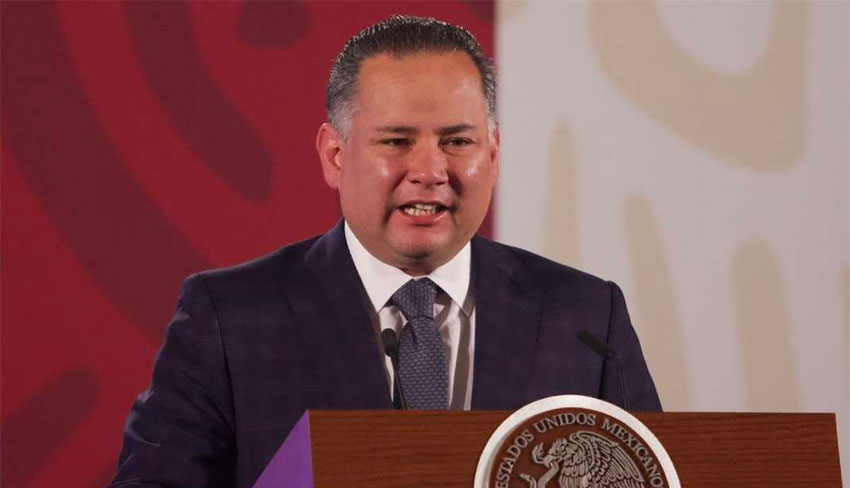
Santiago Nieto, head of the UIF.

He also asserted that it was the first time that the federal government has frozen the bank accounts of a municipal council.

The UIF has taken on a leading role in the federal government’s fight against corruption and organized crime, and director Santiago Nieto has provided semi-regular updates about high-profile cases.

Attorney General Alejandro Gertz Manero insinuated in January that the UIF chief had made statements that failed to respect the presumption of innocence of those who he had mentioned, including former cabinet secretary Rosario Robles and ex-Pemex chief Emilio Lozoya.

Responded to Gertz’s insinuation, President López Obrador said that Nieto “doesn’t do anything without consulting with the president.”

That remark raises the possibility that the president directly ordered the freezing of the accounts of the municipality of Delicias as well as those of the mayor and other officials allegedly behind the Boquilla dam protests.

López Obrador claimed in July that PAN politicians are behind the protests, charging that they want to protect water in Chihuahua for their own business interests.

The conservative PAN is currently the main opposition party to the ruling Morena party, and with midterm elections to be held in 2021, the president and other federal officials are even more eager to depict it in a bad light.

Javier Corral, the PAN governor of Chihuahua, is one of 10 governors who decided to withdraw from the National Conference of Governors this month after deciding that López Obrador is a threat to democracy.

Corral, who said that there is a “hint of authoritarianism” in the president’s conduct, is strongly opposed to the diversion of water to the United States, which the federal government says must be sent there in compliance with a 1944 water treaty between Mexico and its northern neighbor.

While the president blames his political adversaries for the dam protests, Corral blames Conagua for poor management of the country’s dams and claims corruption within the agency has permitted the illegal use of water for irrigation.

Source: Reforma (sp), Sin Embargo (sp) 

‘Shoot the narcos,’ declares mayor of Hermosillo, Sonora

0
Drug dealers are traitors, says Mayor López.

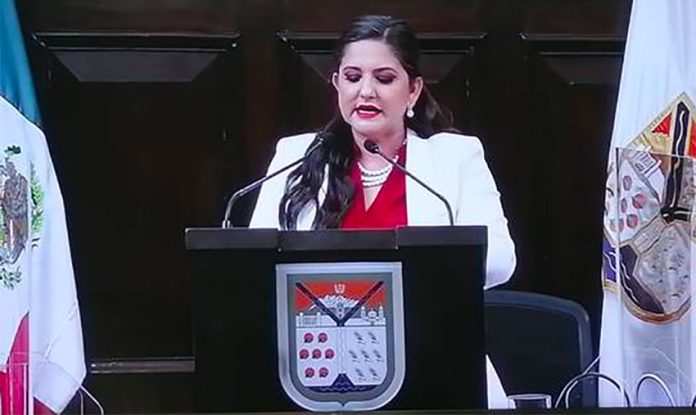
Mayor Célida López of Hermosillo, Sonora, believes that drug traffickers should be shot.

López made the statement Wednesday during her second annual report on the state of the city, in which she offered that those who sell drugs to minors are traitors to their country.

“Drug trafficking should not be confronted with [a show of] weapons,” she said, “drug traffickers should be shot in this country, as happens in other countries of the world.” 

“We do not only need more elements of the National Guard, we need to remove from our city each and every man who rises up with a gun in hand and is capable of murdering a minor,” she added. Prison sentences or freezing financial assets of drug dealers is not punishment enough, she said. 

“These are traitors to the country, and we should shoot all those who give [drugs] to minors. It is not possible that this be allowed to continue,” she continued.

“I am not going to settle for keeping quiet for my safety. I know that I put my life and that of my family at risk, but what good is it being in authority if I do not have the courage to speak up when many men are silent?” she said, thanking her constituents for “not losing faith, for fighting against a strange virus, for maintaining Hermosillo as a place with opportunities, with economic development, with greater security, with greater social harmony, order and coexistence.” 

Her tough talk comes two days after the mayor inaugurated a new rehabilitation center for young addicts which will open September 21 with space for 86 young people in recovery, fulfilling a 2018 campaign promise to combat drug addiction.

Source: Reforma (sp)

Hungry bear spoils family barbecue, makes off with grilled meat

0
Black bear helps itself to some grilled meat.
Black bear helps itself to dinner.

A mother black bear joined a family barbecue in Santiago, Nuevo León, helping herself to meat right off the grill as family members looked on in surprise.

The family, who were vacationing in a cabin in the woods at the Pueblo Mágico, watched as the bear climbed onto the brick grill and made several attempts to remove the meat without burning its paws.

It also spilled a pot of previously grilled meat in the process as a bear cub stood by and waited for its dinner. 

The incident was captured on video and while some of the observers laughed and shouted at the animal to go away, one simply watched with his mouth agape as his dinner was taken.

Bear sightings in the state have been more frequent since the coronavirus pandemic began, and black bears have been seen roaming the streets of Monterrey, San Pedro and even Sabinas, Hidalgo, where a black bear was captured on August 20 walking in the middle of a street in the Hacienda Larraldeña neighborhood.

OSO EN CARNE ASADA EN MONTERREY

Two days earlier, a larger bear was captured in San Pedro in the Joya del la Corona area of Chipinque. 

In Monterrey, a small black bear ambled into an office last month and employees filmed its visit. The bear stood up on its hind legs and sniffed a man who remained motionless at his desk as another employee asked the bear calmly to open the door and leave, which the bear eventually did. 

In late July, a bear was photographed with a yellow bag in its mouth emblazoned with the logo of the Pollo Loco roasted chicken chain.

The photo was taken in San Pedro Garza García municipality located near the Chipinque ecological park where another people-curious bear was captured, castrated and released in a less populated area of the Chihuahua mountains. It had engaged in several close encounters, including one where the bear stood on its hind legs to sniff a woman’s hair as she snapped a selfie, violating park recommendations for proper bear behavior. 

In the United States, bears that lose their fear of people are often euthanized, but Mexican black bears are an endangered species and thus protected by law.

During an encounter with a bear, park rangers recommend keeping a safe distance from the animal and walking slowly away without running. 

Source: Excélsior (sp)

Medications shortages: cancer kills 6 children in 5 days in Nuevo León

0
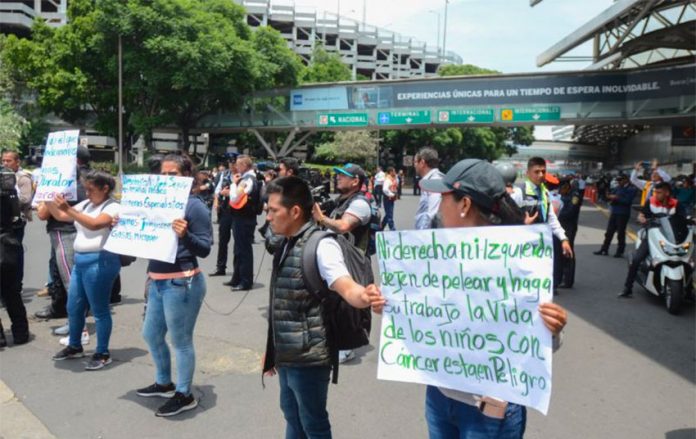
Parents of cancer patients protest shortage of medications in Mexico City.

Six children with cancer who were unable to obtain chemotherapy drugs died in Nuevo León in a period of just five days this month.

The minors died between September 4 and 8 in hospitals in Monterrey, according to Verónica González, co-founder of an organization that supports the families of child cancer patients.

Candy Moya, founder of another civil society organization that helps parents buy medications for their sick children, said two of the children who died in Nuevo León were from that state and the other four were from Coahuila and Tamaulipas.

She said there has long been a shortage of drugs but it has worsened this year. Among the medications that have been difficult to obtain and whose prices have significantly increased are dexrazoxane, vincristine and cyclophosphamide.

One of the children who passed away was a 6-year-old boy with brain cancer.

His mother told the newspaper Reforma that her son was diagnosed in August 2019 and that his treatment had been adversely affected since April because some of the medications he needed were unavailable at the University Hospital in Monterrey.

He died on September 4 after his chemotherapy was delayed for weeks due to a lack of cyclophosphamide.

“If they’d treated …[him] on time this wouldn’t have happened,” said Reyna López. “His cancer returned and it consumed him.”

In addition to the five other children who died earlier this month, a 3-old-girl with leukemia died in Monterrey at the end of August after her treatment was affected by drug shortages.

González said that in the eight years since she co-founded Apadrina un Niñ@ (Support a Child), never have so many children died in one place in less than a week.

“The shortage [of medications] has a lot to do with it,” she said, adding that authorities are not giving the issue the attention it deserves. “Enough already, we’ve had this problem for more than a year now.”

Parents of children with cancer have protested against the shortages on numerous occasions since last year, most notably in Mexico City where young patients have also died after their treatment was delayed due to a lack of chemotherapy drugs.

The federal Health Ministry made a commitment in May to end the shortages of several cancer medications but more than three months later the problem has not been fully resolved.

Health Minister Jorge Alcocer said in mid-August that shipments of cancer drugs to last until the end of the year would arrive in the coming weeks but the shortages persist.

His assertion came after the federal government signed an agreement with the United Nations Office for Project Services to collaborate on the international purchase of medicines.

President López Obrador said at the time that the agreement would allow Mexico to obtain high quality medications all over the world at low prices and thus put an end to shortages.

Source: Reforma (sp), La Jornada (sp) 

Boy, 6, killed in crossfire between police, suspect in Tijuana

0
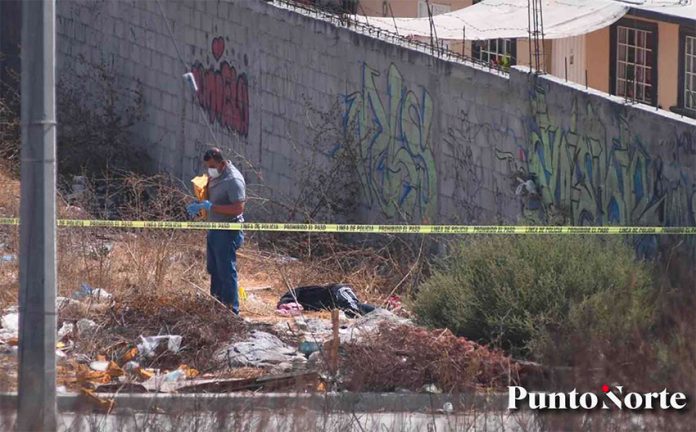
An investigator at the crime scene in Tijuana.

A 6-year-old boy died after being caught in the crossfire Wednesday during a shootout between police officers and a criminal suspect in Tijuana.

Municipal police were conducting surveillance in the Mariano Matamoros neighborhood when officers observed a man carrying a firearm. When they approached the man he began shooting at them and fled into a vacant lot next to the home of Yurem Abdiel González Carrasco.

The second-grader was playing in his yard with his 4-year-old sister when he was struck by a bullet in the abdomen.

The suspect was also shot and died at the scene.

Yurem was taken to the hospital where he died a few hours later.

The boy’s mother was inconsolable, demanding justice and a full investigation into the incident, including ballistics to find out who killed her son.

The media outlet Punto Norte reported that the bullet came from a rifle, which may mean that police fired the fatal shot.

So far this year, 1,430 people have been murdered in Tijuana, 71 in September alone.

There were 2,185 people killed last year, 334 fewer murders than the previous year.

Last year Tijuana was declared the most dangerous city in the world by the non-profit Citizen’s Council for Public Safety and Criminal Justice with a murder rate of 134 per 100,000 inhabitants.

The second most dangerous city was Ciudad Juárez, Chihuahua (104.54 homicides per 100,000), which is also on the border with the United States.

Source: El Sol de Tijuana (sp)

Wednesday rainfall most intense in 20 years: Mexico City mayor

0
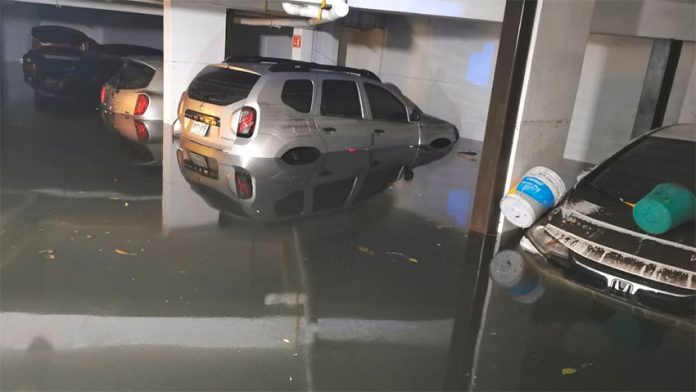
A flooded parking garage in Mexico City.

Wednesday’s heavy rains in Mexico City were the most intense recorded in the past 20 years, Mayor Claudia Sheinbaum said Wednesday night, observing that there were only six occasions during that period when more than 100 millimeters of rain fell in a single day.

Streets and shopping malls were flooded, and downed trees blocked traffic as wind gusts of up to 59 kilometers per hour buffeted the city. Some parts of the city also saw hail.

Sheinbaum said it was striking that on two consecutive days, the weather stations recorded more than 100 mm per day on Tuesday and Wednesday. 

The storms were generated by an area of low pressure and tropical waves generated in the Gulf of Mexico, she said, a phenomenon that happens every 150 years. 

A purple, intense rain alert was declared in the municipalities of Coyoacán, Benito Juárez and Álvaro Obregón as the city’s government implemented “Operation Storm” in order to help with flooding, downed trees and car accidents, dispatching 96 officers with 21 vehicles and two tow trucks to attend to stranded cars. 

Various streets were flooded, and the Xoco hospital sustained a sewage leak inside the building’s emergency room and intensive care unit as well as its parking lot. 

At the Zapata Metro station, the steps were turned into a waterfall as water cascaded down. The station also reported water leaking in through the ventilation system on Lines 3 and 12.

Social media users shared photos and videos of widespread flooding, and some streets saw up to 35 mm of standing water. 

Civil Protection recommended that residents clear storm drains in order to keep them free of debris. 

A Walmart parking lot in Benito Juárez turned into a lake and customers climbed into shopping carts in order to reach their vehicles. Inside the store, aisles turned into rivers as water flooded in.

Source: El Universal (sp)