Home Blog Page 1445

How to make distance learning successful: Guadalajara college leads the way

0
Award-winning interactive app for studying the solar system in your living room.

The appearance of Covid-19 has forced almost all the world’s schools to switch to remote learning. For many of them this may have been quite a challenge, but not for Luis Medina, director of Guadalajara’s IMI College.

“It was no problem,” Medina told me. “It took only an hour to make the switch and things are going really well. Instead of firing teachers, I had to hire more staff.”

Not only is the college coping during the pandemic but, according to Medina, “Students are learning better than ever and they love it.”

Medina’s school is one of a network of over 150 Knotion schools, founded in Morelia, Michoacán, which have replaced traditional textbooks, teachers and curricula with iPads, coaches and a monthly challenge that transforms students into investigators and researchers.

“Knotion schools, which have spread from Mexico to Guatemala, Costa Rica, Colombia and El Salvador, have a complete technological and pedagogic infrastructure for distance learning, so our students can achieve 100% academic success even if they’re quarantined at home,” said Medina.
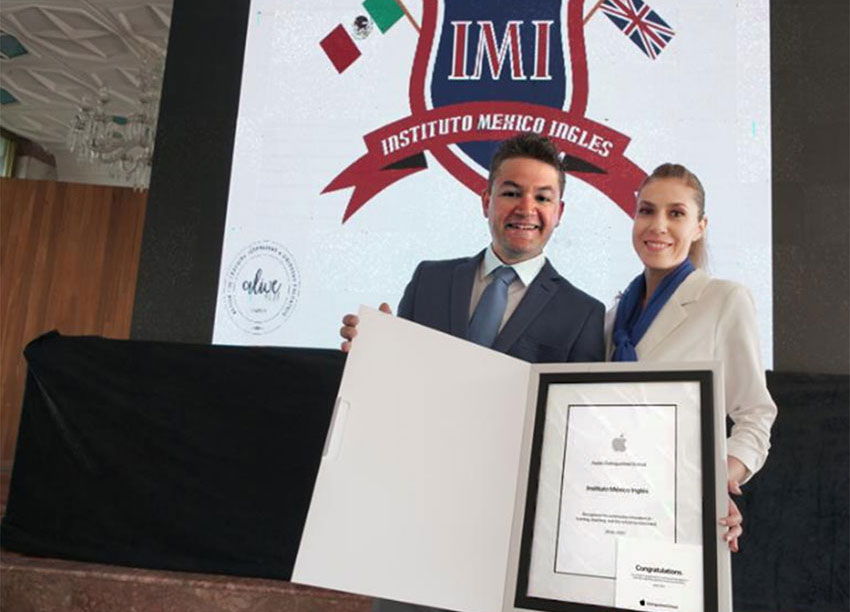
 

Luis and Lucy Medina receive award for continuous innovation in learning and teaching.

Mexico’s public schools would like to see similar results from their nationwide program to teach via television and YouTube. They use music, animation, puppets and dynamic, attractive instructors but, suggests Medina, they still follow the traditional lecture approach where the teacher is omniscient, a walking encyclopedia, and the student is expected to be a sponge with “no creativity, no critical thought, no different ideas — in fact no ideas at all.”

Private schools in Mexico are also having a tough time dealing with remote learning. “Their problem,” says Medina, “is that they had long been looking at technology as the enemy of education. They saw cell phones as distractions, social networks as competition and the internet as full of lies. Now they are putting a camera in front of a white board, but it’s still the teacher explaining away and the student is still expected to regurgitate a summary of the teacher’s wisdom.”

This isn’t the way people learn, points out Medina, and as a result the children turn to parents to explain what they didn’t learn from the teacher. The parent reacts by saying “Hey, wait a minute! Why am I paying the school to educate my children when I have to do it myself? I’m working here from home and I can see that my kids aren’t learning. I’m not going to pay the full tuition anymore.”

This notion, says Medina, is now spreading all over Mexico exponentially … and has given rise to the creation of micro schools. A group of families hire a teacher (and there are tons of them out there with no job) who goes to one of the homes and works with six or eight kids of mixed levels, charging much more money than that teacher could ever earn in a normal school. “Of course,” adds Medina, “they’ve worked it out so the kids will get credit for those classes.”

The newspaper Excélsior reports that 25% of the private schools in Mexico have already shut down permanently and 40% of the public schools are closing their doors. The private colleges can’t pay rent, maintenance, etc. At the same time, they can’t fire their teachers because they would have to give them decades of severance pay. So their only choice is to declare bankruptcy.

“What this means,” comments Luis Medina, “is that just here in the state of Jalisco, 10,000 teachers will be unemployed — and things will be getting much worse in the next few months.”
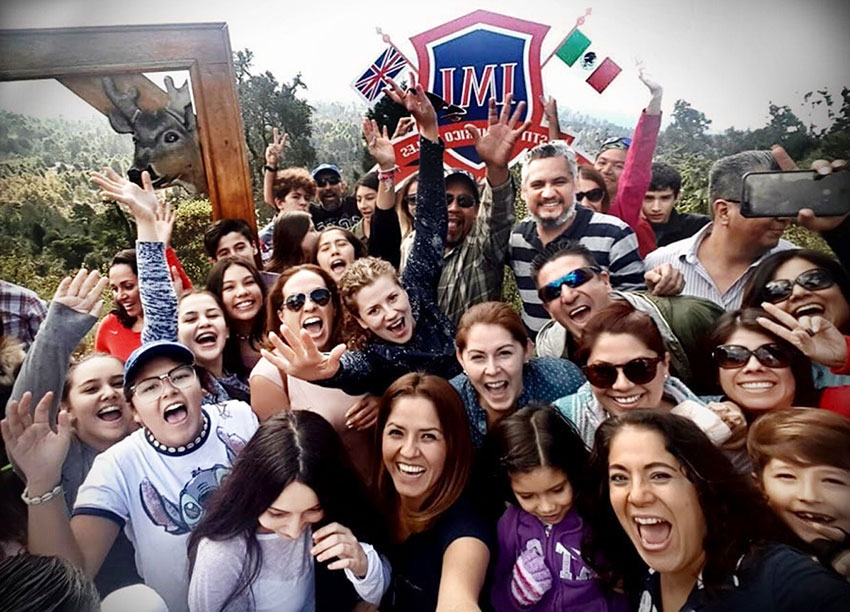
Happy parents and students at IMI College in Guadalajara.

At IMI College things are quite different. “We’ve never had parents complaining that their children aren’t learning. One reason is because our teachers no longer operate as teachers, but rather as coaches or facilitators. The kids check their instructions for the day’s activities and the coach tells them what they will be trying to accomplish. Then everybody puts their shoulder to the wheel!”

Medina tells his teachers they should think of both themselves and the students as apprentices. “The students don’t have to wait for the teacher to tell them what’s what. Instead, the students and the teachers pose questions, just the way Socrates did. If you ask Google the state capitals, you’ll find them immediately, but if you ask Google a really deep question, a question that invites reflection and critical thinking, you’re not going to get a quick and simple answer.”

What do parents see when their children are learning remotely? Says Medina: “They see their child talking and participating, not sitting there listening to a teacher drone on. No, that child is working with his companions; they are sharing their findings; they are saying, ‘I’ll take the photos and you’ll do the editing and Bernardo will publish it on social media.’

“They know how to dialog, how to communicate, how to resolve problems. So the parents find their kids are no longer complaining that they’re not learning, but quite the opposite: they see their kids totally involved. Instead of asking their parents to explain something, they’re saying, ‘Hey Mom and Dad, I’m investigating water consumption and I think we should try to participate in this challenge, to see if we can reduce the amount of water we use at home. I want to look at our old water bills to see how many cubic meters we’re using and then I’ll document the changes we’ll be making month by month and I’m going to publish all of it on the web.’”

“The parent hears this and says, ‘Wow, my little girl is taking action!’ And all this may be tied to a study of mathematics: maybe they are studying volume, how to transform milliliters into cubic meters. So this is math, but math applied to life.”

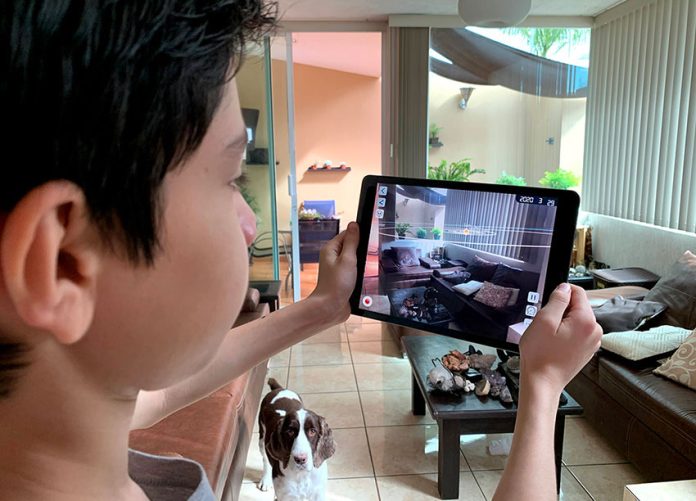
Medina says his students are learning a lot from a system called Augmented Reality. On the screen of their iPad they see things in their environment such as a table or a sofa, but the image is enhanced by computer-generated perceptual information. On their table they may see a detailed representation of a river cutting its way through a landscape. They may now be asked to plan the construction of a dam on the river. By trial and error they discover that placing the dam at one point might produce great benefits or huge problems, and they can see the results of their choices with their own eyes.

[soliloquy id="122513"]

Augmented Reality makes it easy for IMI students to study chemistry, physics or biology right at home. “This week,” Medina told me,  “our seventh-graders were dissecting a virtual frog. They open their iPad and there they see the frog on their desk. Then they anesthetize it and use a scalpel to open it up and go deep inside it, to study its heart and its lungs. In physics, they were working on a Tesla coil. They learned how to connect the components together correctly and to measure amps and volts. For chemistry they use the Virtual Chemistry Lab developed by experts at Carnegie Mellon whose aim was to ‘create learning environments where college and high school students can approach chemistry more like practicing scientists.’

“This week in chemistry they were making aspirins. So they were using different chemical reagents and they had to play around with them to figure out what percentage of each they needed for creating an aspirin.”

Medina contrasts the challenge to make an aspirin with the standard approach where the students sit and listen to a teacher spouting formulas and talking about phenyl salicylate and Erlenmeyer flasks. “Our students set up their Augmented Reality lab on a table. They take a good look at the beakers and flasks and they play around with the reagents and then they say, ‘Chispas! So that’s what happens when I mix these two together.’ And yes, maybe they do blow up the whole lab — it happens — but there’s no harm done and there’s a lot they learn.”

Knotion school students use Augmented Reality to investigate chemistry one day and perhaps go looking around inside the pyramids of Egypt the following day, using x-rays to examine a mummy. They can also study a black hole while sitting in their kitchen, not only looking at it, but figuring out how it works.

“Because of all this, we are not affected by the pandemic,” says Luis Medina. “and we have a long waiting list of parents who want to send their children to us. We’ve done so well that our little college was named an Apple Distinguished School, meaning that it is considered one of the most innovative schools in the world … and, in fact, we were one of three Mexican schools recently invited to participate in a virtual global meeting organized by Apple — and that is something we are really proud of!”

The writer has lived near Guadalajara, Jalisco, for more than 30 years and is the author of A Guide to West Mexico’s Guachimontones and Surrounding Area and co-author of Outdoors in Western Mexico. More of his writing can be found on his website.
Morenista will seek to change state’s name to Tabasco de López Obrador

0
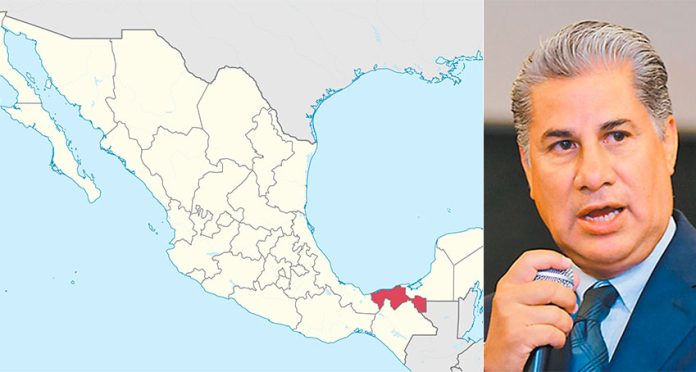
Rojas and the state he wants to rename.

A candidate for the national leadership of the Morena party will push to change the name of the state of Tabasco to “Tabasco de López Obrador” in 2024 in honor of the president, who was born in the state.

The idea comes out of a proposal Alejandro Rojas Díaz Durán made several months ago that would amend the constitution to allow López Obrador to run for governor of Tabasco once his presidential term is over. 

The amendment would allow Tabasco residents to “take advantage of the experience, knowledge and trajectory of those who have been holders of the federal executive power,” Rojas argued when he presented the motion to Congress in January.

Governor Adán Augusto López Hernández rejected the proposal. “We know the president. He is not inclined to be honored with streets, monuments or anything like that. The best we can do is help the fourth transformation, the rest is not of the greatest importance,” he said.

Source: El Financiero (sp)

Program helps thousands of small restaurants stay alive

0
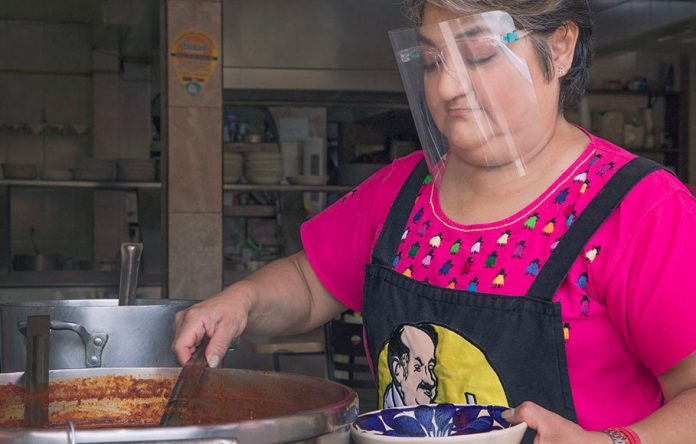
The campaign is intended to encourage people to eat out at their local eateries.

An initiative supported by the national restaurant association Canirac, Coca-Cola and others is helping thousands of small eateries survive the coronavirus-induced economic downturn.

Called Tu Cocina Local (Your Local Kitchen), the program provides training to staff at fondas (small, informal eateries), taquerías (taco restaurants) and torterías (sandwich shops) on the implementation of health measures that reduce the risk of coronavirus infection and make diners feel safe.

The idea is that the restaurants will attract more customers if they are seen to be taking people’s health and hygiene seriously.

The initiative has also provided social distancing screens, face shields and washable tablecloths to more than 50,000 small food businesses.

In addition, it has launched a digital campaign to encourage people to return to their local fondas, taquerías and torterías, which account for 95% of all restaurants in Mexico, according to Canirac.

More than 30,000 are at risk of closing permanently due to a downturn in sales, the restaurant association says. Tu Cocina Local aims to help as many as possible remain open and thus keep thousands of people in work.

One restaurant owner who has benefited from the program is Rocío González Díaz.

“El Volcancito is a family business. We’re the third generation. Approximately nine people work here and nine families depend on [their employment]. The pandemic has affected us in an economic sense,” she said.

González said sales fell and that she was unable to meet some costs but nevertheless she was able to keep her inexpensive eatery open.

“We didn’t have to close because the government allowed us to open at 30%. Tu Cocina Local has helped me a lot with tablecloths and partitions [to separate diners]. That’s helped a lot in terms of making customers feel safe,” she said.

In addition to Canirac and Coca-Cola, the companies Mondelēz México, Unilever, Kimberly Clark and Ragasa are supporting the initiative, which was launched in June.

Source: El Economista (sp) 

Teacher gathers donated TVs so students can continue their studies

0
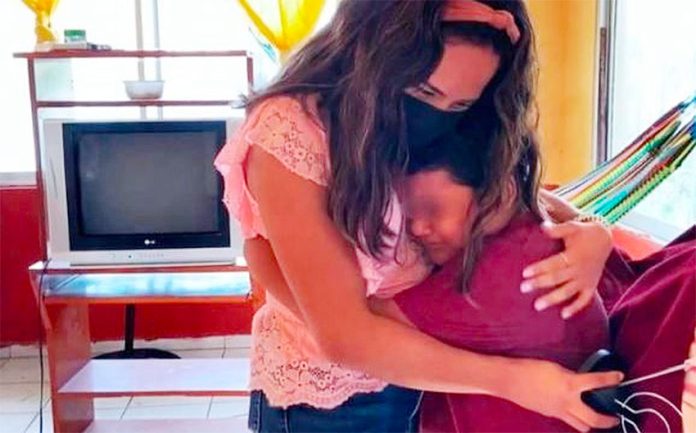
Montiel gets a hug from an emotional Jesús, grateful for having a TV to attend classes.

Attending classes in the midst of the coronavirus pandemic can be complicated if you don’t have a computer or television, which is a problem for many.

But a Veracruz teacher is doing what she can to help her students continue their studies through the federal government’s “Learn at Home” program, initiated at the start of the school year to avoid reopening schools. Eliana Montiel is gathering donated TVs.

One of her students is 8-year-old Jesús Castellanos, whose television and school supplies were damaged during a recent flood. The third-grader broke down in tears when his television was delivered. “I am very grateful because the teacher has made many efforts for me, she teaches me many things,” he said before giving Montiel a long and loving hug. 

“I was very concerned … knowing that many students would not have a place to watch their classes,” Montiel said. “What I always try for is that no student is left behind, that everyone advances, each according to their learning pace, but that no one is left behind, much less due to economic circumstances.” 

And so the 29-year-old teacher launched the initiative on Facebook and got a near-immediate response from people offering analog and digital televisions to her low-income students. Donated sets now crowd her living room.

The young teacher drives through the neighborhoods of the city of Veracruz to collect the sets which allow her students to study alongside 30 million others in Mexico who have been distance learning since the school year began on August 24. 

Classes in the “Learn at Home II” program are taught by television and internet although teachers can also organize sessions by video call. Adapting to the new learning and teaching format has been a challenge.

“I believe that the pandemic has a radical impact … because it is the first time in the history of education in Mexico that we have experienced a teaching-learning process through TV,” Montiel says.

“I felt a great responsibility and empathy for those people who may not have the means.” 

Mexico opted for televised classes because 94% of households have a TV set, compared to 70% or 80% of homes that have internet. The government will also provide children with free textbooks. 

According to UNESCO, 24 million students could drop out of school around the world due to the impact of the pandemic.

Source: Milenio (sp)

July’s international visitor numbers reached 1.4 million, 66% fewer than last year

0
tourists on the beach
Their numbers are recovering slowly.

Almost 1.4 million foreign visitors came to Mexico in July, the highest level since March, but numbers were still way down compared to the same month last year.

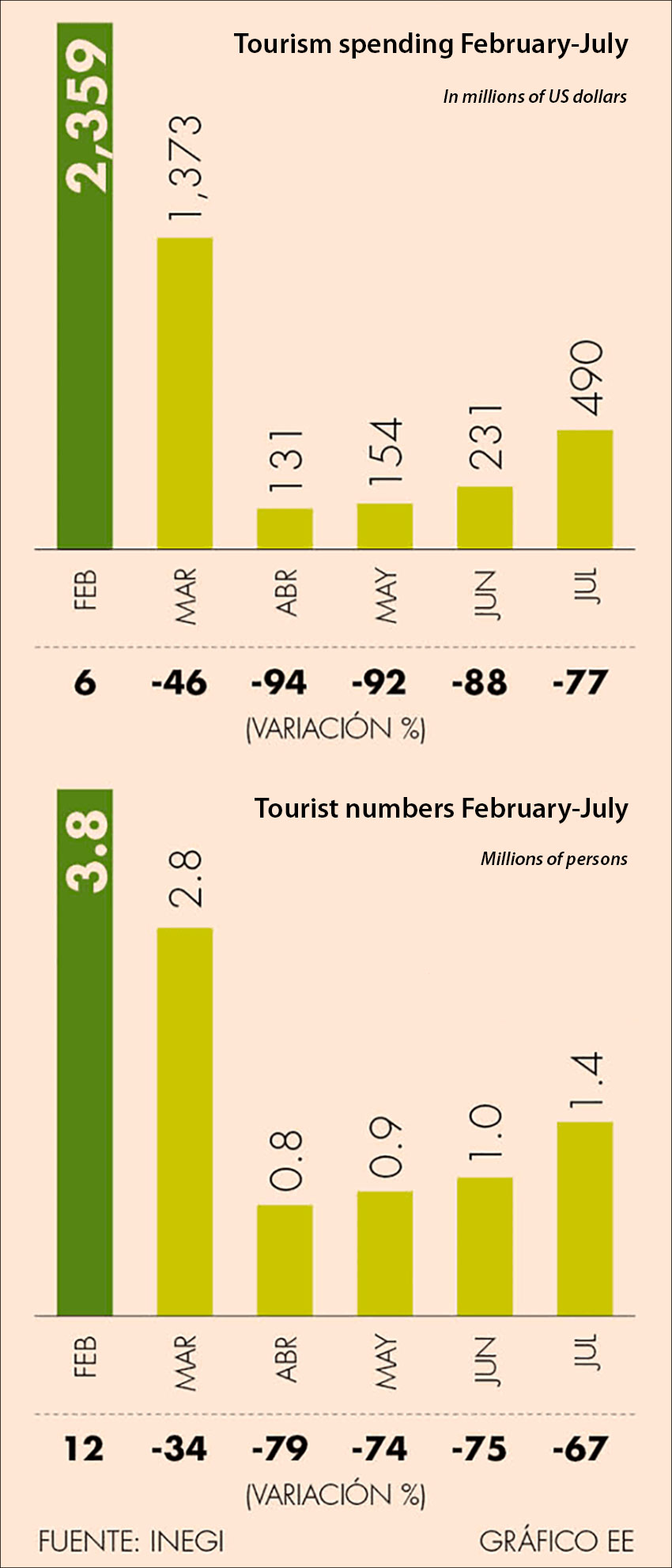
Just over 1.39 million international tourists visited during the month, according to the national statistics institute Inegi, 66.6% fewer than a year ago. Their spending in Mexico totaled US $490.4 million, a decline of 77.4% compared to July 2019.

While visitor numbers and tourism revenue in July were both very low compared to a year ago, they were considerably higher than figures for previous months.

Foreign visitor numbers declined from about 3.8 million in February to 2.8 million in March before plummeting to just 800,000 in April. They recovered slightly to 900,000 in May and 1 million in June but remained more than 70% lower than in the same months of 2019.

Unlike many other countries, Mexico hasn’t prevented air travelers from entering the country during the coronavirus pandemic nor forced them to go into quarantine.

Tourism's slow recovery by the numbers.
Tourism’s slow recovery, by the numbers. el economista

Tourism revenue declined from more than $2.3 billion in February to almost $1.4 billion in March before slumping to just $131 million in April, a 94% decline compared to the same month last year. Revenue recovered slightly in May and June to $154 million and $231 million, respectively, but tourism income was still around 90% lower than the same months of 2019.

In the first seven months of 2020, visitor numbers were 11.9 million lower than in the same period of 2019 and tourism revenue was down more than $8.2 billion, according to Inegi data.

Cruise ships, which dock in ports including Acapulco, Cozumel and Puerto Vallarta, haven’t brought any passengers to Mexico for months.

The tourism industry, which normally contributes almost 10% of GDP, has been decimated by the pandemic and is likely to take years to recover.

Embarrassing gaffes with the official tourism portal Visit México – it was taken down in July, apparently for lack of payment, before the site reappeared in August with a series of mistranslated place names – haven’t helped Mexico’s image as it seeks to attract visitors even as the coronavirus pandemic continues.

In light of the sharp downturn in tourism over the past several months, the Mexican Federation of Tourism Associations (Fematur) called on authorities to provide financial support to the sector.

“The harshness [and] severity … of the dramatic decline in tourism activity recorded and reported by Inegi during the months of the pandemic should serve [as a reminder] to financial authorities to reconsider the need to design a special support program for the tourism industry,” Fematur said in a report.

The federation said that Mexico needs tourism to alleviate the economic crisis, which it predicted would worsen in the coming months.

Many analysts are forecasting that the economy will contract about 10% in 2020, although the Bank of México said in late August that GDP could decline 12.8% in a worst-case scenario.

Source: El Economista (sp) 

The yucca plant catches the eye of organized crime in Baja California

0
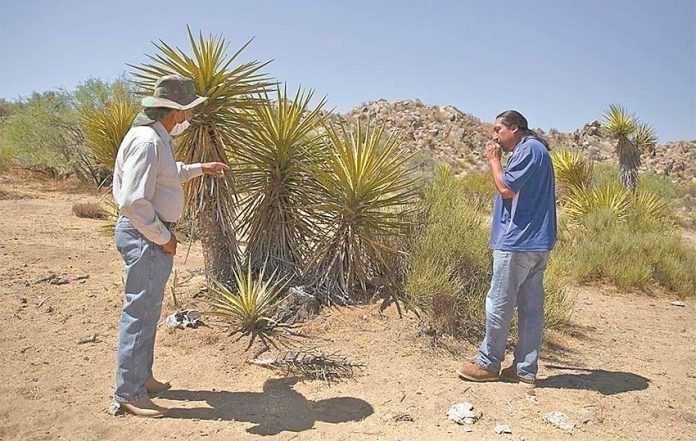
Stealing yucca has increased in the last two years, say communal landowners.

What do totoaba, a species of fish prized in China for its swim bladder, petroleum pipelines and the Mojave yucca plant have in common?

All three are targeted by criminal organizations in Mexico.

While the illegal fishing of totoaba in the Gulf of California – and the resultant devastating impact on the vaquita marina porpoise – and the clandestine tapping of pipelines in states such as Guanajuato and Puebla have been widely reported, there has been much less focus on the theft and trafficking of yucca schidigera, a flowering plant native to the deserts of northern Mexico and the southern United States.

But criminal gangs have been stealing the plants and selling their stems for years.

Theft of the Mojave yucca is a major problem in the Trinidad Valley, located southeast of Ensenada in the northern border state of Baja California, where local residents call the plant’s stem “el palo de oro” or “the stick of gold.”

The nickname is derived from the stems’ value: they are exported to the United States, the Arab world and China, where yucca extracts are used in herbal products and pet food.

According to the federal government’s delegate in Baja California, the modus operandi of yucca looters is the same as that of other criminals who target products that can yield high prices abroad.

Jesús Alejandro Ruiz Uribe told the newspaper El Universal that armed men enter ejido, or communally-owned, land to steal yucca plants and later sell their stems to companies that export them. He said that authorities collude with the criminals, pointing out that officials don’t check whether they have permits to extract the plants and don’t investigate when environmental crimes are reported.

“It’s the same thing that happens with totoaba because it [the yucca plant] also … generates wealth,” Ruiz said. “We have to disband this network of criminals that is effectively acting like a mafia.”

The federal delegate said that Baja California companies that purchase the yucca stems help the thieves to cover their tracks by issuing receipts to them as though the two parties had completed a legitimate business transaction.

Ruiz also said that organized crime has a long history of operating in the Trinidad Valley, explaining that cartels transport drugs through the area and grow marijuana and opium poppies there.

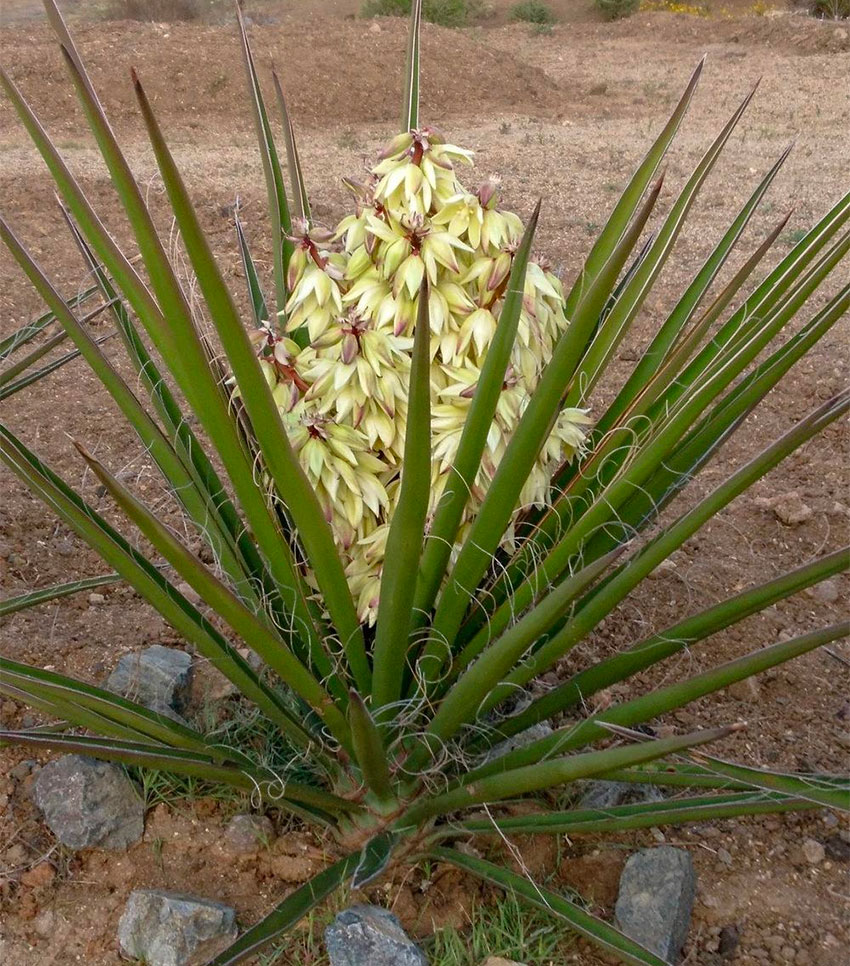
A flowering yucca plant.

One indigenous leader in the area told El Universal that thieves are stripping their land of yucca and depriving local residents of their livelihoods in the process.

“We’re sad. They’re going to exterminate us,” said Elías Espinoza, a leader of the indigenous Kiliwa people.

Local landowners have entered into an agreement with environmental authorities that allows them to remove yucca stems and sell them but also aims to ensure the plant’s long term survival. But thieves being thieves they don’t respect the pact and uproot entire plants indiscriminately without any thought for sustainability.

Espinoza said that yucca theft is a longstanding problem but that looting has increased in the past two years. At least three ejidos in the Trinidad Valley have been stripped bare, he said.

Another resident identified only as Cirilo said that criminal groups enter ejido land and steal yucca plants twice a week. He said that armed thieves, even teenagers at times, arrive in pickup trucks that they fill with tonnes of plants.

Cirilo said the thieves sell the plants for less than they are worth – about US $450 a tonne – explaining that they are able to do so because they don’t pay for permits to extract them. On the few occasions that thieves have been arrested they were soon released, he said.

In 2018, landowners filed a complaint with the federal environmental protection agency Profepa but the thefts and violence against landowners only increased, El Universal said. In July this year, communal landowners built new fences to protect their properties and began patrolling them 24 hours a day, seven days a week.

But criminal elements continued to find ways to evade or intimidate the landowners and make off with the valuable yucca plants.

Also in July, landowners reached an agreement with authorities for a checkpoint manned by members of the National Guard and municipal and state police to be set up in the Trinidad Valley for the purpose of clamping down on yucca theft.

But two months later, the checkpoint has still not been established.

Source: El Universal (sp) 

Bullfighting neither art nor culture—it’s torture, says senator in performance

0
Rodríguez in her performance as the banderilla-ridden bull.

Outspoken senator, thespian and animal rights activist Jesusa Rodríguez posted a dramatic, 43-second video against bullfighting to her Twitter account Thursday which has garnered controversy and more than 455,000 views.

“Neither art nor culture, it’s torture,” she says in a voice-over as she pretends to stab herself with banderillas. Clad in a white linen dress, eyes to the sky, she winces and cries out in pain with the plunge of each dart. 

She warns that bullfighting aficionados are advocating that the spectacle be deemed cultural heritage by UNESCO, which could be a setback for animal rights activists seeking to ban the practice. Better to abolish “all those anachronistic, violent, bloody and immoral manifestations in which animals are tortured,” she says.

While the performance might be seen as an unusual tactic for a politician to adopt, Rodríguez is a decidedly unusual politician. 

Last year, she told Mexicans that every time they ate a carnitas taco, they were celebrating the fall of the Mexica capital of Tenochtitlán to the Spaniards. 

Last week, Rodríguez took a marijuana plant with her to the Senate floor during a debate on marijuana legalization and likened its medicinal properties to female genitalia.

“Twenty years ago an Australian urologist made a description of how the clitoris works; before we did not know how to use it. The same goes for marijuana,” she said. “There is a complete program of misinformation so that people do not know the wonders that the plant can do for society when it is well regulated.”

Several commenters on her anti-bullfighting performance wondered if she hadn’t been smoking marijuana when she made it. Others considered her video an embarrassment to her office.

“Madam, remember you are a public servant. We don’t need these kinds of ordinary, poorly acted, meaningless and clumsy performances. If you have an initiative, present it and stop making these fucking ridiculous things,” one Twitter user wrote. 

“I totally agree with you madam, what is regrettable is your performance. All intention is lost and it only makes us laugh at your ridiculous madness. Be serious madam, you only detract from a legitimate fight with your stupidities.”

But for at least one user, Rodríguez’s message resonated. “Although unorthodox, she is absolutely right. Defending practices simply because they are considered cultural without questioning in principle what makes them good or bad leads us to justify barbaric acts such as human sacrifice, mutilations or bullfights.”

Source: El Universal (sp)

Tension continues at La Boquilla dam as more National Guardsmen expected

0
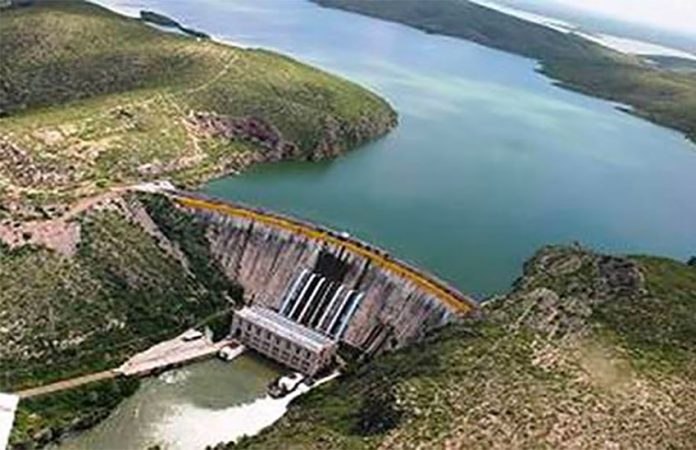
La Boquilla, where farmers have taken over the dam.
Under a new treaty provision, the federal government could seize water belonging to northern states to make up for shortfalls in water deliveries to the U.S. Pictured: La Boquilla dam in Chihuahua. (File photo)

The unrest that came to a violent head on Tuesday at the La Boquilla dam in Chihuahua continued Thursday night as protesters who have taken control of the dam awaited the arrival of more National Guard troops.

At 10 p.m., the entire area lost electricity, internet and cell phone signals, creating a communications and media blackout that some suspect was intentional.

The mayor of San Francisco de Conchos, José Ramírez Carrasco, reported that a group of infiltrators doused one of the dam’s turbines in diesel and set it afire yesterday. The mayor said that they also left bouquets of flowers, candles and packages of worm-ridden clothing at the site. 

Friday morning, personnel from the  Federal Electricity Commission arrived to inspect the damage caused by the fire.

Several mayors in the region, including Alfredo Lozoya from the southern municipality of Parral, spent Thursday night at La Boquilla in solidarity with the farmers occupying the dam, who are protesting the diversion of water to the United States in order to meet the terms of a 1944 treaty.

[wpgmza id=”256″]

“The fight is fair, not only to defend the water of our farmer brothers but also because of the unfortunate events that occurred on Tuesday night in Delicias,” said Lozoya, referring to the couple who were victims of an armed attack.

Versions of what occurred are contradictory, but as authorities try to sort out what happened, friends and family of Yessica Silva, 36, said goodbye to the mother of three yesterday.

The funeral was held as her husband, Jaime Torres, a 42-year-old alfalfa farmer, remained in the hospital with serious injuries resulting from three gunshot wounds to the neck and shoulder.

Silva and Torres attended the protest Tuesday afternoon in which thousands of farmers and ranchers, armed with sticks, stones and Molotov cocktails, took control of the dam from National Guard members clad in riot gear. The Guard relinquished control of the dam after trying to drive them off with tear gas. 

The farmers’ action was in response to the National Water Commission (Conagua) allegedly violating an agreement with ranchers by diverting water from the La Boquilla dam to the United States. 

Mexico has been pressured by the United States to pay its 426-million-cubic-meter water debt, which comes due next month, by releasing water from dams on the Mexican side of the border. 

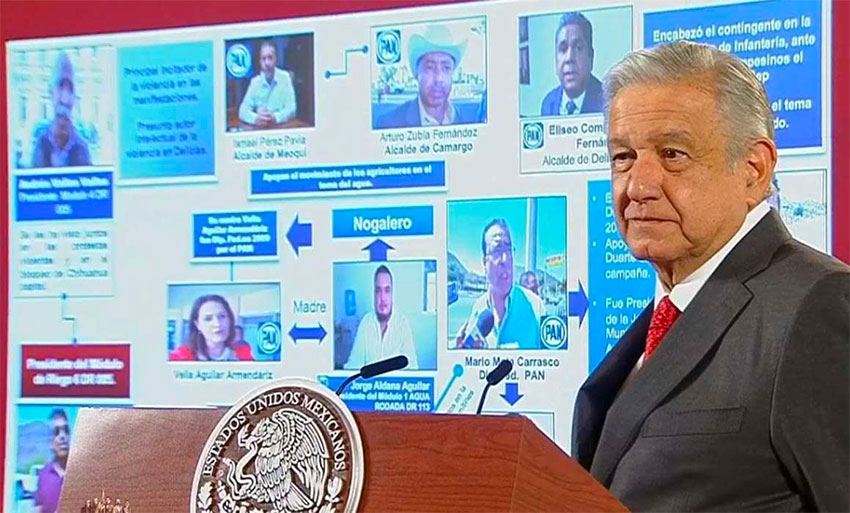
The president displays photos of ex-politicians he claims are behind the protest.

Silva and Torres were on their way home from La Boquilla when they were shot in their pickup truck. 

“They were attacked, according to various testimonies and accusations, by elements of the National Guard. We strongly condemn the events,” said Chihuahua Governor Javier Corral, who demanded that the Attorney General’s Office investigate the incident.

However, the National Guard says it was fired on first by armed civilians after they arrested three protesters found to be in possession of tear gas and ammunition. Seventeen guardsmen are are under investigation for the shooting.

President López Obrador said today that mayors, legislators and ex-governors of opposing political parties who have interests in agriculture in the area are behind the protests, but vowed that those responsible for Silva’s death will be punished. “We are not going to cover up for anyone,” he said Friday morning. “If there is abuse of authority, if a crime has been committed, we are going to punish the guilty,” 

López Obrador supported the National Guard’s version of events, that they were only returning fire during a chase by armed civilians.

Yolanda Torres, Jaime Torres’ sister, denies that the couple was carrying weapons. “My brother and my sister-in-law are good people. I have no words for the president. The National Guard attacked them for no reason,” she said.

Governor Corral said none of the National Guard vehicles have bullet holes in them, and that witnesses say the couple were shot without provocation.  

As of Friday morning, around 100 hooded men armed with sticks, stones and pipes were guarding access to the dam. More National Guard troops have yet to arrive.

Source: El Universal (sp)

Deputy health minister mocks proposed virus strategy; ex-minister urges humility

0
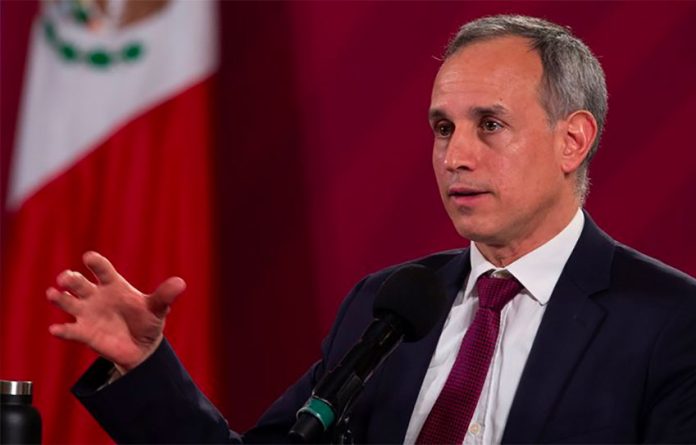
López-Gatell greeted the proposals with sarcasm.

The federal government’s coronavirus czar has mocked six former health ministers after they penned a proposed strategy to combat the coronavirus pandemic, saying ironically that they should patent their “innovative” formula.

“If there is a select group of former health ministers who have the formula to control the epidemic in six or eight weeks, it could lead to a kind of patent because that is needed all over the whole world given that the epidemic is still active in the whole world,” said Deputy Health Minister Hugo López-Gatell.

“Only China has ended the epidemic, … we’ve seen in European countries that they’re now recording new outbreaks.”

López-Gatell’s sarcastic remarks came after a group affiliated with the Citizens Movement political party published a report by six former health ministers who served in the administrations of ex-presidents Miguel de la Madrid, Vicente Fox, Felipe Calderón and Enrique Peña Nieto.

Entitled “Covid-19: Preliminary Analysis and Urgent Recommendations,” the report criticized the federal government for its pandemic response, especially its reluctance to test widely and its “anti-science resistance” to the use of face masks, and set out a new national plan to get on top of the coronavirus outbreak in a period of six to eight weeks.

Among their recommendations, the former health ministers urged a national testing campaign, advocated localized lockdowns in areas with high numbers of cases and proposed making face masks mandatory nationwide.

López-Gatell invited the former officials to submit their strategy to the World Health Organization and Foreign Minister Marcelo Ebrard.

“It’s always encouraging to see that people have initiative,” he said before adding that it was a “coincidence” that the former health ministers were presenting their strategy at a time when the government is predicting a significant reduction in coronavirus cases in precisely six to eight weeks.

“I don’t know if it took them a long time due to the complexity of the document, we’re not complaining … but if there is such an innovative formula they should have presented it before,” López-Gatell said.

He said that he was unaware whether the report was sponsored by a political party, adding that it was curious that the former health ministers had spoken out against a lack of health infrastructure and medical personnel given that they were once responsible for managing the public health system.

He also indicated he hadn’t read the report by “these illustrious ex-ministers” and planned to find a copy of “the magic formulas.”

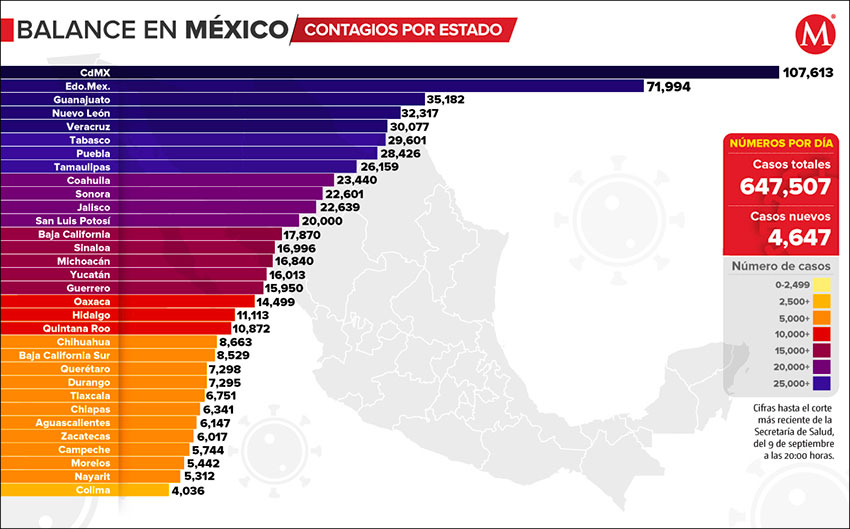
Accumulated coronavirus case numbers by state.
Accumulated coronavirus case numbers by state. milenio

President López Obrador has said that his administration inherited a public health system that is “in ruins” and pledged shortly after he took office that Mexico would have a system comparable to those in Canada, the United Kingdom and Denmark in two years.

But in his second year in office, the coronavirus pandemic – which has claimed the lives of almost 70,000 people in Mexico as of Thursday – has brought shortcomings in the public health system into sharp focus: many hospitals have a shortage of basic equipment, medication and personnel and some don’t even have soap.

In response to López-Gatell’s remarks about the coronavirus report, one of its authors called on the deputy minister to show humility and take the time to read it.

“Hopefully Deputy Minister Hugo López-Gatell makes time to review the document,” Salomón Chertorivski, health minister in the final year of the Calderón government, wrote on Twitter.

“In it we evaluate the actions and [coronavirus] policy of the Mexican government and propose a way to correct [the situation]. 67,000 deaths oblige us to be serious and him to be humble,” he said.

In a second tweet directed to López-Gatell, Chertorivski provides a link to the report and calls for the coronavirus czar to meet with the former health ministers “to discuss the emergency.”

“Today Mexico needs rigor, science [and] evidence, …[not] rancor and polarization. We’re facing a national crisis and what’s important is to control the epidemic now. It’s about saving the lives of thousands of Mexicans. With dismissive insults, the coronavirus wins,” he wrote.

Meanwhile, Mexico’s accumulated tally of confirmed coronavirus cases increased to 652,364 on Thursday with 4,857 new cases registered, and the official Covid-19 death toll rose to 69,649 with 554 additional fatalities reported.

Source: El Universal (sp) 

Government will proceed with controversial thermoelectric plant in Morelos

0
The nearly-finished plant in Huexca, Morelos.

The federal government announced Thursday that construction of a controversial thermoelectric plant in Morelos will recommence.

President López Obrador said the state-owned plant, located in the municipality of Yecapixtla, is expected to begin operations at the end of the year.

“The work to build the thermoelectric plant in Morelos will restart. The project was suspended because of the demands of farmers [and] residents of the communities of that region. It’s a project that started several years ago [and] it was practically finished; there’s very little left to do for it to [start] operating,” he said.

The government held a public consultation on the plant in February last year that found 59.5% support. López Obrador told reporters at his regular news conference this morning that there are no legal impediments to it going ahead.

“We believe that everything is resolved, that there is no legal problem. All the injunctions [against the plant] were resolved, there is now a plan for this thermoelectric plant to begin operations at the end of the year.”

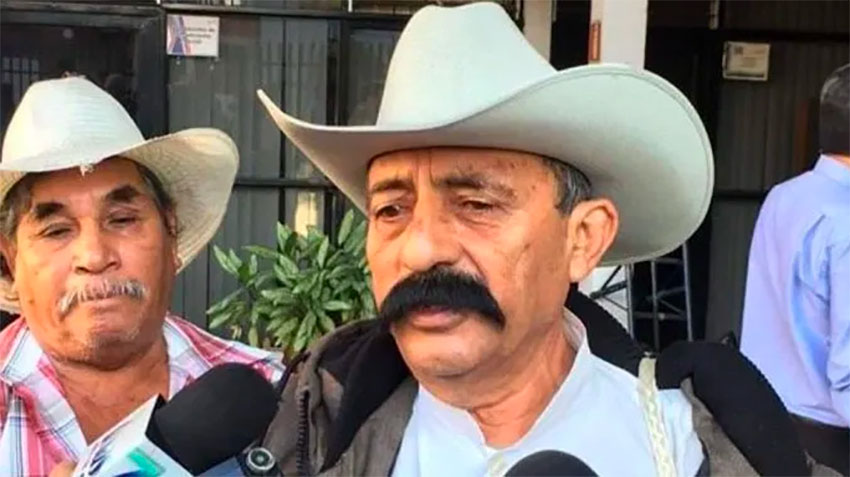
Jorge Zapata says legal action against the plant will continue.

Federal Electricity Commission (CFE) director Manuel Bartlett noted that Morelos is one of just a few states that don’t have the capacity to generate their own energy and therefore the completion of the thermal plant was important.

He said the 20-billion-peso (US $930.7 million) plant will have a 642-megawatt capacity and that its operation will not affect the quantity or quality of the local water supply, as opponents claim. It will never draw water from the Cuautla River as it will use recycled water from a nearby wastewater treatment plant to generate steam, Bartlett said.

Interior Minister Olga Sánchez said studies have shown that the operation of the plant won’t affect the local water supply.

“As there was no valid suspension [order] related to the construction, the National Water Commission granted the permits to the CFE. … All the injunctions are resolved and the project can legally continue,” she said.

But one community leader in Morelos quickly challenged the government’s assertion that all legal impediments have been removed.

Jorge Zapata González, grandson of Mexican Revolution hero Emiliano Zapata, said that not all injunctions against the project have been overturned and asserted that the majority of communities, communal landowners and private landowners in the east of Morelos remain opposed to the plan.

[wpgmza id=”255″]

“Right now we’ll start with the organization to defend our land and water because they’ve already organized themselves to go ahead with a plant we’ve always rejected. What the president says is one thing and what the people decide is another,” he said.

Zapata said the members of 32 ejidos (cooperatives) and 12 owners of small lots are involved in legal action against the plant, located about 60 kilometers southeast of Cuernavaca in the town of Huexca.

He said if legal action in Mexico fails to stop the plant, its opponents could still take their case to international bodies.

Source: Reforma (sp), El Universal (sp)