The mayor of Soconusco, Veracruz, has some unorthodox methods for dealing with the coronavirus pandemic in his town.
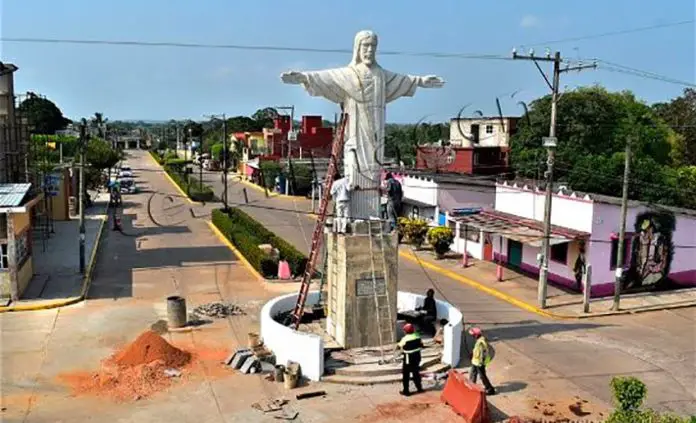
Rolando Sinforoso Rosas’ latest effort in the fight against the pandemic was the installation of a nine-tonne statue of Christ the Redeemer in the town’s main square on Friday, a move that he claims will strengthen the faith of his constituents and protect them from the coronavirus.
Sinforoso said the over 12-meter-tall replica of the famous Cristo Redentor statue in Rio de Janeiro, Brazil, will give the region character and help people recover the faith in Jesus Christ that he declares they have lost.
But the statue isn’t the only unconventional tactic the mayor has come up with to face the pandemic. In early May he caused a stir when he issued a decree prohibiting deaths from Covid-19 in the municipality, located in the southeast of the state.
“I believe that Soconusco — if we’ve already outlawed Covid-19 deaths — along with putting God first, nothing is going to happen,” he said in an interview with local media that his administration streamed live from its official Facebook page on Friday.
He added that the official inauguration of the statue will be held on Friday this week and emphasized that authorities will implement sanitation measures to mitigate coronavirus transmission, despite the statue’s alleged protective abilities.
Sinforoso also expressed the magnanimity of the erection of the Jesus statue, saying that “this isn’t just a Christ for Soconusco, but for the whole region.”
Despite criticism on social media and national news outlets, the Citizens’ Movement party politician defended his endeavor to prohibit deaths from Covid-19. He has claimed victory, announcing that not one person had died from the disease in Soconusco.
In his most recent statement to his constituency, Sinforoso requested that anyone who is going to die of Covid-19 do so outside the municipality.
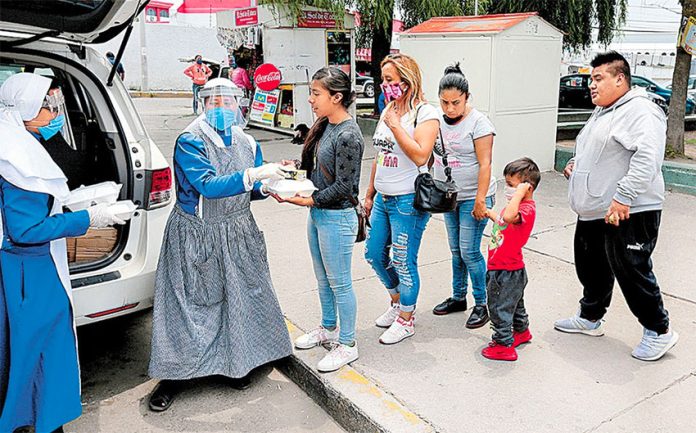
Cocinamos volunteers distribute food to families of hospitalized coronavirus patients.
A network of volunteers who prepare meals for the needy that began in Mexico City in March has now spread to Puebla, Jalisco, Aguascalientes, Nuevo León and the state of Mexico.
Cocinamos México (We Cook Mexico) began when founder Abelardo Marcondes took a bike ride through the capital city’s historic center and noted the number of homeless people on the city’s streets.
When the coronavirus pandemic hit, Marcondes, who runs Luxury Lab, a marketing and networking platform for those involved in the luxury sector, decided action was needed to help those in need and Cocinamos México was born.
The project recruits volunteers, mostly families, to cook and package 10 individual meals using their own supplies or those provided in a kit of donated ingredients.
Each meal includes protein, vegetables, fruit, water or a juice box and a dessert. The meals are packaged in biodegradable containers that the family decorates with jokes, drawings or messages of hope, such as: “Everything will be fine”, “This will end soon” and “Made with love.”
Volunteers prepare food to hand out to the needy.
Once the meals are ready, they are picked up and distributed at churches. Last week the Mexico City initiative managed to feed more than 700 people in one day, including medical personnel.
The Cocinamos México objective is simple: “To raise awareness among the population that if it is in our hands to be able to help someone else, it must be done.”
Those who are not in a position to cook can also help out by donating ingredients and supplies, volunteer to help with meal distribution or simply help spread the word through social media.
Luisa Hoyos, one of 120 volunteers with Cocinamos Toluca, cooks 15 to 20 meals a day with help from her entire family, even enlisting her 3-year-old to help decorate the to-go boxes. When the newspaper Milenio visited her home, the family was making chicken in green sauce, red rice with vegetables, and black beans.
In its first week, Cocinamos Toluca provided 300 meals for the unemployed, homeless, immigrants and others suffering from the economic crisis provoked by the coronavirus. The initiative will run until July at least, but the thought is that it should continue on a permanent basis even after the coronairus crisis has passed.
“I feel that as a human being, one has to give what one has, what one receives,” Hoyos explained. “I feel that I am obliged that if I always have a plate of food, I should at least give a little and do my bit.”
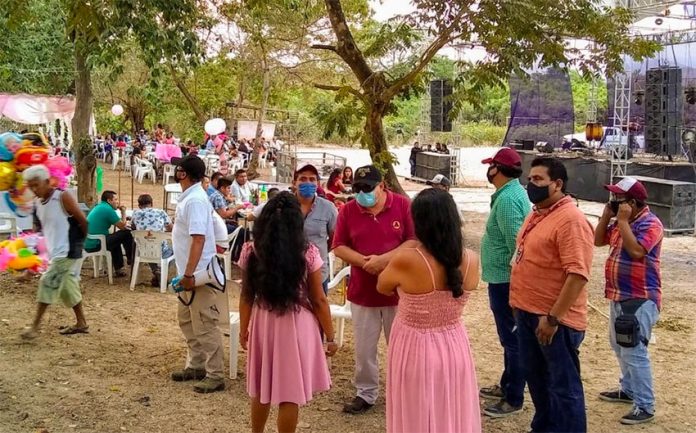
Authorities in Acapulco, Guerrero, broke up at least three large events in the city over the weekend, obliging over 700 people to return to their homes to continue to mitigate the spread of Covid-19.
The ISSSTE and IMSS social security hospitals in the city are both reaching close to 90% capacity, prompting Mayor Adela Román Ocampo to announce that the facilities were on the verge of collapse on Friday.
Federal Epidemiology Director José Luis Alomía announced on Saturday that Guerrero has now surpassed Mexico City as the entity with the highest hospital occupancy rates in the country.
He warned that the state will see its highest number of infections in the week to come, with Acapulco as its epicenter. His calculations estimate that May 30 will be the most critical day of the pandemic in the resort city.
Over half of the cases in the state — 619 of 1,175 — are in Acapulco, as have been at least 31% of the deaths, with 53 of the 170 who have died of Covid-19 in the state so far. Such numbers have led authorities to order the digging of 300 new graves in the city’s El Palmar cemetery to handle the influx of burials.
The dismal stats didn’t stop at least three large parties, which were broken up by municipal authorities on Saturday night and early Sunday morning.
They sent over 400 people home from a quince años party, thrown to celebrate a young girl’s entrance into womanhood at the age of 15, while another 200 were forced to leave a wedding. Officials broke up at least one other large party that night as well.
The municipal government also announced that it has had to force the closure of bars that have refused to suspend service during the pandemic.
State Health Minister Carlos de la Peña Pintos said that the two primary hospitals in Acapulco treating Covid-19 patients were at 89% and 85% capacity as the city braced itself for the worst of the virus.
The hospital dealing with the coronavirus in the state capital Chilpancingo is at 80.6% occupancy. The one in Taxco is at 37.7% and the hospital in Iguala is only at 25%. Average hospital occupancy statewide is at 70%.
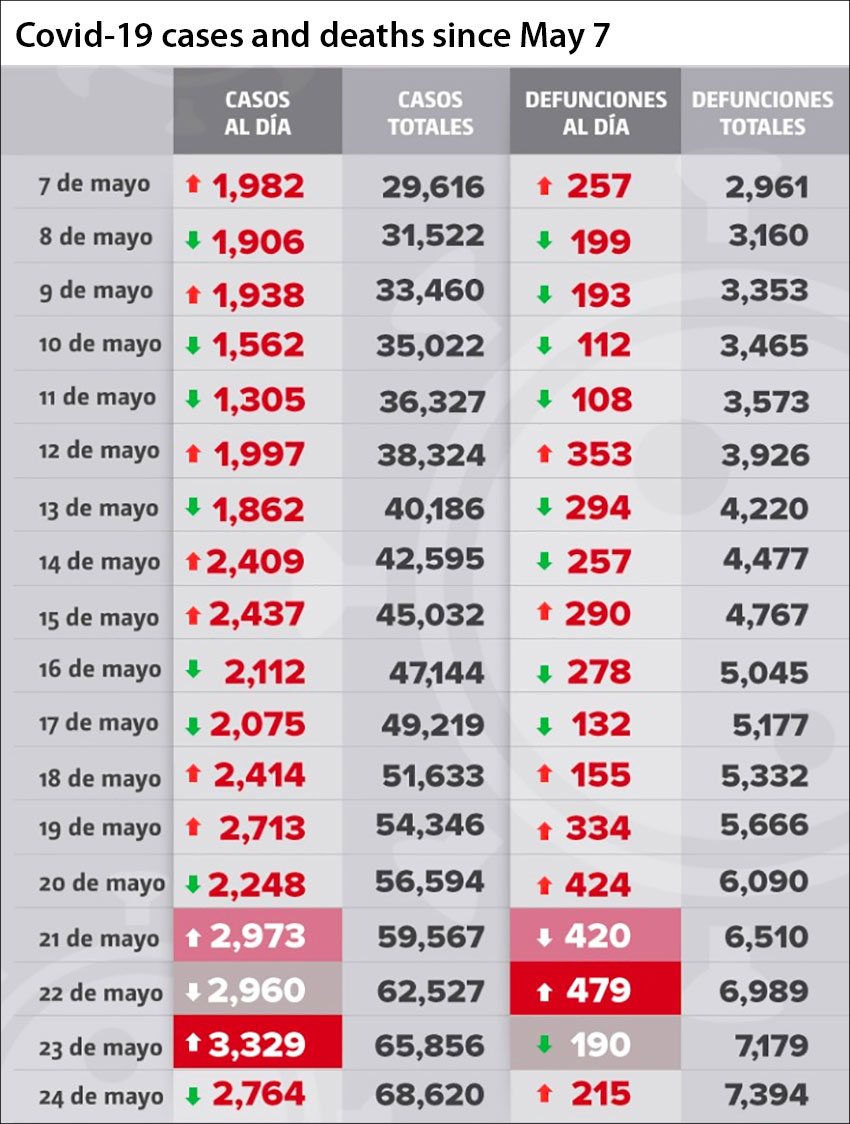
More than 6,000 new Covid-19 cases were added to Mexico’s tally over the weekend while the coronavirus death toll passed 7,000 with 405 fatalities reported on Saturday and Sunday.
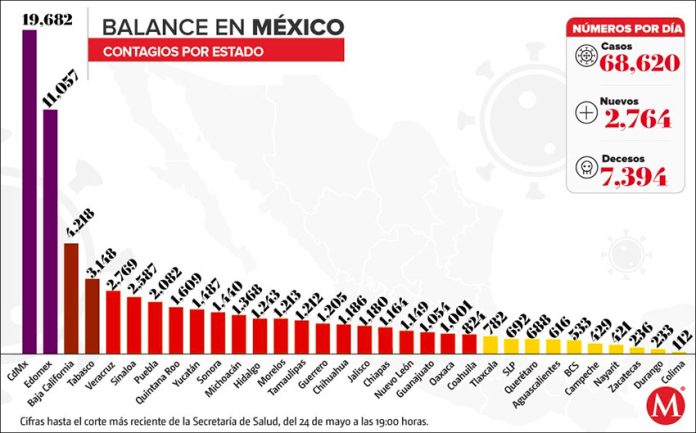
The federal Health Ministry reported a record 3,329 additional cases on Saturday and 2,764 on Sunday, increasing the total number of cases since the start of the coronavirus pandemic to 68,620.
It reported 190 Covid-19 fatalities on Saturday and 215 on Sunday, lifting the death toll to 7,394.
Director of Epidemiology José Luis Alomía said Sunday that an additional 595 deaths are suspected to have been caused by the disease but have not yet been confirmed.
In addition to the more than 68,000 confirmed cases, there are 28,931 suspected cases across the country, Alomía said. More than 219,000 people have now been tested for Covid-19 of whom 121,613 – 55% – tested negative.
Daily totals of coronavirus cases and deaths as of Sunday. milenio
About one in five of the total number of confirmed cases – 14,247 – are considered active, meaning that those infected first developed Covid-19 symptoms in the past 14 days.
Almost 70% of people who have tested positive for Covid-19 in Mexico since the start of the pandemic have now recovered, about 20% currently have the disease and 10.8% died.
Mexico City, the epicenter of the coronavirus outbreak, has now recorded 19,682 cases since Covid-19 was first detected here almost three months ago. More than 11,000 people have tested positive in neighboring México state while Baja California ranks third for accumulated cases with 4,218.
Mexico City also leads the country for active cases, with 3,819 as of Sunday. México state has the second largest active outbreak, with almost 1,500 known cases, followed by Tabasco, Baja California, Veracruz and Puebla, all of which have more than 500 active cases.
Only four states – Colima, Zacatecas, Baja California Sur and Durango – have fewer than 100 active active cases.
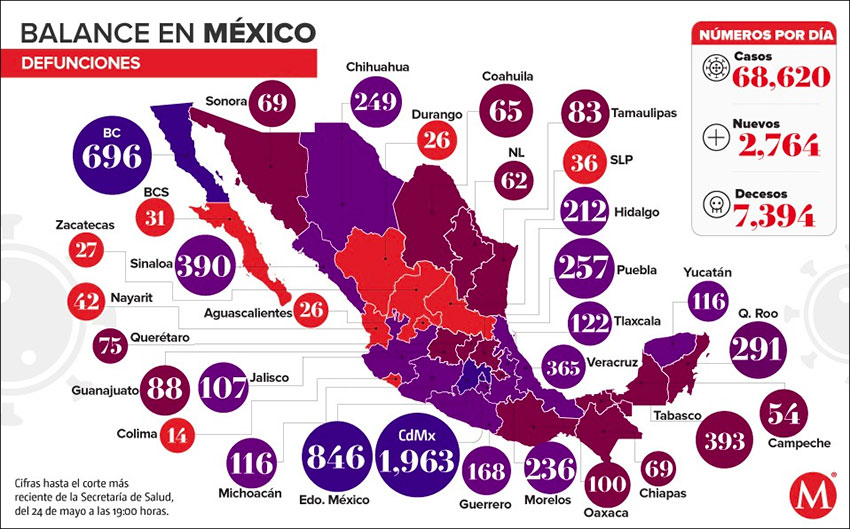
Mexico City also has the highest coronavirus death toll in the country, with 1,963 confirmed fatalities as of Sunday, according to official statistics. México state has recorded 846 coronavirus-related deaths while Baja California has the third highest death toll, with 696 fatalities.
Coronavirus deaths by state. milenio
Two-thirds of the Covid-19 deaths in Baja California occurred in Tijuana, which has recorded more fatalities than any other municipality in the country.
National data presented by the Health Ministry at Sunday night’s coronavirus press briefing showed that 38% of general care beds set aside for patients with serious Covid-19 symptoms are currently occupied while 35% of those with ventilators are in use.
At 79%, Guerrero has the highest occupancy rate for general care beds followed by Mexico City (71%) and México state (58%).
Mexico City has the highest occupancy rate for beds with ventilators, with 67% currently in use. México state and Baja California follow, with more than 60% of critical care beds currently occupied in both states.
Hospitals in coronavirus hot spots, such as Mexico City and Acapulco, are facing increasing demand for their services as the pace of growth of the pandemic quickens and could soon come under even greater pressure with even higher numbers of new coronavirus cases predicted.
The Health Ministry reported more than 2,000 additional cases on each of the past 11 days and daily case numbers passed 3,000 for the first time on Saturday.
Researchers at the National Institute of Public Health (INSP) and the National Council of Science and Technology predict that 76,992 people will have tested positive for Covid-19 by Tuesday, meaning that an additional 8,372 cases would have to be reported today and tomorrow.
Based on the number of Covid-19 tests whose results are not yet known and the positivity rate in recent days, the prediction – if it turns out to be accurate – will mean that more than 4,000 new cases will be reported on a single day for the first time.
Juan Eugenio Hernández Ávila, an INSP epidemiological expert, said the researchers’ predictions have not been 100% accurate but have provided a good approximation of how the pandemic will develop in the short term.
Even though coronavirus case numbers are continuing to rise rapidly, the national social distancing initiative will officially conclude this Saturday and decisions will be made on a state by state basis about which coronavirus restrictions can be lifted and which will remain in place.
Many states will begin easing restrictions on June 1 as part of efforts to reactivate their beleaguered economies and alleviate the financial pain the coronavirus pandemic has afflicted on millions of Mexicans.
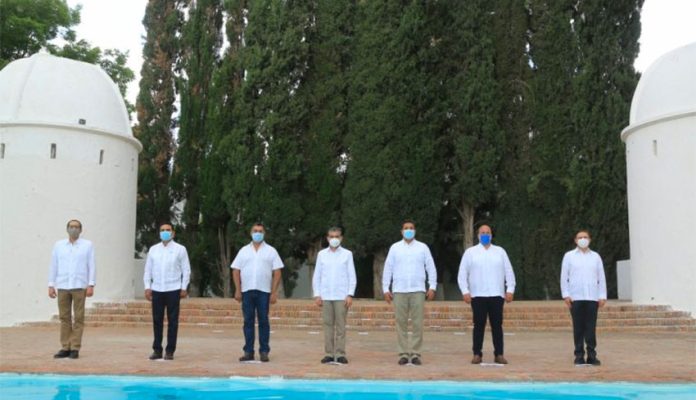
The seven governors at their meeting in Coahuila Friday.
The governors of seven states have formed a common front to oppose federal energy policy changes that seek to consolidate control of the electricity market in the hands of the Federal Electricity Commission (CFE) and limit the participation of private, renewable energy projects.
The governors of Nuevo León, Coahuila, Tamaulipas, Durango, Michoacán, Jalisco and Colima announced their pact at a meeting in Parras de la Fuente, Coahuila, on Friday.
The formation of the group comes after the National Energy Control Center (Cenace) announced in late April that surplus fuel oil produced by the state oil company Pemex would be used to ramp up electricity generation at old CFE plants and that trials that allowed wind farms and solar parks to provide electricity for the national grid would be suspended during the coronavirus pandemic to ensure the reliable supply of power.
Cenace’s suspension of the renewable energy trials will delay the commencement of at least 28 renewable energy projects.
The establishment of the common front also comes after the federal Energy Ministry (Sener) published a new energy policy that imposes restrictive measures on the renewable sector that could effectively prevent its expansion in Mexico.
The seven governors said that Cenace’s measures and the Sener policy are harmful to investor confidence and could cause Mexico to violate its commitments under the Paris Agreement, a global pact that seeks to reduce greenhouse gas emissions.
They also said that thousands of jobs could be lost in the renewable energy sector in which both Mexican and foreign companies have invested, and pointed out that clean energy is generated more cheaply that that generated by fossil fuels.
The availability of electricity at lower prices is a competitive advantage that no country has the luxury to give up, the governors said.
The Federal Economic Competition Commission (Cofece) warned earlier this month that electricity rates could go up as a result of the measures that will delay the commencement of new renewable energy projects and ramp up production at old state-run power plants.
The governors warned that the increased use of fuel oil to generate electricity at inefficient CFE plants would also cause pollution and emissions to increase. They called on the federal government to cancel definitively the Cenace agreement and Sener policy, noting that environmental organizations, business groups, ratings agencies and representatives of the European Union have rejected them.
The governors said they reserved the right to take legal action against the measures that threaten the renewable energy sector and the right of Mexicans to a healthy environment.
Sener’s policy has the potential to cause “serious consequences to the health and lives of millions of Mexican families,” said Tamaulipas Governor Francisco García Cabeza de Vaca.
The governors said they are concerned about the economic impact of the coronavirus pandemic and are thus developing policies to limit it. In that context, they said they are obliged to do all they can to maintain the confidence of renewable energy companies that have invested in their states and created jobs.
The measures announced by the federal government will cause millions of dollars in investment to be lost and lead to a lack of opportunities in the renewable sector for recent university graduates, they said.
It had always seemed a little too good to be true. When the announcement came in June of 2019 that the Yucatán would play host to its first solar energy facility, the implications were immediately lauded.
At a cost of US $30 million, and capable of producing enough power for 30,000 Yucateco families, the initiative set the Yucatán on course to be the leading Mexican state in the pursuit of clean energy.
But this project was only the spearhead of a more all-encompassing sea change, one that promised 24 clean energy projects for the Yucatán, netting an extra 3,400 megawatts of power for the region. For context, energy output of this level would make it the only state to be entirely self-sufficient, and producing more clean energy than it uses.
Even these 24 pledged projects, projects set to fire the Yucatán to the forefront of the eco age, seemed unable to satisfy the ambitions of policy makers involved.
A myriad of international investors are in direct support of the projects, but multiple Chinese investors in Energía Renovable de la Península, through the necessary transportation of important construction equipment to the region, have marked the beginning of the first regular trade route between Progresso and China. Whichever way this initiative was observed, its merits for the prosperity of the southeast were numerous and undeniable.
Recently, however, the projects that have been promised and praised for the last year have hit a sizable and unexpected roadblock. As is so often the case, the often swampish bureaucracy of central government has slowed the Yucatán’s ambitious reach, with a list of changes only recently made to the clean energy sector.
On May 15, an agreement was published by the Ministry of Energy severely limiting the participation of renewable energy plants in the private sector. The measures, while a major setback for the development of green projects in the Yucatán, were claimed to be an attempt to regulate and safeguard the national electricity system, the future of which seems increasingly unreliable the more progressive initiatives are announced.
The new policy announcement essentially bans all private investment in the development and implementation of electricity generation, prioritizing the fossil fuel plants over new energy initiatives. While official comments from policy makers involved have been few and far between since the new regulations were implemented, the viability of these pioneering projects is threatened, with the majority set to struggle for funding and governmental support over the coming months.
Unfortunately, the new environmental focus that Yucatán Governor Vila Dosal claimed would set the state as a national and international example in the green energy sector looks unlikely to be able to weather the storm.
It’s not even just the hope of an eco-conscious industrial future that stands at risk, but the employment prospects of hundreds of Yucatecos ready to train in the renewable energy industry, and pioneer its future throughout the region. Even those residents in indirect proximity to the projects are set to be left unbalanced should the rug be pulled out from underneath.
Electricity rates can be a pernicious strain on the viability of businesses and families, and the promise of more affordable prices offered from a switch to renewable and sustainable methods would have acted as a life-line to countless people. In total, a possible 12,000 jobs and crucial financial stability for thousands looks set to become history.
To draw a set of rules as to what kind of projects are supported and which are cancelled by the government in the southeast would be nigh on impossible. With the continuation of the Dos Bocas refinery and the unwavering belief in the potential of the Maya Train, the decision as to which initiatives are worth the government’s effort seems arbitrary. What does seem clear is a tenacious disregard for environmental ideas and a prioritization of clearer, economically beneficial projects.
There is no easy fix for this problem, and the frustration of Yucatecos grows with each intervention from outside influences. Too often it seems that lawmakers are inward looking when they need to be looking out, and outward looking when they need to be looking in. The Maya Train has international implications, yes, but arguably threatens the locals at home, and it’s the same dynamic with these new clean energy projects.
The potential of 24 environmental projects reaches far beyond the Yucatán, with the ability to propel Mexico itself into a future we all know is eventually inevitable; sadly, this future will remain illusive as long as the true capability of the Yucatán is overlooked.
The United States government suspects that pirate attacks on vessels and oil platforms in the Gulf of Mexico are being underreported, according to the latest advisory from the U.S. Maritime Administration (MARAD).
“A significant underreporting of attacks in this area is suspected. These attacks have involved the discharge of firearms, crew injuries, the taking of hostages and robberies,” the report stated, urging vessels in the area to develop security protocols to prevent pirates from boarding.
MARAD says that a minimum of 20 fishing vessels and 35 oil platforms have been attacked since 2018 in the Bay of Campeche in the southern Gulf of Mexico with at least five attacks occurring in April.
An April 20 report from the U.S. Office of Naval Intelligence (ONI) details the latest reported attacks.
At around 9 a.m. on April 4, Remas, an Italian pipe-laying vessel near Dos Bocas, Tabasco, was approached by eight armed men in a fast boat, prompting the captain to sound the alarm and lock down the vessel. The men opened fire on the ship but the captain was able to use his thrusters to prevent the pirates from coming alongside and boarding.
On April 8, around 9:30 a.m., seven armed men in two boats pulled up on another pipe-laying vessel near Dos Bocas and three of the pirates were able to board but later fled.
The following day at 10:30 p.m. eight armed pirates wearing masks managed to once again board the Remas near Dos Bocas, the third pirate attack in five months on that vessel, taking crew members hostage and using them as human shields. The armed men looted the ship, stealing the crew’s personal belongings and navigation equipment. Several shots were fired but no injuries were reported.
On April 12, pirates attacked the Maersk Transporter, a Denmark-flagged supply vessel located north of Ciudad del Carmen, Campeche, and took several crew members hostage as they looted the ship. The hostages were released when the pirates left.
And on April 14 six pirates armed with automatic weapons and pistols boarded the barge Telford located north of Ciudad del Carmen and opened fire. One crew member was injured.
After a fourfold increase of reported acts of piracy in the Gulf in 2019, the Mexican navy established four monitoring zones which will be patrolled through 2024.
Last year, Mike Vigil, former chief of international operations for the United States Drug Enforcement Administration, called Gulf of Mexico piracy “the wave of the future.”
One of two babies that survived Covid-19 in Tabasco.
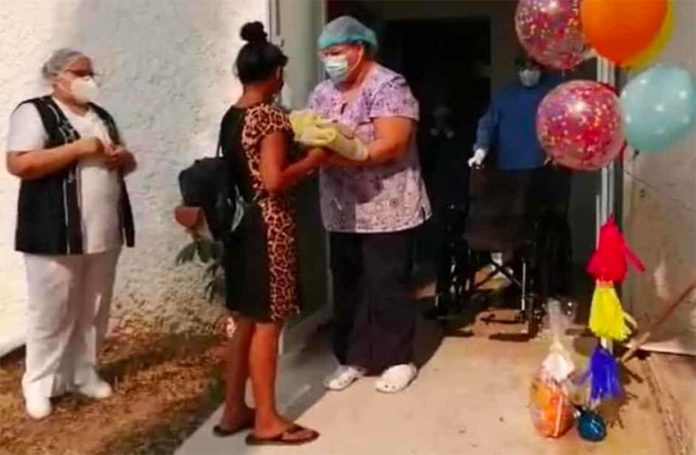
Two infants have recovered from coronavirus this week in Tabasco.
After 35 days in the hospital suffering from coronavirus-associated respiratory symptoms and malnutrition, 4-month-old Isaac received a clean bill of health and has rejoined his family.
The infant spent more than a month at the Rodolfo Nieto Padrón children’s hospital in Villahermosa, the Ministry of Health reports.
After overcoming symptoms and testing negative for the coronavirus, baby Isaac was discharged Wednesday from the hospital to applause from medical staff.
The child’s mother thanked the hospital for caring for her baby over the last five weeks and rang the “Bell of Life,” a symbol of victory and hope, before taking him home.
A second baby in Tabasco, 9-day-old Lupita, was discharged from the same hospital with similar fanfare less than 24 hours later after she too recovered from the coronavirus.
The World Health Organization reports that worldwide “relatively few cases of infants confirmed to have Covid-19 have been reported; those who are infected have experienced mild illness.”
As of Friday, Tabasco had 2,930 confirmed cases of the coronavirus and 371 deaths.
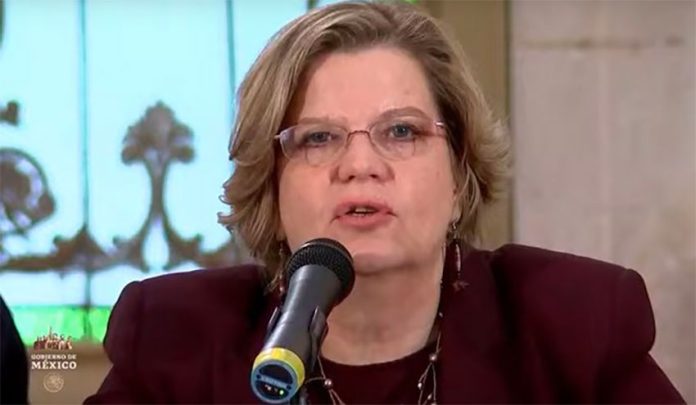
Nadine Gasman of the federal women's agency Inmujeres.
Coronavirus stay-at-home measures have generated a marked increase in attacks on women, says the head of a federal agency, who called it a “second pandemic.”
In a virtual meeting with federal lawmakers, Nadine Gasman Zylbermann, president of the National Institute of Women (Inmujeres) reported that 400,000 domestic violence calls were made to 911 during April.
Gasman also pointed out that 91% of victims of violence do not file complaints at all. Frustration with the system may be one reason behind their silence.
“When a woman is experiencing such violence, she has very little recourse,” World Justice Project lawyer and researcher Layda Negrete told the website Foreign Policy. “If she calls the police, they might not come, and even if they do, they have no training in how to respond to family violence. To pursue charges and protection from the violence they must go to the prosecutor’s office, who typically fail to do anything about the complaint.”
Numbers from the Spotlight Initiative, a partnership between the United Nations and the European Union working to eradicate violence against women and girls, show that Mexican women made more than 115,000 domestic violence-related calls to 911 in March a 22% increase compared to February.
The majority of calls came from the state of México, Mexico City and Chihuahua, with Chihuahua having the largest number of calls per capita in the country.
Sexual assault reports are also on the rise. In March 395 rape-related calls were made to 911, representing a 20.06% increase over February when 323 calls were received, and 15.83% more than in March 2019 which saw 341 complaints.
On May 15, President López Obrador rejected numbers from his own government showing that violence against women has increased during the coronavirus emergency.
“I’m going to give you a piece of information that doesn’t mean that violence against women doesn’t exist,” López Obrador said. “I don’t want you to misinterpret me because a lot of what I say is taken out of context: 90% of those calls … are false, it’s proven.”
Reports from activists claim that 209 women have been murdered since stay-at-home measures were implemented.
According to the non-profit women’s justice organization Equis, three factors have led to an increase in calls during the pandemic. First, self-isolation means women spend more time with their aggressors, thus increasing their risk of being attacked. The economic crisis also puts added stress on households, and finally, some support networks available to help women deal with violence, although considered an essential service by the government, are operating at limited capacity due to the coronavirus.
During the meeting, Gasman appealed to the the Gender Equality Commission of the lower house of Congress to use the opportunity to develop a “new normal” for women and families in the nation, calling on institutions, government and non-profits to work together to create a unified front in the prevention of domestic violence.
Interior Minister Olga Sánchez told the meeting that most public funds have been directed toward the Covid-19 crisis, putting budgetary pressures on other projects, including the protection of women who are victims of violence.
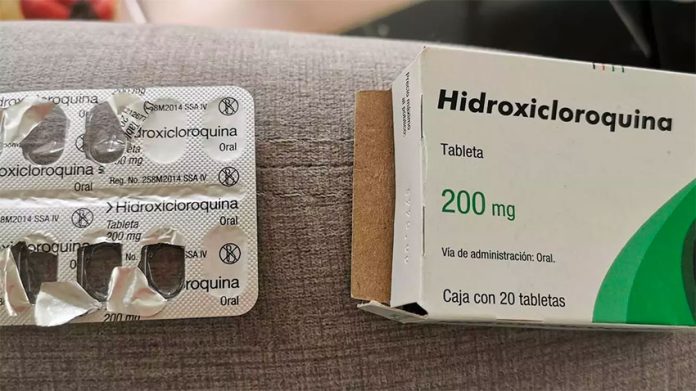
The federal Health Ministry will use the anti-malaria drug hydroxychloroquine to treat 20,000 Covid-19 outpatients despite doubts about its efficacy and the risk of it causing an irregular heartbeat and even death.
The director of the National Institute of Medical Sciences and Nutrition told the newspaper Milenio that the health regulatory agency Cofepris has authorized the administration of the drug to patients recovering from Covid-19 in their homes.
José Sifuentes acknowledged that clinical trials have shown that high doses of hydroxychloroquine for a prolonged period of time can cause a range of side effects in Covid-19 patients but emphasized that the drug has been shown to reduce generalized inflammation in people with the disease.
In that context, he stressed that outpatients will be given only low to medium doses for a maximum of seven days starting in the early phase of their illness.
Sifuentes said that all patients receiving treatment with the drug will be closely monitored, explaining that the “careful follow-up” will occur at people’s homes and via telephone and video calls.
He said that 130,000 doses of hydroxychloroquine donated by the Swiss healthcare company Novartis will be distributed to national health institutes, regional hospitals and specialty hospitals, among other facilities. The use of the drug among ambulatory Covid-19 patients will commence next week.
The announcement of the plan came just two days after the World Health Organization (WHO) reiterated that the drug should only be used in closely-monitored clinical trials due to the potential side effects.
Michael Ryan, executive director of the WHO health emergencies program, said that hydroxychloroquine and the similar drug chloroquine have “yet to be found effective in the treatment of Covid-19” or to prevent the disease.
The medical journal The Lancet published a study on Friday that said that there were no benefits to treating Covid-19 with either drug and that their use actually increases the risk of dying for coronavirus patients.
In a study of 96,000 coronavirus patients, 18% treated with hydroxychloroquine and 16.4% of those treated with chloroquine died. For patients in a control group, the death rate was 9%.
Deputy Health Minister Hugo López-Gatell, Mexico’s coronavirus point man, is among a large number of medical professionals who have warned against taking hydroxychloroquine as a preventative measure against Covid-19.
But United States President Donald Trump, who has repeatedly promoted the drug as a Covid-19 treatment, was not dissuaded from using it to try to stave off Covid-19, the disease caused by the new coronavirus.
“A lot of good things have come out about the hydroxy, you’d be surprised about how many people are taking it … before you catch it. … I happen to be taking it …” he told reporters on Monday.
“Couple of weeks ago, I started taking it because I think it’s good, I’ve heard a lot of good stories. And if it’s not good I’m not going to get hurt by it. It’s been around for 40 years for malaria, for lupus, for other things. I take it, frontline workers take it, a lot of doctors take it …” Trump said.