Home Blog Page 1567

Norteño bands play in the streets to earn what they can

0
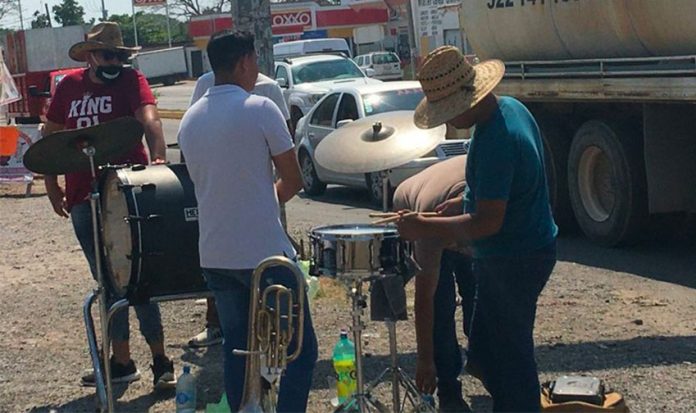
Bands take to the streets to perform.

Members of norteño bands from Jalisco, Nayarit and Sinaloa have taken to the streets to play music and earn what they can, being out of work due to the Covid-19 pandemic.

Tourism and the entertainment industry have suffered in the states, as in other parts of Mexico, and bands find themselves facing months of cancelled gigs.

“We make the day happy and help out with music,” said Israel Rodríguez, a musician collecting donations from the few people crossing a pedestrian bridge in Bahías de Bandera, Nayarit. His band El Coral de Puerto Vallarta was forced to search for new territory after not being allowed to play and collect money in the streets of neighboring Puerto Vallarta.

He carried a sign that read, “Support for musicians. We’re out of work. Music is what we do. Thank you.”

He and musicians from other bands in the region united in Bahía de Banderas to play music in the streets while observing physical distancing measures to minimize the chances of transmission of the coronavirus.

“Thank God we’re able to earn enough to survive, for our families. We’re going to continue [playing in the street] because there’s no work. All the gigs we had scheduled for April, May and June were cancelled because of the virus,” he said.

Another musician named Isidro Guerrero said that he and his fellow players have asked for economic support from the government, but have had to settle for these small chances to play music in public.

“We play for a little while, make people happy for a little while … and ask for a small donation so that we can buy food,” said Guerrero. “[The pandemic] stopped everything for us, all the contracts we had scheduled.”

Working musicians across the country are experiencing tough economic times, as the weddings, birthday parties, confirmations and other fiestas that normally keep them employed have been cancelled.

Mariachi musicians in Acapulco performed outside hospitals in the city in early April to show their gratitude for the frontline workers’ efforts, to encourage them to keep going and to ask the local government to help them during the difficult times.

Source: La Jornada (sp)

Due to coronavirus, Guerrero street market closed for first time in 500 years

0
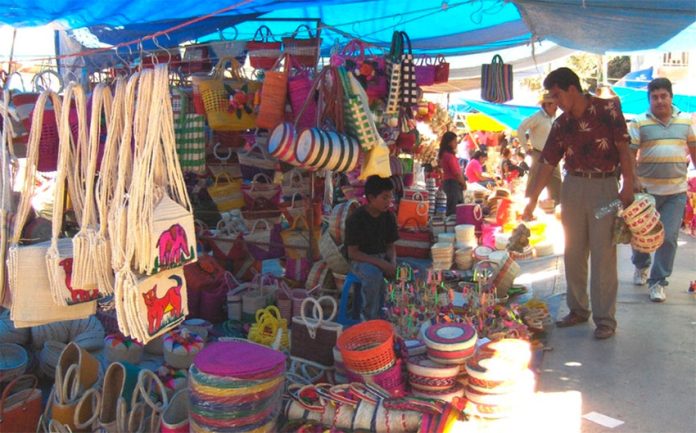
Chilapa's Sunday market, closed by coronavirus.
Chilapa's Sunday market, closed for three weeks.

The weekly street market in Chilapa, Guerrero, was cancelled on Sunday for the first time in 500 years in response to the Covid-19 pandemic.

Perhaps one of the oldest of such markets in Mexico, the Chilapa tianguis has persisted in spite of adversity, especially during the last decade, due to drug-related violence.

The situation came to a head in 2014 when the violence severely slowed down market activity, but did not stop it completely. Many rural transportation companies suspended services, making it difficult for farmers to make it to the city to sell their goods. Others never returned: they were either killed or fled the insecurity.

The violence kept market activity to a minimum for years, but nothing was able to stop it completely, until now.

The Chilapa municipal government notified the more than 1,000 vendors who set up their booths under the plastic tarps each Sunday that the tianguis would be cancelled as of yesterday, and would remain closed for the two following Sundays.

The pandemic had already begun to take its toll on the weekly commerce in Chilapa, as the number of visitors has decreased dramatically during the crisis. For weeks the market ran at minimum capacity, covering local demand but little more.

Now the subsistence farmers, artisans and other local and regional merchants who depend on the tianguis for their livelihood don’t even have the option to barter their goods, a custom that is still practiced in this and other such markets in Mexico.

The crisis has hit those in the informal economy hard. Some street vendors in Baja California Sur have even resorted to bartering directly for food to survive in the absence of the tourists on which they depend for sales.

Source: El Universal (sp)

Coronavirus pandemic proves that ‘neoliberal’ model has failed: AMLO

0
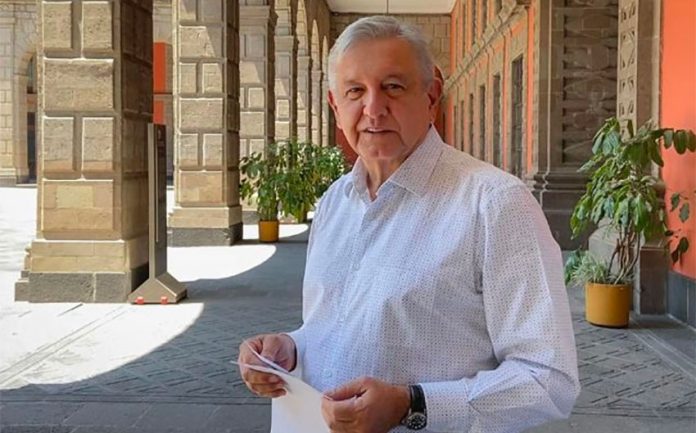
The president gives a video address Sunday to discuss the causes and effects of the coronavirus pandemic.
The president gives a video address Sunday to discuss the causes and effects of the coronavirus crisis.

The coronavirus pandemic serves as proof that the “neoliberal” economic model has failed, according to President López Obrador.

In a six-page dispatch entitled Some lessons from the Covid-19 pandemic, the president writes that “the coronavirus is not responsible for the economic catastrophe” but rather “the pandemic has … exposed the failure of the neoliberal model in the world.”

In Mexico, López Obrador writes, governments in power during the neoliberal era – a period he defines as the 36 years before he took office in late 2018 – failed to adequately fund public universities, violating young people’s right to education and leaving the country with an insufficient number of doctors and nurses “to attend to the nation’s health needs.”

He also says that a lack of hospital beds, ventilators and personal protective equipment for health workers is a product of the years of neoliberalism in Mexico.

In addition, López Obrador blames neoliberal governments for failing to respond over a period of decades to the widespread prevalence of health problems that make many people more susceptible to Covid-19.

“Perhaps the greatest indifference or irresponsibility of governments that the coronavirus [pandemic] has exposed is the disregard, for decades, of chronic diseases such as hypertension, diabetes, obesity and kidney problems,” he writes.

“In our country, the pandemic has showed that the most affected people have been those with the above-mentioned chronic diseases.”

The neoliberal model, the president charges, is only concerned with economic growth “without caring about the wellbeing of the people” or the environmental damage that the pursuit of endless growth causes.

Another failing exposed by the coronavirus pandemic, López Obrador adds, is that there is “scant solidarity” between the nations of the world when it comes to purchasing medical equipment and medicines.

“A ventilator that cost on average US $10,000 before Covid-19 is now sold for up to $100,000” he writes. “The worst thing is that, due to the shortage, there is stockpiling [of medical equipment and supplies] both by governments and the companies that produce them.”

López Obrador asserts that the coronavirus pandemic “has come to demonstrate that the neoliberal model is in its terminal phase.”

“As a result, it’s time to create new forms of political, economic and social cohesion, putting definitively to one side the commercial, individualistic and unsupportive approach that has been predominant during the last four decades. … The unstoppable expansion of predatory neoliberalism … [has caused] exploitation, looting [of public coffers], environmental devastation, pathological eating habits, organized crime, social and family breakdown and a generalized loss of values,” he writes.

“There has been no interest in providing people with drinking water, electricity, schools, clinics, roads and telecommunications.”

At the end of his dispatch, the president outlines eight “basic lessons” he has drawn from the coronavirus pandemic.

López Obrador writes that the strengthening of public health systems is essential and that attending to the “serious problem” of chronic diseases is urgent.

He says that “a more caring world” in which medical resources are shared more equitably is essential and that the United Nations and the World Health Organization “must immediately summon the government and scientists of the world to create vaccines against the coronavirus and other ills.”

The president also writes that the economic model that “creates wealth without wellbeing” must be disposed of, asserting that it is the responsibility of the state to reduce social inequalities. His sixth “lesson” is that cultural, moral and spiritual values must be strengthened and that the family should be recognized as “the best social security institution.”

López Obrador argues that the World Bank, the International Monetary Fund, the Inter-American Development Bank, the Organization for Economic Co-operation and Development and the G20 need to become “true promoters of cooperation for the development and wellbeing of people and nations.”

The final “lesson” the president draws from the pandemic is that the ideas and actions of the governments of the world should be guided more by “humanitarian principles” than economic and personal interests.

“The still ongoing pandemic will leave us with hundreds of thousands of irreparable absences [deaths] and a … severely diminished economy” he writes.

“In many senses, we will have to apply ourselves to the task of rebuilding the world,” López Obrador adds, asserting that health care has to be a “collective task” and that all people around the world “belong to the same family – humanity.”

Mexico News Daily 

Former ambassador says Mexico knew about top cop’s narco involvement

0
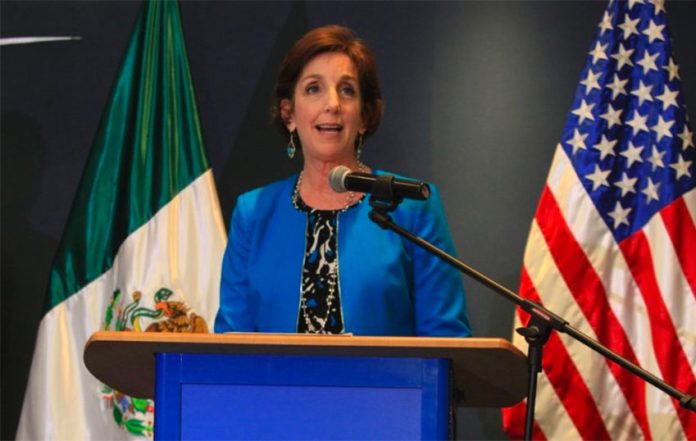
Former ambassador Jacobson.

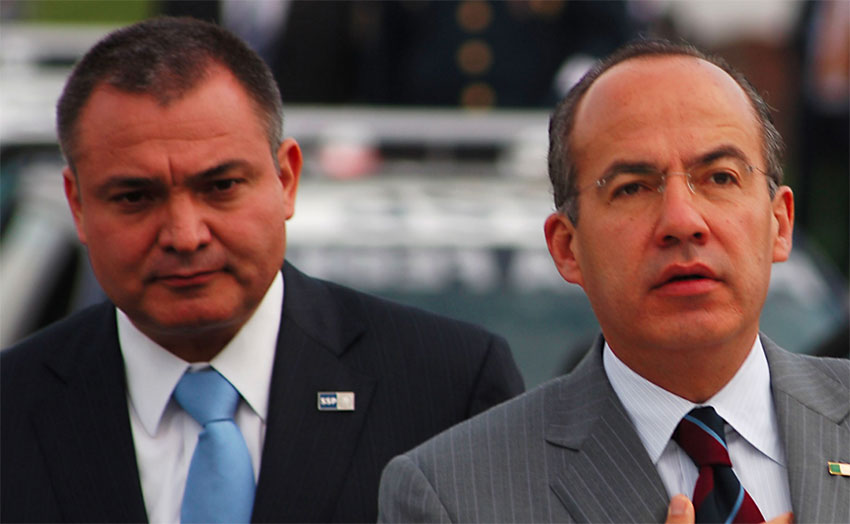
In an explosive interview with Proceso magazine published on Saturday, former U.S. ambassador to Mexico Roberta Jacobson revealed that the Mexican government knew about the criminal activities of former head cop Genaro García Luna.

However, she later said via Twitter that she had never seen any “corroborated information” about García’s involvement in drug trafficking.

Garcia, the Minister of Public Safety under Felipe Calderón, was arrested in December 2019 in Texas on charges of receiving millions in bribes from the Sinaloa Cartel. He is currently awaiting trial in New York. 

In public García played the role of supercop, but in private he had close ties to Joaquín “El Chapo” Guzmán’s drug smuggling ring, something Mexico was well aware of, Jacobson said.

And so was the United States.

Calderón, right, says there was no concrete evidence that García, left, had criminal ties.

“The information we obtained – in the State Department – was through U.S. officials, but it came from Mexicans, they were those who received the most information and had information about the corruption of García Luna,” she told the magazine.

“The Mexican government knew as much as we did, if not more, and never took action at the time and therefore I find it a little naive to blame the United States for not taking action,” said the former ambassador. 

In a pair of tweets following the publication of the story, Jacobson appears to soften her remarks and deflect blame for allowing García to act with impunity. 

On May 3 she posted: “Let’s be clear about what I said — and have always said about former secretary García Luna: 1. I never saw any CORROBORATED information of involvement in drug trafficking; 2. In an environment of many rumors, one is always cautious about working with officials.”

Former President Calderón also denied having any concrete evidence that García was involved in illegal activities. “If the United States government had had actionable information against any top Mexican official, that information should have been communicated to my government through one of the robust communication channels we had,” he wrote in a letter to Proceso published Sunday. “That did not happen.”

Today, President López Obrador called on the United States to investigate its top federal law enforcement agencies and their possible cooperation with García, especially during “Operation Fast and Furious,” when U.S. weapons were allowed to make their way into Mexico in an effort to track the guns in Mexico. 

Those weapons, López Obrador said in his morning press briefing, “were used to murder people, so it does merit a thorough investigation. It is not only corruption, it is a criminal association between governments or between officials of two governments. All of this must be analyzed.”

Jacobson was ambassador to Mexico from May 2016 until May 2018.

Source: Proceso (sp), El Universal (sp)

Beer shortage in 25 states; prices soar on black market

0
Boxes of beer are destroyed in Tabasco.

With beer production having been deemed a nonessential activity during the coronavirus pandemic, breweries have been shut down since early April. Now Mexico is running out of beer.

The short supply has driven prices through the roof on the black market, where a six-pack of cold ones can cost up to 300% more than pre-coronavirus prices. 

Smugglers on the northern border are bringing in clandestine shipments of beer from the U.S., where production continues.

In southern Mexico, illegal beer runners in Tabasco, where alcohol sales have been prohibited for the past month, recently saw 85 cases of beer meant for resale seized by authorities. The shipment was destroyed by a bulldozer. 

Last weekend at least 25 states across Mexico reported beer shortages both in large supermarket chains and corner stores. 

As of Friday, the Oxxo chain of convenience stores had inventory for 10 days.

Some areas of the country are under government-mandated dry laws either banning outright the sale of alcohol or limiting the hours during which it can be purchased, but the shortage has imposed de facto dry laws on other regions simply because supplies do not exist. 

And in areas where beer is still in supply, prices are soaring. In Tamaulipas, the price of a six-pack has doubled and a case of beer that used to sell for 280 pesos is now going for up to 600 pesos. In Coahuila, prices are up by 40%. In Chihuahua, panic buying and hoarding have exhausted shelves. 

In Monterrey and Tijuana, stores are posting signs saying they have no beer. 

Beer runners are taking to social media to sell their clandestine wares, which are being trafficked similarly to cocaine and marijuana. Sellers will bring beer to a customer’s door to lower the risk of being caught by police, but purchasers will often pay a 300% premium for the service.

Not only do regular beer drinkers miss out, so too do the government’s coffers as they are no longer collecting beer tax money. In 2019 those revenues amounted to around 1 billion pesos, almost US $41 million.

According to Mexico’s National Institute of Statistics and Geography, there were about 65 million regular beer drinkers in 2018, about half the population.

Source: Milenio (sp)

Mexico City hospitals to see greatest number of virus cases May 11-15

0
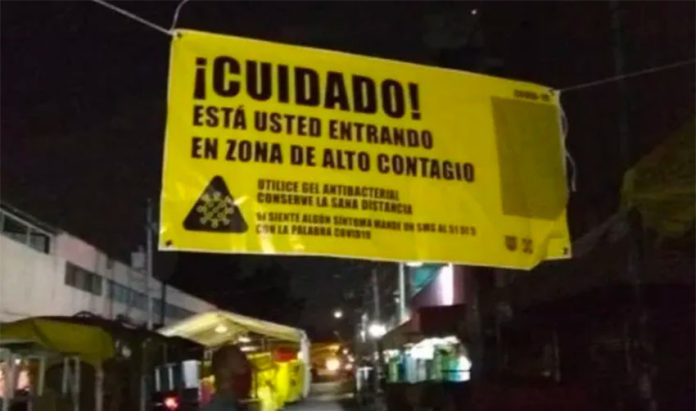
One of the warning signs in 89 areas of Mexico City that are considered high risk.

The number of coronavirus patients in intensive care beds in Mexico City hospitals will peak next week, Deputy Health Minister Hugo López-Gatell said on Sunday.

Speaking at the Health Ministry’s nightly coronavirus press briefing, López-Gatell said that about 1,800 Covid-19 patients are expected to be in the capital’s intensive care wards between May 11 and 15. The prediction is based on the estimate that the transmission of the virus will reach its peak in Mexico City between Wednesday and Friday of this week, he said.

With that scenario looming, the Mexico City government has put up signs in 89 different locations warning residents that they are areas of high risk of infection because large numbers of people pass through them.

Placed in 51 metro stations, 31 transit hubs (mainly bus stations outside subway stations) and seven public markets including the Central de Abasto wholesale market and the sprawling Mercado de la Merced on the fringe of the capital’s historic center, the yellow and black signs bear messages such as “Careful! High contagion area” and “Keep your distance and don’t touch anything.”

Mexico City is the worst affected entity in the country in terms of both Covid-19 cases and deaths from the infectious disease.

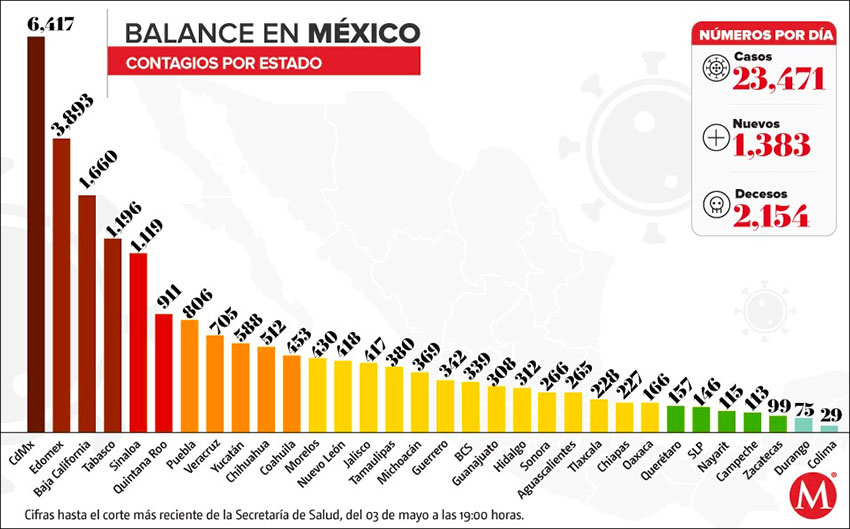
Confirmed Covid-19 cases as of Sunday evening
Confirmed Covid-19 cases as of Sunday evening. milenio

López-Gatell said on Sunday night that the number of confirmed cases across the country had increased by 1,383 to 23,471 and that the death toll had risen by 93 to 2,154. He also said that there are 191 suspected coronavirus fatalities that have not yet been confirmed.

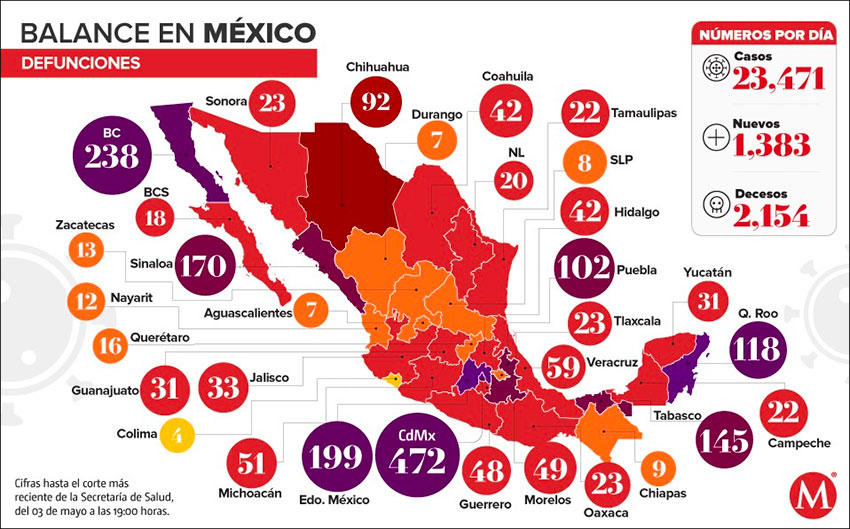
More than a quarter of the confirmed cases since Covid-19 was first detected in Mexico at the end of February – 6,417 – were reported in Mexico City while almost 4,000 more were identified in neighboring México state. The capital has reported 472 coronavirus-related deaths, almost double the 238 fatalities in Baja California, which has the second-highest death toll in the country.

México state has the third highest death toll with 199 fatalities followed by Sinaloa, Tabasco, Quintana Roo and Puebla, where 170, 145, 118 and 102 people, respectively, have lost their lives to Covid-19.

Of the more that 23,000 confirmed cases, 6,933 are currently considered active, López-Gatell said, adding that there are 12,664 suspected cases of the disease and that almost 96,000 people have now been tested.

Mexico City also has the highest number of active cases, with 1,894, followed by México state, with 1,076. Tabasco has 344 active cases, Sinaloa has 287, Veracruz has 273, Yucatán has 261, Puebla has 241, Quintana Roo has 222 and Morelos has 216. No other state currently has more than 200 active cases, according to Health Ministry data.

While admissions of Covid-19 patients to intensive care wards in Mexico is predicted to spike next week, hospitals in the capital are already under more pressure than those in the rest of the country.

Mexico City leads with the number of Covid-19 deaths
Mexico City leads with the highest number of Covid-19 deaths, at 472, according to the statistics released Sunday. milenio

Two-thirds of hospital beds for patients requiring general care are already occupied in the capital while 59% of those with ventilators are currently is use, López-Gatell said.

Baja California has the second highest occupancy rate of regular hospital beds, at 53%, while Sinaloa ranks second for occupancy of beds with ventilators, with 55% currently in use.

At a national level, occupancy of regular hospital beds is 29% while 24% of beds with ventilators are in use.

President López Obrador said in late April that Mexico is prepared to respond to the worst of the pandemic and pledged that “no sick person will be left without a ventilator.”

Source: El Universal (sp), Milenio (sp) 

Ex-drug lord’s mansion goes for 49 million pesos in latest auction

0
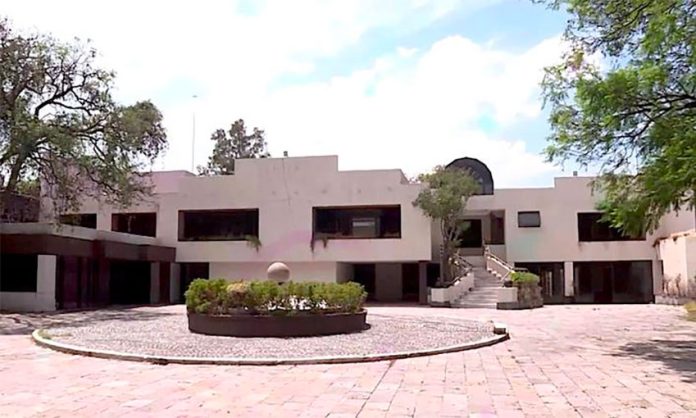
The drug lord's mansion in the Jardines de Pedregal neighborhood of Mexico City.

The former home of famed Mexican drug lord Amado Carrillo Fuentes has a new owner. On Sunday, the once luxurious property in Mexico City’s posh Jardines de Pedregal neighborhood was sold at auction for 49.71 million pesos, a little over US $2 million.

The home was one of hundreds of offerings put on the auction block by Indep, a branch of government formed to claim the proceeds of assets seized during the committing of crimes. The money raised in this auction will be used to help fight the coronavirus, officials said. 

The boxy, cement home would have been state-of-the art when it was built. The 3,500-square-meter mansion includes an indoor swimming pool and spa, an elaborate children’s playhouse, large gardens, a bar and a wine cellar. 

There was only one bidder for the house.

The auction, held at the Los Pinos cultural complex, also offered 77 cars, five airplanes, five homes and 107 lots of jewelry, among other seized goods. In total, more than 130 million pesos, around US $5.3 million, was collected.

The home, whose style and fixtures appear dated, belonged to Carrillo, known as “The Lord of the Skies,” until his death in 1997 from a botched series of plastic surgery procedures. 

Carrillo became involved in the drug trade while still a teenager, working in poppy and marijuana cultivation in the mountains of Chihuahua before rising through the ranks to become head of the Juárez Cartel. 

He is estimated to have amassed a fortune of around US $25 billion by transporting drugs, mostly cocaine, from Colombia and Mexico to the United States, often using his fleet of jets, which is how he earned his nickname. 

After his death, Mexican police seized dozens of Carrillo’s properties across the country. The government also seized an Arabian-style home called “The House of 1,001 Nights” from Carrillo in 1993. The over-the-top mansion still stands, abandoned and covered in graffiti, in Hermosillo, Sonora.

Source: Infobae (sp)

New measures adopted after families storm hospital seeking information

0
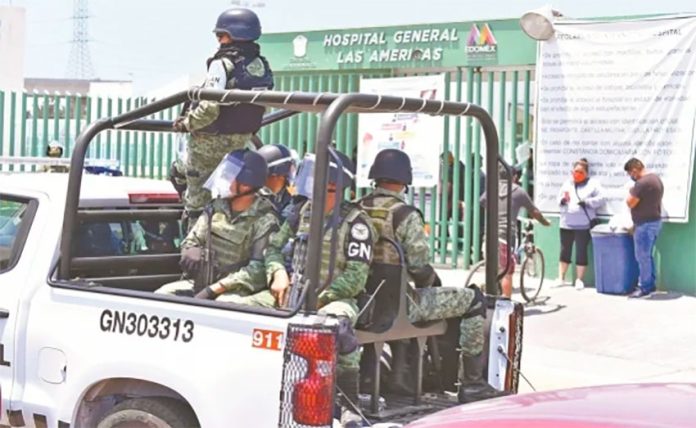
National Guard patrols outside hospital stormed by angry family members on Friday.

The family members of coronavirus patients at a México state hospital will now be able to stay in contact with their loved ones using tablet computers after an angry mob stormed the facility on Friday night seeking information about a patient.

The México state Health Ministry has distributed mobile phones to medical personnel at the Las Americas General Hospital in Ecatepec and tablets to family members of patients. If Covid-19 patients are well enough, they will be able to speak with their relatives via video calls. Family members are prohibited from visiting the patients due to the risk of infection.

Authorities will also erect tents outside the Ecatepec hospital where information about patients’ conditions will be provided to family members. More than 30 additional health workers, including doctors, nurses and nurses’ aides, will be allocated to the facility to treat the growing number of Covid-19 patients.

Almost 500 people have tested positive for Covid-19 in Ecatepec, a sprawling, densely-populated municipality that borders Mexico City.

The announcement of the new measures comes after a group of some 15 people breached security at the hospital after they found out that two coronavirus patients had died but were given no specific information about the fatalities.

Led by the parents of a young man who had been hospitalized with coronavirus-like symptoms, the mob burst into the hospital to locate him and other patients. The group found several bagged bodies in a hospital corridor including one containing the young man.

The discovery triggered even greater anger among some of the group’s members, who demanded answers from doctors and nurses about the treatment and medications he had received. An emergency doctor and three security guards were physically attacked during the altercation, the newspaper El Universal reported.

Members of the National Guard and state police arrived at the hospital almost an hour later to quell the protest but disgruntled family members demanding better care for their loved ones maintained a blockade outside the facility until Saturday morning.

The state government said that due to to lack of space the bodies of eight deceased Covid-19 patients had been temporarily stored in a hospital corridor as they awaited collection by busy funeral homes. The government said that family members of the victims had been notified even as relatives claimed they had been kept in the dark.

Deputy Health Minister Hugo López-Gatell later admonished those who stormed the Ecatepec hospital and rummaged through the body bags, which he described as a source of infection.

There is evidence that staff at other health care facilities are also failing to notify family members of Covid-19 patients about their condition in a timely manner as they face increasing demand for their services due to the worsening coronavirus outbreak.

Miriam Cruz, the daughter of a 58-year-old man admitted to a Mexico City hospital with coronavirus-like symptoms last week, didn’t find out that her father had died until two days after his passing.

According to a report by the newspaper Milenio, Rosendo Cruz was admitted to the ISSSTE Ignacio Zaragoza Hospital in Iztapalapa on Wednesday but his daughter didn’t find out about his death the next day until Saturday when her mother-in-law received a call from the facility.

Miriam, who waited day and night outside the hospital with other family members, described not knowing anything about his condition for several days as “horrible.”

She said the hospital said its staff is overwhelmed by Covid-19 patients.

Iztapalapa, the most populated and poorest of Mexico City’s 16 boroughs, has been hit hard by the coronavirus pandemic, recording more confirmed cases than any other municipality in the country.

Source: El Universal (sp), Milenio (sp) 

AMLO’s approval rating drops four points to 49%, its lowest yet

0
AMLO is looking up but his popularity is not.
The president is looking up but his popularity is not.

President López Obrador’s approval rating reached its lowest point ever in April, according to a survey by Consulta Mitofsky and commissioned by the newspaper El Economista.

Last month saw his approval rating drop 4% from March to 48.8%, with disapproval rising to 52%. 

López Obrador’s popularity according to previous Mitofsky polls peaked in February 2019 at 67.1%, three months after he took office.

The current survey showed his highest approval rating was among teachers (63.8%), the informal sector (60.1%), self-employed workers (55.2%) and public servants.

López Obrador’s highest disapproval rating came from the unemployed (65.3%), business owners (61.2%), students (58.4%), professionals (57.7%) and retirees (54.5%).

By age, 50.8% of 30 to 49-year-olds approved of the president’s performance compared to only 43.9% of those over 50.

By state, more than 64% of residents in Tabasco, Tlaxcala, Campeche and Oaxaca rated the president as “outstanding.” The lowest approval rates, below 40%, were found in Guanajuato, Aguascalientes, Jalisco, Querétaro, Yucatán and Zacatecas.

When asked if López Obrador has managed to unite the country, 72.4% answered no, eight percentage points higher than in March.

Finally, 60.8% of those surveyed felt the president does not have a good relationship with the business community, the lowest number since April 2019.  

Factors affecting the president’s approval rating last month included complaints from state governors about the lack of quality medical supplies to deal with the coronavirus pandemic and the drastic drop in oil prices. Also mentioned were the country’s homicide rate and the president’s announcement that, despite the pandemic crisis, the Dos Bocas oil refinery, which is expected to cost upwards of US $8 billion, the US $8-billion Maya Train and the US $3.8-billion Santa Lucia airport projects would continue to go forward.  

The survey was conducted among 45,605 Mexicans over the age of 18, using smartphones with internet access.

Source: El Economista (sp)

Mexico’s favorite taco has immigrant roots

0
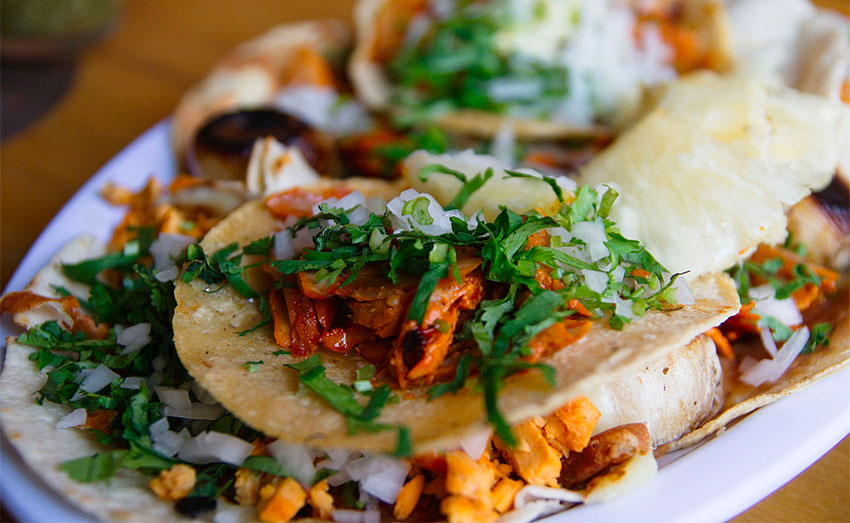
Shepherd's tacos, commonly known as tacos al pastor
Shepherd's tacos, commonly known as tacos al pastor. XXMaxusXx / CC BY-SA

Mexico’s most popular taco originated in the Middle East but why they should be called “shepherd’s tacos” is anybody’s guess.

In the United States, classic dishes with immigrant roots are almost a given – hot dogs and hamburgers (Germany), pizza (Italy), fortune cookies (China), and so on.

However, the same cannot be said for Mexican cuisine. There is this idea that Mexico is a timeless land, whose identity was forged in the colonial period and has been preserved ever since.

Although smaller in numbers, Mexico does have a history of immigration that continues to affect the country’s cultural development.

One of the more unusual immigration stories concerns people from the Middle East, now often referred to as Lebanese. This migration started as early as the 19th century from an area then known as “Greater Syria.” Here, non-Muslim families often sent children abroad to avoid conscription in the Ottoman Empire, and some made their way to Mexico.

A dish of tacos al pastor.
A dish of tacos al pastor.William Neuheisel / CC

Such immigration increased in the first decades of the 20th century as the empire became unstable and fell. In 1943, much of the region became the country of Lebanon.

Most were Arabic-speaking Christians, and they brought with them the technique of roasting sliced meat on a vertical spit. This is common in the Mediterranean Middle East and known by various names such as gyro, döner and shawarma. The original dish is lamb, pita bread, vinegar and various spices.

After this, the story gets murky. The immigrants settled in various parts of Mexico, with the majority in Puebla and Mexico City. In Puebla, they began selling the spit-roasted meat, with some places such as Taquería Bagdad becoming institutions by the 1930s. Family stories taking credit for the creation of tacos árabes abound. These tacos are still popular in Puebla, where the spicing remains Middle Eastern, but the meat is now often pork.

The dish was served in Mexico City as well, especially in the La Merced area where many of the Lebanese lived. The evolution of taco árabe to taco al pastor most likely occurred in Mexico City. Non-Lebanese taco places began to adopt the use of the vertical spit but modified the dish.

In addition to pork, other substitutions included achiote and chile pepper for the original spices, corn tortillas for the pita. Additions include onion, cilantro, pineapple and salsa. It is unknown why pineapple came to be included although some swear that it is important for proper digestion.

Another unknown is why it is called “al pastor” (shepherd’s) as pigs are not herded like sheep.

Tacos al pastor as we know them took form by the 1960s, with various families and businesses in Mexico City taking credit for their invention. Al pastor is an anchor of Mexico City cuisine, but árabe is not so easy to come by. In Puebla, al pastor competes with árabe.

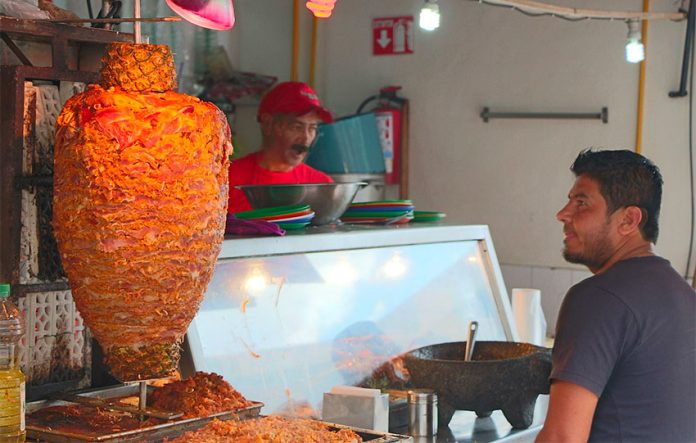
Recipes for al pastor vary. Many places jealously guard their version, especially the marinade used for the meat. The pork is cut into thin sheets along the grain, much like the cut for milanesa (thin cutlets). The sheets and onion slivers are marinated, then stacked over the spit. Then a peeled pineapple is skewered on top, in part to keep the meat pressed. The spit is placed and rotated exactly the way those for gyros and döners are, with cooked bits cut off and served on tiny corn tortillas, usually in orders of five.

While tacos rule, al pastor can also be used to make tortas (Mexican subs), alambres (meat with vegetables) and gringas (meat and cheese layered on flour tortillas).

The popularity of al pastor can be attributed to its mild taste — before salsa is added, of course. But it is also a kind of show. Spits are almost always found in prominent places where perspective diners can see and smell the meat being cooked as well as the artistry of the taquero at work. An important talent for these cooks is to be able to cut a small piece of pineapple from the top of the spit and have it land perfectly onto the taco below.

Since becoming popular, it has spread to the rest of the country, where it may be called tacos del trompo (top, as in the toy) or tacos de adobada (marinated). It has become the most popular taco variety in the country by far. Its reach continues to grow, crossing the border into Mexican restaurants in the United States, and there is even one restaurant serving it in Beijing.

The Lebanese have not only contributed Mexico’s favorite taco to the country. Today, there are over 400,000 Mexicans of Lebanese heritage, with a reputation for business acumen. Latin America’s richest man (and fifth richest in the world) is Carlos Slim Helú, a first-generation Mexican, whose parents were Lebanese immigrants.

Leigh Thelmadatter’s culture blog appears weekly on Mexico News Daily.