Home Blog Page 1566

Organizations charge narcos’ help for needy shows authorities’ failure

0
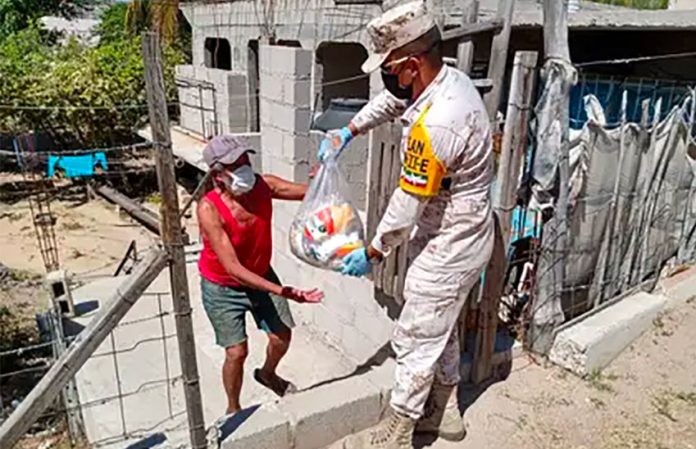
Both soldiers and sicarios distribute care packages in Mexico.
A coalition of more than 30 nonprofit organizations has demanded that the government increase the distribution of food to those most affected by the coronavirus and not leave the task to criminal organizations.

In recent weeks organizations such as the Jalisco New Generation and the Gulf cartels have seized on the marketing strategy of handing out boxes of food, emblazoned with their brand, stepping into a role the coalition argues that the government should be filling.

The coalition, composed of groups including Common Cause, Mexico United Against Crime, Mexicans Against Corruption, and even the Michoacán Chess Clubs Association, says that cartels have donated “narco-pantries” to the needy in at least 12 states across the country.

“There is no antecedent in the country’s history of media campaigns of such intensity, and they are the result of regional and even national coordination between organized crime to carry out propaganda competition with local and federal governments,” they said in a joint statement containing 140 signatures. 

Organized crime has taken advantage of the absence of the government to position itself as a benefactor, both in rural and urban areas of the country, they said.
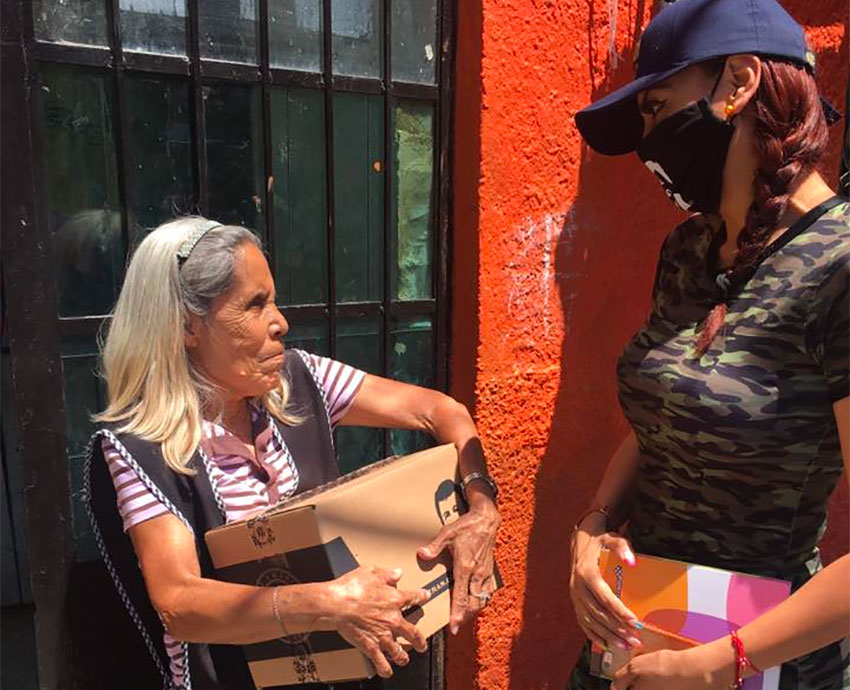
A representative of Alejandra Guzmán delivers a box of supplies.
A representative of Alejandra Guzmán delivers a box of supplies bearing the image of her father, convicted drug lord El Chapo.

“These criminal groups take advantage of the dismantling of social support programs and institutions and the worsening of the economic crisis to reinforce an image of sensitive and effective benefactors,” the statement continued. 

The coalition denounced the lack of official condemnation of the cartels’ community handouts, calling them deceptive measures to garner support ahead of the violence, kidnapping and extortion that occur when a cartel infiltrates a town. 

The coalition demands that “governments build true networks of economic and social support that allow all Mexicans to glimpse a different horizon than that of ineptitude, irresponsibility, indolence and organized crime.”

At a press conference on April 20, President López Obrador acknowledged that cartels have been distributing groceries. “This does not help,” he said, urging criminals to stop delivering food items and instead focus on love for their fellow man.

The National Defense Ministry reports that since April 6 it has delivered 517,508 care packages of food in Baja California Sur, Campeche, Chihuahua, Coahuila, Guanajuato, Nayarit , Quintana Roo, Sonora and Yucatán.

Source: Reforma (sp)

Surplus oil that Pemex can’t sell will fire CFE’s old and inefficient generators

0
solar panels
Trial runs allowing solar parks to inject electricity into the grid have been suspended.

The federal government will use fuel oil it is unable to sell to fire old and inefficient power plants operated by the Federal Electricity Commission (CFE).

Energy sector experts charged that the plan announced by the National Energy Control Center (Cenace) last week “to improve the reliability of the electricity system” is designed to make use of excess fuel oil produced at Pemex refineries.

They also criticized a decision to suspend trials that allowed wind farms and solar parks to provide electricity for the national grid.

The state oil company produced 11.44 million barrels of fuel oil in the first quarter of the year but was only able to sell 43% of it because new environmental rules prevent tanker trucks from using the Pemex-produced derivative.

“They were processing 400,000 barrels per day [of crude] in the refineries and … 26% [of that amount became] fuel oil; now that they are planning to increase production, they will logically generate more barrels of a product that no one in the world wants. Now they’ll be able to burn it at CFE plants,” said César Cadena, president of the Nuevo León Energy Cluster, a civil society organization.

Independent energy analyst Ramsés Pech also said that the plan to re-fire or make greater use of old CFE plants is motivated by the desire to use the unwanted fuel oil. Jorge Arrambide, a lawyer who specializes in energy matters, said that CFE plants that run on fuel oil are generally expensive to operate and big polluters.

The experts told the newspaper Reforma that the fuel oil plan will allow the CFE to reopen or make greater use of inefficient power plants whose operation is harmful to the environment. They also said that their use could cause power prices to go up.

The Business Coordinating Council (CCE) was also critical of the plan, stating that it favored state-run plants over private renewable energy companies. The former pollute more and produce more expensive power, the CCE said.

The influential business group charged that without technical or legal justification, Cenace “has disregarded its legal mandate to protect the national electricity system and competition in the electricity market.”

Thousands of commercial and industrial CFE customers will be adversely affected, the CCE said.

The business group said that it would take legal action against the Cenace plan on the basis that it prevents new clean energy plants from completing the trials required to begin formal operations.

In addition to announcing that fuel oil would be used to power CFE plants, the energy control center said that trials that allowed wind farms and solar parks to inject electricity into the national grid in high demand periods would be suspended on May 3.

During the coronavirus health emergency period, the injection of additional energy from so-called “must run” power plants operated by the CFE will be prioritized to reduce the possibility of supply problems, Cenace said.

At least 28 wind and solar projects will be affected by the suspension of trials, said Víctor Ramírez of the Mexico Climate and Energy Platform, a renewable energy advocacy group.

The CCE said that Mexico’s renewable energy sector is worth more than US $20 billion and must be protected.

“The private sector will take the legal steps necessary to defend a level playing field and the right of Mexicans to a healthy environment,” it said.

Source: El Economista (sp), Reforma (sp) 

Shipment of ventilators shows US is a friend, says foreign minister

0
The first shipment of ventilators arrives from the US.
First ventilators arrive from the US.

In times of adversity you learn who your friends are, Foreign Affairs Minister Marcelo Ebrard said on Tuesday after the government took possession of a shipment of ventilators from the United States.

“The United States is a friend of Mexico, this is the proof,” Ebrard said at an event at Toluca Airport after the arrival of 211 ventilators on a flight from Reno, Nevada.

The purchase of the life-saving medical machines came after United States President Donald Trump made a commitment to sell them to Mexico during a telephone call with President López Obrador last month.

Ebrard said that 189 of the new ventilators will go to the National Institute of Health for Well-Being (Insabi), the government department responsible for Mexico’s new universal healthcare scheme, and 22 will go to the navy.

Insabi chief Juan Ferrer said that the ventilators will be installed in hospitals in cities with high numbers of Covid-19 cases such as Mexico City and Tijuana, Baja California. He said that the ventilators – of which there are four different types made by the company Hamilton Medical – were purchased at preferential prices below market value.

For his part, navy chief Rafael Ojeda said that 12 of the ventilators are designed specifically for use by the military. The Hamilton T1 military ventilators can be installed on ships, helicopters and planes to help keep ill or injured patients alive as they are transferred to hospitals.

Ebrard said that more ventilators will be brought to Mexico from the United States later this month. At least six flights will bring about 610 of the machines, he said, adding that more shipments could arrive in June.

López Obrador said on April 19 that President Xi Jinping of China and Trump had agreed to sell Mexico 1,270 and 1,000 ventilators, respectively. Ebrard said earlier the same month that Mexico would buy US $56.6 million worth of medical supplies from China to respond to the coronavirus pandemic.

The ninth of 20 planned flights carrying supplies from Shanghai touched down at the Mexico City airport last night.

Source: El Financiero (sp) 

One beer maker continues operating — with beer for export to US

0
Mexican beer still available in US as exports continue.
Mexican beer still available in US.

Although beer production in Mexico is supposed to have been shut down, creating a beer shortage and driving beer prices through the roof, one company is continuing to brew brands such as Corona and Modelo.

But the beer brewed by Constellation Brands is not ending up in the hands of thirsty Mexicans. All of its production is destined for the United States. 

After the government shuttered breweries in early April, deeming beer production a nonessential activity, supplies in the country are running low and at least 25 states report shortages. 

Last week, convenience store chain Oxxo said it only had enough beer in stock to last 10 days, and in Monterrey and Tijuana stores are posting signs to their windows saying they have no beer. Black market beer prices in Mexico often come with a 300% markup

But Constellation’s two plants in Mexico have been up and running throughout the pandemic, but have limited production and cut back staff, spokesman Michael McGrew said, adding that after consulting with government officials he is convinced the company is in compliance with the law. 

But there may be good news on the horizon for Mexican beer drinkers. 

Ricardo Sheffield Padilla, head of the consumer protection agency Profeco, says beer production in Mexico may start up again in mid-May, which will bring supply, and prices, back to normal levels. 

The barley harvest was not affected by the coronavirus work stoppage, and Sheffield says breweries are ready to go once given the green light from the government and will resume producing Mexican beer, in Mexico, for Mexicans.

Source: Milenio (sp), El Financiero (sp)

AMLO’s morning press conference: ‘spectacle without value’

0
López Obrador takes control of the news cycle.

There can be no denying that President López Obrador has a penchant for lengthy political discourse: every weekday morning he appears before reporters at the National Palace in Mexico City to respond to questions during a press briefing that lasts up to two and a half hours.

But how valuable are the daily press briefings when, as the newspaper The Guardian notes in a report published on Monday, the president’s “verbose responses” often don’t provide an actual answer to the question he was asked?

Not valuable at all, says Javier Garza, a journalist in Torreón, Coahuila. He told The Guardian that when AMLO, as the president is commonly known, first began his weekday press briefings shortly after he was sworn in as president in December 2018, they were “a useful and novel method of presidential communication.”

However, the news conferences later became “a predictable spectacle without any value,” Garza said, although he acknowledged that reporters at least have the chance to pose a question to the president, an opportunity that only presented itself very rarely during the governments of many past presidents including AMLO’s predecessor, Enrique Peña Nieto.

“The president has not tried to flee,” Garza said.

But it’s not only long-winded, often evasive answers, that punctuate the president’s 7:00 a.m. pressers: López Obrador is also known for bending the truth.

Verificado, a fact-checking initiative, said in December that more than half of the statements AMLO made in his first year in office were false or misleading. His lies and half-truths extended across a range of government matters including migration, crime, the economy, welfare and education.

More recently, the coronavirus crisis has been subjected to the president’s “looseness with the truth” treatment, with López Obrador claiming at one recent press conference that Mexico’s epidemic curve had “flattened” even as statistics from his own Health Ministry showed that cases continued to steadily rise.

Verbal attacks on past presidents as well as political opponents or those perceived to be – the newspaper Reforma is a favorite target – are also often entwined in AMLO’s wordy responses as are staunch defenses of his government’s policies, actions and plans.

The president’s potshots, impassioned pleas – AMLO often asks criminals to think of their mothers before committing crimes – loquacious lecturing and remarks made in self-defense all add to the theatrics of his daily press briefing on their own, while put together they help him to achieve his overarching aim: to dominate the daily news cycle.

López Obrador is more concerned about dominating the news cycle than the quality of the message he sends, says Federico Estévez, political science professor at the Autonomous Technological Institute of Mexico.

“It works just like it works for [United States President Donald] Trump,” he told The Guardian.

“It doesn’t matter what the quality of the communication is, it dominates the [news] cycle. That’s all it’s about. That’s all it’s supposed to be about,” Estévez said.

The president’s pugnacity in going after both media that covers him less than favorably and his political opponents has riled many Mexicans – including the press freedom advocacy organization Article 19 –  but according to a historian at the Iberoamerican University, López Obrador’s tendency to pick fights only endears him more to his ardent followers.

“This is the charm for his followers,” Ilán Semo said. “They believe in him like they would a preacher.”

Source: The Guardian (en) 

‘Coronavirus is a lie:’ mob attempts to ‘rescue’ patient from Chiapas hospital

0
Virus deniers outside a Chiapas hospital on Monday.

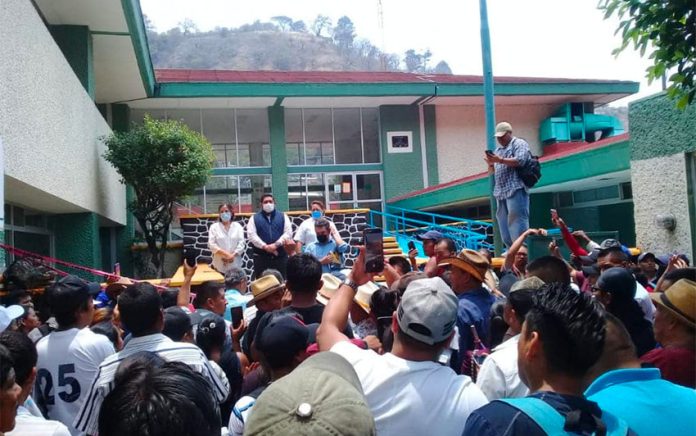
An angry crowd of around 300 people attempted to storm the Social Security Institute hospital yesterday in Motozintla, Chiapas, after a third patient in the town was diagnosed with the coronavirus. 

They demanded to examine the newly-diagnosed patient themselves to determine whether he really had the virus, but doctors and nurses refused them entry.

Friends and family members of the infected patient advocated for his “rescue” from the hospital on social media, convinced that the coronavirus diagnosis is a government conspiracy and health authorities are trying to kill people.

The call to action was spread on the “Mercado Libre Motozintla” Facebook page, which normally functions as a sort of virtual yard sale, where messages urged supporters to leave their homes and march to the hospital.

“Coronavirus is a lie, let’s not fall for it,” one member posted.

The crowd also demanded the stay-at-home guidelines be lifted because, they said, the virus does not actually exist.

The protesters gathered at the health center and demanded a meeting with the hospital’s director and the region’s political representative.

Hospital personnel called in the army and the National Guard to help defuse the situation.

But some Facebook group members were against the protest. “Motozintla has not understood the danger involved in continuing to expose oneself, not complying with the prevention measures against Covid-19, and people continue to believe that this disease does not exist or is a government lie,” one member wrote. “Hopefully soon people will stop believing in email chains and videos that a random person invents just to generate panic.”

Source: El Universal (sp)

As virus numbers show signs of dropping, sargassum makes a return

0
A sargassum-free beach in Quintana Roo.

Before the coronavirus pandemic, insecurity and sargassum vied for the title of biggest deterrent to tourism in Quintana Roo.

Now, as Mexico and countries around the world confront the Covid-19 crisis, the smelly, unsightly seaweed is returning to the beaches of the Caribbean coast state.

Large amounts of sargassum invaded the beaches of Isla Holbox – an island located off the northern tip of the state – on Monday, leaving both sand and seawater discolored. The unwelcome arrival was the first of the annual sargassum season, which normally runs for several months.

Sargassum also began washing up on beaches in the Cancún area last week, although not in large amounts.

But plenty more seaweed is set to wash up on Mexico’s Caribbean coast beaches in the months ahead. The Optical Oceanography Laboratory at the University of South Florida (USF) reported in March that there was a considerable increase in sargassum density in the Atlantic Ocean off the coast of the Americas.

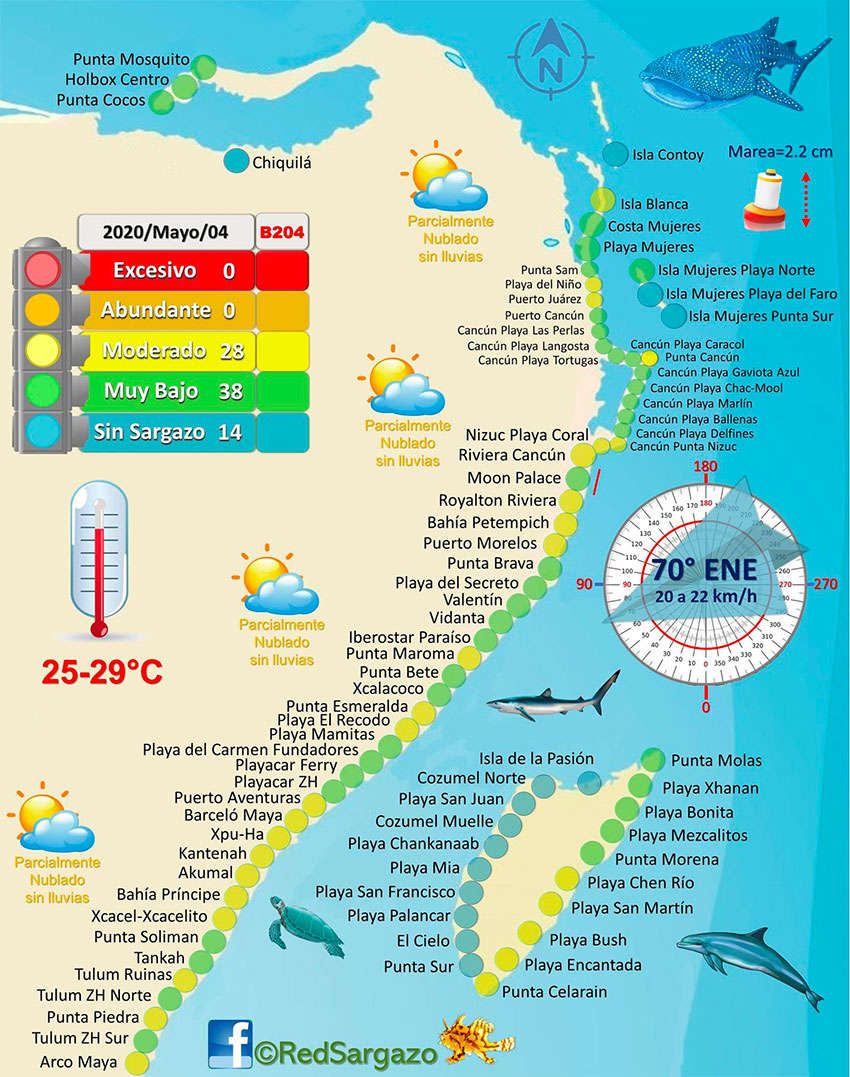
The map published Monday by the Cancún sargassum monitoring network.
The map published Monday by the Cancún sargassum monitoring network. Blue indicates sargassum-free, green very low amounts and yellow moderate.

The proliferation of the macroalgae is directly related to warmer sea temperatures in the world’s second largest ocean.

The USF lab said that there is a high risk that massive amounts of sargassum will wash up on Mexican beaches, especially those located along the Caribbean coast of Quintana Roo.

“This situation may continue into summer, and the overall amount is likely to be similar to that in 2015,” the lab said.

The quantities are not predicted to exceed the record levels seen last year, but the news is still a blow for the tourism sector, which is hoping that visitor numbers will rebound quickly starting as early as next month. The coronavirus crisis has devastated Mexico’s tourism industry.

However, with Cancún seeing a drop in confirmed coronavirus cases, the resort city’s hotel association last week announced an aggressive new campaign to bring visitors back to the region. Its success, however, may not only depend on keeping the city’s coronavirus outbreak under control but also having clean beaches in Cancún and the Riviera Maya region.

To that end, Navy Minister Rafael Ojeda held a virtual meeting last week with Quintana Roo Governor Carlos Joaquín and the mayors of six coastal municipalities during which they discussed strategies to prevent the arrival of sargassum and the plan to clean up the seaweed that does make it to the beach.

María Lezama Espinosa, mayor of Benito Juárez, the municipality where Cancún is located, said that the aim must be to keep beaches clean during the coronavirus emergency period so that they can be reopened as soon as restrictions are lifted.

The navy, which last May was given responsibility for combatting the seaweed’s arrival, and other authorities have used sargassum-gathering vessels and barriers to prevent the weed from reaching beaches but large quantities have nevertheless continued to wash up on shore.

As a result, seasonal demand for sargassum shovelers has been high and is expected to remain so as hotel owners, tourism operators and authorities strive to keep beaches as clean as they appear in glossy travel brochures.

Source: El Universal (sp) 

Coronavirus leaving more people in poverty and inequality: activists

0
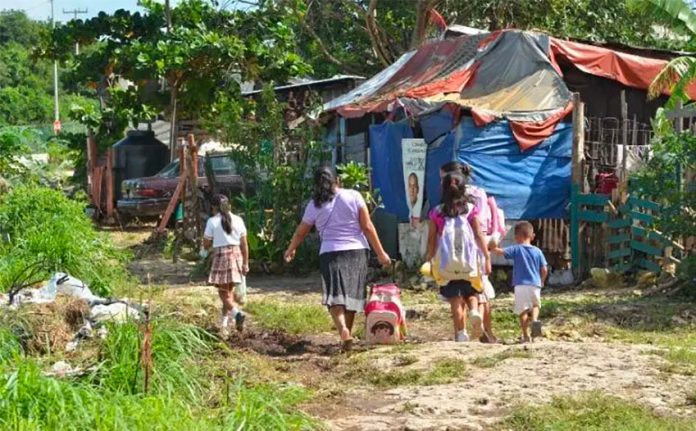
One issue is the lack of water.
One issue is the lack of water. 'Everyone says wash your hands, but with what?'

Human rights activists warn that the coronavirus epidemic has deepened poverty and inequality for vulnerable sectors of Mexico’s population, including indigenous communities.

During a May 2 virtual forum organized by the group Citizen Action Against Poverty, a number of regional participants described their concerns for the communities they serve, and measures they are taking to address current and future challenges posed by the coronavirus pandemic.

Jeannette Arriola, founder of indigenous rights group Pro Zona Mazahua, said the health crisis has further limited indigenous communities’ access to health services and food.

Her organization, which operates 13 health centers in Chiapas, has been overwhelmed, serving more than 1,000 patients in the last several weeks, a number they typically see in an entire year as government health systems are failing them.

The Pro Zona Mazahua clinics provide general health and dental care but also monitor for coronavirus symptoms. Those patients are sent to other health institutions. 

Arriola also noted that the pandemic has exacerbated the lack of access to running water. Most of those she serves collect rainwater for basic needs. “Everyone says ‘wash your hands and wash them well,” but in these communities, with what water? With what soap?” she said.

Pro Zona Mazahua is collecting food, masks, personal hygiene and cleaning products for families in the community where she works, as well as guaranteeing them access to health clinics. 

Malcom Aquiles of World Vision Mexico, an organization whose “Fields of Hope” initiative focuses on the sugar cane and coffee fields of Veracruz and Oaxaca, said that the epidemic has forced them to rethink their aid strategies and awareness campaigns. 

His organization has increased its focus on agricultural, day-laborer families and preventing a possible increase in child labor due to the coronavirus pandemic. He warned that in the coming weeks he expects the number of minors working in the fields to skyrocket, as will poverty, malnutrition and violence, including sexual violence against children and adolescents.

Patricia McCarthy of the Yucatán Family Civic Front said she is working with citizen groups and business organizations to help feed the poor. For months, she says, they have placed shopping carts outside supermarkets where people can place donations, which are then taken to a collection center, sorted by volunteers, and distributed in coordination with municipal and local governments. 

One generous donation amounted to 1,000 kilograms of pork.

One of the measures taken by The Hunger Project México, a non-profit that works in highly marginalized communities, is making sure information on coronavirus precautions and sanitary measures is made available in the indigenous languages of the populations they serve, said Roberto Baeza.

Forum participants are asking all levels of government to channel their efforts to help those in need with food, health care and information on how to stay safe during the coronavirus pandemic.

They agreed that President López Obrador’s familiar refrain of “the poor first” is not enough if public policies are structurally inadequate. 

Source: Reforma (sp)

Over 3,600 people removed from beaches in Mazatlán, Sinaloa

0
A lifeguard patrols a beach in Mazatlán.

Authorities in Mazatlán have removed over 3,600 people from the municipality’s beaches during the quarantine period ordered in response to the Covid-19 pandemic.

The municipality’s closed beaches operation has observed an increase in the number of people removed from the beaches as the quarantine continues into May.

A total of 798 people were removed in the week of April 27 to May 3, 160 more than the week before. In total, authorities have removed 3,648 people from the beaches during the quarantine period.

The majority of those gathering on the beaches were locals, but authorities did report small numbers of tourists as well.

The closed beaches operation is one of the primary actions taken to mitigate the spread of Covid-19 in the city by the Mazatlán government, which reiterated its call to residents to remain in their homes and practice physical distancing when outside on essential business.

The federal government closed all of the country’s beaches on April 2, but enforcement has been a point of contention between authorities, tourists, locals and members of the media.

Authorities in Puerto Vallarta were forced to step up their quarantine measures after a video of Canadian tourists verbally and physically attacking a local reporter went viral in early April.

Meanwhile, other coastal tourist destinations are looking to the future. Preparing to see visitors return on June 1, hotels in Quintana Roo recently announced a promotional campaign to attract tourists when they are allowed to travel safely again.

Source: Milenio (sp)

Government contractor denies getting help from his father

0
León Manuel Bartlett, owner of Cyber Robotics Solutions.

The owner of Cyber ​​Robotics Solutions, a high-tech medical equipment company, has denied a report that his company sold over-priced ventilators to the Social Security Institute (IMSS) and that he benefited from the fact that his father, Manuel Bartlett Díaz, is the director of the Federal Electricity Commission (CFE).

On April 17, the company, owned by León Manuel Bartlett Álvarez, was awarded a contract worth 31 million pesos, around US $1.3 million, to provide 20 ventilators to IMSS. Each cost the health service 1.55 million pesos or US $65,000. 

According to an investigation by Mexicans Against Corruption and Impunity (MCCI), Bartlett’s ventilators came in at 85% more expensive than the cheapest models previously purchased by the government. 

In an interview on Milenio Television on Monday, Bartlett explained that there are different calibers of ventilators, some more expensive than his. He emphasized that his company complied with the terms of the contract and the ventilators are now being used to keep patients alive.

“They are not overpriced,” he insisted. “This is the market price given the situation and the urgency of the pandemic.”

Bartlett was adamant that he received no help from his father in winning the contracts. “I am 43 years old, I have been working since before I was 20 years old, always independent of my father,” Bartlett said. “My father has never helped me, you can ask anyone you like. I have never received any favors because of him.”

The ventilator purchase was revealed Sunday in a report by journalist Carlos Loret de Mola, who also wrote that Cyber Robotics has been awarded at least seven government contracts worth 162 million pesos.

Source: Milenio (sp)