Home Blog Page 1585

Despite imperfections of big business, the better choice is to hear them out

0
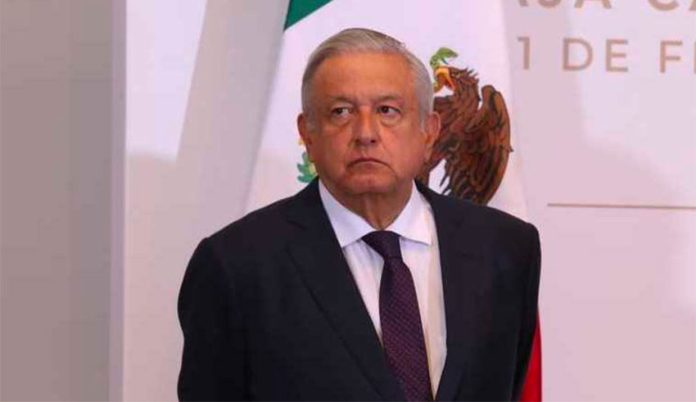
AMLO shouldn't set himself up as an enemy of business.

OK. We couldn’t avoid it any longer: it’s time to talk about AMLO and … Business (in my head I say “business” with a self-important British accent like Scrooge’s childhood professor in the Muppet Christmas Carol, and I encourage you to do the same … it’s the small pleasures these days, isn’t it?).

In a much-criticized but not unexpected move, President López Obrador has ordered “business” (yes, do it again) to continue to pay workers even if their businesses are shuttered. Many have responded with also-expected animosity, with one Tamaulipas business group going so far as to announce that they won’t be paying taxes or services during the pandemic in protest, and what we have to assume is a general inability to do so since we, the public, don’t have any proof either way. They are not happy.

I won’t lie. I share much of AMLO’s animosity and suspicion toward giant businesses whose leaders and executives take home monstrous paychecks and bonuses while many of their workers struggle to get by. The same goes, for that matter, for public servants who mysteriously have enough money to buy million-dollar condos in the U.S., but I digress.

As of October 2019, only 4% of Mexicans were making over 15,400 pesos per month, with 67% making between 3,080 and 15,400, and 29% making up to 3,080 pesos. I don’t need to tell you that these are not impressive wages, especially given the cost of living and how many hours Mexicans work compared to other OECD countries.

Ask how such inequality can possibly happen if they’re such fantastic pillars of the economy, and you’ll find most business leaders whistling as they twiddle their thumbs and look around the room avoiding eye contact. Or worse, trying to insist that, ‘6,000 pesos a month is so much money to those people, you have to understand …’

So forgive me for rolling my eyes when the Business Coordinating Council says, “We’ve always made workers, their families and the country our priority” while Coparmex chief Gustavo de Hoyos follows up with, “If the government supports companies, it will actually be supporting families.”

Still, there seems to be a disconnect here. As rich as individual business leaders may be, no business can keep spending indefinitely if there’s no money coming in the other end, no matter how much the highest-paid give up their own wages. Eventually, the money will simply run out. AMLO obviously knows this, which is why I think part of his “we won’t be bailing out big businesses” rhetoric is simply that — rhetoric.

But what exactly are “big businesses” to him? Does it have to do with how much profit they generate, or perhaps how many people they employ? If Mexican airlines, quickly heading toward bankruptcy, have to close, will the president accept partial blame for all the jobs lost as a result, or will he accuse them of having been too greedy before the crisis?

It’s certainly tempting to lecture them sarcastically that they “should have had at least six months of expenses saved and not spent so much of their money on expensive lattes” as rich people have been sanctimoniously instructing the poor to do for decades, but it’s really not a good strategy for a president.

He’s made good (if not vague) promises to help the most economically vulnerable weather the coronavirus storm. But I think it’s short-sighted of AMLO to set himself up as the enemy of business.

I’m not against wealth as a concept, and I don’t think the president is, either. But I am against vast amounts of it concentrated in the hands of a few while the majority of those who create it wind up with crumbs. I’m not saying that people who come up with business ideas and have the motivation, intelligence, and yes, privilege, to create something don’t deserve to live well. Investors certainly too will want more money back than they put in — I get that. So far, so fair.

But as Michael Moore famously asked in his movie The Big Ones when he was interviewing Nike CEO Phil Knight, “How much is enough? If you are a billionaire, would it be OK just to be a half a billionaire?”

My hope for Mexico and for other countries where the seductive lure of “the free market” has created way too many economic losers during a seeming economic boom is that from this crisis we can create something better: a more truly equitable system.

How might this look? First, we all need to expect that crises happen. It’s happening now, and some crisis or other will surely happen in the future. Let’s be ready next time!

Here’s a proposal: every company must put money aside in a contingency fund, the same way they do for social security, for example. This fund would be used to pay at least a percentage of wages to workers in the event that the business couldn’t function. They must also have a “bare bones” plan for what will happen if they must cease doing business for a time that will ensure that workers keep getting paid for as long as possible; to make this easier, the government could match funds.

And though I know I’ll be accused of being a socialist (I am! It’s not an insult!), a law that ensures that no top executive or owner make more than, say, 50 or 100 times the median worker’s salary —which is surely enough, especially for those who believe that their employees make “fantastic” wages — would ensure a more equitable distribution of the fruits of overall labor.

But AMLO: as imperfect as many of these companies are, they’re part of the fabric of society and of the economy; could we, perhaps, antagonize them a little less?

At least listen to what they have to say? A new future is possible, but we’ve got no choice but to work together to get there.

Sarah DeVries writes from her home in Xalapa, Veracruz.
‘You’re our hero:’ messages of love and support find their way to isolated patients

0
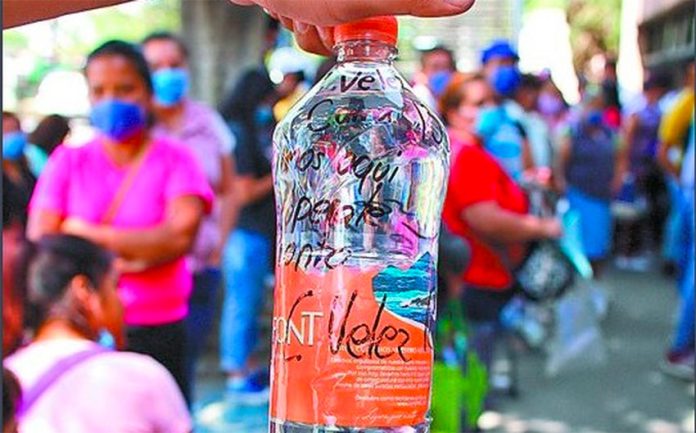
A message on a water bottle.
A message on a bottle.

The isolation necessary to avoid spreading the coronavirus only compounds the suffering of those being treated for Covid-19, but concerned loved ones outside one Mexico City hospital have found ways to send messages of love and support.

The La Raza Hospital for Infectious Diseases has implemented a no-visitation policy during the crisis, but it cannot stop family members from gathering in the street outside to wait for any information on the conditions of their loved ones.

In lieu of face-to-face visits, they are allowed to give the hospital staff small items such as bottles of water, toothpaste and toilet paper, all of which have become a medium for writing messages of love, support and encouragement to their sick relatives.

“The worry and exhaustion of being here day and night aren’t as big as the sadness of not being able to see my father’s face. The last time I saw him was when he passed through the doors of the hospital,” said María del Carmen, who waited for eight days outside the hospital for word on the 68-year-old.

Still without an official positive or negative diagnosis for Covid-19, she said “there’s nothing left for us to do but ask that God’s will be done.”

La Raza hospital staff come out to update families on the conditions of their loved ones between noon and 3:00 p.m. each day, and those outside take advantage of the opportunity to get even just a few words passed on to the patients.

In an age when a message can cross the globe in seconds, the only way these families are able to communicate is via short, emotional notes such as “We love you so much,” “You’re our hero,” and “Your wife and kids love you” written on the packaging of small personal items.

“It gives you goosebumps,” said María Cristina, whose husband is currently recovering from Covid-19. “This is the only way we’re able to send them a small message, a small incentive to carry on because they also get discouraged and depressed because they can’t see us.”

For some, however, even this pandemic-inspired life hack is not an option to let their loved ones know they’re not alone.

Although her husband has been intubated and put into a medically induced coma, Rosario still wrote “I love you, sweetie,” on a bottle of water in hopes he’ll soon be able to read it.

“It’s distressing,” she said.

The hospital staff-turned-couriers have comforted the families waiting outside by assuring them that the small notes of love and encouragement are breaths of fresh air for those battling the virulent respiratory disease inside.

Source: Milenio (sp)

In 4 states and CDMX, local-level stats showing Covid-19 infection are secret

0
coronavirus transparency

Approximately three in 10 Mexicans cannot access information about the spread of Covid-19 in the area where they live because four states and Mexico City don’t publish any local-level data about infections.

An investigation by the news website Quinto Elemento Lab (QEL) found that the governments of México state, Querétaro, Tlaxcala and Yucatán are not revealing data about coronavirus outbreaks at the municipal level, while the government of Mexico City is not providing statistics for any of the capital’s 16 boroughs.

More than 33 million people, or almost 30% of Mexico’s population, live in the five federal entities that are not disclosing any municipal-level statistics.

The governments say that publishing information such as the number of confirmed and suspected cases of Covid-19, the death toll, hospitalization rates and the sex and age of those infected at a local level could violate patients’ privacy, lead to discrimination against them and cause panic among residents.

However, via a review of the websites of state governments and their health ministries as well as their official social media accounts, QEL found that all of the other 27 federal entities in Mexico do provide at least some information about coronavirus outbreaks at a municipal level.

In the case of México state – which currently has the second highest number of both confirmed Covid-19 cases and deaths after Mexico City – health officials have said that only state-level statistics are published in order to avoid panic among residents in municipalities with large outbreaks.

In Querétaro, Health Services Director Martina Pérez Rendón said that the state government decided not to disclose coronavirus data for each municipality in order to avoid discrimination and acts of aggression against infected people and their families. However, she added that the government could decide to publish municipal-level data as the number of cases in the state grows.

Querétaro had recorded 65 confirmed coronavirus cases as of Tuesday and four deaths, according to data from the federal Health Ministry.

The authorities in Tlaxcala – where there are 51 confirmed cases – said that they don’t publish the location of infections because doing so could place people’s privacy at risk.

A health official in Mexico City – which has more than 1,500 confirmed cases – said that information for each borough is not published because people from other states are being treated for coronavirus in the capital, meaning that the data could be distorted.

While the Yucatán government doesn’t offer any data about Covid-19 infection rates at a municipal level, one positive note is that it provides information about the disease and social distancing recommendations in both Spanish and Maya. The state had 116 confirmed cases as of Tuesday.

The lack of detailed data about localized coronavirus outbreaks could place lives at risk, according to Michael Bess, a researcher at Mexico City’s Center for Economic Research and Teaching and a member of the university’s coronavirus data tracking team.

“As we have seen in the whole world, access to information is one of the best ways to combat this disease, … we have to know where the biggest clusters are,” he said.

Among the 27 states that do provide at least some information, Guanajuato is the most transparent, according to the QEL investigation, followed by Aguascalientes, Veracruz, Tamaulipas and Coahuila.

To rank the states in terms of transparency, QEL took a range of factors into account including how often data is updated, how detailed it is and how easy it is to find.

Since the beginning of the Covid-9 epidemic in Mexico, the Guanajuato government has reported both confirmed and suspected Covid-19 cases in each of the state’s 46 municipalities on a government website.

It also provides data on deaths at a municipal level and details the number of people who have recovered from the disease. In addition, the government offers a daily epidemiological report with detailed information about Covid-19 patients and the hospitals treating them.

A spokesperson for the Guanajuato Health Ministry said that as a result of being well-informed, residents have offered financial support to hospitals in affected municipalities and made donations to them.

The government of Aguascalientes and Veracruz have also created websites where they provide detailed information about the coronavirus outbreak at a municipal level. Officials in both states said that the data allows people to be better informed and helps them to protect themselves against infection.

QEL‘s transparency ranking table and information about what each state is doing to inform citizens about coronavirus in the municipality where they live can be accessed by clicking here (Spanish only).

One reason why there is so much discrepancy between the states in terms of the information they offer is that the federal Health Ministry has not issued any guidelines about what data should be published.

QEL said that the federal government itself has been circumspect in revealing detailed information about localized coronavirus outbreaks, noting that the Health Ministry’s general director of health promotion suggested that people wouldn’t take the pandemic seriously if they knew that their local area wasn’t overly affected.

“If half of the deaths are in Tingüindín, Michoacán, people in Mexico City will say: ‘I’m not in Tingüindín, my risk is less,” Ricardo Cortés said in late March.

Mexico News Daily

Guide criticized for recommending young Covid-19 patients be saved first

0
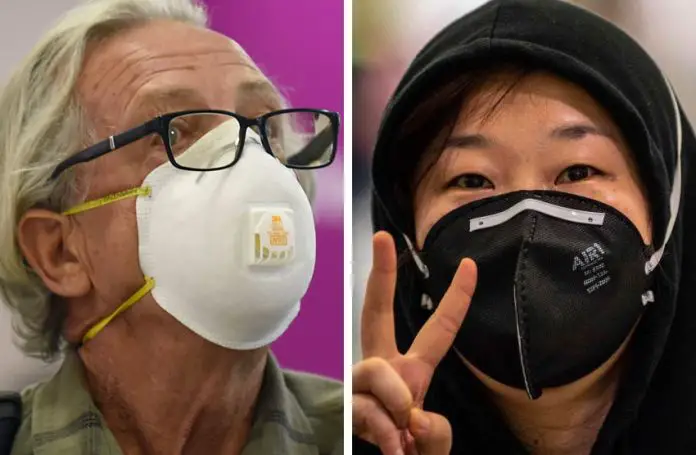
senior, child with face masks
Who will get priority treatment?

A controversial guide on how to prioritize coronavirus cases under extreme circumstances is drawing fire from experts and academics across Mexico.

Among the opponents is the National Autonomous University (UNAM), which announced it will not be abiding by the terms outlined in the Mexican General Health Council’s Bioethical Guide to Allocation of Critical Medicine Resources, published last weekend, which argues that the lives of younger people should be prioritized over those of older people should the medical system become overwhelmed. 

The 13-page document was signed onto by 13 academics and physicians, including several UNAM staff members, but UNAM leadership was not consulted. “Neither UNAM nor its rector, Dr. Enrique Graue Wiechers, were summoned to any plenary session for the analysis, discussion and eventual approval of the guide,” UNAM said in a statement denouncing the report’s findings.

But it’s not just how the report was created that is drawing criticism, it’s also the conclusions it draws on as to who should live or die.

“This document is intended to be a bioethical guide to triage decision-making when a public health emergency creates a demand for critical medicine resources that cannot be satisfied,” the introduction reads. “This guide should only come into operation if existing critical care capacity is overwhelmed, or close to being exceeded, and it is not possible to refer patients who need care to other facilities.”

During normal times, all lives matter equally, the guide states, quoting English philosopher Jeremy Bentham’s ethical theory on equality, that “each person is to count for one, no one for more than one.”

However, with coronavirus, which the report says can present serious complications in about 5% of patients, there are different considerations that must come into play when making life and death decisions. 

“Patient A, 80 years old, needs a ventilator. Patient B, 20 years old, needs a ventilator. If patient A receives the ventilator she will live seven more years, if patient B receives a ventilator she will live 65 more years,” the guide posits. “Faced with this problem, an additional principle must be introduced: save the greatest number of lives to be completed.”

The university is not alone in its criticism of the guide. Gabriel García Colorado, president of Mexico’s Association of Bioethics and Human Rights, has been public with his disdain for the government’s report.

“They could call it a guide for optimizing financial resources, medical equipment or human resources, but it is not a bioethics guide, because then the state would try to have resources available to all patients, where preference should never be given,” García said. 

While other countries such as Italy and Spain have adopted similar protocols to those outlined in the guide, what works for those countries is not appropriate in Mexico, he argues, comparing the recommendations to those used by doctors in Nazi Germany who discarded the old, sick and disabled as unworthy of life.

Rodrigo Guerra López, member of Mexico’s Advanced Social Research Center, concurs. “The human rights of all people must be recognized and respected,” he said. “It is not ethically justifiable to discard a patient because he or she has lived longer or has some pathology, and doing so incurs discrimination, abandonment and violence against the most vulnerable.”

Source: El Universal (sp)

Radar Jalisco: process will rapid-test 500 people a day for Covid-19

0
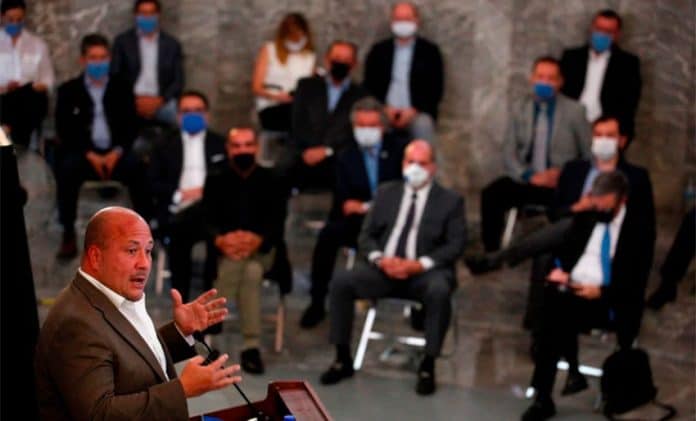
Not testing represents missed opportunities to save lives, said Governor Alfaro, left.

Authorities in Jalisco will perform 500 PCR coronavirus tests per day starting on Thursday, Governor Enrique Alfaro said on Tuesday.

Alfaro said that the state government developed the so-called “Radar Jalisco Covid-19 Active Detection System” in conjunction with the University of Guadalajara.

To request a polymerase chain reaction — PCR — test, Jalisco residents must phone a call center that has been set up for the purpose at 33-3540-3001. Final year medicine students will field the calls, determine whether a test is necessary, schedule the tests and provide general information about Covid-19.

The PCR tests will mainly be carried out in the parking lot of the University of Guadalajara Center of Health Sciences but Alfaro said that PCR testing will be available statewide.

Those being tested will remain in their cars to avoid coming into close contact with other people suspected of having Covid-19. The samples will be sent to one of four laboratories for analysis and results will be known in 24-72 hours.

The state government will provide 7,000 PCR tests for the month-long testing initiative while the University of Guadalajara will supply 5,000. Their combined outlay for the testing scheme will be 47.1 million pesos (almost US $2 million).

Governor Alfaro acknowledged that federal authorities have said that there are no reliable rapid Covid-19 tests, adding that they are currently blocking their importation.

In that context, the Jalisco government turned its focus to carrying out a testing scheme using PCR tests, he said.

Alfaro asserted that each day on which large numbers of tests are not carried out represents a missed opportunity to save the lives of Mexicans, adding that he was unconcerned that Jalisco’s coronavirus statistics will increase on paper.

“What we’re doing here is looking after lives. … What we want is to know where we stand – not to be building a strategy blindly,” he said. The aim of “Radar Jalisco” is to test 100% of people with Covid-19 symptoms, he said.

Jalisco had recorded 165 confirmed coronavirus cases as of Tuesday and 11 deaths, according to data from the federal Health Ministry.

The federal government has faced criticism for the low coronavirus testing rate in Mexico, where just over 40,000 people had been tested as of Tuesday.

Deputy Health Minister Hugo López-Gatell said last week that the real size of the Covid-19 outbreak in Mexico is likely eight times bigger than that shown by the number of confirmed cases of the disease.

Source: Infobae (sp), El Universal (sp) 

Workers at Oaxaca hospital protest lack of equipment, personnel

0
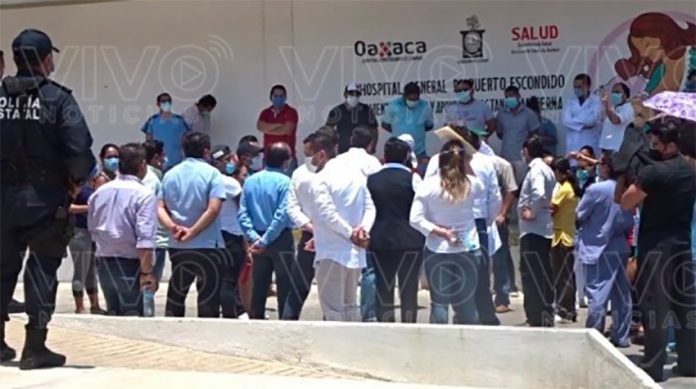
Hospital workers protest equipment shortages.

Doctors, nurses and orderlies at the general hospital in Puerto Escondido, Oaxaca, reproached federal and state government health authorities for plans to send the hospital coronavirus patients without first supplying it with adequate medical equipment and trained personnel.

Currently, coronavirus patients in Oaxaca are being treated at San Pedro Pochutla and Pinotepa National hospitals.

Clad in masks and medical gowns, the hospital’s staff met government authorities, including Manuel Ruiz López, representative of the social security agency Insabi, and the head of state health services, Donato Casas Escamilla, at the hospital’s door, demanding the supplies and procedural measures they need to care for infected patients. 

Emergency rooms lack sanitary filters, they claimed, and hiring practices have not matched the increased demand for pandemic-related medical services. 

Critical personal protective equipment, such as gloves, masks and hand sanitizer, is lacking, and the pandemic has “caught us with our pants down,” they said, demanding action. “It is sad and regrettable that as high-level officials they have only stopped at this hospital to take their picture,” said paramedic Iván Reséndiz.

Health Secretary Casas called on doctors and nurses to redouble efforts to care for coronavirus patients, vowing to work with the federal government to support hospitals during the pandemic and ensure the safety of medical personnel providing direct care.

Casas reiterated the importance of working as a team for the health of all Oaxacans.

“Now more than ever we must work together. I know that there are needs in each hospital, and we are working to meet them as soon as possible, but today, we are facing a health emergency that requires joint efforts. Governor Alejandro Murat’s administration is taking the necessary steps to continue providing all hospitals with necessary supplies,” he said.

He asked the directors of the hospitals to manage clear and permanent communication with the staff in their charge, as well as with the rest of the first and second level units to refer patients. He also exhorted them to make good use of personal security equipment, to handle responsible information about patients, and to work in coordination with municipal authorities.

In Oaxaca there are currently 46 confirmed coronavirus case, 60 suspected cases and five fatalities.

Source: Tvbus (sp), Multimedios (sp)


Father jailed for making his children beg in the street

0
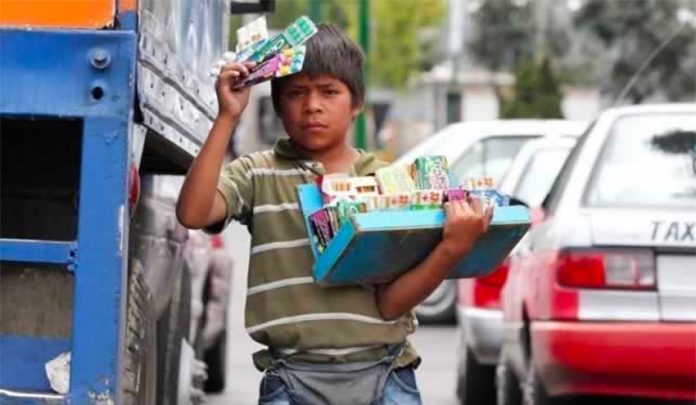
A child vendor on a Mexican street.

An indigenous man in Aguascalientes has been ordered into preventative custody after being arrested for forcing his children to juggle, perform acrobatic tricks, sell seeds and beg for money on the street.

The Mixtec man identified as Galindo allegedly compelled his children — aged 9, 12 and 15 — to collect at least 350 pesos (US $14.50) per day and beat them with various objects when they failed to do so. The abuse was carried out in the family home.

The identities of the minors have been withheld in order to protect their safety, but evidence against Galindo provided by a special women’s investigative unit in the state justice department reveals that at least one must be female.

The evidence shows that he forced them to collect money for him in this way from the end of 2018 to March 2020.

Authorities became aware of the situation when agents from the state Attorney General’s Office saw the two older children performing acrobatic tricks at an intersection in the city. They immediately initiated a process to rescue the minors and opened a child abuse investigation into the matter.

Galindo now faces charges of human trafficking and domestic violence. The judge ordered 3 1/2 months of preventative custody in the Cereso state penitentiary just outside Aguascalientes for the duration of the preliminary investigation.

Source: El Universal (sp)

130 fined for violating mandatory quarantine in Sonora

0
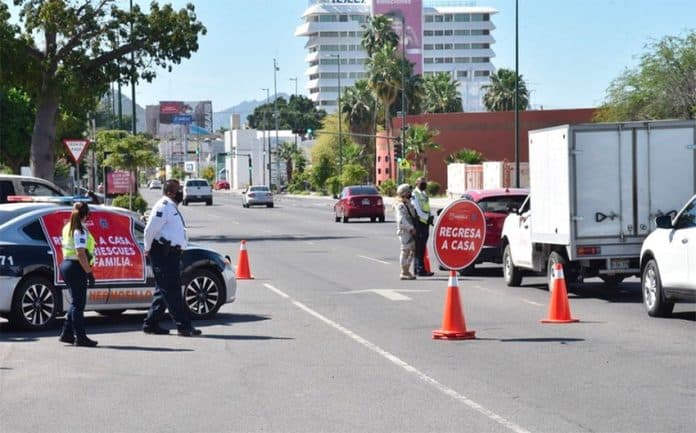
'Return home,' reads the sign at a checkpoint in Sonora.

Most citizens in Sonora stayed at home on the first day of the statewide mandatory lockdown to contain the spread of Covid-19 on Monday, but authorities still had to issue fines and apply other sanctions to force some to return home.

State Security Minister David Anaya Cooley said that police imposed 130 fines, made two arrests and impounded six vehicles as a result of people’s failure to comply with the guidelines.

“The sanctions began today and the places where they gave out the most fines were Puerto Peñasco, Hermosillo, San Luis Río Colorado, Magdalena, Huatabampo, Nogales and Cajeme,” he said on Monday night.

The state government decided to impose the full-scale lockdown after weeks of appeals to the public to observe the physical distancing and stay-at-home measures went unheeded. As of Monday, all nonessential activity outside the home and more than one person traveling in a vehicle are prohibited in Sonora.

In Hermosillo alone police meted out 64 fines under the authority of a state law that allows sanctions against anyone who refuses to follow police orders.

State transit director Jesús Alonso Durón Montaño said that authorities have set up 34 checkpoints in the capital and at its highway access points to ensure that motorists are on the road for essential business only and that families don’t leave town for vacation.

“We have informed the public, made recommendations — no more. We’ve now begun to give tickets. … Anyone on the street who cannot prove that they are carrying out essential business will be fined or [arrested],” Durón said.

Source: Milenio (sp)

It’s a matter of days before Mexico enters phase three of Covid-19 crisis

0
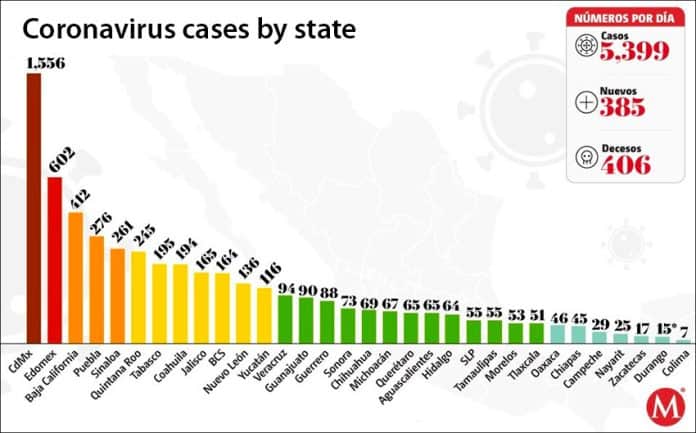
Confirmed cases as of Tuesday, April 14.
Confirmed cases as of Tuesday, April 14. milenio

Mexico will enter phase three of the coronavirus pandemic in a matter of days, Deputy Health Minister Hugo López-Gatell said on Tuesday as the number of confirmed cases of Covid-19 continues to rise steadily.

Speaking at the Health Ministry’s nightly coronavirus press briefing, López-Gatell once again urged citizens to stay at home to reduce the number of new infections and thus help to avoid overwhelming the nation’s health system.

Despite the work the authorities have done to prepare the system for a large influx of patients, the spread of Covid-19 “could be so quick” during phase three that hospitals would be unable to cope, he said.

In such a scenario, the health system would experience “serious and large problems” in attending to Covid-19 patients, López-Gatell added.

The deputy minister said that the commencement of phase three is “literally” just days away and that when it arrives, the spread of Covid-19 will be “very rapid” and “irreversible.”


Coronavirus by state
State Deaths Cases Suspected Tested negative
Mexico City 92 1556 2049 4628
Estado de México 35 602 904 1800
Sinaloa 34 261 293 680
Baja California 28 412 590 766
Puebla 27 276 312 762
Quintana Roo 25 245 201 403
Tabasco 19 195 343 502
Chihuahua 16 69 186 211
Coahuila 12 194 911 920
Jalisco 11 165 620 2350
Michoacán 11 67 163 469
Hidalgo 10 64 33 377
Sonora 9 73 158 465
Morelos 9 53 79 266
Yucatán 7 116 147 511
Guerrero 6 88 142 279
Baja California Sur 5 164 198 484
Nuevo León 5 136 1919 1634
Veracruz 5 94 418 838
Guanajuato 5 90 172 1496
Oaxaca 5 46 60 330
Querétaro 4 65 68 419
San Luis Potosí 4 55 115 800
Tlaxcala 4 51 149 296
Nayarit 4 25 36 158
Tamaulipas 3 55 178 438
Chiapas 3 45 67 234
Durango 3 15 89 248
Campeche 2 33 41 95
Zacatecas 2 17 59 244
Aguascalientes 1 65 66 705
Colima 7 26 92
Deaths Cases Suspected Tested negative
Total 406 5399 10792 23900
Figures released by the Ministry of Health on Tuesday.


“What we do today [in terms of social distancing], we have few days left to do it vigorously,” López-Gatell said.

“[We have to] avoid being in contact with other people, … all of us, not just the people with greater risk of having complications [from the disease]. We insist that you stay at home; this is the measure of precaution, prevention and control that is necessary today,” he said.

Asked whether a phase three declaration could only apply to certain parts of the country that have concentrated outbreaks of Covid-19, López-Gatell responded:

“Technically it could be done … but [a] … selective process would be confusing, that’s why we’re considering a single phase three [declaration] of a national character.”

An obligatory home quarantine and a “health curfew” in which people are only permitted to leave their homes during certain hours are among the stricter restrictions that the government could choose to impose during the third phase of the pandemic, although President López Obrador said earlier this month that his administration would not seek to implement any “draconian measures.”

López-Gatell’s declaration that a phase three declaration is imminent came after Health Ministry Director of Epidemiology José Luis Alomía reported that the number of confirmed cases of Covid-19 had increased by 385 to 5,399 and that coronavirus-related deaths had risen to 406 from 332 a day earlier.

The 72 new fatalities represent the biggest single-day increase in the death toll since the first Covid-19 patient died on March 18.

Alomía also said that there are 10,792 suspected cases of Covid-19 in the country and that just over 40,000 people have now been tested. Almost 40% of those confirmed to have Covid-19 – a total of 2,125 people – have now recovered, he said.

Mexico City has the highest number of confirmed cases, with 1,556, followed by México state and Baja California, where there are 602 and 412 cases, respectively. Colima has the lowest number, with seven, followed by Durango and Zacatecas, where there are 15 and 17 cases, respectively.

Among the more than 5,000 people confirmed to have Covid-19 are nine infants aged less than one. Twenty-four pregnant women have also tested positive and four have died.

Mexico City also leads the country in terms of coronavirus-related deaths with 92 fatalities. México state and Sinaloa follow with 35 and 34 deaths, respectively. Colima is the only state that hasn’t yet recorded a fatality.

Among Covid-19 patients aged 60 or over, the fatality rate is 17.1 per 100 cases and for those aged 25-59 it is 5.6. There has only been one coronavirus-related death among those younger than 25 – a 2-year-old girl with a congenital heart defect died in Tabasco on Tuesday.

The overall fatality rate in Mexico is 7.52 per 100 cases. According to Health Ministry data, 43% of those who have died suffered from hypertension, 38% had diabetes, 34% were obese and 12% had chronic obstructive pulmonary disease.

As the percentages indicate, some of the deceased suffered from more than one existing health problem.

Source: Milenio (sp) 

Oaxaca wildfires trigger emergency declaration in 9 municipalities

0
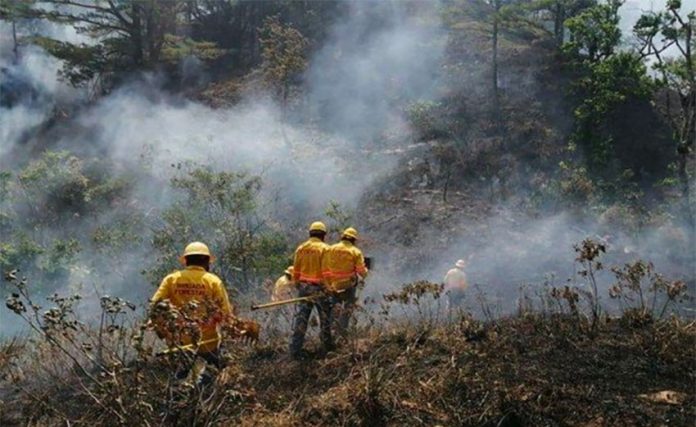
Firefighters at work in Oaxaca.

In the face of spreading wildfires, the state of Oaxaca is asking the federal government to extend its state of emergency declaration from four municipalities to nine. 

The request comes after high winds intensified a fire that spread from the rural town of Santiago Juxtlahuaca on April 9 to Santos Reyes Tepillo — an indigenous town of fewer than 1,000 people in the southern Mexico state’s Mixteca region — where nine people lost their lives last week. 

Representatives of the state government met with the families of those who perished to discuss offering them life insurance benefits, policies the government has reserved for accidental deaths in cases due to circumstances like the fires. 

The National Forestry Commission (Conafor) reported that the fire was 75% contained. The agency said that 138 people from the communities of Santa María Tindú, San Juan Cahuayaxi, Guadalupe Mesón and Tinuma de Zaragoza were working alongside 35 firefighters from the National Defense Ministry (Sedena), 30 from the National Guard, 14 from the National Commission for Natural Protected Areas (Conanp), six from the State Forestry Commission (Coesfo), 14 rural firefighters and 24 from Conafor.

Twelve firetrucks have been dispatched, as well as two helicopters which have made at least 80 water drops in an attempt to put out the fires.

In the first four months of 2020, Oaxaca has seen 95 forest fires across the state that have charred more than 7,166 acres. 

It is nothing new for Oaxaca. Last year around this time the state was fighting 172 forest fires that had consumed nearly 23,000 acres. In 2019, 129 separate forest fires burned their way through the Oaxaca countryside, destroying a devastating 48,432 acres in total.

Across Mexico, 20 states are currently reporting forest fires that have burned nearly 15,000 acres. 

Source: El Milenio (sp), El Universal (sp)