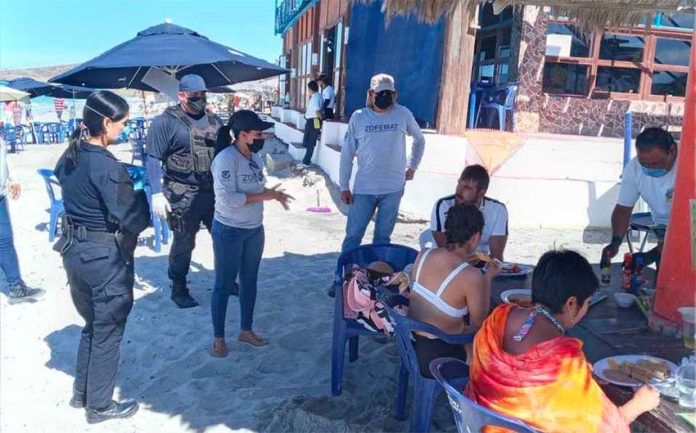
Officials advise beachgoers in Baja California Sur that beaches are off limits.
Authorities in at least three states have announced beach closures in response to the Covid-19 pandemic.
Baja California Sur closed every beach in the state, where municipal police will be responsible for ensuring that the closure is upheld. It could prove challenging during the normally busy Semana Santa (Holy Week) vacation in April.
In Baja California the municipal governments of Tijuana and Mexicali decided to close their beaches in order to avoid large gatherings of people.
Police patrolled the Playas de Tijuana beach area on Monday and urged citizens to leave at the order of Mayor Arturo González Cruz.
“I have decided to suspend all activities on the beaches of the region. … It’s important that citizens respect these measures for their protection,” said González.
The city of Mexicali is on the border with California, but the municipality extends far enough south to include the popular Gulf of California tourist destination San Felipe. It recently saw its number of cases rise from 14 to 20, leading Mayor Marina del Pilar to take the same action.
“We have seen how people have not been complying with isolation measures, and that’s why the contagion curve has been growing in our city,” said Del Pilar.
“It is therefore my obligation to introduce stricter measures. We’ve determined to close the tourist beaches of San Felipe, and install a patrol that will monitor [them],” she said.
In the south of Mexico, local authorities on the Oaxaca coast decided to close Zipolite, the country’s only nudist beach, due to the large number of tourists who usually visit during the Semana Santa holiday.
Many indigenous communities on the coast that offer tourist services like lagoon and mangrove tours and cabin stays have cancelled all tourist services completely.
Held in February, Zipolite’s Nudist Festival brings around 8,000 visitors to the 1 1/2-kilometer-long stretch of beach and boosts hotel business in the surrounding towns of Mazunte, Puerto Ángel, San Agustinillo and Pochutla.
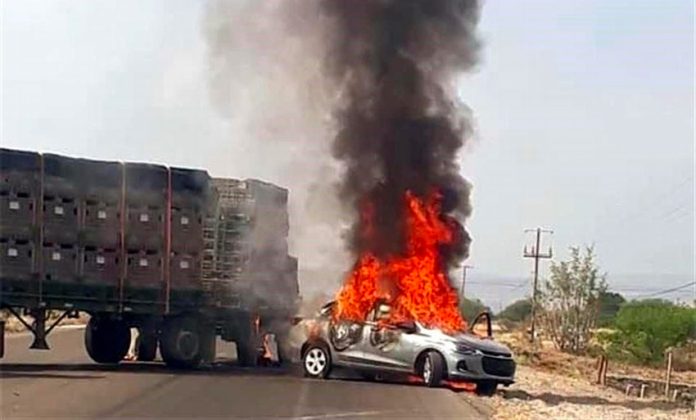
A vehicle burns Tuesday in a Guanajuato roadblock.
Although the Covid-19 pandemic has brought daily life to a standstill in most of Mexico, the threat of a deadly respiratory disease has done little to curb the extreme levels of violence in Guanajuato.
There were nine murders in the state on Tuesday alone when the municipalities of Celaya, Valle de Santiago and Villagrán saw murders, armed confrontations with security forces and roadblocks with burning vehicles.
In Valle de Santiago, armed men entered a barber shop where two police officers were getting their hair cut on their day off. They opened fire on the officers, killing one and seriously wounding the other.
A confrontation between state police and a group of armed civilians in Villagrán left one of the attacking civilians dead during a chase. Police were able to arrest two others before they got away.
State Public Security Minister Alvar Cabeza de Vaca said that state police were deployed to the city in response to a report of a stolen vehicle. As a result of the deployment, criminals blocked three highways accessing the city with at least six burning vehicles.
“We’re certain that due to this intervention, other criminals have blocked highways surrounding the municipality of Celaya,” said Cabeza de Vaca.
Also in Celaya, a commando of masked men assassinated five people at a steel distribution yard on the outskirts of the city. They forced the people to their knees in the workshop and killed them execution-style.
Another man in Celaya was killed around 2:00 p.m., his body left in an auto dealership.
State police had already found another body wrapped in a blanket in a different part of Celaya earlier that morning.
Over the weekend, a transgender rights activist was murdered in the city of San Felipe, in the north of the state. Karla Valentina Camarena del Castillo’s body was found in an area known as Las Cabañas on Sunday.
Governor Diego Sinhue Rodríguez announced in December that Guanajuato state police officers would receive a raise, making them the highest-paid state police force in the country.
The state continued to be Mexico’s most violent in February, when 348 people were victims of intentional homicide.
López-Gatell: if there is no decline, stricter measures will have to be considered.
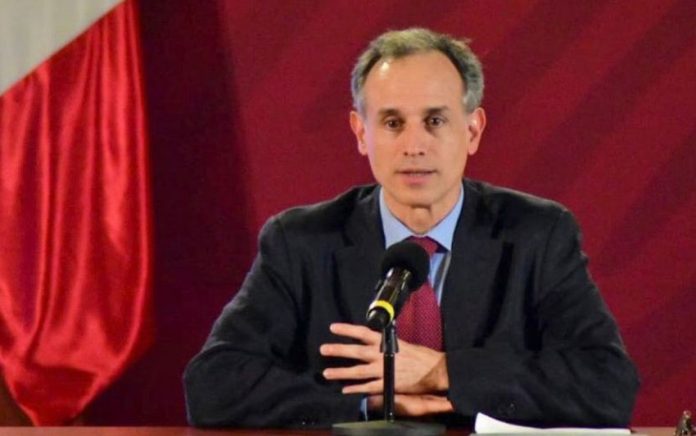
The commencement of the government’s social distancing initiative on March 23 should soon result in a decrease in the number of confirmed coronavirus cases reported on a daily basis, Deputy Health Minister Hugo López-Gatell said on Tuesday.
“When 14 days have passed – in fact seven days on average – since the mitigation measures began, we’re going to begin to see changes in the inclination of this line [the epidemic curve]; we should see, hopefully we’ll see,” López-Gatell told reporters at the government’s nightly Covid-19 press conference.
“This would be a success not by us, the government, [but] a success by Mexican society for having stayed at home, out of public spaces,” he added.
López-Gatell said that “there is not a pre-established goal” that the government is aiming to achieve in terms of reducing the number of Covid-19 cases detected on a daily basis but stressed that any decline would be welcome.
“The ideal would be zero but we know that is impossible. Any gain in which the speed [of infection] is reduced is a success, a triumph of the community mitigation measures” he said.
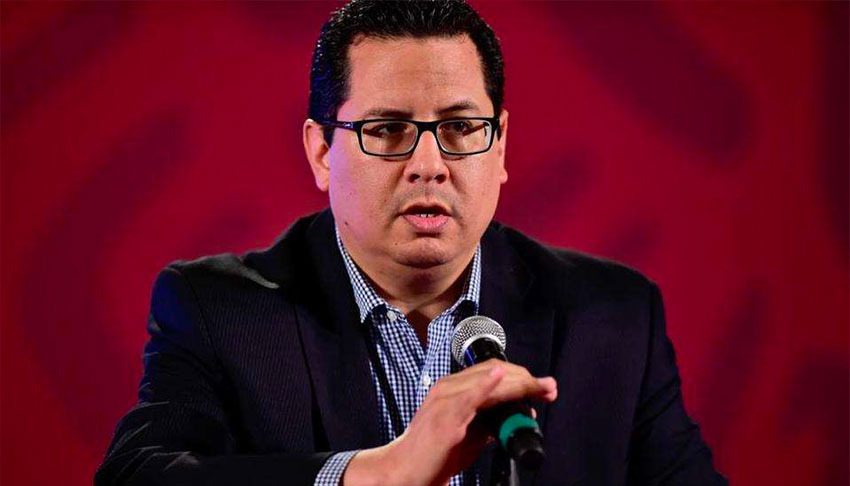
Epidemiology director José Luis Alomía.
“In this case, the measures started on March 23 with the closure of schools; the closure of schools means the suspension of circulation in the public space of around 15 million people,” the deputy minister said.
If the number of Covid-19 cases reported daily doesn’t begin to decline, the government will have to consider even stricter measures to limit people’s movement, López-Gatell said, explaining that such a move would have an even greater impact on the economy.
Since the Sana Distancia, or Healthy Distance, scheme started at the beginning of last week, the government has already implemented stricter measures to contain the spread of Covid-19, declaring a health emergency on Monday that stipulated the suspension of non-essential activities until April 30, prohibited events seeking to gather more than 50 people and urged citizens to stay at home as much as possible.
The declaration came the same day as the number of confirmed cases in Mexico passed 1,000.
In the two weeks after the first two cases of Covid-19 were reported on February 27, only a very small number of additional cases were detected. However, the number of confirmed cases of the disease began to increase more quickly from March 13 and surged over the past week.
Authorities reported last night that the number of confirmed cases had increased to 1,215, a 200% increase in the space of a week.
In addition to reporting 121 new confirmed Covid-19 infections, Health Ministry Director of Epidemiology José Luis Alomía announced that the coronavirus death toll had increased by one from a day earlier to 29.
He also said that there are 3,511 suspected Covid-19 cases – an increase of 759 compared to Monday – and that 6,282 people had tested negative for the disease. A total of 11,008 people have been tested, Alomía said.
Mexico City continues to have the highest number of confirmed cases in the country, with 234, followed by México state, Jalisco, Puebla, Nuevo León and Yucatán, where there are 149, 94, 81, 76 and 49 cases, respectively.
In per capita terms, Quintana Roo, where there are 47 confirmed cases of Covid-19, is the worst affected state in Mexico with a rate of 2.73 infected persons per 100,000 inhabitants.
Among the more than 1,000 people now confirmed to have been infected are 39 Mexican Social Security Institute (IMSS) healthcare workers and 21 other medical personnel employed at the Monclova General Hospital in Coahuila.
Three of the IMSS workers – two in Mexico City and one in Zacatecas – have died, the newspaper La Jornada reported, adding that it has not been proven that any of the 39 IMSS employees were infected with Covid-19 while at work.
With regard to the 29 coronavirus-related deaths, Alomía said that the most prevalent comorbidities have been hypertension, obesity and diabetes. All but three of the Covid-19 patients to have died have been men.
There is no excuse not to test, says infectious disease expert.
The federal government continues to face criticism for its response to the coronavirus pandemic even though it declared a health emergency on Monday that stipulated stricter measures to contain the spread of the disease.
Some experts believe that Mexico is acting too late and not carrying out enough Covid-19 tests to prevent a widespread outbreak such as that seen across the northern border in the United States.
Health authorities announced on Tuesday night that there are 1,215 confirmed cases of Covid-19 in Mexico and that a total of 11,008 tests have been completed. Many experts believe that the real number of cases is much higher – hidden by the lack of testing that has taken place.
The number of tests carried out to date is low compared to many other countries and even dwarfed by New York state, where more than 205,000 tests had been performed as of Tuesday.
Janine Ramsey, an infectious disease expert with Mexico’s National Institute of Public Health, told the Associated Press that widespread Covid-19 testing should have occurred in February and March. She suggested that politics may have been a factor in the lack of testing to date.
“Politics is very, very much involved in the decision-making going on right now. Mexico, politically, does not value scientific evidence. Why? Because it takes decision-making away from the politicians,” Ramsey said.
“For most of us, especially those of us who work with infectious pathogens, there is absolutely no excuse not to test,” she added, explaining that widespread testing is the only way to determine how fast a disease is spreading.
Dr. Joseph Eisenberg, chair of the Epidemiology Department at the University of Michigan’s School of Public Health, also said that Mexico should have started testing more widely earlier.
“Testing is really our eyes, otherwise we’re kind of blind,” he told AP.
“The only way you can really understand where the disease is and where you really need to focus your energies with respect to control is to be able to know where the infections are. And the only way to know that is through testing.”
For its part, the government has defended its response to the virus, stating that on-the-ground health surveillance provides much of the information it needs to determine how the coronavirus epidemic is evolving. Deputy Health Minister Hugo López-Gatell said on Tuesday that he expects the epidemic curve to begin flattening soon as a result of the government’s social distancing recommendations.
Authorities have ramped up their “stay at home” message in recent days, with President López Obrador urging Mexicans to avoid going out as much as possible in a video message posted to social media on Friday.
But the measures announced on Monday are “too late,” according to Dr. Miguel Betancourt, president of the Mexican Society of Public Health, who said that they should have been announced two weeks earlier when the epidemic curve began to steepen.
“We still have time to avoid an outbreak that grows out of control but we all have to do our part,” Betancourt said.
However, without federal authorities threatening to impose penalties on people who flout the directive to stay at home, and with millions of Mexicans not in a position to follow it because they are unable to support themselves if they don’t continue to work, it remains to be seen how effective the emergency declaration measures will be.
Susana Ruiz, a vegetable vendor in a market in the north of Mexico City, told AP that she couldn’t stop working because she has no other way to earn a living and the government hasn’t provided any other options.
Esperanza Rivas, a 50-year-old Mexico City resident, downplayed the threat of Covid-19.
“If this virus were so dangerous, I think they would have already closed the metro,” she said referring to the capital’s subway system.
Shopping centers and department stores in Mexico City are now closed to help limit the spread of Covid-19.
Mayor Claudia Sheinbaum announced their closure at a press conference on Tuesday but stressed that essential businesses including supermarkets, other food stores, pharmacies, gas stations and banks will remain open. Restaurants are limited to providing take-out to customers.
Sheinbaum said that officials from four different government agencies will carry out patrols to ensure that businesses are complying with the order to close.
The mayor also said that large public parks in the capital, including the Chapultepec, Tláhuac and Aragón forests, have been ordered to close effective Wednesday.
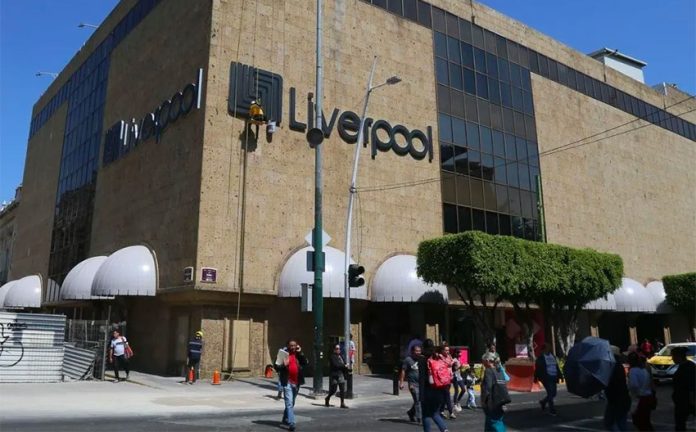
Although their closure in the capital is obligatory, the department store chains Liverpool, Sears and El Palacio de Hierro announced that they were closing all their stores across the country for a month due to the coronavirus pandemic and the government’s declaration of a health emergency.
Between 80,000 and 100,000 employees will stop work as a result of the stores’ decision to close, the newspaper El Economista reported. All three department stores said that their online stores will remain open.
Still, analysts who spoke with El Economista said that they expected it would be another year before the retailers reach the level of sales they saw before the arrival of Covid-19 to Mexico.
Along with businesses such as restaurants and gyms, retailers will be among the hardest hit by the coronavirus pandemic in the short term, said Jose Antonio Cebeira of financial services company Actinver.
However, he said that large department store chains have the wherewithal to withstand the tough times ahead.
Liverpool, which also owns and operates Suburbia department stores as well as a number of smaller chains that are also closing temporarily, said that its “commitment” is to guarantee the positions of all of its employees and to continue to pay their salaries and benefits “to the extent that is possible.”
Sears México owner Carlos Slim has also provided a guarantee that he won’t dismiss any of his employees at his several companies. However, El Palacio de Hierro has not publicly announced whether its employees will continue to be paid in full while off work.
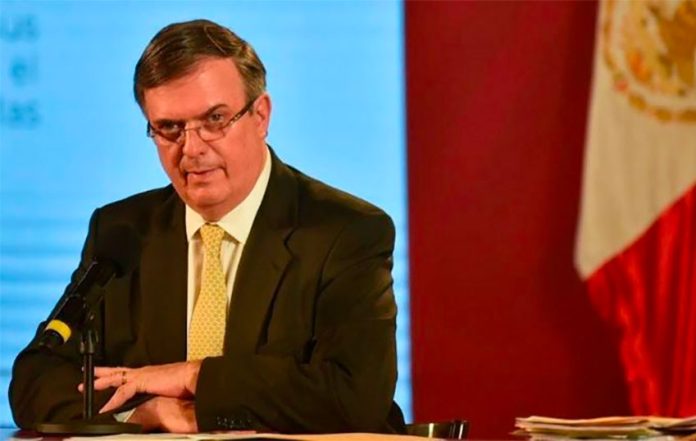
The government said on Monday that non-essential businesses that have been ordered to close for the next month must not dismiss their employees and must continue to pay them their full salaries. Those that don’t comply with the directive will face administrative sanctions or even criminal penalties, Foreign Affairs Minister Marcelo Ebrard said.
Although the government has ordered businesses to keep employees on their books, thousands of people are still at risk of losing their jobs, said José Manuel López Campos, president of the Confederation of Chambers of Commerce, Services and Tourism (Concanaco).
He said that 65% of businesses across the country are currently closed and that some of them won’t survive the enforced closure. López Campos also said that most tourism-oriented businesses including hotels are closed or have virtually no customers.
Concanaco estimates that the retail, services and tourism sectors lost revenue of just over 243.5 billion pesos (US $10 billion) between March 17 and 31 and with the Easter vacation period fast approaching, and stricter virus containment measures in place, the losses will only escalate.
Many small businesses will not be able to afford to continue paying their workers during the month-long health emergency period, “as the federal government is asking,” because they won’t be generating any income, Concanaco said in a statement.
The business group urged the government to provide an economic stimulus package for businesses and to allow them to defer the payment of taxes.
“If they have to comply with their annual [tax] declarations, many small and very small businesses would have to choose between sacrificing their staff in order to be able to pay their taxes or breaching their tax” obligations, Concanaco said.
Employers who don’t pay their workers their full wage during the one-month health emergency declared by the federal government on Monday or fail to follow the instruction to close their businesses will face fines and could even go to jail.
“[With regard to] the protection of workers – their wages cannot be taken away from them this month, according to the law,” Ebrard said.
In addition to breaking the law, businesses that dismiss workers or reduce their salaries will “destroy” their capacity to operate in the future because they will be left without the knowledge and skills they require, he said, charging “it’s almost like suicide.”
The foreign minister explained that businesses that don’t pay their employees their wages in full, dismiss workers or continue to operate even though they don’t offer a service that is considered essential will face “administrative sanctions” such as fines or closures.
If a non-essential business continues to operate, obliges employees to go to work and as a result one or more person is infected with Covid-19, the business could face “criminal responsibilities,” Ebrard said.
“In general, those who oppose [the order to close] and continue with their [business] activities despite this prohibition will be deserving of administrative sanctions that range from closure of the business to the imposition of a fine,” the foreign minister said, adding that in more serious or “very extreme” cases, criminal courts could hand down harsher penalties.
“We’re appealing to … the social conscience we have. The process we are going through … is equivalent to the earthquake we had in 1985,” Ebrard said referring to the temblor that killed thousands of people in Mexico City.
“We’ve gotten through [in the past] and we will get through this because we’re acting on time and with force,” he said.
Speaking at his morning news conference on Tuesday, President López Obrador also called on the private sector to comply with the order to pay salaries in full and urged employers not to attempt to fight it in court.
“There is no need to go to court,” he said, imploring employers to keep paying regular salaries out of humanism, solidarity and fraternity.
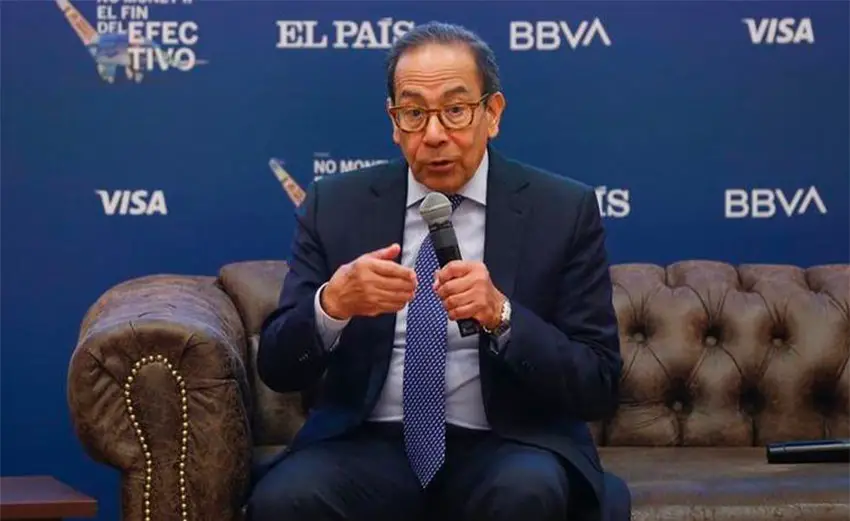
The CCE’s Carlos Salazar Lomelín called on the government to allow deferring taxes.
“In terms of the legal issue, it’s a matter of interpretation. In a reform that was made to the Federal Labor Law it was established that in the case of a health emergency, the minimum salary can be paid for a month but there is a regulation in the same law that establishes that it is the full salary” that must be paid, López Obrador said.
“I’m also asking the business leaders to keep helping us. … [Business magnate] Carlos Slim [said] that he wasn’t going to dismiss any worker, that’s the example to follow,” he added.
In response to the government’s health emergency declaration and the measures it entails to limit the spread of Covid-19, the Business Coordinating Council (CCE) urged the López Obrador administration to allow greater flexibility in the payment of taxes.
The influential business group presented a series of recommendations in a statement that warned that the quarantine ordered by the government threatens businesses’ capacity to survive.
The CCE stressed that it is “not asking for any kind of tax reduction” but said that it was urgent that the federal government issue a decree that stipulates that both individuals and business can defer the lodging of their 2019 tax declarations for a period of six months.
It also said that businesses and individuals should be automatically exempt from having to make provisional tax payments in 2020. Once taxes for this year become payable, taxpayers should be permitted to settle their obligations in 12 installments, the CCE said. The business group also said that authorities should expedite tax refunds to those who have a credit.
“These measures will allow businesses to have the minimum liquidity necessary … to preserve sources of employment,” the CCE said.
López Obrador said last week that the government would provide interest-free or low-interest loans to 1 million small businesses to help them weather the coronavirus storm, stressing that the aim was to support the neediest.
He ruled out any possibility of waiving taxes for large companies and said that there wouldn’t be any “rescues” for banks and corporations as occurred in the “neoliberal period,” a term he uses to describe the 30 years before he came to power in late 2018.
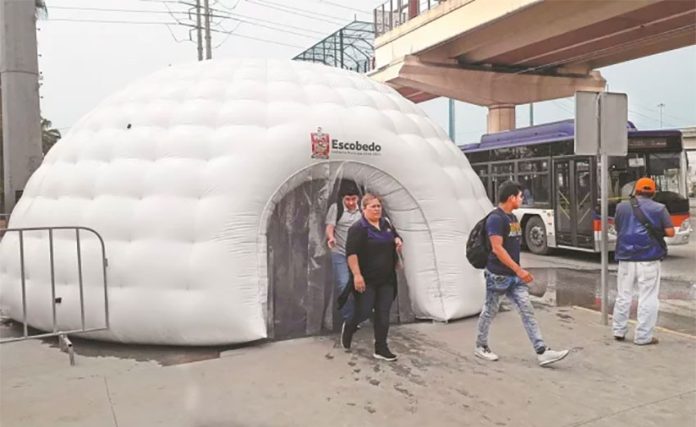
Three Nuevo León municipalities have begun installing inflatable disinfection tunnels in strategic points to help mitigate the spread of Covid-19.
People who must leave their homes in Escobedo, Allende and Monterrey can use the structures voluntarily and free of charge to protect themselves from the virus and bacteria for up to 12 hours, officials said.
The project was initiated by Escobedo Mayor Clara Flores Carrales, who said that the provisional structures have sprinklers overhead that spray a mist of the protective substance into one’s clothing.
She did not name the substance, but said it was a hypoallergenic material used in hospitals.
As many as 30 people can pass through the tunnel every minute.
Flores had five tunnels installed in Escobedo on Sunday in areas where people can pass through them before entering public transportation facilities and the city’s industrial park. Three more will be installed on Wednesday in strategic, high-traffic areas.
She said that the tunnels were purchased from a company named Water Drop with an investment of 600,000 pesos (US $25,000).
Allende Mayor Patricia Salazar also installed a disinfection tunnel in her city on Monday.
Monterrey Mayor Adrián de la Garza installed a similar tunnel at the Municipal Palace so that all government employees and citizens who enter to carry out official business can pass through it for protection.
Authorities in other states, including Tamaulipas, Coahuila, Chihuahua and Tabasco, have expressed interest in the system.
No masks or gel unless they buy the products themselves.
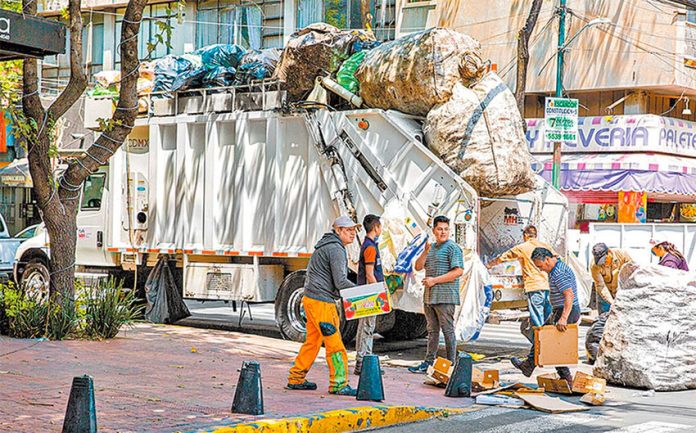
The federal government has ordered non-essential workers to stay at home but among those who will continue to work through the Covid-19 pandemic are the nation’s invaluable garbage collectors.
“With coronavirus, earthquakes, whatever it is, we can’t stop,” Javier, a garbage collector in the Mexico City borough of Miguel Hidalgo, told the newspaper Milenio, adding that he and his colleagues will continue to work “with a smile.”
He and the other members of his trash collecting team meet in the early hours of every morning at the Bordo Poniente dump in Mexico City before heading to Miguel Hidalgo to complete their rounds through eight different neighborhoods.
Despite the growing outbreak of Covid-19 in Mexico, Javier said that the collectors haven’t been given face masks or antibacterial gel to help protect them infection.
“There are no masks or gel nor a boss who will give us the day off because of coronavirus, there’s not even water,” he said.
The possibility of wearing a mask and even gloves while on the job “depends on whether we have money or not to buy them,” Javier said, although he added that people sometimes gift the items to them.
“My gloves are the ones I’ve always used … now I try to wash them every day,” he said.
Édgar, the youngest member of the crew, said that the garbage collectors are aware of the risks of their job but like millions of other Mexicans have to continue working in order to be able to support themselves.
“We’re always exposed [to health risks] and with the virus even more; people put everything in the trash – toilet paper, tissues they use to blow their nose, the things that they eat, the things they don’t eat, everything. Everything is a focus of infection for us but what can we do? I live from this and if I don’t work I don’t eat,” he said.
Nadia, a 25-year-old mother and garbage collector for the past two years, said that her partner also works in trash collection and that one of them takes care of their 9-month-old baby while the other is at work.
“He’s on another route in the afternoon … so he looks after Brandon in the morning and I arrive [home] when he leaves,” she said.
The driver of the Miguel Hidalgo team’s truck, Gilbrán, told Milenio that even though he has less contact with the trash they collect, he faces the same health risks.
“But my daughters are worth it; the truth is that you get very tired [but] you get used to the smell. … It’s a decent job, my daughters go to school because of it,” he said.
Gilbrán added that because more people staying at home amid the outbreak of coronavirus outbreak, there is more rubbish to collect. However, one positive is that the collectors have noticed that their tips have increased slightly over the last week.
The extra money will come in handy should any member of the crew fall ill. After explaining that his five co-workers are like his second family, Javier said:
“If one of us gets sick, we all have to put in part of our tips [to buy medicine] so that they get better quickly. It’s an agreement, a deal between us. Who else will pay for the medicine for he [or she] that gets sick from coronavirus?”
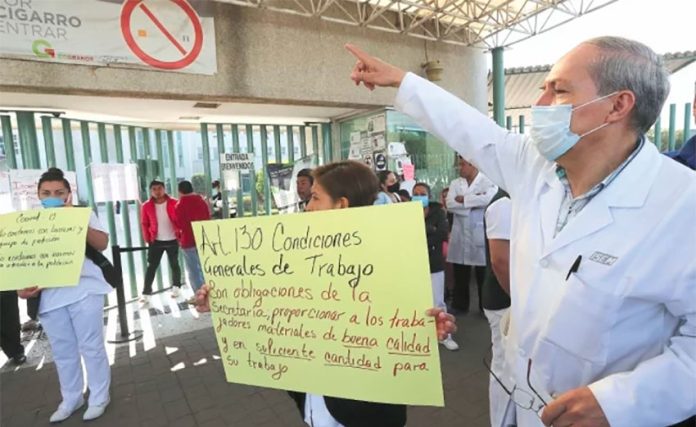
Doctors, nurses and other hospital staff in México state protested on Monday to demand they be given the supplies they need to treat safely and effectively those infected with Covid-19, whose numbers are growing in at least a dozen municipalities in the state.
Beginning around 8:00 a.m., they gathered outside state hospitals in Toluca, Atizapán de Zaragoza, Naucalpan, Nicolás Romero, Nezahualcóyotl, Ecatepec, Tecámac, Texcoco and Ixtapaluca.
It was day two of the protest for staff of the Adolfo López Mateos state hospital in Toluca, who demanded sufficient and quality personal protection equipment after 14 nurses and one resident doctor at the facility were put into isolation and hospitalized for Covid-19.
Nurse Liliana Romero said that some supplies were sent to the hospital for the crisis, but not enough. “There aren’t any goggles or face masks. We got some body suits, but they aren’t fully sealed.”
There was a similar demonstration outside the Salvador González Herrejón state hospital, in Atizapán de Zaragoza.
“We can’t go to war without rifles,” said pediatrician Josefina Onofre Díaz. “We’re the most exposed [to the virus], those who fall first.”
Dr. Daniel Arellano of the hospital’s intensive care unit said there are not enough ventilators and other equipment to deal with the crisis.
A shipment of new beds and containers that Arellano said “we hope are full of equipment, supplies and high-grade medications” was sent to the hospital toward the end of the protest on Monday.
Elsewhere in the state, doctors, nurses and other staff from the José María Rodríguez state hospital in Ecatepec blocked a street in that city to protest a similar lack of supplies.
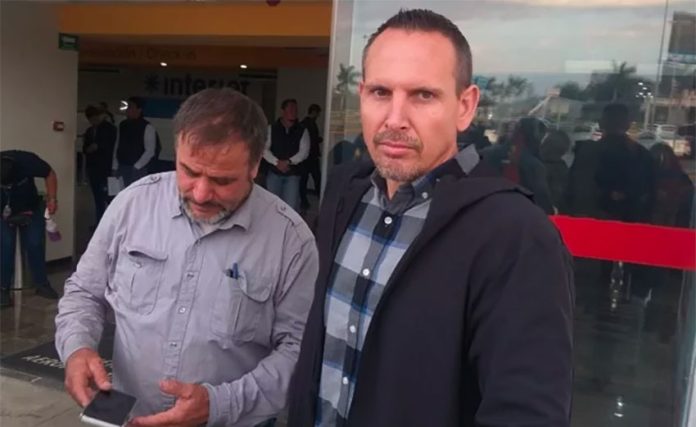
When he saw President López Obrador greet the mother of notorious drug lord Joaquín “El Chapo” Guzmán in Sinaloa on Sunday, Bryan LeBaron felt betrayed.
“The president has misidentified his priorities. When we marched he didn’t want to receive us … but yesterday he sent a very hurtful message to all of Mexico when he stopped to greet [Guzmán’s] mother and speak with the lawyer for one of the most dangerous drug traffickers in the world,” said LeBaron.
“This seems like a betrayal to me. Not for the fact of having greeted a mother, but because he [is closer to] the relatives of organized crime than the relatives of those who have been victims of the violence of that organized crime.”
President López Obrador met El Chapo’s mother, María Consuelo Loera Pérez, while in Badiraguato, Sinaloa, where he was overseeing the construction of a highway connecting the town to the municipality of Guadalupe y Calvo, Chihuahua.
In a video that enraged political opponents in addition to disappointing the LeBarón family, the president walks toward Loera, who is in the passenger seat of an SUV, telling her, “Don’t get out, I’ll come to greet you.”
They shake hands and AMLO, as he is commonly known, confirms that he received a letter she recently sent him.
Political rivals were critical on social media, even accusing him of colluding with organized crime.
Said LeBaron, “It’s terrible because while we march, the criminals keep killing people. While [AMLO] ignores the victims, it appears as though he puts himself at the service [of organized crime].”