For many people, there's not enough for good hygiene.
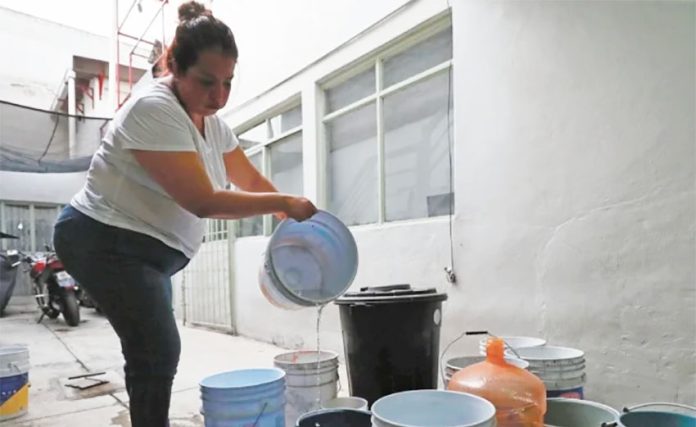
Health authorities say that washing one’s hands is one of the most effective ways to avoid contracting and spreading Covid-19, but the measure isn’t as simple as turning on the faucet for the one-third of Mexican households that lack daily access to water.
In Mexico, 10.5 million households do not have daily access to potable water for cleaning and drinking, and human rights experts say that this shortfall poses one of the biggest challenges to combatting the spread of the novel coronavirus.
The data published by the federal statistics agency Inegi comes as a warning after the United Nations (UN) said last week that the fight against the disease has little chance of success if people aren’t guaranteed access to clean water to wash their hands.
The data reveal that 25% of households receive water only “every now and then,” while over 7% have no access at all to water in the home and must carry or otherwise transport it from external sources.
“We were able to observe that 68% of households — 22,428,142 — receive water [consistently], while 25% — 8,411,920 — obtain it every three days, one or two times a week or every now and then,” reported the agency.
“… 7% — 2,085,208 — do not have [access to water in the home] and get it by carrying it from another home, a public tap, wells, rivers, ditches, lakes, lagoons or from tankers,” it said.
The UN’s announcement of the importance of handwashing to containing the spread of Covid-19 was accompanied by a plea to world governments to guarantee sufficient access to clean water to their most vulnerable populations.
“The fight against the pandemic has few possibilities for success if personal hygiene, the principal measure for preventing contagion, is not within reach of those who do not have access to potable water services,” said the organization.
The UN’s Human Rights Council said that limited access will make it more likely that the virus will spread among vulnerable populations with limited resources.
“Governments should apply measures to break this cycle,” said human rights specialists on the council.
The social development agency Coneval said that in Mexico, rural and indigenous communities will be the most affected by the situation.
“Indigenous communities have the least coverage within the potable water infrastructure,” said Coneval, citing different but similar data to Inegi about water access.
Amnesty International Mexico’s executive director, Tania Reneaum Panszi, told the newspaper El Universal that the pandemic is going to affect those with limited resources much differently than those of other social classes.
“Access to [water] will be one of the biggest challenges [during the pandemic]. … There are people in this country who will not be able to wash their hands. The inequality is going to be made completely visible,” she said.
She said that inequality will be seen in people whose economic situations oblige them to go to work to survive and people without access to social security and urged both the Mexican government and the private sector to take measures to protect vulnerable populations.
“It is recommended that people stay home, but this is a privilege of class. It can be done with stable working conditions, with social security and when the employer is willing,” she said.
López Obrador: 'People are behaving as they should.'
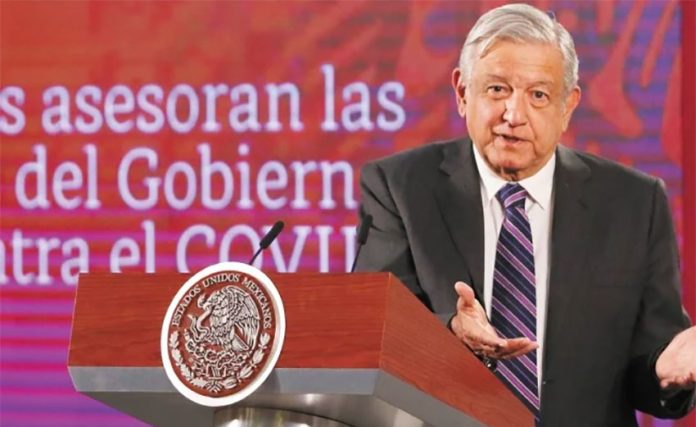
A day after Mexico recorded its largest single day increase in the number of confirmed cases of Covid-19, President López Obrador described the coronavirus crisis as a “fleeting situation” that the country will overcome soon.
“I want to provide confidence and certainty to the people of Mexico that this is a fleeting situation … a temporary public health and economic crisis. A temporary crisis – that means that we’ll overcome it soon,” López Obrador told reporters at his regular news conference on Thursday morning.
Declaring that the situation is not a disaster, the president asserted that the strength and culture of the Mexican people will allow them to “confront this adversity.”
“The people of Mexico are extraordinary. I want to thank the people a lot … because they’re complying with the [social distancing] measures that were established to avoid more infections. The people are behaving 100% [as they should], they’re showing that the people of Mexico are sensible, not irresponsible,” he said.
López Obrador’s remarks followed the Health Ministry’s announcement on Wednesday night that 163 new Covid-19 cases had been detected, taking the country’s total to 1,378. Director of Epidemiology José Luis Alomia also told a press conference that the coronavirus-related death toll had risen by eight to 37.
He said that there are 3,827 suspected cases of Covid-19 and that 7,073 people had tested negative for the disease. The total number of people that have been tested increased by 1,270 to 12,278.
Mexico City has the highest number of cases in the country, with 296, followed by México state with 157. There are 99 confirmed cases in Jalisco, 97 in Puebla, 78 in Nuevo León and 57 in Coahuila. With just three confirmed coronavirus cases, the small Pacific coast state of Colima is the least affected in the country.
Mexico City has also recorded the highest number of coronavirus-related deaths, with eight, while Sinaloa has seen four and three Covid-19 patients have died in each of Jalisco and Hidalgo.
Nineteen of Mexico’s 32 federal entities have now recorded at least one coronavirus-related death. Hypertension, diabetes, obesity and chronic obstructive pulmonary disease have been the four most common existing diseases suffered by those who have died.
Of the 1,378 people confirmed to have Covid-19, 58% are men and 42% are women. Of the 37 deaths, 32 have been of men and just five of women.
As the number of coronavirus cases rises, the pressure on Mexico’s healthcare system will only increase but López Obrador stressed Thursday that the government is taking the necessary steps to prepare for an influx of Covid-19 patients.
“We are dedicated to that full time, it’s the priority of the government … We’re preparing so that we won’t lack beds or ventilators and we can attend to the serious cases,” he said.
He called on state governors and all other authorities to “align” their response to Covid-19 with the federal strategy.
“My recommendation continues to be the same: we all have to align, respect the recommendations of the specialists, the scientists. It’s not time for bright ideas, this is a very serious matter,” López Obrador said.
He appealed to his political opponents earlier this week for a month-long “truce” as the country faces a dual health and economic crisis caused by the growing outbreak of Covid-19 and the emergency measures put in place to contain it.
“The conservatives have wanted to encourage division, polarize [people] … I call for unity, I even call for unity from my adversaries, from the conservatives. The homeland comes first, they should dial [their attacks on the government] down a notch.”
The federal Finance Ministry (SHCP) is predicting that the Mexican economy could shrink by as much as 3.9% this year due to the coronavirus pandemic while the Bank of America is forecasting an even more dire contraction of 8%.
The SHCP downgraded its 2020 growth outlook from a range of 1.5% to 2.5% to between -3.9% and 0.1%.
The ministry said in a statement outlining the contents of a preliminary 2021 budget proposal that the Covid-19 pandemic has caused the global economic outlook to deteriorate “quickly and significantly” in a short period of time.
In Mexico’s case, the SHCP said that the social distancing measures necessary to contain the spread of Covid-19 will have an impact on economic activity and the country’s public finances.
It added that the government will seek to find a balance “between the necessity of supporting and boosting the economy and fiscal discipline,”explained that it doesn’t want a depletion of public resources “to worsen the macroeconomic situation.”
The government “will seek to improve the efficiency of tax collection and generate budget savings,” so that it has sufficient resources to finance its priority programs and attend to any health and economic emergencies that arise from the outbreak of Covid-19, the SHCP said.
The ministry also said that it expects the economy to recover from the effects of the pandemic in 2021, predicting growth in the range of 1.5% to 3.5%.
As is becoming his custom, President López Obrador said that he didn’t agree with the Finance Ministry’s forecast.
“I don’t agree now either. To start, there is no economic normality for obvious reasons, everything is disrupted,” he told reporters at his morning news conference on Thursday, explaining that he believed oil prices would go up and help boost GDP.
For its part, the Bank of America said that the economic downturn in the United States due to the coronavirus pandemic, plunging oil prices and the government’s declaration of a health emergency – which activated a range of stricter social distancing measures – all contributed to its prediction that the Mexican economy will contract by 8% this year.
Bank of America economist Carlos Capistrán said in a note to clients that he expects the Bank of México to cut its benchmark interest rate to 5.5% from its current level of 6.5% but added that it won’t help the economy much because of the recent depreciation of the peso.
On the bright side, the bank is predicting that the Mexican economy will recover strongly in 2021 and grow by 4.5%, helped primarily by a resurgent U.S. economy.
They'll spend a month at home with full pay if their employer behaves.
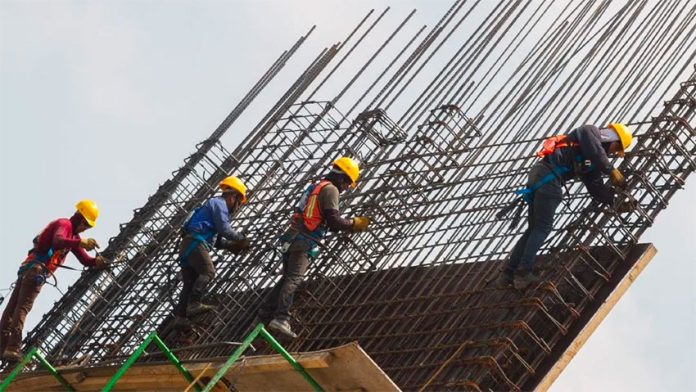
Companies that lay off staff during the month-long coronavirus health emergency or don’t pay them their full salary could be named and shamed by the federal government, President López Obrador said on Wednesday.
“We’re obliged to defend the workers and enforce the law; we would also make public … those who are capable of turning their backs … on those who suffer, on those who are needy,” López Obrador told reporters at his regular news conference.
His threat came two days after Foreign Affairs Minister Marcelo Ebrard said that businesses that don’t comply with the directive not to dismiss and to keep paying their employees even if they been ordered to close will face administrative sanctions such as fines or even criminal penalties in “extreme” cases.
López Obrador said that some company owners have already made a commitment not to lay off workers or cut their salaries but others “are not behaving well.”
However, he added that there is still time for them to change their minds and do the right thing.
“What good is an advertising campaign that costs hundreds of billions of pesos if they [the company owners] act in a selfish way in an emergency?” the president asked.
López Obrador said that it will be the responsibility of the Labor Ministry to intervene in cases in which employers don’t follow the government’s order to maintain their workforce and continue to pay them during the health emergency period that is currently scheduled to run through April 30.
While some lawyers questioned the motives of the government’s directive to companies to keep paying their employees in full even if they are not working, business groups called for tax payments to be deferred and a stimulus package for businesses.
The Mexican Employers Federation said that its members will make their best efforts to pay their workers in full but called on the government to change the classification of the health emergency in order to reduce employers’ wage obligations.
The government on Monday declared a health emergency due to “force majeure,” or unforeseeable circumstances, in lieu of declaring a regular “health contingency.”
Had it declared the latter rather than the former, employers would only be required to pay their workers the minimum wage (just over 120 pesos, or US $5, per day) over the next month, according to the Federal Labor Law.
Coparmex said that if a regular health contingency was declared, “each company, according to its financial means” could negotiate salaries higher than the minimum with their employees.
“We urge the federal government to go ahead with the official health contingency declaration to provide certainty to millions of owners of micro, small and medium-sized businesses and their workers,” the group said in a statement.
The law firm De la Vega & Martínez Rojas said that the government’s “force majeure” declaration was a deliberate ploy that made a mockery of the Federal Labor Law.
Raúl Maillard, president of the Labor Commission of the National Chamber for Industrial Transformation, agreed that the government deliberately chose not to declare a regular health contingency to avoid activating the minimum salary clause in the law.
Luis Monsalvo Álvarez, a lawyer and academic at Ibero University, likened the government’s actions to a “play on words” and said that its aim is to avoid being blamed for any negative impact on workers’ hip pockets.
“The federal government doesn’t want to assume [responsibility] for … the economic impact [on workers]. … It doesn’t want the private sector to say: ‘as the government said that it’s a health contingency, you, worker, can go now with your minimum wage,” he said.
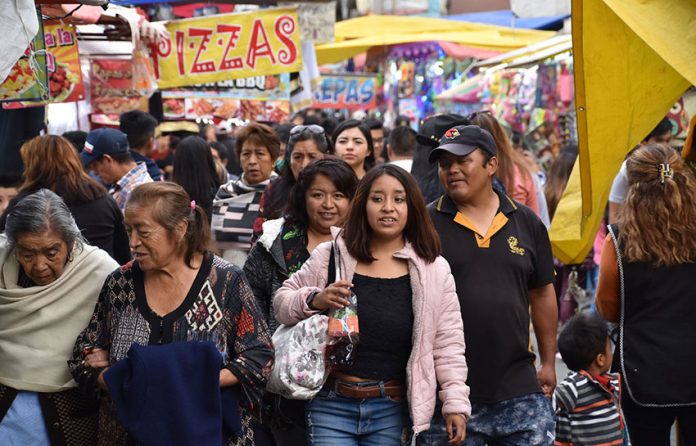
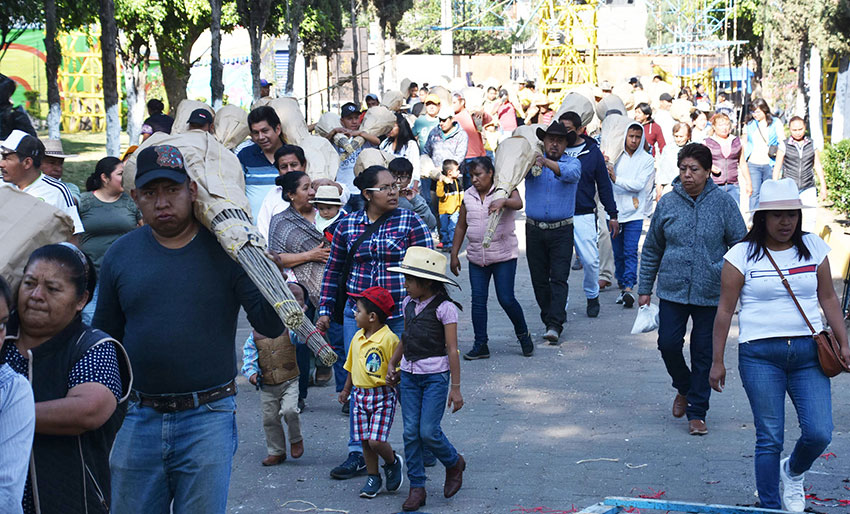
Fiesta time in San Gregorio and the streets are packed with people.
San Gregorio Atlapulco, a pueblo of about 30,000 residents that is part of Mexico City, is woefully unprepared for the coronavirus.
San Gregorio is a pueblo originario (original town), a designation acknowledging that it has maintained many of its indigenous traditions.
This means, in part, that there are fiestas. A lot of fiestas. In fact, I’ve been told there are 365 a year and that’s probably an underestimate. There are fiestas for a large number of saints and virgins; there are dozens of processions for a variety of reasons; there are a number of pilgrimages; every time a new mayordomo (a lay religious figure) is installed, there’s a fiesta. There are something like 300 mayordomos.
Every fiesta features bottle rockets, bands and processions and are attended by dozens or often hundreds of people. In normal times, that’s a good thing. The fiestas are loud, fun, and have great food, lots of tequila and, with hundreds or even thousands of people attending, strengthen community. But these are anything but normal times.
Last week featured the Feast Day of San Gregorio, the pueblo’s patron saint. It started on March 12 and lasted 10 days. On Sunday the 15th, several bands played in the local cemetery, a tradition meant to entertain the deceased. At least 50 people were there.
This was followed by a battle of the bands attended by several hundred people. On Monday morning, there was a procession with a couple of hundred people. That night was the huge fireworks display in the church’s atrium. And I do mean huge.
Three castillos — 100-foot-tall structures crammed with fireworks — dominated the event, which also featured a fireworks display that would be the envy of any major U.S. city’s 4th of July celebration. It probably lasted two hours with a couple of thousand people in attendance. I watched in the distance from my balcony.
Every night this week, there’s been a concert with different kinds of music. I walked past them a couple of nights and there were several hundred people crammed into the civic plaza. A friend asked me why I didn’t attend the concert on one particular night. The band played classic rock.
“It was great,” he said. “They played The Doors, Stones, Creedence.” I told him I was busy. He’s someone who should know about the current risks of being in a large crowd. He’s the manager of the small medical clinic.
I’ve been to the clinic twice since I moved here last year — once to treat some cuts I got when I was knocked over by a horse, once to remove blackened toenails that were the result of walking some 12 hours through mountains on the pilgrimage to Chalma, a holy site. I was pleased with the care both times.
But there’s no way this clinic can handle people who get sick from the virus. There are no beds. There are no test kits. I’d be shocked if they had adequate masks. Forget respirators. I don’t know where the nearest hospital is but wherever it is, it will soon be overwhelmed.
Residents carry hundreds of bottle rockets to the church, where they’ll be set off. (The author timed the barrage: it lasted 30 minutes.)
Social distancing has become the most popular phrase in the U.S. media. I’ve seen it used in some of the larger Mexican newspapers, and some Mexican friends have mentioned (and are practicing) it, but it’s definitely not being followed in San Gregorio.
I really don’t know if it can be. There’s simply no way to practice social distancing in the local market. It’s small, located on two narrow streets and it’s crowded every day. Most people, including me, have no way to store fresh food for more than a day or two, so we typically go to the market two or three times a week. I’ve started buying more fruit that can be kept unrefrigerated.
San Gregorio isn’t some isolated pueblo where we could think we’re safe because there’s little contact with Mexico City proper. Many people work there, which means a two-hour trip riding in two micros (small buses) and then the Metro subway. They’re still packed. And, at least up until two weeks ago, things hadn’t changed much in the city. I was there because I had to wrap up an article. The Metro, streets and restaurants were all filled.
The virus, if not already in the pueblo (and I doubt that it isn’t), is on its way but most of the people I talk with about it shrug off the dangers. “No pasa nada,” said one friend: Nothing will happen. Several people have told me that Mexicans are different; they’re stronger because they eat a lot of chiles. A couple of people have told me to drink more tequila, something I definitely enjoy doing but not for its virus-fighting capabilities.
I’ve seen several large signs warning about coronavirus painted on walls in three of the pueblos I’ve been in. It looks like they’re being done by local governments because the federal government’s response has been uneven at best. Just a couple of days ago, President Lopez Obrador said he was protected from the virus by the two amulets he always carries with him.
But, although I fear what will happen in the pueblo when the virus really settles in, there are at least two things that will help us get through the pandemic. First, there’s the incredibly strong sense of family and community. People help one another during crises.
The most recent example was when an earthquake struck in September 2017. There was no hesitation: people got to work helping, feeding, rebuilding. I know that when people get sick, they’ll be cared for. The other thing that may help us get through this is the chinampería.
The chinampería (sometimes simply called the chinampa) is an ancient agricultural area that was formed by building small islands in shallow water. San Gregorio is one of the few pueblos where chinampas are still used to grow food. Hundreds of people (called chinamperos) still work there and I believe, no matter what, we’ll always have fresh vegetables.
Even if many chinamperos got sick, there’s enough institutional memory in the pueblo to keep the area productive. Last week, city residents asked me to talk with chinamperos to see if they’re willing to deliver food to them. They are.
There are ruins in the hills surrounding the pueblo that are at least 1,000 years old. There’s a Neolithic site in the chinampa that dates back 4,000 years. Just last week I photographed a carving my good friend Javier discovered there; it’s 6,000 to 8,000 years old. The pueblo has seen its share of crises and disasters over the milenia. Although I worry that the virus will exact a terrible toll, I’m confident the pueblo will find a way through it.
Joseph Sorrentino is a freelance writer and photographer currently living in San Gregorio Atlapulco, which is part of Xochimilco. His articles and photographers have appeared in In These Times, Commonweal Magazine, US Catholic and La Jornada del Campoand other newspapers and magazines.
The Dos Bocas refinery, under construction in Tabasco.
The slump in the value of the peso against the United States dollar could significantly increase the cost of building the new Pemex oil refinery on the Tabasco coast, according to calculations by the newspaper El Financiero.
The federal government announced last May that the Dos Bocas refinery project would cost no more than US $8 billion. The exchange rate at the time was approximately 19.3 pesos to the dollar, meaning that the price of the project would be 154.4 billion pesos.
However, one US dollar was worth 23.8 pesos on Tuesday, El Financiero said, meaning that building the refinery could cost 190.4 billion pesos, an increase of 36 billion pesos, or 23.3%. Most contracts for work on the project are likely to be in dollars.
The government, which announced in May that it had scrapped the bidding process to find a builder for the new refinery and that Pemex and the Energy Ministry would take charge of the project instead, could well end up paying even more.
Many analysts have said that the government’s $8-billion estimate for the refinery is too low, pointing out that similar projects have cost $12-$14 billion. Many have also expressed skepticism that the government can keep its promise to build the project in three years.
While the peso price of the project looks set to increase, the capacity of the refinery – expected to process 340,000 barrel per day of Mexico’s flagship heavy crude – to recoup the investment looks to be under threat due to dropping oil prices.
The price of Mexico’s export crude plunged to $10.37 per barrel on Monday, its lowest level in 21 years, before recovering slightly to $10.76 at the close of trading on Tuesday. As the coronavirus pandemic worsens and demand for oil remains low, crude prices are predicted to decline even further.
Even before oil prices started to plummet, many experts questioned the government’s decision to invest in a new refinery, arguing that it will only divert funds from Pemex’s more profitable exploration business.
President López Obrador, however, has championed the project in the name of sovereignty, asserting that it will help to reduce Mexico’s reliance on fuel imports and contribute to greater economic prosperity in the country’s southeast.
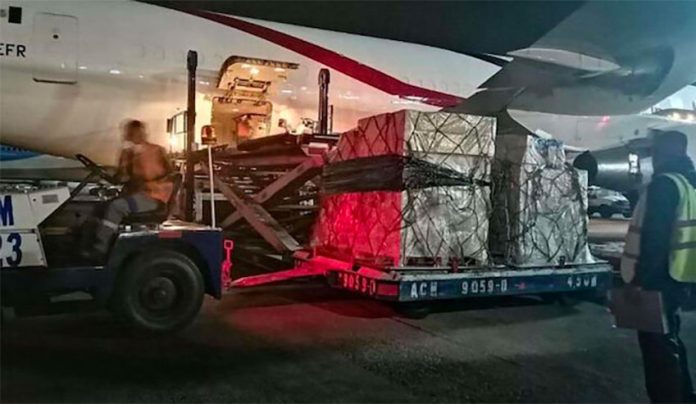
Donated test kits and masks arrived from China on Tuesday.
Foundations in China have donated 50,000 coronavirus testing kits to Mexico as the number of confirmed cases of Covid-19 rises to over 1,200.
The donations arrived at the Mexico City International Airport early Tuesday morning.
The Chinese Cultural Center in Mexico said in a statement that it had also received 100,000 face masks and five ventilators from the Jack Ma Foundation, a charitable organization founded by the owner of Chinese online retail giant Alibaba.
“In these times when the Covid-19 pandemic is spreading across the globe, Chinese companies have generously donated some supplies to Mexico, a gesture that has been recognized by the Mexican community,” the cultural center said.
As of Wednesday, Covid-19 had claimed 29 lives in Mexico and the number of confirmed cases had risen to 1,215.
The donated supplies were received by representatives of the Ministries of Foreign Affairs and Health, as well as Mexican customs.
Testing for Covid-19 has seen a number of pitfalls during the pandemic. Some hospital chains were reported to be charging 6,000-10,000 pesos (US $246-$410) for coronavirus tests earlier in March. Last week, a private lab in Oaxaca was shut down for price gouging and selling phony tests.
Both medical staff and potential patients have called attention to and taken action to correct a lack of supplies in hospitals around the country.
Hospital staff in several México state cities protested on Monday to demand supplies, and citizens in Morelos threatened to burn their hospital down on Tuesday if takes on Covid-19 patients, claiming that it is unprepared to deal with such a crisis.
Meanwhile, in Wuhan, China, the epicenter of the global pandemic, life has taken the first steps toward returning to normality. Businesses there began to reopen on Monday, but to a wary and small group of clientele.
Authorities have begun to lift restrictions that kept tens of millions of people isolated in their homes for two months.
“I’m so excited I could cry,” said one woman in a popular shopping mall.
Some 70-80% of businesses reopened in Wuhan on Monday, many putting limits on how many customers can enter at a time.
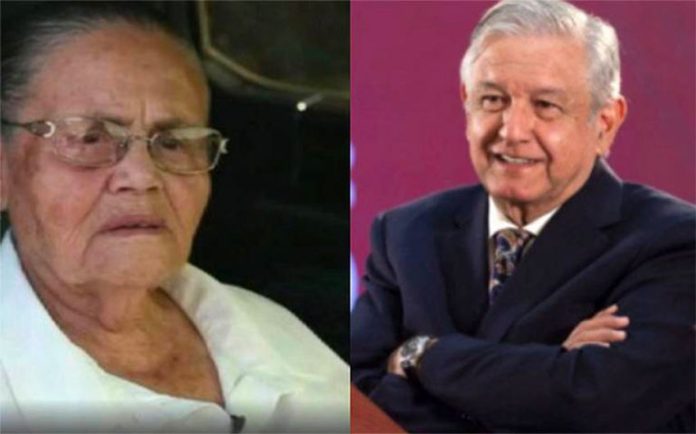
El Chapo's mother and AMLO: their relationship is worrisome.
So the coronavirus is in full swing and the president’s administration is encouraging people to stay home. The state government of Yucatán has gone even further, telling people they could face up to three years in prison for violating quarantine rules if they are sick with Covid-19, are showing symptoms, or have been in contact with an infected person.
It’s hard to see how they’d actually enforce that, at least without the risk of gross human rights violations.
Pair that with AMLO refusing to get tested for Covid-19 even though he’s very obviously been exposed (and if he has been in infected, spread it to countless people), and we have a very strange situation here indeed.
Then there’s the interaction with El Chapo’s mother: a warm greeting, a comment that he’d received her letter.
I’m sorry, what? What exactly is going on here?
According to López Obrador, he has a “responsibility to listen to the concerns of all Mexicans,” and El Chapo’s mother is no exception. Come on. Behaving as if the mother of one of Mexico’s most notorious drug kingpins is a poor, disadvantaged, bullied character is just beyond ridiculous.
Along with my “conservative/neoliberal adversaries,” I’d also like to know how it came to be that she found an audience with him. The fact that they have a relationship, especially for a president who claims every day that he’s fighting corruption tooth and nail, bothers me. A lot.
Anyone who’s regularly read my column knows that I’ve been a fan of AMLO for a long time. That said, I’m not so blind in my devotion and admiration that I’ll avert my gaze if it’s clear he’s going off the deep end. This is the leader of the country, after all.
It’s been very popular since the election to compare AMLO to Trump, two populist leaders with fiercely loyal followings (it’s worth noting, however, that only one of them clearly won the popular vote). I always felt annoyed and grumbled when someone did it, but lately the similarities have been coming into horrifying focus.
The difference, I think (I hope), is that while Trump can do no wrong in the eyes of his supporters — his version of “they’re trying to undermine me!” no matter how ridiculous, is always believed by his base. Not all AMLO enthusiasts in Mexico simply “fall in line” behind his claims.
Is the opposition trying to undermine him? Almost certainly, but what’s new? That’s just politics. The leader of a country (be it this one or my own) behaving like a victim brings out the worst kind of contemptuous feelings in me.
Another similarity between them is the dismissal of the seriousness of the pandemic right up until the moment they couldn’t deny its seriousness any longer. Both insisted for quite a long time — AMLO up until last week even — that things weren’t that bad. As some governors in the U.S. follow Trump’s dismissive attitude, the United States has predictably been one of the hardest hit.
I pray that Mexico doesn’t follow that exact pattern, but with AMLO’s increasingly bizarre comments, accusations, and refusals to follow the safety guidelines put forth by his own government, my hope is dwindling.
His argument of “conservatives and neoliberals want me self-isolating so they can steal power” is ludicrous. Why, it’s almost as ridiculous as “the director of the National Institute of Allergy and Infection Diseases (Dr. Anthony Fauci) is trying to undermine the Trump presidency.”
It’s not as if AMLO has to be physically present everywhere at the same time in order to rule. It’s as if he didn’t believe that phones or the internet existed. Couldn’t they just stick a tablet with a video of him on top of a robot or something? I saw it on a sit-com once. Seriously, solutions to “being somewhere” these days aren’t hard.
Luckily for us, there are some grown-ups in the room both down here and in the so-called “deep state” up there. Let’s hope they can see us through.
Sarah DeVries writes from her home in Xalapa, Veracruz.
While the global Covid-19 pandemic is the priority for health officials the world over, a smaller outbreak of a similar kind is also worrying those in México state, Mexico City and now Campeche.
According to the Health Ministry’s epidemiology department, the number of measles cases in the country doubled in just 10 days.
The outbreak began in a prison in the north of Mexico City on February 23, and state health officials reported on March 21 that the number of cases had grown to 49. In the 10 days since, that number has more than doubled to 101.
A Health Ministry epidemiology report issued at 10:00 p.m. on Tuesday said that 87 of the cases are located in Mexico City, 13 are in México state and one has been identified in the state of Campeche, the first of this outbreak confirmed outside of the Valley of México.
Smaller concentrations of imported measles cases sprouted up in several states last year, including Quintana Roo, Chihuahua, Nuevo León, San Luis Potosí and México state, but none of them grew to such numbers as the current outbreak.
The borough of Gustavo A. Madero, where the outbreak’s epicenter — the Reclusorio Norte prison — is located, has most of the city’s measles patients with 47. Cases have also been confirmed in 11 other boroughs in the city.
Five of the 13 infected people in México state are in Ecatepec, and there are also measles cases in Tecámac, Tlalnepantla, Naucalpan, Atizapán de Zaragoza, Nezahualcóyotl and Chimalhuacán.
The case reported in Campeche is in the municipality of Champotón, where a 5-year-old girl contracted the disease despite having received the measles vaccine.
Of the 101 confirmed cases, 57 are adults aged 17-68, while 44 are children ranging from four months to 13 years old, and 19 had been vaccinated against the disease before contracting it.
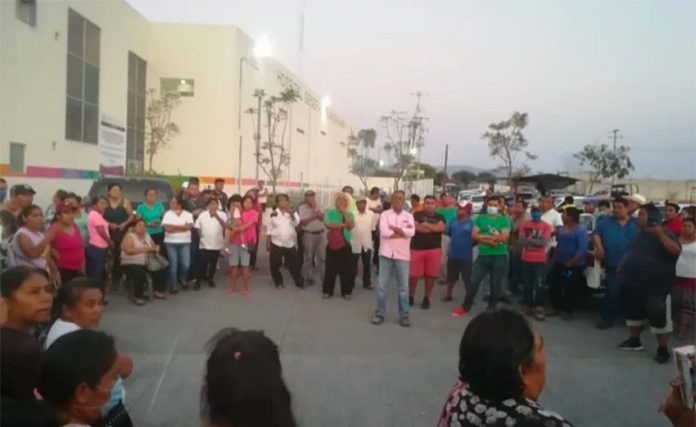
Citizens protest admission of Covid-19 patients in Axochiapan.
Residents of Axochiapan, Morelos, protested outside a hospital in the city to demand that the facility not accept any patients infected with Covid-19, threatening to burn the building down if it did.
Around 150 citizens gathered outside the Dr. Ángel Ventura Neri hospital, protesting on the grounds that they believe the hospital is underprepared to handle even its normal daily caseload, let alone an outbreak of Covid-19.
“Here the only thing that interests us is that the hospital knows plainly that we don’t want them to bring anybody [with Covid-19], and if they’re going to ruin everything then yes, we’re going to have problems,” said one man.
“We’ll burn [the hospital] down. If they don’t have the capacity to attend to the few who are already here, … do you think that they’re going to be able to deal with a crisis? It’s laughable,” said a woman in the crowd.
Another protester suggested they make Molotov cocktails to throw into the hospital and force the medical staff to evacuate.
“Why would we want a fucking hospital full of sick people? … The doctors already said they don’t have the capacity to treat these people, and we are being responsible by saying that if someone [with Covid-19] comes, we’re going to act,” said another.
The Morelos Health Ministry reported on Tuesday evening that there were seven confirmed cases of Covid-19 and one death from the disease in the state. Health officials there ruled out 72 other patients and still had 31 suspicious cases they were investigating.
State Health Minister Marco Antonio Cantú Cuevas said that the newest case in Morelos is a 37-year-old male from the southwestern part of the state who recently traveled to the United States.
Cantú urged citizens to respect people’s right to confidentiality and not to spread rumors or fake news that could alarm others.
Their response may border on panic, but the citizens of Axochiapan aren’t the only ones worried about their hospital’s capacity to confront the virus.
Hospital staff in nine México state municipalities protested on Monday to demand supplies to treat patients infected with Covid-19 and protect themselves from the deadly respiratory disease.