Home Blog Page 1596

Archaeologist casts new light on ancient people of western Mexico

0
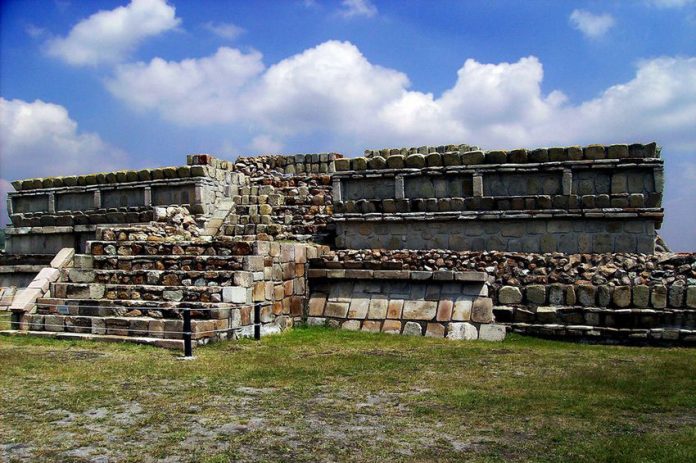
Many buildings at Plazuelas, in Guanajuato, follow ‘foreign’ architectural traditions.

A new book — written in excellent English — presents the first study of the archaeology of the whole of western Mexico, from the earliest to the latest cultural periods, by a single author.

It is also unique in that it is far more than a simple compendium of excavations and artifacts. Guadalajara-born archaeologist Eduardo Williams, who is now a professor at the Colegio de Michocán, tells us this up front in the book’s title: Ancient West Mexico in the Mesoamerican Ecumene.

His choice of the word ecumene (pronounced ee-CUE-me-nee) is significant. This expression which, to the Greeks meant the known, inhabited world, here refers to the community or civilization of Mesoamerica in a holistic sense: including its social, cultural and economic aspects.

Williams told me he decided to use this word in honor of his colleague archaeologist Phil Weigand (1937-2011) who worked tirelessly to promote the idea that archaeology must be dedicated to more than cataloguing potsherds and figurines.

The book, published this year by Archaeopress Publishing Ltd. of Oxford in, is 441 pages long and has over 320 illustrations. It first presents a history of the archaeological research carried out in western Mexico between 1880 and 1990, with special emphasis on Michoacán, Jalisco, Colima, Nayarit and Sinaloa. In these pages, Williams presents the work carried out by dozens of researchers in a huge number of papers, wherever necessary updating the information.
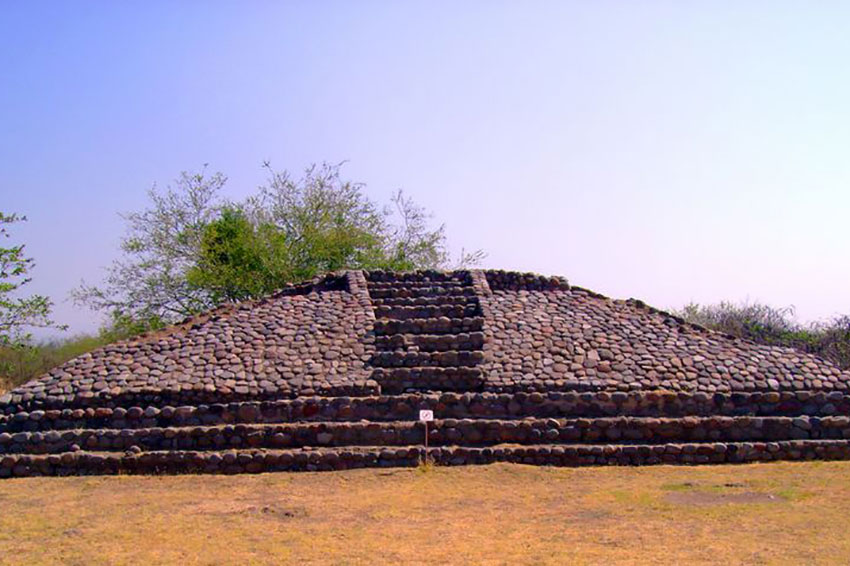
La Campana, Colima, was the largest pre-Hispanic population center in West Mexico.
La Campana, Colima, was one of the largest pre-Hispanic population centers in western Mexico.

This means that anyone interested in the archaeology of western Mexico will find everything they need at their fingertips, in one volume. For this alone, I would say that Williams deserves a great round of applause!

In the second half of the book, Williams focuses on the people who lived in the region from the Formative Period (starting in 1500 BC) through to the end of the Classic Period (900 AD). He looks at their beliefs, their culture, their economy, their relations among themselves and with their neighbors in central Mexico. This is indeed an ecumenical study, which brings to life the people who made those pots and erected those pyramids.

If you are not an archaeologist or anthropologist, but simply curious about the ancient history of western Mexico, you will probably see Eduardo Williams’ book as a treasure chest full of wonderful places to visit. For example, you’ll learn about the huge complex of ruins at Ixtlán del Río in Nayarit, one of the few sites where archaeologists were able to unearth and study a temple erected to Ehécatl, the Mesoamerican wind god and Quetzalcóatl’s avatar.

You’ll also discover that the famous circular pyramids of the Teuchitlán tradition are found not only in Jalisco, but also in Comala, Colima. And then you’ll read about the ruins of Plazuelas in Guanajuato, a complex site with plazas, mounds, causeways and a major ballgame court, all built between AD 600 and 900. Plazuelas was a busy place in its heyday, trading in turquoise from New Mexico, conch shells from the Caribbean, and jadeite from Guatemala.

Williams tells us that western Mexico is the part of Mesoamerica about which we have the least amount of information, because most fieldwork has been conducted in areas filled with impressive monuments such as the ruins at Teotihuacán, Monte Albán and Chichén Itzá.

“However,” he says, “recent research has revealed that west Mexico was actually a very important player in Mesoamerica’s cultural milieu, though its role is only now beginning to be fully-defined and understood.”
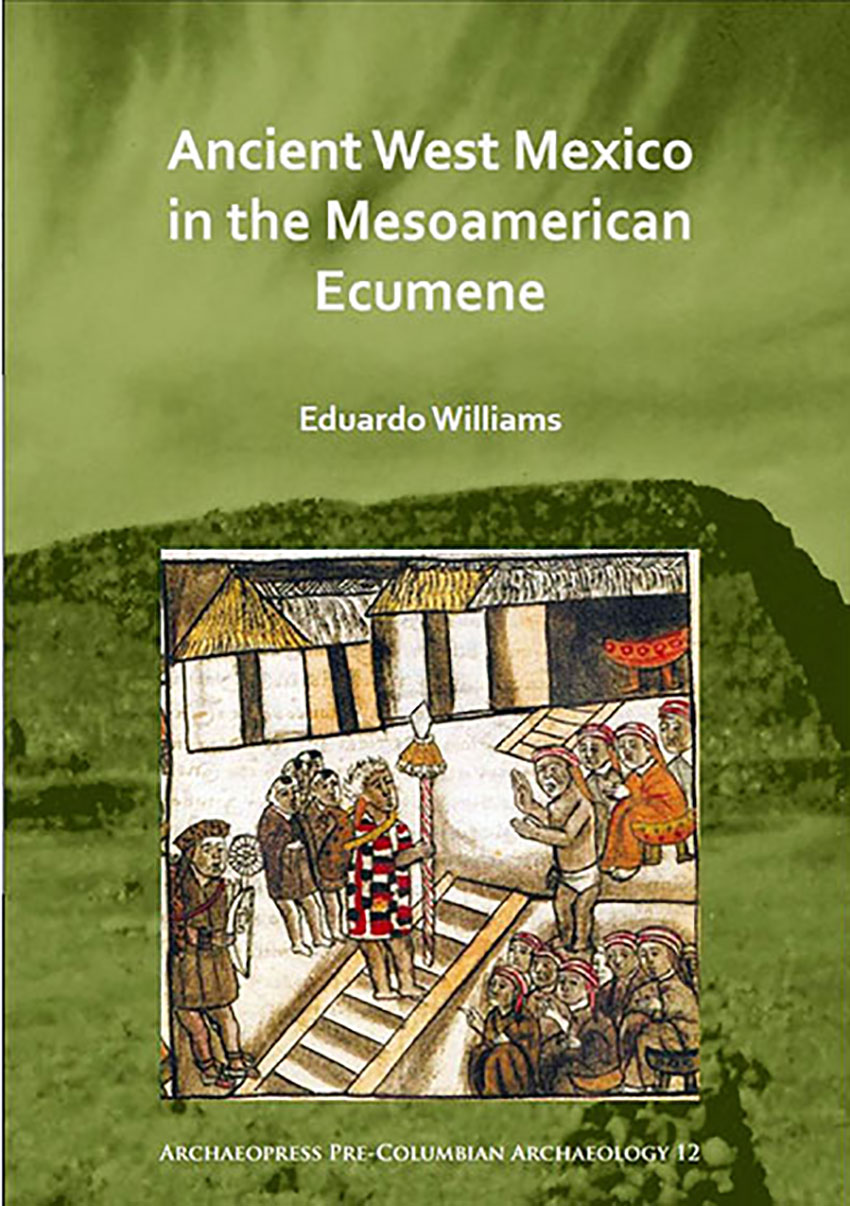
Eduardo Williams book presents 100 years of archaeological research.

Western Mexico, he points out, is the largest of the areas that make up the Mesoamerican ecumene, and also the most diverse in terms of its natural environments. It includes portions of the Mesa Central (central plateau), the NeoVolcanic Axis, the Mesa del Norte (northern plateau), the western Sierra Madre, and the Pacific Lowlands. It has highlands over 5,000 feet in altitude as well as a coastal plain of tropical lowlands.

What was the relationship of people living in these diverse ecosystems to their cousins in urban centers farther south?

According to Williams, a study of oxygen isotopes in the bone and dental remains of people who lived in Teotihuacán indicated that around one-third of them were immigrants:

“Christine D. White and her colleagues determined that, before coming to Teotihuacán, these people had grown up and lived in places like Michoacán, Yucatán and the Gulf Coast of Mexico. The isotopes of oxygen are different in each of these places. This data, 20 years old, puts people from West Mexico in Teotihuacán.”

What were these people doing in Teotihuacán? Williams suggests we look at the trade routes linking the people of central Mexico to communities far to the north and south. By way of example, he tells us that “Turquoise (and other green stones) had to be imported from far-away lands in northern Mesoamerica (including the present day southwestern United States) and southern Mesoamerica — and turquoise was the most precious material for these people.”

A person from Michoacán who found himself in Teotihuacán may have been interacting with the local people on equal terms, suggests Williams.  Rather than a beggar or a poor immigrant, he may have been a major player in the economic system, perhaps an importer of turquoise from Zacatecas or the U.S.A. This point of view, says Williams, “is reinforcing the idea of the ecumene as a universe of interaction.”

[soliloquy id="106630"]

Supporting this perspective is a discovery made in Sinaloa in the 1940s by American archaeologists. “They began to find all kinds of material from the Mixteca-Puebla tradition,” Williams told me. “They asked: what were these people doing way over here?”

Williams suggests a theoretical model that would help us understand this and many other phenomena of interaction among the major cultures of Mesoamerica.

“I’m looking for a possible explanation as to how or why people were going from Cholula (just west of the modern city of Puebla) all the way up to Sinaloa. I think we can use the Silk Road, which linked China and Europe from as far back as the second century BC, as an external model. In addition to silk, jade, metals and other items of interest to the elite, people were exchanging ideas. The spread of a tradition of the Mixteca-Puebla coincides with the spread of an iconography based on Quetzalcóatl.

“Do we understand Quetzalcóatl as a personality? Probably not 100%, but the fact remains that this major symbol, which was the most important deity in Cholula in the Classic and Postclassic periods, appears along this trade route from Cholula to Lake Chapala to Nayarit and to Sinaloa.”

Williams cites British historian Peter Frankopan who, he says, looks upon the Silk Road as a conveyor not only of goods, but also of ideas, from early prehistory all the way to the 21st century. “For the early empires,” says Williams, “the richest part of the world was the East, not the West. The British, the French and the Germans were poor compared to China, India, Pakistan and Persia.

“But trade began to flow from the most remote parts of Asia to Europe and afterwards came the great empires of the British and the French and so on. So I think we can say the same about Mesoamerica: the richest cultures, in terms of architecture and art, for example, were in central Mexico, but it was still important for them to explore the farthest corners of their world.”

Reviewing this book, professor Robert B. Pickering of the University of Tulsa says, “For far too long, west Mexican prehistory has been the poor stepchild of Mesoamerican studies. Eduardo Williams’ book demonstrates the connections between this neglected region and the better known areas of the Mesoamerican world … I think this will be the “go-to” volume for anyone who wants either a broad overview or to compare different regions and developments (e.g. settlement, trade, social organization) through time.”

If all this has whet your appetite, look for Ancient West Mexico in the Mesoamerican Ecumene on Amazon, or save a lot of money by downloading the e-publication version (PDF) from Archaeopress.

The writer has lived near Guadalajara, Jalisco, for more than 30 years and is the author of A Guide to West Mexico’s Guachimontones and Surrounding Area and co-author of Outdoors in Western Mexico. More of his writing can be found on his website.

CORRECTION: The earlier version of this story stated that La Campana, Colima, was the largest pre-Hispanic population center in western Mexico. In fact, it was one of the largest.
Maker of Corona beer to suspend production Sunday

0

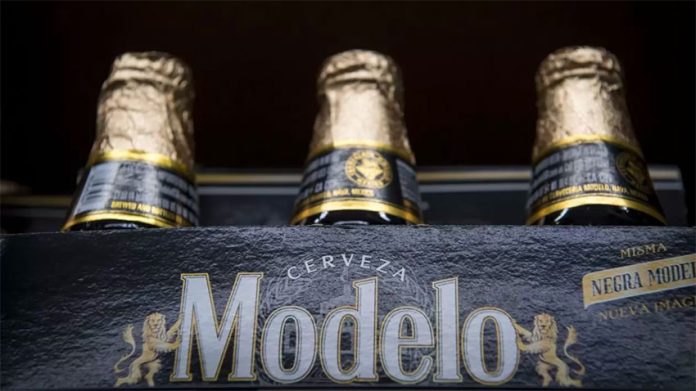
The brewer of Corona, Negra Modelo and other popular Mexican beers announced Thursday that it will suspend production and sales on Sunday.

Grupo Modelo said it will stop both brewing and selling beer in response to the federal government’s Covid-19 emergency declaration, which suspends all nonessential activities until April 30.

The announcement was the latest bad news for beer drinkers as other companies announced earlier this week that they are halting beer production and rumors of a prohibition triggered panic buying in several states.

Beer production is not considered an essential activity as defined by the emergency declaration, but Grupo Modelo said the government could change that by declaring beer an essential agro-industrial product.

It said it would be ready to reinitiate production with as many as 75% of its employees working from home “in the case that the federal government considers it appropriate to issue a clarification confirming beer as an agro-industrial product.”

It said that in addition to direct employees, the beer industry impacts over 15,000 families who sow 150,000 hectares of malt barley every year in Mexico. The value chain also includes 800,000 grocers and shopkeepers who depend on beer for as much as 40% of their revenue.

Grupo Modelo has the capacity to produce a little over 82 million hectoliters of beer per year in its eight plants located in Yucatán, Zacatecas, Coahuila, Guadalajara, Oaxaca, Sinaloa, Hidalgo and Mexico City.

Its portfolio includes 46 national beer brands, including Corona, Modelo, León, Victoria, Barrillito, Pacífico and others.

The company said that it would make announcements in the coming days about further actions it will take to combat the pandemic. In March it donated 300,000 bottles of hand sanitizer made with alcohol produced in its breweries.

“We are one of the first companies in Mexico that has implemented and strictly followed the hygiene and safety recommendations of the Mexican government and the World Health Organization,” Grupo Modelo said.

As of Friday morning there were 1,510 confirmed cases and 50 deaths from the coronavirus in Mexico.

Source: El Financiero (sp), Milenio (sp)

There were 13 coronavirus deaths on Thursday; cases total 1,510

0
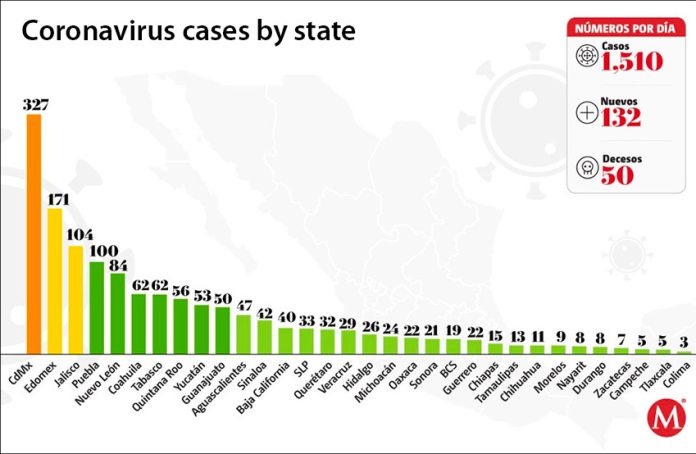
Mexico City leads with the number of Covid-19 cases, as of 7:00 p.m. Thursday.

Mexico’s coronavirus death toll rose to 50 on Thursday after health authorities reported the passing of 13 Covid-19 patients, while the number of confirmed cases of the disease increased by 132 to 1,510.

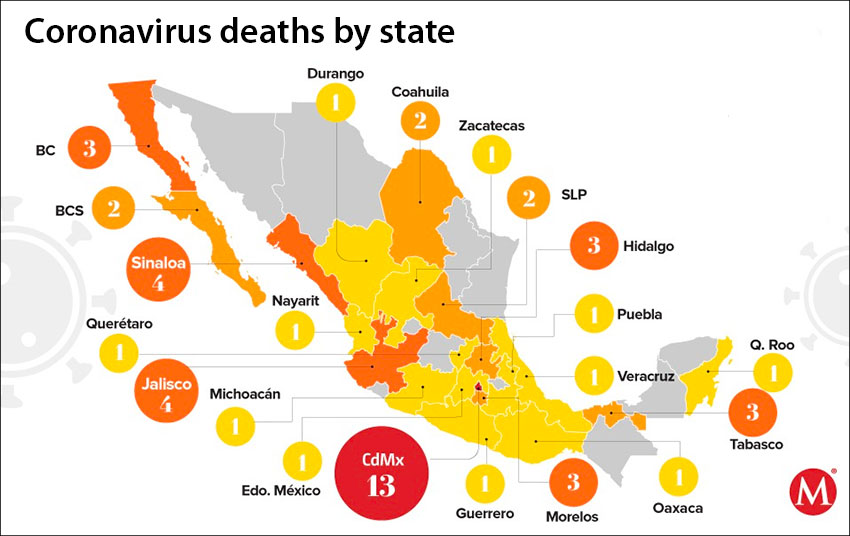
Mexico City has recorded the highest number of deaths, with 13, followed by Sinaloa and Jalisco with four each.

Three Covid-19 patients have died in each of Hidalgo, Morelos, Tabasco and Baja California, while San Luis Potosí, Coahuila and Baja California Sur have reported two deaths each. Eleven other states have reported a single death from Covid-19.

Health Ministry Director of Epidemiology José Luis Alomía told a press conference Thursday night that the ages of the patients who have died range from 26 to 85. Thirty of the deaths have been of people aged 55 or older while the other 20 were under 55.

Of the 50 who have died, 43 were men and the other seven were women.

The number of deaths due to Covid-19 as of Thursday evening.

Just under half of those who have died from Covid-19 had hypertension, making the condition the most prevalent comorbidity. Almost 46% had diabetes, 40.5% suffered from obesity, 19% had chronic obstructive pulmonary disease and 16% had chronic kidney problems.

In addition to the 1,510 confirmed Covid-19 cases, Alomía reported that there are 4,653 suspected cases and that 7,822 people have tested negative. A total of 13,985 people have now undergone coronavirus testing.

Mexico City has the highest number of confirmed cases with 327, followed by México state, Jalisco, Puebla and Nuevo León, where there are 171, 104, 100 and 84 cases, respectively.

Coahuila has the sixth highest number of confirmed cases with 62. Around half of the people confirmed to have Covid-19 in the state are medical workers at the Mexican Social Security Institute General Hospital in Monclova.

With 3.63 people per 100,000 residents confirmed to have Covid-19, Mexico City also has the highest number of cases in per capita terms. Aguascalientes, where there are 47 confirmed cases, is next with a per-capita rate of 3.28 followed by Quintana Roo with a rate of 3.25.

Just under six of every 10 coronavirus infections have been detected in males while just over four in 10 correspond to females.

Alomía said that 19% of people with Covid-19 have required hospitalization while the other 81% have not. However, among people aged over 65, almost 40% have required hospital treatment.

“This confirms that being an older person continues to be a significant risk factor,” Alomía said.

Globally, the number of confirmed Covid-19 cases has now passed 1 million and more than 55,000 coronavirus-related deaths have been reported.

The United States has reported the highest number of cases, with around 245,000 as of Friday morning, while Italy has the highest death toll with almost 14,000 coronavirus-related fatalities.

Source: Milenio (sp), El Financiero (sp) 

On a tweet by Trump, Mexican crude soars 51%

0
pemex

The price of Mexico’s export crude increased by more than 51% on Thursday after United States President Donald Trump said on Twitter that he expected Saudi Arabia and Russia to cut oil production significantly as demand plummets due to the coronavirus pandemic.

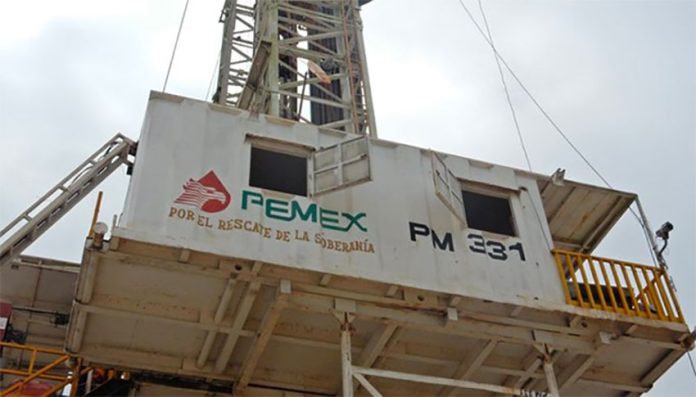
Pemex reported that a barrel of Mexican crude was selling at US $16.05 per barrel at the close of trading on Thursday, an increase of $5.44, or 51.3%, compared to Wednesday’s closing price of $10.61.

The financial group Banco Base said that the main reason for the gain was a tweet sent by Trump on Thursday morning although it acknowledged that China’s decision to purchase oil to increase its reserves was also a factor.

“Just spoke to my friend MBS (Crown Prince) of Saudi Arabia, who spoke with President Putin of Russia, & I expect & hope that they will be cutting back approximately 10 Million Barrels, and maybe substantially more which, if it happens, will be GREAT for the oil & gas industry!” Trump wrote.

“Could be as high as 15 Million Barrels. Good (GREAT) news for everyone!” The U.S. president added in a second tweet.

Saudi Arabia and Russia entered into an oil price war in March after the latter country refused to reduce its production even as demand dropped due to the coronavirus pandemic. Saudi Arabia, the world’s second largest oil producer after the United States, increased its production in retaliation, flooding international markets with cheap crude.

Oil prices, including those paid for Mexican crude, slumped in response. On Tuesday of this week, a barrel of Mexican crude was selling for just $10.37, its lowest level since March 1999.

The West Texas Intermediate and Brent prices, the two main benchmark prices for oil, have also taken a hit recently but both closed more than 20% higher on Thursday after Trump’s Twitter intervention even though there is doubt about whether Saudi Arabia and Russia will actually cut their production.

Neither of the two countries publicly committed to a reduction and a spokesman for the Russian president said that Putin had not spoken with the Saudi Crown Prince, Mohammed Bin Salman.

“There was no conversation,” said Dmitri S. Peskov.

Source: Milenio (sp) 

Coronavirus has closed more than 1,000 hotels, more to follow

0
Hotels in Mazatlán are among those that are set to close.

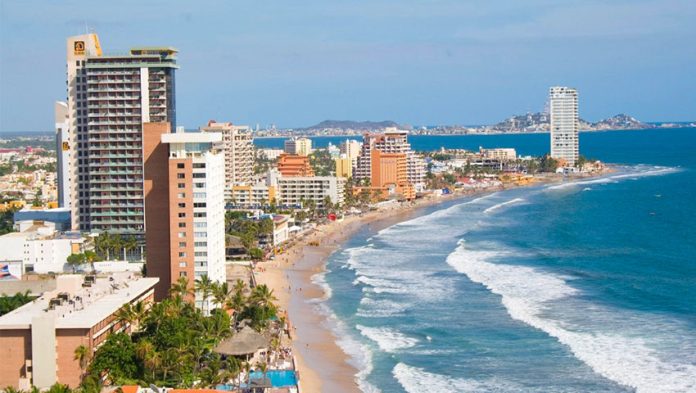
More than 1,100 hotels across Mexico have temporarily closed due to the coronavirus pandemic and the number will swell in the coming days as orders that they shut down take effect in Sinaloa and Baja California Sur.

The Mexican Hotel and Motel Association (AMHM) said that among the hotels that have closed are 645 run by small and medium-sized businesses rather than large chains. Cancún and Mexico City, where authorities ordered all hotels to shut as of Wednesday, have seen the highest number of closures.

More than 500 hotels in Sinaloa will be forced to close while around 460 in Baja California Sur have been told that they can’t remain open after April 5.

The AMHM said that occupancy levels have dropped drastically at hotels that remain open and warned that thousands of small hotels and guesthouses could go bankrupt. Without guests, they will have no income to meet their tax obligations and to pay for services such as electricity, the association said.

However, a new source of revenue for some could come from providing beds for Covid-19 patients should Mexico’s health system become overwhelmed.

The president of the National Tourism Business Council said in a radio interview that authorities had asked hotel owners and CEOs whether they were prepared to accommodate patients should the need arise.

“We told them yes, of course,” said Braulio Arsuaga, director general of the Presidente hotel group.

The tourism industry, and many other sectors, is set to lose massive amounts of revenue over the coming months as Mexico and countries around the world seek to limit the spread of Covid-19 by implementing strict social distancing measures and ordering non-essential businesses to close.

All of Mexico’s airlines have cut the number of flights they are offering with the exception of Aeromar as the demand for both domestic and international services has largely collapsed.

The federal government has declared a month-long health emergency scheduled to run through April 30 but if social distancing measures fail to substantially contain the spread of Covid-19, there is a possibility that even stricter restrictions, such as an obligatory home quarantine, will be enforced, exacerbating the impact on the economy.

If Mexico succeeds in getting the coronavirus outbreak under control, the president of the Hotel Association of Cancún and Puerto Morelos believes that tourism could begin to recover in those destinations in July.

Roberto Cintrón said in an interview that hotels on the Caribbean coast could see occupancy levels of 50% in July and August provided that  Mexico doesn’t present a coronavirus infection risk to tourists.

“If we want to be back as soon as possible, we have to be healthy. … When people from other countries can travel [again], they won’t travel to a place where there is a risk of infection,” he said.

Source: Milenio (sp), Reportur (sp)

Monclova, Coahuila, Mexico’s Wuhan: epicenter of coronavirus battle

0
Staff at the IMSS hospital in Monclova stage a protest on Wednesday.

Monclova, Coahuila, has become an epicenter of the growing Covid-19 pandemic with more than 30 public healthcare workers from a single hospital in the northern city confirmed to have the infectious disease.

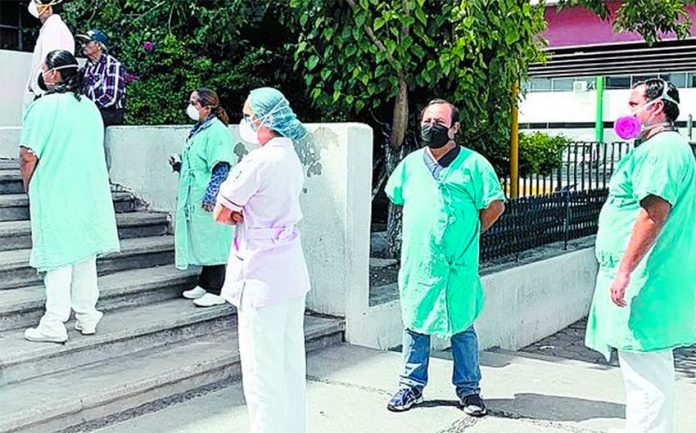
At least 32 doctors and nurses at the Mexican Social Security Institute (IMSS) General Hospital have tested positive for the novel coronavirus that originated in Wuhan, China, late last year and one doctor has died.

The concentrated outbreak is the largest in the country, leading the newspaper Milenio to dub Monclova “the Mexican Wuhan.”

About two-thirds of the 57 confirmed Covid-19 cases in Coahuila are in Monclova, a city of more than 300,000 located about 200 kilometers north of the state capital Saltillo and about the same distance south of Piedras Negras on the Mexico-United States border.

The first Covid-19 case in the city was detected on March 18 when a truck driver presented at the General Hospital’s emergency department with symptoms of the disease. The man died 10 days later and on Tuesday of this week, the 45-year-old doctor who treated him also succumbed.

The deceased doctor is believed to have transmitted Covid-19 to his colleagues while on duty. Susana Nájera Sánchez, an emergency department doctor, said that there is a lack of personal protective equipment (PPE) at the hospital.

Staff protested the shortages on Wednesday and also demanded that all personnel be tested for Covid-19. IMSS official Eduardo Robles said later that a batch of PPE supplies had arrived at the hospital and that the facility’s medical director would be stood down due to “his age.”

Despite the large coronavirus outbreak among the IMSS medical personnel in Monclova, federal and state authorities decided at a meeting on Wednesday not to close the General Hospital. However, they said that the facility would be thoroughly sanitized to avoid any possibility of the outbreak widening.

Doctors in at least two other states have died after contracting Covid-19. Arturo Olvera Martínez, a doctor with more than 22 years experience in the public health system in Hidalgo who had been treating coronavirus patients, died on Tuesday, while 38-year-old IMSS doctor Renzo Ramírez passed away the same day in Zacatecas.

The latter is believed to have been infected by his sister who recently traveled to France, said Zacatecas Governor Alejandro Tello.

Medical personnel across the country have staged protests to demand they be given the necessary PPE and supplies to treat patients with Covid-19, which had infected 1,378 people in Mexico as of Wednesday and claimed the lives of 37.

Source: Milenio (sp), La Jornada (sp) 

‘Protect the poor first:’ AMLO rejects tax breaks, deferrals for business

0
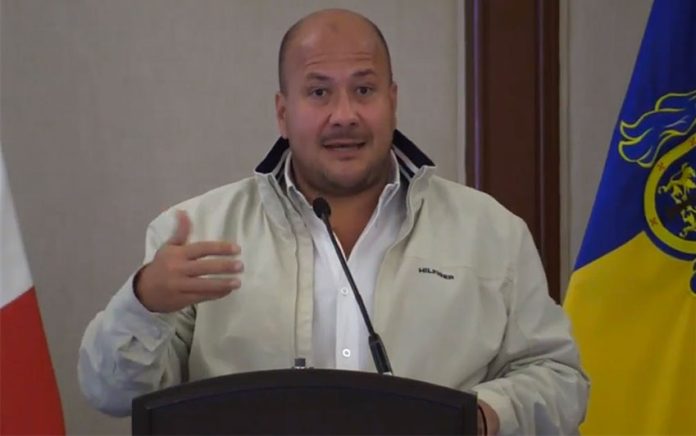
Jalisco Governor Alfaro urged the president to reconsider support for the private sector.

Faced with criticism from businesses lobbying for economic incentives to help them ride out the coronavirus pandemic, President López Obrador defended his economic strategy yesterday of directing aid to Mexico’s poor and elderly populations.

The charge is being led by Jalisco Governor Enrique Alfaro Ramírez, who held a press conference Wednesday on behalf of the private sector urging the president to reconsider his stance.

Central to this drive is the Business Coordinating Council (CCE), which requested a deferral of annual tax payments for six months and allowing the payment of these taxes to be made in installments and other similar measures it deemed essential to keeping businesses afloat as the pandemic runs its course. 

“Today we want to ask the president of Mexico, with respect, that the request the entrepreneurs of this country are making can be met and can be the reason for a very broad agreement at the national level to find ways we can support entrepreneurs and ensure that people don’t lose their jobs,” the governor said. 

López Obrador acknowledged Alfaro and the CCE’s request but held firm to his plan to first put aid in the hands of the country’s neediest and most vulnerable populations. 

Citing previous programs offering economic aid to businesses during times of crises, such as the scandal-ridden Banking Fund to Protect Savings (FOBAPROA) —  a contingencies fund that converted bank debt into public debt during the financial crisis of the mid-90s, López Obrador vowed to protect the country from corrupt “neoliberalism” policies employed by his political predecessors.

This approach to the economic consequences of the coronavirus pandemic is well in line with the populism that defined both his campaign and his presidency thus far. 

Any deferral or reduction of taxes means less money in the government’s coffers, López Obrador explained, and therefore fewer resources available to provide for “older adults, girls and boys with disabilities and peasants and to grant credits to small family businesses.”

“I am confident that we are going to achieve a speedy economic recovery because we have very solid foundations,” López Obrador said, adding that six million Mexican seniors have already received public aid.  

“Some economic sectors want us to apply the same recipes as before,” he stated. “That, faced with a crisis, we ask the people to tighten their belts. Not anymore. We have to protect the poor first.” 

Source: Reforma (sp)

All beaches declared closed during emergency period

0
mexican beach
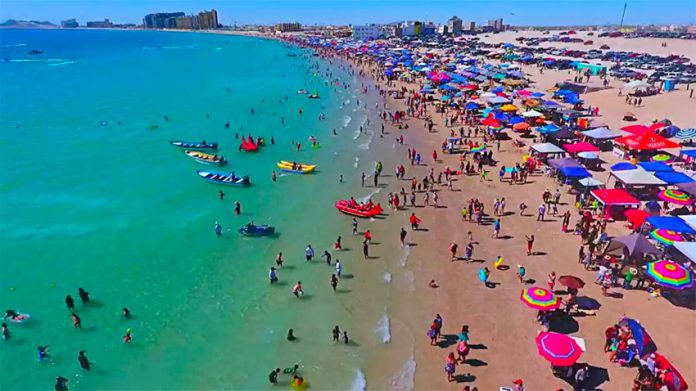
Beachtime has been deemed nonessential.

The federal government has officially deemed beach tourism a nonessential activity, ordering state and local governments to close beaches in an attempt to mitigate the spread of Covid-19.

Deputy Health Minister Hugo López-Gatell told a press conference on Thursday that the closure order applies to every beach in the country until the end of the national emergency on April 30.

“The order has been given. It obliges state and municipal authorities to take coherent measures and suspend tourist activity on beaches, be it international or local tourism,” he said.

Other states had already begun to close beaches earlier this week, including Baja California Sur, Baja California and Oaxaca, where local authorities closed down the country’s only nudist beach, Zipolite.

Like beaches throughout Mexico, Zipolite is a big draw during the Semana Santa (Easter Week) vacation in April.

Authorities in Tamaulipas and Sonora had also begun to close beaches before the order, and Guerrero announced Wednesday that its beaches would be closed beginning Thursday.

“The state government makes this delicate decision in an unsatisfactory setting: we have had to choose between protecting life and suspending economic activity,” the state government said in a press release.

It said that the economy will always be recoverable as long as the human factor still exists and urged citizens to stay at home and practice other methods of social distancing.

It remains to be seen if there will be enforcement.

Authorities in the state have also canceled flights and cruises and closed hotels and other gathering places to avoid people assembling in groups.

Sources: AS (sp), El Financiero (sp)

Experts charge government’s coronavirus case numbers not credible

0
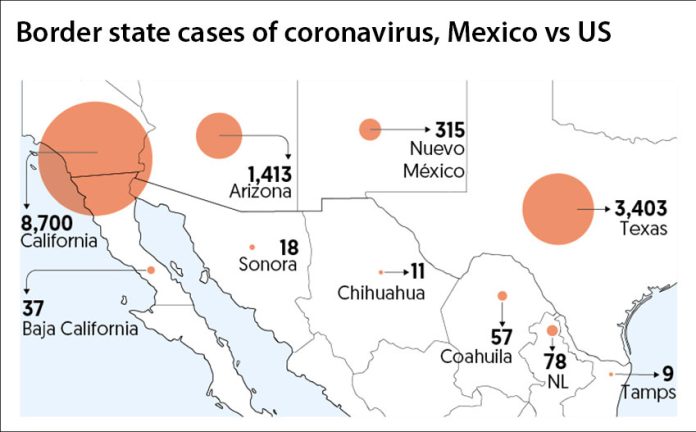
Confirmed cases of coronavirus in border states of both countries. US border cases totaled 13,831.
Confirmed cases of coronavirus in border states of both countries, as of Thursday. US border cases totaled 13,831. The Mexico total was 210. el financiero/ministry of health/Johns Hopkins University

The federal government’s coronavirus case numbers – 1,378 confirmed cases as of Wednesday – are not credible, according to two epidemiological experts who spoke with the newspaper El Financiero.

Alheli Calderón, a medical researcher at the College of the Northern Border, said that it is not plausible that Mexico’s northern border states have so many fewer cases of Covid-19 than the states they adjoin in the U.S.

California, for example, had around 10,000 confirmed cases as of Thursday morning but Baja California had just 37. Arizona had more than 1,400 cases whereas Sonora only had 18, while Texas and New Mexico had more than 4,500 confirmed cases between them as of Thursday morning but the four Mexican states they border – Chihuahua, Coahuila, Nuevo León and Tamaulipas – only had a combined total of 155 cases.

“The Covid-19 infection figures in Mexico are not reliable. I would trust the [number of] deaths more, it’s a more accurate number,” Calderón said.

“We shouldn’t pay too much attention to the number of confirmed cases because the Health Ministry has said that it only has 9,100 tests scheduled [almost 12,300 tests have now been performed] in the first stage,” she said, adding that more than half a million Covid-19 tests have been carried out in the United States.

Calderón also pointed out that the number of tests completed in Mexico is much lower than countries such as South Korea, Italy and the United Kingdom.

Malaquías López, an epidemiologist and professor of medicine at the National Autonomous University, agreed that the government’s Covid-19 case numbers are not a reliable indication of the presence of the disease in Mexico. He claimed that health authorities are only allowing people with severe symptoms of Covid-19 to get tested for the disease.

“There is a deliberate concealment of cases,” López said, adding that the only accurate number that will be known in Mexico at the end of the Covid-19 pandemic is that for coronavirus-related deaths.

Source: El Financiero (sp) 

Halting beer production, alcohol sales triggers panic buying

0
Consumers stock up in Nuevo León.

An announcement that beer production and all alcohol sales will be suspended in Nuevo León beginning on Friday shocked consumers, sending many to head to liquor vendors to stock up.

Governor Jaime Rodríguez Calderón announced at a Covid-19 update press conference on Thursday morning that brewing beer is not considered an essential activity as defined by the federal government’s Covid-19 emergency declaration, calling the decision to halt production “logical.”

“I came to an agreement with the mayors that if there is not going to be distribution, there shouldn’t be sales, period. If alcohol is sold and people are cooped up at home, we’re going to generate conflicts, problems and fights,” he said.

The governor initially said he wanted to enact a statewide prohibition on alcohol, but made sure to clarify before the end of the press conference that that was not what his administration is doing.

“We’re not [initiating a prohibition]. I said the beermakers won’t work, and if there’s no distribution there should be no sales,” he said.

But talk of prohibition appeared to outweigh his call to refrain from panic buying alcoholic beverages, and people rushed to the stores to grab what they could.

Fears of possible prohibitions also sparked panic buying in Tampico, Ciudad Madero and Altamira, Tamaulipas, on Tuesday.

In Mexico City, Mayor Claudia Sheinbaum was forced to make clear on Twitter that “No one has declared a prohibition,” after images of signs in stores saying sales would be stopped until April 30 began to make rounds on social media.

“I’m asking stores not to close or put conditions on the sale of alcoholic beverages,” she said. “If a borough decides to do it, we will make announcements.”

Other states enacting either halts in production or limitations on sales include Tabasco, Yucatán, Sonora, Quintana Roo, Campeche and Aguascalientes.

Beer distributor Cuauhtémoc Moctezuma suspended production at its plant in Coahuila, and the Heineken Group stopped producing all of the brands it brews and bottles in Mexico, including Tecate, Indio, XX, Carta Blanca, Affligem, Sol, Miller Lite, Lagunitas, Coors Light and Heineken.

The suspension of nonessential activities is a strategy of the federal government to mitigate the spread of Covid-19. As of Thursday there were 1,378 confirmed cases of the coronavirus in Mexico and it had claimed 37 lives.

Sources: Milenio (sp), El Financiero (sp)