Home Blog Page 1614

The great rocks of Big Nose Mountain, Jalisco

0
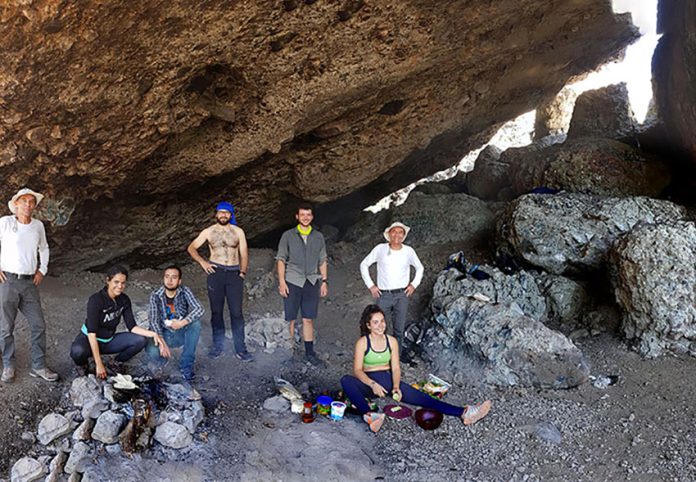
Inside La Casa de Piedra shelter cave.
Inside La Casa de Piedra shelter cave at Big Nose Mountain.

I was in the little town of El Limón, Jalisco, located 110 kilometers southwest of Guadalajara, with my friend Jorge Monroy, the muralist, gazing up at a steep hill looming high above us.

“This small mountain,” said Jorge, “is called El Narigón, the Big Nose, because it’s shaped like a long nose with a high, narrow bridge. It’s an important local landmark for all the towns around here. Because of El Narigón, people have to walk or drive a long way to get, for example, from here to Ejutla, which lies just 9 kilometers north of us.”

“See that rock up at the very peak?” chimed in Marcela Michel, who teaches yoga in El Limón. “We call that La Casa de Piedra, The Rock House, because there’s a huge shelter cave up there and that’s where we’ll be eating today.”

To me, the Rock House looked awfully high and awfully far away. “We’re going to hike way up there?” I asked, a bit surprised because Jorge had asked them to take us on “una caminata fácil,” an easy hike.

“Yes, we’re going to follow a circular route. We’ll go up ‘El Camino Feo’ (the ugly way) and come down via El Sendero de las Mil Piedras (The Path of a Thousand Rocks), finally arriving at El Tepame, The Acacia Grove.”
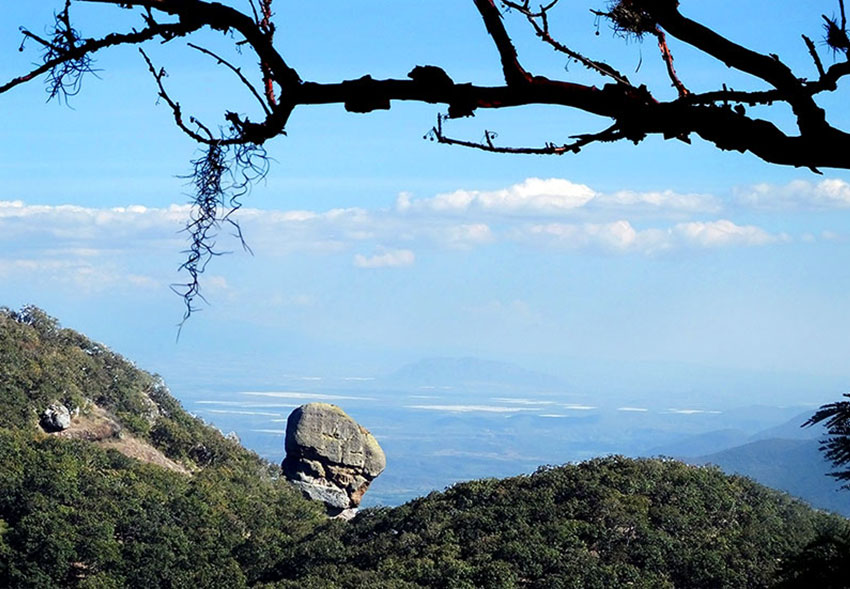
Spanish moss and a stranded rock.

True to its name, the trail first took us through thorny scrub which, however, became less and less feo the higher we climbed, but also grew steeper and steeper. Fortunately, I had brought along two bottles of Electrolit, my favorite hydration choice by far, invented and made in Guadalajara.

After hours of climbing, panting and sweating, we began to catch glimpses of gorgeous landscape stretching off into the distance, and at the same time, the scrub gave way to oak, copal and papelillos, often called “tourist trees” because of their peeling red bark.

The Rock House turned out to be 928 meters above the spot where we started hiking. The “house” had been formed when one impossibly large rock fell over and leaned against another impossibly large rock, producing a convenient shelter which has served the local mountain climbers since time immemorial.

The last few hours of the climb I had been moving at a snail’s pace but, fortunately, most of the younger members of our group had sprinted on ahead to start cooking lunch, so when Jorge and I finally staggered into La Casa de Piedra, delicious smells told us that we had arrived just in time for a great meal of tacos and pico de gallo (rooster’s beak), a non-liquid, chopped salsa, which in this case included bits of mango.

Somehow those hardy chicos and chicas from El Limón had also managed to carry a two-gallon container of orange juice up there, to which they had added a bit of baking soda: the local version of Electrolit, and a lifesaver for Jorge and me, as we had nothing left to drink.

After eating and snoozing, Marcela led us to El Gran Mirador, the Great Lookout Point, which lies 200 meters south of the Rock House, insisting that we could not possibly start our descent until we had seen it.
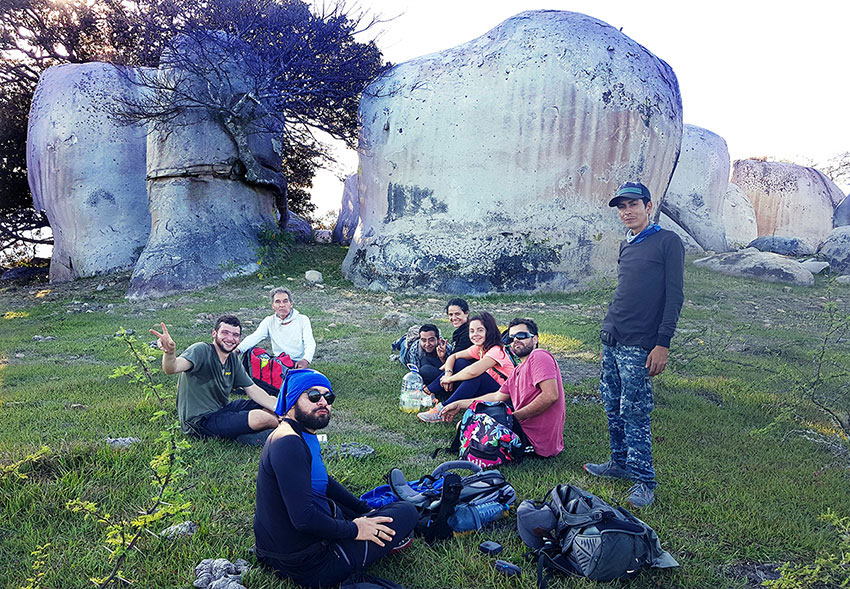
El Tepame Meadow, a favorite picnic spot.

Well, I’ve been to a lot of miradores in Mexico, and I must say this one ranks among the most dramatic, because you don’t realize you’ve come to it, as you emerge from a tunnel-like trail, until suddenly the horizon expands a thousand-fold and you find yourself teetering on the edge of a great rocky cliff overlooking a vast panorama. I could imagine Also Sprach Zarathustra playing in the background as the glorious view unveiled itself.

We now made our way west along a high, narrow ridge where the vegetation was quite curious. On the one hand, there were rocks covered with lichen, and oak trees dripping with Spanish moss, but at the same time there were plenty of acacias and cacti, which I would expect at lower altitudes.

During this part of our hike we came upon three or four more lookout points giving us great views both to the north and to the south. Then our path began to wind through a literal forest of huge white rocks. We were now on the Sendero de las Mil Piedras.

This scene was mind-boggling. In Jalisco, people go to the town of Tapalpa to gaze upon the local Piedrotas, Great Rocks … but there aren’t more than a handful of them to be seen.  I turned to my compañeros: “Your piedras make Tapalpa’s Great Rocks look like marbles. Wait till the rest of the world discovers this incredible sendero.”

We continued threading our way through countless magnificent monoliths until at last we came to El Tepame, a gorgeous flat meadow surrounded of course by still more giant rocks: a favorite place for local people to come for a picnic.

So long did we linger at El Tepame, sharing all the snacks we had left, that darkness overtook us on this last leg of our trek and we were soon making our way down the steep trail by the light of headlamps and flashlights.

[soliloquy id="104155"]

By this time my legs felt like rubber. “How much farther?” I would ask Marcela over and over, as we descended.

“Falta menos!” she would reply again and again. “There’s less to go than there was before,” scant comfort for my aching body which now wanted nothing more than to collapse into bed.

At last we reached El Limón, 12 hours after we had started, having covered 15 kilometers and having ascended and descended a vertical distance of over 1,000 meters.

The next day some of the local people were already talking about building a road up to El Tepame, from which visitors could then hike as far as they want along the Sendero de las Mil Piedras which, I think, surely deserves a place among the most beautiful trails in the world.

Check this hike out on Wikiloc under “Casa de Piedra.” And don’t forget your Electrolit: you may need several bottles if you’re over the hill!

The writer has lived near Guadalajara, Jalisco, for more than 30 years and is the author of A Guide to West Mexico’s Guachimontones and Surrounding Area and co-author of Outdoors in Western Mexico. More of his writing can be found on his website.
Holdups, gunfire among perils census takers face on their rounds

0
Taking the census is proving to be dangerous work.

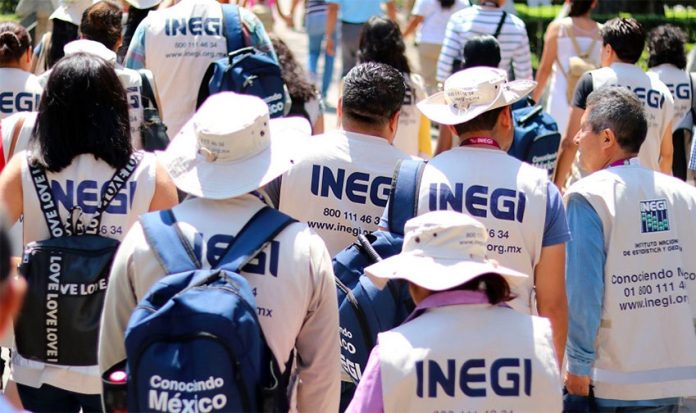
Conducting the 2020 national census is proving to be a dangerous business: census takers have been mugged in at least two states and Mexico City and one interviewer was shot.

At least seven census takers employed by the National Institute of Statistics and Geography (Inegi) to carry out the 2020 Population and Housing Census were held up in Juchitán, Oaxaca, on Thursday.

According to a report filed by a local Inegi coordinator, the census takers were working in the 11 de Septiembre neighborhood when they were intercepted by two men on a motorcycle.

The assailants stole five mobile telephones, 1,000 pesos in cash and a motorcycle from the census takers, according to a report by the newspaper El Universal. The victims said that nobody was injured during the robbery and explained that the police carried out an operation to search for the criminals but no arrests were made.

Other census takers in Juchitán, a municipality in the Isthmus of Tehuantepc region almost 300 kilometers south of Oaxaca city, suspended work on Thursday afternoon after hearing about the robbery.

The muggings followed a gun attack on a census taker in the same city on Monday. A 37-year-old male Inegi employee was shot in the abdomen, chest and forearm while working in the Juchitán neighborhood of Magisterio Democrático. He sustained serious injuries but is now in stable condition. The perpetrators of the attack fled on a motorcycle, Inegi said.

Since that attack, police have accompanied some census takers as they carry out their work in Juchitán but a lack of officers means that all Inegi interviewers cannot be protected all of the time.

“We can’t go out to to work under these conditions of insecurity,” one Juchitán census taker told El Universal.

Census takers have also been targeted by criminals in Puebla, where six muggings have been reported. Most recently, two Inegi employees had their mobile telephones and electronic census equipment stolen while working in the municipality of San Martín Texmelucan on Thursday afternoon. The census takers were reportedly threatened by two men who approached them on a motorcycle.

Other incidents have occurred in the municipalities of San Felipe Teotlalcingo and San Salvador el Verde, the Puebla-based newspaper Puntual reported.

In Mexico City, three census takers were subjected to violence between March 2 and 6, the first week that the 2020 census was conducted.

On March 3, a 39-year-old female Inegi employee was held up at gunpoint in the northern borough of Gustavo A. Madero by a man who stole her mobile phone. Later the same day in the same borough, a 32-year-old woman was threatened with a firearm after knocking on a door in the 2 de Octubre neighborhood.

The man demanded that she hand over the electronic device she was using to record census data but she refused and fled, ABC Noticias reported.

Two days later, on March 5, a man was arrested in the sprawling eastern borough of Iztapalapa after stealing the mobile phone and census device of a male Inegi employee.

More than 150,000 census takers plan to visit some 45 million homes by March 27 to collect information such as the age, ethnicity, religion, marital status, education and employment status of more than 125 million Mexicans. Inegi last conducted a national census in 2010.

Source: El Universal (sp), Animal Político (sp) Diario Puntual (sp), ABC Noticias (sp) 

Jalisco to devote 2.5bn pesos this year to overhauling its highways

0
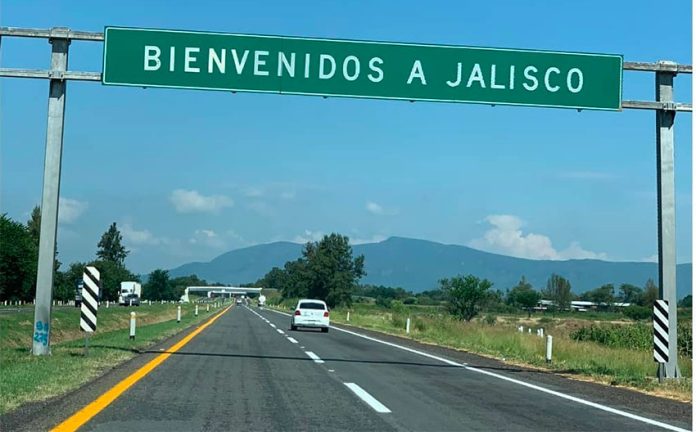
Welcome to Jalisco, where better highways have been promised.

The Jalisco government announced that it will invest over 2.5 billion pesos (US $114 million) this year to renovate the state highway system.

Along with the funds bankrolled for the project in 2019, the investment will amount to over 8.76 billion pesos (US $399 million) for the two-year period.

Governor Enrique Alfaro Ramírez said that with the investment in the state’s federal highways made by the Ministry of Communications and Transportation, Jalisco’s roads will have received a makeover worth over 11.4 billion pesos.

“Within nine months, we will have reached our goal of having 70% of the state highway system in good condition in just two years of our administration. We’ll go from 80% in bad condition to 70% in good condition,” said Alfaro.

He said that of the 6,617 kilometers of public highway in the state, 4,421 are in the state system and 2,196 are federal. With most of those roads in sub-standard shape when he began his administration, Alfaro said, they were leaving a bad impression on the 62 million people who drive them annually.

Thus far 40% of the funds have been spent, he said, and the remaining 60% will be spent by July.

“The goal for July of this year is to get to where half of our highways are in acceptable operating condition,” he said, adding that they will also build six new highways to strengthen regional connectivity.

The new highways will be Colotlán-El Carrizal-Aguascalientes, Autlán-Villa Purificación-Chamela, Talpa de Allende-Llano Grande-Tomatlán, Chiquilistlán-Tapalpa, Huejuquilla-Bolaños and Teocuitatlán-Concepción de Buenos Aires.

Source: El Economista (sp)

Why so few cases of coronavirus? Deputy minister explains

0
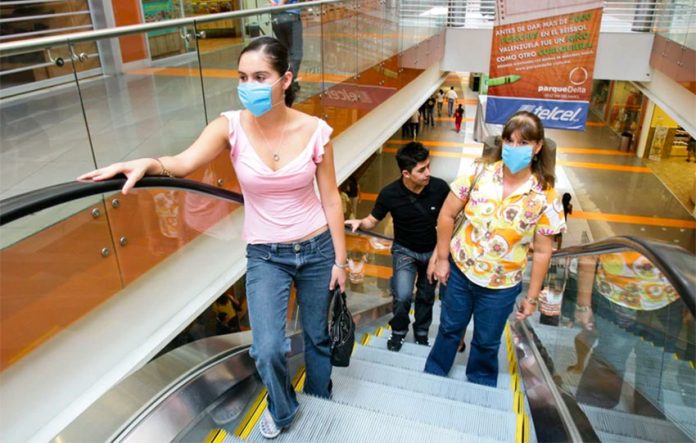
Masked shoppers in Mexico City this week.

Mexico currently has a low number of confirmed cases of novel coronavirus Covid-19 because the first case was detected just two weeks ago, Deputy Health Minister Hugo López-Gatell said on Friday.

Speaking at the president’s morning news conference, López-Gatell said that countries such as the United States and Spain – where there were more than 1,700 and 4,000 Covid-19 cases, respectively, as of Friday morning – have many more cases than Mexico, where 16 people are confirmed to be infected, because the disease was detected there earlier.

“Why isn’t Mexico at that level? Because Mexico [where the first case was detected February 27] has a difference of one month with respect to … the detection of the first case,” he said.

Although the first case of Covid-19 wasn’t detected in Mexico until the end of February, authorities began monitoring for its presence in the middle of January, López-Gatell added, explaining that 9,100 Covid-19 tests have been carried out, 1,500 of which were conducted at the Institute of Epidemiological Diagnosis in Mexico City.

“We’ve done the same monitoring as all countries [with high numbers of confirmed coronavirus cases] but they had cases approximately one month before [Mexico],” the deputy minister said.

His remarks come after a Mexico City infectious disease specialist said that Mexico should be carrying out more tests to detect cases of Covid-19. Francisco Moreno Sánchez, head of internal medicine at the ABC hospital, asserted that there are “many more cases” of coronavirus in Mexico than those confirmed and predicted that the country will see a widespread outbreak.

“I’m worried about the lack of diagnostic testing. If Mexico has undetected cases circulating, the spread of the disease is going to be brutal,” he said.

López-Gatell, who said Thursday that community transmission could occur within 15 days, acknowledged Friday that it is very probable that there will be hundreds of cases in Mexico at the least.

He said that it was no surprise that cases of Covid-19 were detected in United States before Mexico because the U.S. has greater exposure to countries where high numbers of people are infected.

In comparison with Mexico, the influx of airline passengers to the United States and that country’s trade relationship with China and European nations are “much more intense,” López-Gatell said.

As concern grows that a more widespread outbreak of coronavirus is nigh, the health official appealed for calm, stating that the government has a response plan ready to go that could include placing restrictions on large events.

AMLO arrives Thursday in Hermosillo. No 'social distancing' for the president.
AMLO arrives Thursday in Hermosillo. No ‘social distancing’ for the president.

“It could be useful to restrict events but not in a disorderly way. It has to be done when it’s appropriate, maintaining order, calm and institutional discipline,” he said.

López-Gatell noted that misinformation about coronavirus has begun to spread, explaining that two false statements attributed to the governors of Aguascalientes and Quintana Roo circulated on Thursday. One announced that the San Marcos Fair in Aguascalientes had been canceled and the other that classes had been suspended in Quintana Roo, he said.

The deputy minister also said that a false notification attributed to the Health Ministry circulated on social media, urging people to get tested for Covid-19. That resulted in a huge number of calls to a government hotline set up to provide information about the disease.

Mexico News Daily can confirm that the hotline was busy on Thursday as more than 20 attempts to get into contact with health authorities to seek information about where Covid-19 testing is available were unsuccessful.

Mexico News Daily did, however, receive a response to an e-mail sent to the federal Health Ministry asking the same question. Without specifying where testing is available, the ministry’s epidemiology department said that anyone with symptoms such as fever, headache and a sore throat should go to their closest healthcare center or hospital.

It didn’t say whether that advice applied to both people who have traveled outside Mexico and those who have stayed at home.

Finding reliable information about where Covid-19 testing is available is difficult as the government has not listed certified hospitals and clinics online.

However, according to a report by the news website Infobae, the following are certified to carry out Covid-19 testing in Mexico City:

  • The National Institute of Respiratory Illnesses
  • The National Institute of Nutrition
  • The 20 de Noviembre National Medical Center
  • The IMSS La Raza Speciality Hospital
  • The National Pediatric Institute
  • The Federico Gómez Children’s Hospital

Meanwhile, President López Obrador said he will continue to salute citizens with hugs and kisses despite the advice of his deputy health minister. “There are people who say that because of coronavirus you shouldn’t hug,” he told reporters at the conclusion of Thursday morning’s press conference.

“But you have to hug; don’t worry about it.”

On February 28, López-Gatell suggested to the president it was better not to give hugs and kisses to citizens because of the risk of contagion. And health authorities in other countries are urging “social distancing” for the same reason.

Later yesterday, López Obrador arrive by plane in Hermosillo, Sonora, where he freely gave out hugs to other passengers and citizens who were awaiting his arrival.

Source: El Financiero (sp), Infobae (sp) Milenio (sp) 

600mn pesos earmarked for Guanajuato airport expansion

0
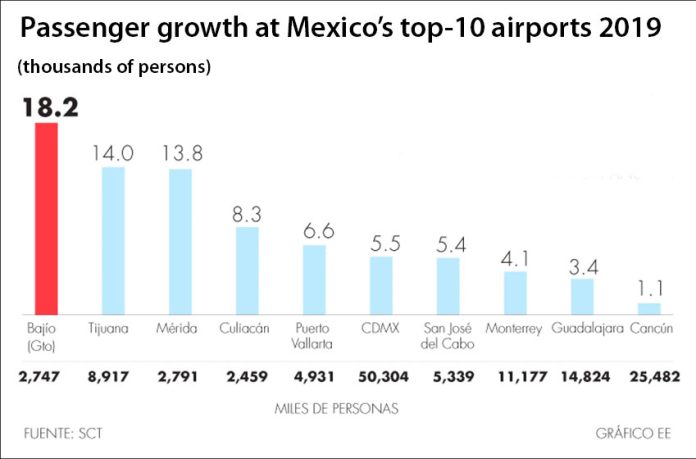
At 18.2%, the Bajío airport led the country in passenger growth last year.

The operator of the Bajío International Airport in Guanajuato will invest over 600 million pesos (US $27.4 million) to expand and improve the airport’s facilities.

Guanajuato Governor Diego Sinhue Rodríguez Vallejo announced that the Pacific Airport Group (GAP) will increase the number of arrival gates from eight to 14 and carry out upgrades in the lobbies and VIP area and on the roof.

The investment will also go toward providing services to cargo planes and renovations to the customs and shopping areas.

Governor Sinhue said that despite a lack of growth in both the domestic and global economies, Guanajuato has an opportunity to consolidate its competitive position in the market and become a hub of economic development and logistics.

“Despite the storm clouds in the global and domestic economies, Guanajuato sees a great opportunity. What is happening in China’s economy is an opportunity for Guanajuato, and with the signing of the USMCA [trade agreement] we’re seeing more confidence among investors,” he said.

To take advantage of this opportunity, the state government has committed to investing over 400 million pesos (US $18.2 million) in promoting the growth of micro, small and medium-sized businesses, known as mipymes in Spanish, in Guanajuato.

“We have to bet on the Mexican people … so that they can become professionals and can be suppliers in the industry. This year we increased the investment in mipymes from 200 to 400 million pesos,” said Sinhue.

Another tool Sinhue plans to use to drive economic growth in the state is the Central-Bajío-West Alliance, an economic partnership between the states of Guanajuato, Aguascalientes, Jalisco, Querétaro and San Luis Potosí.

He called it the biggest economic alliance in Latin America, with a regional vision for infrastructure, health, education and development.

Luis Aguirre Lang, head of the national export council, known as Index, said that “one of every five pesos our country exports is produced by these five states, … [which] contribute 18% of the GDP and represent 15% of the labor force in the country.”

Source: El Economista (sp)

Cracked jar foils strawberry jam makers’ attempt to break world record

0
The contents leak out of what was going to be the world's largest jar of strawberry jam.

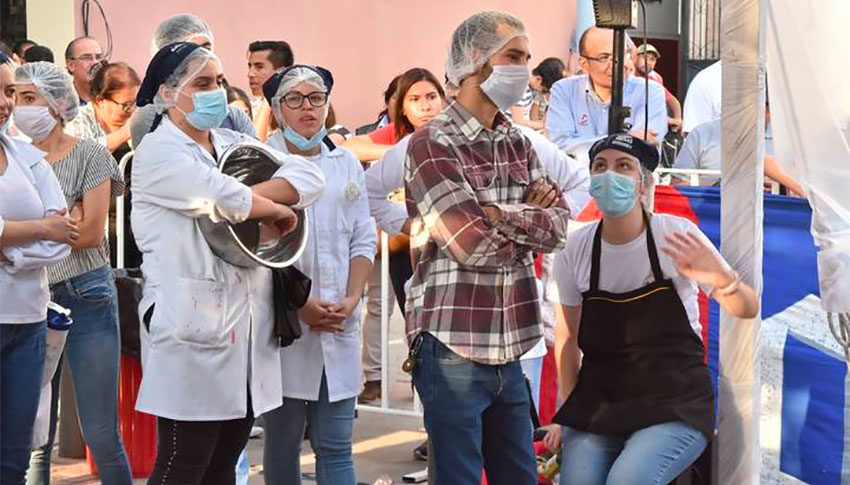
Residents of Irapuato, Guanajuato, almost broke the Guinness World Record for the world’s largest jar of strawberry jam, but their hopes were dashed when the giant container began to leak just as they were putting the lid on it.

The event began around 10:00 a.m. on Thursday, when over 70 people got to work making large batches of jam. As per the rules, organizers had decided on one recipe chosen from five contenders.

With hopes of surpassing the current record of 559 kilograms held by Michoacán, event staff began filling the giant jar around 1:00 p.m. Everything was going smoothly until around 5:30, the time for the official weigh-in.

But as they moved to place the lid on the jar, jam began to leak out a crack that opened in the side of the container. As the jam was still hot when they placed it in the jar, it had cracked the glass.

Jam began to spill all over the grounds of the main square and event staff immediately covered the crack with plastic wrap and began to salvage what was left of the contents.

Dejected jam makers in Irapuato on Thursday.

Official Guinness World Records judge Susana Reyes said that Irapuato was on its way to the top, but just barely missed it.

“They broke the record. Unfortunately the conditions of the jar caused the jam to leak out, and that’s when we began to see the guidelines being breached,” she said.

However, Irapuato isn’t down for the count. Event organizer Alex Cortés said that they will try again next week.

With the record, the town hopes to solidify its claim to being the “World Capital of Strawberries” in the domestic and international markets.

Sources: El Sol de Irapuato (sp), El Universal (sp)

Panic buying, events called off before widespread Covid-19 outbreak

0
Coronavirus worries have triggered panic buying in cities near the northern border.

Panic buying is taking hold in cities in northern border states as fear grows that a widespread outbreak of novel coronavirus Covid-19 is nigh, while some large events have been postponed and the cancellation of others is being considered.

Supermarkets in Monterrey, Mexicali, Tijuana and Nuevo Laredo all saw large numbers of shoppers on Thursday as people sought to stock up on essentials a day after the World Health Organization (WHO) declared Covid-19 a global pandemic.

While there were still fewer than 20 confirmed cases of the infectious disease in Mexico as of Friday morning, there were more than 1,600 in the United States, including more than 250 in California, which borders Baja California.

In addition to stocking up on food, most shoppers in northern cities were also buying bottled water, soap and toilet paper, the newspaper Reforma reported. Long lines were seen at supermarket checkouts as consumers waited to pay for large numbers of items crammed into their shopping carts.

Residents of Tijuana are concerned about confirmed cases of coronavirus in San Diego and Los Angeles, while those in Mexicali are more worried about two cases in El Centro, California, located just 20 kilometers from the Baja California capital.

There are also confirmed cases of Covid-19 in the three other U.S. states that share a border with Mexico – Arizona, New Mexico and Texas.

Photographs and footage of people panic buying at supermarkets in California is influencing the behavior of residents of neighboring Baja California, the newspaper La Jornada reported. Amid the growing concern about the possibility of Covid-19 crossing the border, the Baja California Health Ministry called on people to keep calm.

Farther east, Mexican immigration and customs officials working at border crossings in Chihuahua are taking greater precautions since the WHO pandemic declaration. Sergio Madero, head of the agency responsible for border crossings in the state, said that all personnel have been given face masks and gloves to reduce their risk of being exposed to Covid-19.

Meanwhile, organizers of large events are assessing whether to go ahead with them, postpone them or cancel them altogether in the face of a potential widespread outbreak.

The International Tennis Federation said on Thursday that the San Luis Open Challenger tournament that was scheduled to take place in San Luis Potosí from April 6-12 will not be held until the week starting April 20 at the earliest.

Federal Tourism Secretary Miguel Torruco announced on Tuesday that the Tianguis Turistico – Latin America’s largest tourism industry event – would be held in Mérida, Yucatan, from September 19-22 rather than March 22-25.

Organizers of the Guadalajara International Film Festival announced today that the event, scheduled for March 20-27, has been postponed. No new date has been set for the 35th annual festival.

The organizers of the Tabasco Fair, scheduled to take place April 30 to May 10, said that they are continuing with preparations but are alert to the instructions of authorities. They stressed that people’s health would be prioritized.

Zacatecas Governor Alejandro Tello said that the possibility of canceling a cultural festival scheduled to run April 4-14 will be evaluated by health authorities, while Oaxaca Governor Alejandro Murat announced that a half marathon scheduled for this Saturday has been called off.

Another event that could be postponed or canceled is the San Marcos Fair, the largest fair in Latin America, scheduled for April 17 to May 10 in Aguascalientes. The Pa’l Norte 2020 music festival scheduled for March 20 and 21 in Monterrey was still going ahead as of Thursday but lawmakers and others in Nuevo León were calling on the state government to cancel it.

Deputy Health Minister Hugo López-Gatell said Thursday that the spread of Covid-19 could force the postponement or cancellation of as many as 8,000 events but stressed that the government will aim to ensure that there is not “unnecessary damage to the economy.”

He said that community transmission of Covid-19 – which has spread to more than 100 countries around the world after originating in Wuhan, China, late last year – could begin in Mexico within 15 days.

Source: Reforma (sp), La Jornada (sp) 

5 cruise ship arrivals at Cozumel canceled due to coronavirus fears

0
The Regal Princess is among the ships that won't be operating for 60 days.

Princess Cruises has canceled five upcoming cruise ship arrivals to Cozumel, Quintana Roo, after it announced that it will voluntarily and temporarily suspend its global operations for the next 60 days.

The Regal Princess, set to dock on March 13 and 27, the Sky Princess, set to arrive on March 19 and April 10, and the Caribbean Princess, set to arrive on April 30, would have brought 21,546 passengers to Cozumel in the next couple of months.

The director general of the Integral Port Administration of Quintana Roo, Alicia Ricalde Magaña, said that the region will lose an estimated $1.76 million in tourism revenue from the one company’s customers alone, basing its estimate on the fact that the average cruise ship passenger spends around US $82 upon disembarking.

The economic impact of cruise ship passengers in Quintana Roo is seen in services such as tours, food and drinks in bars and restaurants, folk art and souvenir sales and transportation to other popular destinations on the Caribbean coast, such as Playa del Carmen and Tulum.

The port authority said that it will make all of its facilities available to Princess Cruises once the coronavirus scare has subsided. It also said that it has worked to maintain sanitary conditions throughout the crisis.

“Since the arrival of the first suspicious case aboard a cruise ship, we have implemented preventative hygienic measures, such as putting in handwashing sinks in every terminal we administer, as well as antibacterial gel,” said Ricalde.

She also urged the public to get information via official channels and avoid being misinformed by false news reports.

There are currently 15 confirmed cases of the coronavirus known as Covid-19 in Mexico, but health officials say that a widespread outbreak in the coming weeks is inevitable.

Sources: Milenio (sp), El Economista (sp)

Denied access to US, travelers from Europe to remain in Mexico

0

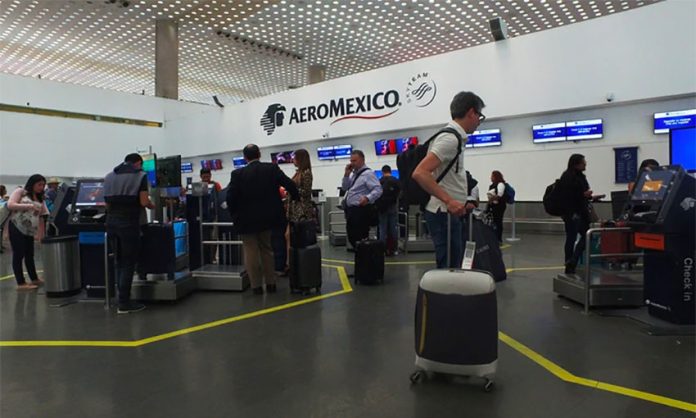
Aeroméxico passengers flying from Europe to the United States with a layover in Mexico will not be allowed to board their connecting flights, but will instead be forced to wait 14 days before continuing on to their destinations.

Beginning Friday, the United States will not allow passengers from countries in Europe’s Schengen Area to enter the country directly in an attempt to mitigate the spread of the coronavirus known as Covid-19.

The Schengen Area of the European Union includes France, Germany, Austria, Spain, Sweden, Italy and other countries in mainland Europe.

Aeroméxico had a similar policy for travelers to the United States from China, where the virus originated.

“We did not allow passengers coming from China in the last 14 days to make their connection to the United States under instruction from the [U.S.] government. Now we’re including passengers from Europe in this scheme,” said Grupo Aeroméxico security director Arturo Duhart.

The airline added that it is reinforcing its sanitation protocols on its fleet of airplanes used for international routes.

“When a plane arrives from an at-risk area, we are cleaning the whole passenger cabin with a nebulizer and we’re also doing deep cleans,” said Duhart.

There are currently 16 confirmed cases of coronavirus, up from 12 cases yesterday, but health officials say that a widespread outbreak of the virus is inevitable in the coming weeks.

Sources: El Universal (sp), Político (sp)

Source of contaminated med sought after 7th death in Pemex hospital

0
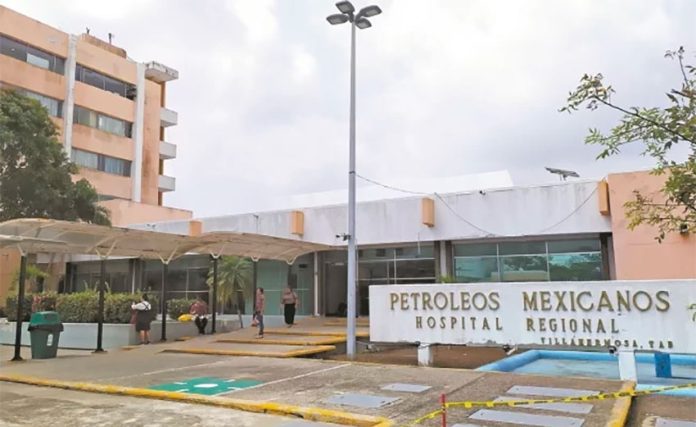
The hospital where seven dialysis patients have died.

Federal authorities have launched an investigation into the contaminated medication that was administered to dialysis patients at the Pemex Regional Hospital in Villahermosa, Tabasco, where a seventh death linked to the tainted drug occurred  on Thursday.

The Federal Commission for Protection Against Sanitary Risk (Cofepris) and the federal Attorney General’s Office (FGR) said that they are investigating the possible adulteration or counterfeiting of the blood-thinning drug sodium heparin that was given to scores of dialysis patients almost two weeks ago.

Pemex last week accused the manufacturer of the drug of delivering heparin that was contaminated with bacteria.

Cofepris said that the investigation into the tainted medication was launched after the pharmaceutical company PiSA filed a criminal complaint with the FGR, alleging that its heparin was either adulterated or counterfeited.

PiSA said that it examined its sodium heparin at the Pemex Regional Hospital and detected signs that the vials it was contained in had been reused or tampered with. Testing found that the heparin contained substances that are not used by PiSa to manufacture the drug.

PiSA said that the person who delivered the drug to the Pemex hospital, José Roche Pérez, is not an authorized distributor of the pharmaceutical company, according to Cofepris.

The commission called on hospitals, pharmacies and other medication retailers to review their stock for INHEPAR 5000 manufactured by PiSA with a batch number of C18E881 and an expiry date of January 2021. Anyone who finds the drug in their stock “should secure it and notify this health authority,” Cofepris said.

The commission also recommended that no medication be purchased from José Roche Pérez until its investigation has been completed.

The tainted sodium heparin claimed its seventh victim on Thursday – 76-year-old Bienvenido Sánchez Feria of the Tabasco municipality of Huimanguillo. His granddaughter Yenny Lisbeth Sánchez said that he died of respiratory arrest.

The newspaper El Universal reported that six dialysis patients given heparin contaminated by the bacteria Klebsiella pneumoniae have now died and that one other person lost their life in the Villahermosa hospital after becoming infected with the same bacteria. The death of that person is considered “collateral damage” of the administration of the contaminated medication, El Universal said.

The deaths are under investigation to determine their exact cause and the role played by the tainted heparin.

Source: El Universal (sp) 

UPDATE: Health authorities have confirmed that eight patients have died from the contaminated medication.