Home Blog Page 1613

Coronavirus cases at 53, 2 in grave condition; schools to begin closing Tuesday

0
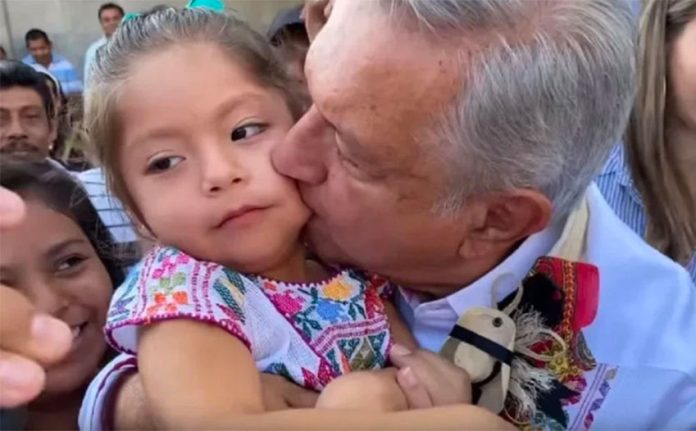
The president kisses a child in March, as the coronavirus outbreak was beginning.
The president kisses a child in March as the coronavirus outbreak was beginning.

The number of confirmed cases of the new coronavirus Covid-19 rose to 53 on Sunday after health authorities announced 12 new cases.

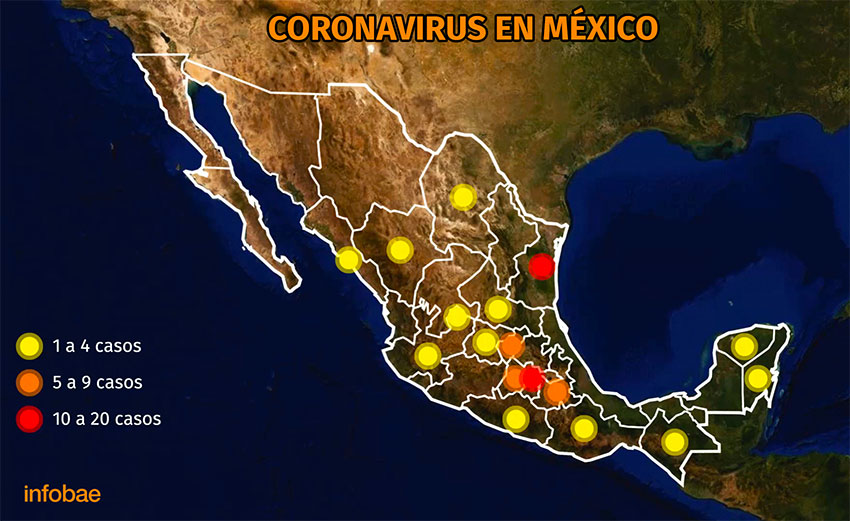
Mexico City has the highest number with 18, followed by Puebla and Querétaro, with six each, and Nuevo León, with five.

Ten other states, including Jalisco, México state and Yucatán, have recorded at least one confirmed case of Covid-19, which had sickened just over 153,500 people around the world as of Sunday and caused 5,735 deaths, according to the World Health Organization.

Of the 53 people in Mexico confirmed to have the infectious disease, 60% are men and 40% are women and their ages range between 19 and 73, said Ricardo Cortés Alcalá, general director of health promotion at the federal Health Ministry.

He told a press conference Sunday night that only 17% of the patients with Covid-19 have required hospitalization. The majority of patients only have mild symptoms and were recovering in isolation at their homes, Cortés said, adding that three people have already recovered completely.

Convive AMLO, en pandemia, como si nada
López Obrador received a hero’s welcome in Guerrero.


The official said that 314 people had been identified as coming into contact with the 53 known cases of Covid-19 and that 16 have developed symptoms of the disease and are in isolation.

Mexico News Daily is making most of the coronavirus coverage available free to all our readers. In order that we can continue to provide the latest Mexico news please consider purchasing a subscription. Our members enjoy full access to all our content ads-free. Click here to see all our coronavirus coverage.

For his part, Gustavo Reyes Terán, head of the commission that manages Mexico’s national health institutes and specialty hospitals, said that two patients are in “grave” condition.

There were reports Sunday night that 71-year-old businessman José Kuri had become the first person with Covid-19 to die in Mexico but health authorities said later that he had not passed away but was in critical condition.

President López Obrador confirmed at his regular news conference on Monday morning that Kuri – believed to have been infected with Covid-19 during a recent trip to the United States ski resort town of Vail, Colorado – had not died in the Mexico City hospital where he is receiving treatment.

While the number of people confirmed to be infected with Covid-19 in Mexico remains low in comparison with many other countries, the national caseload has risen quickly in recent days. Last Monday, there were just five confirmed coronavirus cases, meaning that the total number increased 960% in less than a week.

A widespread outbreak of the disease is seen as “inevitable” although there is still no evidence that Covid-19 is spreading via community transmission within Mexico.

Still, the Ministry of Public Education announced on Saturday that Easter holidays for the nation’s school students would start on March 20, two weeks earlier than scheduled, and run through April 20.

However, the governments of three states – Jalisco, Yucatán and Guanajuato – have since announced that they are bringing forward the commencement of the vacation period to Tuesday.

Jalisco Governor Enrique Alfaro said Sunday that waiting until the end of this week to suspend classes is the “wrong decision.”

“Classes have to be suspended now, it’s absurd to allow four more days [of classes],” he said, adding that starting holidays at the start rather the end of the week could have a “very important” impact “in terms of prevention.”

Alfaro said that his government would hold talks with the private sector to discuss how parents could be supported in relation to taking care of their children during the extended vacation period. He also said that the Jalisco Education Ministry will work with teachers to draw up a plan to compensate for the loss of classes.

Announcing the suspension of classes as of Tuesday in Guanajuato, Governor Diego Sinhue said that his government will not “skimp on preventative actions” in order to protect residents from exposure to Covid-19.
Coronavirus in Mexico
Coronavirus in Mexico: yellow indicates states with one to four confirmed or suspicious cases, orange five to nine and red 10 to 20.

For his part, Yucatán Governor Mauricio Vila said that in addition to the school closures from tomorrow, the archaeological sites of Chichén Itzá and Dzibilchaltún will not open later this week for planned equinox events that usually attract large crowds.

Meanwhile, President López Obrador said Sunday that he has “a lot of faith” that the Covid-19 pandemic will not have an adverse impact on Mexico.

“The misfortunes, pandemics are not going to do anything to us,” he said during a tour of the Costa Chica region of Guerrero.

“[Mexican] culture always saves us from earthquakes, floods, epidemics, bad governments, corruption; we can confront all these calamities.”

López Obrador also suggested on the weekend that people should read the Gabriel García Márquez novel Love in the Time of Cholera, describing the book as “a balm to calm us.”

On the weekend, the president followed through with his pledge to continue to greet citizens with hugs and kisses despite the advice of his deputy health minister to avoid such salutations.

López Obrador posted five videos to his social media accounts on Sunday that show him kissing and hugging his supporters on the Guerrero coast and freely giving handshakes.

His decision not to observe the practice of “social distancing” recommended by the World Health Organization and other health authorities triggered strong criticism on social media.

“Hopefully [Deputy Health Minister] Hugo López-Gatell sits President López Obrador down and explains to him that these are not times of rallies, kisses and hugs but of responsible leadership,” political scientist and columnist Denise Dresser wrote on Twitter.

There was also widespread criticism that the Vive Latino musical festival, attended by tens of thousands of fans, was allowed to go ahead in Mexico City on Saturday and Sunday.

The journalist Monica Garza took aim at Mexico City Mayor Claudia Sheinbaum, claiming that her decision not to cancel the event headlined by United States hard rock band Guns N’ Roses, among other acts, was irresponsible.

The organizers of the event checked each person’s temperature as they entered the venue and a strong smell of antibacterial gel permeated the air, the Associated Press reported, while noting that attendees still crowded together to watch the performances.

One fan told AP that he believed that many people are overreacting to the potential danger of being infected with Covid-19 at large gatherings.

“I consider it is more a collective hysteria than any other thing. In Mexico we have a culture of a little bit more of hygiene that helps us to limit this kind of transmission,” Alan Miranda said.

Source: Reforma (sp), Milenio (sp) 

Update:

The Health Ministry announced Monday evening that there were 24 new coronavirus cases in the last 24 hours, bringing the total to 82. Most presented mild symptoms and did not require hospitalization. Of the remainder, only two were reported in serious condition.
Piñata maker takes a swing at globally feared virus

0
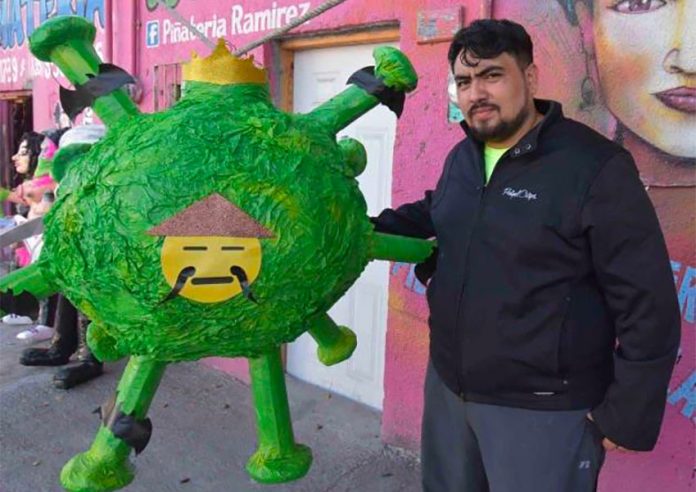
Ramírez and his coronavirus piñata.

A piñata-maker in Reynosa, Tamaulipas, has used his art form to inject a little humor into a global news story that has caused more anxiety than laughter.

For 600 pesos, party organizers in the busy border town can purchase a piñata in the shape of the coronavirus that causes the disease known as Covid-19. Health officials have said that a widespread outbreak of the coronavirus in Mexico is inevitable within the next few weeks.

The big green ball features the crown-like spikes that give the virus its name, as well as an actual crown, a caricature of a Chinese face and several bats to identify it as the microbe that has become a global pandemic.

“We have been following the news of this disease that is going around the world,” said Dalton Ávalos Ramírez, the artisan who created the piñata. “When we learned that it arrived in Mexico, we wanted to give it our own personal humorous touch, and the response from the people has been good.”

Ávalos said that he put the piñata up for sale earlier this week and has so far sold five of them, mostly for children’s parties. He had promoted the design on social media, and it went — suitably enough — viral within minutes.

“What we tried to do is represent this virus. We chose a face with slanted eyes, the bats because we heard that it came from that animal. … We aren’t trying to offend anyone. It’s just funny a way of looking at current problems.”

The store has also treated other current events with its papier-mache stylings, though the piñata of President López Obrador holding a model of the presidential plane hasn’t sold so well.

The current feminist movement in Mexico, which has led to a number of marches and protests, did not escape the humor of Ávalos. He has designed a piñata of a topless female protester painted with the phrases “My body, my choice” and “Down with the patriarchy.”

Although he priced them around 1,200 pesos (US $53), Ávalos said those two aren’t up for sale due to some negative comments they have elicited from customers.

“We didn’t want to sell them because many people have gotten offended. That’s not our intention. As artists, we just want to express what’s happening in the country,” he said.

Source: El Mañana (sp)

Sophia’s small food stand now a cluster of restaurants

0
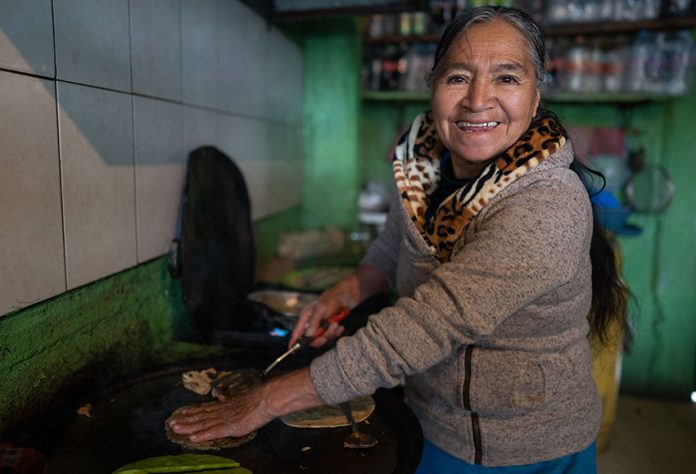
Sophia in her kitchen in Morelos.
Sophia in her kitchen.

Meet Sophia, a sweet, septuagenarian grandmother working in one of the kitchens in Comida antes de Tres Marías on the busy road between Cuernavaca and Mexico City.  Around a dozen small restaurants are nestled side by side offering all kinds of traditional delights and workers, such as Sophia’s daughter-in-law, Julia, furiously wave colourful plates as a way of attracting customers. 

But Sophia isn’t your average restaurant worker. She is the reason behind this cluster of restaurants. Alone at 21 with four children to feed after her husband left her for another women, she set up a small food stand at the side of the mountain road that runs north from Cuernavaca.   

At first she had limited luck as cars were unable to stop on the busy highway.  However, Sophia didn’t give up. She noticed two things: firstly, that customers were more likely to stop when the roads were quieter and secondly, that the hungriest travelers passed by first thing in the morning. With that in mind, she opened for business every day at 4:00 a.m.

As the years went by, more and more vendors began to join her until the early 1990s, when the police banned their roadside stalls for safety reasons. Undeterred, Sophia and the other vendors decided to work together to build a safe space for cars to stop, which is now a thriving spot with a carpark, shops and restaurants. 

As our conversation moved into Sophia’s personal life, my colleagues signalled that it was time to leave. With a smile and a wink she added, “Come back another day and I’ll tell you the rest of the story.” To be continued — I hope.

Mexico News Daily

Mexico drops three points on index measuring rule of law

0
rule of law index

Mexico has fallen three places on an index that measured the rule of law in 128 countries based on the experiences and perceptions of the general public.

Mexico’s score on the World Justice Project (WJP) Rule of Law Index 2020 declined 0.01 points to 0.44 and its ranking fell to 104th. The index uses a scale from 0 to 1, with 1 indicating the strongest adherence to the rule of law.

In Latin America, Mexico ranked 26th out of 30 countries, ahead of only Honduras, Nicaragua, Bolivia and Venezuela.

The WJP, an international civil society organization dedicated to advancing the rule of law around the world, found that Mexico rated most poorly among the 128 countries in absence of corruption and order and security.

With scores of 0.27 and 0.53, respectively, Mexico ranked 121st in both areas, a blow to the government of President López Obrador, who has vowed to stamp out corruption and reduce insecurity.

The country also ranked among the worst countries in the areas of criminal justice and civil justice, placing 119th and 116th, respectively. In regulatory enforcement, constraints on government powers, fundamental rights and open government, Mexico ranked 91st, 89th, 78th and 36th, respectively.

Mexico’s second worst score in the eight areas assessed, after absence of corruption, was 0.30 for criminal justice. A study published by the non-governmental organization Impunidad Cero (Zero Impunity) last September showed that the probability of a crime being reported, investigated and solved in Mexico is just 1.3%.

The third worst score for Mexico was 0.39 for civil justice. As its ranking also indicates, Mexico fared best in the area of open government, with a score of 0.60.

Denmark, Norway, Finland, Sweden and the Netherlands were, in that order, the best assessed countries in terms of rule of law, while Venezuela, Cambodia, the Democratic Republic of Congo, Egypt and Cameroon were the worst.

In Latin America and the Caribbean, the top three countries were Uruguay, Costa Rica and Chile, which ranked 22nd, 25th and 26th, respectively, out of the 128 countries evaluated. Mexico’s North American trade partners, the United States and Canada, ranked 21st and 9th, respectively.

The scores and rankings in the WJP Rule of Law Index 2020 are derived from more than 130,000 household surveys and 4,000 legal practitioner and expert surveys worldwide.

According to the WJP, the index is the world’s most comprehensive dataset of its kind and the only to rely principally on primary data.

Mexico News Daily 

Monarch butterfly numbers down 53% in terms of area covered

0
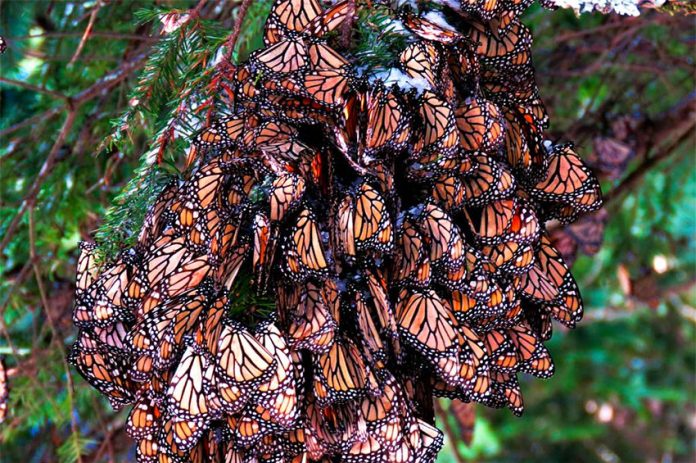
Monarch butterflies cluster in a Mexican forest.

The area covered by monarch butterflies overwintering in Mexico declined by 53% this season, the Natural Protected Areas Commission (Conanp) announced on Friday.

The commission said that the monarchs, which travel more than 4,000 kilometers from the United States and Canada to spend the winter in pine and fir tree forests in Michoacán and México state, covered an area of 2.83 hectares in the winter of 2019-20 compared to 6.05 hectares a year ago.

Conanp chief Roberto Aviña said that there were 11 different colonies of butterflies this winter, three in Michoacán and eight in México state, including a new one on community land in the municipality of Amanalco.

Despite the 53% decline in the area covered, Conanp said that monarch numbers were “stable.”

Experts said that the butterflies gathered in denser clusters this winter than they did in 2018-19, meaning that the 53% decline in area covered doesn’t equate to a decline of the same percentage in total numbers.

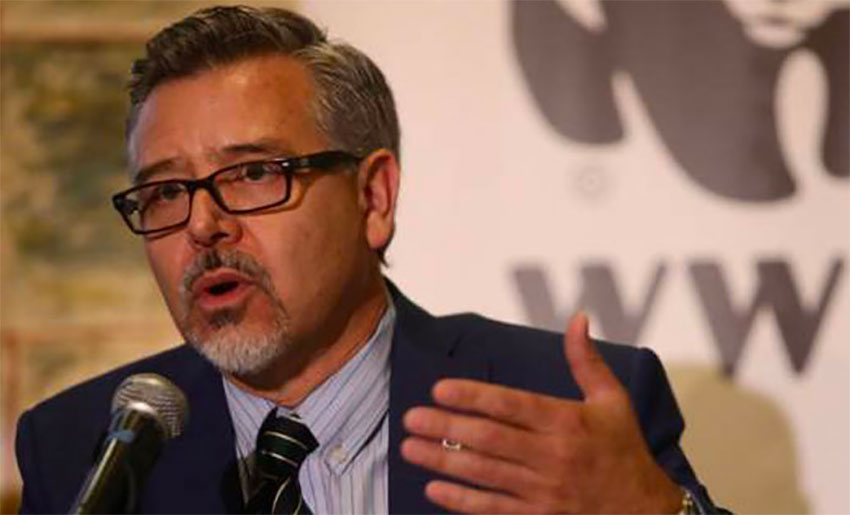
Rickards: numbers are stable.

The head of the World Wildlife Fund (WWF) in Mexico, Jorge Rickards, said that the reduction “is not alarming,” adding that the large numbers last year were “atypical.”

“The norm has been for the butterflies to cover an average of about three hectares,” he said.

“The last season, 2018-19, was very good, with 6.05 hectares of forest cover, but it was certainly atypical, thanks to the fact that the first generation of butterflies in the spring of 2018 encountered favorable weather conditions to reproduce.”

In the spring of 2019, butterflies encountered colder weather in Texas on their return from Mexico than they did the previous year and reproduced less as a result.

Rickards also said that there was a greater presence of ants, which eat butterfly eggs, in breeding areas last year.

While the WWF and Conanp were not concerned by the decline in this season’s butterfly migration, a senior scientist at the Center for Biological Diversity in the United States said that the decrease was “heartbreaking.”

Curry: decrease is heartbreaking.

“Scientists were expecting the count to be down slightly, but this level of decrease is heartbreaking,” Tierra Curry said. “More protections are clearly needed for this migratory wonder and its habitat.”

The center said in a statement that scientists estimate that the 6-hectare coverage seen in Mexico last year “is the extinction threshold for the migratory butterflies’ survival in North America.”

Víctor Sánchez-Cordero, a researcher at the National Autonomous University’s Institute of Biology and Mexico’s lead representative on a tri-national scientific committee that studies the monarch, said in February that Mexico, the United States and Canada all must do more to ensure the long-term survival of the migrating butterfly population.

Expressing a view similar to that of Curry, environmentalist and author Homero Aridjis said that “the decline of over 53% of populations in the butterfly reserve is worrisome, above all because of the effects of climate change on the migration route and on the wintering grounds in Mexico.”

He also said that deforestation in Mexico and crime against environmentalists are reason for concern: butterfly conservationist Homero Gómez González, head administrator of the El Rosario monarch butterfly sanctuary in Angangueo, Michoacán, was murdered earlier this year.

The use of pesticides and climate change also pose a risk to the ongoing survival of the monarch butterfly.

In addition, a sooner than expected departure of butterflies from Mexico this year could pose a risk to the next generation of black and gold-winged insects, according to regional Conanp director Gloria Tavera Alonso.

She said that most monarchs left Mexico earlier than usual, and that there is not yet enough milkweed in Texas to support the next reproduction cycle. Monarch butterflies lay their eggs on the plant and the caterpillars eat its leaves.

The lack of milkweed in Texas is “very worrying,” Tavera said.

Source: AP (en), Milenio (sp) 

One former health minister critical of coronavirus response

0
José Narro: can't simply blame the conservatives.

Former health minister José Narro has slammed the federal government for its response to the coronavirus pandemic, charging that it is acting too slowly and “as if we had no problems.”

Narro, health minister in the second half of former president Enrique Peña Nieto’s six-year term between 2012 and 2018, said in a radio interview that authorities should have already taken measures to slow down the spread of Covid-19, such as canceling classes at the nation’s educational institutes and suspending large events.

“We mustn’t wait 10 days for the cases of Covid-19 to increase in order to take action … [The government] is acting in the wrong way,” he said.

Narro, also a former rector of the National Autonomous University and head of its Faculty of Medicine, said that Mexico should look to countries such as Italy, which is under a national quarantine, and the United States, which this week banned the entry of travelers from continental Europe for 30 days, for ideas about how to respond to the outbreak of the novel coronavirus that originated in Wuhan, China, late last year.

“We see the decisions that Italy, Spain, the United States, Central and South American countries have taken and we want to continue combatting coronavirus as if it were an invention of the conservatives but it’s a public health issue,” the former minister said in a swipe at President López Obrador, who dubs all critics of his government “conservatives.”

Córdova: measures are appropriate.

Narro also said that there are contradictions in the messages sent by federal officials about Covid-19 and how best to avoid being infected.

“The president says ‘hug each other,’ the deputy [health] minister says there is no need to worry, the public education minister of the same government says don’t shake hands, don’t hug; this is completely contradictory,” he said.

“This is a national problem, a worldwide problem, there has to be a general public policy. The National Health Council is there to dictate the measures.”

Echoing calls from health professionals, Narro said that Mexico should be carrying out greater numbers of coronavirus tests, especially among people who are known to have come into contact with people already confirmed to have Covid-19. (There were 26 confirmed cases of coronavirus in Mexico as of Friday.)

However, he questioned the public health system’s capacity to carry out a large number of tests and to treat those who become seriously ill from the disease that had killed almost 5,000 people around the world as of Friday.

“Where are the spaces [to treat people]? Where are they going to do the tests?” Narro said.

He also questioned why Deputy Health Minister Hugo López-Gatell, rather than Health Minister Jorge Alcocer, is leading the government’s coronavirus response.

“The way in which the deputy minister is working is completely reprehensible … What I wonder is, where’s the health minister?”

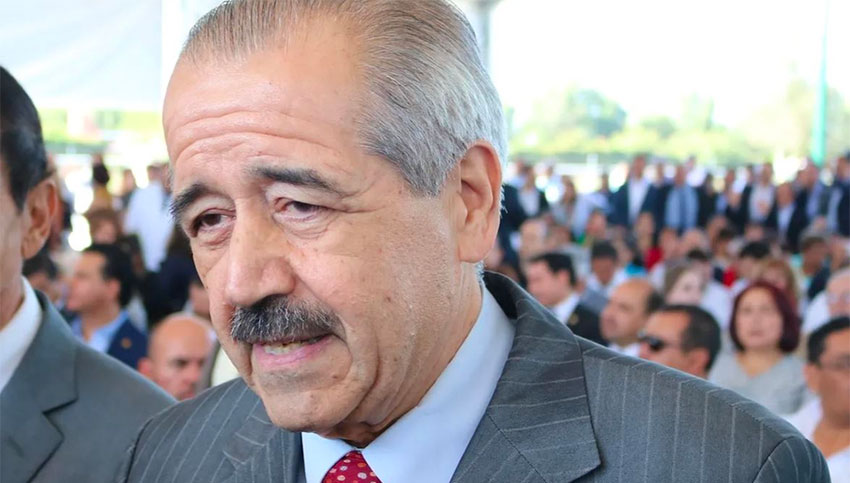
In contrast, another former health minister defended the actions of health officials. José Ángel Córdova Villalobos said the actions being taken by the government over the coronavirus are those that should be taken.

When there is community transmission, he said, it will time to implement other actions, such as “social distancing,” or minimizing contact with others.

Córdova, who was health minister in the Felipe Calderón government at the time of the A/H1N1 flu virus outbreak, said the current administration is taking appropriate measures.

Source: Milenio (sp) 

San Miguel de Allende celebrates World Water Day with week of events

0

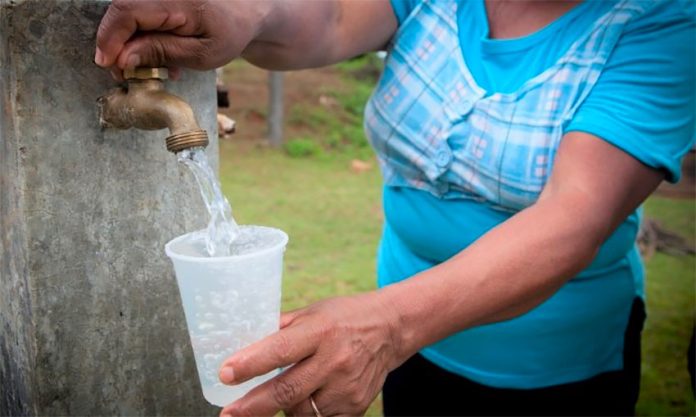
A nongovernmental organization in San Miguel de Allende, Guanajuato, has big plans to celebrate World Water Day on March 22, extending the festivities through the following week.

Dedicated to supporting communities without access to safe potable water and developing sustainable solutions to the problem, Caminos de Agua (Paths of Water) has scheduled a week’s worth of events, discussions and activities to entertain and inform.

Executive director Dylan Terrell said that the organization has several important goals for the week.

“We believe that it’s fundamental to inform the public about the growing scarcity of our water supplies, as well as the increasing pollution of the potable water left to us,” he said.

“We want to use World Water Week as an opportunity to educate the people of our region about the causes of these problems, what are the risks to health, what can they do about it personally and as part of their communities, and what actions they can begin to take right now,” he said.

The San Miguel de Allende municipal government and the Life Water Coalition, a group of 15 local nongovernmental organizations concerned about water problems in the region, are also pitching in to organize and administer the events.

The week will kick off with the Municipal Water Fair on March 22 from 10:00 a.m. to 5:00 p.m. With lots of family-oriented events, as well as music, entertainment, food and educational activities, there will be something for all ages. Admission is free.

The special guest speaker for the week will be Joaquín Murrieta, an ecologist with the Tucson, Arizona-based Watershed Management Group (WMG). He will give talks in both English and Spanish and conduct practical workshops on topics such as constructing microwatersheds, rain gardens and other rain collection techniques.

“We need to begin to construct homes that have their own incorporated systems of rainwater harvesting, and this is a change that can be done without depending on the government or others, but on systems that I and everyone else are capable of building,” Murrieta said.

There will also be a benefit dinner and other educational and bilingual activities throughout the week. Check the Caminos de Agua website for a full listing of events.

Mexico News Daily

Carnitas vendor leads archaeologists to capital of Mayan kingdom

0
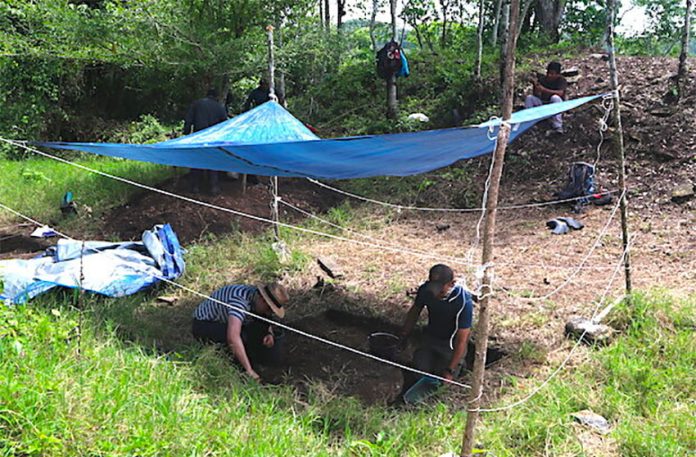
Schroder, left, and Scherer excavate in the ballcourt
Schroder, left, and Scherer excavate in the ballcourt which they enclosed with a fence to keep away nosy cows. Charles Golden

What do carnitas – pork simmered for hours in its own lard – and an ancient Mayan stone tablet have in common? Apart from their shared mexicanidad, or Mexican-ness, not much, one might think.

But the two are inextricably linked in the discovery of the long-lost capital of an ancient Mayan kingdom in the southern state of Chiapas.

In June 2014, Whittaker Schroder, then a grad student at the University of Pennsylvania was touring archaeological sites in Chiapas looking for inspiration for a dissertation topic when he saw a carnitas vendor waving at him on the side of a highway in Ocosingo near the border with Guatemala.

Believing that the vendor was encouraging him to buy some tacos, and being a vegetarian, Schroder continued on his way. However, the day before he was leaving Chiapas, the student saw the same man in the same place waving at him again.

This time, Schroder, who had been visiting the same area for years, pulled over.

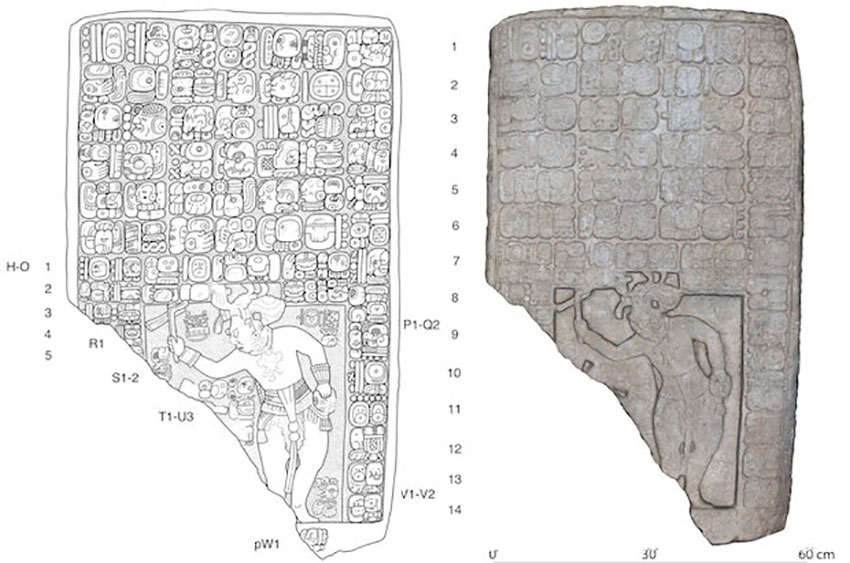
drawing of a tablet found at the site
At left, drawing of a tablet found at the site. Right, a digital 3-D model. Stephen Houston (Brown University)/Charles Golden (Brandeis)

The carnitas vendor, it turned out, wasn’t interested in selling any of his succulent pork but instead wanted to alert the student – who he knew was interested in Mayan history –  to a discovery made by his friend: an ancient stone inscribed with stories of rituals, battles, a mythical water serpent and the dance of a rain god.

The following day, Schroder and another grad student, Jeffrey Dobereiner of Harvard, met the vendor’s friend, a cattle rancher, convenience store owner and carpenter, who showed them the Mayan stone.

Schroder would later tell Charles Golden, an associate professor of archaeology at Brandeis University, and Andrew Scherer, a bioarchaeologist at Brown University, about what he saw, prompting them to hatch a plan to excavate the site where the stone was found.

It took them years to get permission but along with a team of researchers from Mexico, the United States (including Schroder) and Canada, they began excavating the site – the backyard of the cattle rancher – in June 2018.

What they discovered amazed them – the ancient capital of the Sak Tz’i’ Mayan kingdom. According to a report published by science and technology news website Phys.Org, academics have been looking for evidence of Sak Tz’i’ since 1994.

Named Lacanja Tzeltal after the nearby community, the site discovered by Golden and Scherer was likely settled by 750 B.C. and then occupied for more than 1,000 years.

[wpgmza id=”240″]

As a result of excavations, the archaeological team has found remnants of pyramids, a royal palace and a ball court as well as a treasure trove of Mayan monuments. The team has also found remnants of fortifications believed to have been built to keep out invaders.

Sak Tz’i’ – which means white dog, although for what reason is unknown — was far from the most powerful Mayan kingdom, and the structures that once stood in its capital are very modest when compared with the pyramids of such sites as Palenque and Chichén Itzá.

But Golden says that the discovery still contributes a lot toward a greater understanding of ancient Mayan culture and politics. It’s a “big … piece of the puzzle,” he said.

He and his collaborators published the results of their research in the December edition of the Journal of Field Archaeology. 

Pending permission from the Mexican government and the local community, the archaeological team plans to return to the Sak Tz’i’ capital in June to continue mapping the ancient city using the laser surveying method known as lidar (light detection and ranging).

They also intend to stabilize ancient structures that are in danger of collapsing, carry out further studies of sculptures and other monuments found at the site and explore an area believed to have been a marketplace.

Golden said that the team will seek to continue working closely with members of the local community, many of whom are the descendants of the builders of pre-Hispanic Mayan cities.

“To be truly successful, the research will need to reveal new understandings of the ancient Maya and represent a locally meaningful collaboration with their modern descendants,” he said.

Source: Phys.Org (en) 

Coronavirus represents ‘biggest challenge to tourism since World War II’

0
Madrid: Mexico's tourism industry will suffer economic damage.

The global outbreak of the new coronavirus Covid-19 poses the biggest challenge to tourism since World War II, according to experts at Mexico City’s Anáhuac University.

In a report published Friday, academics with the university’s Center of Research and Tourism Competitiveness (Cicotur) said that the global tourism industry could take its biggest financial hit since the 1939-45 war as a result of the Covid-19 pandemic.

The Mexican tourism industry will not be immune from the situation, the academics said, predicting that the initial financial cost of a downturn in visitor numbers will be 1-5% of tourism GDP. The tourism industry in Mexico, the seventh most visited country in the world in 2018, contributes 8.7% of total GDP, Tourism Minister Miguel Torruco said in January.

Francisco Madrid, Cicotur director and a former deputy tourism minister, said that the current “emergency” the world is going through due to the global outbreak of Covid-19 is of “enormous proportions.”

In light of the situation, Cicotur urged the government to develop a plan that supports the tourism industry now and into the future. All of Mexico’s tourism companies “will suffer [economic] damage to a greater or lesser extent due to the pandemic,” the report said.

“But without a doubt, airlines will face greater challenges. Therefore … they will require extraordinary support.”

A significant percentage of the revenue generated by the DNR tourist tax that foreigners pay when entering Mexico by air should be used for tourism marketing in the months after the Covid-19 health crisis subsides, the research center academics said.

They also said that Mexico’s tourism destinations need to improve their capacity to provide timely and accurate online information to potential tourists about the local Covid-19 situation.

In the face of an inevitable downturn in visitor numbers in the coming weeks and months, tourism-oriented companies must do all they can to preserve the jobs of their employees, the academics added.

The head of the World Travel and Tourism Council said this week that the coronavirus could cost up to 50 million jobs worldwide. Gloria Guevara, a former Mexican tourism minister, said the outbreak “presents a significant threat” to the industry. Council figures suggest the travel sector could shrink up to 25% this year.

The publication of the Cicotur report comes as Mexico braces for a likely widespread outbreak of Covid-19, which had sickened almost 133,000 people around the world as of Friday and killed close to 5,000.

There were 26 confirmed cases of coronavirus in Mexico as of Friday, a 117% increase compared to Wednesday, when there were 12 cases.

Deputy Health Minister Hugo López-Gatell said Thursday that community transmission could occur within 15 days, and acknowledged Friday that it is very probable that there will be hundreds of cases in Mexico at the least.

Source: El Universal (sp) 

Mexican crafts and craftspeople to be celebrated on March 19

0
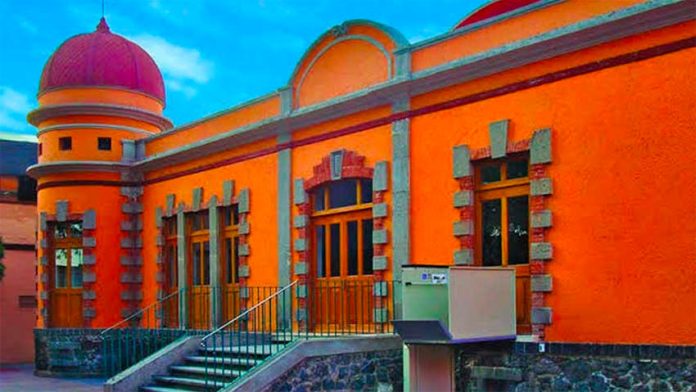
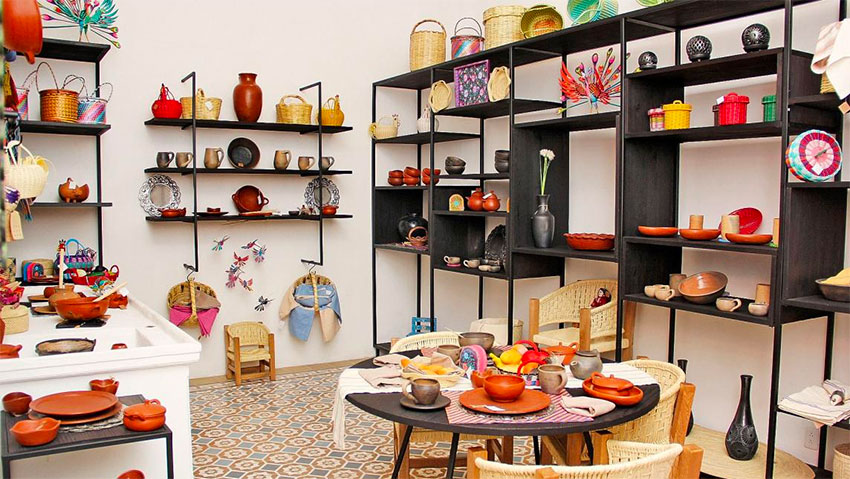
The Museo Nacional de las Culturas Populares in Coyoacán will invite artisans to set up tables and sell products directly to the public.

March 19 marks the “Day of the Artisan” (Día de Artesano) in Mexico — a date chosen because it is the feast day of Saint Joseph, the human father of Jesus and a carpenter by trade.

Handicrafts were not always valued in Mexico. Before the Mexican Revolution they were considered a sign of a backward society, unable to join the modern, industrialized world. The post-Revolution government, seeking to establish its legitimacy and a new sense of what it meant to be “Mexican,” began to take imagery from Mexico’s rural and indigenous populations, and this included handicrafts.

Modern documentation of Mexican handicrafts began in the 1920s and was led by Mexico’s avant-garde artists, most notably Dr. Atl. The tourism industry provided the next boost: it began slowly around the same time period, but took off in the 1950s with the advent of affordable recreational travel. Handicrafts soon became a way to take a piece of “authentic Mexico” home, leading to new generations of collectors, especially in the United States. Today, the vast majority of handicrafts are made for the tourist and collectors markets.

According to the National Institute of Statistics and Geography (Inegi), there are at least 12 million craftspeople in the country, meaning that 10% of the population make something with their hands, full or part time. Their direct economic contribution is estimated at 91 billion pesos (US $4.15 billion), along with an indirect contribution of 62 billion related to the tourism industry.

For many families, especially in rural areas, this work is the main or only form of economic support. But it is not easy; most live and work in poverty. One reason is that the local and Mexican markets for their products are limited, and many Mexican buyers negotiate prices down, not only because it is the culture with informal vendors but because most associate handicrafts with “cheap.”

Andares, in Oaxaca city, will celebrate the Day of the Artisan from March 19-21.

Few artisans have managed to gain significant direct access to foreign buyers because of distance from tourist areas, an inability to take advantage of online resources and/or hurdles associated with export.

Most cultural institutions connected to handicrafts have something in the works for the Day of the Artisan, often extending into the nearest weekend and sometimes for the entire month of March. The most common of these events are sales by the artisans themselves at the institutions, rather than by resellers.

(Because of current coronavirus concerns, it’s a good idea to check with local museums and casas de cultura to make sure there have not been any cancellations.)

Some highlights:

  • The Museo Nacional de las Culturas Populares in Coyoacán, Mexico City, each year invites artisans to set up tables and sell products directly to the public. It also includes items that might not usually be termed “handicrafts,” such as hygiene and prepared food products (like chocolate).
  • Andares, located in the historic center of Oaxaca city, is holding an event from March 19-21 with sales by artisans, workshops related to different crafts and, of course, local food.
  • For the whole month of March, the municipality of Tlaquepaque, Jalisco, has an exhibition of textiles at the Centro Integral de Atención al Turista in the city center.
  • The federal School of Handcrafts (Escuela de Artesanías), in Mexico City, focuses this year on papier-maché crafts (cartonería), with an exhibition and three-day conference based on the recently published bilingual book: Mexican Cartonería: Paper, Paste and Fiesta (Schiffer).
  • The Centro Cultural Ciudadela Del Arte in the city of Zacatecas will have mask-making workshops for those 15 and older from March 17-20.

Mexico News Daily