Home Blog Page 1612

Coronavirus count: 29 new cases for total of 82; three in serious condition

0
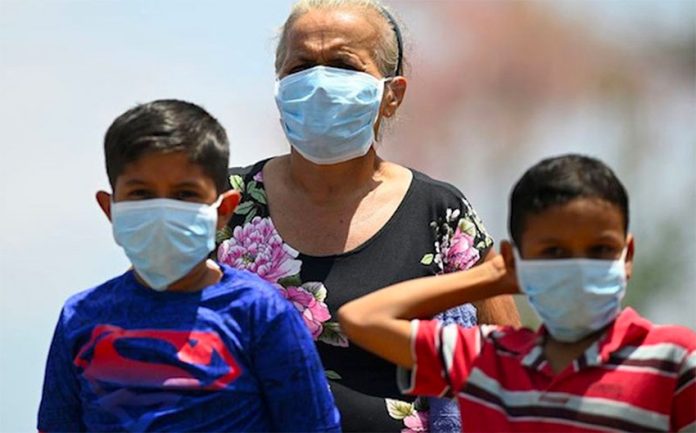
coronavirus face masks

There are now 82 confirmed cases of coronavirus Covid-19 in Mexico after the federal Health Ministry announced 29 new cases on Monday night.

The number of new cases is the highest for any single day since the first confirmed case of the disease in Mexico was announced on February 28.

The Health Ministry also said that there are 171 suspected cases and that 579 people had tested negative for the infectious disease.

Deputy Health Minister Hugo López-Gatell told a press conference that six coronavirus patients are in hospital and that three of them are in serious condition.

Ricardo Cortés, general director of health promotion at the Health Ministry, said that 90% of the people confirmed to be infected only have mild symptoms and are recovering in isolation at home.

Among people known to have come into contact with others infected with coronavirus, only 10% have symptoms of the disease, he added.

Mexico News Daily is making most of the coronavirus coverage available free to all our readers. In order that we can continue to provide the latest Mexico news please consider purchasing a subscription. Our members enjoy full access to all our content ads-free. Click here to see all our coronavirus coverage.

The northern border state of Tamaulipas reported its first case of Covid-19 on Monday – a Malaysian national who works in a multinational company in Tampico. All but three states in Mexico now have confirmed or suspected cases of the disease that had infected more than 167,000 people around the world and caused 6,606 deaths as of Monday, according to the World Health Organization.

López-Gatell also said that the government’s coronavirus hotline had been “indirectly sabotaged” because rumors have circulated on social media stating that anyone with suspected symptoms of Covid-19 should call the Health Ministry’s epidemiology department. The volume of calls increased from 480 a day to 6,800 in the space of 24 hours, he said.

The deputy health minister also addressed a claim by El Salvador President Nayib Bukele that 12 people confirmed to have Covid-19 were intending to travel to San Salvador from Mexico City.

López-Gatell said that the 12 people in questions were nationals of El Salvador and had arrived in Mexico from Chicago. He said that medical personnel at the Mexico City airport confirmed that the passengers did not have any symptoms of Covid-19 nor had they been tested for the disease. Therefore, López-Gatell added, “it’s impossible to speak of confirmed cases.”

The airline Avianca nevertheless cancelled its scheduled flight between Mexico City and El Salvador and thanked Bukele on Twitter for alerting it to “the patients with Covid-19 trying to board the flight.”

Speaking at President López Obrador’s morning news conference on Tuesday, López-Gatell said that a coronavirus pandemic in Mexico could last 12 weeks or more.

“This is not going to be a short epidemic. We’ve already said it but I want to make it very clear again. We’ve said that the epidemic could last at least 12 weeks. That’s how long it lasted in China; it reached its high point about halfway through those weeks and then it started to go down, not necessarily because of the extreme containment measures that were taken,” he said.

“This would be the minimum scenario that we expect in Mexico. However, to the extent that each country has different characteristics, it could last longer – there could be small secondary upturns that prolong the need for mitigation and control measures,” the health official added.

In response to the expected widespread outbreak of Covid-19, the government announced on Saturday that Easter holidays for the nation’s school students would start on March 20, two weeks earlier than scheduled, and run until April 20.

However, unlike many other countries, federal authorities have not announced any travel bans to help fight the virus, which originated in mainland China late last year.

Source: Reforma (sp), El Universal (sp), Milenio (sp), El Financiero (sp) 
Maintain ‘a healthy distance’ to avoid infection, government urges

0
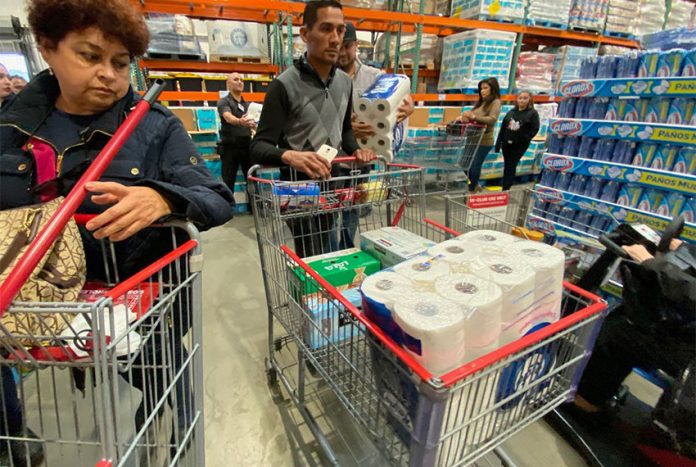
Shoppers have been stocking up on toilet paper in northern cities.

The federal government has urged Mexicans to maintain “a healthy distance” from each other to avoid infection from the novel coronavirus Covid-19 while a leading business group has guaranteed the supply of food and other essentials as the country braces for a wider outbreak of the infectious disease.

The Health Ministry announced an initiative on Saturday known as “Sana Distancia,” or Healthy Distance, to encourage people in Mexico – where greeting all and sundry with a hug, kiss or handshake is de rigueur – not to get as close to each other as they normally would.

The ministry said that the Sana Distancia scheme would formally commence on March 23 and continue for four weeks.

“It’s social distancing, it’s about distance to keep us healthy,” Ricardo Cortés, general director of health promotion at the Health Ministry, said at a press conference Sunday at which it was announced that the number of confirmed cases of Covid-19 had increased by 12 to 53.

It remains to be seen whether President López Obrador will disregard the advice, as he has done until now. A deputy health minister urged people over two weeks ago to avoid hugs and kisses, but the president has ignored it.

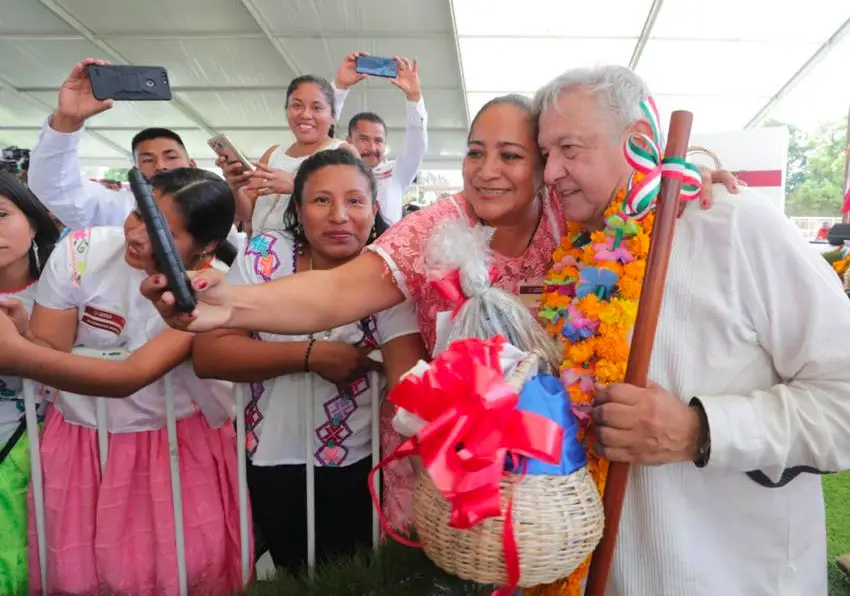
He greeted his supporters in Guerrero with hugs, kisses and handshakes during a tour of the southwestern state over the weekend.

López Obrador posted five videos to his social media accounts on Sunday that showed him getting up close and personal with residents of coastal Guerrero who flocked to see him.

Mexico News Daily is making most of the coronavirus coverage available free to all our readers. In order that we can continue to provide the latest Mexico news please consider purchasing a subscription. Our members enjoy full access to all our content ads-free. Click here to see all our coronavirus coverage.

Without mentioning Covid-19 specifically, he said that he had “great faith” that the “misfortunes [and] pandemics … won’t do anything to us.”

The president’s blatant flouting of the social distance convention triggered criticism from health experts and critics who said that he is setting a bad example for the nation.

Meanwhile, the Business Coordinating Council (CCE), an influential business group, provided an assurance on Monday that its members – among whom are the Mexican Employers Federation and the Mexican Business Council – will maintain the supply of food and other essentials.

“The country has sufficient resources to guarantee food, processed and canned products, and cleaning and hygiene items to all Mexicans,” the CCE said in a statement.

AMLO hugs a fan in Guerrero.

“There are sufficient inventories to provide goods to families, homes, hotels and restaurants. … The private sector has an unwavering commitment to Mexico and for that reason we are applying protocols to maintain, to the greatest extent possible, normality in economic and social activity in the coming weeks,” it added.

The business group urged people to keep calm and not engage in panic shopping or stockpiling essential products.

“It’s not necessary or justified, and it affects those who have urgent needs,” the CCE said. “To face up to this difficult time, Mexicans have to be united and show our solidarity, discipline and maturity. If we all do our part, we’re sure to get through it.”

While the CCE is calling for people to voluntarily show restraint when shopping, several supermarkets in Tijuana have imposed limits on the purchase of personal hygiene products such as toilet paper, the newspaper El Universal reported.

Supermarkets in the northern border city have been bombarded in recent days with shoppers among whom have been residents of southern California who crossed the border to seek out items they couldn’t find at home due to a wave of panic buying across the United States.

Photos showing people re-entering the United States from Tijuana with their cars loaded with toilet paper and other hygiene products have circulated on social media, El Universal said.

The growing threat of a widespread coronavirus outbreak in Mexico has also led the National Autonomous University (UNAM) to take the decision to begin suspending classes from Tuesday on. All faculties will be shut down by the end of the week, UNAM said in a statement.

More than 350,000 students and some 40,000 academics will be affected by the decision. UNAM said that students will be provided with the opportunity to continue their studies at home, presumably via online learning.

The total suspension of classes at the university, Mexico’s largest and most prestigious tertiary education institution, will allow students to leave campus on or before March 20, the date on which UNAM mathematician Gustavo Cruz predicts a widespread Covid-19 outbreak could commence via community transmission.

The government has also announced that Easter holidays for the nation’s school students will start on March 20, two weeks earlier than scheduled, and continue until April 20.

However, unlike the United States and most Central American countries, Mexico has not announced any travel bans to help fight coronavirus, which had spread to more than 140 countries as of Sunday and killed close to 6,000 people.

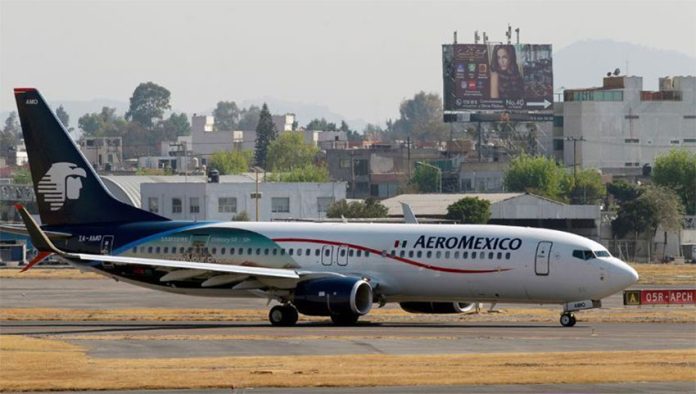
While Aeroméxico has announced that it will reduce the frequency of its flights to Europe by 40%, it is likely that domestic routes will also be decreased due to a lack of demand as people increasingly choose to hunker down to avoid potential infection from the coronavirus, which originated in Wuhan, China, late last year.

Nayarit Governor Antonio Echevarría told a press conference on Monday that his government would ask the airline Volaris to suspend flights between the state capital Tepic and Tijuana due to the latter city’s proximity to the United States, where there were more than 4,000 confirmed cases of Covid-19 as of Monday afternoon.

“With all respect, we’re going to ask the airline Volaris to help us and cancel this flight. Unfortunately, the neighboring country is in phase 3 [of the outbreak] and we have to protect ourselves,” he said.

“My responsibility is to look out for the 1.3 million Nayarit residents and we have to do what has to be done to protect their health,” Echevarría added.

The Nayarit Fair has already been suspended due to the risk of Covid-19 transmission among attendees.

There is a growing list of suspended or cancelled events across Mexico due to the likelihood that community transmission of the infectious disease will become more prevalent in the near future, and the soccer clubs América and Cruz Azul played a match on Sunday at Mexico City’s cavernous Estadio Azteca without the presence of spectators.

Deputy Health Minister Hugo López-Gatell said late last week that the spread of Covid-19 could force the postponement or cancellation of as many as 8,000 events but stressed that the government will aim to ensure that there is not “unnecessary damage to the economy.”

However, with the peso already tumbling, the Mexican Stock Exchange taking a hit and an economy that was already stagnant before the new coronavirus was even heard of, Mexico, like countries around the world, looks set to suffer huge economic consequences as a result of Covid-19, whose list of victims is growing at an alarmingly fast pace.

Source: Reuters (en), El Economista (sp), El Universal (sp), Debate (sp), Milenio (sp) 

Sheet-pan dinners (and one dessert): a cinch to prepare

0
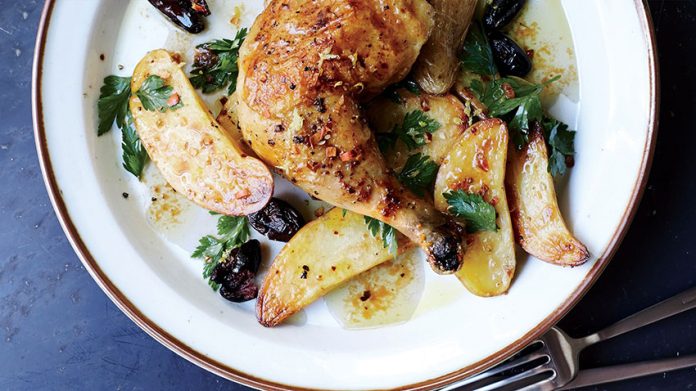
Chicken and potatoes, sheet-pan style.

Sometimes it seems like cooking trends are really something common that’s been around for a while (or forever) with a new fancy name. “Sheet pan” dinners – i.e., roasting meats, fish and vegetables on an oiled cookie sheet in the oven at a fairly high temperature – might be one of the most recent.

That said, who doesn’t like an easy, delicious dinner, with minimal prep and cleanup, that doesn’t require unusual ingredients?

I often cook like this when I want a vegetarian night, using whatever veggies I have on hand. (It’s also a good way to add some glamour to the infamous “top shelf special.”) Roasting vegetables turns some of their natural starches into sugars, resulting in more hearty, in-depth flavors.

Beets, onions, tomatoes, turnips and carrots all transform wonderfully when roasted, and even high-sugar fruits, like pineapple, yield a richer, more complex sweetness. What I do is chop the veggies into more or less inch-size pieces, toss them around in an olive oil, soy sauce and Balsamic mixture, add some salt and pepper and maybe some other spices, and then throw the whole thing on a cookie sheet in my fancy-dancy toaster oven.

In about 30 minutes at 400 degrees they’re roasted to a state of caramelized decadence. Accompanied with some fluffy Basmati rice and maybe sprinkled with a little fresh Parmesan, it’s a lovely, simple and healthy dinner. And, if you line the pan with foil, clean-up is really a cinch.

Use these recipes as guidelines, and feel free to adjust them to your own tastes and what you have available. Different kinds of fish, cuts of chicken and most vegetables (other than leafy greens, although they can be roasted, too, just for less time, coated with a bit of olive or coconut oil) will all work fine.

Salmon & Broccoli with Chile-Caper Vinaigrette

Cauliflower would work well too.

  • 1 bunch broccoli, cut into florets
  • 4 Tbsp. olive oil, divided
  • Kosher salt, freshly ground pepper
  • 4 six-oz. skinless salmon fillets
  • 1 red Fresno chile or jalapeño, seeds removed, thinly sliced into rings
  • 2 Tbsp. rice vinegar
  • 2 Tbsp. drained capers

Preheat oven to 400°. Toss broccoli and 2 Tbsp. oil on a baking sheet; season with salt and pepper. Roast, tossing occasionally, until browned and crisp-tender, 12–15 minutes. Remove from oven. Rub salmon with 1 Tbsp. oil; season with salt and pepper. Push broccoli to edges of baking sheet and place salmon in the center. Roast until salmon is opaque throughout, 10–15 minutes. Meanwhile, combine chile, vinegar and pinch of salt in small bowl and let sit about 10 minutes. Mix in capers, salt & pepper and remaining 1 Tbsp. oil. Drizzle fish and veggies with vinaigrette just before serving.

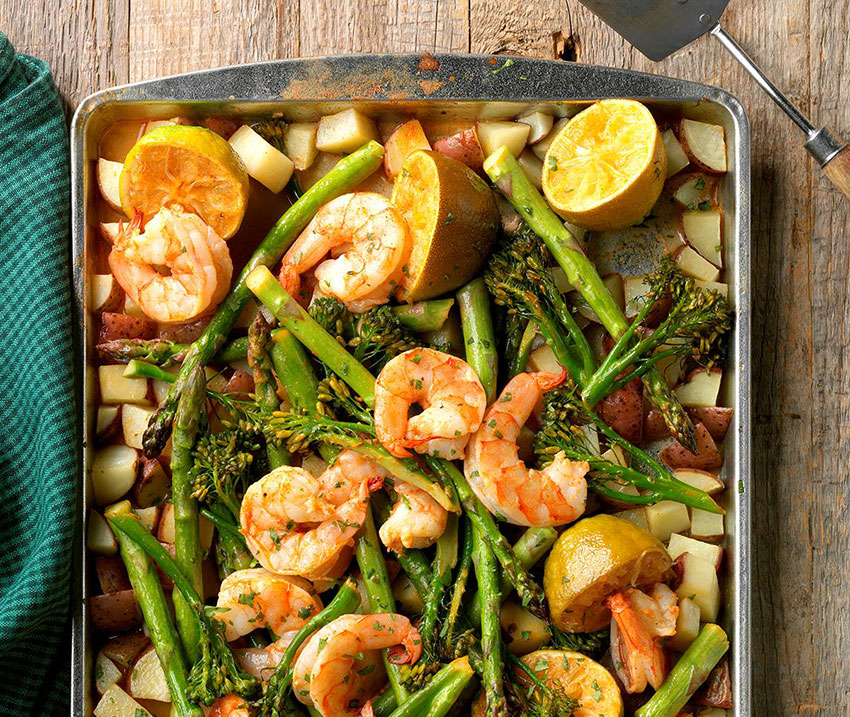
Chipotle-Lime Shrimp: minimal prep and cleanup.

Chipotle-Lime Shrimp

  • 1-½ pounds baby red potatoes, cut into 3/4-inch cubes
  • 1 Tbsp. extra virgin olive oil
  • ¾ tsp. sea salt, divided
  • 1/3 cup fresh lime juice
  • ¼ cup unsalted butter, melted
  • 1 tsp. ground chipotle pepper
  • ½ lb. asparagus or broccoli, cut into small florets
  • 1 lb. uncooked shrimp (16-20 per pound), peeled & deveined
  • 2 Tbsp. minced fresh cilantro

Preheat oven to 400°. Place potatoes on greased baking sheet; drizzle with olive oil and sprinkle with salt. Bake 30 minutes, stirring occasionally. Meanwhile, squeeze 1/3 cup juice from limes, reserving fruit. Combine lime juice, melted butter, chipotle and remaining salt. Remove sheet pan from oven. Arrange asparagus or broccoli, shrimp and reserved limes on top of potatoes. Pour lime juice mixture over vegetables and shrimp. Bake until shrimp turn pink and vegetables are tender, about 10 minutes. Sprinkle with cilantro. – TasteOfHome.com

Chicken with Potatoes & Kalamata Olives    

  • 1 bay leaf, crushed
  • 1 tsp. fennel seeds
  • ½ tsp. crushed red pepper flakes
  • 1-½ lb. fingerling potatoes, halved
  • ½ cup pitted Kalamata olives
  • 4 Tbsp. olive oil, divided
  • Salt & pepper
  • 4 chicken legs (thigh & drumstick; about 3 lb.)
  • ½ cup fresh parsley or cilantro
  • 1 tsp. lemon zest

Preheat oven to 450°. Pulse bay leaf, fennel seeds, and red pepper flakes in spice mill until finely ground. Toss potatoes, olives, 2 Tbsp. oil, and half of spice mixture in a large bowl; add salt and pepper. Place chicken on a baking sheet; rub with remaining 2 Tbsp. oil. Season with salt and pepper and rub with remaining spice mixture. Arrange potatoes around chicken. Roast until potatoes are fork-tender, chicken is cooked through, and skin is crisp, 35–45 minutes. Serve topped with parsley and lemon zest.

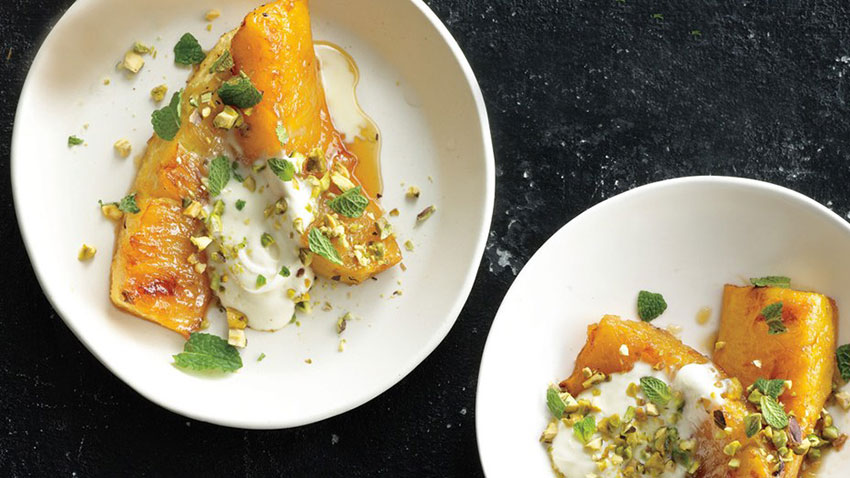
And for dessert, some roasted pineapple with honey and almonds.

Honey-Almond Roasted Pineapple

  • ½ cup packed grated piloncillo or brown sugar
  • ½ cup fresh orange juice
  • 3 Tbsp. honey
  • 1 medium ripe pineapple, peeled, cored, cut lengthwise into 8 wedges
  • ¼ cup creme fraiche or plain yogurt
  • 1/3 cup slivered almonds or natural unsalted pistachios, chopped
  • 2 Tbsp. fresh mint leaves

Preheat oven to 400°. Line baking sheet with parchment or foil. Stir first 3 ingredients in a large bowl until sugar dissolves. Add pineapple; toss to coat. Let marinate, stirring occasionally, for 10 minutes. Place pineapple, one flat side down, on prepared pan; reserve marinade. Bake 15 minutes, turn, brush with marinade, and bake until tender and caramelized, 10-15 minutes more. Drizzle with remaining marinade, let cool slightly. Garnish with crème fraiche, nuts and mint.

Janet Blaser of Mazatlán, Sinaloa, has been a writer, editor and storyteller her entire life and feels fortunate to write about great food, amazing places, fascinating people and unique events. Her work has appeared in numerous travel and expat publications as well as newspapers and magazines. Her first book, Why We Left: An Anthology of American Women Expats, is available on Amazon. Contact Janet or read her blog at whyweleftamerica.com.

Aeroméxico to scale down Europe service due to coronavirus

0

Aeroméxico has announced that it will reduce the frequency of its flights to Europe by 40% in the face of the pandemic of the coronavirus known as Covid-19.

In an internal letter to the company’s collaborators, director general Andrés Conesa said that it is one of the hardest moments in the company’s history.

“I can say without a doubt that this has been the most difficult thing I’ve ever experienced,” said Conesa.

He also announced that he would reduce his own salary by 20% during the crisis in order to free up more resources to get through the tough time.

The major routes that have been reduced are Madrid, from 17 to seven flights; Barcelona, from five to three; Paris, from 11 to seven; London, from seven to five; and Amsterdam, also from seven to five flights. The modified frequencies are scheduled from March 17 to April 30.

Some passengers have already had their flights changed, and Aeroméxico is asking them to contact customer service only if they are not happy with the change.

“If your flight was rescheduled and you’re OK with the new flight, be at the airport three hours before departure. In this case, it’s not necessary to contact us,” the company said in a message to passengers.

Its phone customer service is giving priority to those who have flights in the next 72 hours, so it is asking those whose flights are later to consult the website first.

Flights to and from China have seen a much steeper dropoff since the outbreak of the coronavirus. Only 835 passengers flew between the two countries in January, a drop of 89.6% from January 2019.

Only one airline — China Southern Airlines — provides service between Mexico and China. Aeroméxico formerly offered service but stopped last year when it cancelled its route to Shanghai.

In addition to the coronavirus scare, Aeroméxico and other airlines are also dealing with the financial hit of not being able to use the Boeing 737 Max plane after taking it out of service in March of last year.

Sources: El Economista (sp), El Financiero (sp), Milenio (sp), El Heraldo (sp)

Mexicali brewery no threat to water supply: federal government

0
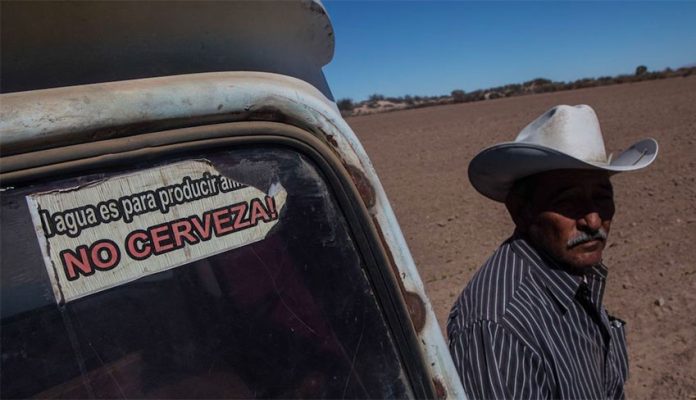
'Water is for producing food not beer,' reads the sticker.

The operation of the brewery under construction by the United States company Constellation Brands in Mexicali, Baja California, does not pose a threat to the water supply, the federal government says in an information leaflet being distributed in the lead-up to this weekend’s referendum on the controversial beverage plant.

Emblazoned with the logos of the ministries of the Interior and the Environment as well as the National Water Commission, the brochure acknowledges that there is community concern that the brewery will use excessive amounts of water and thus create a shortage in Mexicali and surrounding areas.

However, the government points out that there is annual water availability of 2.7 billion cubic meters in the Valley of Mexicali and that the state government has only authorized the use of 5.8 million cubic meters per year by the brewery.

The amount represents “just 0.2% of the total volume [of available water] in the region,” the leaflet says, adding that the brewery will not be permitted to increase the quantity of water it uses.

“The operation of the plant doesn’t represent a present or future risk to the supply or availability of water for the countryside and homes in the Valley of Mexicali, or to the human right to water.”

The government also offers a guarantee that the brewery – being built on 400 hectares of land – will not use more water than a farm of the same size. In addition, Constellation Brands will pay 68 centavos for each liter of water it uses whereas farmers pay only 14 centavos, the brochure says.

If water supply is low, the Constellation brewery, other factories and farmers will all have to reduce their use of the resource to ensure availability for human consumption, the government says.

The leaflet notes that Constellation has obtained all the environmental and other permits it requires to operate but stresses that “the people” will have the final word on whether the US $1.5-billion brewery is allowed to open. “This March 21 and 22, you decide!” it says.

Opponents of the brewery, such as the Mexicali Committee for the Defense of Water, said that the brochure is biased and accused the government of showing favoritism to Constellation Brands.

“It betrays the principles of Juárez,” said Armando Salinas, leader of the committee and another group opposed to the brewery project, referring to 19th-century president Benito Juárez.

He added that if the government has already made up its mind to allow the brewery to open, the consultation should be cancelled to save money. “It would be an unnecessary expense,” Salinas said.

President López Obrador announced at the start of the month that a vote to decide the fate of the brewery would be held in Mexicali and said last week it would take place March 21 and 22.

“We want the citizens to be those who decide, we want the public to decide,” he said last Monday, explaining that the vote is not called a consultation but rather a “participatory exercise.”

On March 3, López Obrador rejected any suggestion that holding a referendum on the brewery set a bad precedent.

“People say: ‘it will set a bad precedent if there’s a consultation, because it will impact investment.’ No, the bad precedent was already set when, without taking people into account, they gave out the permits,” he said.

Citizens will be able to cast their vote this Saturday and Sunday at 17 locations in Mexicali and a further 10 in agricultural areas.

Constellation, the largest importer of beer to the United States, has rejected the public consultation and said that it will consider other locations for a new brewery if Mexico becomes too problematic.

If the company decides to continue construction of the brewery in Mexicali – and its operation is given a green light at the government’s consultation – it is expected to open at the end of 2021.

Source: La Jornada (sp) 

144 tonnes of narcotics seized at ports during AMLO’s tenure

0
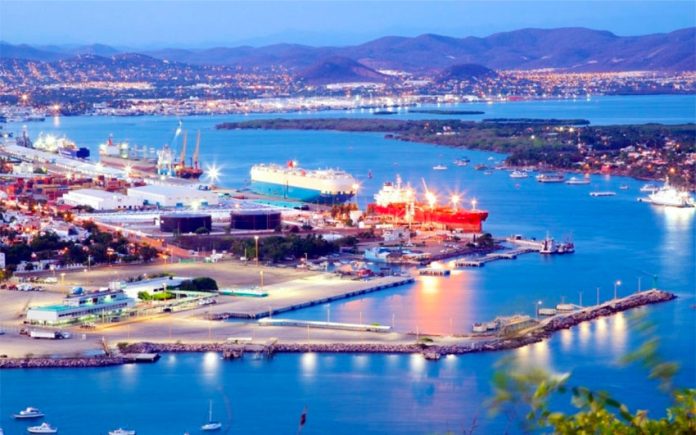
Mazatlán has been a popular port for drug smugglers.

Federal security forces have seized almost 144 tonnes of drugs at Mexico’s 22 biggest ports since President López Obrador took office in December 2018.

According to information obtained by the newspaper Milenio via requests made to the National Institute for Transparency and Access to Information (INAI), the army, navy and National Guard confiscated 143.97 tonnes of drugs including marijuana, cocaine, methamphetamine and heroin during the first 15 months of the current federal administration.

The quantity of narcotics seized at ports accounted for 97% of all drugs confiscated since López Obrador became president.

Seizures at the port in Mazatlán, Sinaloa, accounted for 71% of all drugs confiscated and just under 80% of the total for marijuana.

The ports in Guaymas, Sonora; Huatulco, Oaxaca; Puerto Peñasco, Sonora; Puerto Chiapas, Chiapas; and Ensenada, Baja California saw the next biggest seizures but the amounts confiscated there were dwarfed by the 102.24 tonnes confiscated in Mazatlán.

Just over 124 tonnes of marijuana were seized at ports in the last 15 months, a figure that accounts for 86.2% of the total amount of drugs confiscated. The largest single seizure occurred at Mazatlán last month when the navy confiscated 99 tonnes of pot.

The second most commonly seized drug was crystal methamphetamine, with total confiscations of 11.11 tonnes. Almost 7.5 tonnes of the drug, or 67% of the total, were seized in Guaymas.

Cocaine followed with port seizures totaling 7.81 tonnes since December 2018. Just over 45% of that amount – 3.55 tonnes – was seized in Puerto Chiapas, a port town approximately 25 kilometers southwest of Tapachula.

The three federal security forces seized just under 837 kilograms of methamphetamine (other than crystal meth) since López Obrador took office, 22.3 kilograms of heroin and 43.3 kilograms of other drugs. Ensenada saw the largest confiscations in all three categories.

Data supplied by INAI also showed there were drug seizures in the past 15 months at the Tamaulipas ports of Altamira and Tampico, but these were negligible, with authorities confiscating just 0.01 tonnes in the former location and 0.03 tonnes in the latter.

Milenio reported that almost 12.5 tonnes of drugs were seized in April 2019, making that month the second most successful for the federal government in terms of confiscations after February 2020. The least successful month was December 2019, with narcotics confiscations of just 18 kilograms.

Milenio also reported that homicide numbers were high in many of the ports that are used by criminal organizations, such as the Sinaloa Cartel and the Jalisco New Generation, to transport drugs.

There have been 500 homicides with firearms in Mazatlán since President López Obrador took office, 261 in Guaymas and 93 in Huatulco, according to the National Public Security System.

Source: Milenio (sp) 

Cruise ship arrivals cancelled for 5 weeks due to pandemic

0
Cruise ship ports will be quiet.

Cruise ship arrivals in Mexico have been canceled for up to five weeks in response to the coronavirus pandemic that is spreading across the globe.

West coast coordinator of the Mexican Cruise Association, José Arturo Musi Ganem, said that the virus is having an unprecedented impact on the cruise industry. He said ships currently at sea will return to their ports of origin and not leave again until the crisis has passed.

He expects them all to be back at the ports of Cabo San Lucas, Mazatlán and Puerto Vallarta within two weeks.

Musi said that cruise operators Disney, Princess, Norwegian, Holland America, Regent Seven Seas, Carnival, Celebrity, Amadeo and others have all cancelled upcoming arrivals in the country.

“It’s an unprecedented situation that we’ve never seen before, so the whole industry is worried about this,” he said.

He said that in addition to nautical tourism, the coronavirus affects other industries that also depend on the arrival of cruise ship passengers, such as tour operators, restaurants, bars and transportation.

“We don’t know how long this will go on. The cruise ship companies said a month, however they could be out of service as long as two months, depending on how things go, as there is news every day,” he said.

The service suspensions likewise affect cruise ship ports on the Yucatán peninsula. The director general of the Integral Port Administration of Quintana Roo (Apiqroo), Alicia Ricalde Magaña, announced the cancellation of arrivals to Cozumel, Puerta Maya and Punta Langosta for the next 30 days.

The 31 arrivals that were canceled to these destinations during the week of March 16-22 amount to a loss of 181,000 passengers disembarking and spending money in the port cities. Cozumel alone had 120 arrivals scheduled for the next month, with a total of 720,000 passengers.

The first cancellations came from Princess Cruises, which announced that it canceled five arrivals on Friday.

Ricalde said that Apiqroo is in close communication with cruise ship companies, attentive to the day they resume operations once the situation is under control.

Sources: Milenio (sp), El Economista (sp)

The quest to preserve Mexico’s richest legacy: its cuisine

0
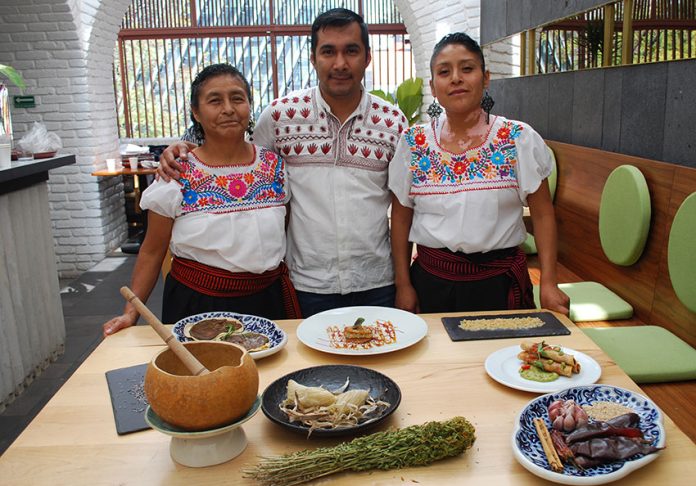
Irad Santacruz and two cooks from the Guardianas de la Tierra de Maíz at El Mexicano Masaryk
Irad Santacruz and two cooks from the Guardianas de la Tierra de Maíz at El Mexicano Masaryk. leigh thelmadatter

When we think of amas de casa (housewives, literally ladies of the house) in rural Mexico, we picture older women in traditional dress, slaving over wood fires in adobe homes.

Scenes such as these certainly do play out in many parts of Mexico, but the creation and preservation of traditional cooking has taken on other dimensions. Aside from those who compile regional recipes in the form of cookbooks, several groups of devotees, recognizing the richness of this tradition, are working to preserve the creative legacy of generations in the kitchen.

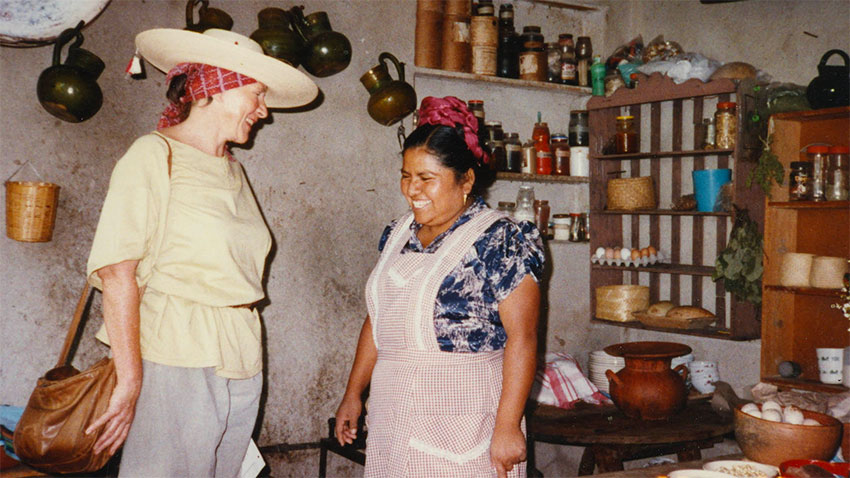
Systematic documentation of traditional Mexican cooking began with the work of an Englishwoman by the name of Diana Kennedy, who fell in love with Mexican cuisine in the late 1950s and whose first book, The Cuisines of Mexico (1972), brought central and southern Mexican food to international attention.

In the decades since, Mexican gastronomy has become as important to the mammoth tourism industry as beaches, pyramids and handcrafts. Most of the focus has been on the restaurant industry. However, Kennedy’s work was with home cooks, traveling to their villages, documenting ingredients and techniques and “translating” them into workable recipes for modern cooks.

Decades later, there are new efforts to pick up where Kennedy left off. Not only have other foreign chefs “discovered” and worked to promote Mexican cuisine outside of Tex-Mex, Mexican public and private initiatives have sprung up to do much the same.

An early photo of Mexican cuisine expert Diana Kennedy with a traditional cook.

Cookbooks have been a part of this of course. Where Kennedy’s work has been on an introductory level for foreigners, a number of Mexican cooks and chefs have produced works that go into depth on the cooking traditions they know best.

For example, in 2012 Carmen Titita of El Bajío restaurant in Mexico City published a cookbook dedicated solely to soups, rice and pasta dishes — the sopas that precede the main courses of Mexican meals. Celia Florián has worked with Oaxaca home cooks to produce books that have become authoritative works in Spanish on that regional cuisine.

Journalist Dulce Villaseña, who has worked with Florián, comments that “Without having written recipes, traditional cooks guard in their minds the culinary treasures that have been passed down from generation to generation. And this is how they typically cook daily for their families, as well as cook for major festivals in their communities when called upon. … It is wonderful to see how they measure portions with their hands. Everything is calculated perfectly with fists and pinches, using local products at hand, and with this they prepare incredible dishes.”

Perhaps even more important than the written word has been the rise of organizations of cooks dedicated to preserving traditional recipes, ingredients and cooking techniques. They organize and bring respect to the work of these cooks, 90% of whom are women.

These organizations exist on the local, state and regional levels, with one of the best known being the Asociación de las Cocineras Tradicionales of Oaxaca (Association of Traditional Cooks of Oaxaca), headed by Florián. Work done by several Michoacán-based cooking organizations led Mexican cuisine to be included as a World Intangible Heritage in 2010.

The work by such groups has caught the attention of public and private entities. On the federal level, one important ally has been the Mexican Biodiversity Commission (Conabio). The agency sees traditional cooking as a way to promote and preserve Mexico’s biodiversity, especially in edible plants, and regards the use of locally sourced food as a means of sustainable development.

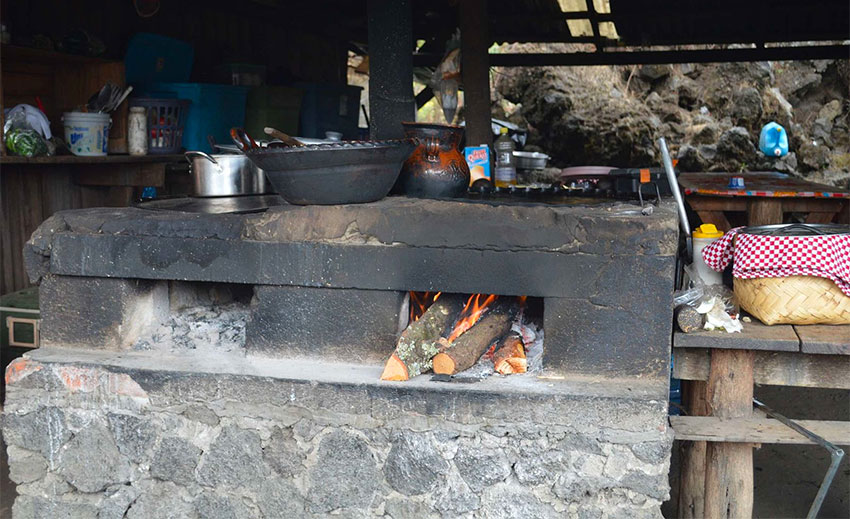
Traditional kitchen at a tourist stop near the San Juan Parangaricutiro church in Michoacan
Traditional kitchen at a tourist stop near the San Juan Parangaricutiro church in Michoacan. Alejandro Linares García

Their first major project was the digitalization in 2010 of Kennedy’s decades of handwritten notes created as she traveled the backroads of Mexico and interviewed everyday housewives.

A more recent project is Los quelites de México (in Spanish), a 2020 calendar that promotes the cooking and eating of Mexico’s native greens, known collectively as quelites. There are over 350 species of plants in this category, the best known of which are romeritos (seepweed or Suaeda Torreyana S. Watson), huaunzontle (Chenopodium nuttalliae), squash flowers and verdolaga (purslane or Portulaca oleracea). Most have fallen out of favor and are in danger of disappearing because of cultural changes, in particular population shifts into cities. However, such plants are highly nutritious, contain anti-oxidants and can even work to eliminate certain parasites and other digestive issues.

Such traditional cooking has caught the attention of fine diners as well. A number of well-known cooks have started successful restaurants, especially in Oaxaca, whose regional cuisine is now one of the best-known in Mexico. Others have collaborated with established restaurants to influence their menus.

One new restaurant in Mexico City is based on the idea of regular collaboration with traditional cooks. El Mexicano Masaryk opened in 2019 in a swank Polanco location.

Every six months the restaurant changes the menu to accommodate regional dishes that are taught to the chef and kitchen staff by traditional cooks. For the first six-month period, the menu featured items from the states of Oaxaca, Michoacán, Puebla and Quintana Roo, with the collaboration of such notable cooks as Benedicta Alejo of Michoacán and Ofelia Toledo of Oaxaca.

This does not mean that the resulting menu items are made exactly the way they’re done in rural settings. Wood fires are impossible in modern kitchens, and the dishes are adapted for a fine dining experience. But the cooks’ role is to make sure the dishes taste as close as possible to what they themselves make.

Currently one of the collaborating cooks/chefs is Irad Santacruz of Tlaxcala. Despite studying gastronomy in Spain, when asked about his state’s cooking, he found himself embarrassingly unaware. On returning to Mexico in 2006, he began researching and documenting.

Collaborating with families such as the five generations under Doña Nicolasa (98 years old) of Contla on the foothills of the Malinche volcano, he founded the restaurant Guardianas de la Tierra de Maíz (Guardians of the Land of Corn) in 2014 to preserve techniques and ingredients from local Tlaxcalan cooking.

Mexico News Daily

Known for stealing oil, Guanajuato cartel has moved into cocaine

0
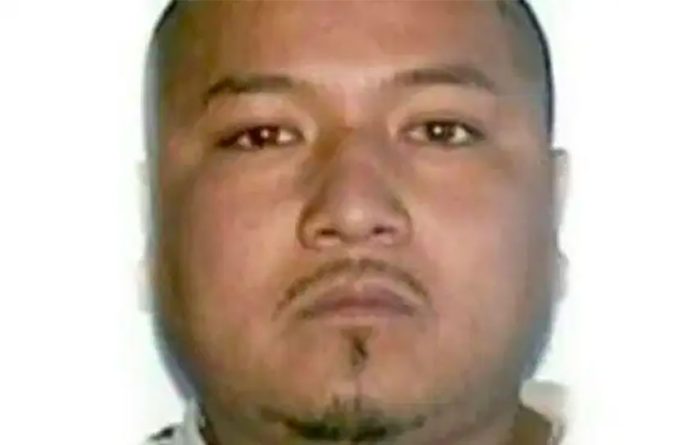
Cartel boss El Marro.

The Santa Rosa de Lima Cartel, a fuel theft and extortion gang from Guanajuato, has moved into cocaine trafficking and its leader, José Antonio “El Marro” Yépez Ortiz, is now wanted by the U.S. Drug Enforcement Administration (DEA).

Former DEA chief of international operations Mike Vigil said that although the cartel is well-known for its illegal trafficking of petroleum products, it also sells other illicit goods, “mainly cocaine.”

Vigil told the newspaper Milenio that El Marro is a big target for the DEA, even though the gang he leads isn’t as large as other more notable criminal organizations, and said he believed that the walls are closing in on the fugitive kingpin.

A number of family members close to El Marro have been arrested recently. His father was nabbed in Guanajuato in early March, and his niece was detained on weapons charges in February.

El Marro’s wife was arrested in January, although she was released soon afterward, and his sister was assassinated with her groom at their wedding in that same month.

With so much pressure on El Marro from both the Mexican government and the DEA, Vigil says it’s only a matter of time before he is brought in.

“I believe that El Marro is well-hidden because the government is on his trail,” said Vigil.

As for the violence that has erupted in Guanajuato and neighboring states in which the cartel operates, Vigil said there is only one explanation: money. He said that, like other leaders of criminal organizations, El Marro uses extreme violence to protect his earnings, which are in the millions.

“Narcotrafficking and violence are a glove on the same hand,” he said.

According to Vigil, recent blockades, car fires and shootouts in Celaya, Guanajuato, last Wednesday had the same effect as the shootouts with members of the Sinaloa Cartel in Culiacán, Sinaloa, in October. The chaos from the Culiacán confrontations led authorities to release Ovidio Guzmán López, whose arrest was the objective of the operation.

Last month, Milenio toured the community of Santa Rosa de Lima, Guanajuato, the gang’s base of operations, and found that El Marro had outfitted the town to lead the gang’s activities and evade capture.

He has escaped in the past thanks to a network of safe houses that allows him to move surreptitiously from one property to another in a matter of minutes and to escape to the nearby city of Celaya in just 20 minutes in a vehicle.

Source: Milenio (sp)

Peso continues to slide, falling over 3% against dollar

0
currency

The coronavirus pandemic continues to take a heavy toll on the Mexican peso amid growing fears of a global recession.

The peso fell more than 4% to a record low of more than 23 to the United States dollar early Monday before recovering slightly.

In early international trading, the peso dropped to 23.07 to the U.S. dollar, a 4.1% slump compared to its closing on Friday. Just before 9:00 a.m., the currency had recovered to 22.74 to the dollar, a decline of 3.73% compared to Friday.

The fall in the value of the peso came after the United States Federal Reserve announced Sunday it would cut interest rates to 0% as part of measures to cushion the economic impact of the global spread of Covid-19, an infectious disease that originated in Wuhan, China, late last year and which has now spread to more than 140 countries including Mexico, where there were 53 confirmed cases as of Sunday.

“The United States definitely is expecting a very strong blow to the economy because of coronavirus. The signs are clear that a recession is getting closer,” Gabriela Siller, head of economic analysis at Mexican bank Banco Base, told the news agency Reuters.

The slump of the peso on Monday morning came after the currency lost 8.3% of its value against the U.S. dollar last week due to an oil price war between Saudi Arabia and Russia and the World Health Organization’s declaration that coronavirus is a pandemic.

Financial data and media company Bloomberg reported that last week’s losses amounted to the “biggest rout” for the peso since November 2016.

Bank of México Governor Alejandro Díaz de León said Friday that policymakers could sell dollars into the spot market to cushion the impact on the peso but added that foreign-exchange hedge auctions are preferred because they don’t deplete Mexico’s international reserves.

The central bank offered US $2 billion of foreign exchange hedges on Thursday, its first intervention since 2017.

However, Bloomberg reported on Monday that the Bank of México may need to do more to “calm markets and rein in excessive swings” in the value of the peso.

Source: El Financiero (sp) , Milenio (sp), Reuters (en), Bloomberg (en)