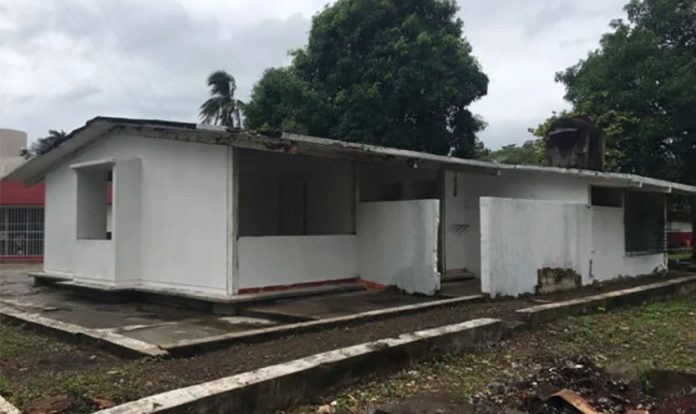
The house in Nacajuca, Tabasco, in which President López Obrador lived when starting his political career as director of the local Indigenous Peoples Coordinating Center (CCPI) could be turned into a museum to honor his legacy.
The president lived in the house from 1977 to 1982, but it has been abandoned for at least 37 years and is in a state of disrepair. A development proposal created by the CCPI states that it is in need of major maintenance.
The four-bedroom home is “completely unusable” and on the point of collapse. The plaster has fallen from the ceiling to expose the roof beams and there are no doors or windows. The bathroom also needs remodeling and there are exposed wires in the walls.
The development plan also includes the renovation of the local CCPI office, which is proposed to house a tribute to the poet Carlos Pellicer, a political mentor to the president who encouraged him to take the position as director of the center.
Released during López Obrador’s presidential campaign, the 2017 documentary Este soy (This Is Me) shows footage of AMLO, as he is commonly known, visiting the house and saying “those six years here were one of the most important times of my life.”
“I lived in this house from ’77 to ’82. I lived here with my late wife Rocío [Beltrán Medina], and my oldest son, José Ramón, was born here.”
The president revisited the facilities on February 28 to reinaugurate the indigenous radio station La Voz de los Chontales (Voice of the Chontals), which he himself founded in 1982. It had been off the air since 1989, when then-Governor Neme Castillo refused to fund it.
The president’s son José Ramón posted a video of the visit to Instagram with the comment: “It all began here.”
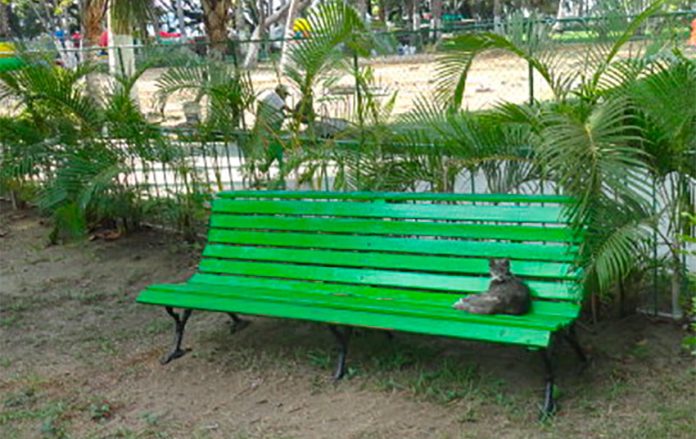
Animal rights activists in Acapulco rescued and sterilized around 400 stray cats from the city’s Papagayo Park and has put them up for adoption.
The president of the Animal Rights Activists Union of Acapulco, Almarina Navarrete Ávila, said that with the upgrade to Papagayo Park and the use of heavy machinery on the grounds, the union stepped in to take care of the strays since the government wouldn’t do so.
She said that the municipal council told her that “the cats aren’t costeños” — or citizens of the coast — and “they are in a state institution” and therefore had to be removed. The federal Environment Ministry, for its part, told her that it was not responsible for “urban fauna” in the park.
The cats were removed from the state-owned property and taken to a house loaned to the activists for the purpose of rescuing them.
The location of the aptly named Casa de los Gatos Rescatados del Parque Papagayo (House of the Cats Rescued from Papagayo Park) has not been disclosed to avoid uncontrolled drop-offs of unwanted cats.
So far over 100 cats have been adopted after people from Acapulco and neighboring communities heard about their stories on social media.
Navarrete said in a press release that the union asks “residents to be aware of those who commit crimes against animals when they abandon them in public places or mistreat them at home.”
She asked that regional governments implement programs to take care of urban animals, such as animal wellbeing centers and massive and constant sterilization programs. She said that it is impossible to separate animal from human problems and urged sensitivity to such issues in the implementation of public policy.
The director of The Cat Feral Mexico — which helped rescue the animals — said that his organization works to address cat and dog overpopulation through sterilization throughout the country.
“We work in neighborhoods, theaters, empty lots, parks, abandoned houses, government buildings, [etc.] because the birthrate is very high and it won’t be solved by killing them,” Diego Franco said.
AMLO not a 'force of contagion,' says deputy minister, right.
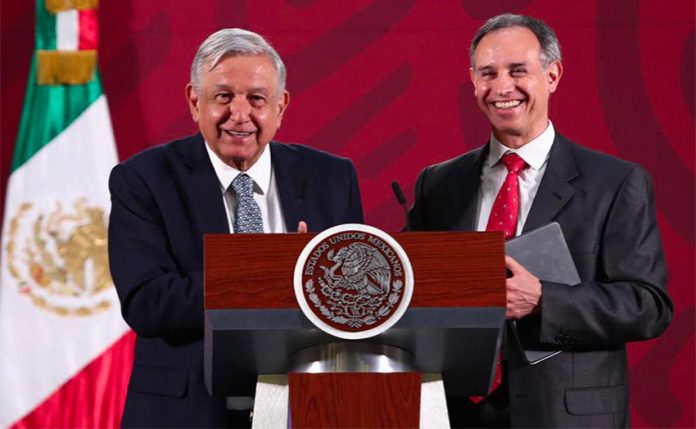
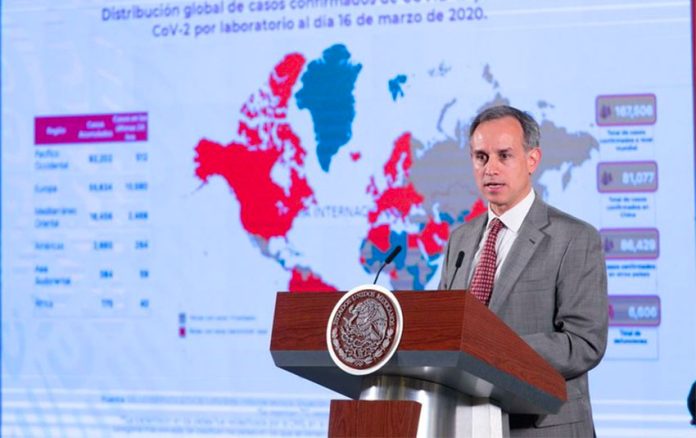
Despite the affection President López Obrador frequently shows his supporters in the form of hugs, kisses and handshakes, he is no more likely to pass on coronavirus to others than anyone else because his force is “moral” rather than one of “contagion,” according to Deputy Health Minister Hugo López-Gatell.
The official’s claim came in response to a question asked by a reporter at the president’s regular news conference on Monday morning.
“If he [López Obrador] becomes a carrier [of Covid-19] and he goes … to areas of high marginalization, could he pass on [the disease] or not?” a reporter asked López-Gatell.
“The force of the president is moral, it’s not a force of contagion,” the deputy health minister responded.
“In terms of a person, an individual who could infect others, the president has the same probability of transmitting [Covid-19] as you or me. And you also do trips, tours and are in society. The president is not a force of contagion so there is no reason why he’ll be a person who infects the masses,” he said.
López-Gatell also told reporters on Monday that even though López Obrador is older than 60 (he’s 66), he’s not at “special risk” of suffering a serious illness if he becomes infected with Covid-19 because he’s in good health.
“I’m going to tell you a very pragmatic thing. It would almost be better that he had coronavirus because most likely he, as an individual, like the majority of people, will recover quickly and he’ll be left immune and then nobody would have to worry about him,” he said.
For his part, Lopez Obrador said that he will suspend his tours of the country and making close contact with his supporters when López-Gatell advises him to do so.
“He’ll tell me when it’s not a good idea for me to meet with a lot of people or that I shouldn’t go on these tours … or give hugs and kisses, … he’ll tell me when,” he said.
The president also said that he could hold his morning press conferences without the physical presence of reporters.
“I would come here [to the National Palace], you in the distance, and we would be talking and communicating with the people. What I can’t do is come with a face mask because you would say, ‘if that’s the way the president is, how will the people be?’ I have to give the people encouragement, security,” López Obrador said.
Later on Monday, opposition lawmakers took aim at López-Gatell for his claim that the president is no more likely to pass on Covid-19 than anyone else because he doesn’t have a “force of contagion.”
“They [the government] even use the pandemic for [the purposes of] populism and [to cultivate] a cult of personality,” Democratic Revolution Party Deputy Guadalupe Almaguer wrote on Twitter. “What irresponsibility [on the part] of Hugo López-Gatell.”
National Action Party Deputy Marco Adame wrote on Twitter that the deputy health minister “loses authority by trying to justify the conduct of the president,” adding “it’s not his role.”
Citizens’ Movement Senator Clemente Castañeda appeared to take a swipe at both López Obrador and López-Gatell in one short tweet accompanied by footage of the latter speaking while standing next to the president.
“In times of pandemic, even ineptitude is contagious,” he wrote.
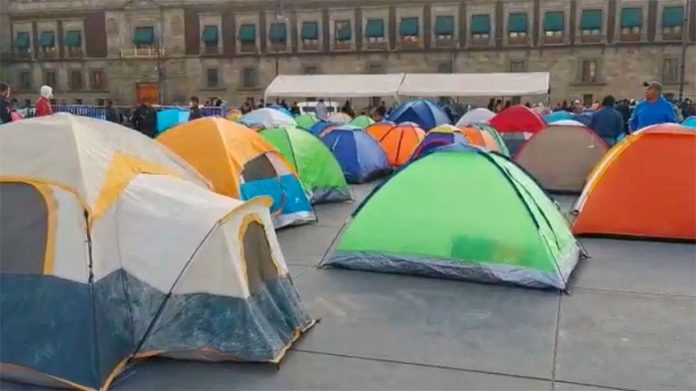
Chiapas teachers set up tents outside the National Palace.
Although it said it would consider the Education Ministry’s request to begin the Semana Santa, or Holy Week, vacation early in response to the spread of Covid-19, the CNTE teachers union is not doing so without skepticism.
A press release issued by union local Section 22 from Oaxaca on Saturday said that the union did not “rule out the possibility that [precautionary measures for the coronavirus] could be the product of a strategy for geopolitical control of interests in the capitalist system.”
The document added that “the working class and the people in general are the victims of such interests.”
It also asked union members and parents to practice proper hygiene, but not to fearmonger with false news about the “so-called coronavirus.”
One government recommendation the union does not seem to heed is that of social distancing. Teachers from a union local in Chiapas gathered to protest in Mexico City on Tuesday.
They set up camp outside the National Palace and demanded an end to the economic and legal repression they claim now reigns in the administration of Chiapas Governor Rutilio Escandón Cadenas.
A total of five marches or assemblies snarled traffic in the nation’s capital on Tuesday. Aside from protests led by the CNTE and SNTE teachers unions, there were demonstrations by electricians and citizens demanding better potable water supplies and the cancellation of the extension of Line 3 of the Metrobús.
At least 6,000 pesos for a test at the Ángeles hospitals.
Two private hospital chains in Mexico City are charging between 6,000 and 10,000 pesos (US $260-$433) for coronavirus tests, the newspaper Milenio has confirmed.
Milenio reporters verified that hospitals operated by the Ángeles chain are charging patients at least 6,000 pesos for Covid-19 tests. The price is almost three times higher than the 2,300 pesos that the government has said it costs to produce and perform a single test.
Milenio noted that a specific coronavirus test is not available at some Ángeles hospitals because they don’t have the necessary equipment.
Those hospitals are instead offering a broader virological test, at a cost of 40,000 pesos, to people who believe they may be infected. The fee includes a medical consultation, personalized care and hospitalization if required.
Test results are available in 24 to 48 hours.
During visits to emergency departments of Ángeles hospitals, Milenio reporters noted that medical personnel ask patients a range of questions such as “What are your symptoms?”, “Have you traveled to the United States, Italy, Asia, France or Germany?” and “Have you had contact with any positive case?”
Mexico News Daily is making most of the coronavirus coverage available free to all our readers. In order that we can continue to provide the latest Mexico news please consider purchasing a subscription. Our members enjoy full access to all our content ads-free. Click here to see all our coronavirus coverage.
Before coronavirus tests are carried out, patients are isolated and tested for influenza and the common cold, Milenio said.
The newspaper said that strict sanitary measures are not observed at the emergency departments at Ángeles hospitals, noting that receptionists and security guards were not using face masks or gloves.
Milenio also visited hospitals operated by the ABC chain and found that they are charging similar fees for Covid-19 tests to their counterparts at Ángeles hospitals, though medical personnel there are observing stricter sanitary measures, the newspaper reported.
People with symptoms of Covid-19, such as a dry cough and fever, are isolated to prevent any possible spread of the infectious disease to other patients, and doctors wear long-sleeved lab coats, face masks and latex gloves when interacting with them.
In addition to Covid-19 testing, patients presenting flu-like symptoms are also tested for other respiratory diseases. If they test positive for either coronavirus or another respiratory illness, ABC hospital staff recommend hospitalization, Milenio said.
Details of the Covid-19 testing costs and procedures at private hospitals in Mexico City come as the number of coronavirus cases continues to climb in Mexico.
There were 82 confirmed cases of Covid-19 as of Monday, according to the Health Ministry, and 171 suspected cases.
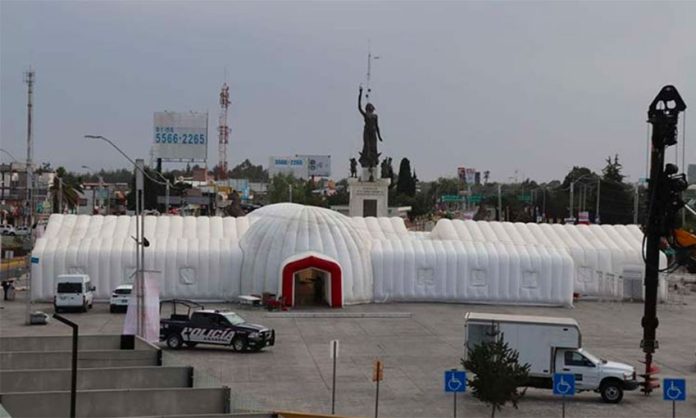
The government of Hidalgo has set up an inflatable hospital in Pachuca to deal with a possible influx of patients infected with the coronavirus Covid-19.
There are currently no confirmed cases of Covid-19 in the state.
Workers began setting up the 1,800-square-meter structure on Saturday in Pachuca’s Bicentennial Esplanade and completed the construction on Monday.
The hospital has nine external consultation modules with the capacity to see 80 patients a day, and 40 hospital beds and 10 intensive care beds.
Governor Omar Rayad Meneses took a tour of the facility on Monday night. He announced that the hospital would be sanitized on Tuesday morning and that it should be ready to accept patients by the afternoon.
This is not the first time the government of Hidalgo has installed the inflatable hospital. It set it up for four days in November 2018 in Pachuca’s David Ben Gurión Park to provide free medical care to the public.
Health officials are still recommending the public wash hands and use sanitizer regularly, sneeze into a tissue or the inside of their arm and stay at home as much as possible, as well as not touch their faces, in order to mitigate the outbreak of the disease.
López-Gatell: no evidence to show that closing borders slows spread of the virus.
Mexico appears unlikely to join a growing list of countries that are closing their borders as part of efforts to reduce the spread of the novel coronavirus Covid-19.
Deputy Health Minister Hugo López-Gatell said Tuesday that according to the World Health Organization, there is no scientific evidence that shows that closing borders contains the spread of contagious diseases.
He added that “closing the borders is not possible without causing damage to society with unpredictable and huge consequences.”
If the movement of people is not allowed, there will be no way to access food and medical supplies, López-Gatell said.
The deputy minister also said that the government has 3.5 billion pesos (US $152 million) to purchase supplies required to respond to the coronavirus pandemic. Federal and state governments are both involved in preparations for a widespread outbreak of the disease, López-Gatell said.
While Mexico isn’t planning to close its borders, many other countries have moved to restrict the entry of foreigners.
Mexico News Daily is making most of the coronavirus coverage available free to all our readers. In order that we can continue to provide the latest Mexico news please consider purchasing a subscription. Our members enjoy full access to all our content ads-free. Click here to see all our coronavirus coverage.
The United States has barred the entry of foreign nationals traveling from China, Iran and Europe’s Schengen Area, while Guatemala closed its land border with Mexico at midnight Tuesday and Canada is closing its borders to all foreigners except Americans from Wednesday on.
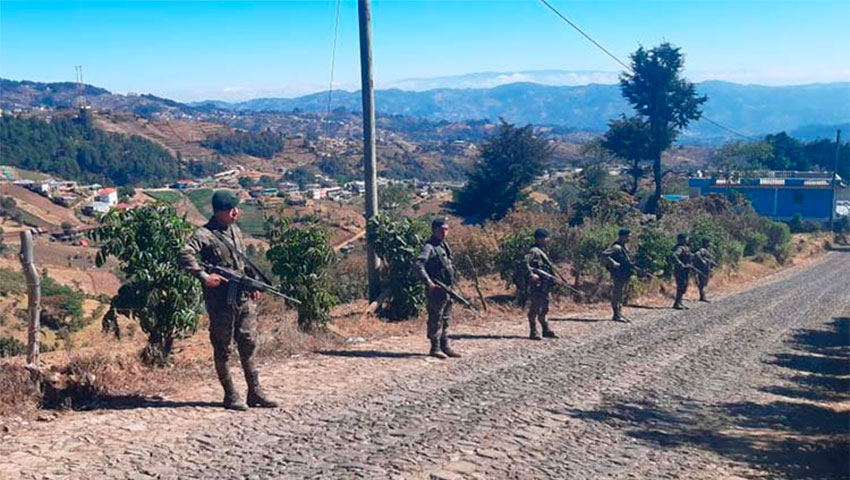
At Mexico’s southern border with Guatemala, health officials from the Central American nation told foreigners attempting to enter that the border will remain closed until March 30.
Guatemalan Health Ministry sources told the newspaper Reforma that authorities have established highway checkpoints to detect any foreigners who may have entered the country irregularly by crossing the shallow waters of the Suchiate River between Chiapas and Guatemala.
For his part, Canadian Prime Minister Justin Trudeau announced Monday that his government “will be denying entry to Canada to people who are not Canadian citizens or permanent residents” with the exception of U.S. citizens, air crews, diplomats and immediate family members of Canadian citizens.
U.S. citizens are exempt due to the high “level of integration of our two economies and the coordination that we have,” Trudeau said.
Guatemalan soldiers guard the border with Mexico.
Flights from Mexico and other countries can continue to land in Canada but they will be directed to just four airports: Vancouver, Calgary, Toronto and Montreal.
Many other countries in the Americas, including Chile, Colombia and Ecuador, have announced they are closing their borders, while a number of countries in Europe, Asia, Africa and Oceania are also restricting the entry of foreigners.
But any foreigners stranded in Mexico needn’t worry about coronavirus treatment should they contract it. President López Obrador said today Mexico will treat and care for any foreign patients with Covid-19 because medical attention is “a basic right.”
Foreign citizens will have “full protection and attention. If they are infected, we will take care of them here regardless of their country of origin because that’s universal brotherhood.”
Meanwhile, the Mexican airline Interjet has announced that it will reduce the number of seats it offers on flights by 40%. The company said in a statement that it took the decision both as a health measure and in response to the expected downturn in demand for air travel.
“In the face of the public health issue that Covid-19 represents, the most important thing for Interjet is the safety of its passengers and almost 6,000 employees. For that reason, the company is strengthening its safety and hygiene protocols,” the statement said.
Interjet also said that its aircraft are equipped with high-efficiency particulate air filters that remove 99.99% of microscopic bacteria and virus particles.
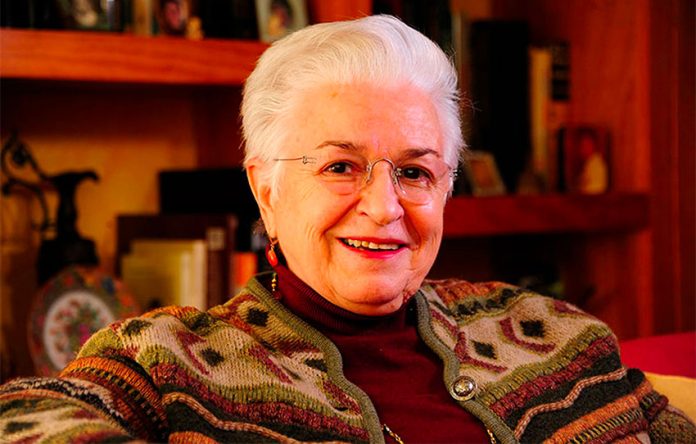
After a decades-long career researching and protecting Mexico’s underwater cultural heritage, Pilar Luna Erreguerena died on March 15, 2020 at age 76.
Luna pioneered the field of underwater archaeology in Mexico, while it was still being institutionalized in the United States.
She discovered the specialty while studying archaeology at the National School of Anthropology and History (ENAH) when a professor, Eduardo Matos Moctezuma, lectured about the relocation of the temples and monuments of Abu Simbel in Egypt due to the construction of the Aswan Dam. After that class, she ran across the hall to the library to research the project as it combined her two loves, archaeology and water.
This led her to the work of the American George F. Bass, the father of underwater archaeology, with whom she would collaborate on projects in Mexico and abroad during her career.
Luna found the New Spain Flotilla, which sank in the Gulf of Mexico in 1631; of particular note was the discovery of its flagship, Nuestra Señora del Juncal. Perhaps her most far-reaching achievement, however, was ending private excavations in Mexican waters to find artifacts to sell.
She taught underwater archaeology for almost 40 years in Mexico and abroad.
Although she was most prominent for her work underwater, she was also an important member of the team that excavated the Templo Mayor in Mexico City between 1974 and 1979.
Luna was born in Tampico, Tamaulipas, near the ocean. When she was six, her family moved to Mexico City but she remained an avid swimmer, even teaching it to children with Down’s Syndrome.
Encouraged to study, she earned her degree in archaeology at ENAH and a master’s in anthropology at the National Autonomous University (UNAM).
She had her first taste of underwater archaeology in 1974, working with Mayan artifacts in the Chunyaxché Lagoon in Quintana Roo. In 1978 she worked with George Bass to give a course and practicum at the Media Luna Spring in San Luis Potosí. After that she founded a scuba group at ENAH.
Working with the National Institute of Anthropology and History (INAH) and the Mexican armed forces, she headed Mexico’s first ocean archaeology project. Through archaeologist Donald H. Keith she learned that some Americans had found an old cannon at the Campeche Bank, a shallow water area in the Gulf of Mexico on the north side of the Yucatán Peninsula. They retrieved the cannon in 1979 and dated it to the 16th century.
One year later, INAH made Luna the director of its new Department of Underwater Archaeology. She remained its head until 2017, working with national and international experts on projects both off the coast and in the inland waters of Mexico.
Her last major project was at the Hoyo Negro in Tulum, Quintana Roo, where in 2011 she found the remains of a woman deemed to be over 12,000 years old. This earned her the Field Discovery Prize of the Shanghai Archaeology Forum in 2017.
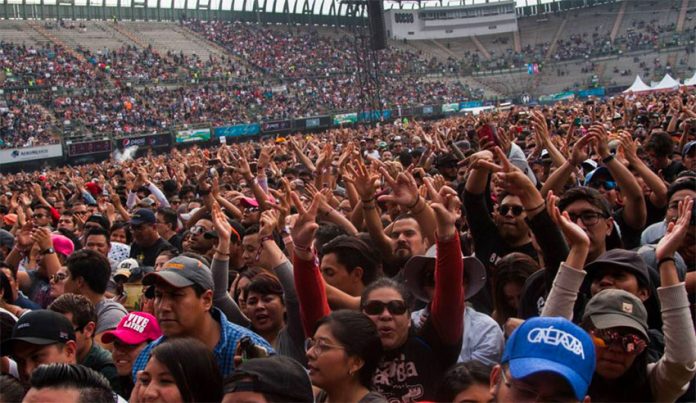
Last weekend's Vive Latino music festival, which drew over 100,000 people, was the last big event in Mexico City until the coronavirus threat is over.
Events in Mexico City that bring together more than 1,000 people will be suspended as of this week due to the growing threat of a widespread coronavirus outbreak.
Mayor Claudia Sheinbaum told a press conference on Monday that the measure is a precautionary one as the capital has not yet entered into a stage of community transmission of the infectious disease.
She said that the governments of all 16 Mexico City boroughs as well as private event organizers and venues will postpone large events.
“We’ve already been in contact with the National Auditorium and the Mexico City Arena,” Sheinbaum said, referring to two large indoor venues in the capital.
The mayor also said that citizens’ meetings at the Mexico City town hall will be suspended as of Tuesday. The government will attend to people’s needs over the telephone or via the internet, Sheinbaum said.
Mexico News Daily is making most of the coronavirus coverage available free to all our readers. In order that we can continue to provide the latest Mexico news please consider purchasing a subscription. Our members enjoy full access to all our content ads-free. Click here to see all our coronavirus coverage.
With regard to the Passion Play of Iztapalapa, an annual Holy Week event that attracts huge numbers of spectators to the borough of Iztapalapa to watch a reenactment of the last hours of the life of Jesus Christ, the mayor said that local authorities and organizers are evaluating whether it will go ahead.
Sheinbaum also said that five doctors per shift are working at the Mexico City International Airport to help detect potential cases of Covid-19 among arriving passengers, adding that the government will this week “strengthen hygiene measures in public transit.”
She asserted that her government has the capacity to implement more extreme measures to reduce the spread of Covid-19.
“Mexico City is one of the most prepared entities in the republic,” Sheinbaum said.
At the same press conference, Mexico City Health Minister Oliva López Arellano said that classes would not be suspended before this Friday, as is occurring in some other states, explaining that authorities would follow the schedule set by the federal government, which announced Saturday that Easter holidays will start two weeks early on March 20.
In neighboring México state, Governor Alfredo del Mazo also ordered the suspension of large events and other activities that bring together high numbers of people.
He said that the state government has allocated 300 million pesos (US $13 million) to purchase medications, medical supplies and equipment to attend to patients that require hospitalization for Covid-19. There were six confirmed cases of coronavirus in México state as of Monday but only one patient is currently in the hospital.
Del Mazo also said that six hospitals have been given specific responsibility to provide treatment for coronavirus patients. Three are in state capital Toluca while the others are in Zumpango, Ixtapaluca and Tlalnepantla, municipalities that are part of the greater Mexico City area.
The Health Ministry said Monday that there were 82 confirmed cases of coronavirus in Mexico, three of which were serious, and 171 suspected cases.
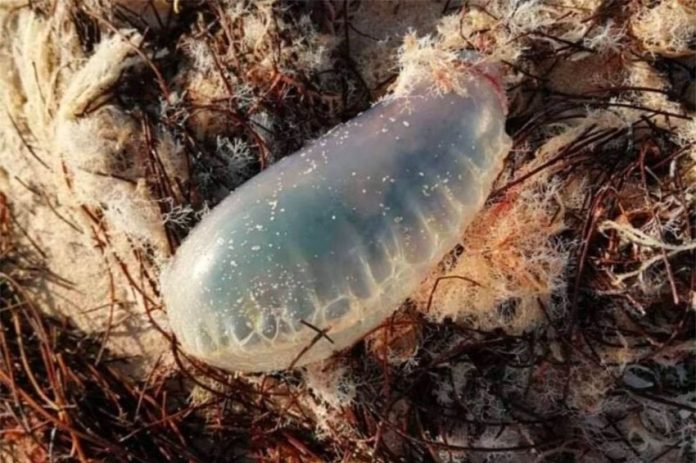
Residents of Progreso, Yucatán, woke up to a slimy surprise on the beach when they found jellyfish in the water and washed up on the sand on Monday.
Mayor Julián Zacarías Curi asked citizens not to come into contact with the creatures, as it is still unknown what kind of reaction they may cause. The beach will be closed until the situation is resolved.
“Today we detected jellyfish on the shore. For safety it is recommended that no citizens or visitors make contact with these jellyfish, since they might cause allergic reactions or be highly painful,” said the municipal government in a press release.
The government issued specific recommendations to the public on how to deal with the situation, including: don’t touch the creatures; don’t take them out of the sea; don’t try to catch them; don’t try to drag them by the extremities; and keep children away from them.
It is asking people to take the warnings seriously. Weather conditions caused jellyfish to come ashore in Sinaloa in June of last year, after which 500 people required treatment for stings they received.
The National Water Commission, the Environment Ministry and the sustainable development department have yet to determine the species found in Progreso and whether or not it is dangerous to people.
This is the first time that jellyfish have been seen on the beach at Progreso, the closest beach to the state capital of Mérida.
It is unknown why the jellyfish arrived on the beach, but they could have been brought by strong marine currents. No federal entity has issued guidelines or other information on the situation.