Home Blog Page 1636

El Bajío: how a ‘simple cook’ created a globally renowned restaurant

0
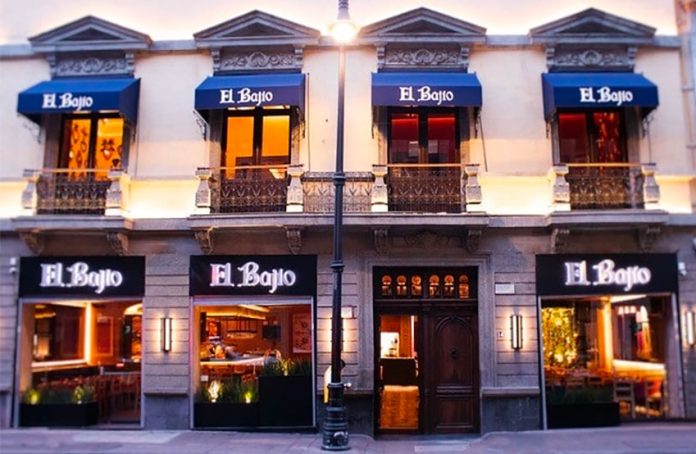
The Bajío restaurant in the historic center.
The Bajío restaurant in Mexico City's historic center.

El Bajío is a culinary institution in Mexico City with an international reputation, started by a “simple cook” who not only made it what it is but did so while raising five children alone.

Her legal name is Carmen Hernández Oropeza but she uses her late husband’s last names, Ramírez Degollado. To friends and family, she is known as Titita. She was born in 1940 in Xalapa, Veracruz, an area filed with herbs, spices, corn and perhaps most notably, coffee.

Ramírez learned to cook the area’s regional specialities in her family home with a strong maternal presence. She insists, “I am not a chef; I am a cook.”

She had never planned on being a restaurateur. Soon after marrying the couple moved to Mexico City, where Raúl Ramírez Degollado saw a restaurant for sale in the Azcapotzalco borough northwest of the city center. It was already serving carnitas, but Raúl was from Michoacán where the dish originated, and of course he had his own recipe. The couple bought the business in 1972, and Raúl renamed the restaurant El Bajío in reference to his home region. Unfortunately, not long afterward Raúl died of cancer, leaving Carmen with the restaurant and their five children.

She not only saw that the restaurant survived but thrived, allowing her to put all of her children through school.
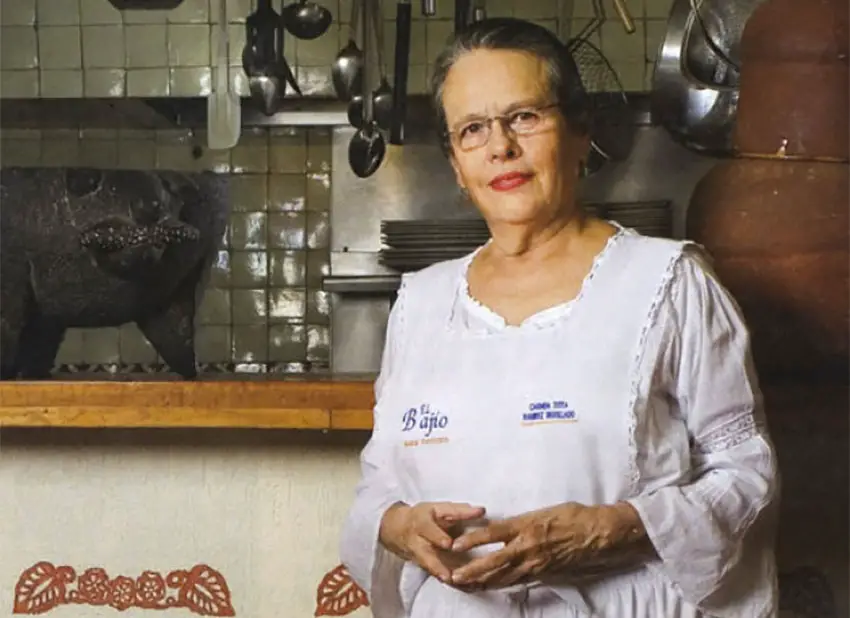
Bajío co-founder Carmen Rodríguez.

The menu is a mix of the Michoacán food of her husband and the northern Veracruz fare she grew up with. She kept the name of the restaurant as well as her late husband’s recipes for carnitas, but she added menu items from her native Xalapa. It wasn’t easy at first.

“Imagine,” she says. “At first we served dishes such as xonequi, a bean soup with a leaf that goes by this name that is made in Xico (Veracruz). We served it with bolitas de masa (dough balls, similar to dumplings) and people put them aside, wondering what they were.”

Another of Carmen’s contributions to the menu is chipotleneco, or salsa negra, a condiment on all tables that is specific to her family. Other signature dishes at El Bajío include mole de olla, Xico-style mole and sopa de fideo.

She hires traditional cooks, not chefs.

Spanish chef Ferran Adrià called El Bajío one of the best Mexican restaurants in the world in 2002. He was particularly impressed by her dish called “gorditas infladas” (inflated and stuffed corn tortillas), on which he based a dish he called air bags.

For many years, the El Bajío name was only on the original restaurant. But in 2006, a regular came to Ramírez offering to become a business partner and open new locations in the city. By then her children were grown and co-owners of the establishment. They agreed and the second restaurant was opened in the Parque Delta shopping center, south of the city center. The chain grew quickly to the current 19, all in Mexico City. Daughter Maricarmen and her husband run most of the locations, along with one other daughter and a son who manages the finances.
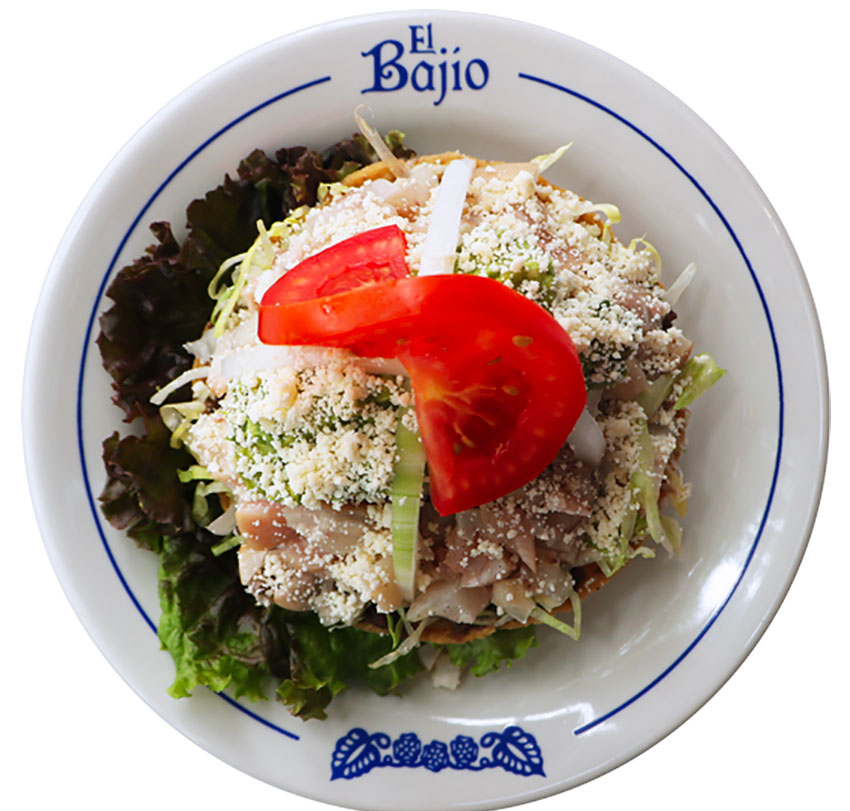
El Bajío's menu is a mix of food from Michoacán and Veracruz.
El Bajío’s menu is a mix of food from Michoacán and Veracruz.

One daughter has even gone on to establish a successful food business of her own. With Spanish chef Juan Bagur I Bagur, Maritere Ramírez Degollado opened Sal y Dulce Artesanos, a chain of coffee shops/restaurants specializing in fine pastry.

The original El Bajío still stands in the Cuitláhuac neighborhood of Azcapotzalco borough. It is an older traditional building, located in a lower middle-class neighborhood. All the other locations have the same menu and prices and base their decor on the original. However, they’re not exact copies.

All but one are located in modern business or shopping centers, catering to businessmen and more upscale customers, and as such cannot exactly mimic the hominess of the original. The one exception is the newest restaurant, located on Bolivar Street in the historic center of the city in a 19th-century neo-colonial building under the protection of federal historical authorities.

Despite this, it had been neglected and used as a warehouse for many years. To restore the building to its former glory and make it workable as a restaurant required three years of renovation work under strict supervision.

Now in her 80s, Ramírez is still active with the restaurant chain, still travels and gives lectures and demonstrations, especially about food from Veracruz. Over the years, she has been invited to places such as the James Beard House Foundation in New York, the Ritz Hotel in Lisbon, the Mana Lani Bay Hotel in Honolulu, the Culinary Institute of America in Napa Valley, the Marriott Hotel in Kuala Lumpur and the Les Dames d’Escoffier International in Atlanta.

She’s also done consulting work with various restaurants in the United States and Europe, won various awards in Mexico and was nominated by The New York Times as one of the two matriarchs of Mexican cooking. She has written two cookbooks in Spanish.

Her advice to cooks is to “never lack love, patience and a slow fire.”

Mexico News Daily

No monkeying around: yummy plantains are a breed apart from bananas

0
A tasty-looking bacon-wrapped plantain bite.

The first time I ate plantains other than as chips was in Jamaica, many moons ago. I was on a press trip, and we’d been invited to a private home to have a home-cooked dinner of traditional local dishes.

One was a sort of stew, where instead of potatoes there were chunks of plantain. Slightly sweet, with a dense potato-like texture, they added a wonderful flavor to the spicy, savory mixture of vegetables and beef. I actually couldn’t figure out what they were and asked the host, who explained they were green plantains, used instead of potatoes, which don’t grow in the island’s hot tropical climate.

Since then, and especially since moving to Mexico, I’ve had plantains (platanos machos) cooked in many ways. One of my favorites is grilled in brochettas (what we’d call shish kebabs). Here in Mazatlán, vendors sell plantains baked in rolling ovens, which they serve drowned in sweetened condensed milk. I’ll buy them plain, then take them home to add butter and a bit of salt instead.

The first thing you need to know about this starchy cousin to the banana is that it’s completely different from the yellow fruit favored by monkeys. Plantains have a much higher starch content, and so must be cooked before eating. The texture and mouth-feel is more like a slightly sticky potato.

What happens, though, is that as they ripen the starches turn into sugars, and when cooked or fried those sugars caramelize and create an even sweeter yumminess. Depending on the stage of ripeness – which you judge by the color of the skin – your finished product will be more or less sweet. Plantains start out green, go to yellow and then turn completely black.

The plantain's stages of ripeness.
The plantain’s stages of ripeness.

The peel is thick and hard, and not easily peel-able like a “dessert” banana. Cut off the top and bottom ends with a sharp knife, then score one section from tip to tip and pry it back carefully with the knife. Once you have one section off, the rest should come easier and you can probably just use your fingers.

Peeling gets a little easier when they’re riper but you’ll still need to start with a knife. When the skin is very yellow or really black, it comes off easily and the plantain inside is sticky, soft and sweet; when fried, they’ll have pudding-soft insides and caramelized edges.

Plantains grow all over the Caribbean, West Africa and Latin and South America. In Puerto Rico and Cuba, you find mofongo, smashed fried green plantains with garlic and fried pork skin; in the Dominican Republic’s mangú they’re part of the traditional Las Tres Golpes breakfast; and in Ghana, where plantains are called “vegetarian meat,” street vendors hawk paper cones of spicy kelewele.

Pumpkin Spice Plantain Chips

Everybody’s favorite flavor, tropical style!

  • 2 ripe plantains
  • 2 tsp. coconut oil, melted
  • 1 tsp. cinnamon
  • ½ tsp. nutmeg
  • ½ tsp. allspice
  • 1/8 tsp. cloves
  • 1 tsp. sugar
  • Salt

Preheat oven to 375 F. Peel and slice plantains thinly. Place in bowl, add coconut oil and mix well. Stir in spices. Carefully lay plantain slices on cookie sheet lined with parchment or lightly greased. Sprinkle with salt. Cook 20-25 minutes until crispy. Watch carefully as they burn easily.

Plantain chips: pumpkin flavor tropical style.

Bacon-Wrapped Plantain Bites

  • 2 very ripe plantains
  • 12 oz. uncooked bacon
  • 1-2 Tbsp. maple syrup

Preheat oven to 375 F. Line a baking sheet with foil or parchment. Peel, then slice plantains into ½-inch chunks. Cut strips of bacon in half. Wrap each plantain chunk with ½ piece of bacon. Carefully place rolls on baking sheet, seam side down. Brush each with a little maple syrup. Bake for 30-40 minutes until bacon is crispy. Stick a toothpick in each and serve. – www.ambitiouskitchen.com

Caribbean Plantain & Bean Boats

  • 2 Tbsp. coconut oil
  • 2-4 cloves garlic, minced
  • ¼ cup thinly sliced red onion
  • ½ tsp. ground cumin
  • Salt & pepper
  • 1 cup sweet corn
  • About 2 cups cooked or canned black beans
  • 1 cup cherry tomatoes, halved
  • 1 jalapeno, chopped
  • 2-4 medium-ripe plantains

Preheat oven to 375 F. Without peeling, slice plantains in half longways, drizzle with olive oil and sprinkle with salt. On a greased baking sheet, lay the sliced plantains, skin on, face-down. Bake for 35 minutes or until fork tender. –www.nutritionstripped.com

Meanwhile, in a small pot, cook coconut oil, garlic, and onion for about 7 minutes or till onion begins to brown. Add corn, beans, tomatoes, cumin, salt, pepper and jalapeno. Cook for 10 minutes, adjusting seasonings to taste.

Once plantains have finished baking, remove the skin. Top with bean and corn mixture, and garnish with fresh cilantro, sliced avocado and a squeeze of fresh lime juice. Serve warm with rice or salad.

Cinnamon-Caramel Baked Plantains

If you like, top this easy dessert with whipped cream or vanilla ice cream.

  • 2 very ripe plantains
  • 2 Tbsp. coconut oil, melted
  • 1-2 Tbsp. sugar or grated piloncillo
  • 1 tsp. cinnamon
  • ¼ tsp. salt

Preheat oven to 350 F. Peel plantains and cut into rounds about ¼-inch thick. In a bowl, toss gently with coconut oil. Lightly grease a baking sheet and spread out plantains in a single layer. Combine sugar, cinnamon and salt. Sprinkle evenly over plantains. Bake for about 25 minutes, turning once. Check often to make sure they don’t burn. Remove from oven, let cool and serve warm.

Baked Plantain Cubes

Use as a taco or tostada filling, on a salad, as a garnish for chili or just as a delicious snack.

Preheat oven to 400 F. Peel and slice unripe plantains into small cubes. In a bowl, drizzle with a little olive or coconut oil. Toss to mix and transfer onto a greased baking sheet. Bake for 20-25 minutes, stirring a few times, until browned and slightly crispy.

Janet Blaser of Mazatlán, Sinaloa, has been a writer, editor and storyteller her entire life and feels fortunate to write about great food, amazing places, fascinating people and unique events. Her work has appeared in numerous travel and expat publications as well as newspapers and magazines. Her first book, Why We Left: An Anthology of American Women Expats, is available on Amazon. Contact Janet or read her blog at whyweleftamerica.com.

Phony honey stinging beekeepers for over 10bn pesos annually

0
pot of honey
Is it real honey? Hard to tell.

Fake honey pouring into the Mexican market is becoming a serious problem for beekeepers and honey producers in Mexico.

The 100,000 tonnes of fake honey sold in the country each year have caused the national apiculture sector to lose an estimated 10.7 billion pesos (US $576 million) annually, according to the Bee Honey Regulatory Council.

With the national consumption of 100% natural bee honey in 2018 at 26,000 tonnes, the council calculates that the ratio of fake to real honey was four to one.

Jalisco led the country in honey production in 2017 with 5,815 tonnes. Other big honey producers were Chiapas, Veracruz, Yucatán and Oaxaca.

With 80% of Jalisco’s production being exported, it’s been deemed especially important to control the quality of honey produced in the state.

In September 2018, the Mexican Organization of Livestock and Food Certification gave its seal of approval to six producers in the state for good practices in the extraction and packaging of bee honey. Jalisco thus went from having zero such certifications to being the state with the most.

Former state Rural Development Secretary Héctor Padilla Gutiérrez said in 2018 that certification was a mandatory step in regulating the quality of Mexican honey, but the process has apparently been ineffective in combating the influx of fake honey into the market.

The production cost for a liter of real honey averages around 150 pesos while fake honey can be made for around a quarter of that price.

The worst part of the situation, according to Víctor Abarca, spokesperson for the honey council, is that the consumer is usually unable to tell the difference between real and fake honey, since the texture and makeup of the two are quite similar.

“Instead of consuming a beneficial product, they are [negatively] affecting their health because of the types of sugars the honey is adulterated with,” he said.

The Mexican Association of Honey Exporters said while the crudest form of adulteration, with sugar or corn syrup, is slightly detectable, other falsifications, made with syrups from beets, rice or potatoes — usually originating from China, Vietnam or India — are more difficult to notice.

Source: Reforma (sp) 

CORRECTION: Estimated losses to honey producers were incorrectly reported in the earlier version of this story, although the headline was correct. The letter “b” became an “m” in the text of the story. We regret the error.

2 years after quakes, Mexico City’s Metropolitan Cathedral to be repaired

0
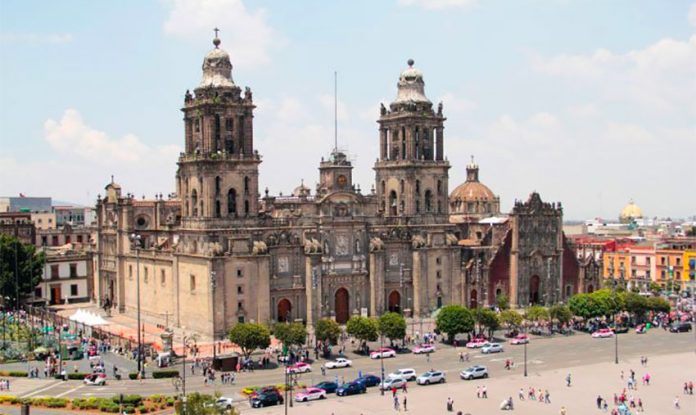
A major restoration project is required to repair quake damage at the cathedral in the city center.

The Institute of Engineering at the National Autonomous University (UNAM) will work with a private restoration company to repair earthquake damage at the Metropolitan Cathedral in Mexico City.

Facing the central square in the capital’s historic center, the cathedral sustained serious damage in the two major earthquakes that rocked southern and central Mexico in September 2017.

The bell towers and some of the walls of the cathedral were affected by the twin quakes as was the facade of the side chapel known as the Sagrario Metropolitano. In addition, crosses that adorned the eastern tower of the cathedral broke off and three sculptures created by the Spanish architect and sculptor Manuel Tolsá were damaged.

Some minor repair and reinforcement work was carried out in late 2017 and 2018 but a major restoration project hasn’t yet been carried out for a range of reasons, among which was an administrative issue related to obtaining resources, according to Antonio Mondragón, a director of the Historic Monuments division of the National Institute of Anthropology and History (INAH).

However, 54 million pesos (US $2.9 million) in funding is now available for the required restoration work and INAH will contract a company to collaborate with UNAM engineers in the first half of this year, Mondragón told the newspaper El Universal.

However, he conceded that the project might not actually begin for another year and estimated that the work itself could take “several more years.”

Mondragón said that specialists at the UNAM Institute of Engineering know the cathedral and the subsoil upon which it stands very well but explained that it is unable to carry out the restoration work on its own due to complex administrative and technical requirements.

“We need a company that can comply with contracts for large amounts [of money], with a consolidated technical and administrative team that can handle … such a big project,” he said.

Hundreds of historic buildings were damaged in the September 2017 earthquakes, which killed close to 500 people and rendered thousands homeless.

The federal government last year allocated 800 million pesos for the restoration of 279 important buildings in 10 states that were damaged either in the powerful 2017 quakes or the 7.2-magnitude temblor that caused damage in Oaxaca in February 2018.

Source: El Universal (sp) 

Taking inspiration from Tehuantepec, as Frida Kahlo did

0
art from isthmus of tehuantepec

Made internationally famous by Frida Kahlo’s painting of herself in the traditional dress of the region, Oaxaca’s Isthmus of Tehuantepec and its abundant multiculturalism served as the inspiration for the current exhibit at Mexico City’s Salon of Fine Arts (Salón de la Plástica Mexicana).

Inaugurated on February 13, the exhibit features over 50 photographs, paintings, drawings, sculptures and objets d’art by members of the Salon and other artists, including Francisco Toledo, Rina Lazo, Mariana Yampolsky, Arturo García Bustos, Aurora Reyes, Blanca Charolet, Heriberto Rodríguez, Francisco Zúñiga, Álvaro Cortés, Helen Bickham, Roani, Salvador Pizarro and Enoc Mendoza.

Themes include women in traditional dress, fantastic animals, landscapes, and images from myths, legends and regional festivals.

Cecilia Santacruz, the director of the Salon, stated that the exhibit “… exalts the culture of the people of this region, one of the most culturally rich …” in Mexico.

Before the conquest the region was part of the Zapotec Empire which controlled important trade routes between what is now central Mexico and Central America. Today it is home to communities of Huaves, Mixes, Zapotecs, Zoques and Chontals, among others.

“The idea is to demonstrate the beauty of the region, of some of the most resilient cultures in the country, which has resisted many changes and even a (recent) earthquake. Culture that has been transmitted from generation to generation. Women and men who are proud to preserve tradition.”

Santacruz added that the exhibition also “… points to the dignity that people have through their traditions, which means a constant struggle.”

“On this occasion, the creators developed their own discourse. Some exalt the beauty of the landscape or traditional women’s garb. It includes a graphic work by the maestro Francisco Toledo that references the earthquake the region suffered and a photograph of a girl playing with a crocodile.”

Running until March 1 at the institution’s building at Colima 196, Colonia Roma, Mexico City, the exhibition is free and open to the public.

The Salon of Fine Arts is a government-sponsored society that was begun in 1949 by such artists as Diego Rivera, David Alfaro Siqueiros, Gerardo “Dr Atl” Murillo and Frida Kahlo. It has inducted over 400 members past and present, particularly among the generations of the Mexican muralism movement and the following period known as La Ruptura (“The Breakaway,” 1950-1970).

Source: La Jornada (sp)

Five years after, Pachuca’s massive sinkhole still not filled

0
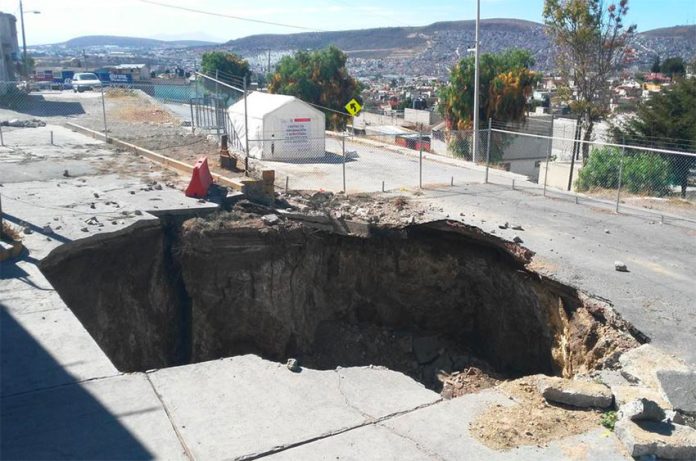
The sinkhole has become a permanent fixture in a neighborhood of Pachuca.

Residents of Pachuca, Hidalgo, are demanding government action almost five years after a sinkhole opened up in the northeastern neighborhood of Minerva.

They complained that the street remains closed and that the hole is affecting the lives and safety of over 1,000 citizens who live in the area.

Nery Silva Martínez, who has lived nearby since the ground collapsed, said that the sinkhole initially measured 12 meters in diameter and 25 meters deep.

After four and a half years of negligence, it has now grown to 40 meters in diameter and 100 meters deep.

Silva said that the sinkhole was partially repaired but the work was never finished, and the growing pit has only become more dangerous in the meantime. She and other residents have asked the government to repair the sinkhole many times but their calls have not been heeded.

The hole forces neighbors to take longer routes to avoid the hazard and blocks access to emergency services.

On February 12 state Deputy Roxana Montealegre submitted a request to Governor Omar Fayad and the mayors of Pachuca and the neighboring city of Mineral de la Reforma that the government reveal the results of a geological survey of the opening.

Having received no response, they threatened to protest outside the state claims court in Pachuca to demand that the problem be resolved.

Source: El Universal (sp), La Silla Rota (sp)

‘Little by little,’ criminal gangs being beaten down in Guanajuato: security chief

0
López Obrador and Durazo in Guanajuato on Sunday.

Federal Security Secretary Alfonso Durazo has offered a guarantee that organized crime will eventually be defeated in Guanajuato, Mexico’s most violent state in 2019.

Speaking on Sunday at a ceremony to open National Guard barracks in the municipality of Pénjamo, Durazo acknowledged the high levels of violence in Guanajuato – there were more than 3,500 homicide victims last year – but asserted that authorities are “gradually” improving the situation.

“Unfortunately, the issue of insecurity won’t be solved from one day to the next. I don’t want to be pessimistic but the problem … grew over many years – decades – and dismantling all this is not easy,” he said.

According to a 2019 study by consultancy firm Lantia Consultores, 11 criminal groups operate in Guanajuato including the Jalisco New Generation Cartel and the Santa Rosa de Lima Cartel, which are engaged in a bloody turf war in the state over the control of fuel theft, kidnapping and extortion.

Durazo described the dispute between the two criminal groups as “ferocious” but pledged that federal security forces would put an end to their operations.

The ribbon is cut at new barracks for the National Guard.

There is a “historic presence” of federal forces in the state, including the National Guard, the navy and the army, he said.

“We’re going to solve the [insecurity] problem; that’s the important thing,” Durazo said. “Little by little, the number of [criminal gangs] is being reduced.”

Taking center stage at the inauguration ceremony among several military and government officials was President López Obrador, who said that 18 facilities for the National Guard have either been completed or are under construction in Guanajuato.

The government’s aim is for the new security force to “lack nothing” to combat crime, he said.

The president also said that his administration will put an end to the corruption in the government and judicial system that has allowed criminals to buy their freedom.

“A message to those who devote themselves to criminal activities: listen up … crime will not be allowed to act with impunity. It’s not like it was before,” López Obrador said, asserting that on his watch, criminals won’t be able to buy off prosecutors, government officials and judges to avoid or get out of prison.

“We’re cleansing the government of corruption. It will no longer be the powerful don dinero [Mr. Money] who makes decisions about public life in Mexico,” he added, citing a Spanish turn of phrase to affirm that money will no longer play a part in interactions with the different branches of government.

“He who thinks his god is money, that he can solve everything with money, will be mistaken. It’s no longer influence or money that … will make decisions about public life in our country,” López Obrador declared.

Many Mexican judges have been accused or suspected of taking cartel money in exchange for granting freedom to suspects, while members of municipal, state and federal governments have been convicted of ties to organized crime or come under suspicion of being in cahoots with criminal groups.

Former president Felipe Calderón’s security chief Genaro García Luna was arrested in the United States in December on charges that he accepted multi-million-dollar bribes from the Sinaloa Cartel. He pleaded not guilty in early January and a lawyer for García said January 21 that his client is “very much looking forward” to fighting the charges against him at trial.

Source: Milenio (sp), El Universal (sp) 

8,000 new beds to be made available for digital nomads

0
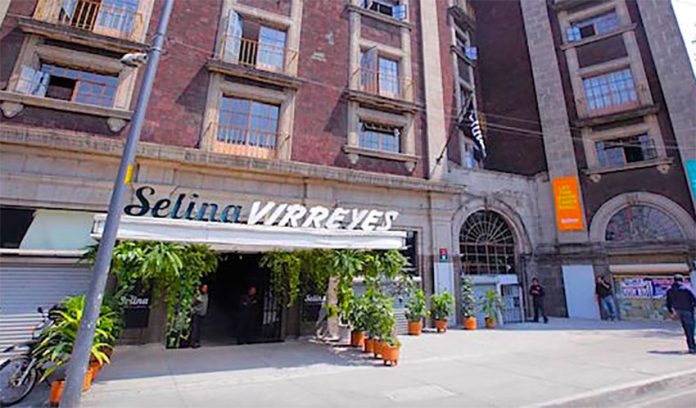
A Selina hotel in Mexico City.

Hotel operator Selina, which specializes in accommodations for digital nomads, is looking to expand in Mexico and open up more parts of the country to freelancers and other types of remote workers who rely on telecommunications technologies to earn a living.

With an investment of US $150 million, the chain plans to add 8,000 hotel and hostel beds in several tourist destinations in Mexico over the next two years.

Selina operations director Paulo Pena said that Mexico is a strategic area for the company’s expansion plan, which includes new units in San Miguel de Allende, Sayulita, San Cristóbal de las Casas and Mérida.

“The plan is to have a total of 10,000 beds [in Mexico]. We now have 2,300 beds open. We’re working with a local partner [DD3 Capital Partners] … with a $150-million fund in order to develop the properties, and in conjunction with them we think we can achieve this goal,” he said.

Selina Los Lirios, recently inaugurated in Tulum, boasts 100 beds in both private rooms and 12-bed dormitories. Pena said that the property is emblematic of the unique service the company offers its guests.

The firm’s business model is to combine diverse accommodation options with coworking installations, restaurants and cultural and artistic activities that guests can make use of during their stays.

Selina, which specializes in revitalizing already constructed buildings, has seven properties in Mexico, many of which are in coastal towns. But it is looking to expand into colonial cities, the specially designated Magical Towns and areas with natural attractions.

Source: El Financiero (sp)

After faulty repairs, quake-damaged housing still perilous

0
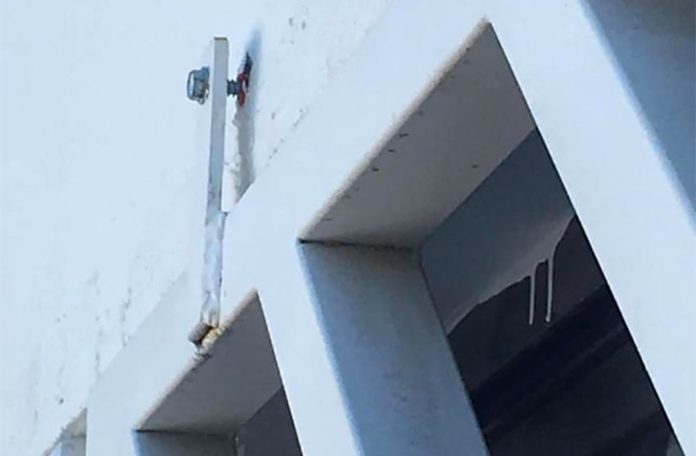
A screw that has pulled out of the wall at housing project.

Just a week after repairs were finished, residents of a Mexico City housing development that was damaged in the September 2017 earthquake have already reported major safety issues.

Several people were killed when one of the buildings in the complex collapsed in the 7.1-magnitude quake that struck central Mexico on September 19, 2017.

The families moved back into the buildings, located in Tlalpan, on February 8 and immediately found potentially life-threatening problems with the work contracted by the Mexico City government.

The handrail of a fourth-story balcony came loose and fell to the ground, a victims’ group posted to Facebook on Friday. They also posted photos of window security bars coming loose, the screws barely holding the bars to the wall.

“What other hidden defects could there be in other buildings?” the post read.

The residents demanded that authorities review and approve the safety of all of the housing units that received government repairs.

Eight of the development’s 10 buildings received structural reinforcement, which included complete renovations of the floors, stairwells and electrical, gas, water and drainage networks.

Authorities reviewed the damages on Saturday accompanied by a legal representative of the construction company that performed the repairs.

“The solution is to add angled anchors with 3/8-inch rods and epoxy resin to the floors, studs and interior faces of the walls,” said the reconstruction commission in a press release.

It added that it would carry out a timely review of the apartments and common areas of the other buildings in the complex to find any other safety issues.

Source: Animal Político (sp)

Police use tear gas against march by families of 43 missing students

0
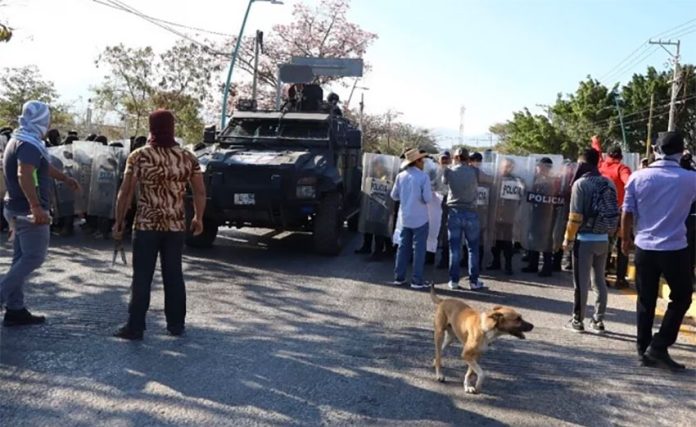
Police confront protesters in Chiapas.

State police in Chiapas used tear gas on Sunday to break up a march by family members of the missing 43 students from Guerrero and students of a teachers’ college in Tuxtla Gutiérrez.

Parents of the missing young men, who were studying at the Ayotzinapa Rural Teachers College when they were abducted and presumably killed in September 2014, and students of the Mactumactzá Rural Teachers College were marching towards the center of the Chiapas capital on the Libramiento Norte road when they were approached by some 200 riot police Sunday morning.

The Chiapas Secretariat of Security (SSyPC) said that the officers approached the participants of the “Caravan in Search of the 43” to seek dialogue and listen to their demands.

However, the students assaulted two officers, threw molotov cocktails, rocks and fireworks at the police contingent and vandalized a police car, the SSyPC said, adding that one police officer sustained a head injury and was taken to hospital.

The police used tear gas in response to the aggression “in accordance with the eviction protocol” in order to reestablish order, the secretariat said.

However, the Chiapas-based Ku’untik Human Rights Center charged that the police response amounted to government repression of the protesters, while parents of the missing Ayotzinapa students said that excessive force had been used.

Three Mactumactzá students, two of the missing Ayotzinapa students’ mothers and the 3-year-old granddaughter of one of them required medical treatment, the parents said.

The “authoritarian attitude” of the Chiapas authorities is “inconceivable,” they said in a statement, adding that their constitutional rights and freedoms were trodden on.

The Mactumactzá students are well-known for protests and have clashed with police in the past. They stole four buses last November after attacking a Tuxtla Gutiérrez garage owned by the bus line Ómnibus Cristóbal Colón (OCC) with molotov cocktails.

The students said they were protesting against the privatization of education and government repression. They also demanded more funding for their school.

Source: El Universal (sp), Notimex (sp)