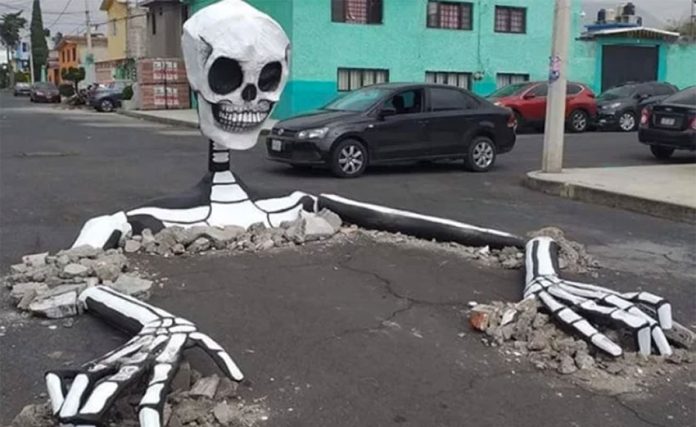
A skeleton surfaces in a street in Tláhuac, Mexico City.
Giant skeletons have left their graves and crawled out of the streets in the Mexico City borough of Tláhuac to celebrate the Day of the Dead.
Photos of the colossal bones went viral on social media along with the mistaken comments that the artists had been attempting to draw attention to potholes in the road.
But members of the Indios Yaocalli cultural collective who designed the figures said there were no potholes, but simply rocks and concrete placed around the protruding limbs to make it appear as though the skeletons were crawling out of the ground.
“No, they’re not potholes, they’re rubble from a construction site across from the neighbor’s house . . . the neighbors had the ingenious idea to add that detail,” one of the collective’s members told the newspaper El Universal.
He said they installed the skeletons in the street to preserve traditions, both of the festivities of the Day of the Dead and of the art of working with paper mache.
“The most important thing is to continue conserving our traditions,” he said. “We are proud to be from Tláhuac, to be from Mexico.”
Chief financial officer Velázquez: sizable loss but less debt.
Pemex recorded a loss of 87.85 billion pesos (US $4.6 billion) in the third quarter but the beleaguered state oil company also reported that it has cut its debt for the first time in more than a decade.
Chief financial officer Alberto Velázquez said in a call with investors that the company’s third-quarter loss can be mainly attributed to two external factors: lower prices for Mexican crude and a stronger US dollar.
Prices for Mexican export crude were down 16.7% between July and September compared to the same period last year, falling to an average of US $55.10 per barrel from $66.20.
Velázquez said the dollar bought on average 4% more pesos in the third quarter of this year compared to the same period of 2018.
More than 35 billion pesos in foreign exchange-related losses were absorbed by Pemex between July and September, the company said in a report sent to the Mexican Stock Exchange on Monday.
In contrast, a positive exchange rate helped Pemex record an unusual profit of 26.8 billion pesos in the same quarter of 2018.
Other factors that contributed to the near 88-billion-peso loss were a decline in export volumes and reduced sales in Mexico’s retail fuel market.
Foreign sales fell just under 22% and domestic revenue declined by almost 20%. Pemex formerly had a monopoly in retail fuel sales but the previous government’s energy reform opened up the sector to private gas stations.
All told, Pemex’s revenues fell more than 88.6 billion pesos to 350.5 billion pesos in the third quarter, a 20.2% decline compared to the same period last year.
The state oil company also said in its report that its debt has fallen by 6.1% this year to US $99.6 billion.
Pemex had debt of $106 billion at the end of last year and has faced pressure from credit rating agencies to make its financial position more sustainable.
Velázquez said that market operations in September that refinanced US $20 billion in liabilities were crucial in achieving debt reduction this year.
“For the first time in over a decade, the company’s net debt was reduced,” he told investors.
“That operation has lowered Pemex’s refinancing risks in international markets and strengthened the company’s short and medium-term finances.”
However, the third quarter loss is indicative of the company’s ongoing challenges. Energy sector analysts have criticized the government’s plan to revive Pemex, whose oil output has been in decline for more than 10 years.
Many have spoken out against President López Obrador’s decision to put an end to joint ventures between Pemex and private companies, known as farm-outs.
Presidential chief of staff Alfonso Romo said in September that the government will cede the business of exploration and oil production in deepwater reserves to the private sector, seemingly confirming a report published in the Financial Times in late August that said that President López Obrador was poised to reopen private exploration in deepwater oil reserves in the Gulf of Mexico.
The search for a Muxe artist’s missing brother is the focus of a short documentary doing the rounds of film festivals and cinemas.
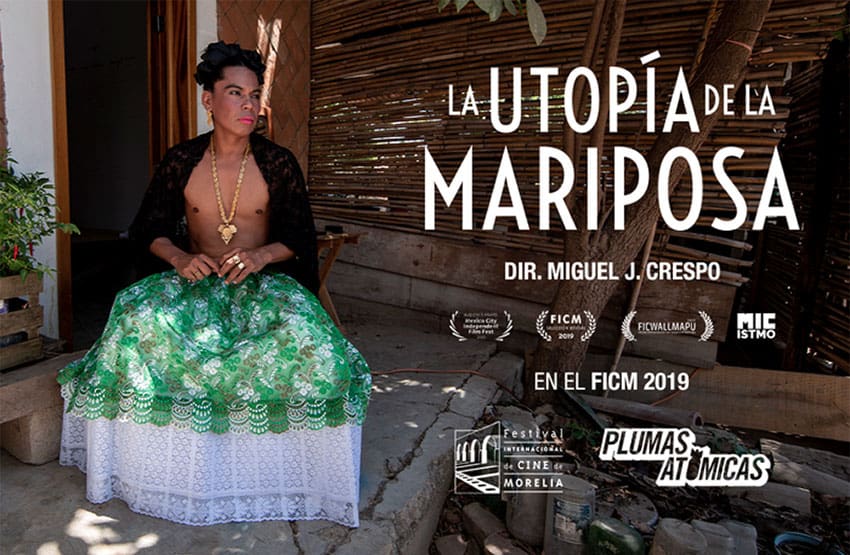
Directed by journalist Miguel J. Crespo, La Utopía de la Mariposa (The Utopia of the Butterfly) was nominated for best short documentary at last week’s Morelia International Film Festival in Michoacán.
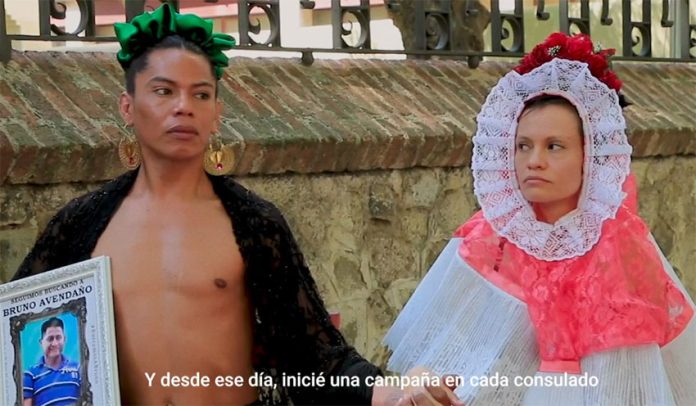
Lukas Avendaño’s brother Bruno went missing on May 10, 2018, and since then, the Muxe anthropologist, writer and performance artist has had one goal: to find him.
Considered a third gender in the Zapotec culture of Oaxaca’s Isthmus of Tehuantepec, Muxes are men raised to assume the social, cultural and economic roles of women.
“I no longer say that I’m an artist, teacher, researcher, because all my time is for Bruno,” said Avendaño.
Plumas Atómicas presenta el trailer de La utopía de la mariposa
He has fully dedicated his work as well to the search. Whether at home or abroad, he uses his artistic endeavors to spread awareness of Bruno’s disappearance.
“I’m always trying to link [my work] to him. It is a way to make his case visible and demand that the details of his disappearance be made clear.”
Avendaño’s art has taken him far and wide. In May, he performed at the International Theater and Street Art Festival of Valladolid, Spain. It was director Crespo’s interest in the artist’s work that initially led him to interview Avendaño.
And after hearing what Avendaño and his family were going through, Crespo came up with the idea for the documentary.
Bruno Avendaño was a naval officer, but according to Lukas and his family, the navy did nothing to ascertain his whereabouts.
Lukas takes any chance he can get to tell Bruno’s story.
“I never say no to an interview, because each one is an opportunity to make Bruno’s story visible and . . . continue challenging the authorities . . . to do their jobs,” said Avendaño.
However, there is still no trace of Bruno, or even an official investigation into the circumstances of his disappearance.
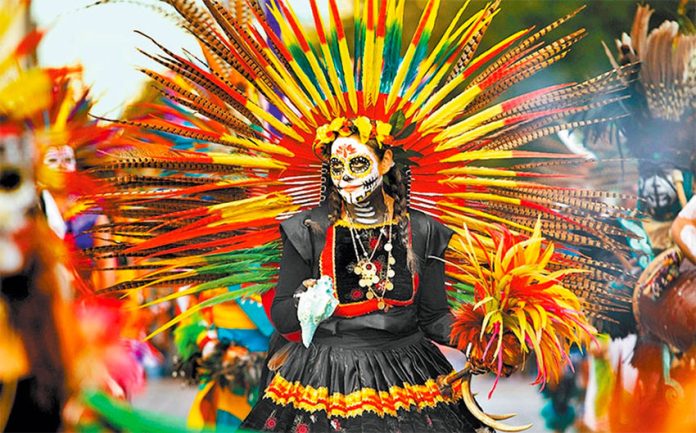
Elaborate costumes are a feature of the Mexico City parade.
A record 2.6 million people attended the International Day of the Dead Parade in Mexico City on Sunday.
The crowd was more than six times larger than the 400,000 who turned up for September’s Independence Day military parade, and dwarfs the 200,000 attendees of the 2008 March for Peace parade, which had held the record until this year.
Traffic in the area was stalled most of the day, as the parade ran from 2-8:00pm.
Not even the capricious rains of the Mexican capital could deter the vast crowd of onlookers, many of whom had waited up to three hours to see the monumental figures and floats pass by.
Attendees waiting in the zócalo hours before the event began said they were there to rescue the Day of the Dead tradition, as Halloween has garnered enough popularity in Mexico to compete, and in places outshine, the indigenous festival in recent years.
Day of the Dead comes alive in the capital on Sunday.
The parade began with a ribbon cutting ceremony featuring invited ambassadors from the United States, Bolivia, Pakistan and Hungary, to give the event a strong international impact.
Contrary to another Mexican tradition, the parade began at 2:00pm on the dot with a 150-strong marching band that played songs from Mexico and other Latin American countries over the nine-kilometer route.
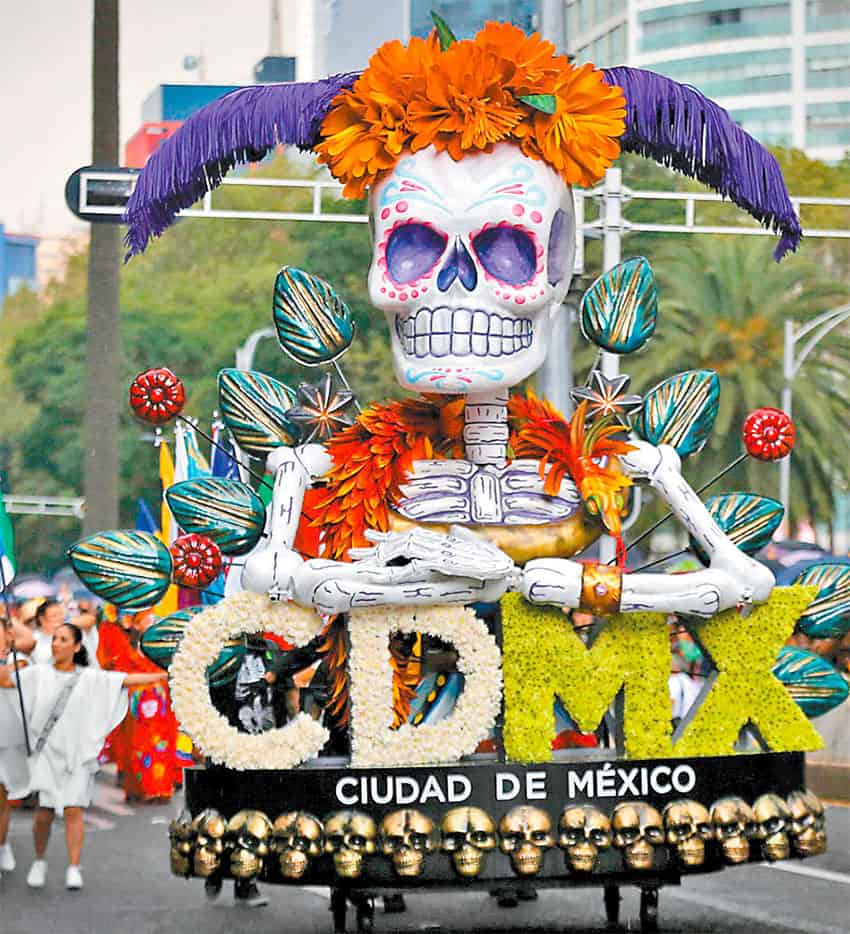
A gigantic Xoloitzcuintle dog puppet followed, leading excited attendees on their trip into the Aztec underworld of Mictlán, the first of four themed blocks of spectacles. Also in this block were a giant puppet representing the Aztec god of death, Mictlantecuhtli, and a giant Catrina, the classy skeleton woman imagined by artist José Guadalupe Posada.
The following segments were themed Skeleton Carnival, Arts and Culture and, finally, La Fiesta (The Party).
Despite the record numbers of people, Mexico City police reported not one incident of violence, theft or other law-breaking associated with the event.
City authorities say the parade compares only with Carnaval in Rio de Janeiro, Brazil, in terms of the number of people who attended.
The parade itself was a kilometer long and featured nine floats and 18 giant puppets.
Voting to elect delegates who will choose a new national leader of Mexico’s ruling party has been marred by violence for a second consecutive weekend.
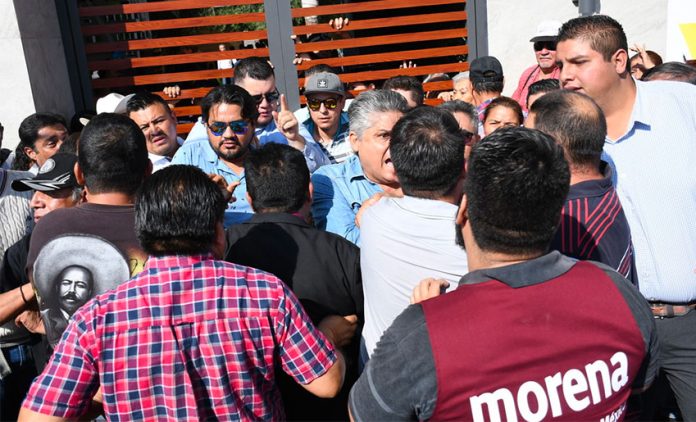
Meetings of Morena party members in 17 districts in Hidalgo, Colima and México state were suspended on Sunday due to acts of violence.
In Huejutla, Hidalgo, a man who was demanding to be let into a meeting at which party members were voting fired a gunshot into the air before fleeing. He was later arrested. In Manzanillo, Colima, a man tried to steal a box of ballot papers, triggering a brawl between party members.
Meetings of 15 México state districts, including Ecatepec, Zumpango, Chalco, Nezahualcóyotl, Los Reyes and Coacalco, were canceled due to violence or the threat of it.
Party members came to blows in Nezahualcóyotl while armed persons were seen outside the meeting location in Coacalco, the newspaper La Jornada reported.
The violence in the three states came a week after similar incidents at Morena party meetings in Guerrero, Tlaxcala and Mexico City.
Four candidates are vying for the national leadership of Morena, a party founded by President López Obrador.
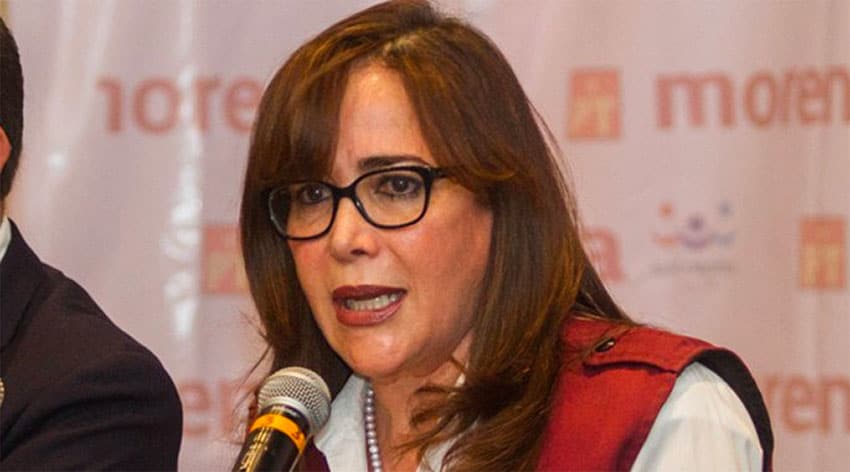
Incumbent Morena president Yeidckol Polevnsky is seeking re-election but faces challenges from the party’s leader in the lower house of Congress, Mario Delgado, former Morena National Council president Bertha Luján and Alejandro Rojas, a former secretary of tourism in Mexico City.
Polevnsky said last week that there were irregularities with the Morena party membership list and that the culling of names was necessary to ensure that only true members vote in the district ballots.
She said on Wednesday that those ballots would be suspended until the registry was reviewed but the party’s Honesty and Justice Commission said hours later that wasn’t the case. Polevnsky also claimed that one of her fellow candidates for the national presidency of the party was responsible for the irregularities and violence but didn’t disclose who.
All four candidates have criticized the irregularities and violence in local Morena party meetings.
Candidate Polevnsky claims a rival is behind irregularities in the party’s membership list.
Martha Singer, a professor of political science at the National Autonomous University, told the news agency EFE that the situation within the five-year-old party is “very complicated.”
“It’s a party with very little institutionalization and that has generated a lot of tension and even aggression within it,” she said.
The tension has been further heightened by the competition for the Morena party leadership.
Singer highlighted that whoever wins the November election will play a key role in determining the candidates for the 2021 mid-term elections and those for state governors.
The national leader will also have the capacity to influence the selection of the party’s candidate for the 2024 presidential election, she said.
Foreign Secretary Marcelo Ebrard, Mexico City Mayor Claudia Sheinbaum and Morena’s leader in the Senate, Ricardo Monreal, have been touted as potential presidential candidates.
The rise of Morena has been meteoric. Apart from providing the president, the party leads a coalition with majorities in both houses of federal Congress and is also in power in Mexico City and several states.
“It’s a party with a lot of political power but with a lot of institutional weakness at the same time,” Singer said.
She contended that López Obrador’s decision to distance himself from Morena since he was sworn in as president last December in an attempt to avoid being tarnished by its internal politics has left the party without moral leadership and triggered a “power struggle” between competing factions.
The president claimed last week that he knew little about the problems in the party.
“They hardly . . . inform me about what’s happening in Morena. But when someone wants to address the issue, I immediately say that it’s nothing to do with me, that I don’t care, I’m not interested,” López Obrador said.
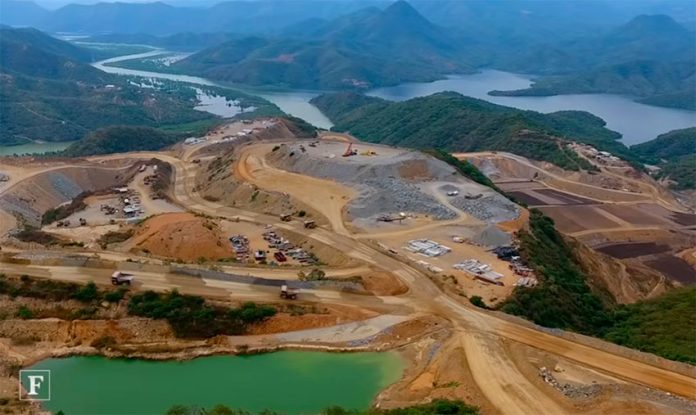
International mining companies have lost interest in investing in Mexico due to over-regulation and insecurity among other factors, says the CEO of Canada’s Torex Gold.
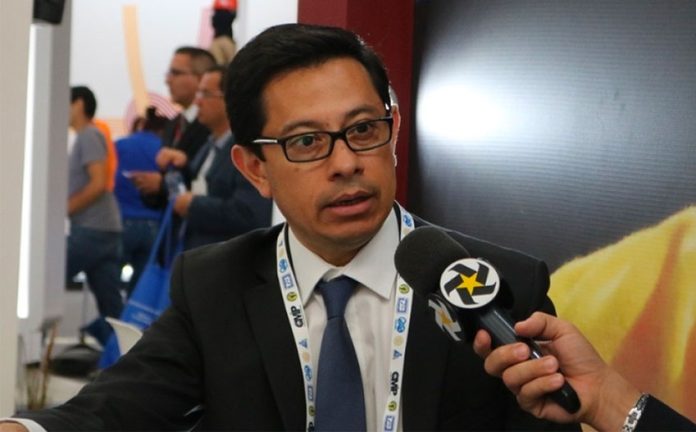
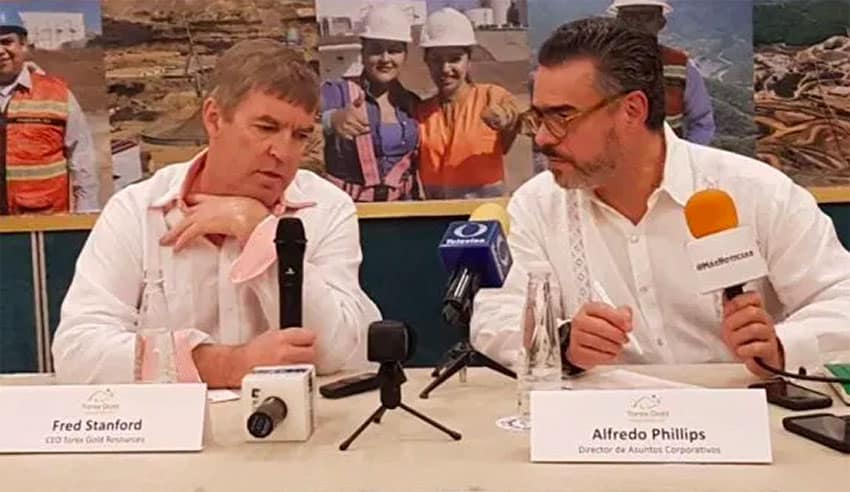
“Mining companies don’t feel comfortable in places where governments change the rules of the game,” Fred Stanford told the newspaper El Universal during the International Mining Conference in Acapulco, Guerrero.
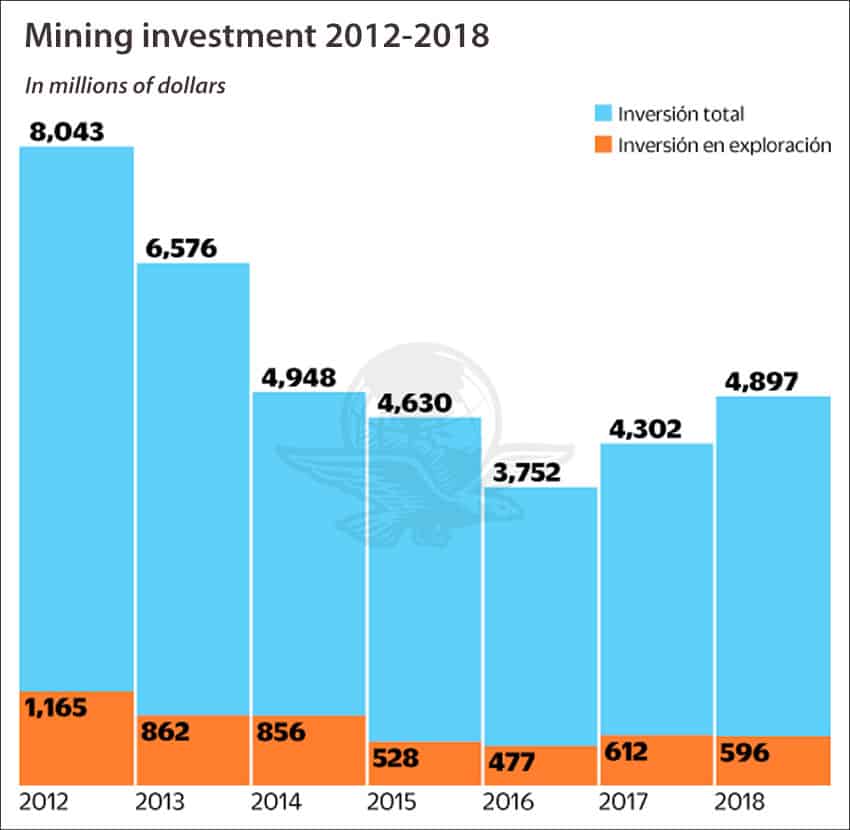
He cited excessive regulation, difficulty to obtain permits, higher taxes, mine blockades, weak rule of law and insecurity problems due to the presence of organized crime as factors that have caused Mexico to lose its attraction as an investment destination.
Stanford said that Torex, which operates the Media Luna gold mine in Guerrero, has had to sell off some of its Mexico mining interests because investors want to reduce their exposure in the country.
He said the company is unlikely to open a new mine in Mexico any time soon but added that it “could return if the [business] environment is right.”
Total investment in blue; exploration investment in orange. Secretariat of Economy/El universal
The Toronto-based CEO said there are several countries that are currently more attractive for mining investment, citing Canada, the United States, Australia, Chile, Peru and certain African nations.
“. . . The rule of law is predictable . . . They’re countries where there are no concerns about security and tax issues,” Stanford said.
In contrast, Mexico’s government has done nothing to put an end to blockades at Peñasquito – the country’s largest gold mine, raised taxes on mining companies and changed the rules of the game for the sector, he said, adding “it appears that there is no commitment to mining.”
Stanford said it was concerning that “everyone thinks the gold is theirs: communities, government, organized crime, the farmer . . .”
“They don’t care about how you extract it as long as you leave them something,” he said.
The CEO said that Torex will spend US $15 million this year to explore a site adjacent to Media Luna but asserted that if the company hadn’t committed to investing in the mine, it might not be in Mexico at all.
Torex CEO Stanford, left, speaks at a press conference last year.
Francisco Quiroga, undersecretary for mining at the Economy Secretariat, rejected Stanford’s assertion that Mexico is no longer attractive for mining investment, although he did acknowledge that the country has lost some competitiveness.
“Mexico continues to be attractive and has enormous mining potential,” he said.
“Torex itself has very significant investment programs and has invested in places with a high level of complexity such as Guerrero,” Quiroga added.
“We’re working to improve the competitive position,” the official said, asserting that every problem the mining industry faces is being dealt with by the government.
The recent violence in Culiacán, Sinaloa, has revealed that President López Obrador’s strategy to bolster social programs is inadequate to combat Mexico’s high crime levels, according to a former national security spokesman and interior secretary in the government of Felipe Calderón.
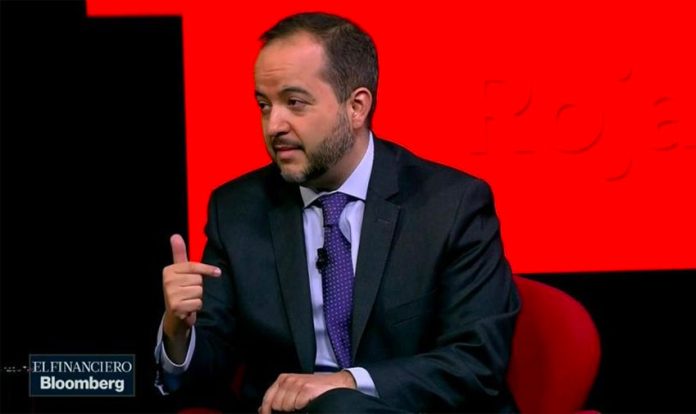
“The lesson to be learned [from Culiacán] is that maybe this idea of social programs — yes, they can help some at-risk populations — but they don’t really get at the criminal cells, the youths being captured and threatened by criminals,” said Alejandro Poiré in an interview with the newspaper El Financiero.
“It’s not enough; this strategy isn’t sufficiently focused, and we have to make a much bigger investment in reconstructing the rule of law, and this administration can do it because it has the majority in both houses of Congress,” said Poiré, now dean of the Monterrey Technological Institute’s School of Social Sciences and Government.
Mayor Jesús Estrada Ferreiro appealed to the public on Saturday to turn out and show solidarity at Sunday’s march.
“All citizens are called to the ‘Brave Culiacán’ march . . . let’s show that Culiacán is a city of peace, a city of order,” he said in a video posted on Facebook.
Violent clashes broke out in Culiacán on October 17 when government forces arrested Olvidio Guzmán, son of former Sinaloa Cartel leader Joaqíun “El Chapo” Guzmán. However, Guzmán the younger was released after the fighting began in order to safeguard citizens from further violence.
Seasoned cooks know without thinking that certain combinations just “work:” things like apples and cinnamon, say, or tomatoes, basil and delicate mozzarella cheese.
In Mexico, though, you’re likely to encounter lots of new veggies, fruits, grains, spices and herbs — and new ways of combining them with more familiar ingredients — that will stretch your culinary acumen in delightful ways.
Papaya is one of those things that have a very different personality in Mexico than we foreigners are used to. Who knew there were so many varieties, with such subtly different flavors and textures?
Papayas here are a far cry from the grown-for-commercial-shipping varieties you get up north. They’re kind of like tomatoes; those grown for export will never have the flavor or mouth-feel that a locally grown, sun-ripened papaya will. Trust me on this.
Some taste like a vanilla pear, but with a softer, almost melt-in-your-mouth pillowy feel; others are more firm, with more melon-like flavors.
Try a papaya salsa for something a little different.
Without going into the different names and seasons, you can explore the world of papayas by asking the vendor where they’re from, and by choosing fruits with different shapes (which vary wildly, from long and tuber-like to rounder, eggplant shaped and everything in between). Some will have seeds; others won’t.
Another important thing to know is that papayas must be ripe – very ripe — to show off their best flavor. How to tell? Local growers and housewives I’ve asked all say the same thing: papayas should look almost rotten on the outside to have the sweetest flavor. Sounds weird, I know, but try it and see.
The first recipe has become a stand-by for me during the summer months when it’s just too hot to cook but I still want a filling meal. Using some of the most popular ingredients in Mexican cuisine, this salad is cool and refreshing and the tangy-sweet flavors and textures are deeply satisfying.
It’s best if you cook the beans yourself, but if that’s not possible, ask at your local tiendita for “frijoles de la olla” – home-cooked beans.
Bean, basil, papaya & rice salad
Salad
¼ cup finely chopped red onion
1-½ cups cooked Peruana or Mayacoba beans*, drained, liquid saved
3 cups cooked Basmati rice
2 large carrots, shredded
2 tomatoes, diced
¼-½ ripe papaya, cut into small cubes
Dressing
2 Tbsp. fresh lime juice
2 Tbsp. red wine vinegar
¼ tsp. each salt & pepper
2-3 Tbsp. finely chopped fresh cilantro
½ cup finely chopped fresh basil leaves
1 clove garlic, minced
¼ cup + 1 Tbsp. extra-virgin olive oil
Mix together all dressing ingredients. Toss onions, beans, rice, carrots, papaya and tomatoes together. Pour dressing over all, stir and let sit for 20-30 minutes. Makes lots, 6-8 servings.
* If these beans aren’t available any bean or mixture of beans will do.
Papaya salsa
1 medium papaya, seeded, peeled & chopped fine
1 red bell pepper, seeded & chopped fine
1 onion, chopped fine
6 Tbsp. lime juice (4-6 small limes)
¼ cup fresh pineapple juice
¼ cup fresh chopped cilantro
1 clove garlic, minced
1 jalapeño, seeded, chopped fine (or to taste)
Optional: 1 cup cooked or canned black beans
Combine all ingredients and mix well. Refrigerate until served; use within eight hours.
Janet Blaser has been a writer, editor and storyteller and fortunate to write about great food, amazing places, fascinating people and unique events. Her work has appeared in numerous travel and expat publications as well as newspapers and magazines. Her first book, Why We Left: An Anthology of American Women Expats, is available in paperback and as an ebook on Amazon.
President López Obrador claimed on Sunday that by working 16-hour days he will effectively serve two terms in office by the time his presidency ends in 2024.
Speaking to members of indigenous communities in Sonora, López Obrador said the long hours will enable his administration to make a real change to Mexico that will be “very difficult” for future governments to wind back.
“We work 16 hours and use eight to rest. If we do it that way we’ll have enough time [to change Mexico] and it won’t be necessary . . . to be re-elected. I’m a supporter of effective suffrage, no re-election,” López Obrador said using a slogan of revolutionary hero Francisco Madero.
“If the people want it, I’ll get to 24 [hours a day] but as we’re working 16 hours a day, it will be as if we did two six-year terms of government in one,” he declared.
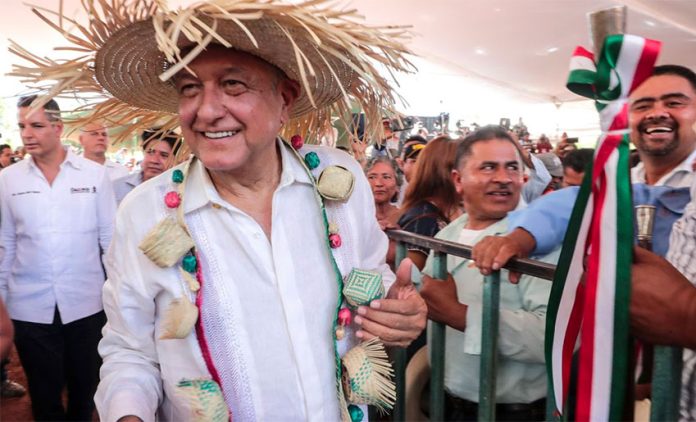
AMLO and Sonora Governor Claudia Pavlovich.
López Obrador said that 16-hour days will allow his administration to satisfy people’s “hunger and thirst for justice.”
He also renewed his commitment to prioritize the nation’s poor and indigenous peoples.
“. . . The majority of Mexicans support giving preference to indigenous communities, an applause for the true solidarity of all Mexicans,” López Obrador said.
“A lot of progress” has been made since the government took office almost 11 months ago, the president added, emphasizing that nine of 10 indigenous households are receiving financial support.
He also said that he is committed to working with the Sonora government to complete projects to meet local infrastructure needs such as the widening of the Hermosillo-Bahía de Kino highway.
“The security cabinet took the right decision and I supported that decision because it was better to let an alleged criminal free than place the lives of many people at risk,” López Obrador said.
After Guzmán López was arrested in Culiacán, Sinaloa, on October 17, Sinaloa Cartel gunmen carried out a wave of attacks across the northern city that terrorized residents and left at least 13 people dead.
The chairman of the Senate Justice Committee, Julio Menchaca, told the newspaper El Financiero that the marijuana business “is a multibillion-peso industry.”
“. . . I spoke with Finance Secretary [Arturo Herrera] and he told me that his office calculates 18 billion pesos” is what legalization could mean in tax revenues in 2020, Menchaca said.
Such projections give lawmakers less worry about the budget for the creation of the Mexican Cannabis Institute, which is expected to be up and running by January 1, 2021.
Senator Menchaca said that a number of Senate committees have hastened efforts to get the bill passed on the Senate floor this week.
Meanwhile, Senate President Mónica Fernández is soliciting the Supreme Court for an extension of a few days to approve the recreational use of cannabis, the deadline for which was October 24.
Menchaca highlighted that the preliminary documentation of the law circulated last week establishes the legalization of the plant in three domains: recreational, industrial and medical research.
He also said that the process of granting licenses should give preference to rural Mexican farmers over foreign businesses. However, after reading the documentation, he said “it appears to be interpreted the other way around.”
The cannabis institute will be responsible for coordinating the plant’s transition from the informal economy into legality. To do so, it will create mechanisms by which the national market will be supplied with cannabis plants and seeds.
It estimates that the number of recreational consumers of marijuana could reach 7.2 million, which would represent as much as US $5 billion in annual sales.