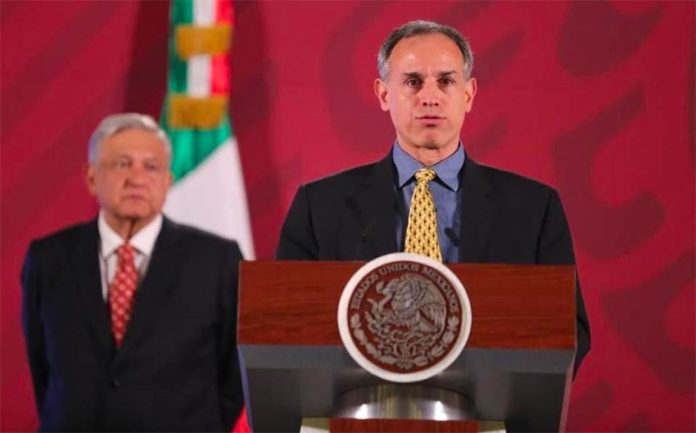
López-Gatell announces the purchase of medications for cancer patients.
The Health Ministry has invested 91 million pesos (US $4.4 million) in cancer medications to combat the drug shortages being experienced in several parts of the country.
Deputy Health Minister Hugo López-Gatell announced on Tuesday that the government bought the drugs from five different countries to offset the shortfalls created by what he called a monopoly by the private sector.
He said that the lack of cancer meds was due to “the private sector, which has had a monopoly in the last six years.”
The government bought 542,677 doses of life-saving cancer medications like methotrexate, vincristine, cyclophosphamide and others.
“This is a failure of private suppliers and since we saw the first manifestation of this failure, which was around the middle of last year, we have begun this strategy to purchase internationally,” he said.
He said that they bought the drugs for 5% less than the prices paid in 2018 by looking to international markets, primarily in Argentina, Spain, France, India and the United States.
The Health Ministry assured the public that the international providers who sold the drugs have all the necessary certifications to guarantee their safety, effectiveness and quality.
“We implemented the process of pharmacovigilance for all of the medications, with the objective of identifying any adverse qualities or lack of effectiveness to guarantee the safety of the patient,” said López-Gatell.
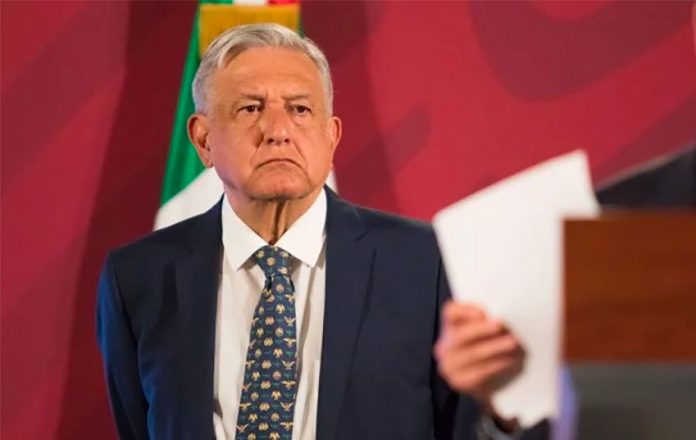
President López Obrador said that his administration is trying to raise up the country’s health system so the Mexican people can be guaranteed free medications and assured of their constitutional right to health.
He reiterated that his goal is to bring about changes by December 1 of this year to ensure that “the health system is running well, that there are no medication shortages, that we don’t lack doctors, that facilities are in good condition.”
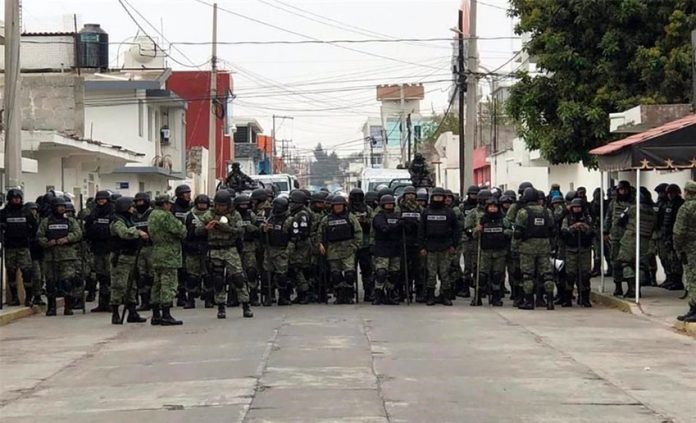
Security forces at the scene of the rail blockade Tuesday morning.
Teachers who blocked railroad tracks in the municipality of Rafael Grajales, Puebla, to protest being laid off cleared the tracks and ended their protest after state police and the National Guard were deployed to remove them.
Although there was no physical confrontation, protest leader Diana Montes Hernández said that she considered the manner in which they were forced to leave the tracks an attack by the state.
“We were surrounded. We want to think that this wasn’t [an order from] the president … [but] we were surrounded by over 400 state police, over 600 National Guard troops, drones, over 50 trucks,” she said.
“We decided to withdraw. We don’t want deaths, we don’t want injuries. We are just asking that our demands be heard. The president … comes from [social] movements; he knows that they have left us no other alternatives, … but today it seemed like other agreements were more important to him than taking care of the teachers,” she said.
The demands of the approximately 1,500 teachers include the democratization of the SNTE teachers’ union and their reinstatement to their teaching positions.
Ferrosur announced las week that it was forced to suspend the transportation of cargo between Veracruz and the Valley of México due to the protest, reporting that it had 144,000 tonnes of products it was unable to move.
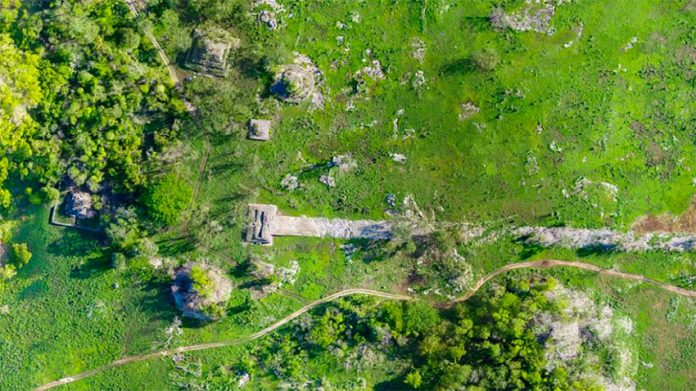
The 1,300-year-old road between the cities of Cobá and Yaxuná is the longest ever built by the Maya. Courtesy of Traci Ardren (University of Miami), Proyecto Sacbe Yacuna-Coba, and Cultural Heritage Engineering Initiative
A Mayan warrior queen may have ordered the construction of a 100-kilometer limestone road on the Yucatán Peninsula in the 7th century in order to invade one city and respond to the rising influence of another.
Archaeologists and anthropologists who studied Sacbe 1, or White Road 1, using the laser surveying method known as lidar (light detection and ranging) believe that the queen of the Maya city of Cobá, Lady K’awiil Ajaw, possibly ordered its construction around 680 A.D. so that her armies could travel along it in order to conquer Yaxuná – a Mayan city 100 kilometers to the west in modern day Yucatán state – as well as other smaller cities along the way.
Travis Stanton, an archaeologist at the University of California and lead author of a report published in the Journal of Archeological Science subtitled “An analysis of lidar data along the great road between Cobá and Yaxuná,” said that K’awiil Ajaw was one of the most powerful and hostile leaders of ancient Cobá. Carved stone monuments, or steles, depict her standing over hostages, he said.
“The bellicose nature of her monuments” suggested that she was the leader who built the road to Yaxuná, Stanton said.
According to Traci Ardren, an archaeologist, University of Miami professor of anthropology and second lead author of the report, the warrior queen may have ordered the road to be built in order to counter the growing influence of Chichén Itzá, a large Mayan city located about 23 kilometers north of Yaxuná that is one of the new seven wonders of the world.
“I personally think the rise of Chichén Itzá and its allies motivated the road,” she said.
“It was built just before 700, at the end of the Classic Period, when Cobá is making a big push to expand. It’s trying to hold on to its power, so with the rise of Chichén Itzá, it needed a stronghold in the center of the peninsula. The road is one of the last-gasp efforts of Cobá to maintain its power. And we believe it may have been one of the accomplishments of K’awiil Ajaw, who is documented as having conducted wars of territorial expansion,” Ardren said.
“The lidar really allowed us to understand the road in much greater detail. It helped us identify many new towns and cities along the road – new to us, but preexisting the road. We also now know the road is not straight, which suggests that it was built to incorporate these preexisting settlements, and that has interesting geopolitical implications. This road was not just connecting Cobá and Yaxuná; it connected thousands of people who lived in the intermediary region.”
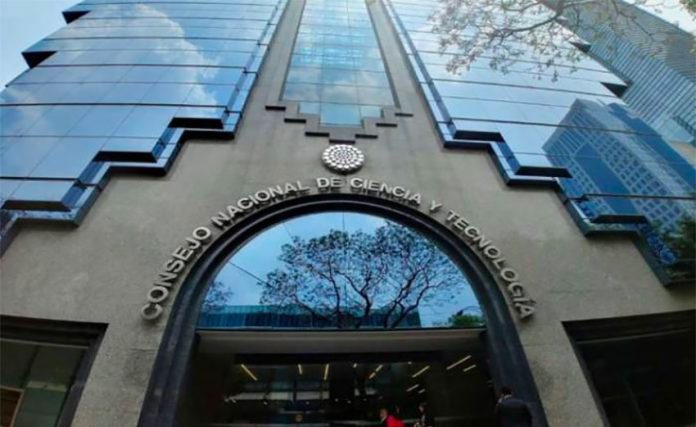
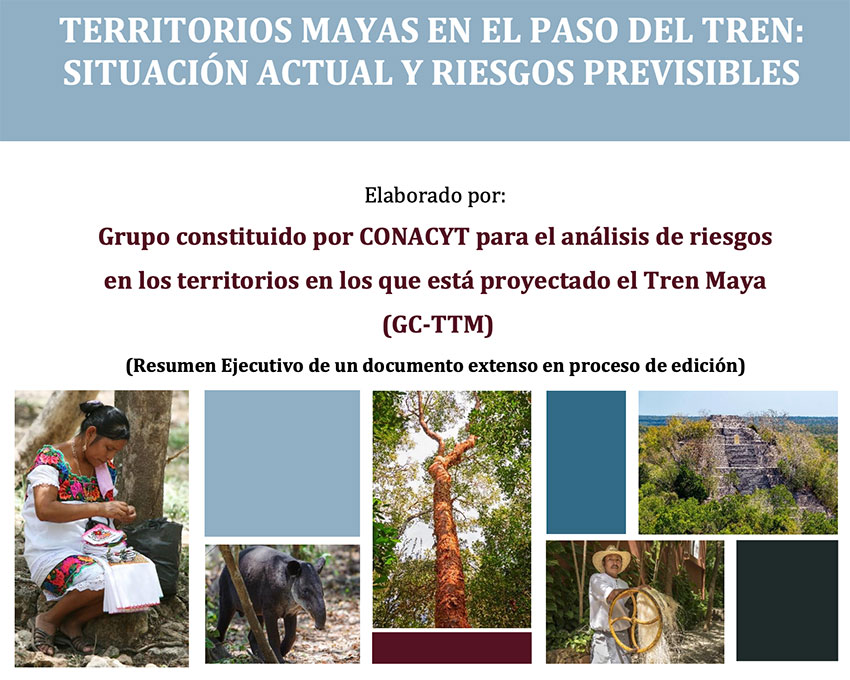
The National Council of Science and Technology (Conacyt) hid a damning report on the Maya Train before a vote was held on the project last December.
At the end of September 2019, the council invited more than 30 researchers to participate in a group that was tasked with carrying out an analysis of the risks that the construction and operation of the 1,500-kilometer railroad will entail.
After a consultation and vote on the project was announced in the middle of November, Conacyt urged the researchers to move quickly to submit their report, telling them that it would be publicly disseminated before the plebiscite took place.
The researchers obliged, submitting their report to Conacyt between December 10 and 12, according to sources who spoke with the newspaper El Universal.
As a result, the federal agency had a window of three to five days to distribute the report before the December 15 vote that found more than 92% support for the Maya Train, President López Obrador’s signature infrastructure project.
However, it failed to make the report available to both government ministries and the general public.
“They [Conacyt] imposed a very short time frame on us … asking us to submit something, and we did. But that’s where it stopped,” said a researcher who spoke with El Universal on the condition of anonymity.
“They told us that it was too late and that they didn’t want to release it before the consultation in order not to influence it.”
Consequently, the report was unable to fulfill its key stated aim before the vote took place: to provide information about the rail project to the “different actors of society, government and academia who have an interest or responsibility … to guarantee … the public good.”
The contents of the report certainly had the potential to change opinion about the railroad that will link cities and towns in the states of Yucatán, Quintana Roo, Campeche, Chiapas and Tabasco, as the researchers determined that its construction and operation would have negative impacts in a broad range of areas.
Obtained by El Universal, the report (Spanish only) said that the project would affect at least 10 natural protected areas in Campeche, Chiapas and Quintana Roo, including the Palenque National Park and the Sian Ki’an Biosphere Reserve.
The Conacyt report, prepared prior to the Maya Train consultation.
Construction and operation of the railroad will undermine the capacity of ecosystems to replenish the water table and capture carbon, the report added.
The researchers also found that 1,288 archaeological sites are within 10 kilometers of the proposed route and that they could suffer a “direct impact” from the operation of the train.
The heavy loads of trains traveling near pre-Hispanic settlements and the increased number of visitors they will transport to them could cause “irretrievable damage” to the sites and their cultural relics, the report said.
It appears that the government has taken that finding into account, at least partially, as the chief of the National Tourism Promotion Fund, Rogelio Jiménez Pons, announced last week that a line between Valladolid, Yucatán, and Tulum, Quintana Roo, will not go ahead due to the large number of archaeological sites around Cobá in the latter state as well as problems with the subsoil in the area
The researchers contracted by Conacyt also found that 143,00o people living in 197 indigenous communities would be adversely affected by the construction and operation of the railroad.
In addition, the report said that cooperatives and individuals who cede land to the government for the project will not necessarily benefit financially because they will be compensated with shares that will be listed on the Mexican stock exchange and “whose performance is not guaranteed.”
Jobs to be generated by the construction of the project will only last for a short time and most will be poorly remunerated, the report said, adding that the operation of the Maya Train and its intent to stimulate tourism in southeastern Mexico will lead to the “increase of illicit activities such as human trafficking and the movement and use of drugs.”
Migrants aiming to travel through Mexico to the United States’ southern border could travel illegally on freight trains that will use the same tracks as tourist trains.
The Conacyt report adds to a range of concerns already raised by experts and indigenous groups in the five states through which the US $7-billion railroad is slated to run.
A group of Maya and Ch’ol people has already been granted a definitive suspension order against the project that applies to one community in the Campeche municipality of Calakmul, and it is likely that other indigenous groups will also file legal action against the Maya Train, one of a trio of large projects that the government is betting will bring greater prosperity to the underdeveloped and impoverished southeast of the country.
A scientist at the National Autonomous University (UNAM) has become the first Latin American and only the second woman to be granted the Norman R. Farnsworth Excellence in Botanical Research Award by the American Botanical Council (ABC).
Professor emeritus Rachel Mata Essayag won the award for her work in pharmacognosy, or the study of plants for their medicinal uses, joining the ranks of other important pioneers in the field, such as Joseph Betz, Otto Sticher and Douglas Kinghorn.
She has worked with a number of plants esteemed in Mexico for their purported medicinal uses, such as epazote, cancerina, myrtus, amber, alache, zopilote and copalchi, among others.
“The importance of studying [these plants] is that it creates awareness of their compositions and biological properties so that health authorities will promote their proper use,” she said.
She said that the award is thanks to the joint labor of her colleagues and students in their work to better understand plants’ medicinal properties.
Mata said that she is pleased that the council looked to Mexico when thinking of granting the award, and “that they are not just interested in research done in Europe, [but] now consider work done in Latin America.”
The ABC gives the award in honor of Norman R. Farnsworth, who made important contributions to the field of pharmacognosy in the mid-20th century.
Mata stands out in the UNAM Chemistry Department for her work creating vegetable compounds from medicinal plants from Mexico. She has developed analytical methods for the quality control of botanical ingredients.
For the last three decades, she has been at the vanguard of research in her field. Her work has led to the discovery of new compounds made from traditional medicinal plants and other agrochemical advances.
She has published over 200 scientific articles, books and book chapters, and has assessed over 100 undergraduate and postgraduate students, among them stand-out researchers of natural products.
She also won the Norman R. Farnsworth Award given by the American Society of Pharmacognosy in 2014, the National University Award for Natural Sciences Education in 2000 and the Marín de la Cruz Award in 2002, among others.
Also among her honors is a special issue of the Journal of Natural Products, official journal of the American Society of Pharmacognosy, dedicated to her in 2019. She has been a fellow of the organization since 2014.
AMLO's energy policy has investor countries worried.
Diplomats from eight countries and the European Union met in Mexico City on Friday to discuss concerns about the federal government’s energy policy and how best to communicate them to President López Obrador.
The news agency Reuters reported that the United States Embassy hosted the talks and that diplomats from Canada, the United Kingdom, France, Germany, Italy, Spain, the Netherlands and the EU attended.
The broad diplomatic participation at the meeting is testament to the widespread concern about López Obrador’s break with the energy policy of the previous federal government, Reuters said. The economies represented at the meeting have traditionally been some of the biggest investors in Mexico.
Reuters reported that officials from the United States, Canada and the European nations say privately that the current government’s policy, which favors a greater role for the state in the energy sector, is undermining the legal foundations of contracts worth billions of dollars that were signed with the administration of former president Enrique Peña Nieto, who opened up Mexico’s oil and gas sector to foreign and private companies for the first time in almost 80 years.
López Obrador’s aim, they fear, is a gradual squeeze-out of the investments of foreign and private companies.
Claudia Jañez sees hostility toward private investment.
For its part, the Mexican government denies that it is sabotaging existing contracts, although it has said that some are unfair and harmful to the country. It has sought to renegotiate some of the contracts, such as those signed with three companies that built gas pipelines for the Federal Electricity Commission (CFE).
The government has also stopped Pemex from entering into new joint ventures with private companies, although it is seeking to muscle in on a large shallow-water oil project in the Gulf of Mexico, claiming that the reserve discovered by a consortium led by U.S. company Talos Energy extends into a block owned by the state oil company.
In addition, the government has attempted to strengthen the CFE by granting clean energy credits designed to encourage the development of new wind and solar farms to old, state-run renewable energy projects. Six foreign and Mexican renewable energy companies launched legal action against the rule change, arguing that it would severely harm clean energy investment, and a federal court upheld one injunction request.
Five people familiar with the talks at the U.S. Embassy on Friday told Reuters that the diplomats contemplated ways in which they could relay their energy policy concerns to López Obrador, who has pledged to “rescue” Mexico’s energy sector and has not held any new auctions to sell off oil and gas blocks since he took office in December 2018.
The diplomats say that the governments they represent have different opinions about how to communicate their complaints to the president, Reuters reported. However, there is a common aim: don’t give López Obrador the impression that he is being pushed about lest he decides to adopt an even more hardline approach with regard to state involvement in the energy sector.
Asked to comment on the discussions, the United States Embassy told Reuters that it doesn’t disclose its private diplomatic conversations, while the embassies of the other countries and the office of López Obrador didn’t respond to Reuters’ requests. However, one person told Reuters that there was a debate about whether to make the discussions public.
Claudia Jañez, president of the Executive Council of Global Companies, said in January that the business community is “deeply concerned” about increasing uncertainty and government “hostility” toward private investment. She charged that government interference in investment is the main cause of stagnation in the Mexican economy, which contracted by 0.1% last year.
At the same press conference, Business Coordinating Council (CCE) president Carlos Salazar Lomelín said that the government shouldn’t change rules because doing so creates economic uncertainty and hurts investment.
For his part, López Obrador has stressed that his government welcomes investment, and indeed direct foreign investment increased 4.2% in 2019 to US $32.92 billion pesos, according to preliminary statistics from the Economy Ministry.
However, Jañez said that investment last year, and that which will flow into Mexico in 2020, are the result of plans made between five and 10 years ago rather than an endorsement of the economic policy of the current federal government.
The fight against the brewery has been going on for nearly four years.
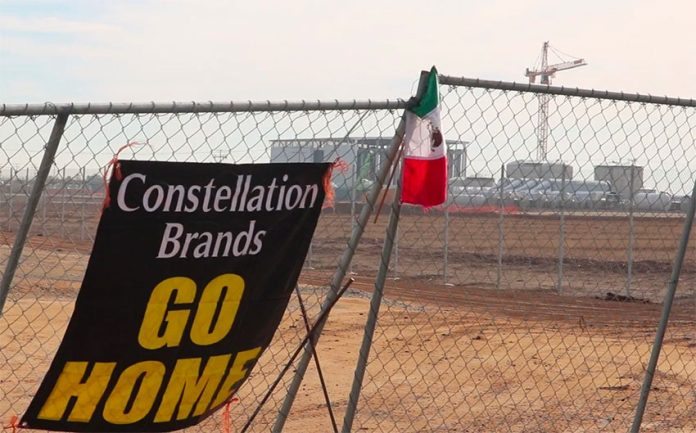
President López Obrador announced that the vote to determine the fate of a brewery being built by U.S. beverage producer Constellation Brands in Mexicali will be conducted on March 21 and 22.
The president announced the vote last week to much opposition from the company and even the U.S. Embassy, which said a vote would not be good for Mexico.
“It is binding because the Ministry of the Interior has the faculties for such a proposition. It’s actually not called a consultation, it’s called a participatory exercise,” he said at his morning press conference on Monday.
Farmers and other residents of the area have opposed the construction of the brewery since 2016, claiming that it will put a strain on the region’s water supply.
The president said that the federal government will set up information tables to apprise the public of the permits the company has received and who granted them.
“We’re going to announce the opinions in favor and those against. We’re going to explain how the company received all of its permits for construction,” he said.
He denounced that his administration is being subjected to pressures by businessmen and financial groups that view the public consultation as a threat to the completion of the project.
“We want the citizens to be those who decide, we want the public to decide,” he said, adding that the government will not issue permits for other projects like the brewery, which require large amounts of water, in the north of the country, where the resource is scarce.
Constellation Brands, which exports Corona and other beer brands to the United States, has said that the plant “will not affect, at any moment, the availability and supply of water in the region.”
The company, which has breweries in other parts of the north of the country, has said that the Mexicali plant will be ready at the end of 2021, after several setbacks due to local opposition to the project.
Construction is currently around 70% complete and the company has invested around US $900 million so far.
“We have to find a balance,” the president said. “The health of the people comes first, we can’t leave people without water. If there are other options for water for the people and water for the company, they can go ahead; if not, it can’t be done. This is the criterion, but both can be done when we look for options,” he said.
The company responded to the president by saying that it does not have the time to carry out a public consultation and that with such an uncertain future, it might have to look elsewhere for such a project.
“Although we consider that the best for our company and for Mexico is that our emblematic brands continue to be produced in Mexico, if we must expand and can’t do it in the country, we might not have any other option than to look elsewhere for production,” said company president Daniel A. Baima in a letter to López Obrador.
“The company no longer has the time to carry out a public consultation in which its future in Mexico continues to be uncertain. We hope to be able to count on your valuable support in order to put an end to the delays and underwrite this historic agreement,” he said.
It’s full-on tomato season in Sinaloa on the west coast of Mexico where I live. Here, tomatoes are the No. 1 commercial crop, and are even part of the state’s license plate. The vast majority, though, are plum tomatoes – not my favorite.
Bred less for flavor and more for easy shipping and consistent appearance, Mexico’s plum tomatoes are disappointing to any serious tomato lover. Actually, “modern” commercial tomatoes don’t have the natural sugars or essential umami flavor that makes the fruit taste so good and work so well in so many dishes. (Umami is why even something as basic as catsup adds so much to something as simple as fried potatoes.)
Sometimes you can find cherry, grape or a Beefsteak variety in a grocery or big-box store, but their flavors can’t compare to “real” tomatoes picked fresh and plant-ripened.
Lucky for me, the local farmers market has a wonderful array of Heirloom, cherry and other tomatoes in a rainbow of colors and many shapes and sizes. For the next few months, I’ll revel in this abundance. My Missouri-farm-girl mom instilled in me her love of fresh-from-the-garden tomatoes, and one of my fondest childhood memories is being sent outside before dinner to pick tomatoes, corn, zucchini, string beans, basil and mint.
Tomatoes are the most popular fruit in the world, with more than 188 million tons produced in 2019. (In case you’re wondering, bananas are next, followed by apples, oranges and watermelon.) But that wasn’t always the case. Until the mid-1800s, people in the U.S.A. considered them poisonous, because the plant is in the nightshade family. On the other side of the Atlantic, though, the French, Spanish and Italians were eating “love apples.”
There is an abundance of tomatoes in Sinaloa right now.
The word “tomato” comes from the Spanish tomate (“fat thing”), originating from the Náhuatl word tomatl, “the swelling fruit.” The Aztecs cultivated tomatoes to be bigger and sweeter, calling the new species xitomatl – pronounced jitomate – “fat water with navel.” Spanish conquistadors brought tomatoes – then small and yellow – to Europe in the 1500s. Tomato recipes were first published in Naples in 1692, although they apparently came from Spain.
Do make some basic salsa – pico de gallo is so easy, there’s no reason not to. Chop tomatoes, onions, half a jalapeño (or more!), some cilantro, fresh lime juice, a pinch of salt and voila! (Using just yellow tomatoes will make your salsa a conversation piece as well as delicious.) If you like, add some fruit: mango, papaya, pineapple, even banana. Letting it sit, refrigerated, for an hour or so will blend the flavors.
Cherry Tomato Vinaigrette
Use this as a sauce over salads, omelets, savory French Toast or any white fish.
1 pint cherry tomatoes
3 Tbsp. olive oil, divided
1 shallot, finely chopped
1 Tbsp. (or more) red wine vinegar
Salt & freshly ground pepper
2 Tbsp. chopped fresh chives
Cut half of cherry tomatoes in half. Heat 1 Tbsp. oil in medium saucepan over medium heat. Add shallot and cook, stirring, until softened, about 4 minutes. Add halved and whole tomatoes and cook, stirring occasionally, until juices release, 4–6 minutes. Mash some of tomatoes with a fork; add 1 Tbsp. vinegar and remaining 2 Tbsp. oil; season with salt and pepper. Serve warm or room temperature. Add chives just before serving.
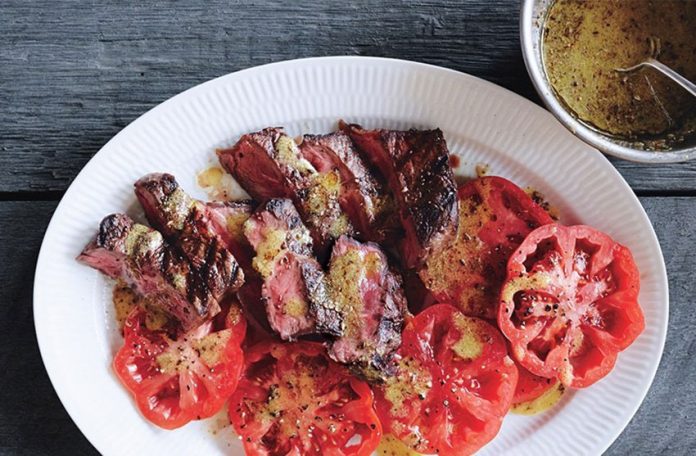
Skirt Steak with Toasted Spice Vinaigrette
1½ pounds flatiron or skirt steak, cut into 4 pieces
1Tbsp. olive oil + more
Salt & pepper
4 beefsteak or heirloom tomatoes, sliced ½” thick
For vinaigrette:
1 tsp. each coriander, cumin and fennel seeds
¼ cup olive oil
2 Tbsp. white vinegar
1 tsp. Dijon mustard
Salt & freshly ground black pepper
To make vinaigrette: Toast coriander, cumin, and fennel seeds in a dry small skillet over medium heat, tossing, until fragrant, about 3 minutes. Let cool, then mince. Whisk with oil, vinegar and mustard in a small bowl; season with salt and pepper. Prepare grill for medium-high heat. Rub steak with a bit of oil; season with salt and pepper. Grill about 4 minutes per side for medium-rare. Let cool 5 minutes before slicing against the grain. Serve steak on top of tomatoes with vinaigrette spooned over.
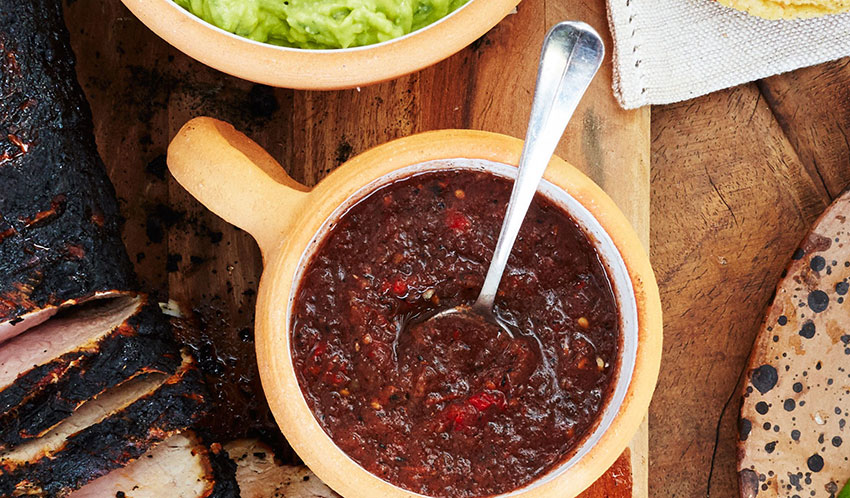
Grilled tomatoes are the key ingredient in this hot sauce.
Grilled Salsa Roja
Although a real grill will give a better flavor, this can be done in a toaster or regular oven set to broil.
8 plum tomatoes, cored
½ medium white onion
4 serrano chiles
3 garlic cloves, peeled
1 cup packed cilantro leaves
Kosher salt
Prepare grill for high heat. Grill tomatoes, onion and chiles, turning occasionally, until lightly charred and fragrant, about 4 minutes for chiles and 6–8 minutes for tomatoes and onion. Let cool, then pulse everything in a blender or food processor until mostly smooth with a few small pieces. Add salt to taste. Cover and chill. –Bon Appetit magazine
Tomato Watermelon Salad
A refreshing and surprisingly delicious combination!
About 4 lbs. chilled seedless watermelon, peeled and cut into 1-inch cubes
3 large Heirloom tomatoes, seeded and cut into 1-inch cubes, or 2 cups cherry tomatoes, halved
1 onion, thinly sliced
3 Tbsp. chopped fresh mint
1 cup crumbled feta cheese
1 tsp. salt
Gently toss watermelon, tomatoes, onion and mint in a large bowl. Add feta, season with salt, and gently toss again. –Allrecipes.com
Preheat oven to 350 degrees. On oiled baking sheet, arrange tomato slices. Sprinkle rosemary and garlic over tomatoes and brush or drizzle with olive oil; season with salt and pepper. Bake in preheated oven until tomatoes are tender, 5 to 10 minutes.
Janet Blaser of Mazatlán, Sinaloa, has been a writer, editor and storyteller her entire life and feels fortunate to write about great food, amazing places, fascinating people and unique events. Her work has appeared in numerous travel and expat publications as well as newspapers and magazines. Her first book, Why We Left: An Anthology of American Women Expats, is available on Amazon. Contact Janet or read her blog at whyweleftamerica.com.
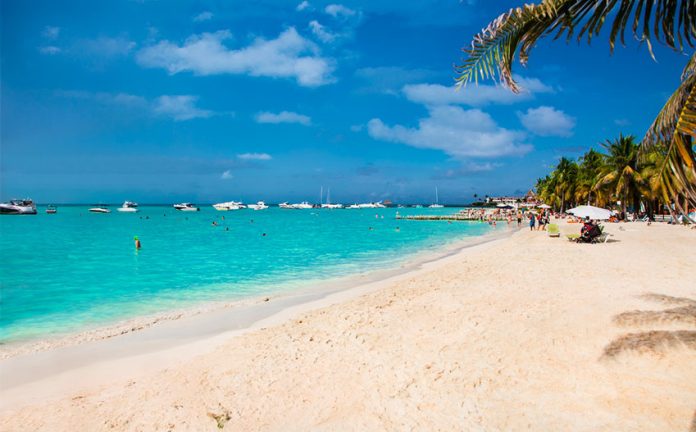
For the third year in a row, Isla Mujeres, Quintana Roo, has won TripAdvisor’s Travelers’ Choice Award for having the best beach in Mexico.
The island’s Playa Norte beach was so popular among site users that it also ranked 17 among the world’s best beaches.
The director of the federal office of maritime land zones (Zofemat), Kerem Pinto Aguilar, said that the distinction allows the island to attract more tourism and bring in more revenue.
“Being among the most popular beaches in the world attracts tourism, which converts into revenue for island families,” she said.
The tourism website classified the beach as an “earthly paradise” with calm, turquoise waters and fine white sand, where thousands of tourists arrive daily to enjoy the beautiful Caribbean Sea and the incredible ocean views the island has to offer.
Pinto said that it is important to have such a recommendation from TripAdvisor, as it is the largest and most popular such website in the world, reflecting the best in services, quality and customer satisfaction.
She added that Playa Norte still has its Blue Flag distinction, an international award for beaches that have high marks for environmental impact, safety, services, water quality and other criteria.
“Thanks to the coordinated work of various government agencies, we were able to maintain the beaches … in optimal conditions. At Zofemat, we are constantly working to clean [the beaches], rake them, make the sand look nice and remove waste and sargassum, with the goal of presenting residents and visitors with first-class beaches,” she said.
Mexico has some of the highest levels of machismo in the developed world, according to the Organization for Economic Cooperation and Development (OECD).
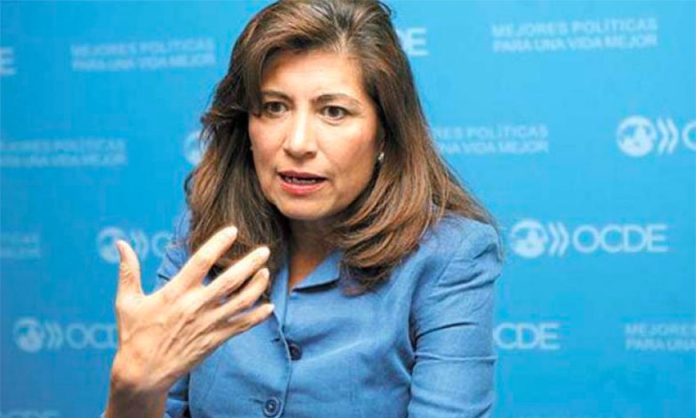
OECD director Gabriela Ramos said that Mexico’s predominant male chauvinism has negative effects on the economy, as it fails to take advantage of half of the country’s population.
Ramos has worked as the advisory coordinator for the OECD secretary general, José Ángel Gurría, and is in charge of the organization’s work on public policy related to gender.
She said that men’s favored treatment in the economy and society is reflected in differences in salaries, greater participation by men in the labor market, and the cultural stereotype that women should be submissive to men.
In an interview with the newspaper El Heraldo de México, Ramos said that most developed countries in the OECD — which boasts 36 member countries, including the United States, Canada, Chile, Italy, Spain, Turkey and Japan — have an average gender gap in salaries of around 15%, while in Mexico that number is closer to 30%.
Ramos did note, however, the interesting change in “social mentality” within the administration of President López Obrador, whose cabinet represents men and women equally. She also praised the fact that Mexico City has a female mayor in Claudia Sheinbaum and that the Congress has a fair representation of women.
But she said that one of the problems women face in Mexico has to do with cultural norms that tell young girls they should be submissive, help men and support them in their professional development.
“When the discrimination comes from your brain, it’s really complicated, and even more so if it passes down from generation to generation, and it’s us women who are transmitting these cultural norms,” she said.
She said that women’s professional development is always linked closely to the expectations put on them by their parents and the attitude of the household in which they grow up.
“I always had very demanding parents. We never had any differentiation of gender stereotypes, of being man or woman [in my home],” she said.
Ramos believes that demanding more of girls as they’re raised at home leads to women with high expectations and strong ambitions.
“We have clearly mapped this out at the OECD. … In one study, we asked girls if they had intentions to go into difficult disciplines like math, engineering, and the majority said no. We ask the parents, and they think the girls aren’t able.”
Ramos’ statements about the effects of machismo on the economy appear to be backed up by Mexico’s own government statistics. Data recently published by the national statistics institute Inegi reveal that women’s salaries have plummeted in the last decade.