Home Blog Page 1779

Rolling back federal policies indicates López Obrador has a woman problem

0
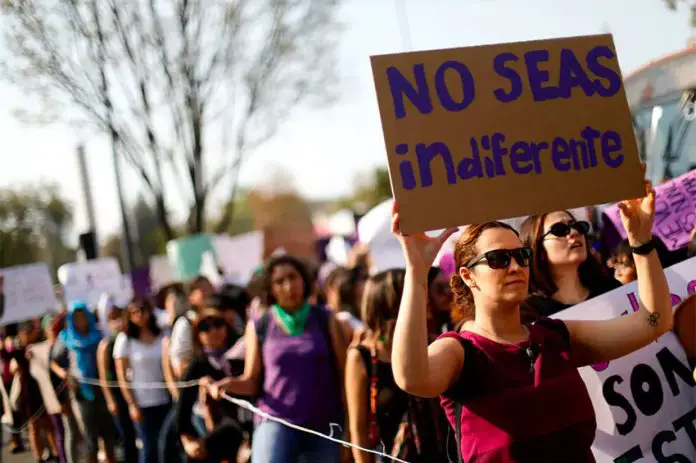
In February, thousands of women marched in Mexico City to demand that President López Obrador do more to keep women safe.
In February, thousands of women marched in Mexico City to demand that President López Obrador do more to keep women safe. The protest sign featured here reads, ‘Don’t be indifferent.’ Reuters/Edgard Garrido

After the leftist firebrand Andrés Manuel López Obrador won the Mexican presidency in a landslide last year, he vowed to “govern for all, starting with the poor.”

In Mexico, “the poor” includes many women, who earn 34% less than men for doing the same job. Women in Mexico also face incessant catcalling and extremely high rates of violence. With 1,199 women murdered in Mexico between January and April this year – about 10 a day – Mexico is Latin America’s second-most dangerous country for women, after Brazil, according to the United Nations.

As a presidential candidate, López Obrador spoke about the challenges facing women in Mexico. His campaign even acknowledged that domestic abuse and poverty are particularly prevalent among indigenous women, and pledged to help them, too.

López Obrador’s administration has not, however, made women’s rights a priority. Instead, it has been rolling back some of the few federal policies designed to protect and empower Mexican women.

Under austerity measures meant to curb public spending, López Obrador in February ended an internationally lauded daycare program that allowed low-income families to sign up for government-subsidized childcare close to their workplace or home.

Rather than pay subsidies to this network of private daycare facilities, the Mexican government will now give vouchers worth about US $80 every two months directly to families.

The new policy will give parents more choice in their childcare, the Mexican government says. Each family may now decide whether to send their children to daycare or pay “a sister, an aunt or a grandma,” López Obrador said in a February 7 press conference.

López Obrador, who remains popular six months into his six-year term, additionally explained his decision to end government-subsidized daycare by saying the program was corrupt.

Several private daycare centers that benefit from government subsidies have been involved in high-profile child abuse scandals or shown to have unsafe facilities. In 2009 ABC Daycare in Hermosillo, Sonora, caught fire, killing 49 children.

Lopez Obrador blamed these problems on corruption among government and private-sector middlemen, who pocketed cash meant to serve children. He says that by removing the intermediaries to give money directly to families, the opportunity for corruption is eliminated.
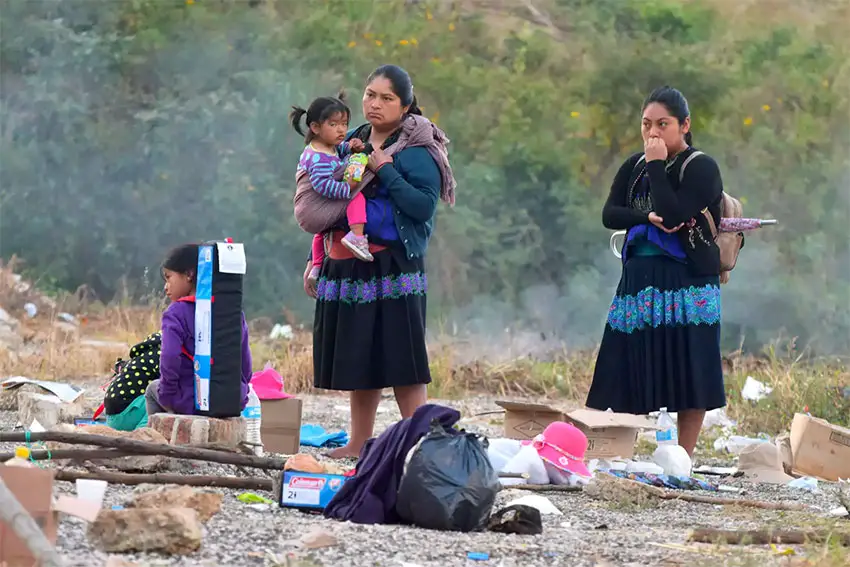
As a group, indigenous women are the poorest people in Mexico. They are also the most likely to receive inadequate medical care and to die in childbirth
As a group, indigenous women are the poorest people in Mexico. They are also the most likely to receive inadequate medical care and to die in childbirth. Reuters/Jacob Garcia

Public corruption is rampant in Mexico. But there’s no evidence that the childcare program suffered particularly from abuse of public funds.

In fact, Mexico’s subsidized childcare network, which has served two million children since it was established in 2007, has been quite successful in enabling more women to work outside the home.

According to a 2017 government evaluation, the daycare network had relieved 1,825,394 parents of childcare duties for 34 hours a week over the past decade. A significant percentage of the communities served by the daycare network were either very poor or home to a predominately indigenous population, according to the U.N., and women were the primary beneficiaries.

Women’s groups and human rights organizations in Mexico responded to the termination of the daycare program – and to the president’s suggestion that female relatives could care for Mexico’s children – with outrage.

In a joint statement released February 11, 17 civil society organizations said the new policy would “strengthen gender stereotypes” and “promote discrimination and gender inequality.” The groups reminded the president that women do 70% of all domestic work in Mexico and that grandmothers already care for 50% of all young children not in their parents’ care.

Mothers who used government subsidized daycare were 18% more likely to have gotten a job between 2007 and 2017 compared to those who did not receive government-subsidized childcare, according to a government program evaluation.

Even so, Mexico still has the second-lowest female participation in the workforce among developed countries, behind Turkey. Only four out of 10 women are employed outside the home.

The López Obrador administration has responded to this criticism with indignation.

After Mexico’s National Human Rights Commission ruled that ending the daycare program violated the constitutional rights of Mexican women and children, a government official sought to discredit the independent government agency as a partisan entity.

Undersecretary of Human Development Ariadna Montiel Reyes called the organization’s position an “unacceptable aberration” orchestrated by López Obrador’s political opponents and accused the commission of complicity with “atrocities” committed by previous administrations.

This is the first time the federal government has challenged the legitimacy of the commission since its creation as a government watchdog in 1992.

The elimination of public daycare was infuriating to López Obrador supporters who expected the president to promote a more progressive gender agenda.

So when the president announced in March that his administration would additionally slash funding for women’s shelters and instead give the money directly to victims of domestic violence, the backlash was immediate and fierce.

President López Obrador remains popular
President López Obrador remains popular. On July 1, 2019, he celebrated the one-year anniversary of his landslide win with a rally in Mexico City attended by several thousand people. AP Photo/Fernando Llano

Worldwide, women are most likely to be murdered by a male partner and may be unsafe in their own homes, making shelters a vital sanctuary.

The number of Mexican women stabbed or strangled at home rose 54% between 2012 and 2016. In March 2019, the same month the cuts were announced, Mexican police received 56,590 reports of domestic violence – a 16% increase over February 2019.

Advocates for victims of domestic violence warned that cutting funding to domestic violence shelters would expose women and children to even more danger.

Public uproar forced the Mexican government to retreat on its plan to stop funding women’s shelters and give cash payments to women instead.

But a few months later, in May, news reports revealed that women’s shelters would see substantial budget cuts under the government’s austerity measures. Twenty-nine percent of Mexico’s 81 publicly funded domestic violence shelters have received no federal funding for the second half of the year.

To quell criticism that it doesn’t care about women, the Mexican government in late May announced the launch of a European Union and United Nations program in Mexico to eliminate violence against women.

The US $7.7 million investment, called Spotlight Initiative, will target three Mexican states with high rates of violence against women: México state, Chihuahua and Guerrero.

Its goals, according to the EU, are to design public spaces that are safer for women, facilitate women’s access to justice and protection services and to “fundamentally change the perception of women within their families and in society.”

López Obrador wasn’t always sure that Mexico needed the help.

A spokesperson for the European Union told the Spanish newspaper El País that López Obrador initially rejected this initiative because, for his government, gender “was not a priority.”

As Mexican women have made clear, they disagree.

The authors of this piece are Luis Gómez Romero, senior lecturer in human rights, constitutional law and legal theory at the University of Wollongong and María de la Macarena Iribarne González, lecturer at the school of law, University of Wollongong. This article is republished from The Conversation under a Creative Commons license. Read the original article. You can read The Conversation daily by subscribing to their newsletter.

Lake goes dry in Chiapas’ Metzabok lagoon system but cause unknown

0
Nearly dry lakebed in Ocosingo.

A lake has run dry in the Lacandon Jungle in Chiapas but the cause of the phenomenon is unknown.

The now-empty lakebed is located in the eastern municipality of Ocosingo and part of the UNESCO-protected Metzabok lagoon system, which is considered sacred by the local Mayan people.     

Local resident Armando Valenzuela said the lake dried up completely on Saturday night but water levels had been dropping during the previous two weeks.

“. . . The community was monitoring it to take care of the [wildlife] species,” he said.

Around 150 residents helped to transfer fish to other lakes in the area, the newspaper Reforma reported, although some ended up on dinner tables.    

“There’s nothing left in what was a great expanse of water and a tourist site,” said one local in a video posted to social media.

Valenzuela said there are 10 smaller lakes in the area that dry up every year but it is the first time that a larger one has lost all its water.

Staff at the Natural Protected Areas Commission told Reforma that an investigation is underway to determine the cause.

Lower than usual rainfall appears to be the most likely culprit.

The National Meteorological Service said in May that land in the catchment area of the Usumacinta river, one of several waterways that feed the Metzabok lagoon system, was in a state of extreme drought.  

Source: Reforma (sp), El Heraldo de México (sp)

Higher taxes on junk food, cigarettes, alcohol urged to fund health costs

0
Government urged to raise taxes on alcohol and other products.

Taxes on sugary drinks, junk food, alcohol and cigarettes should be increased to reduce pressure on the government’s healthcare budget, according to a consumer rights group and a health advocacy coalition.

Alejandro Calvillo, president of El Poder del Consumidor (The Power of the Consumer), told a press conference that an additional 50 billion pesos (US $2.5 billion) in revenue could be generated by raising taxes on the first three products.

The funds would enable the government to increase this year’s healthcare budget of 124 billion pesos by 40%, he said.

Calvillo proposed lifting the IEPS excise tax on sugary drinks from 1 peso per liter to 2, explaining that an additional 13.4 billion pesos could be collected annually.

Junk food taxes should increase from 8% to 12%, he said, while those on beer should go up to 35% from 26%.

Calvillo proposed increasing taxes on other alcoholic beverages to between 45% and 60% from the current range of 30% to 53%.

Erick Ochoa of México SaludHable said that taxes on cigarettes need to be adjusted for inflation.

“Currently a tax of 0.35 centavos per cigarette is charged. So, for each packet of 20 cigarettes, tax of 7 pesos is paid. With an adjustment for inflation this would increase to around 0.48 centavos per cigarette, which would be [tax of] almost 10 pesos per packet,” he said.

That hike would increase government revenue by 53.3 billion pesos compared to the amount collected in 2017.

Coupled with the additional revenue that would be generated by higher taxes on the other products, an extra 103.3 billion pesos (US $5.2 billion) could be injected into the federal health budget.

Calvillo said the proposal by the organization he heads has already been presented to a budget committee of the lower house of Congress, where it was well received.

However, he predicted that gaining support in the upper house will be more difficult because senators are more susceptible to influence from private sector lobbyists.

Even if it were passed, Mexico would still not reach the World Health Organization’s recommended level of taxation on products that are harmful to human health, Calvillo said.

He warned that if the government doesn’t increase taxes on the proposed products, the nation’s public finances will come under significant pressure and people’s health will suffer.

“They’re products that are addictive . . . They’re associated with problems of self-control and compulsive consumption . . . When we talk about the taxes on these products, it’s not just a discussion about revenue raising but rather a strategy to reduce consumption that causes harm to public finances, health and families’ finances.”

Source: El Economista (sp) 

Ex-governor of Campeche elected to lead Institutional Revolutionary Party

0
Moreno and Viggiano won the PRI election Sunday.

The ex-governor of Campeche has been declared the winner of the election to lead the Institutional Revolutionary Party (PRI).

Alejandro Moreno and is running mate, Carolina Viggiano, won Sunday’s election with over 1.6 million ballots in their favor, or 85% of the vote.

The election of Moreno to the party’s presidency could be a watershed moment for the PRI, a party which political analysts say is already seeing the toughest times of its 90-year history.

“The PRI is going through the worst moment in its history . . .” said political analyst José Fernández Santillán. “It was the official party from 1929 to 2000, in power for 71 years, then from 2000 to 2012, it was the opposition party, and it had its second chance until 2018. But the upcoming elections in 2021 could lead it into a third stage it has never before experienced: that of an outlying satellite party.”

Moreno could be the catalyst that brings the PRI’s downfall to that third stage.

“If Alejandro Moreno is elected head of the PRI, the most probable outcome is that the party will become subordinate to the government of Andrés Manuel López Obrador. They call Moreno ‘Alito,’ but his politics are so similar to the president’s that many call him ‘Amlito,’” Fernández said before Sunday’s vote.

The PRI lost the presidency in 2018 with López Obrador’s election, when it was reduced to the No. 3 party in Mexico, with only 47 of the 500 deputies and 14 of 128 senators. It governs only 11 of the country’s 32 states.

Allegations of corruption against former president Peña Enrique Nieto, as well as several former PRI governors, have led to the party’s decline.

Moreno’s rise to the party’s leadership could be the final nail in the coffin.

“The only thing that victory for Alejandro Moreno will do,” said Enrique Toussaint, political analyst at the University of Guadalajara, “is deepen the PRI’s tendency to destroy itself.”

Source: Milenio (sp), Sin Embargo (sp)

5 years after Ayotzinapa, Iguala’s ex-mayor, wife still in jail awaiting trial

0
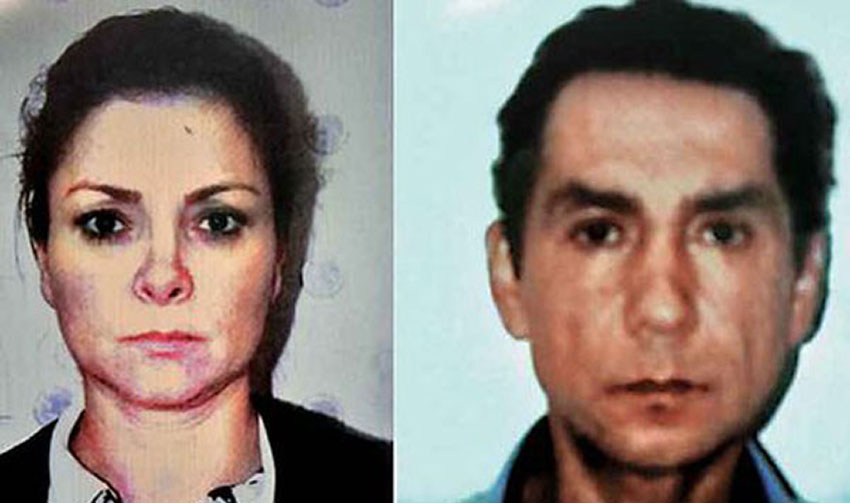
The 'Imperial Couple' of Iguala.

The former mayor of Iguala, Guerrero, and his wife have now spent almost five years in jail awaiting trial in the case of the 43 students who disappeared in September 2014.

José Luis Abarca Velázquez and María de los Angeles Pineda, a former regional president of the DIF family services agency, are accused of masterminding the attacks in Iguala against students from the Ayotzinapa teacher training college.

Six people were killed on the night of September 26, 2014, and 43 students were allegedly handed over to the Guerreros Unidos drug gang by municipal police before they were killed.    

Abarca and Pineda, who were allegedly complicit with the Guerrero Unidos’ criminal activities, evaded capture for more than a month but were arrested in Mexico City on November 4, 2014.

Yesterday, less than three months before the fifth anniversary of their detention, the couple’s daughter took to social media to denounce what she says has been a failure to respect her parents’ right to the presumption of innocence.

The ex-mayor and his wife a year after their arrest.

“. . . In the previous six-year term [of the federal government], they didn’t care that my parents were innocent of what they were accused of, they concealed evidence, altered files and altered the dates of hearings so that they didn’t occur,” Yazareth Abarca Pineda wrote on Facebook.  

“They’ve been prisoners in maximum security jails for almost five years without guarantees, without medical care, without their children,” she added.

“. . . Let justice be served, for once in the history of this country, let’s allow one single thing to be done well and with honesty.”

In hashtags added to her post, Abarca Pineda claimed that her parents are political prisoners.

In addition to defending the innocence of the so-called “Imperial Couple” of Iguala, Abarca Pineda has also initiated legal action in a Mexico City court aimed at recovering assets seized from her parents.  

Just two days after he took office, President López Obrador signed a decree to create a super commission to conduct a new investigation into the case of the 43 missing students.

Human rights undersecretary Alejandro Encinas said last week that the commission had analyzed more than 84 million phone calls made in the first six days after the students disappeared, and that it has information to disprove the previous government’s “historical truth.”

The Enrique Peña Nieto-led administration said that after the students were killed their bodies were burned in a municipal garbage dump and their ashes disposed of in a nearby river.

But that version of events has been widely rejected by independent forensics experts, human rights groups, journalists, family members and others who suspect that the army may have played a role in the students’ disappearance and deaths.

Fue el estado – it was the state – is the opinion of many Mexicans as regards to who is responsible for the students’ disappearance and presumed death.

The three words also make up a common slogan that has been chanted at countless Ayotzinapa protests and graffitied on innumerable buildings and monuments.

Source: Milenio (sp), La Silla Rota

The market in Tepito, one of Mexico City’s most feared neighborhoods

0
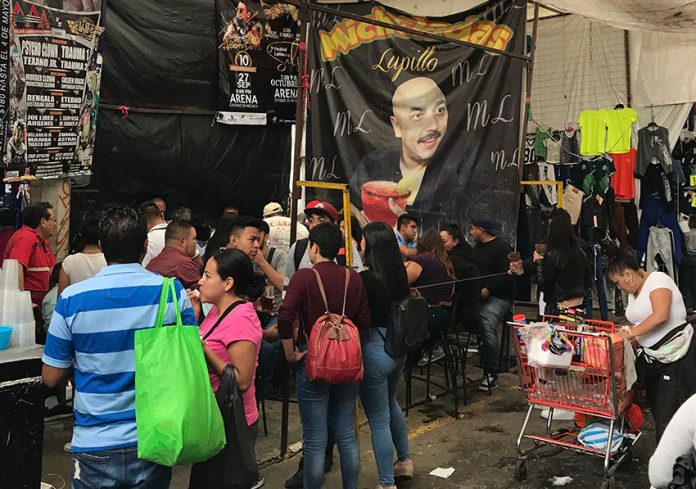
Micheladas Lupillo is one of the many hot-spots at Tianguis el Tepito.

The name Tepito, the “barrio bravo,” strikes fear in nearly every Mexico City resident’s heart. But it’s home to one of the city’s most visited and bargain-filled street markets.

El Tianguis de Tepito is a trip. It’s a strange market “netherverse” that will keep your hands in your pockets and your feet on your toes. Don’t be surprised to find yourself perusing the merchandise amid a hail of narcotics marketing.

Although apparently safer on its daytime streets in recent years, in 2019’s Tepito, crime is still quite high. Depending on how the statistics are broken down, it appears that the neighborhood is one of the most dangerous, or just mildly more dangerous than much of the rest of the city.

At one of the many entrances into the market — where Matamoros crosses Jesús Carranza — the  blaring CDs, DVDs, video games and loaded USB sticks vie for attention. They decibel-wrestle for supremacy to determine which will bring the most customers to their vendor masters.

Some vendors have interior shops, like spacious garage units, but most sell on the streets. So much of the neighborhood is closed to car traffic every day but Tuesday, the tianguista’s day of rest.

“What do you want? Weed? Meth? Coke?”

“Weeeeed . . . Coooooke . . . Meeeeeeth . . .”

“Weed/Coke! Weed/Coke! Weed/Coke!”

Drug dealing is pervasive and blatant, despite the strong showing of police throughout the market. Lookouts intermingle with the crowds, I’m told, motioning to dealers should a cop come too near.

There’s a sticky party happening in the tent at Micheladas Destrucción. Paper cups filled with a liter of beer and enhanced with mixtures of syrups, powders and gummies, depending on the drinker’s persuasion — salty, spicy, sour, sweet, the Mexican taste rainbow.

Two kids erupt onto Matamoros on a motor scooter going far too fast. They whip around a sunglass stand in the middle of the street, regain balance and very nearly lay a lady flat.

The ladies' wear at Tianguis el Tepito.
The ladies’ wear at Tianguis el Tepito.

She was simply enjoying an ice cream. Damn kids made her look like an idiot.

Across Tenochtitlán begins the forest of footwear — Nike, Adidas, Vans, Puma, Crocs, Timberland including dress shoes, work boots, heels, slippers, snow boots. Snow boots? They certainly look legitimate.

I handle a few pairs, wondering if it’s possible to tell which are the poorly-made knockoffs and which are bootlegged from actual factories of the real-deal brands.  But it’s difficult to concentrate with all the marijuana and cocaine sellers. There are dozens of them. They’re around every turn.

“Marijuanaaaaaa! Cocaaaaaaine!”

A couple on a scooter with a full load of purchases weaves through the crowd, speeding straight ahead — just a few meters at a time — then skids quickly to a stop, nipping at the heels of the crowd.

Aside from the drug dealers, there are a handful of glue sniffers looking dazed-out and barely conscious but sufficiently high so as not to appear to be a threat. Paranoia strikes every now and again as I feel I’m being followed too closely. Yet, I witness only fair transactions — money  for goods. Not a robbery in sight.

The clientele are principally families wandering with kids begging for logos, toys and candy. Old ladies sit on curbs chatting. Couples suggest new outfits for each other or themselves — maybe it’s time to try something new. Hands wave in practiced pageantry to entice us to the rug-laid wares of coin collectors or porn merchants.

A leathered and long-haired shadowy man on a Harley makes a ridiculously tedious eight-point turn in the narrow aisle.

”Why would you ride a Harley into a tight-laned tarp market?” I wonder. Well, probably because it’s much safer in here than it would be out on the open street. And if this dude could get away with riding his Harley through Sears, I’m certain he would.

The clothing prices at Tepito are often not much different than what you’d pay at any other market, but the selection is insane — obscure jerseys, hard-to-come-by counterfeit high-fashion labels, collectible streetwear. If not the prices, then it may just be the coordinated lawlessness of Tepito that maintains its popularity.

As I pay for football jersey gifts for my nephews, the vendor asks if I want Nike and Adidas price tags attached. The tags look authentic, with the recommended price printed on them in U.S. dollars. I don’t want the kids to think I spent $120 on a couple of simple jerseys. But, then, they would probably cost only a little less from some guy elsewhere who doesn’t print his own labels, so I go for Tepito “authenticity.”

A train of three scooters zips past in quick succession, like knights into battle. If the first shall fall, two shall remain to fight on.

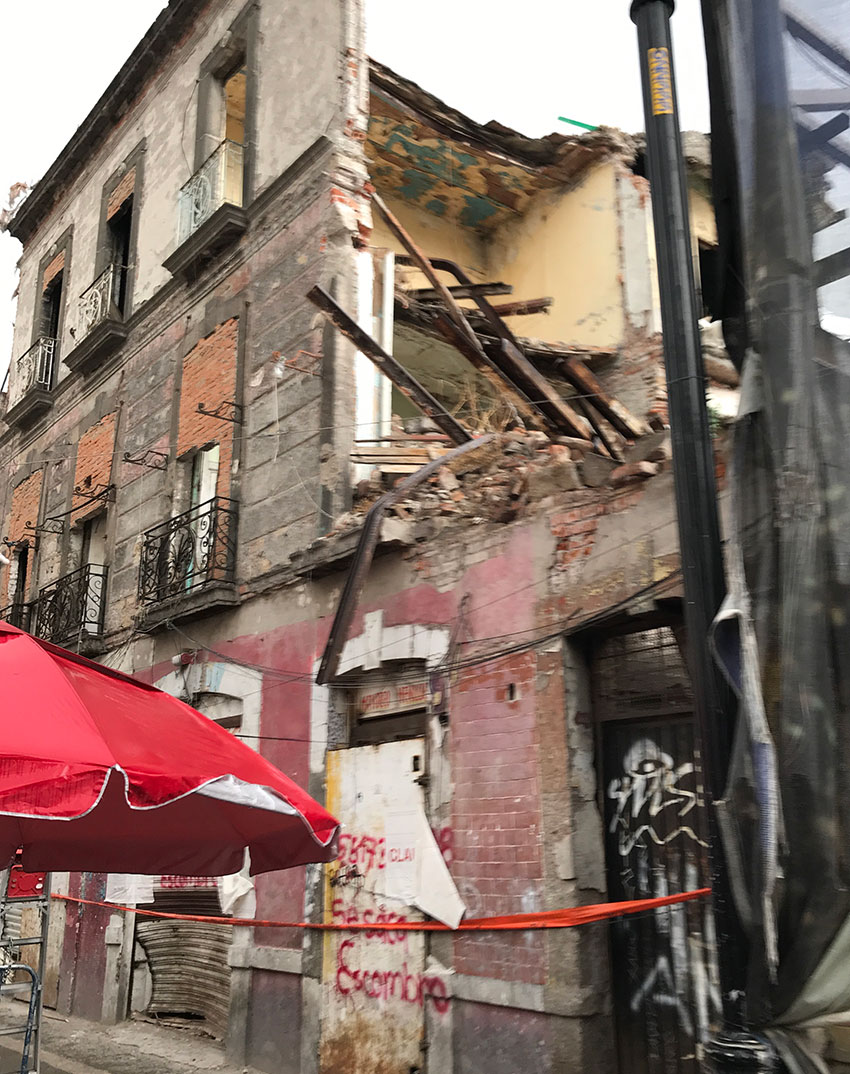
Tepito's surrounding streets can look a bit bombed out.
Tepito’s surrounding streets can look a bit bombed out.

“Coke. Coke. Coke.” This dealer is tapping people on the shoulders as they pass, speaking directly in their ears from a finger’s length and patting their backs — as if he thinks they may not have noticed the general availability of cocaine on the streets of Tepito.

He tugs a man’s sweater as he passes, holding on, following him into the aisle. A handcart making haste through the crowd runs over the dealer’s toes.

Surrounding dealers look over to see what he might do. Their questioning glances ask: “Have you been disrespected?” “Is retribution in order?” But the dealer just laughs it off and the cart disappears into the throng.

Passing through the crowd, people occasionally project bad vibes, but nothing is outwardly threatening. I take photos surreptitiously and a cop mumble-growls under his breath as I pass, “Not here, güero [whitey].”

There are sniffs of weirdness and mistrust everywhere.

I ask a man with stacks of Chinese cigarette cartons if I can take a photo. It’s like a smokers’- pride float. They’re beautifully stacked, alternated side-to-side, at least three meters high and look like a well-crafted sculpture.

He doesn’t just laugh and say “no,” like “Ha-ha, of course not.” He says, “No,” firmly and brutally.

At one of the wrist-watch stands I ask the attendants if there are a lot of scooter accidents within the market confines.

“Sí, sí, sí!” they respond in concert, with concerned looks.

“Do they run into people or tables or other scooters?” I ask.

“Everything,” one of the ladies tells me. “They crash a lot. They don’t know how to drive, and they just jump right on. Be careful out there!”

Still more scooters fly by in suicidal joy.

The sound of rain begins to hit the tarps like the fidgety drum of fingers on a table. It’s a pleasant feeling under the tarps — kept dry in the middle of a downpour.

You can stay dry under the many tarps of Tepito. But the sound of pattering rain is intermingled with calls of “COKE! WEED! COKE! WEED!” As you leave, new possessions in hand, the drug drumbeat grows ever fainter behind you.

• Tianguis de Tepito runs along Rivero (and surrounding streets) from Peralvillo to Eje 2 in Morelos, Mexico City, from 8:00am to 5:00pm daily, but closed on Tuesdays.

This is the 20th in a series on the bazaars, flea markets and markets of Mexico City:

Uber launches its Jump electric bicycle rentals in Mexico City

0
Uber offers app-based bicycle rentals in the capital.

The ride-hailing company Uber is introducing a new electric bicycle rental system in Mexico City through the Uber Jump application.

According to Uber executive Gui Telles, the bikes will be available for rent from 5:00am to 12:30am, starting Wednesday.

Roberto Fernández del Castillo, Uber’s director for mobility innovation in Latin America, said the initial fleet of 1,900 bikes can be rented in the Polanco, Anzures, Juárez, Condesa, Roma and Cuauhtémoc neighborhoods. In the future, the area will be extended according to Mexico City regulations, and the fleet will be expanded to a total of 4,800 bicycles.

After reserving a bike, users will have 10 minutes to find it using its GPS locator, scan its QR code and start their trip.

Unlike other similar services, the bicycles are freestanding rather than anchored to a base.

The cost is 10 pesos (US $0.50) to activate a bike and then 3 pesos per minute. All trips will have insurance from Axa, which protects the rider as well as third parties.

Uber joins two other companies, Motum and Dezba, which also offer anchorless bike rentals in Mexico City. Another company, Mobike, had its license suspended after failing to make required payments to the Mexico City government, and will not be allowed to operate until August 2020.

Source: Milenio (sp), Animal Político (sp)

US gun policy led to El Paso shooter responding to Hispanic ‘invasion’

0
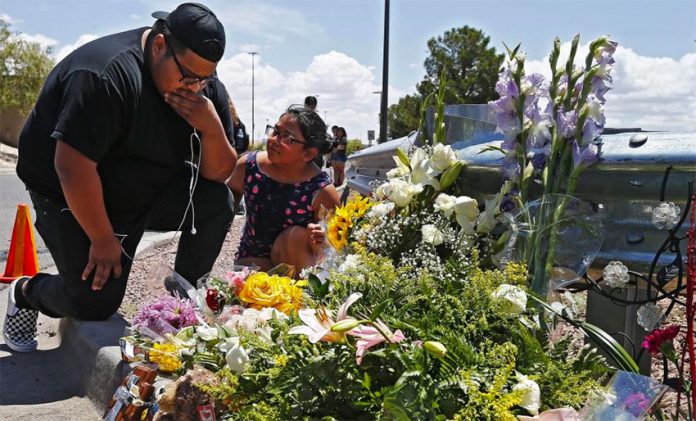
Flowers at the site of the El Paso shooting, in which eight Mexicans were killed.

If you’ve been reading my columns to this point, it must be no secret by now that I have among the bloodiest of bleeding hearts. I come from a long line of pacifist war-resisters, and we’d have sooner bought a pet Komodo dragon than have a weapon in our home.

My father, a die-hard political activist who never showed the strict, masculine protectiveness typical of adult males in family sit-coms and movies, did have one important rule that he insisted on — not even toy guns, under any circumstances, were allowed in the house. 

He also implored my sister and me never to be with men who voted Republican, smoked, made bombs for a living or rode motorcycles. So far, I’ve complied.

I read with sadness, anguish and a desperate weariness surely familiar to many about the recent white nationalist terrorist attack — let’s call it what it is — in an El Paso Walmart. The shooter, just a kid at 21 years old, had left a long manifesto expressing his contempt for what he saw as a “Hispanic invasion” of the United States, and decided to take matters into his own hands.

We’ve all heard the tired trope that “guns don’t kill people; people kill people.” But he certainly wouldn’t have been able to cause as much damage so easily without the availability of guns like the AK-47 he used. The weapon — with multiple magazines — allowed him to accomplish his goal of exterminating as many of the “wrong” people as he could in a very short time, among them eight Mexican nationals.

Mexico’s murder rate — a record 33,000 in 2018 primarily by gun violence — has been increasing since the declaration of the “war on narcos” by the Calderon administration in 2006.  Mexico ranks 20th among all nations in murders. But these American-style mass shootings are virtually nonexistent here.

Many people are killed, but typically not by individually-radicalized citizens who decide they’re going  somehow to help solve what they see as society’s greatest ills by mowing people down. No one would want to see those types of crimes added to our already abysmal track record, but their absence in a country with so many guns begs the question:  why not?

Let’s first talk about Mexico’s gun laws. Famously, there is only one place in all of Mexico to buy a gun legally — a store in the capital city run by the army. To do so, you must pass a background check, provide third-party character references, and show proof of a job and income. It’s a cumbersome process, especially if you don’t live in Mexico City.  So, most private citizens do not bother.

Many gun-loving Americans are scandalized by the restrictive gun laws in Mexico and take the number of murders here as proof of their oft-cited contentions that “If guns are outlawed, then only outlaws will have guns!” Or, “The only thing that stops a bad guy with a gun is a good guy with a gun.”

But this macabre calculus simply leads to more gun deaths. The only thing gun deaths correlate with internationally — and it’s not mental illness or video games — is the number of guns in circulation and the number of people with guns available to them, whether they have good intentions or bad. The more people who have guns, the more gun deaths there are. Period.

Of guns that are here, 70% can be traced directly to the United States, with many others also likely coming from there because the weapons simply aren’t available from other countries. So, it’s true. In Mexico it really is the criminals — and the police and  military — that have the guns and not average citizens.

It must be said, however, the presence of illegal guns is a direct result of the United States’ lax gun laws and its refusal to track where those guns end up.

Much gun violence in Mexico is related directly or indirectly to warring drug and criminal gangs competing for dominance. Those unlucky enough either to get caught in the crossfire or to have become involved with dangerous people or organizations, sometimes unwittingly, also suffer the consequences. The number of journalists murdered as well raises suspicions about the blurry lines between criminal gangs, law enforcement and politicians.

Mexico is one of the most dangerous countries in the world for journalists and among the ones with the highest levels of unsolved crimes against the press. Though the exact figures of those killed are often conflicting, press freedom organizations around the world agree through that Mexico is among the most dangerous countries on the planet to exercise journalism as a profession. 

Evil people exist everywhere. The way they express that evil, however, can vary from society to society. In the United States, a lack of meaningful and logical controls on firearms, especially those designed for war, combined with the prevalence of social isolation and  “fierce independence,” inspire frequent mass shootings.

In Mexico it’s much harder to be a lone wolf.  The structure of society requires one to interact with others face-to-face to get things done. But the absence of a reliable police force and justice system results in the virtual impunity of criminal gangs, facilitated by guns that are relatively easy to get across the border.

While there is social division in Mexico, it’s notably around issues of class, not race and ethnicity. A mestizo society simply cannot foster the kind of racism that has nourished white nationalist terrorism in the U.S. Even so, Mexico must be vigilant. Much of the same language of “invasions” that designates immigrants from the south as criminals has been circulating on social media here. It’s not probable that this will gain the kind of traction it has in the U.S., but it’s not impossible, either.

The great irony about the shooting in El Paso is that the so-called “invasion” the shooter was trying to put a dent in is a direct result of U.S. gun policy that allows those guns into the hands of foreign criminals.

Many Americans don’t seem to understand that most people would rather stay in their home countries. The current mass immigration from Latin America is a result of desperation, not opportunism. Most would willingly stay put if they had a reasonable expectation of safety and justice in which to live.

Mexico is right to restrict guns, but we must figure out a better way to prevent them from being illegally imported from the U.S. I have little hope for a solution on the U.S. side.  As British journalist Dan Hodges put it, “. . . Sandy Hook marked the end of the U.S. gun control debate. Once America decided killing children was bearable, it was over.”

Mexico, it’s unfair for the ball to be in your court, but it is.

Sarah DeVries writes from her home in Xalapa, Veracruz.

Presumed serial killer targets car thieves — and leaves toy cars with the body

0
One of the victims, with toy cars left on his back.

Authorities in Sinaloa are on the lookout for a presumed serial killer in Culiacán whose modus operandi appears to be targeting auto thieves.

But he also leaves a signature: the thief has come to be called “El Juguetero,” or “The Toy Man,” for his practice of leaving toy cars on the backs of his victims.

Police believe that the number of toy cars left on a victim’s back corresponds to the number he stole.

The victims have all been found face down with gunshot wounds and signs of torture. Five bodies with such characteristics have been found as of August 7.

The first suspected victim of The Toy Man was found on August 4. A body was located with 11 toy cars on its back, and another in one hand. That same day, two others were found, each with 13 cars.

The fourth body was found in the neighborhood of El Vallado, and the fifth was a man who had stolen a truck from two women, a crime which was recorded on video.

The local prosecutor’s office is trying to determine if the perpetrator is one person, or an organized group which has dedicated itself to this type of crime.

Some residents of Culiacán are hailing the killer as an anonymous hero who is taking the law into his own hands, meting out justice for the victims of the town’s car thieves.

Source: El Heraldo (sp)

Second fire in Quintana Roo’s Sian Ka’an reserve is under control

0
Firefighters have been busy in the Sian Ka'an Biosphere Reserve.
Firefighters have been busy in the Sian Ka'an biosphere reserve.

Firefighters in Quintana Roo are working to extinguish the second wildfire of the summer in the Sian Ka’an Biosphere Reserve.

The fire, which covers an area of 1,085 hectares, started on August 1 in the southern part of the reserve, near the area known as Uaymil. It broke out while firefighters were fighting another fire in the northern part of the reserve, which they were able to extinguish on August 4.

Firefighters say they have extinguished 35% of the new fire, and the other 65% is under control. The National Forest Commission (Conafor), the military and the Quintana Roo Ecology and Environment Secretariat are all involved in the firefighting effort.

According to Conafor spokesperson Román Uriel Castillo Carballo, the fire could continue to burn for another week. He noted that part of it will reach a mangrove forest in the coming days, and will likely stop spreading in that direction.

He said the fires were started by poachers hunting white-tail deer.

The affected area is about 85% savannah, while the remaining 15% is forested.

There have been 7,211 forest fires across Mexico in 2019, affecting a total surface area of 585,696 hectares in every Mexican state. The states with the most fires were México, Michoacán, Chihuahua, Jalisco, Mexico City, Chiapas, Puebla, Tlaxcala, Guerrero and Oaxaca, which accounted for 78% of all fires.

Source: El Financiero (sp), La Jornada Maya (sp)